
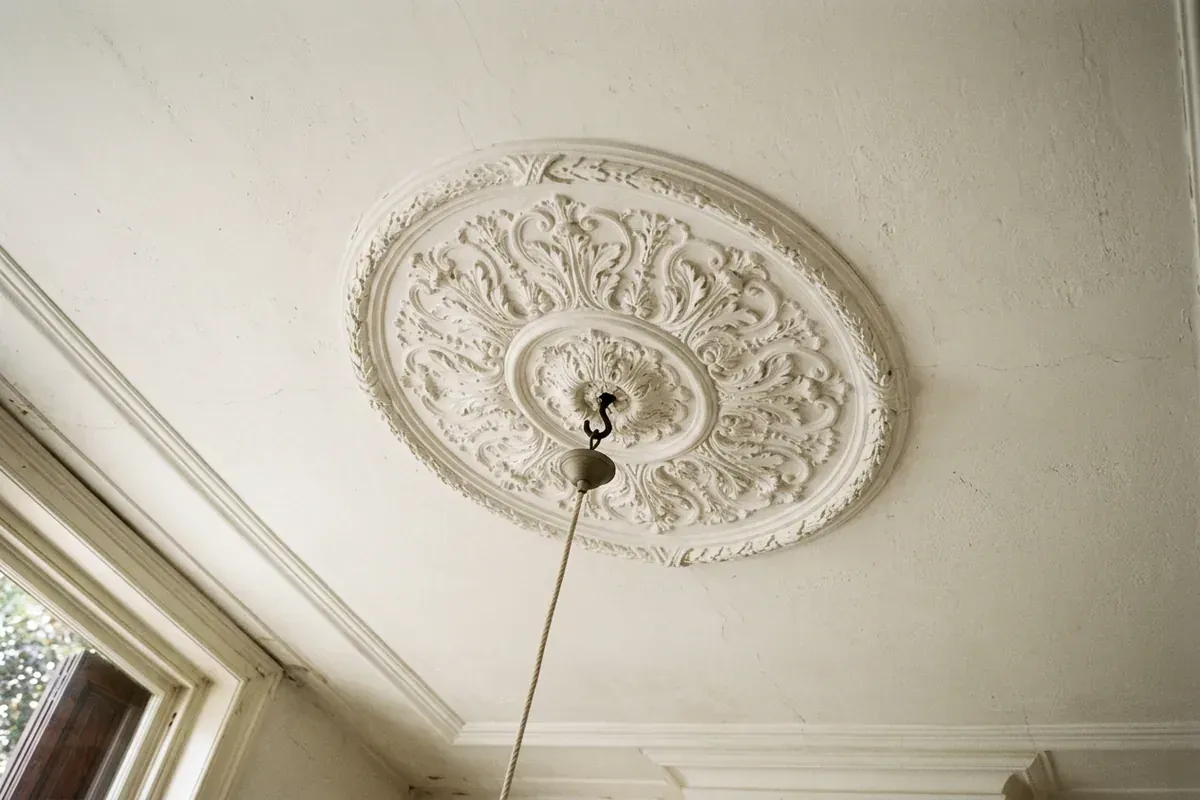
A ceiling rose is a decorative ornament fixed to the ceiling, usually around the point where a light hangs. Ceiling roses are often round, with a relief of leaf motifs, rings or geometric shapes. They give a ceiling a centrepiece and have traditionally belonged to classic interiors, together with cornices and other decorative mouldings.
What is a ceiling rose?
A ceiling rose is a stand-alone ornament, unlike a moulding that runs continuously. There are several types:
- Classic ceiling rose: rich relief with leaves, flowers or beaded edges.
- Plain ceiling rose: simple rings or a smooth, round profile, suited to modern interiors.
- Ornaments: besides ceiling roses there are corner pieces and medallions used in combination with mouldings.
Ceiling roses are made from materials including plaster and rigid foam. Plaster is often used when restoring historic ornaments.
Where is it used?
In living rooms, dining rooms and halls of older homes and town houses, and in prestigious spaces such as hotels. In new builds a ceiling rose is sometimes added to give a flat ceiling a classic accent.
What should you look out for?
- Position: measure the centre of the room or the light point accurately, especially in combination with coving.
- Size: match the diameter to the room, the ceiling height and the light fitting.
- Fixing: a ceiling rose is bonded with a suitable construction adhesive and additionally secured where needed. The weight of a light hangs from the ceiling, not from the rose.
- Substrate: the ceiling must be clean and sound.
- Finishing: the joint all round is caulked and the ceiling rose is painted along with the ceiling.
You can find more background in ceiling roses and ceiling ornaments.
At TipTop Plinten
TipTop Plinten installs decorative mouldings, coving and ornaments, both classic and sleek and modern. Read more about decorative mouldings and coving.
Frequently asked questions
That depends on the dimensions of the room, the ceiling height and the light fitting. A ceiling rose that is too small gets lost; one that is too large dominates. A simple test is to hold a cardboard circle against the ceiling and see how it looks.
Often, yes; many ceiling roses have an opening in the middle for the wiring. The weight of the light must hang from the ceiling itself, not from the rose. Have the electrical connection made by a qualified electrician.
Related
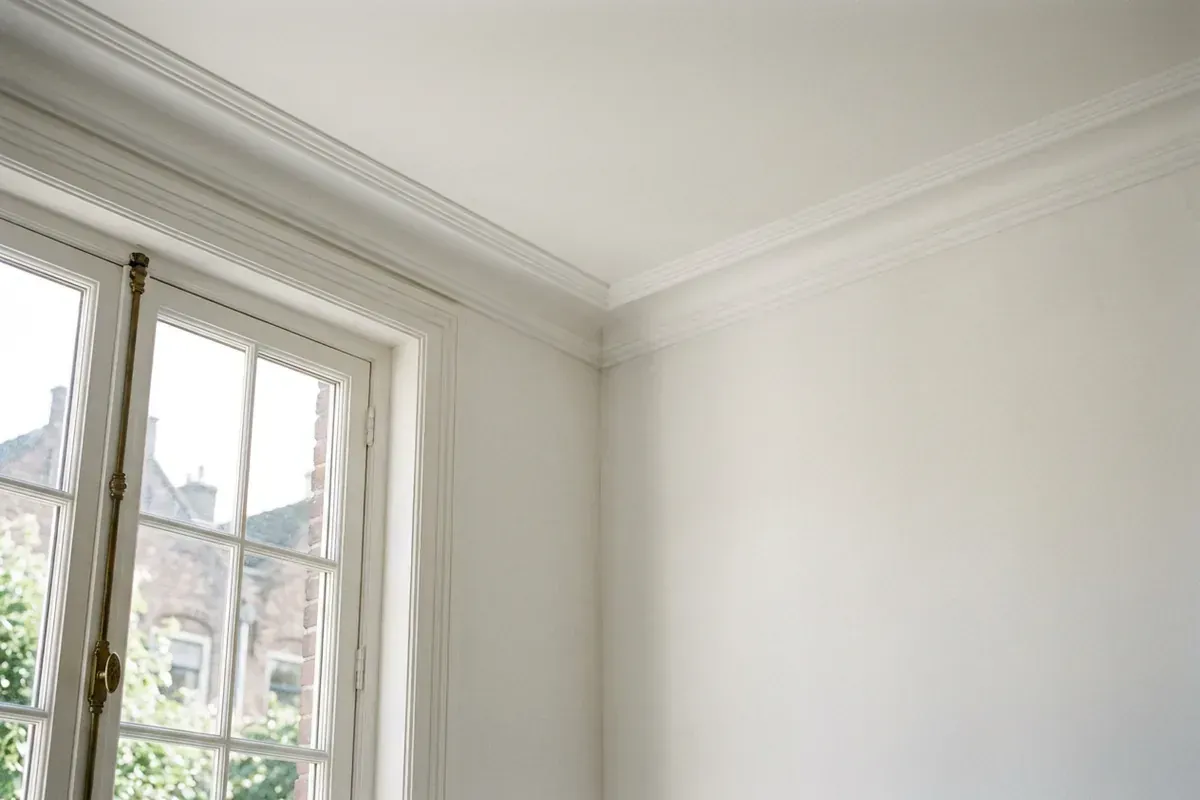
Cornice
A cornice is a richly profiled moulding that crowns the top of a wall. Indoors, it is the classic version of coving.
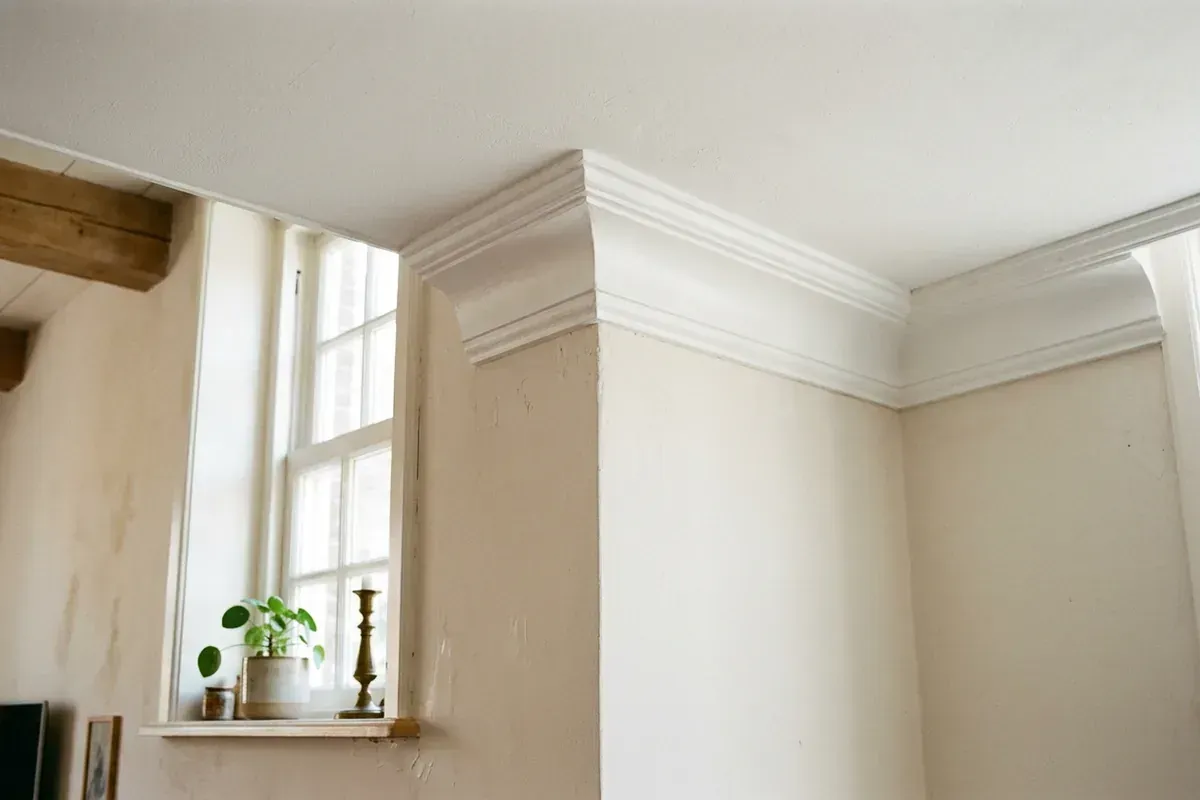
Coving
Coving finishes the corner between wall and ceiling. It hides hairline cracks and unevenness and gives a room a finished top edge.
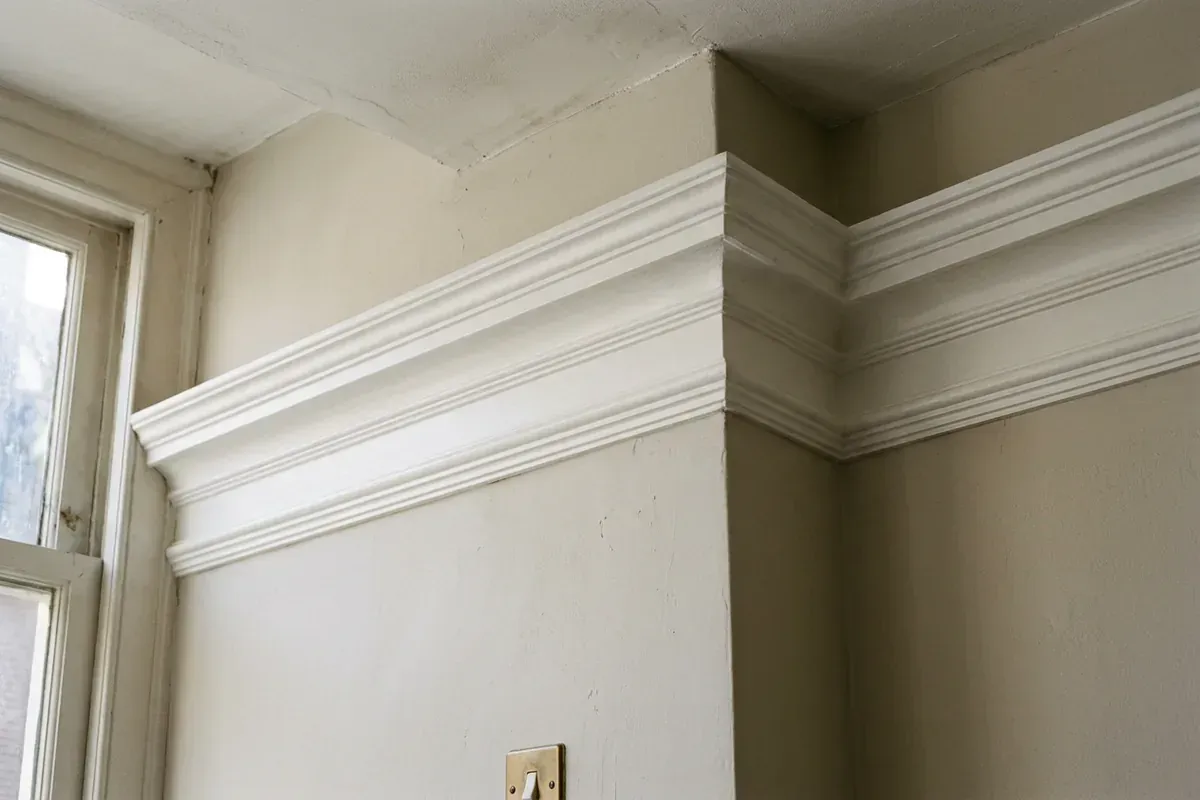
Decorative moulding
A decorative moulding is an ornamental profile on a wall or ceiling. It gives a room character, from classic ornament to a sleek modern line.
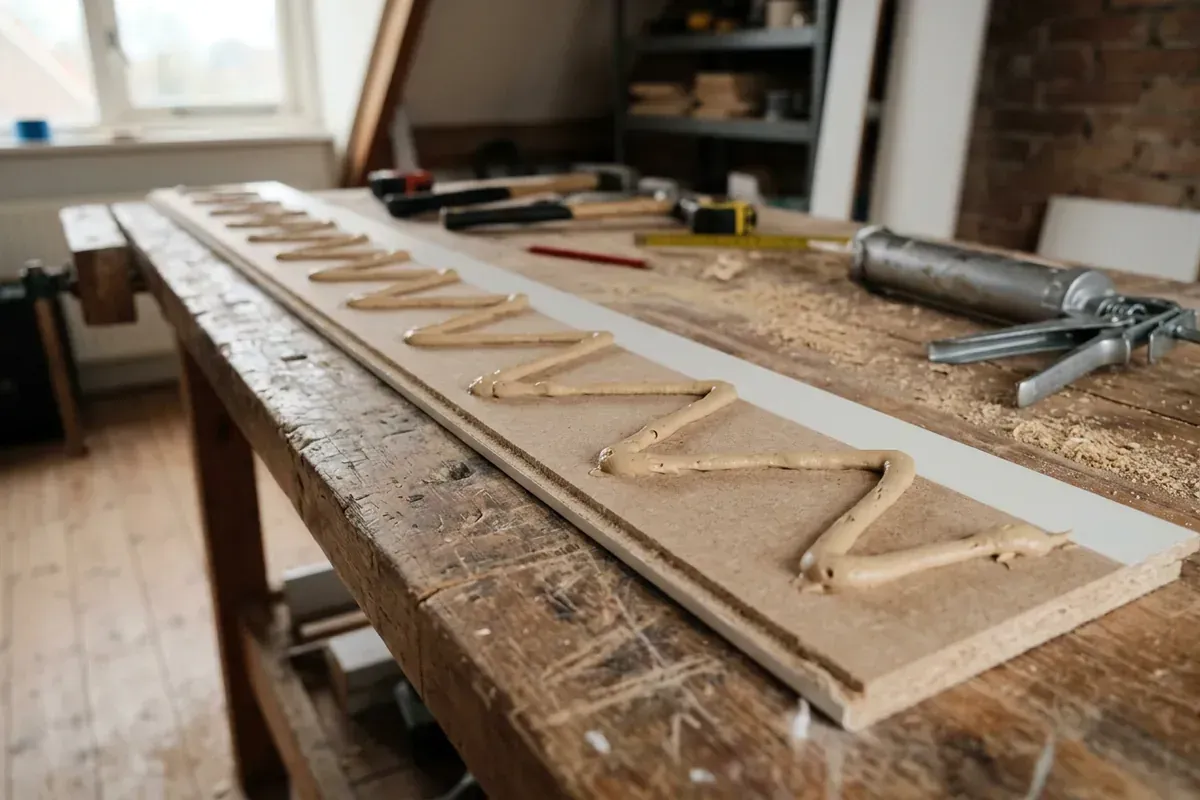
Construction adhesive
Construction adhesive is a strong glue or sealant used to fix skirting boards, mouldings and panels to the wall, often combined with nails or screws.
Mouldings & walls
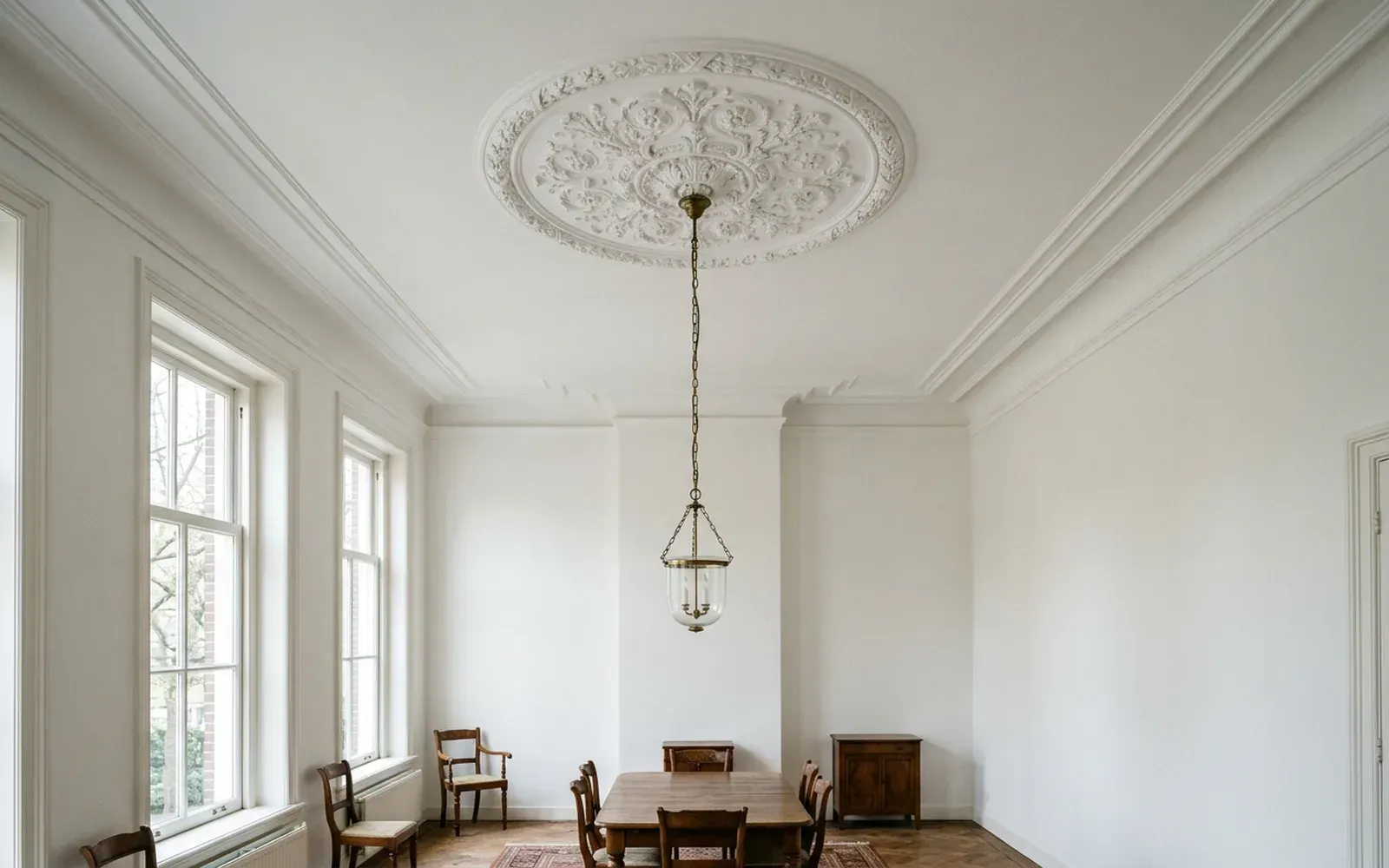
Ceiling roses: meaning, types and what you need to know
A ceiling rose is a round ornament around the light fitting, familiar from townhouses and period interiors. We explain where it comes from, which types there are and how to combine it with coving.
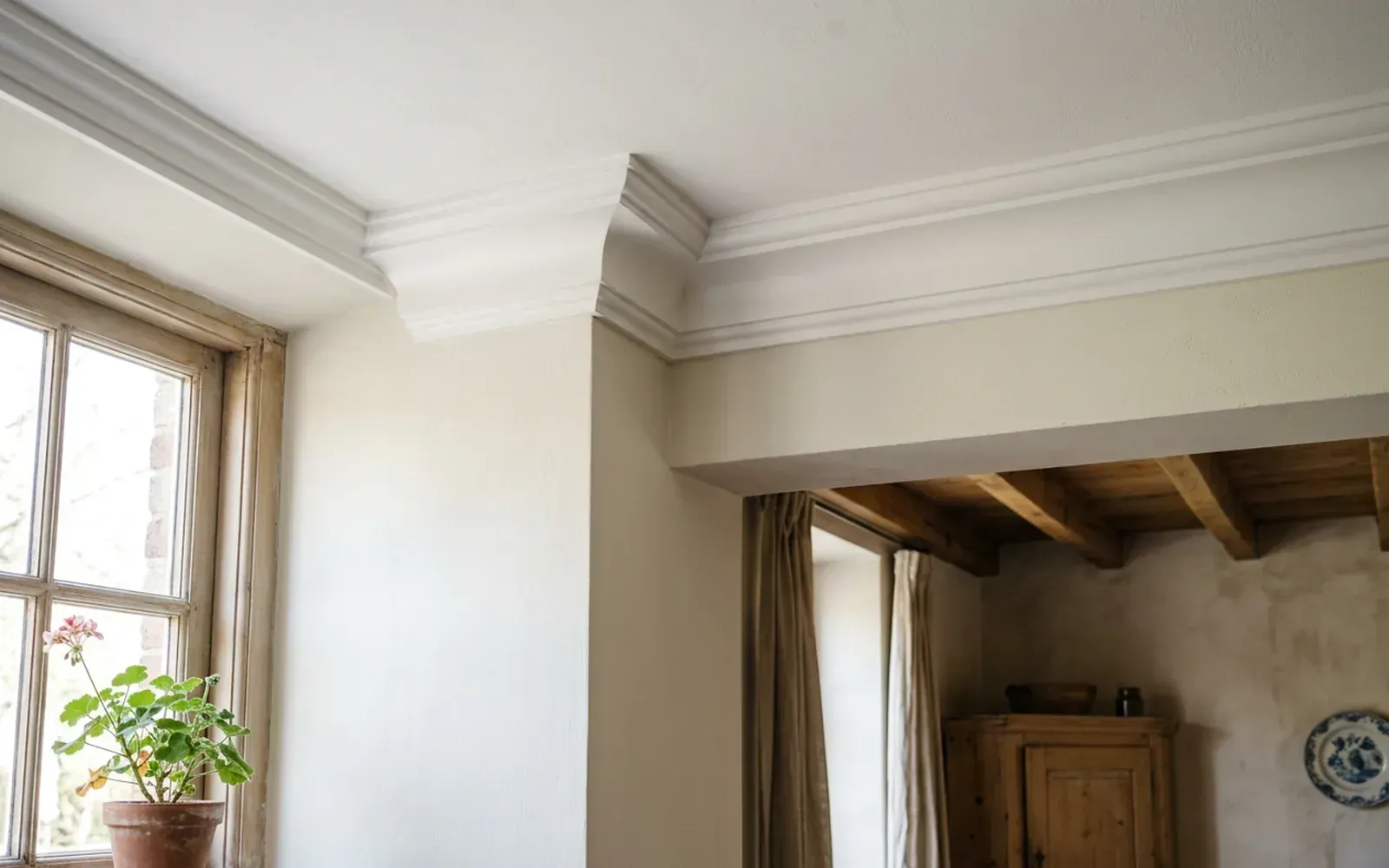
Mouldings & walls
Coving and cornices: the difference, types and installation
Coving gives the transition between wall and ceiling a crisp finish and completes a room. We explain how it differs from a cornice, which profiles are available and how they are fitted.
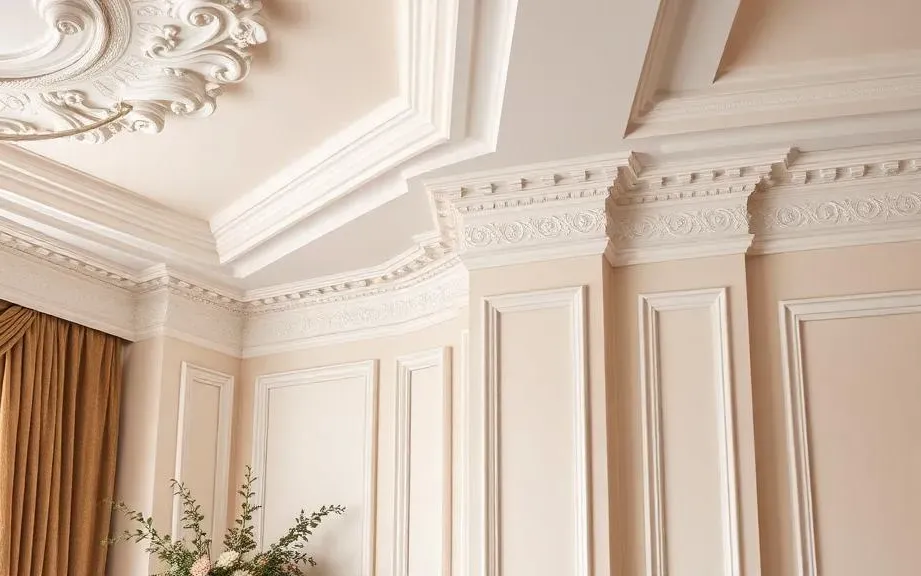
Decorative mouldings and coving installation
Decorative mouldings and coving give a room character. TipTop Plinten fits them in classic or minimal modern styles, with precise mitres and clean caulking.
Skirting board installation? Request a free quote
On-site measurement €75 incl. VAT (credited for orders above a minimum project size)