
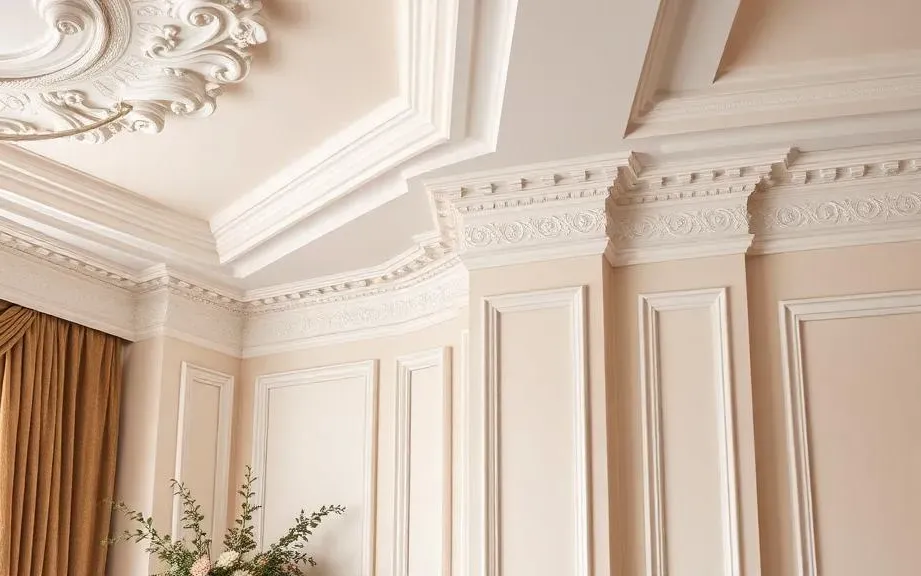
Decorative mouldings and coving give a room character, whether it is a classic townhouse or a minimal modern apartment. TipTop Plinten fits decorative mouldings, coving, cornices and ornaments such as ceiling roses, with precise mitres and clean caulking. In a luxury hotel in Maastricht, all the decorative mouldings and wall panels were handled by us, finished in RAL 9010. The quote is free and without obligation, and we are happy to discuss your plans in English.
What are decorative mouldings?
Decorative moulding is the umbrella term for ornamental mouldings on walls and ceilings. The main types:
| Type | Where | Effect |
|---|---|---|
| Coving | Corner between wall and ceiling | Finishes the transition, hides hairline cracks |
| Cornice | Corner between wall and ceiling, larger profile | Classic, rich appearance |
| Wall moulding | On the wall surface | Frames, panelled look, rhythm |
| Dado rail | Horizontal on the wall | Divides the wall, often above wainscoting |
| Ceiling rose and ornaments | On the ceiling | Focal point around the light |
Classic or minimal and modern
Decorative mouldings are often associated with old buildings, but they also suit a contemporary interior. The difference lies in the profile and the colour:
- Classic: rich, layered profiles, a cornice along a high ceiling, a ceiling rose above the dining table.
- Modern: slim coving in the wall colour, thin wall mouldings for a panelled look, or a minimal corner profile with space for indirect lighting.
For inspiration, see decorative mouldings in a modern interior and coving and cornices.
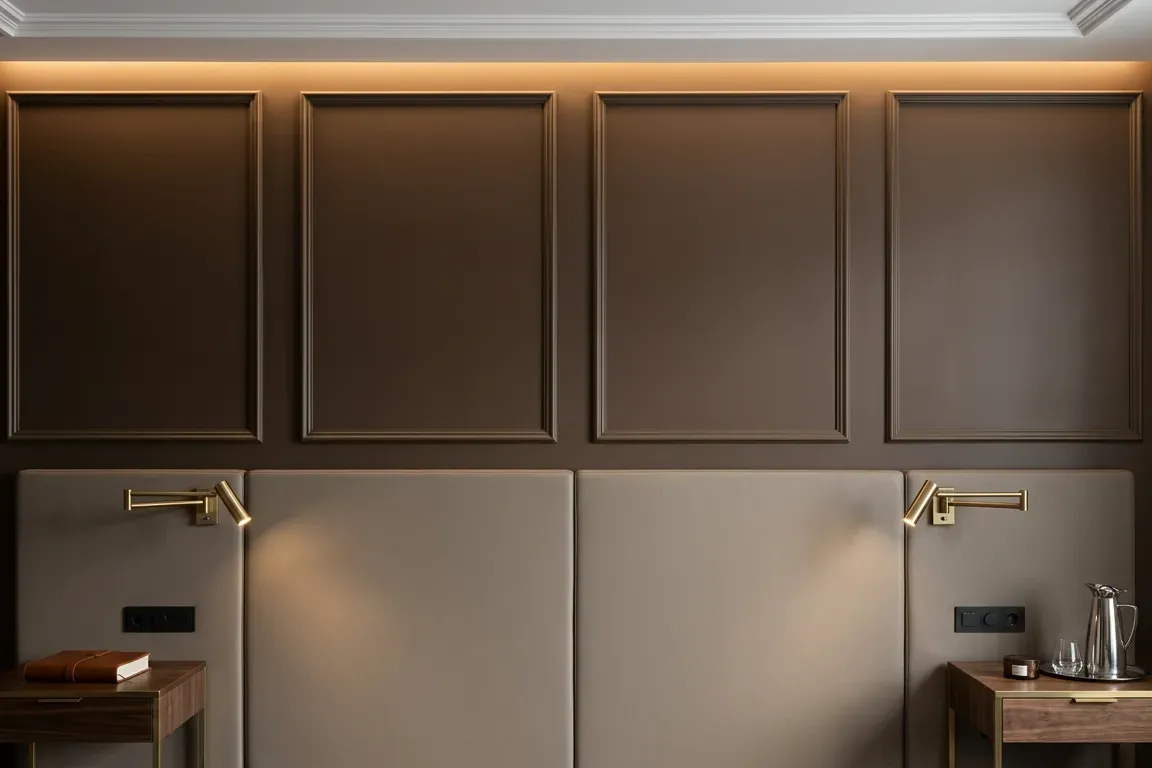
Project: luxury hotel in Maastricht
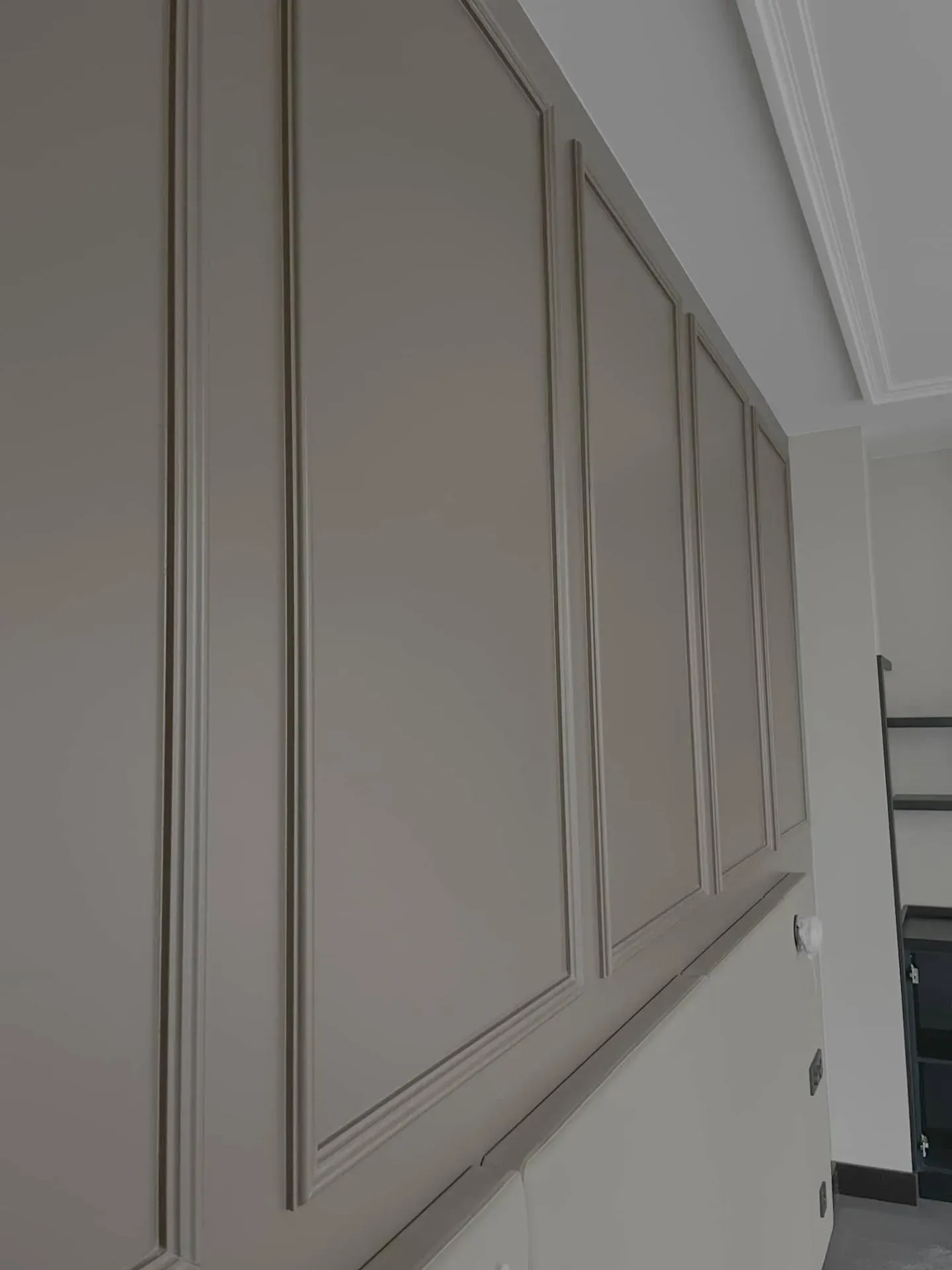
In a luxury hotel in the centre of Maastricht, all the wall panels, decorative mouldings and caulking were handled by TipTop Plinten. Everything was finished in RAL 9010, with millimetre-precise mitres, to a tight deadline. With mouldings arranged in frames, precision matters even more: every frame has four corners, and raking light shows up every deviation.
What does TipTop Plinten pay attention to?
Proportion and scale
A heavy moulding in a low room pushes the ceiling down visually; a moulding that is too slim disappears in a tall space. The profile is matched to the dimensions of the room and to the other mouldings, such as skirting boards and architraves.
Mitres
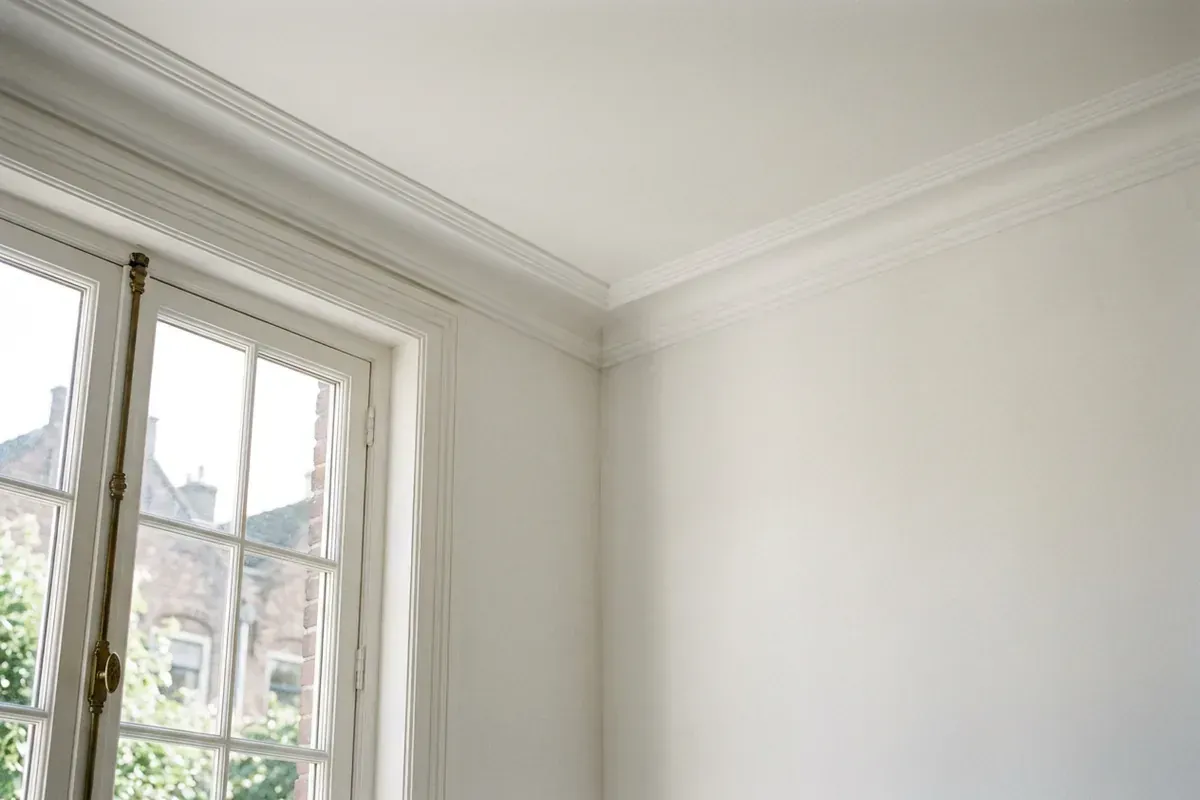
Coving sits at an angle against wall and ceiling, so it usually needs a compound mitre. With classic profiles, the pattern has to continue through the corner.
Substrate and fixing
The wall and ceiling must be clean, dry and sound. Mouldings are bonded with a suitable construction adhesive, and heavier profiles are also fixed mechanically. Loose plaster has to be repaired first.
Straight lines on uneven ceilings
Ceilings and walls are rarely perfectly flat. The moulding is fitted so that the line looks calm; small deviations are taken up with filler and caulk.
Finishing
Joints and connections are filled and caulked with paintable acrylic caulk, after which the mouldings are handed over paint-ready or finished directly in colour.
Decorative mouldings room by room
- Living room: coving that finishes the room, possibly combined with wall mouldings on a feature wall.
- Dining room: a ceiling rose above the table as a focal point, with matching coving around it.
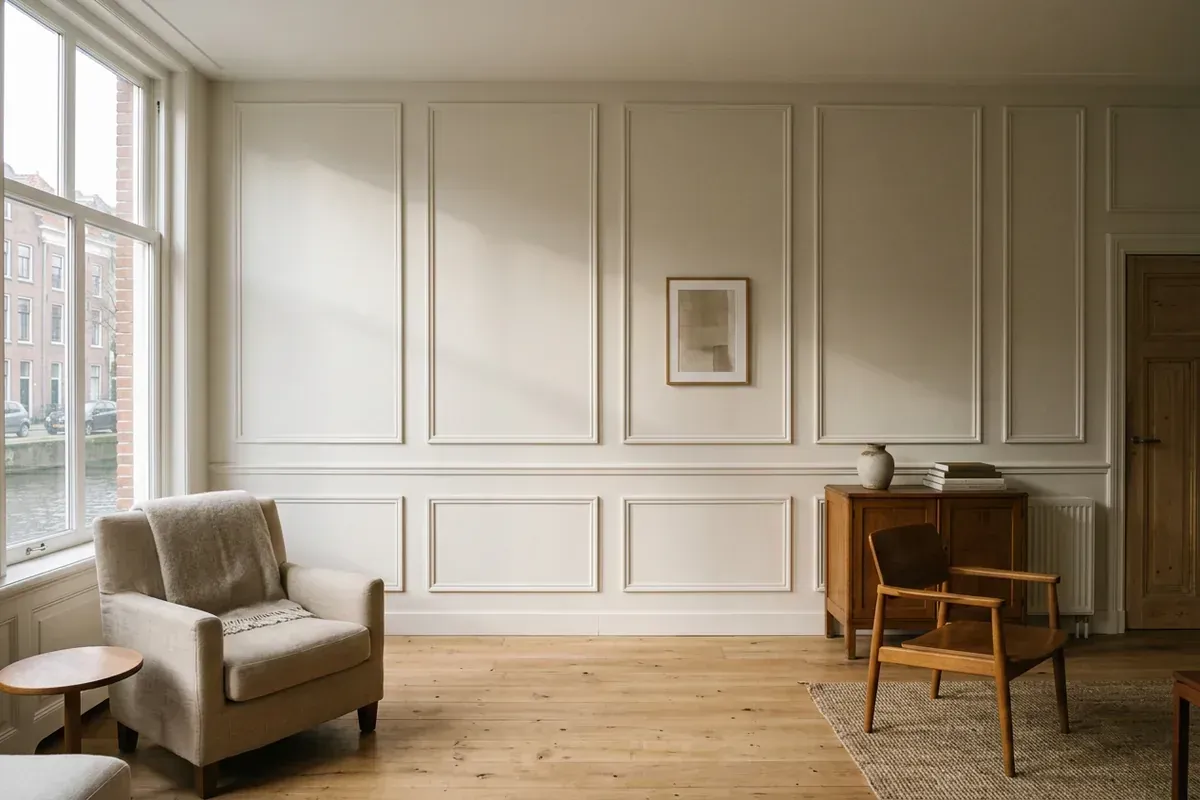
- Bedroom: wall mouldings in frames behind the bed, in the same colour as the wall.
- Hallway and stairwell: a dado rail with wainscoting below, which also protects the wall.
- Hotel or office: a consistent line of mouldings and panels through all rooms, so the whole space looks well kept and recognisable.
Which combination works depends on the height of the room, the style of the interior and the other mouldings.
Ceiling roses and ornaments
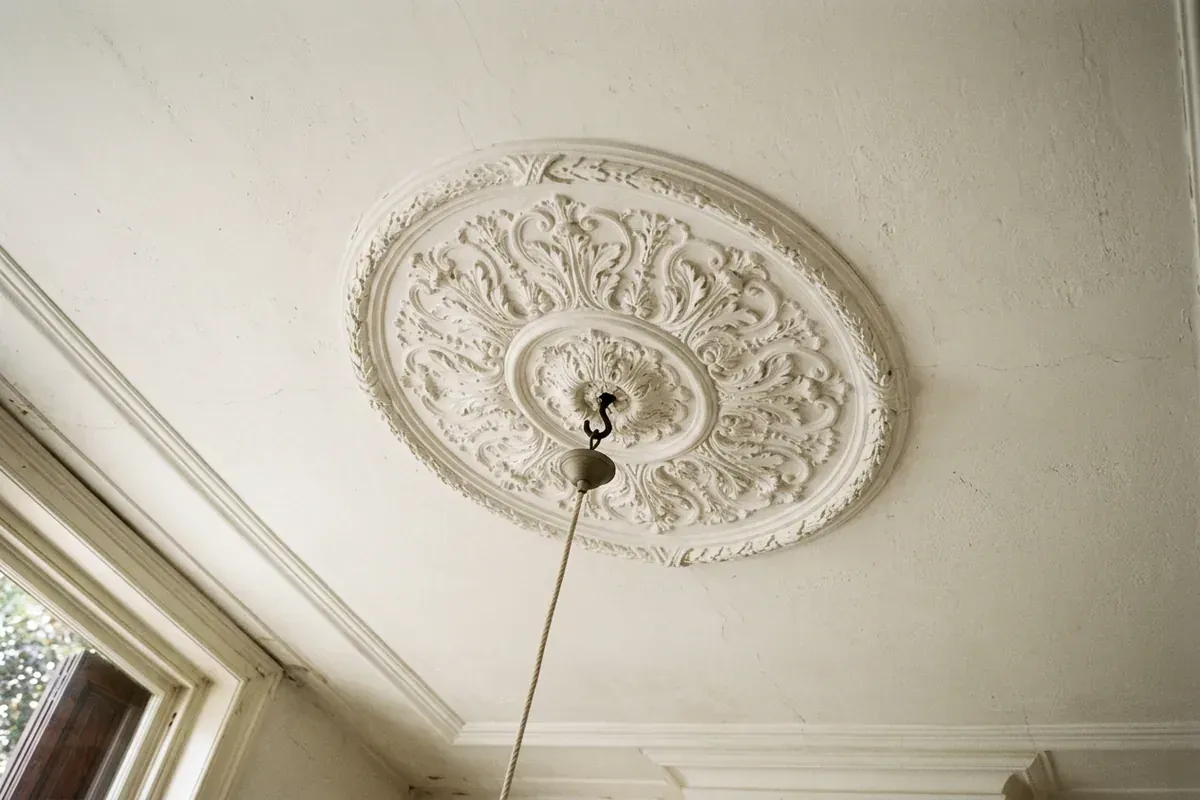
A ceiling rose gives a ceiling a focal point. Its position is measured precisely, especially in combination with coving, and its size is matched to the room and the light. The weight of a light hangs from the ceiling, not from the rose. Read more in ceiling roses and ceiling ornaments.
Materials
Decorative mouldings and coving come in various materials, such as MDF, wood and plaster. Which material is suitable depends on the profile, the weight and the finish, and is decided per project.
How it works
- Enquiry: photos of the room, your location, what you would like fitted and, if you have them, examples of the style.
- Quote: free and without obligation; you usually hear back within 24 hours.
- On-site measurement (optional): for €75 incl. VAT, with personal advice on profile and scale, credited as a discount on jobs above a minimum project size.
- Fitting and finishing: fitting, mitring, filling, caulking and finishing.
How much work is involved depends on the number of metres, the corners and the substrate; you will hear this with the quote. If you are combining mouldings with wall panels, see also wall panels and wall mouldings.
Who is it for?
For homeowners, hotels, contractors and interior fit-out companies, based in 's-Hertogenbosch and working throughout the Netherlands. We communicate in English, Dutch, German, Turkish, Persian and Arabic. Take a look at the service area or request a quote.
Frequently asked questions
Decorative moulding is the umbrella term for ornamental mouldings on walls and ceilings. Coving is a specific moulding fitted in the corner between wall and ceiling. A cornice is a larger, richly profiled version of it.
Yes. Slim, minimal profiles in the wall colour give a modern room depth without looking traditional. Rich profiles and ornaments are better suited to high ceilings and older buildings.
That depends on the number of linear metres, the profile and material, the number of corners, the condition of the walls and ceiling, and the finish. You receive a free quote. An on-site measurement is available for €75 incl. VAT.
Often, yes; coving covers the corner where hairline cracks appear due to movement. With large or recurring cracks, it is wise to have the cause investigated first.
A ceiling rose often has an opening for the wiring, but the weight of the light hangs from the ceiling itself, not from the rose. Have the electrical connection made by a qualified electrician.
The mouldings are filled and caulked and then handed over paint-ready or finished directly in colour, in any RAL colour.
Related
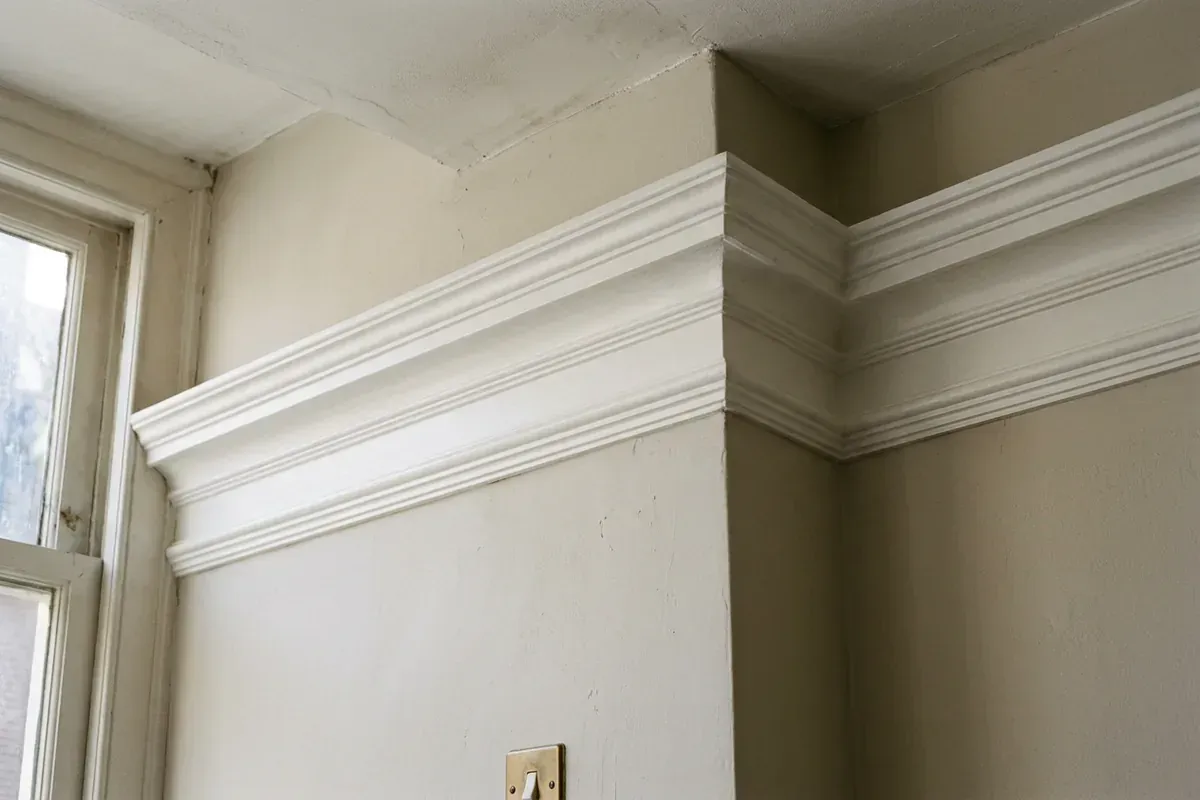
Decorative moulding
A decorative moulding is an ornamental profile on a wall or ceiling. It gives a room character, from classic ornament to a sleek modern line.
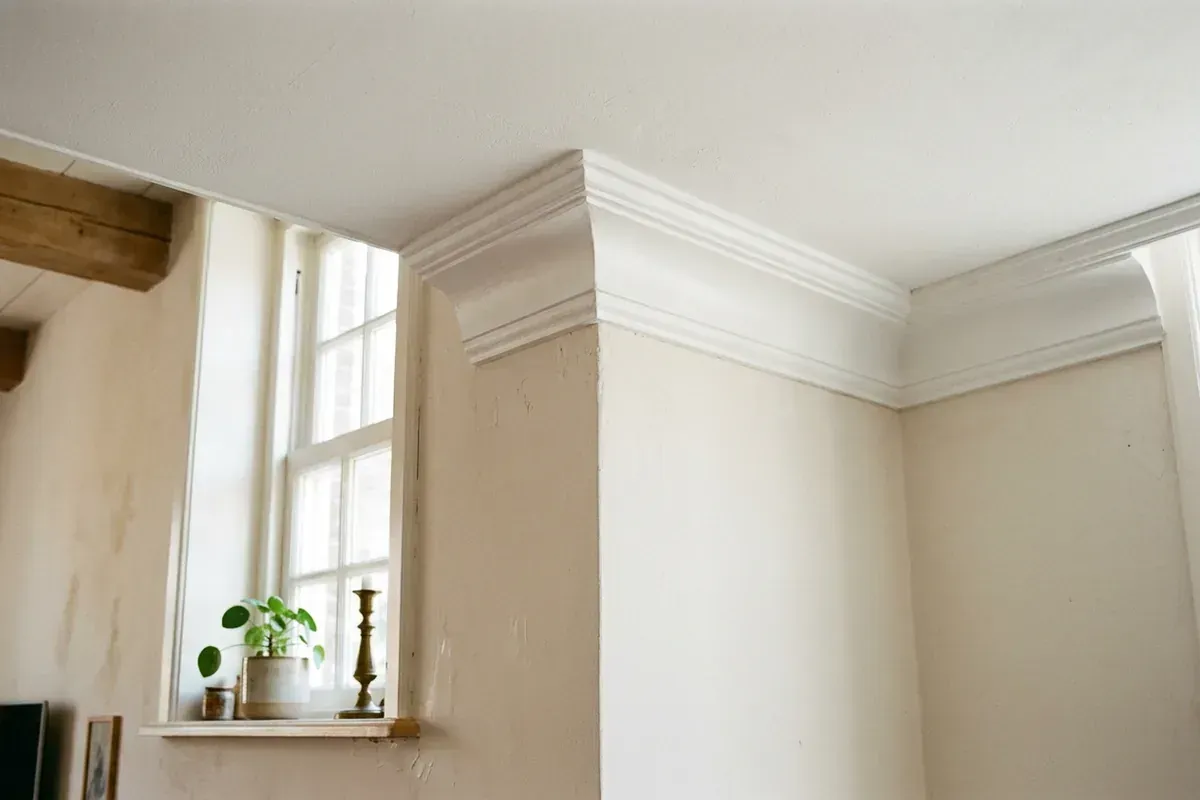
Coving
Coving finishes the corner between wall and ceiling. It hides hairline cracks and unevenness and gives a room a finished top edge.
Cornice
A cornice is a richly profiled moulding that crowns the top of a wall. Indoors, it is the classic version of coving.
Ceiling rose
A ceiling rose is a round or decorative ornament on the ceiling, usually around the point where a light hangs. It gives a ceiling a classic centrepiece.
Wall moulding
A wall moulding is a narrow moulding on the wall surface. Several mouldings together create frames or panels that give a flat wall depth and rhythm.
Mitre joint
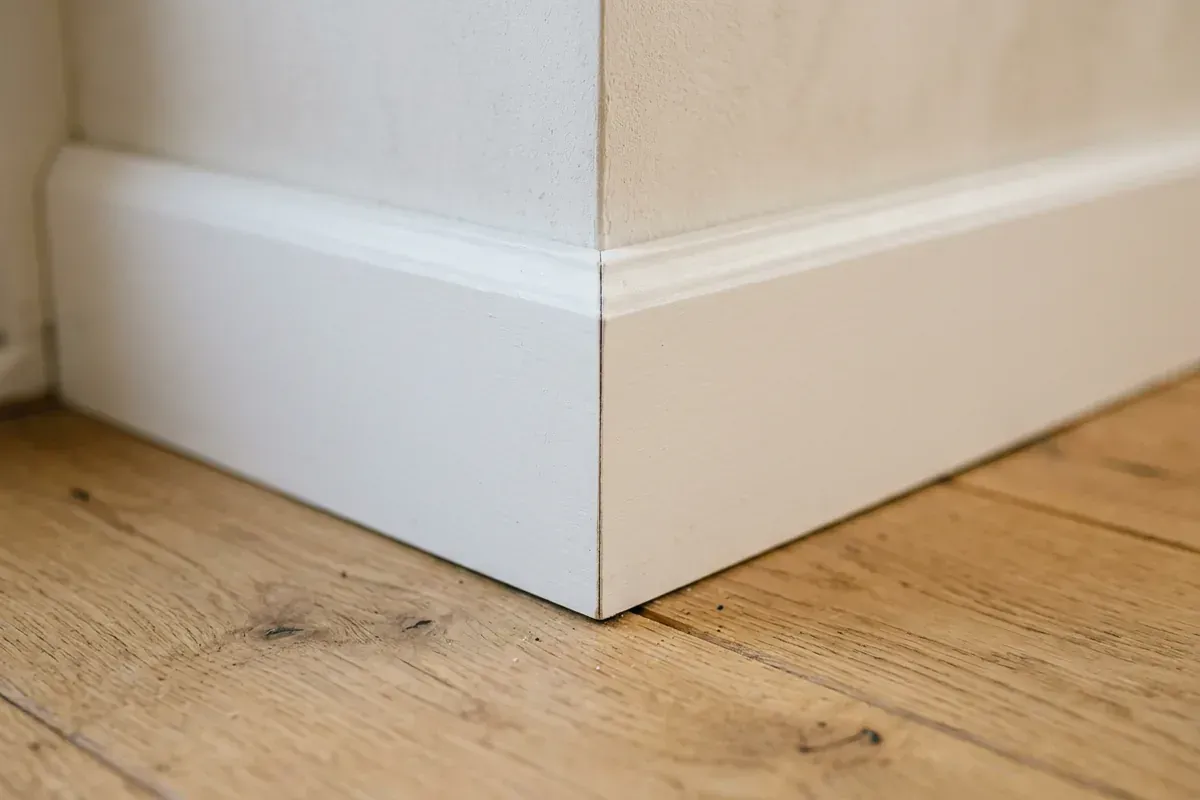
A mitre is an angled cut that lets two mouldings meet seamlessly in a corner. For a right angle, that is usually 2 x 45 degrees.
Mouldings & walls
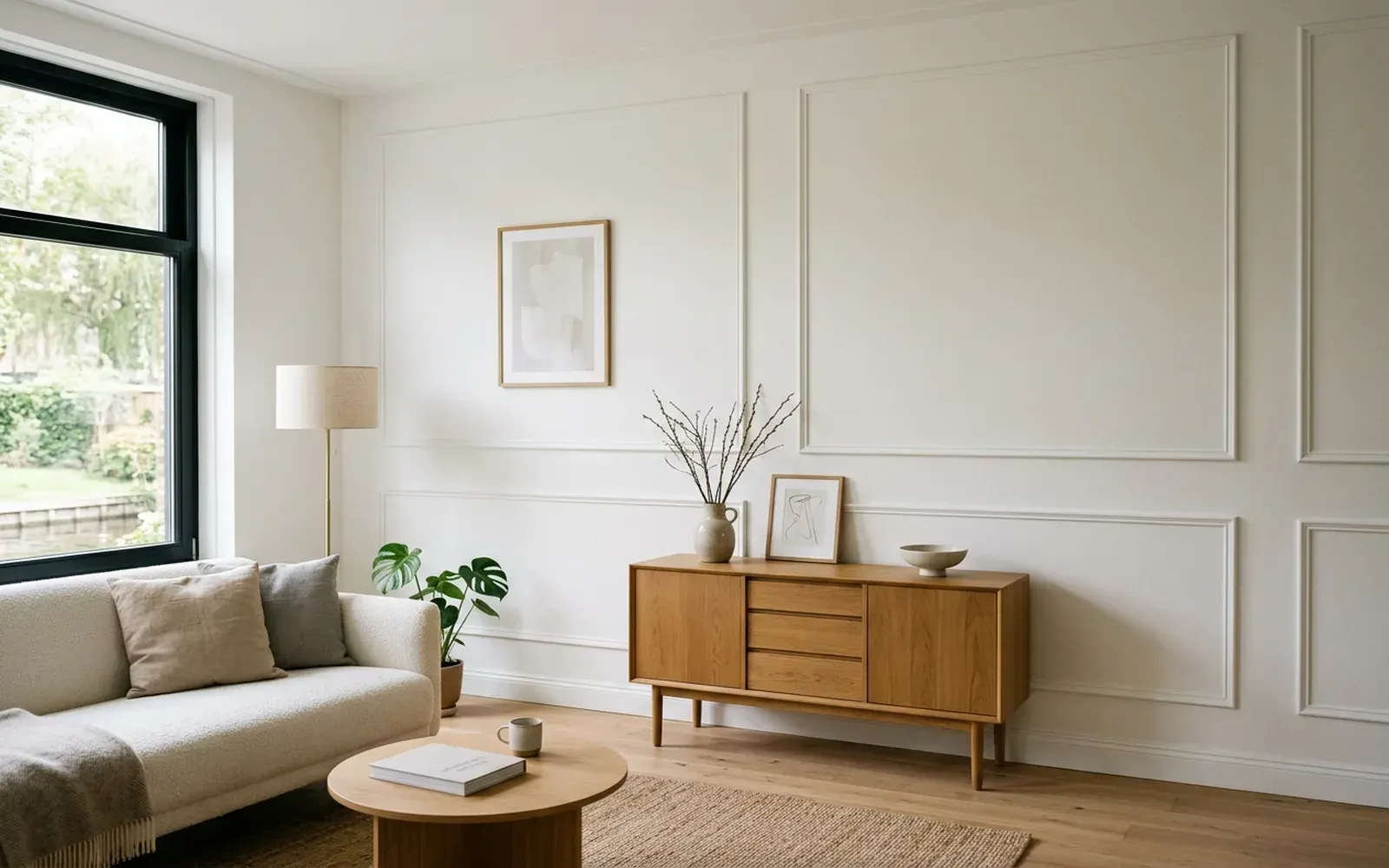
Decorative mouldings in a modern interior: how to use them with style
Decorative mouldings are not just for period properties. With a calm profile and the right colour, they give a modern interior depth and a refined look. Here is how to use them.
Mouldings & walls
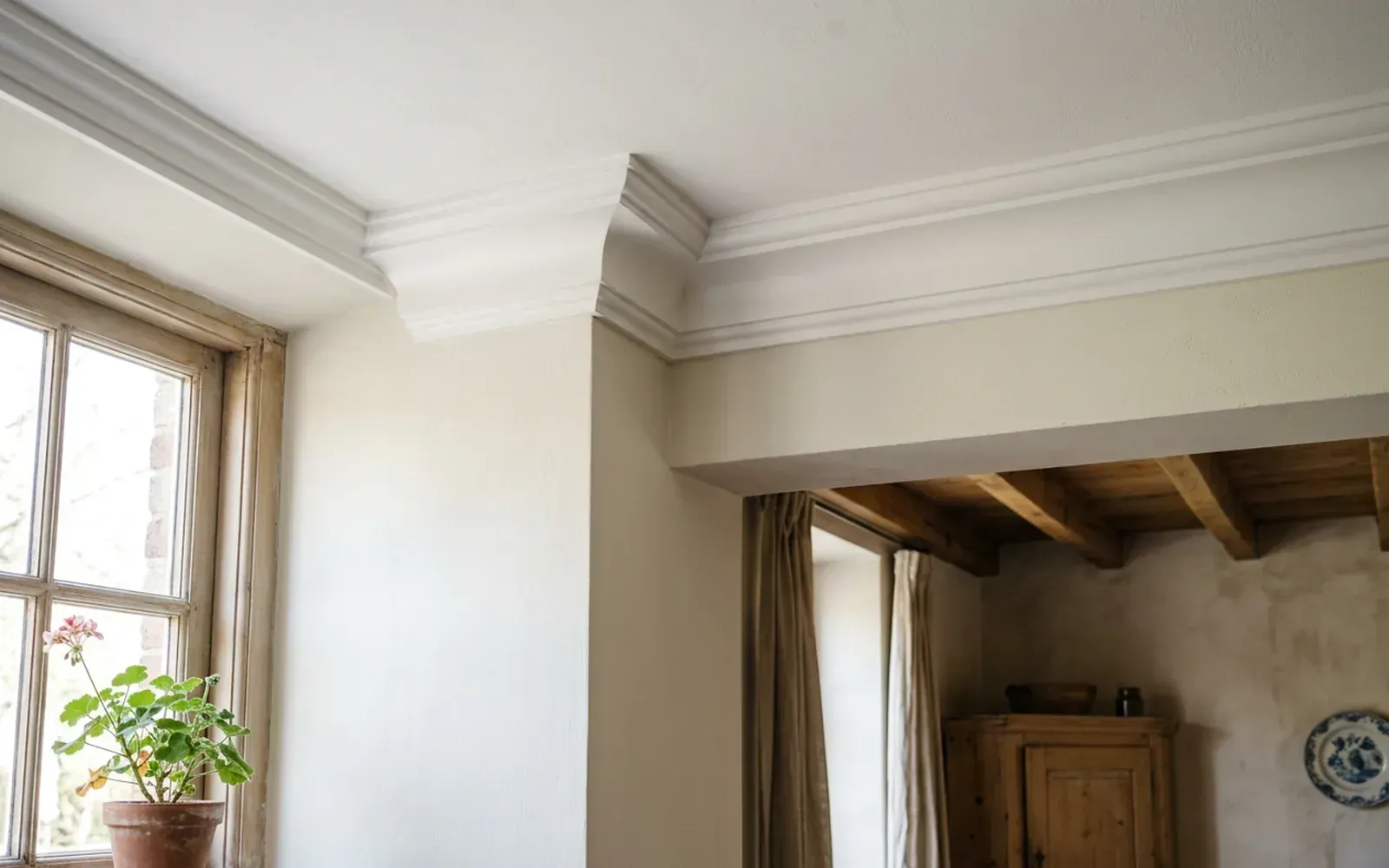
Coving and cornices: the difference, types and installation
Coving gives the transition between wall and ceiling a crisp finish and completes a room. We explain how it differs from a cornice, which profiles are available and how they are fitted.
Mouldings & walls
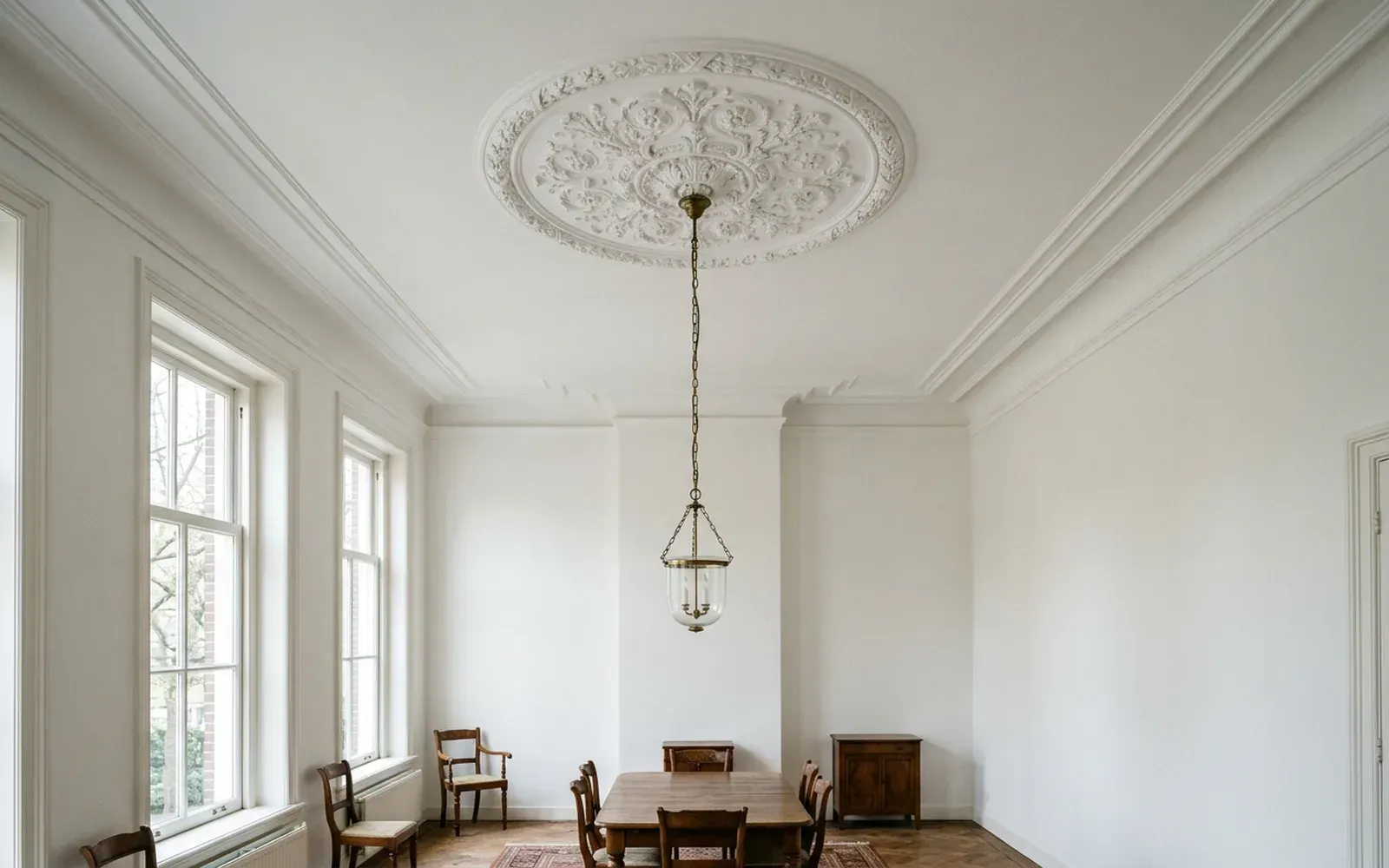
Ceiling roses: meaning, types and what you need to know
A ceiling rose is a round ornament around the light fitting, familiar from townhouses and period interiors. We explain where it comes from, which types there are and how to combine it with coving.
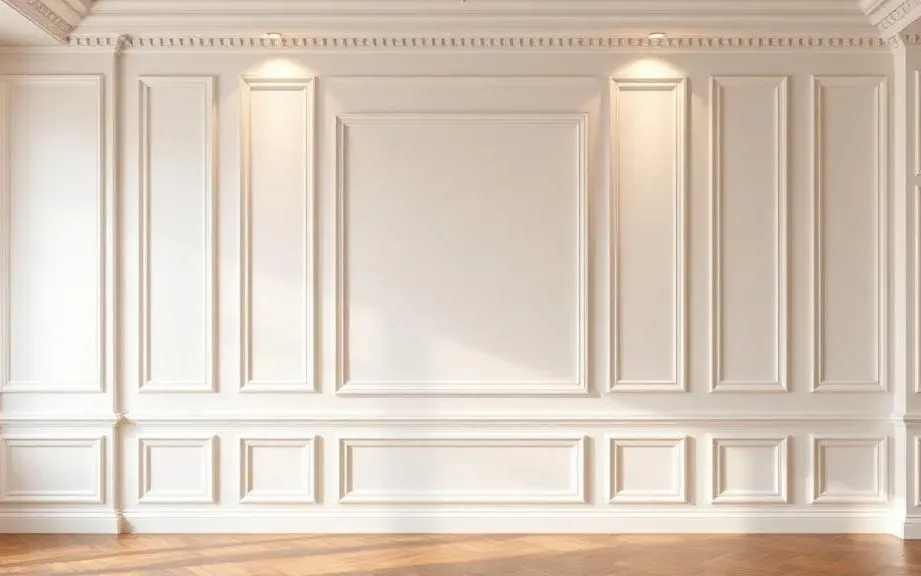
Wall panelling installation and wall mouldings fitted
TipTop Plinten fits wall panels, wall mouldings, slat panels and acoustic panels in homes, offices and hotels, with tight mitres and clean caulking.
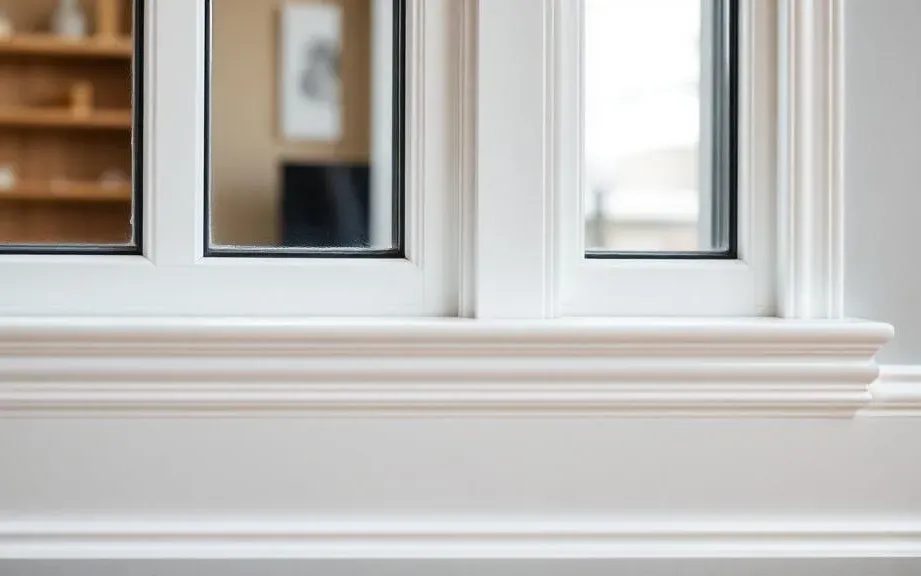
Caulking skirting boards and sealant work for a seamless finish
Caulking is the final step that makes skirting boards, mouldings and panels look seamless. TipTop Plinten uses acrylic or silicone, paint-ready or in colour.
Skirting board installation? Request a free quote
On-site measurement €75 incl. VAT (credited for orders above a minimum project size)