
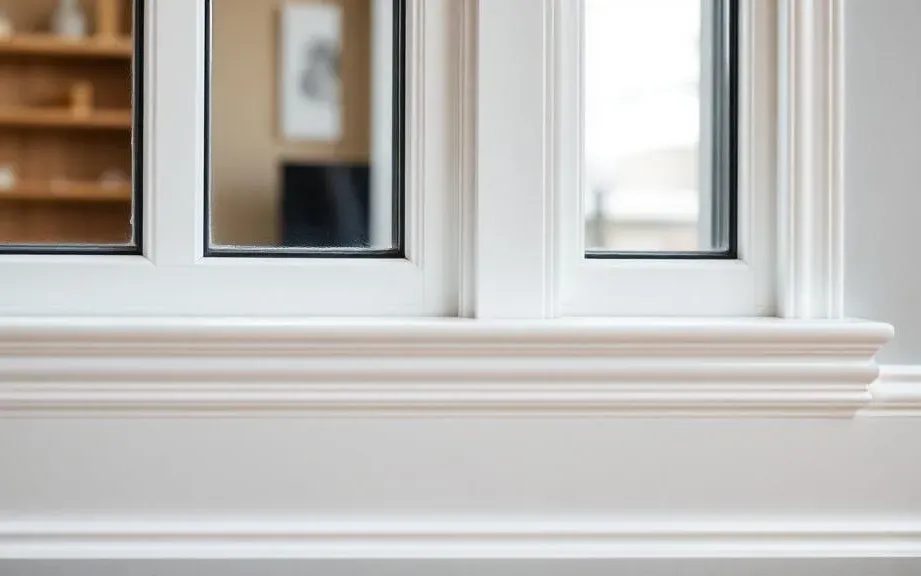
Caulking skirting boards is the final step that turns a fitted skirting board into a finished one. Because walls are rarely perfectly flat, small gaps appear between skirting and wall. Caulking fills them, so that no shadow line or dust edge remains visible. TipTop Plinten carries out caulking along skirting boards, architraves, mouldings and wall panels, using acrylic caulk or silicone sealant, paint-ready or finished directly in colour.
Why caulking makes the difference
However precisely a skirting board has been cut, if there is a gap between its top edge and the wall you will see a dark line, and dust will collect there. Caulking makes skirting and wall look like one. The same applies to the joints around architraves and door frames, along coving and between wall panels. That is why caulking is a standard part of the finish at TipTop Plinten.
Which caulk goes where?
| Type | Paintable | Use |
|---|---|---|
| Acrylic caulk | Yes | Skirting boards, mouldings, frames and wall panels in dry rooms |
| Silicone sealant | No | Wet rooms, sanitaryware, tiling |
Acrylic caulk is the standard for painted mouldings, because it can be painted over once cured. Silicone sealant stays highly flexible and is water-resistant, but paint does not adhere to it. That is why silicone does not belong along painted skirting boards. You will find a detailed explanation in caulking skirting boards: which sealant?.
Where is caulk applied?
- Along the top edge of the skirting board, against the wall.
- Around architraves and door trims, between moulding, frame and wall. See architraves.
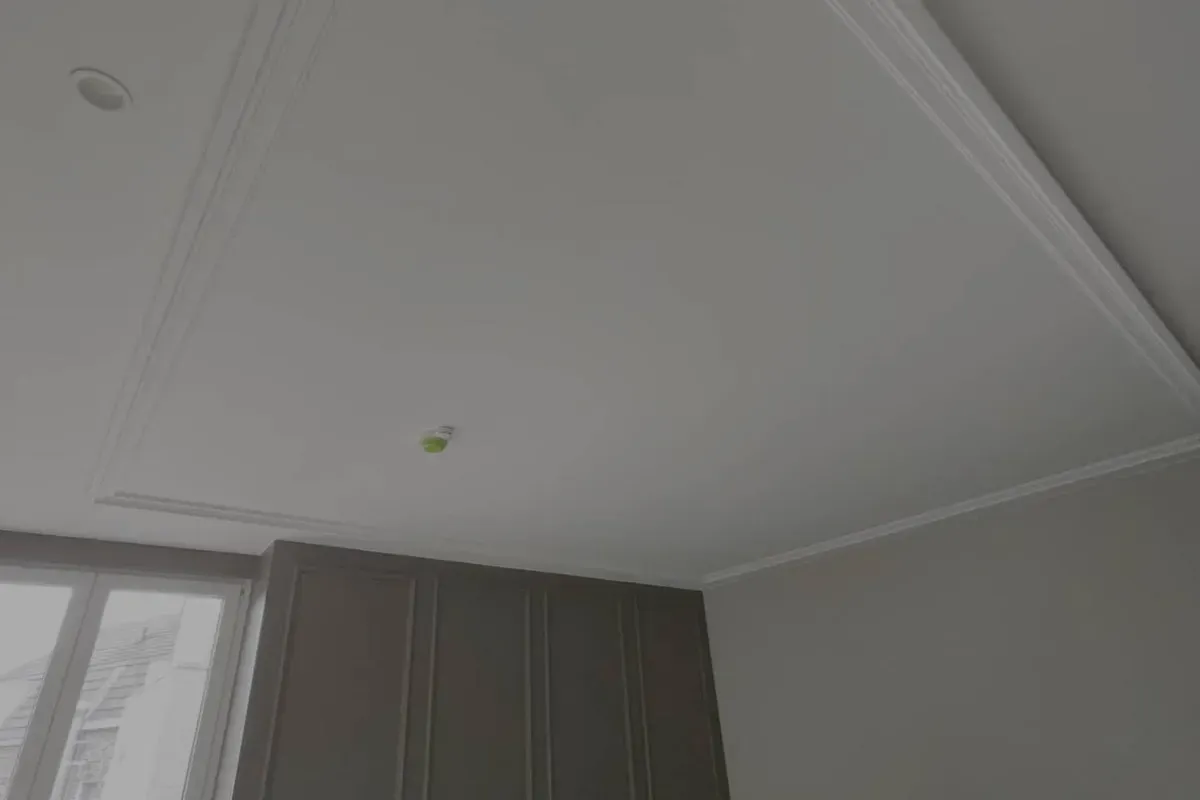
- Along coving and decorative mouldings, at the top and bottom. See decorative mouldings and coving.
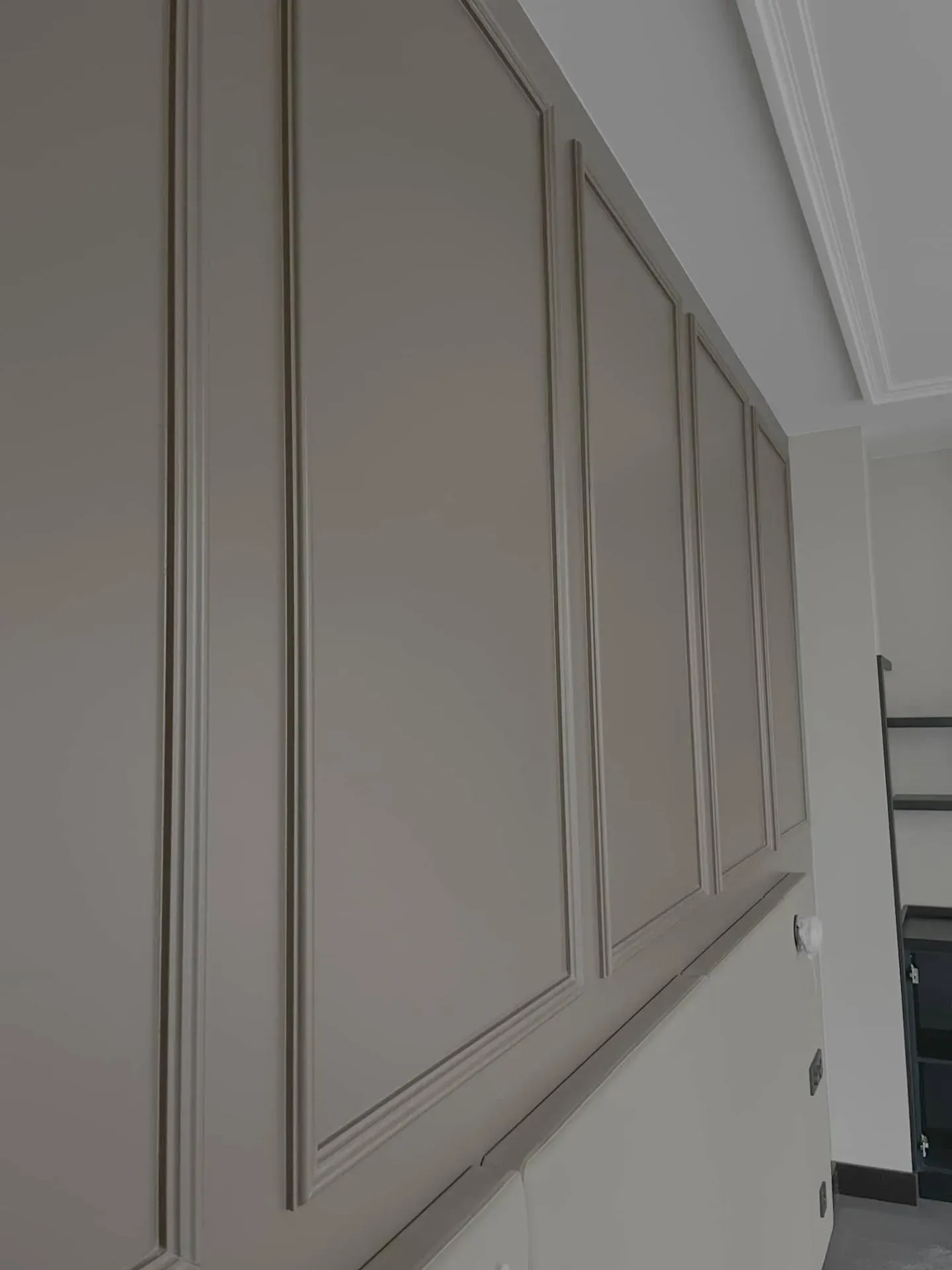
- Around and between wall panels and wall mouldings. See wall panels and wall mouldings.
- In mitres and joints, after filling, as the final finish.
The joint between skirting board and floor
With floating floors, such as laminate, click vinyl and floating parquet, there is an expansion gap along the wall. The floor must be able to expand and contract. That is why the skirting board is fixed to the wall and the joint between skirting and a floating floor is not sealed rigidly. With a glued-down floor or tiles there is less movement, and that joint can be finished with a suitable flexible sealant. This is assessed case by case.
Paint-ready or finished in colour
There are two ways to hand over the work:
- Paint-ready: the skirting boards and mouldings are fitted, filled and caulked; the decorator applies the final coat. Useful if walls, doors and frames are being painted as well.
- In colour: the caulk line and mouldings are finished directly in the colour of your choice, in any RAL colour. No decorator is needed afterwards.
With coloured skirting, matt black for example, a colour match for the caulk line is especially important: a white caulk line along a black skirting board stands out immediately.
What makes a good caulk line?
- The right caulk in the right place.
- A clean, dry and dust-free surface, so the caulk bonds.
- An even, thin bead, smoothed off without smears on wall or skirting.
- Wider gaps filled or covered first. Caulk is intended for narrow joints; for larger gaps a cover strip can be neater.
- Enough drying time before painting, in line with the caulk manufacturer's instructions.
- Removing old caulk before new caulk is applied.
Common problems with caulk lines
- Hairline cracks in the paint above the caulk: often because the caulk was painted over too soon.
- Caulk coming loose: usually due to a dusty or damp surface, or a joint that is too wide for caulk alone.
- Discoloured or black caulk: mould can form in damp rooms; a suitable silicone sealant belongs there.
- Smeared edges: excess caulk that was not removed straight away.
- Caulk cracking along a floating floor: a sign that the floor moves more than the joint allows.
When replacing joints like these, the old caulk is removed first and the surface is cleaned.
Projects with caulking
Caulking was part of the work on the MDF skirting boards on a herringbone floor in Oss, the new-build home in Boxtel, where the skirting was fitted from the shell stage onwards including caulking, and the hotel in Maastricht, where all wall panels, decorative mouldings and caulking were finished in RAL 9010.
How it works
- Enquiry: photos, your location and what needs to be caulked or fitted.
- Quote: free and without obligation; you usually hear back within 24 hours. When skirting boards are fitted, the caulking is included in the same quote.
- On-site measurement (optional): for €75 incl. VAT, credited as a discount on jobs above a minimum project size.
- The work: removing old caulk where needed, caulking and finishing.
How much work is involved depends on the length of the joints, their condition and the finish; you will hear this with the quote. Read more about combining this with painting in painting skirting boards or pre-finished?.
Who is it for?
For homeowners, contractors, floor fitters, interior fit-out companies and hotels, based in 's-Hertogenbosch and working throughout the Netherlands. We communicate in English, Dutch, German, Turkish, Persian and Arabic. Take a look at our skirting board installation service, the service area, or request a quote.
Frequently asked questions
For skirting boards in dry rooms, paintable acrylic caulk is usually used. It can be painted over along with the skirting, so the joint disappears. Silicone sealant cannot be painted and belongs mainly in wet rooms.
With a floating floor such as laminate or click vinyl, that joint is not sealed rigidly, because the floor needs to be able to move. With a glued-down floor or tiles it can be, using a suitable flexible sealant.
Get in touch and describe your situation. At TipTop Plinten, caulking is a standard part of finishing skirting boards, mouldings and panels; whether a caulking-only job is a good fit is assessed per enquiry.
That depends on the length of the joints, the condition of the existing joints, the type of caulk and the finish. When skirting boards are fitted, the caulking is included in the quote. An on-site measurement is available for €75 incl. VAT.
Yes, that is possible. Acrylic caulk is painted along with the skirting or wall, or a caulk in a matching colour is chosen. That way the joint disappears, even with black or coloured skirting.
Usually, yes, especially with silicone or with caulk that is coming loose, cracked or discoloured. New caulk bonds poorly to old residue, and paint does not adhere to silicone.
Related
Caulking
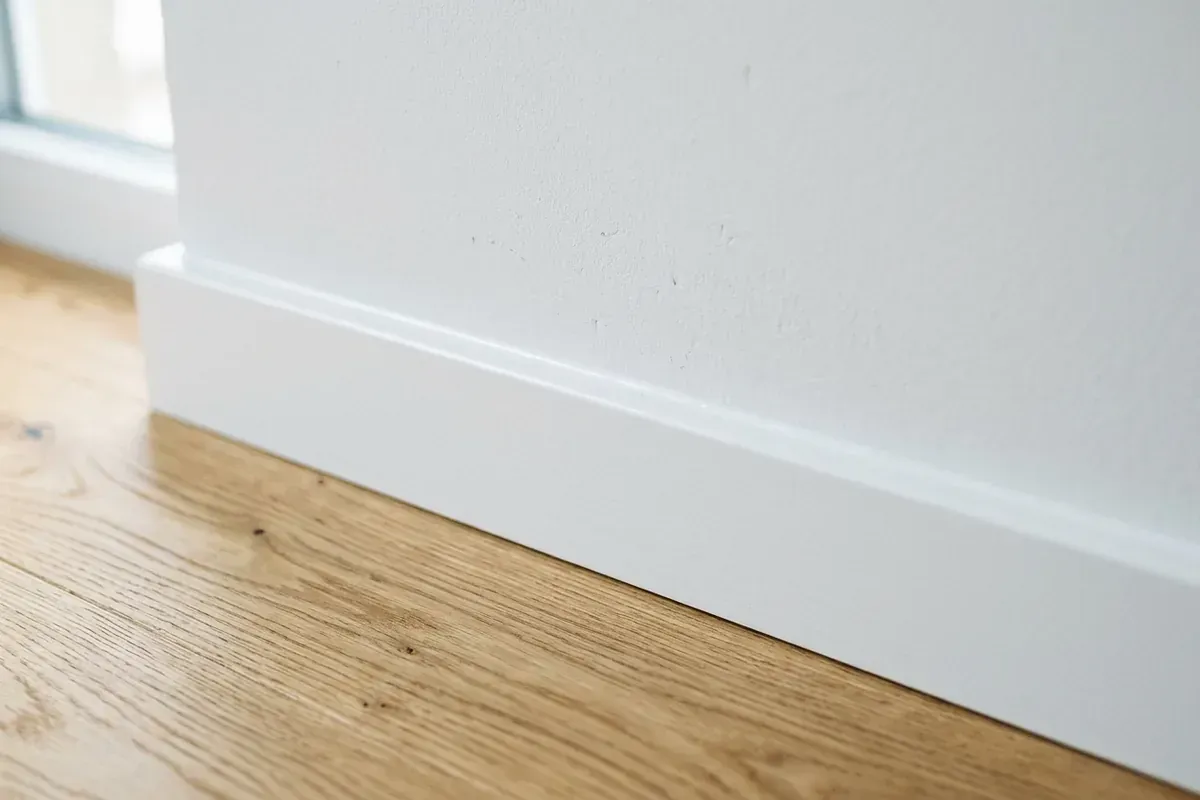
Caulking means sealing joints with a flexible sealant. With skirting boards and mouldings, it makes the transition to the wall crisp and seamless.
Acrylic caulk
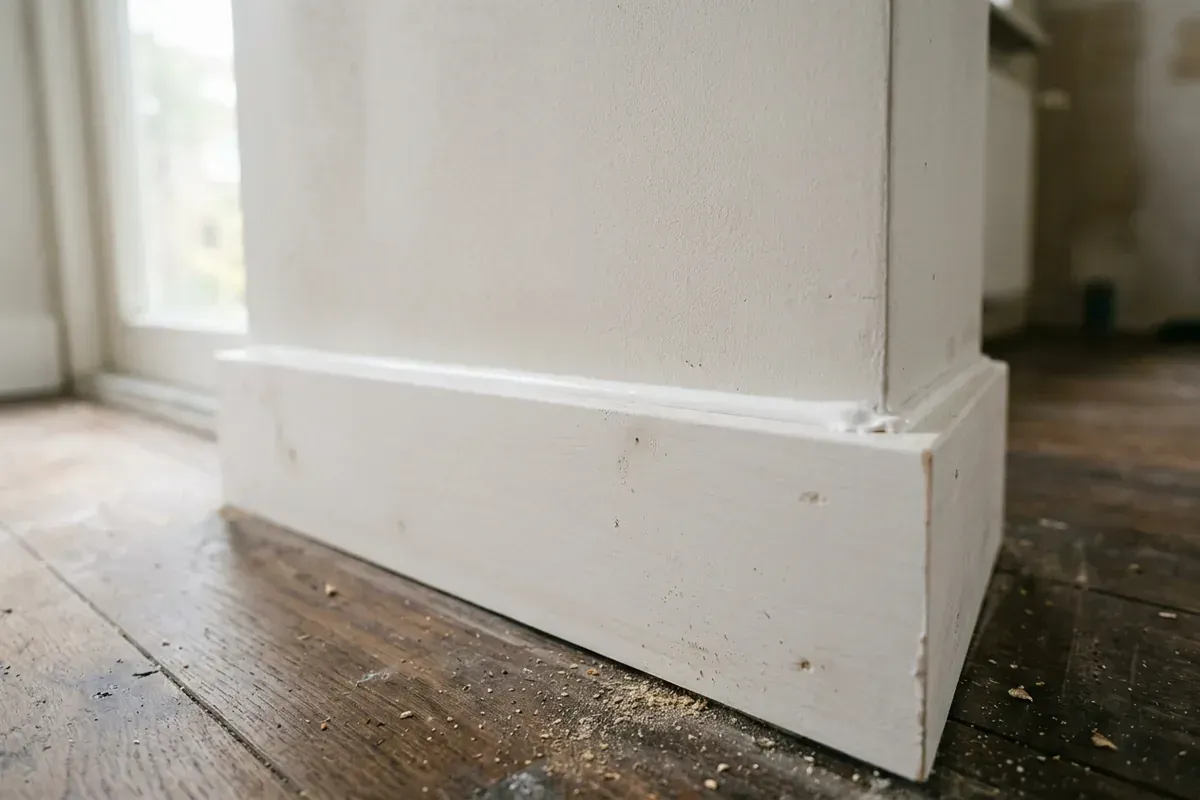
Acrylic caulk is a water-based sealant that can be painted once cured. It is the usual choice for skirting boards, mouldings and frames in dry rooms.
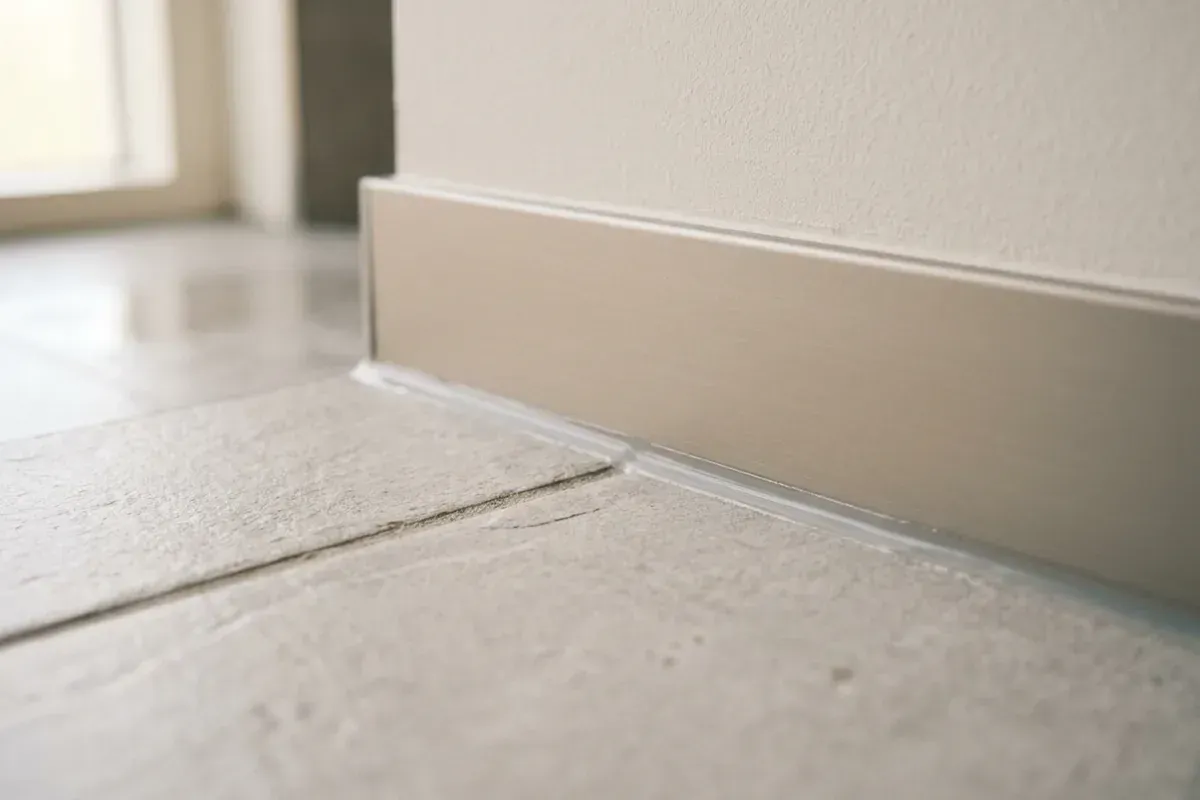
Silicone sealant
Silicone sealant is highly flexible and water-resistant, but cannot be painted. It belongs in wet rooms, not along painted skirting boards.
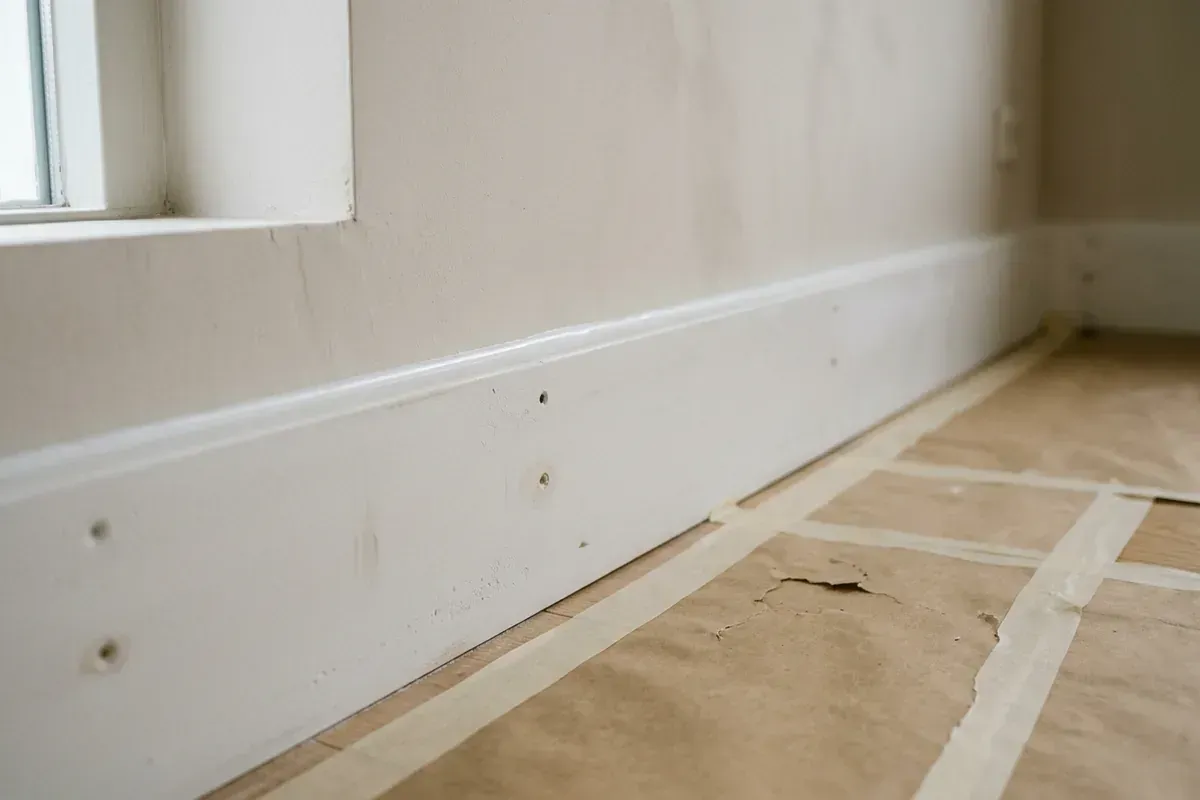
Paint-ready
Paint-ready means skirting boards and mouldings have been fitted, filled and caulked, so only the final coat of paint still needs to be applied.
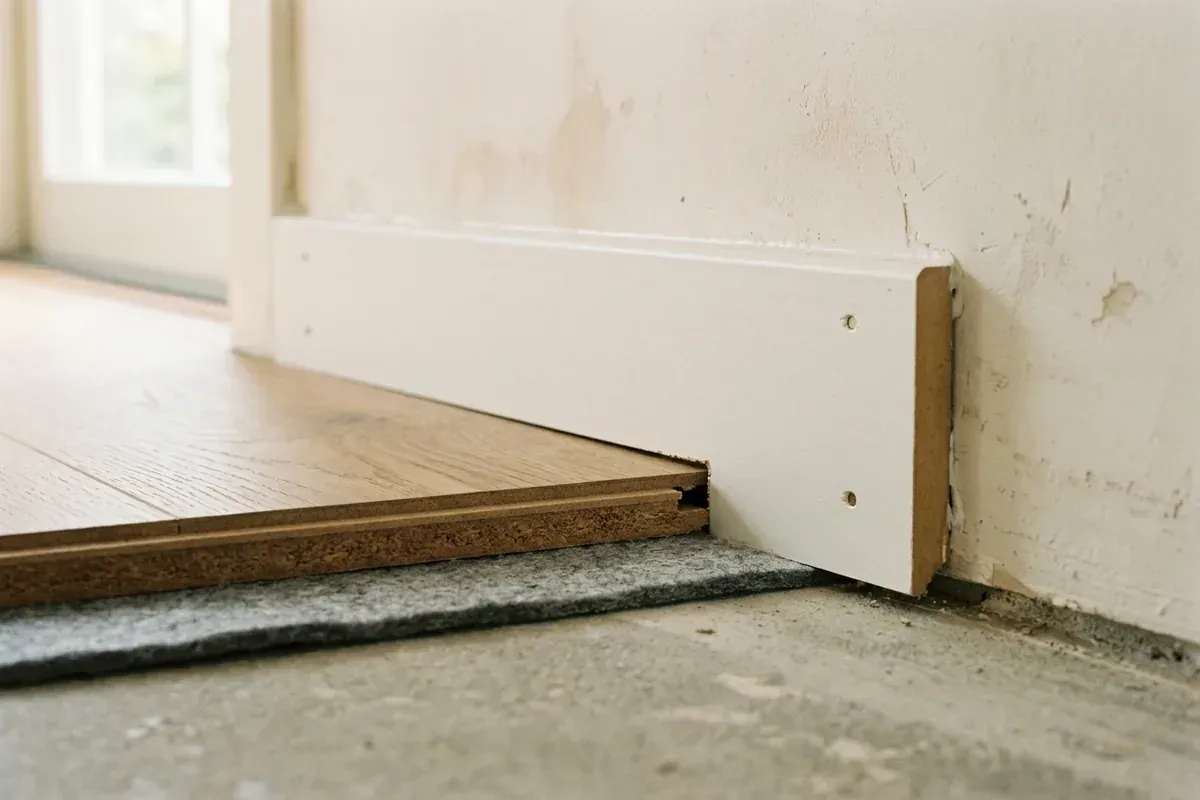
Expansion gap
An expansion gap is an open space along the edge of a floor, so it can expand and contract. The skirting board covers the gap without fixing it.
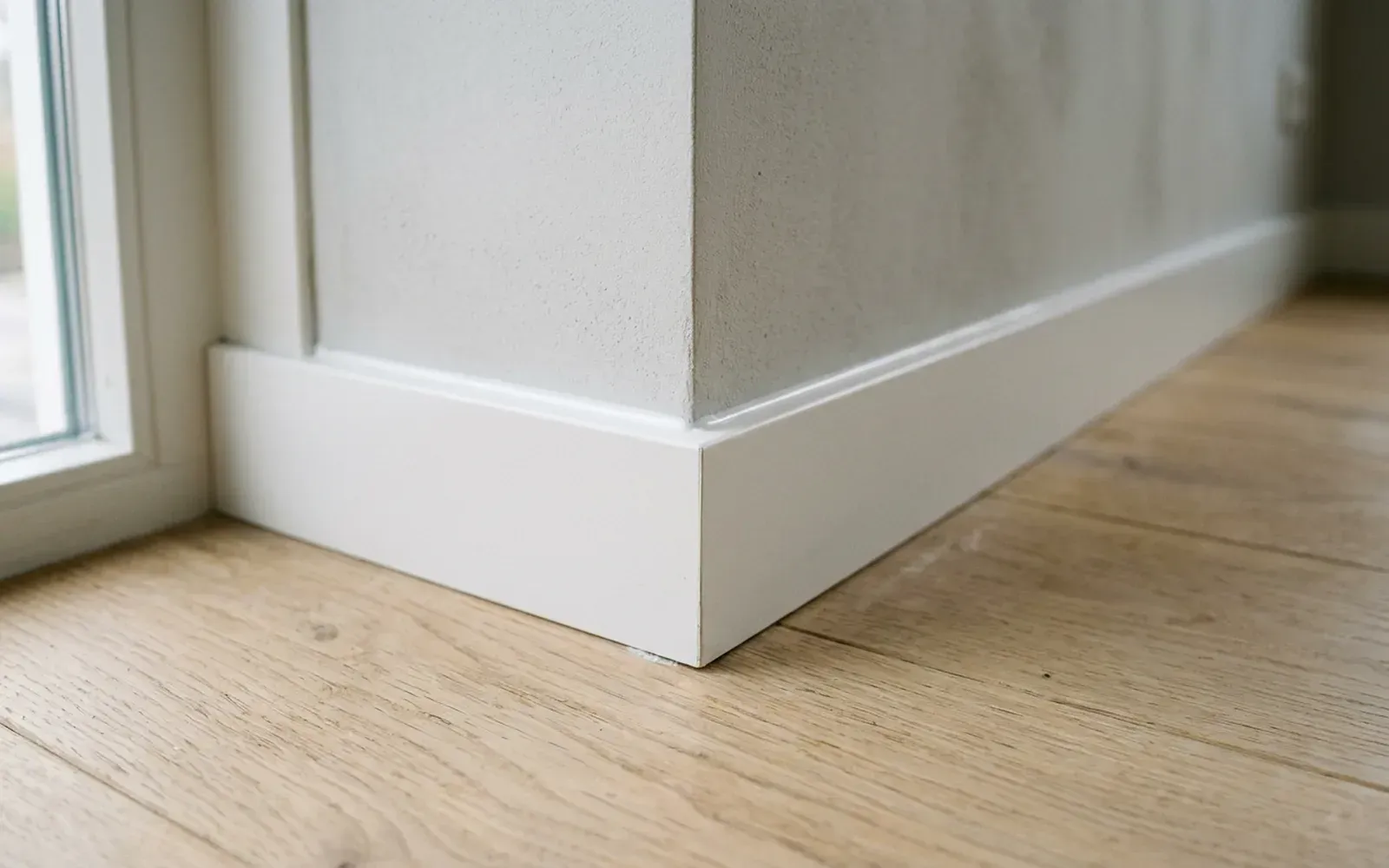
Installation & finishing
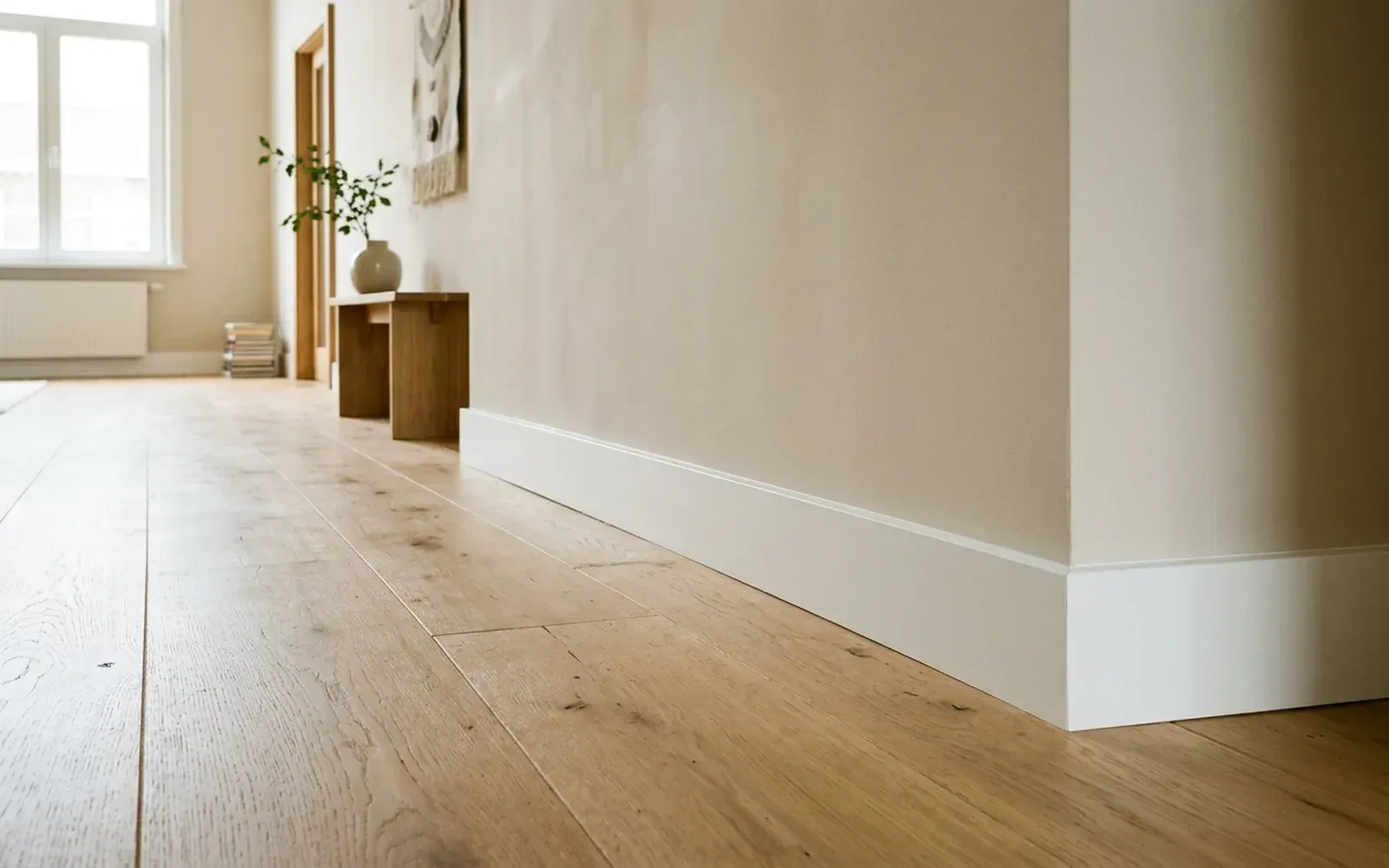
Caulking skirting boards: which sealant should you use and how do you get a neat finish?
For the joint between skirting board and wall you use paintable acrylic caulk, and silicone only where water is involved. Here is how to run a clean caulk line.
Installation & finishing
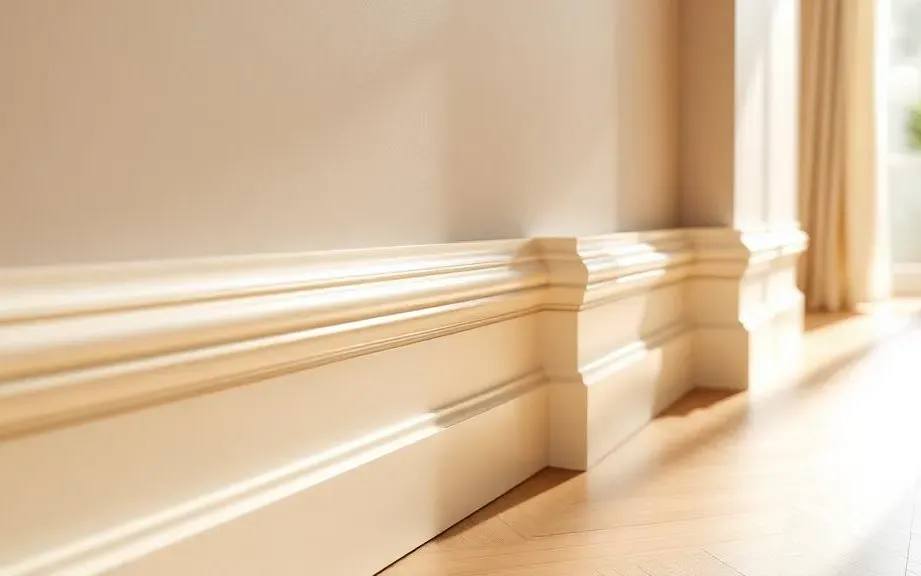
Painting skirting boards or choosing pre-finished: which is the smarter option?
Pre-finished skirting boards are ready straight away, while painting them yourself gives more freedom in colour. Here is how to choose and how to paint skirting boards neatly.
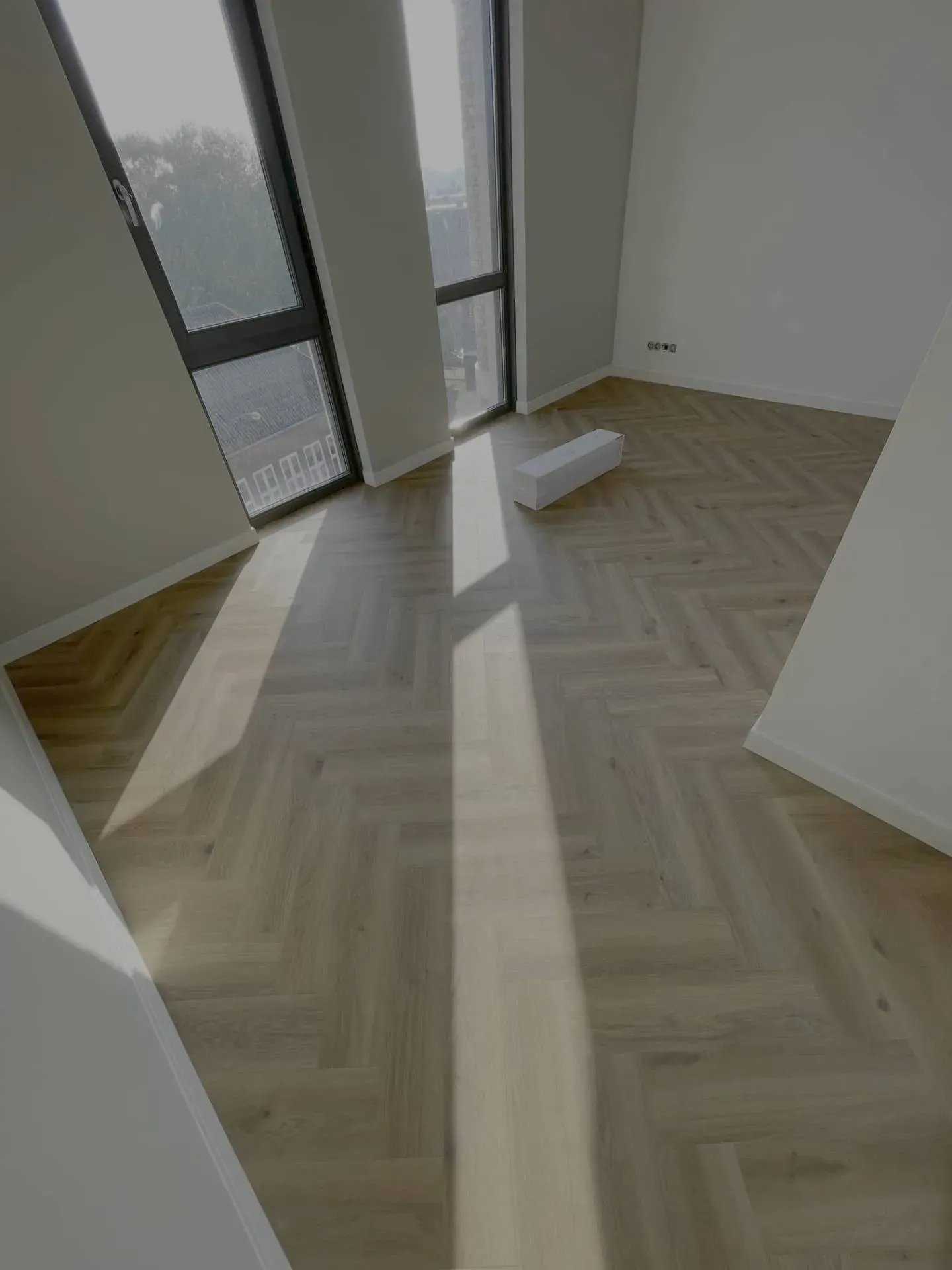
Skirting board installation by a specialist skirting fitter
TipTop Plinten fits skirting boards in MDF, solid wood and aluminium, finished in any RAL colour and neatly matched to any floor, even with uneven walls.
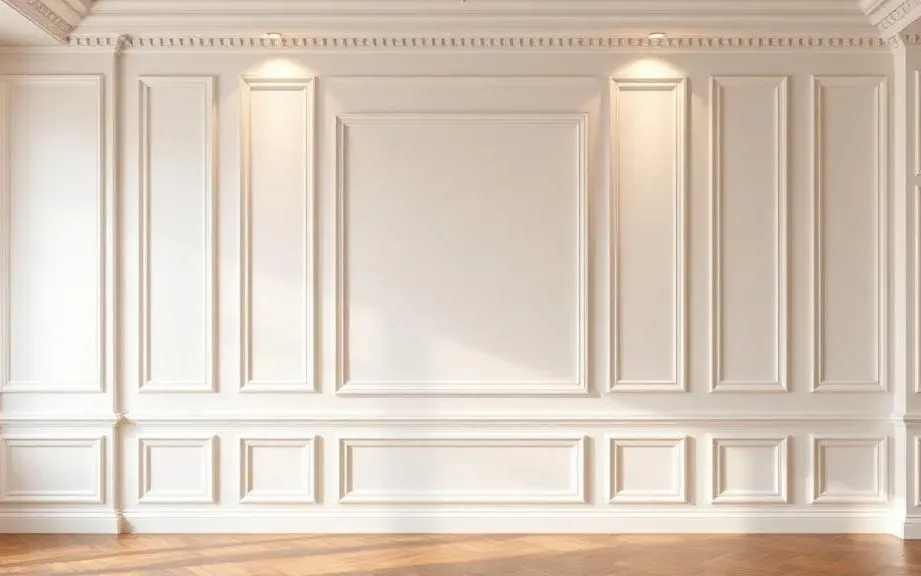
Wall panelling installation and wall mouldings fitted
TipTop Plinten fits wall panels, wall mouldings, slat panels and acoustic panels in homes, offices and hotels, with tight mitres and clean caulking.
Skirting board installation? Request a free quote
On-site measurement €75 incl. VAT (credited for orders above a minimum project size)