
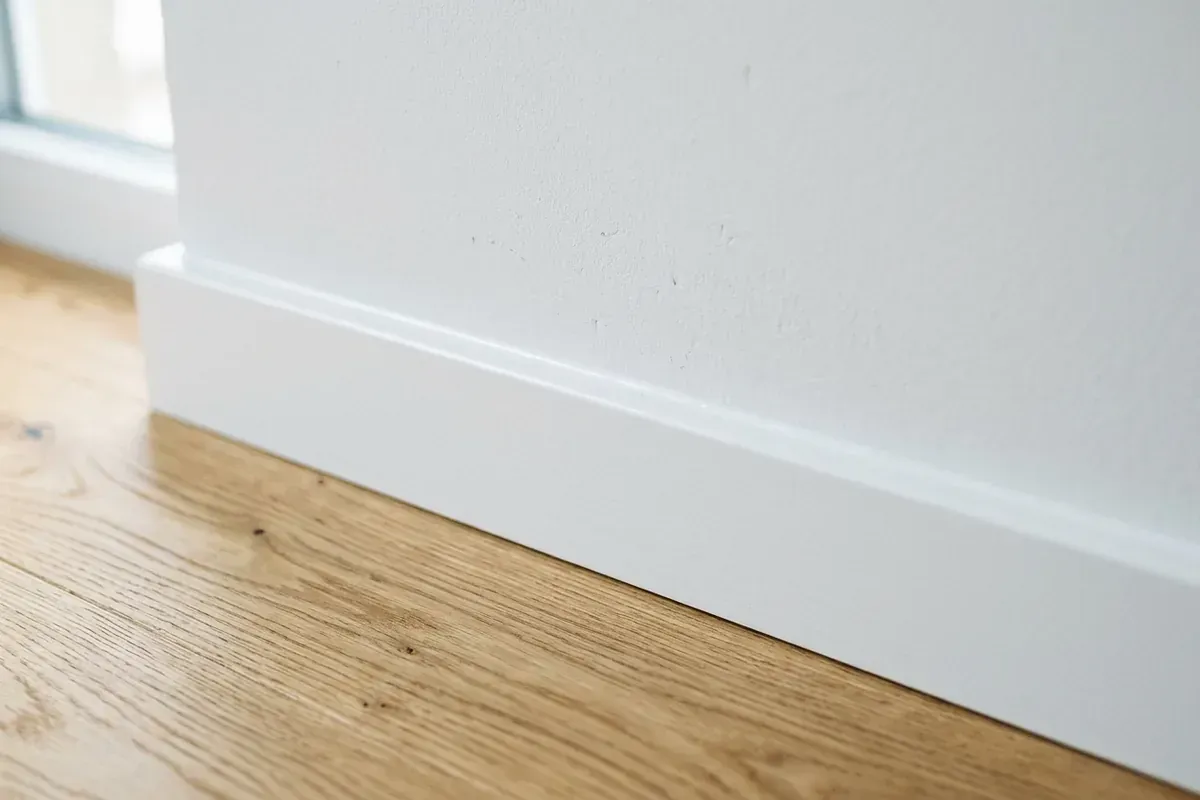
Caulking means sealing joints with a flexible sealant. With skirting boards, mouldings and wall panels it is mainly about the joint between the trim and the wall. Because walls are rarely completely flat, small gaps appear there. Caulk fills them, so the transition looks crisp and seamless and no dust or dirt gets trapped.
What is caulking?
Caulk is a paste that cures after application into a flexible mass. For interior finishing work, two types are mainly used:
| Type of sealant | Paintable | Use |
|---|---|---|
| Acrylic caulk | Yes | Dry rooms: skirting boards, mouldings, frames, wall panels |
| Silicone sealant | No | Wet rooms: sanitaryware, kitchen, tiling |
There are also hybrid or MS polymer sealants, which are flexible and often paintable as well.
Where is it used?
- Along the top edge of skirting boards, against the wall.
- Around architraves, door trims and frames.
- Along coving and decorative mouldings.
- Around and between wall panels.
- In mitres and joints, as the final finish after filling.
What should you look out for?
- The right sealant: paintable acrylic caulk in dry rooms, silicone sealant in wet rooms.
- Surface: clean, dry and dust-free, otherwise the caulk will not adhere properly.
- Joint width: caulk is intended for narrow joints. Fill or cover wider gaps first.
- Finish: an even, thin bead without smears on the wall or skirting. Remove excess caulk straight away.
- Drying time: only paint acrylic caulk once it has cured sufficiently; the packaging gives the guideline.
- Floating floor: do not seal the joint between skirting and floating floor rigidly; see expansion gap.
You can read more in caulking skirting boards: which sealant should you use?.
At TipTop Plinten
Caulking is a standard part of the finishing at TipTop Plinten, either paint-ready or directly in colour. In the herringbone project in Oss and the new-build home in Boxtel, the caulking was included. Read more about caulking and finishing.
Frequently asked questions
Walls are rarely completely flat. That creates small gaps between skirting and wall, where dust and dirt collect and which show up as a shadow line. Caulk fills that joint, so skirting and wall form a single whole.
With a floating floor that joint is usually not sealed rigidly, because the floor needs to be able to move. With a bonded floor or tiles it can be, using a suitable flexible sealant. This is assessed case by case.
Related
Acrylic caulk
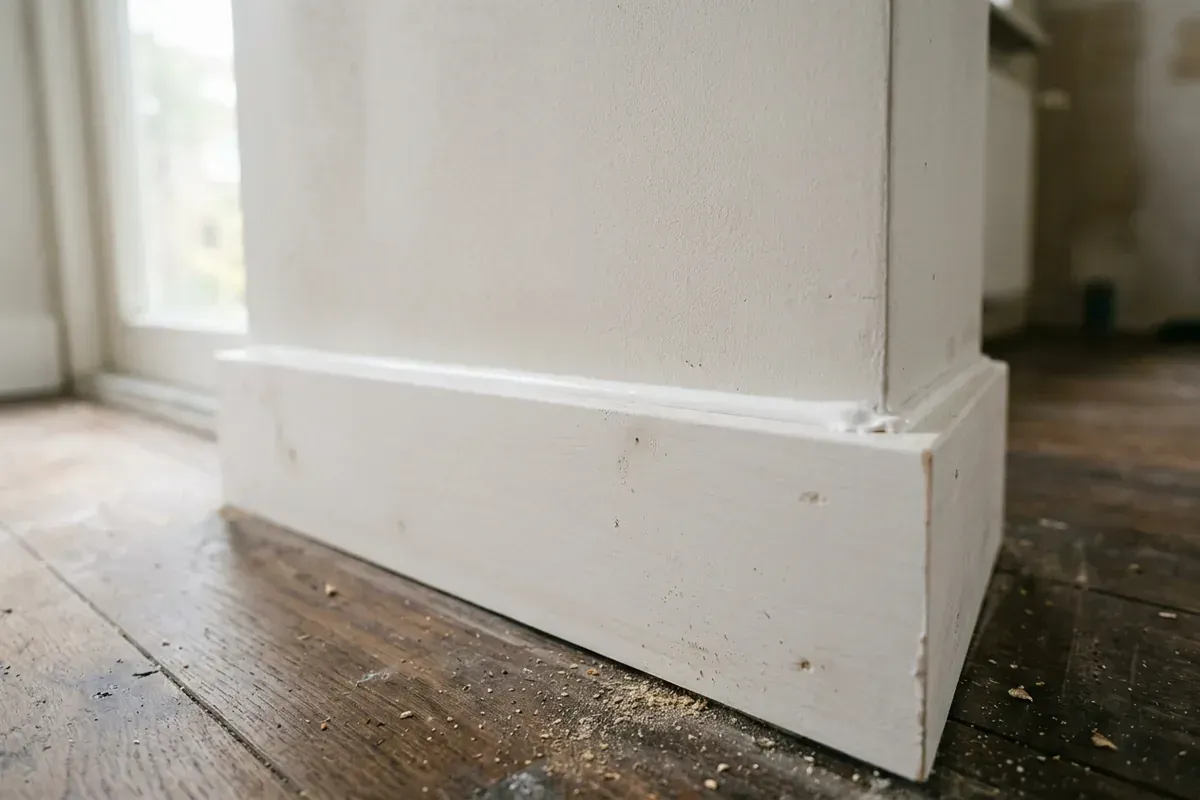
Acrylic caulk is a water-based sealant that can be painted once cured. It is the usual choice for skirting boards, mouldings and frames in dry rooms.
Silicone sealant
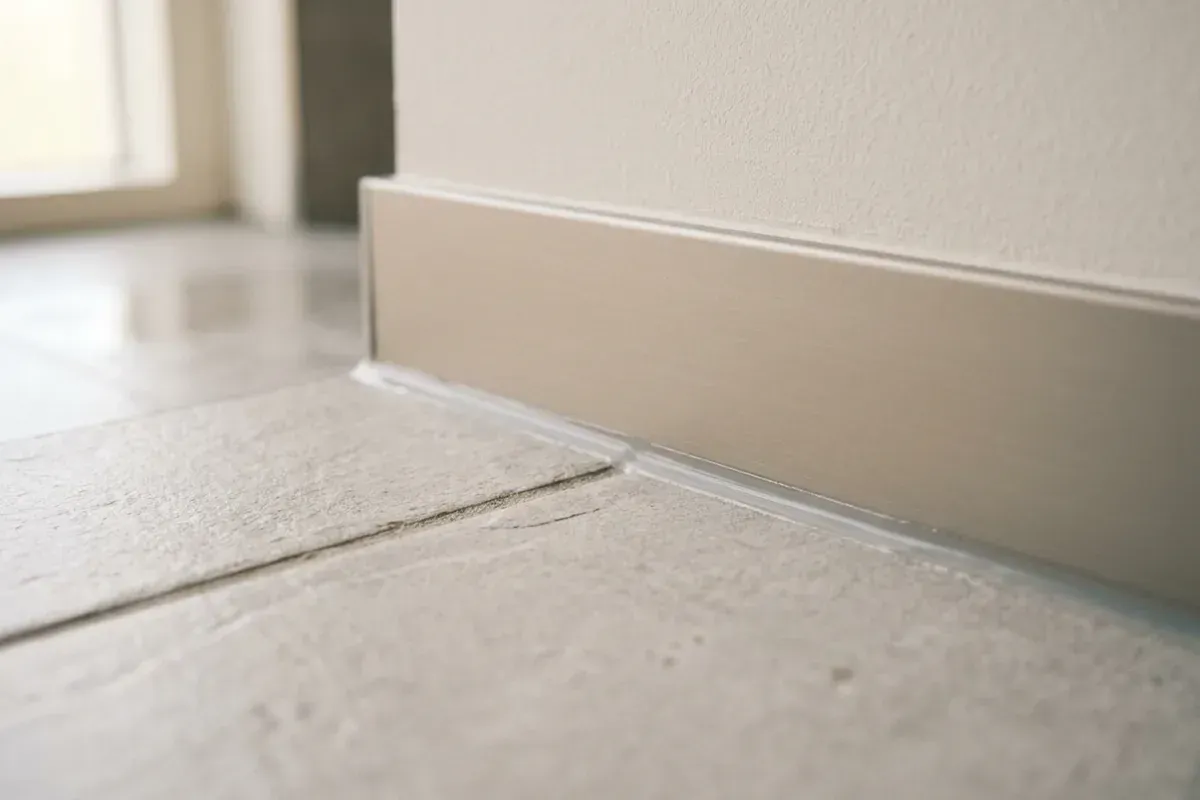
Silicone sealant is highly flexible and water-resistant, but cannot be painted. It belongs in wet rooms, not along painted skirting boards.
Paint-ready
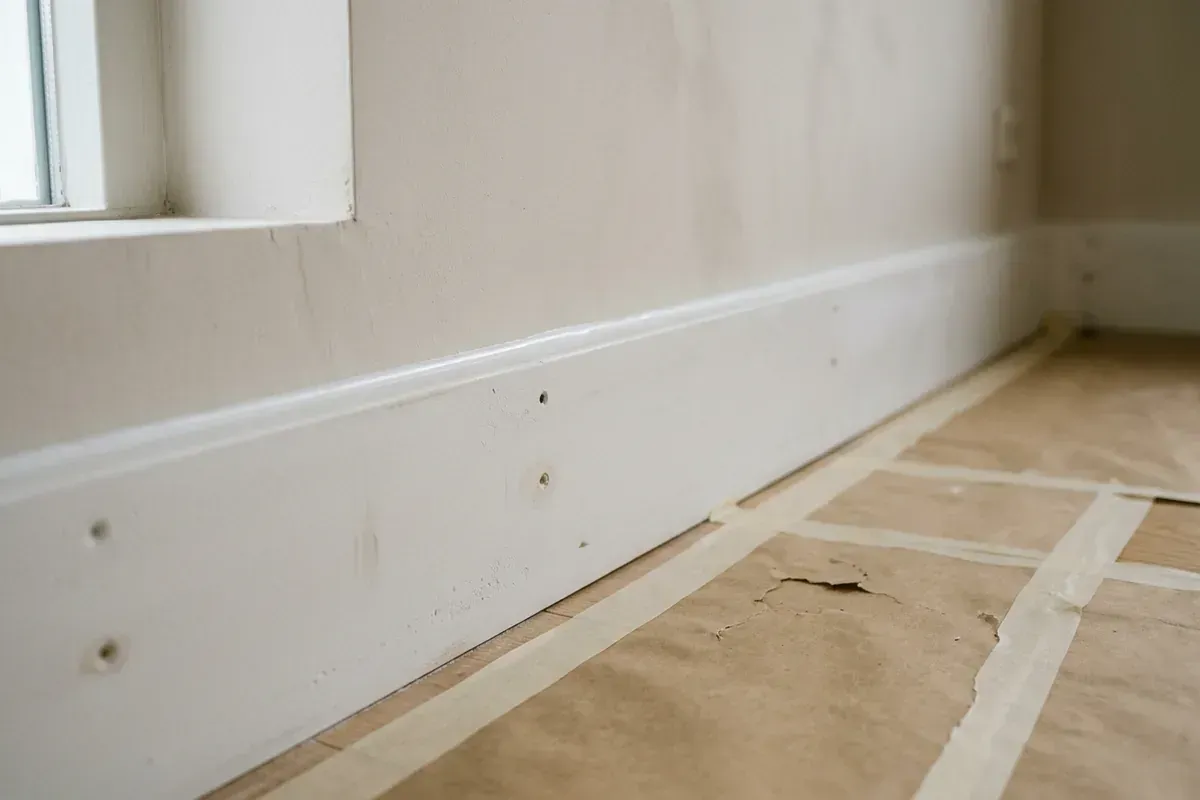
Paint-ready means skirting boards and mouldings have been fitted, filled and caulked, so only the final coat of paint still needs to be applied.
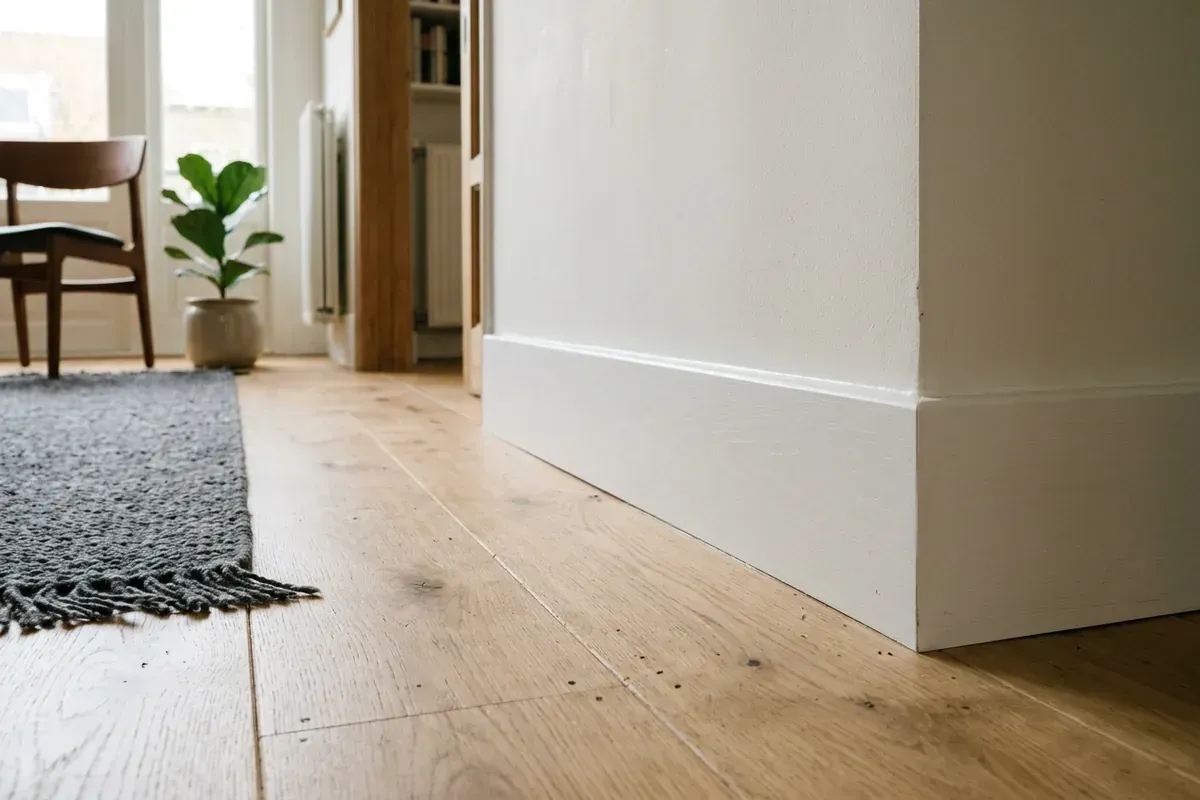
Skirting board
A skirting board is the moulding at the base of the wall that finishes the transition to the floor and protects the wall. Here is how it works and what to look out for.
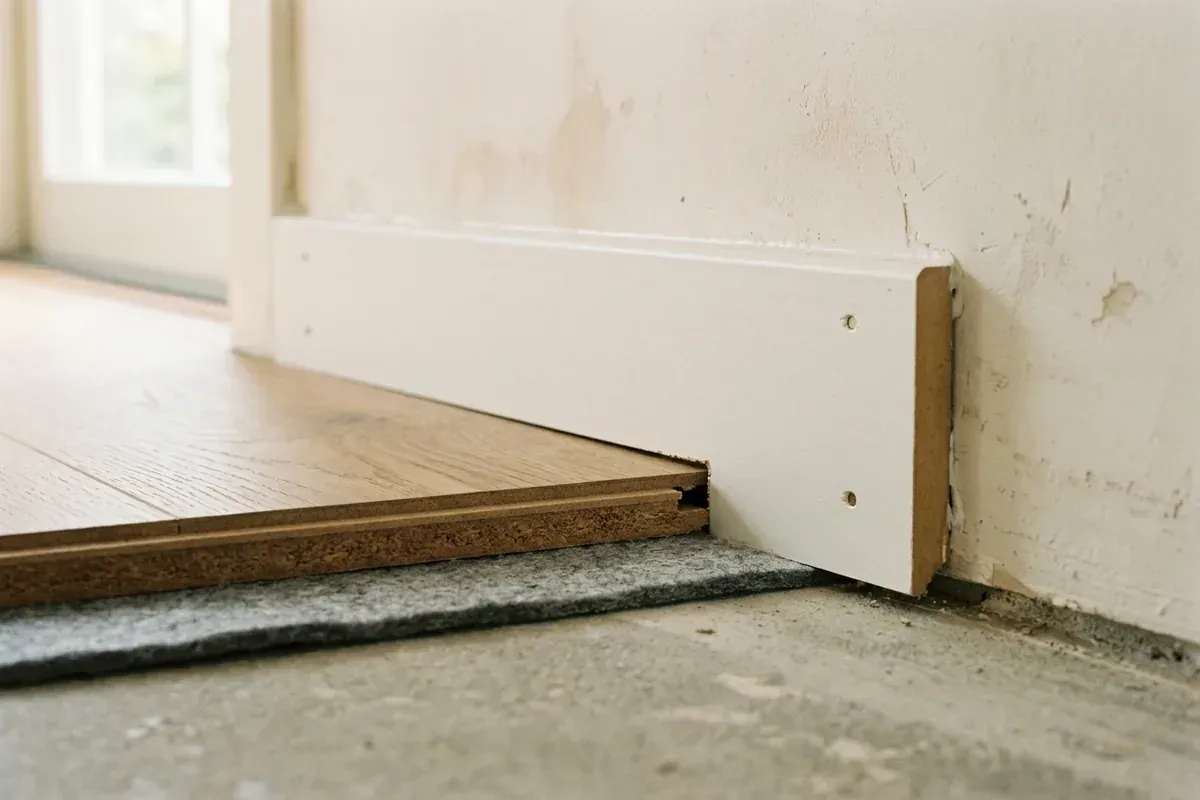
Expansion gap
An expansion gap is an open space along the edge of a floor, so it can expand and contract. The skirting board covers the gap without fixing it.
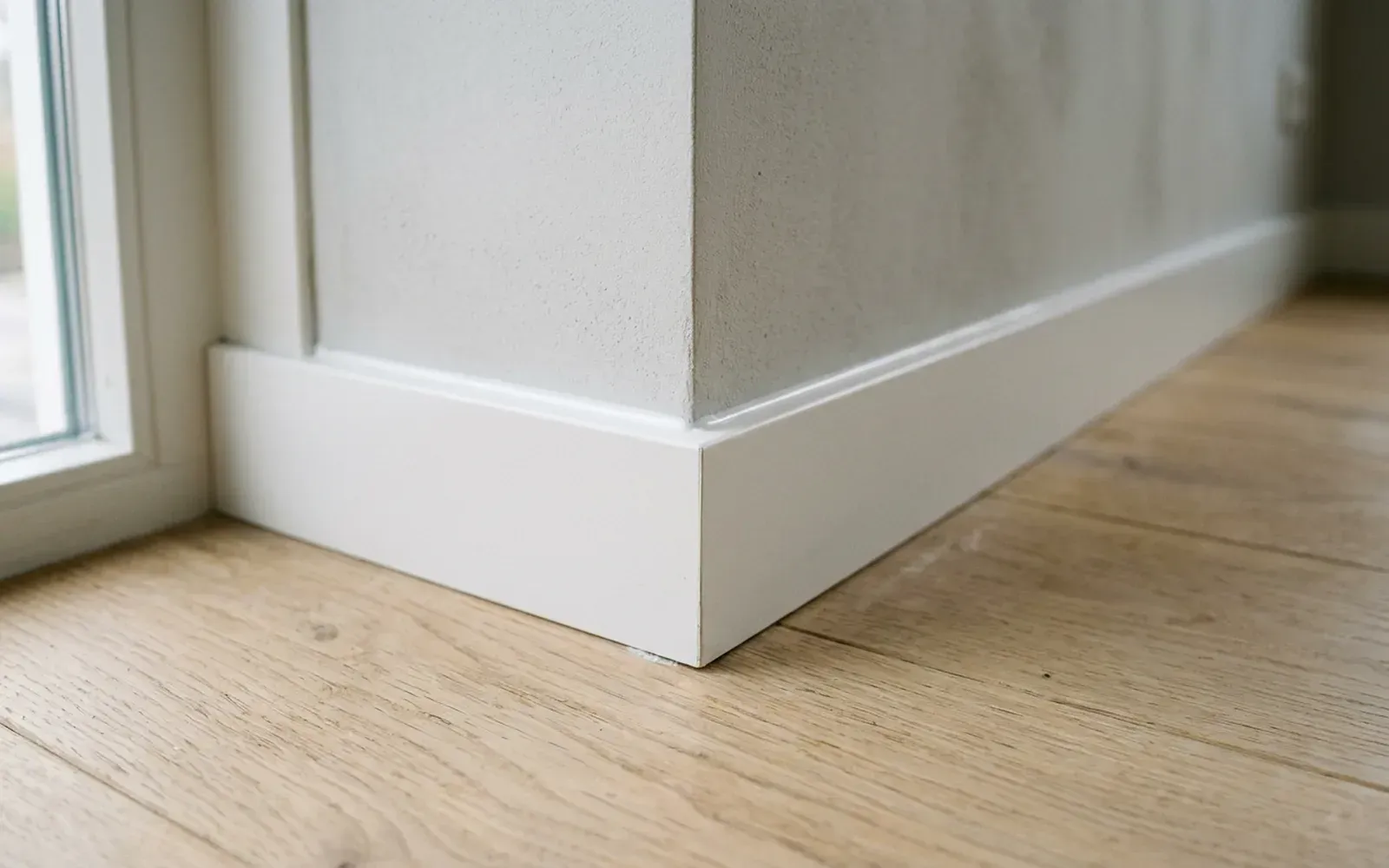
Installation & finishing
Caulking skirting boards: which sealant should you use and how do you get a neat finish?
For the joint between skirting board and wall you use paintable acrylic caulk, and silicone only where water is involved. Here is how to run a clean caulk line.
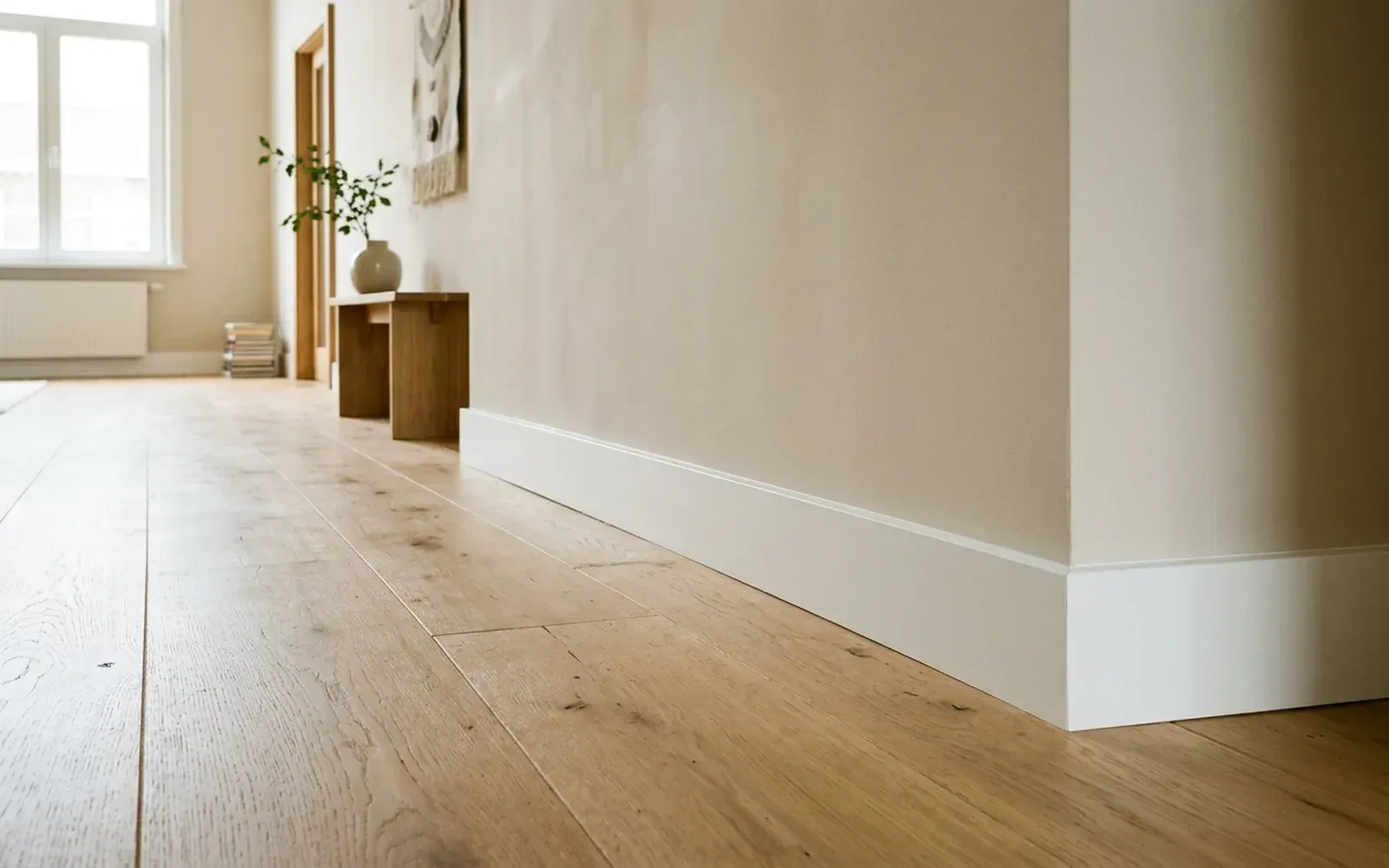
Installation & finishing
Painting skirting boards or choosing pre-finished: which is the smarter option?
Pre-finished skirting boards are ready straight away, while painting them yourself gives more freedom in colour. Here is how to choose and how to paint skirting boards neatly.
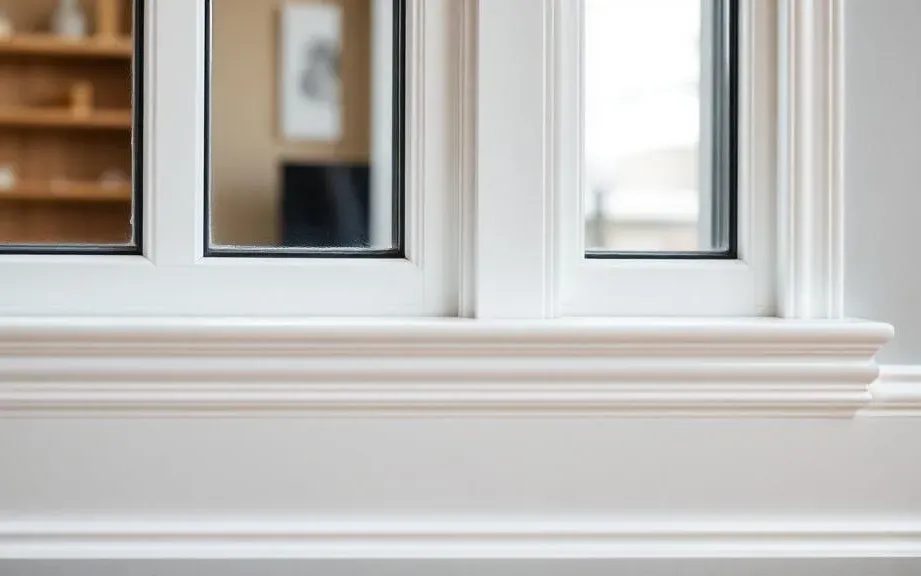
Caulking skirting boards and sealant work for a seamless finish
Caulking is the final step that makes skirting boards, mouldings and panels look seamless. TipTop Plinten uses acrylic or silicone, paint-ready or in colour.
Skirting board installation? Request a free quote
On-site measurement €75 incl. VAT (credited for orders above a minimum project size)