
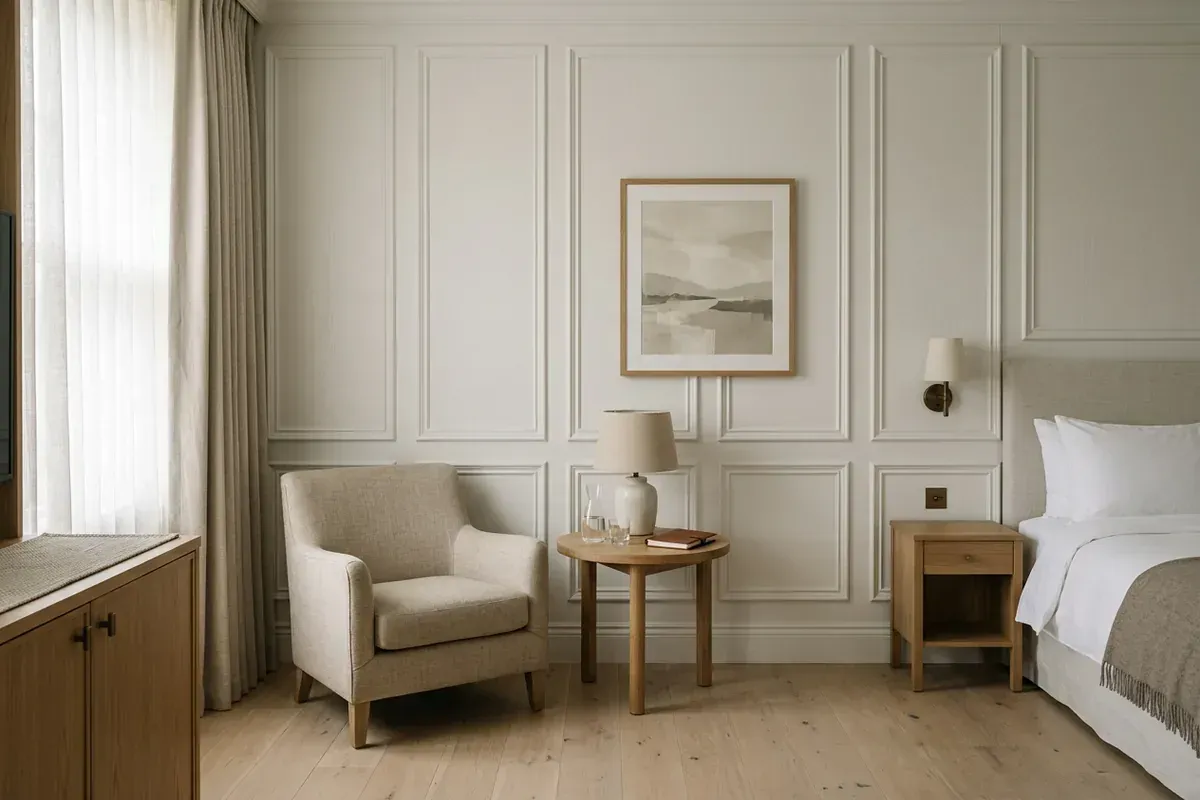
A wall panel is a board or panel fixed to a wall for its appearance, for protection or for sound absorption. Wall panels change the surface of the wall: a flat wall gains relief, texture or rhythm. They are used in homes and in commercial spaces such as hotels and offices.
What is a wall panel?
Wall panels come in several types:
| Type | Feature |
|---|---|
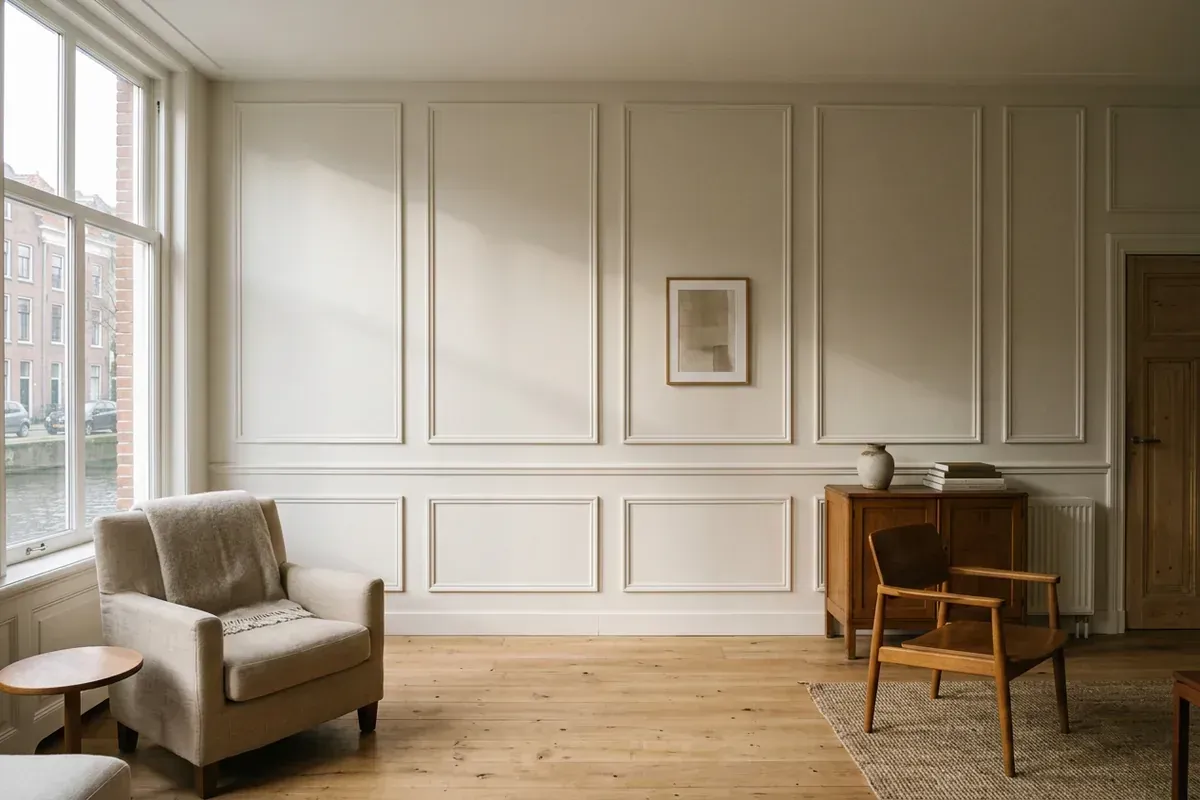
| Panelled look (framed panel) | Flat panel with applied mouldings or routed frames, classic look |
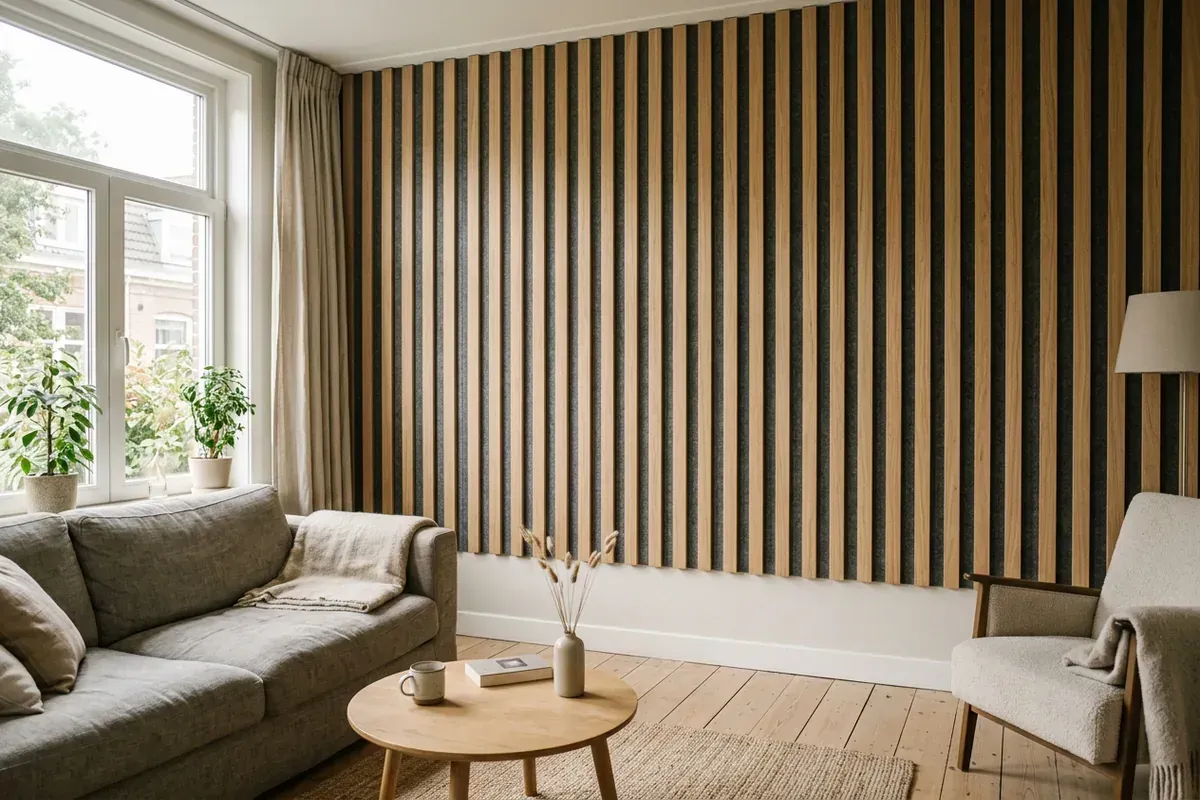
| Slat panel | Vertical slats side by side, modern and warm |
| Acoustic panel | Slats or panels with a sound-absorbing backing |
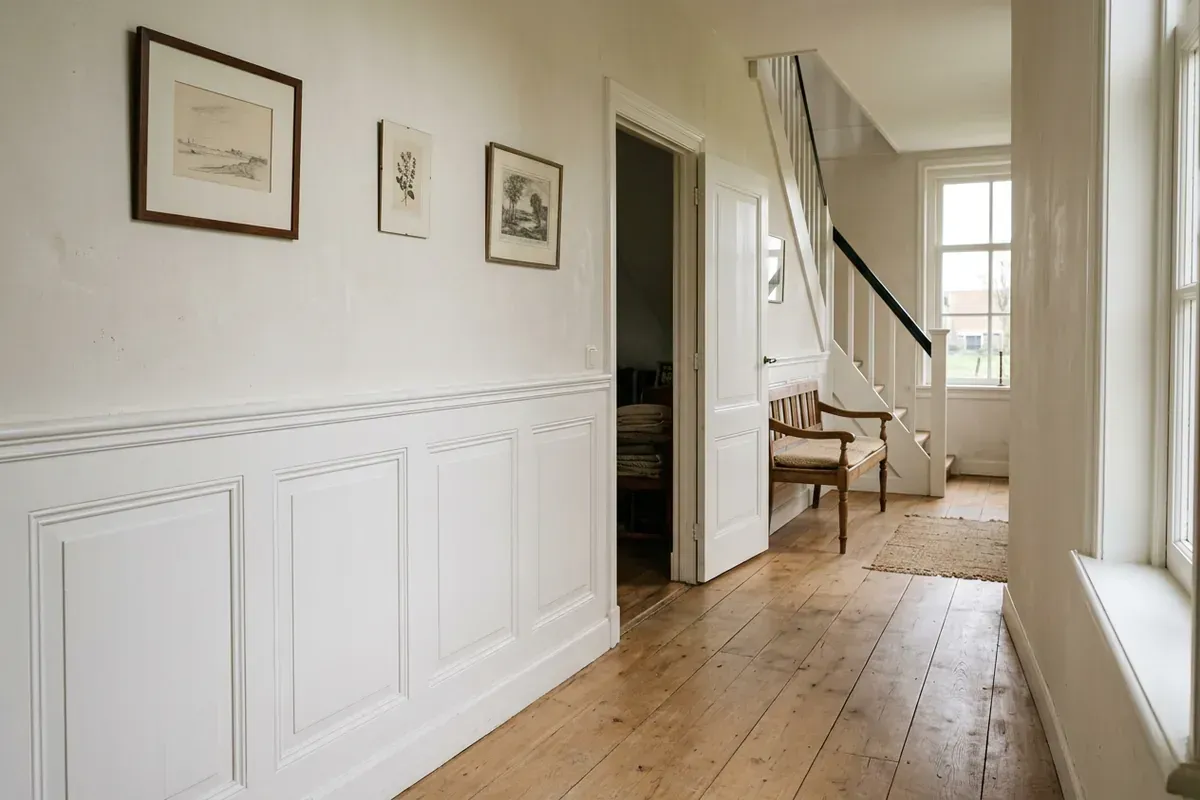
| Wainscoting | Panelling on the lower part of the wall |
Materials include MDF, timber, veneer and felt (for acoustic panels).
Where is it used?
- As a feature wall in the living room or behind the bed in the bedroom.
- In halls and corridors, where the wall takes more wear.
- In hotels, restaurants and offices, for a refined and durable wall finish.
- In rooms with a lot of echo, in the form of acoustic panels.
What should you look out for?
- Substrate: a flat, dry and sound wall. On uneven walls, battens may be needed.
- Layout: start from the centre of the wall or a fixed point, so the ends come out symmetrically.
- Junctions: consider skirting boards, ceiling, frames, sockets and switches.
- Fixing: depending on type and weight, with construction adhesive, mechanically or on battens.
- Finishing: joints and edges are caulked; painted panels are finished in a colour, for example RAL 9010.
You can read more in wall mouldings and wainscoting.
At TipTop Plinten
TipTop Plinten installs wall panels, slat panels and acoustic panels. In the hotel in Maastricht, all wall panels were installed and finished in RAL 9010. Read more about wall panels and wall mouldings.
Frequently asked questions
Wall mouldings are individual mouldings fixed to an existing wall to form frames. Wall panels cover a larger part of the wall with boards or profiles. Both add relief, but wall panels change the surface of the wall itself.
Often, yes, if necessary with battens or a timber backing to which the panels are fixed. That takes up the unevenness, so the panel ends up flat and straight. What is needed is checked during the site survey.
Related
Acoustic panel
An acoustic panel absorbs sound and so reduces echo in a room. Slats on felt are the best-known type for the home.
Wall moulding
A wall moulding is a narrow moulding on the wall surface. Several mouldings together create frames or panels that give a flat wall depth and rhythm.
Wainscoting
Wainscoting is a covering on the lower part of the wall, traditionally in timber. It protects the wall and gives a room a classic character.
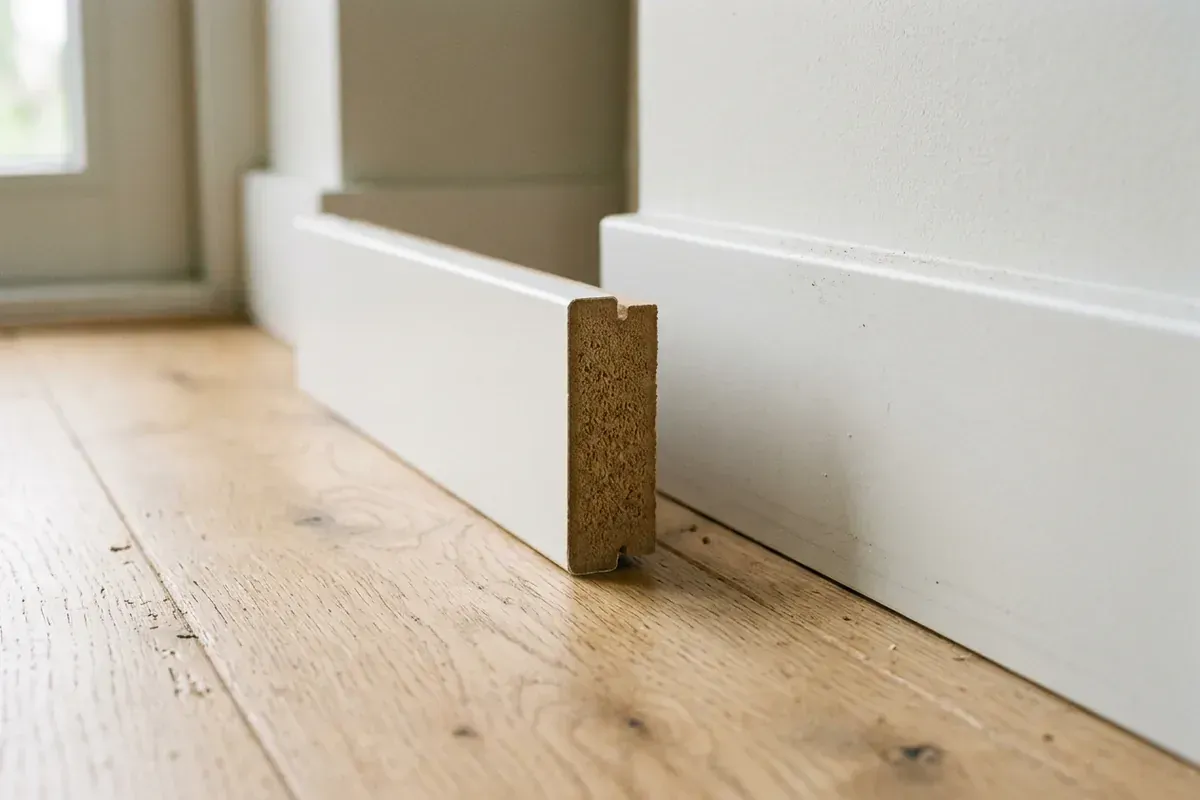
MDF
MDF is a sheet material made of pressed wood fibres. It is stable, smooth and easy to paint, which makes it the most popular material for skirting boards.
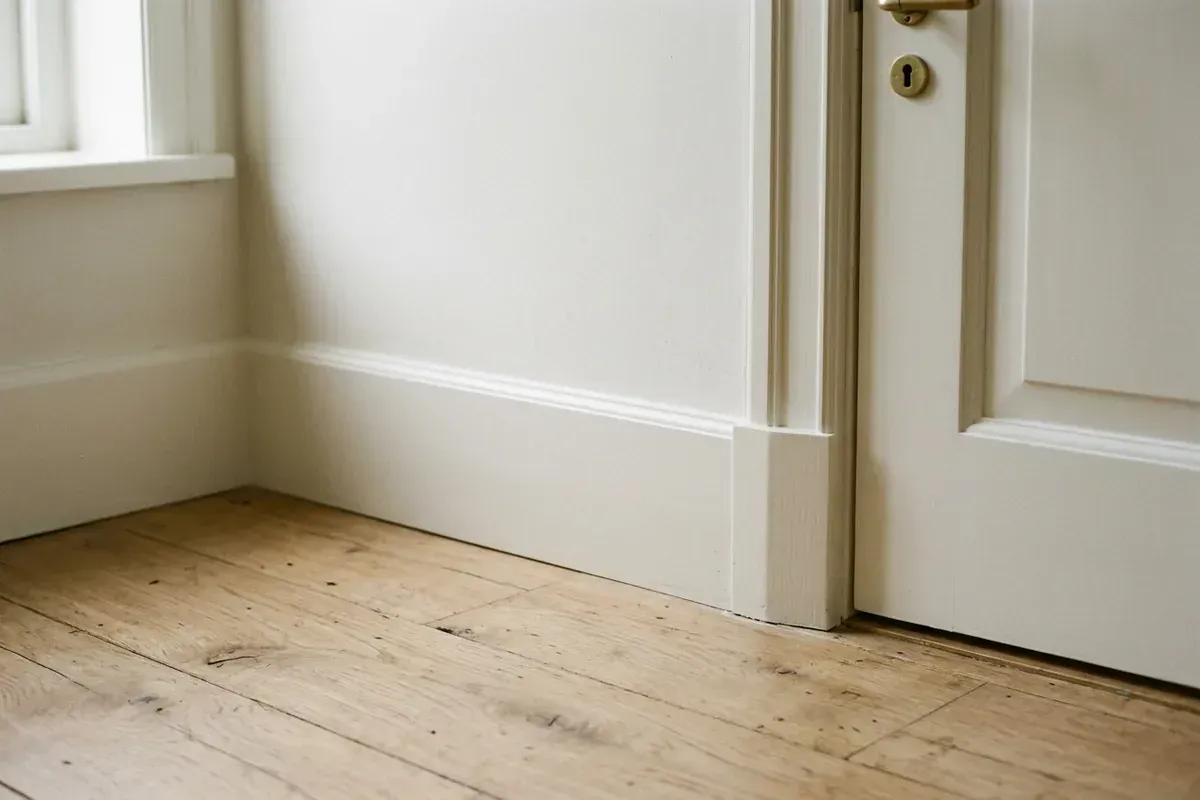
RAL 9010
RAL 9010 is called pure white and is a slightly warm, soft white. It is one of the most popular colours for skirting boards, doors and mouldings.
Mouldings & walls
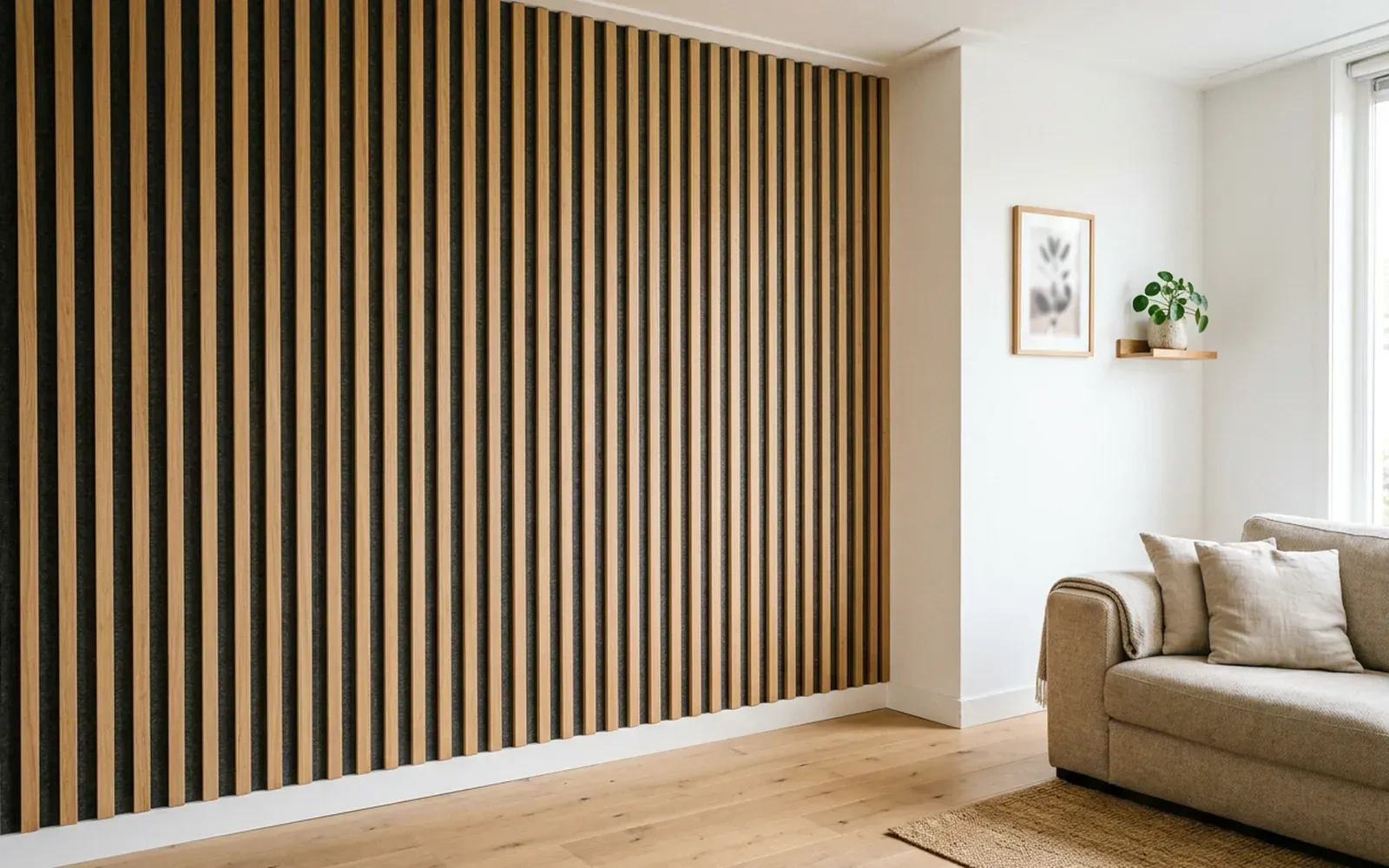
Acoustic wall panels: what do they do and when should you choose them?
Acoustic wall panels dampen echo in a room while giving the wall a warm, modern look. We explain how they work, what you can expect from them and what to look out for.
Mouldings & walls
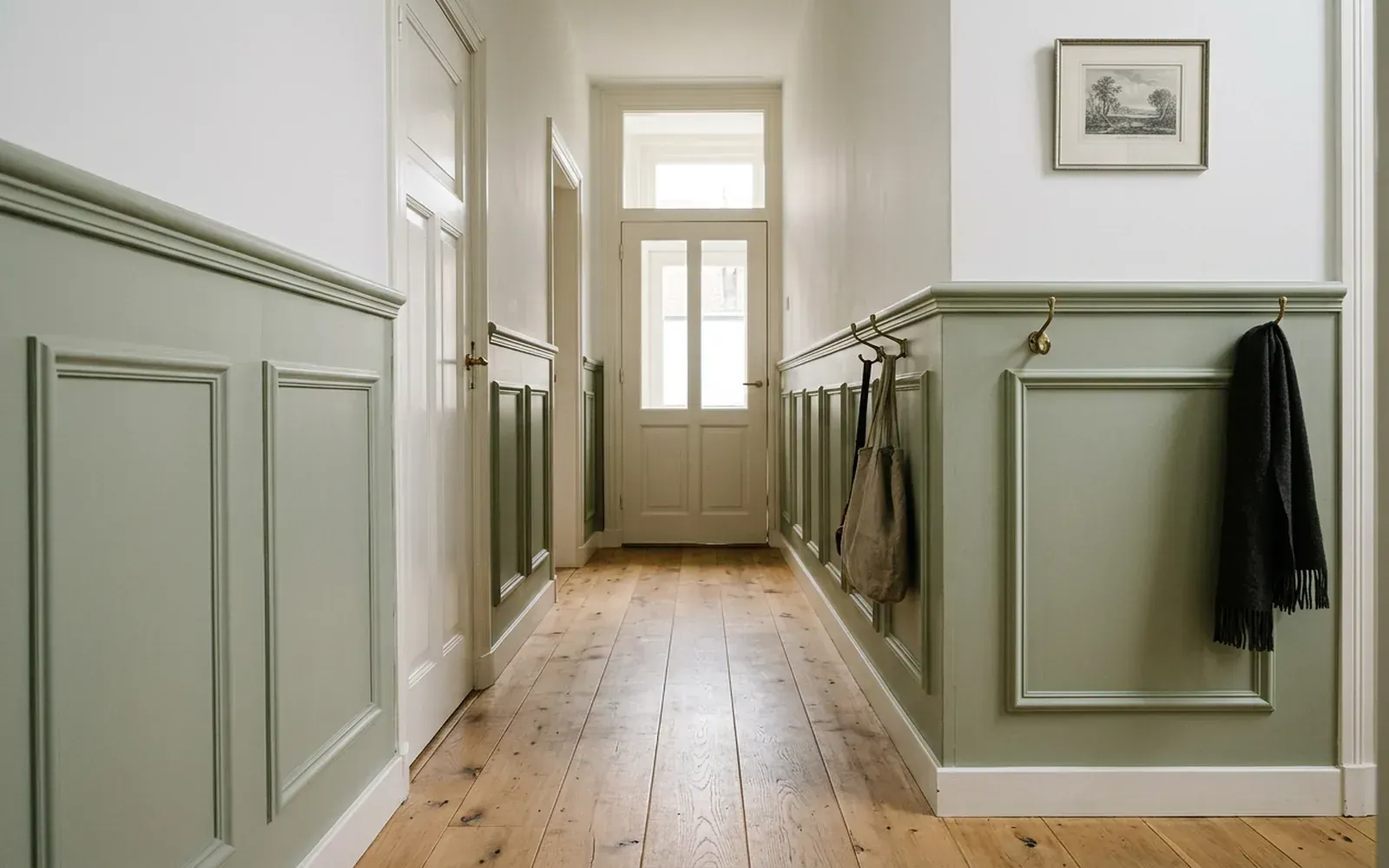
Wall mouldings and wainscoting: differences, styles and uses
Wainscoting and wall mouldings give a wall structure and a classic or modern look. We explain the difference, which styles there are and what to look out for.
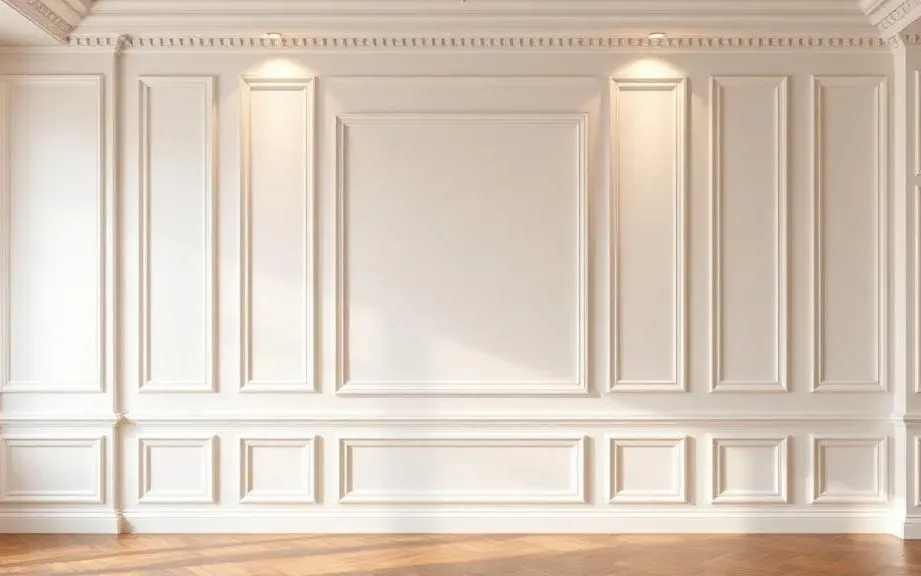
Wall panelling installation and wall mouldings fitted
TipTop Plinten fits wall panels, wall mouldings, slat panels and acoustic panels in homes, offices and hotels, with tight mitres and clean caulking.
Skirting board installation? Request a free quote
On-site measurement €75 incl. VAT (credited for orders above a minimum project size)