
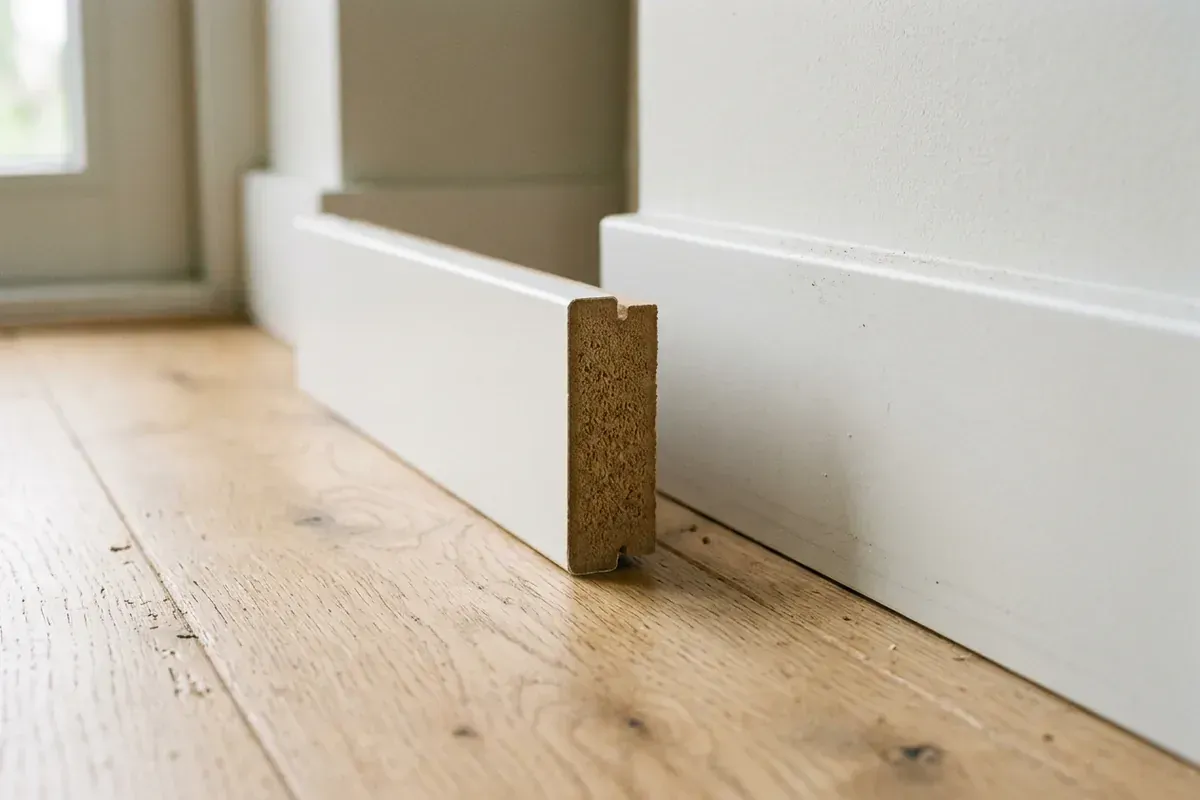
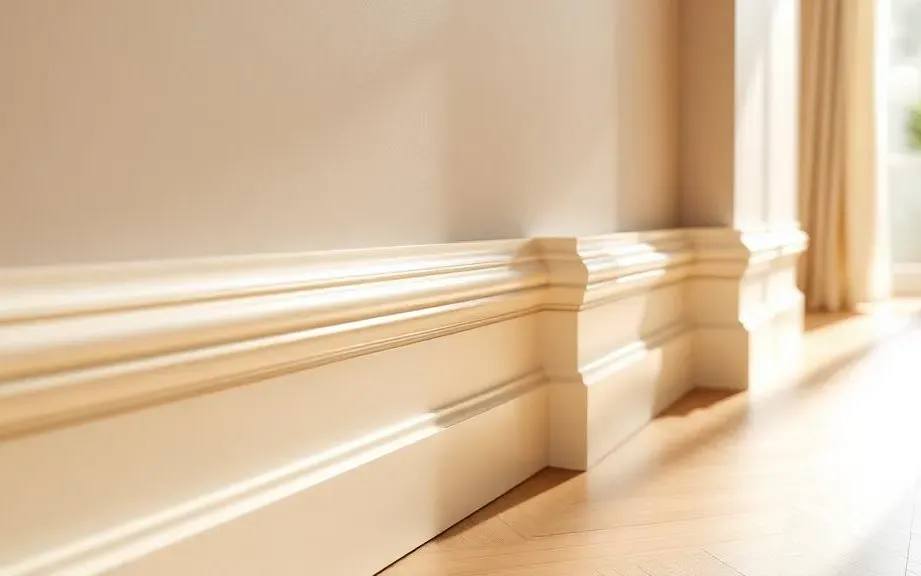
MDF stands for Medium Density Fibreboard: a sheet material made of fine wood fibres pressed with resin under high pressure and temperature into a uniform board. Because MDF has no grain or knots and barely moves, it is the most widely used material for skirting boards, architraves and mouldings. It is smooth, stable and can be painted to a crisp finish in any colour.
What is MDF?
Unlike solid wood, MDF has a homogeneous structure. This means it can be routed accurately into all kinds of profiles, from sleek and modern to classic. MDF skirting boards are usually supplied in three forms:
- Untreated: raw MDF that still needs priming and painting.
- Primed: supplied with a primer coat, ready for the top coat.
- Pre-finished or foil-wrapped: factory-finished, often in white.
Where is it used?
MDF is used for skirting boards, architraves, door trims, wall mouldings and wall panels. In living rooms, bedrooms, hallways and offices, it is the standard choice. For rooms with more moisture, such as a utility room or an entrance hall, moisture-resistant MDF is a better option.
What should you look out for?
- Moisture: unprotected cut edges and the bottom edge are the most vulnerable. Proper painting and caulking help.
- Density and thickness: a thicker skirting board sits more firmly against an uneven wall and casts more shadow at the top edge.
- Finish: a pre-finished skirting board saves painting; a primed board gives freedom of colour.
- Machining: cutting releases fine dust. Extraction and dust protection are advisable for indoor work.
You can read how it compares with timber in wooden skirting or MDF.
At TipTop Plinten
MDF is one of the three materials TipTop Plinten works with, alongside solid wood and aluminium. Moisture-resistant MDF is used where needed. MDF skirting boards can be finished in any RAL colour, as in the project with MDF skirting on a herringbone floor in Oss. Read more about installation under skirting board installation.
Frequently asked questions
Yes. MDF is stable and barely moves, so joints and mitres stay tight. It is less impact-resistant than hardwood, though: a hard knock can leave a dent. For normal domestic use, MDF is perfectly suitable.
Standard MDF absorbs moisture and can then swell, especially at the bottom and the cut edges. For rooms with more moisture there is moisture-resistant MDF, which swells less readily. It remains important that the skirting is properly painted and caulked.
Yes, provided the skirting is primed or first treated with a suitable primer. Raw, untreated MDF soaks up paint and can turn fluffy. Pre-finished skirting boards only need touching up at joints and nail holes.
Related
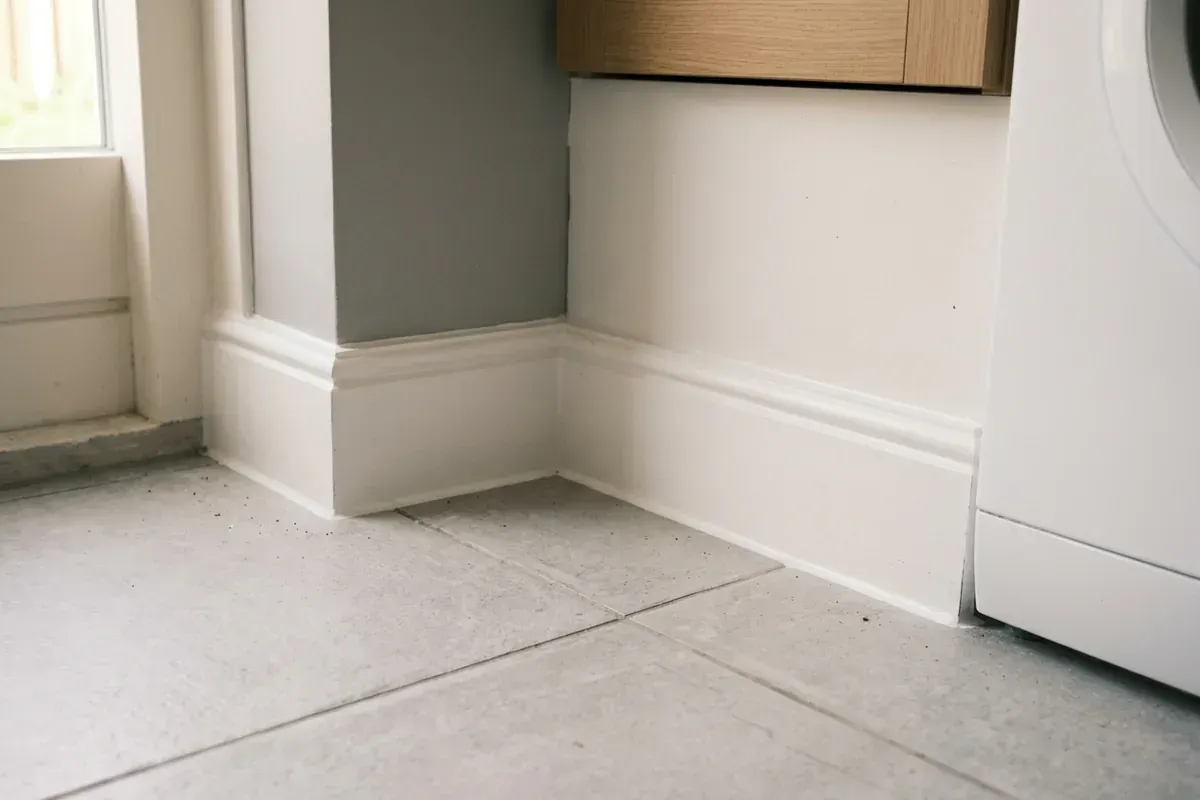
Moisture-resistant MDF
Moisture-resistant MDF is MDF treated to make it less sensitive to moisture. It is suitable for rooms where standard MDF would quickly swell.
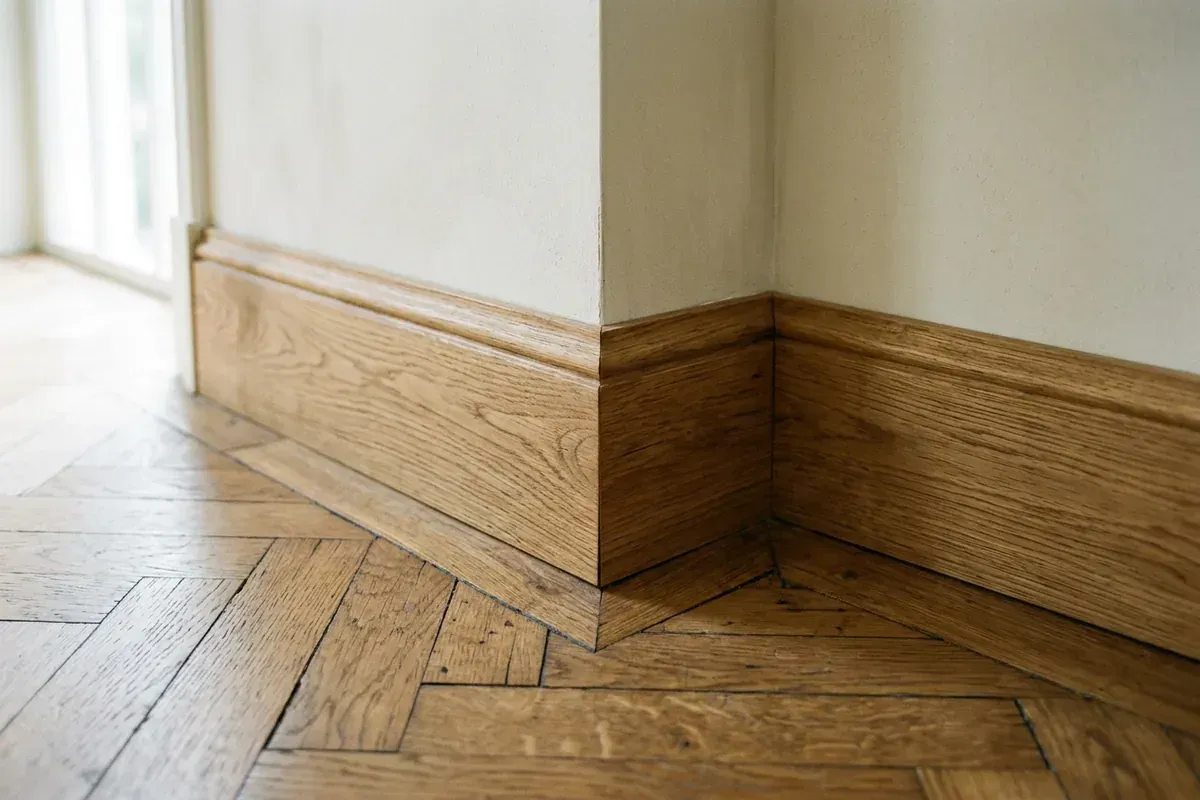
Solid wood
Solid wood is timber in one piece, without pressed fibres. It gives skirting boards a natural look, but moves with temperature and humidity.
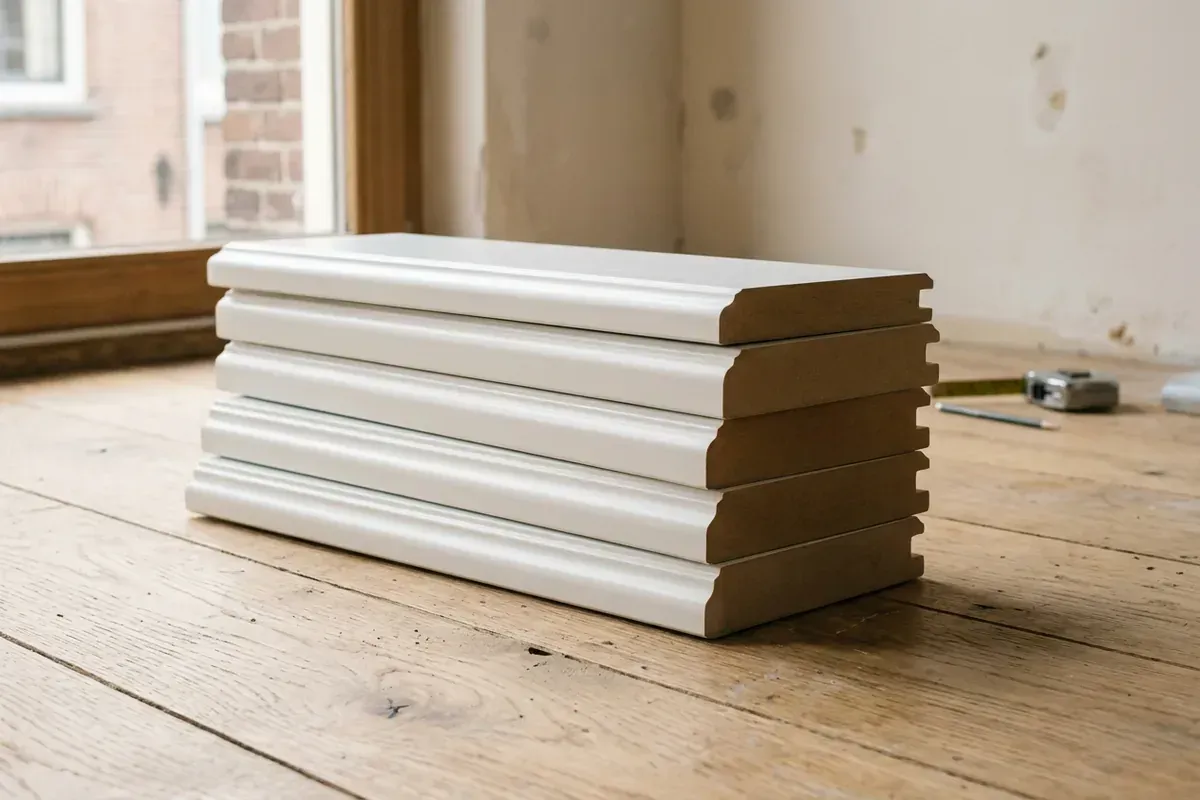
Pre-finished skirting
Pre-finished skirting has already been painted at the factory. That saves painting, but the joints and corners need neat touching up.
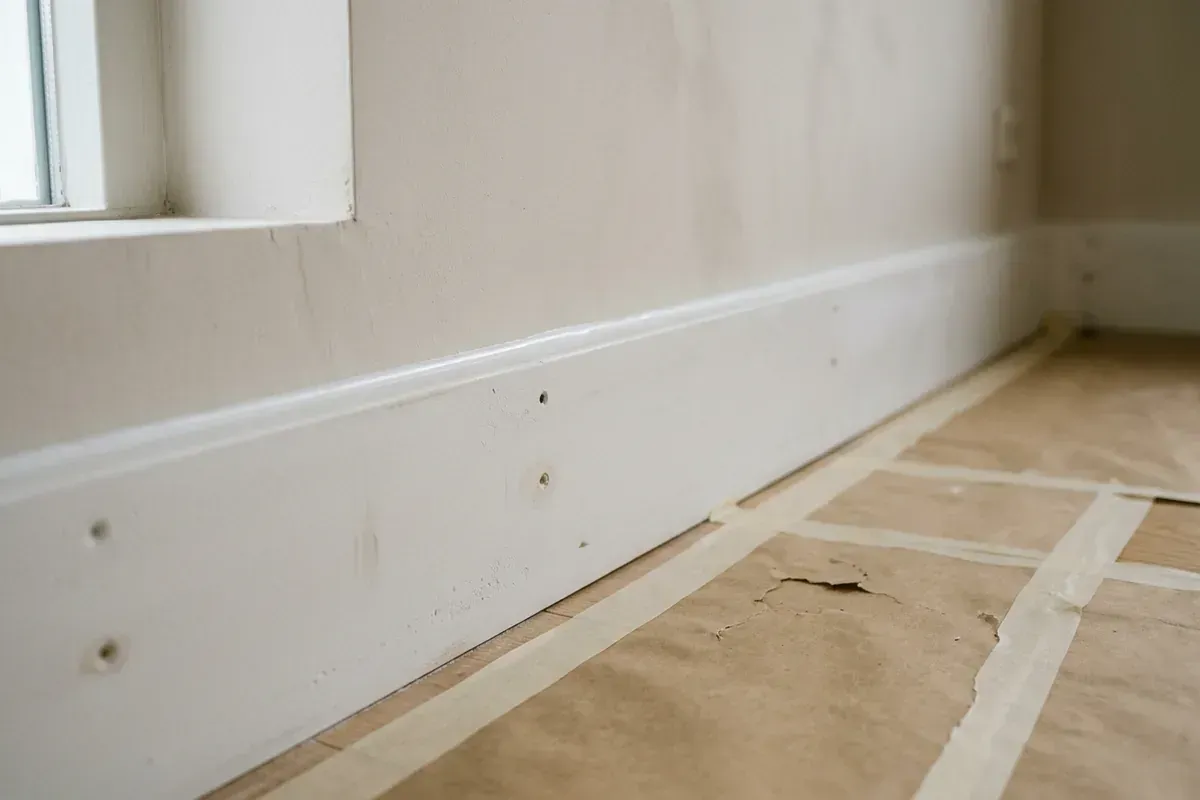
Paint-ready
Paint-ready means skirting boards and mouldings have been fitted, filled and caulked, so only the final coat of paint still needs to be applied.
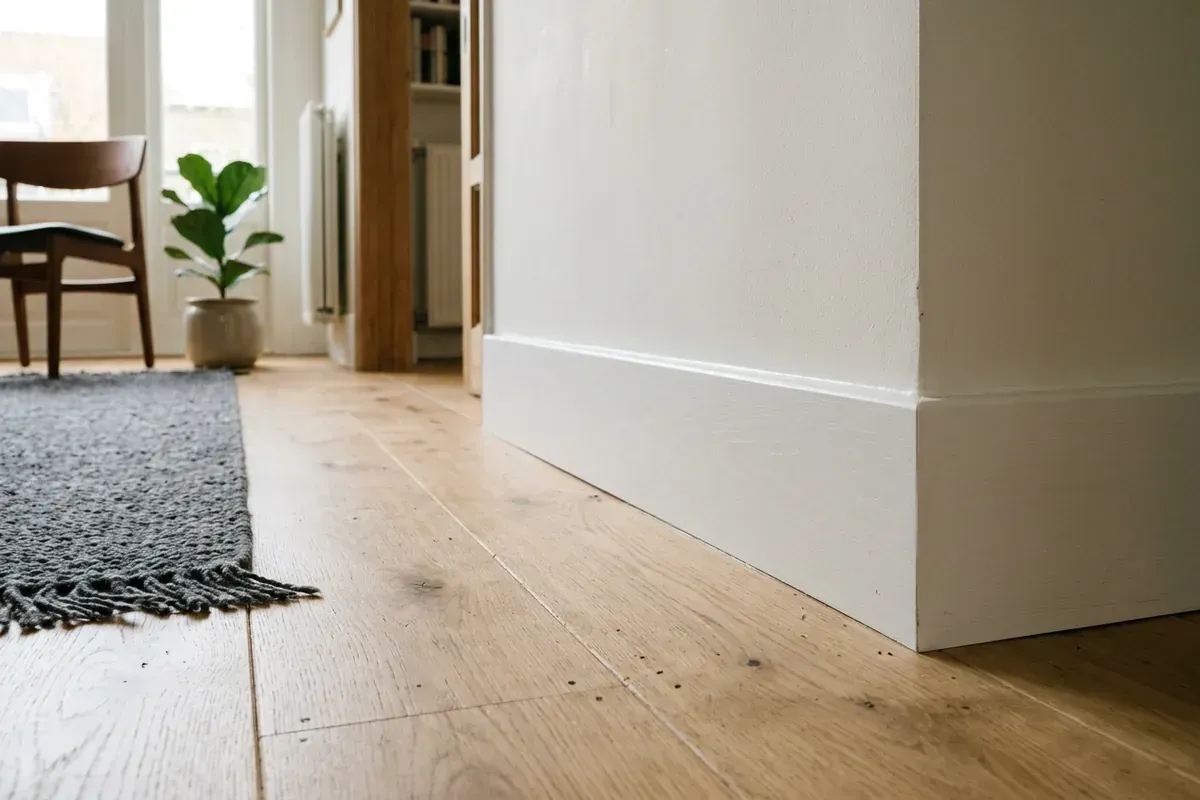
Skirting board
A skirting board is the moulding at the base of the wall that finishes the transition to the floor and protects the wall. Here is how it works and what to look out for.
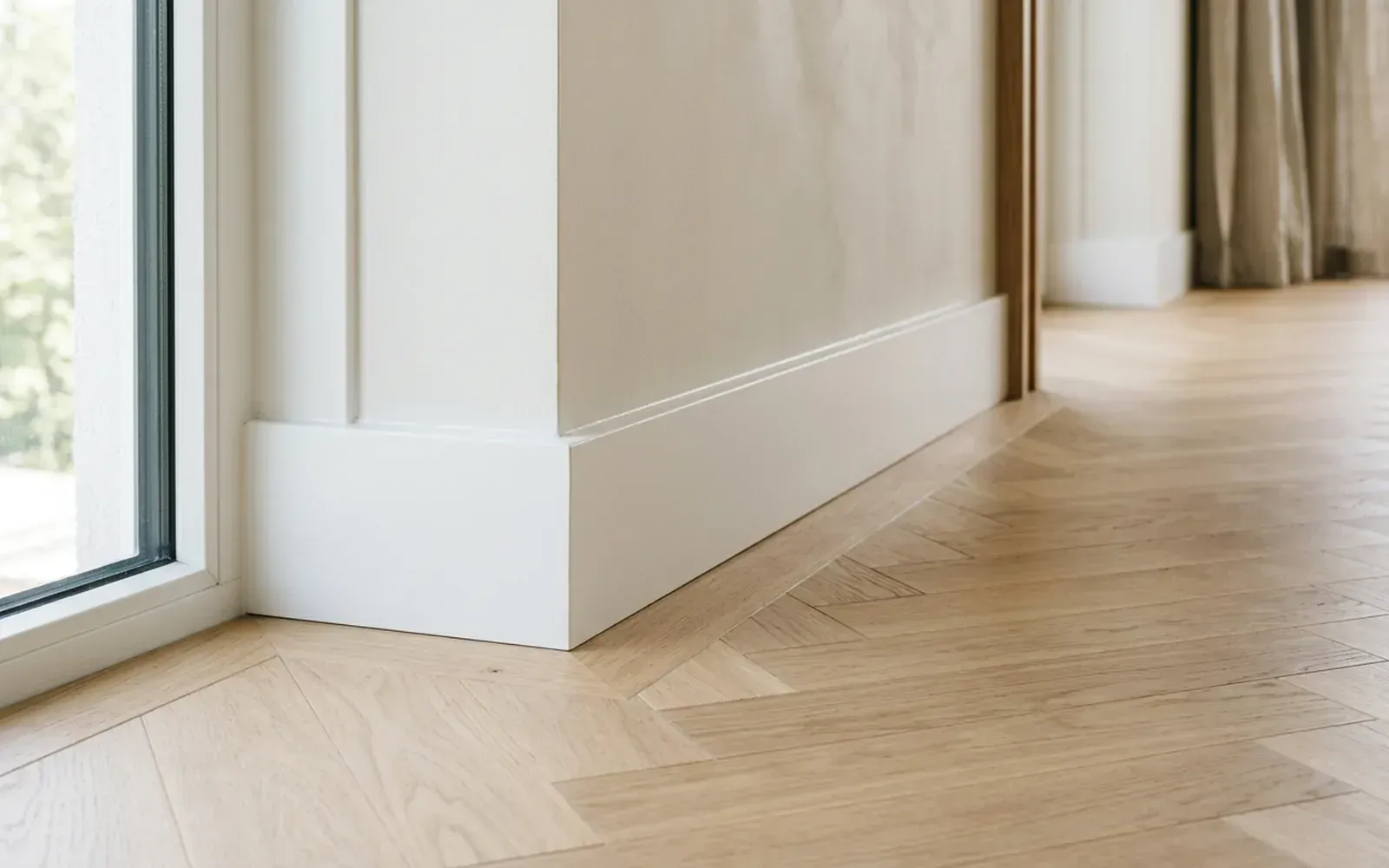
Choosing skirting
MDF skirting boards: pros, cons and when to choose them
MDF is the most popular material for skirting boards, but not the best choice in every situation. These are the advantages, the disadvantages and the pitfalls.
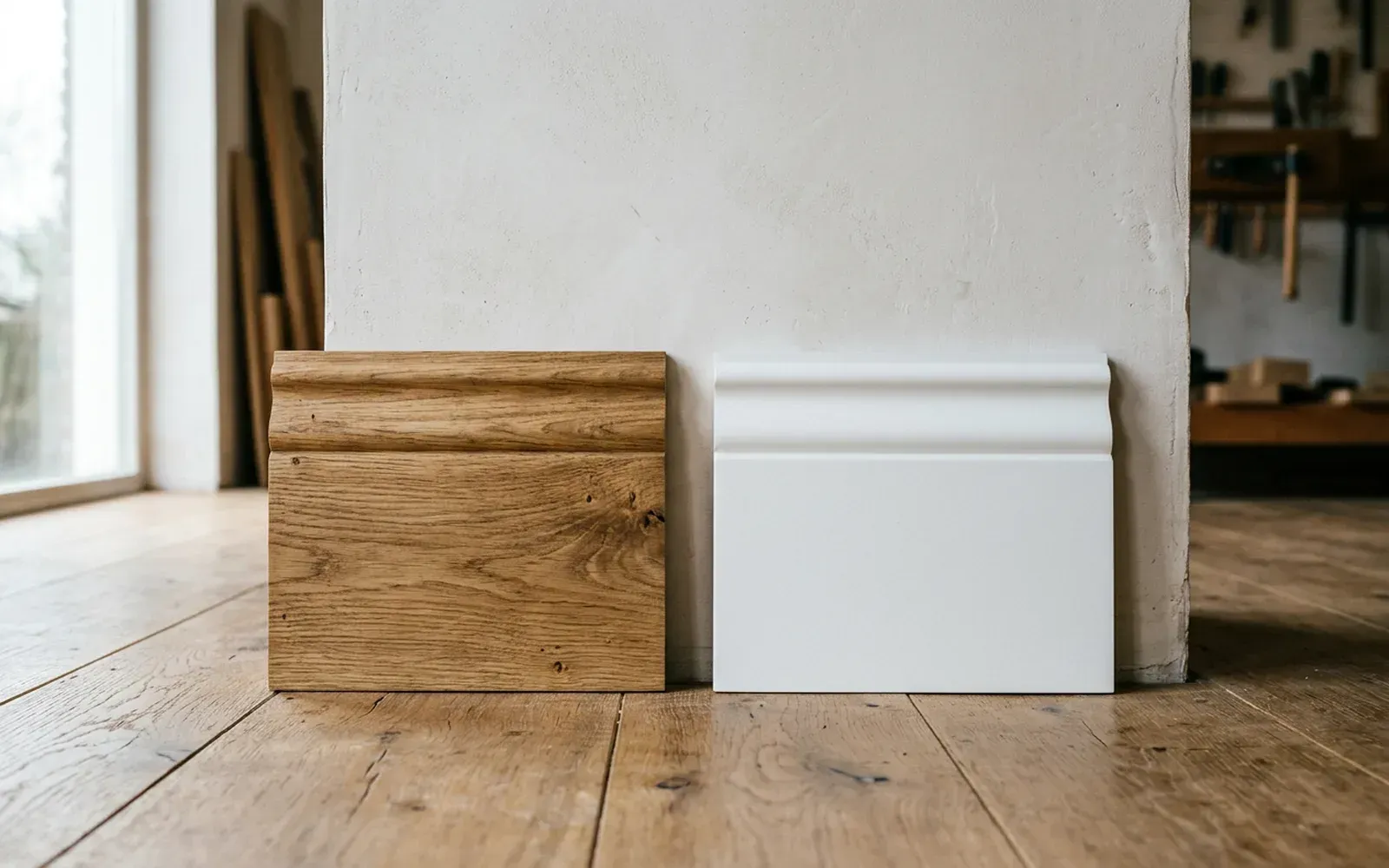
Choosing skirting
Wooden skirting boards or MDF: which suits your home?
Solid wood skirting or MDF? Both materials have clear pros and cons. We compare the differences side by side so you can choose skirting that suits your floor, interior and use.
Skirting board installation by a specialist skirting fitter
TipTop Plinten fits skirting boards in MDF, solid wood and aluminium, finished in any RAL colour and neatly matched to any floor, even with uneven walls.
Skirting board installation? Request a free quote
On-site measurement €75 incl. VAT (credited for orders above a minimum project size)