
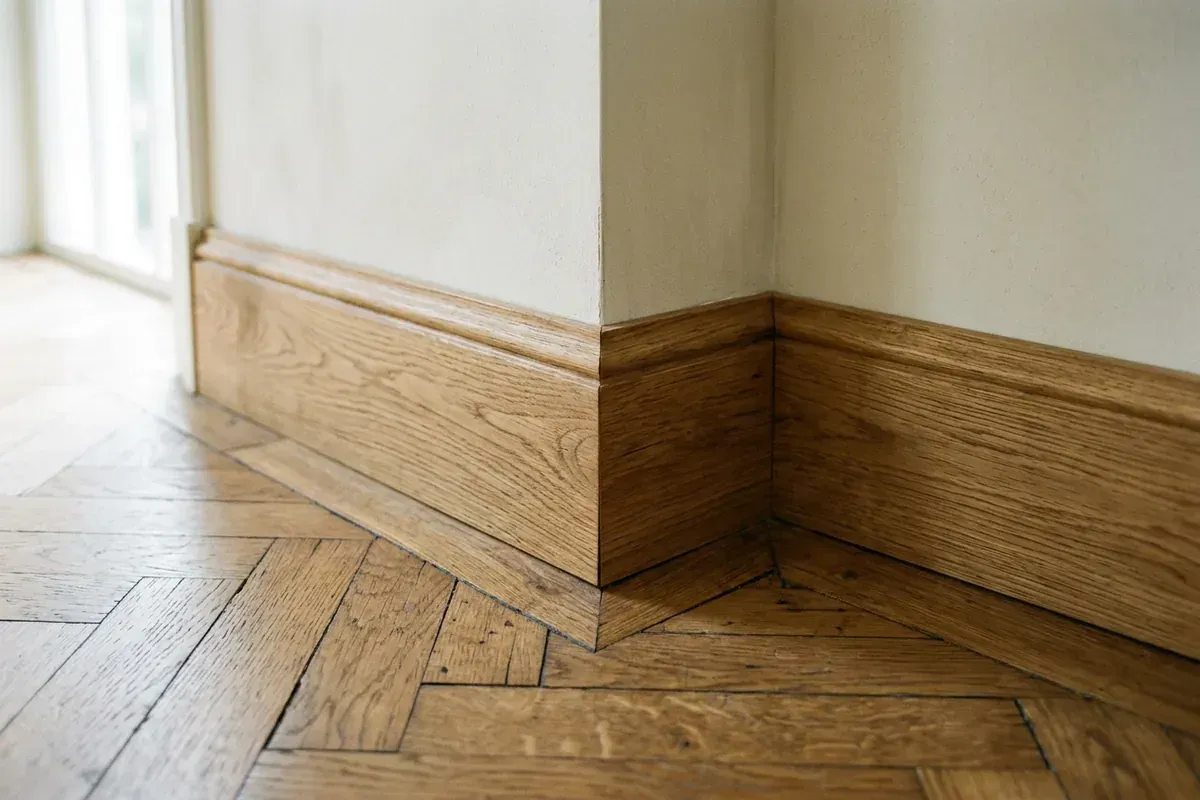
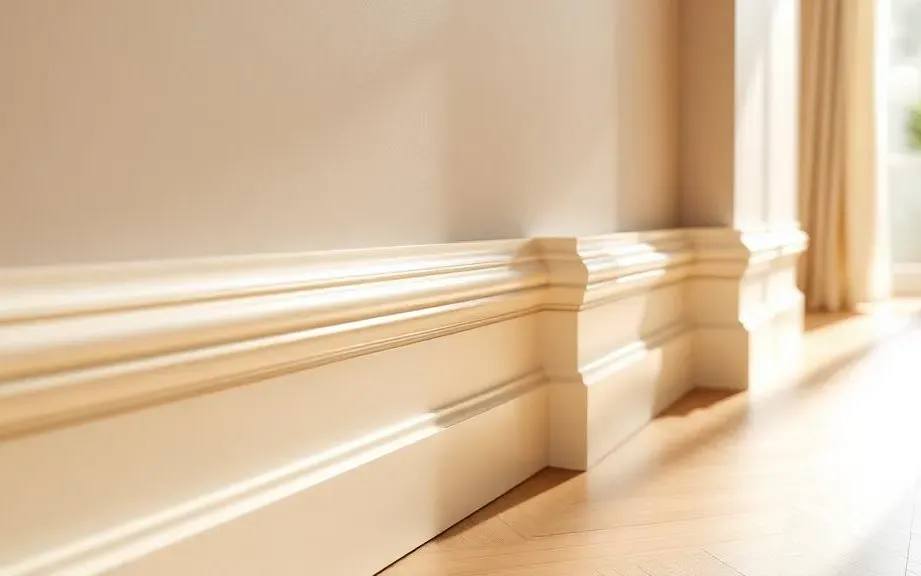
Solid wood is timber sawn from a single piece of tree, without pressed fibres or glue layers. Solid wood skirting boards have a natural grain, are impact-resistant and can be finished clear, oiled, stained or painted. They suit classic and listed interiors well, as well as rooms where the timber can stay on show.
What is solid wood?
For skirting boards and mouldings, this usually means softwood such as pine or spruce, or hardwood such as oak. Softwood is lighter and softer; hardwood is heavier and more resistant to knocks. Unlike MDF, solid wood is a living material: it absorbs moisture from the air and releases it again, so it expands and shrinks slightly.
Where is it used?
- In older and historic homes, where original timber skirting boards are added to or replaced.
- With a timber or parquet floor, where skirting in the same species gives a continuous whole.
- In interiors where the natural wood grain is part of the style.
What should you look out for?
- Movement: let the timber acclimatise to the indoor climate first. That limits gaps and opening mitre joints later on.
- Straightness: solid wood can twist or bow slightly. This is taken into account when choosing the lengths.
- Finish: clear or oiled timber does not allow a caulk line in a contrasting colour, so extra precision is needed at the junctions.
- Maintenance: oiled or lacquered timber needs occasional maintenance, depending on use.
You can find a detailed comparison in wooden skirting or MDF.
At TipTop Plinten
TipTop Plinten works with solid wood, MDF and aluminium. Solid wood is mainly used where it suits the character of the building, such as in older homes with irregular walls. An example of made-to-measure work in a historic building is the historic home in Apeldoorn. More about installation: skirting board installation.
Frequently asked questions
That depends on the interior. Solid wood is more impact-resistant and can be left clear-finished or oiled, so the grain stays visible. MDF is more stable and easier to paint to a crisp finish. MDF is usually chosen for painted skirting, solid wood for visible timber.
Yes, timber expands and shrinks slightly as humidity changes. As a result, mitres or joints can open slightly over time. It helps to let the timber acclimatise beforehand in the room where it will be fitted.
Related
MDF
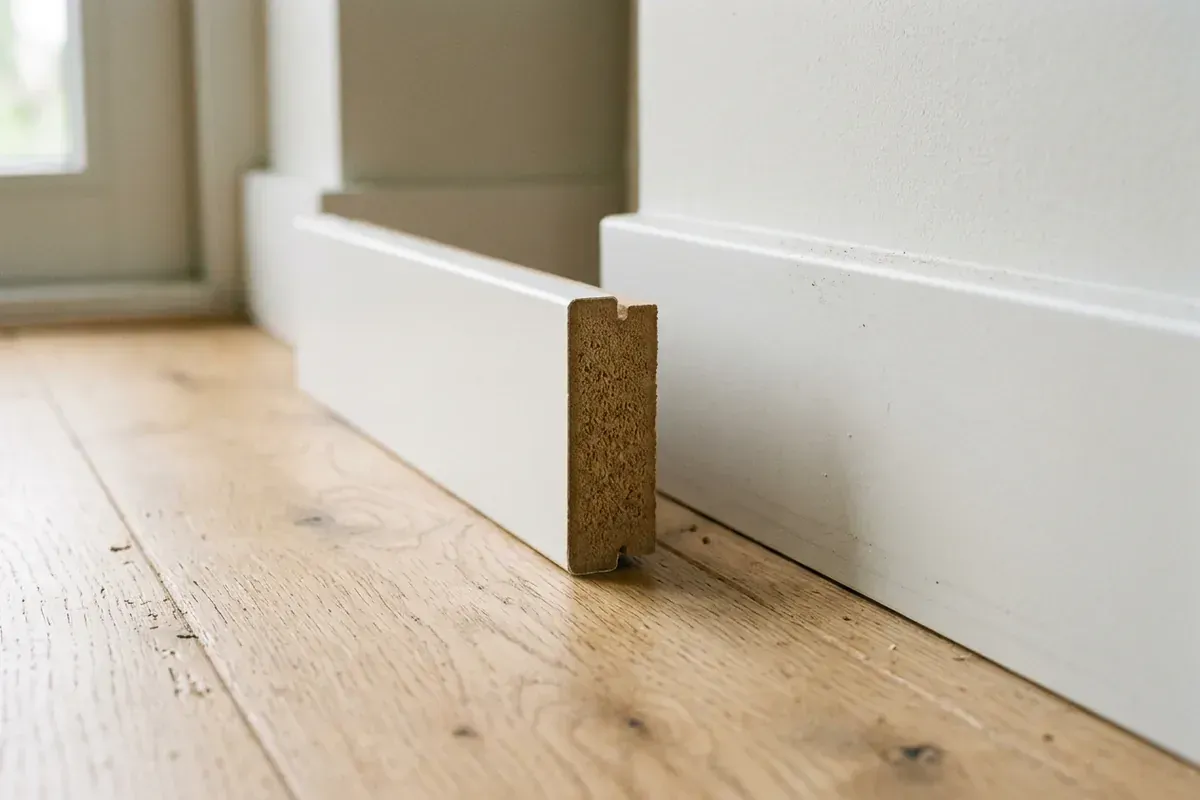
MDF is a sheet material made of pressed wood fibres. It is stable, smooth and easy to paint, which makes it the most popular material for skirting boards.
Skirting board
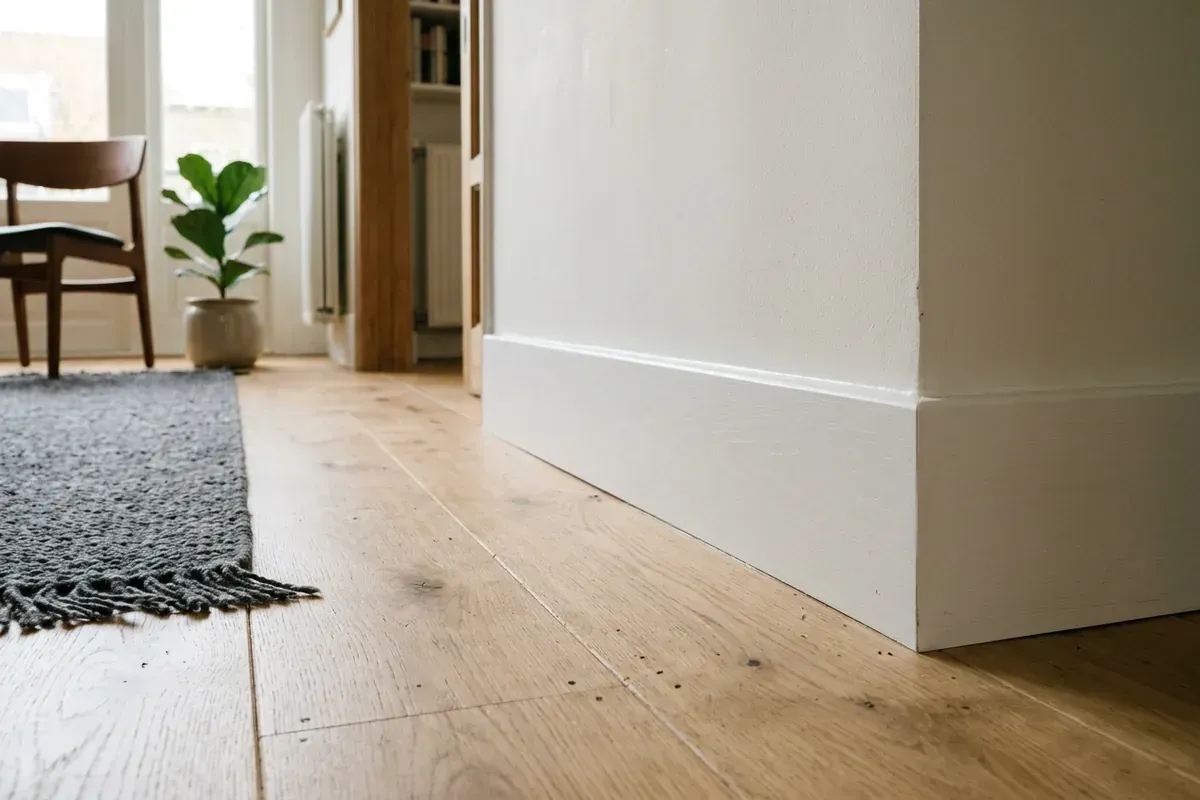
A skirting board is the moulding at the base of the wall that finishes the transition to the floor and protects the wall. Here is how it works and what to look out for.
Mitre joint
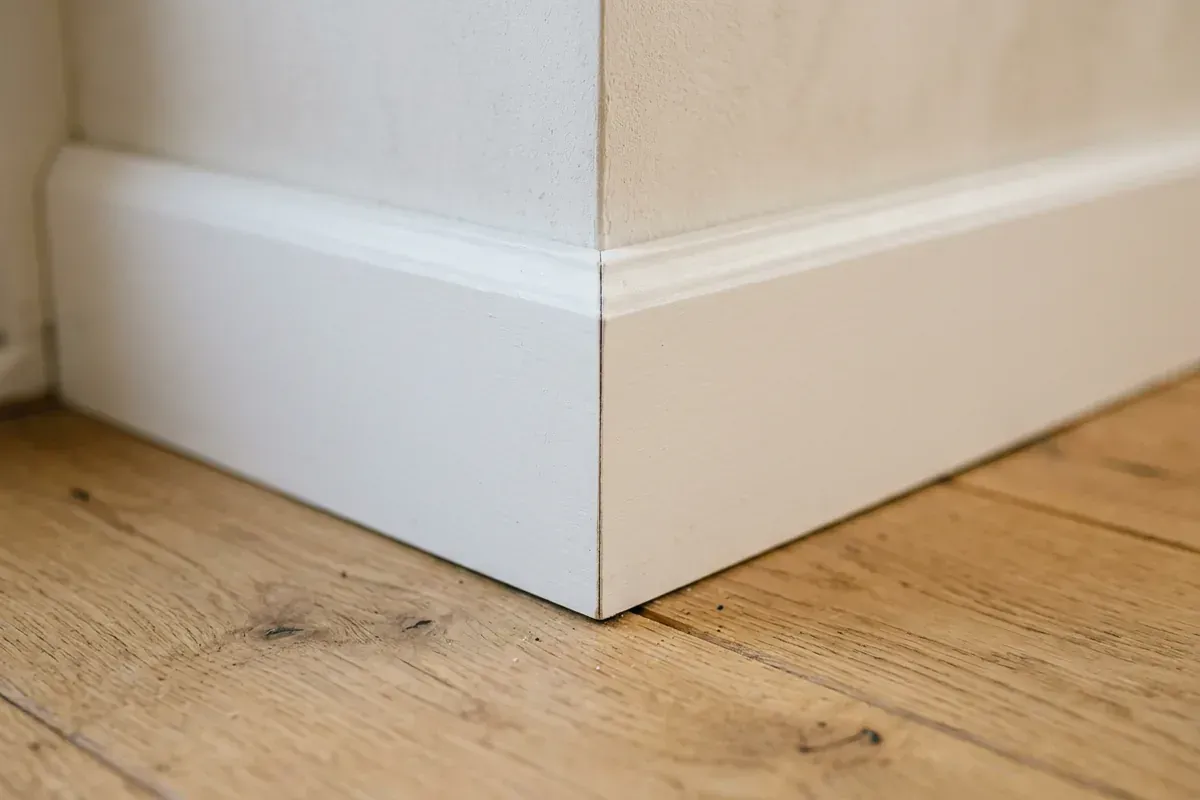
A mitre is an angled cut that lets two mouldings meet seamlessly in a corner. For a right angle, that is usually 2 x 45 degrees.
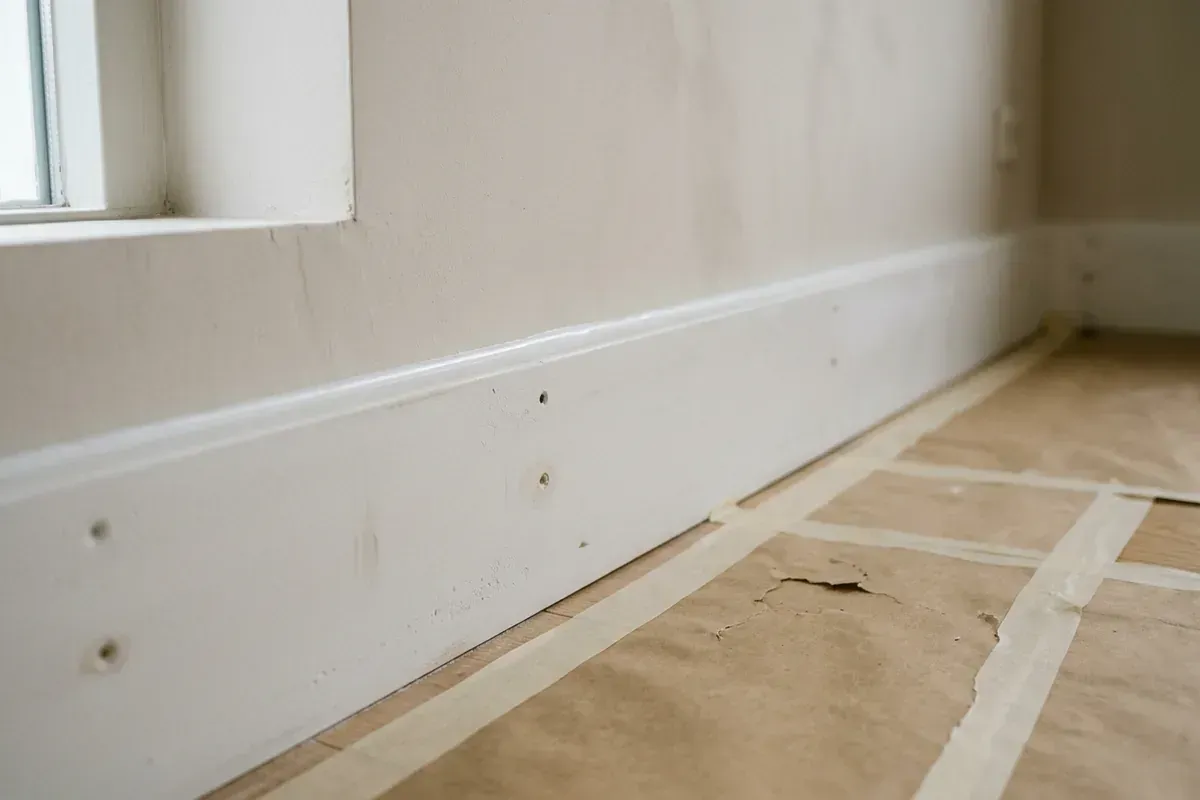
Paint-ready
Paint-ready means skirting boards and mouldings have been fitted, filled and caulked, so only the final coat of paint still needs to be applied.
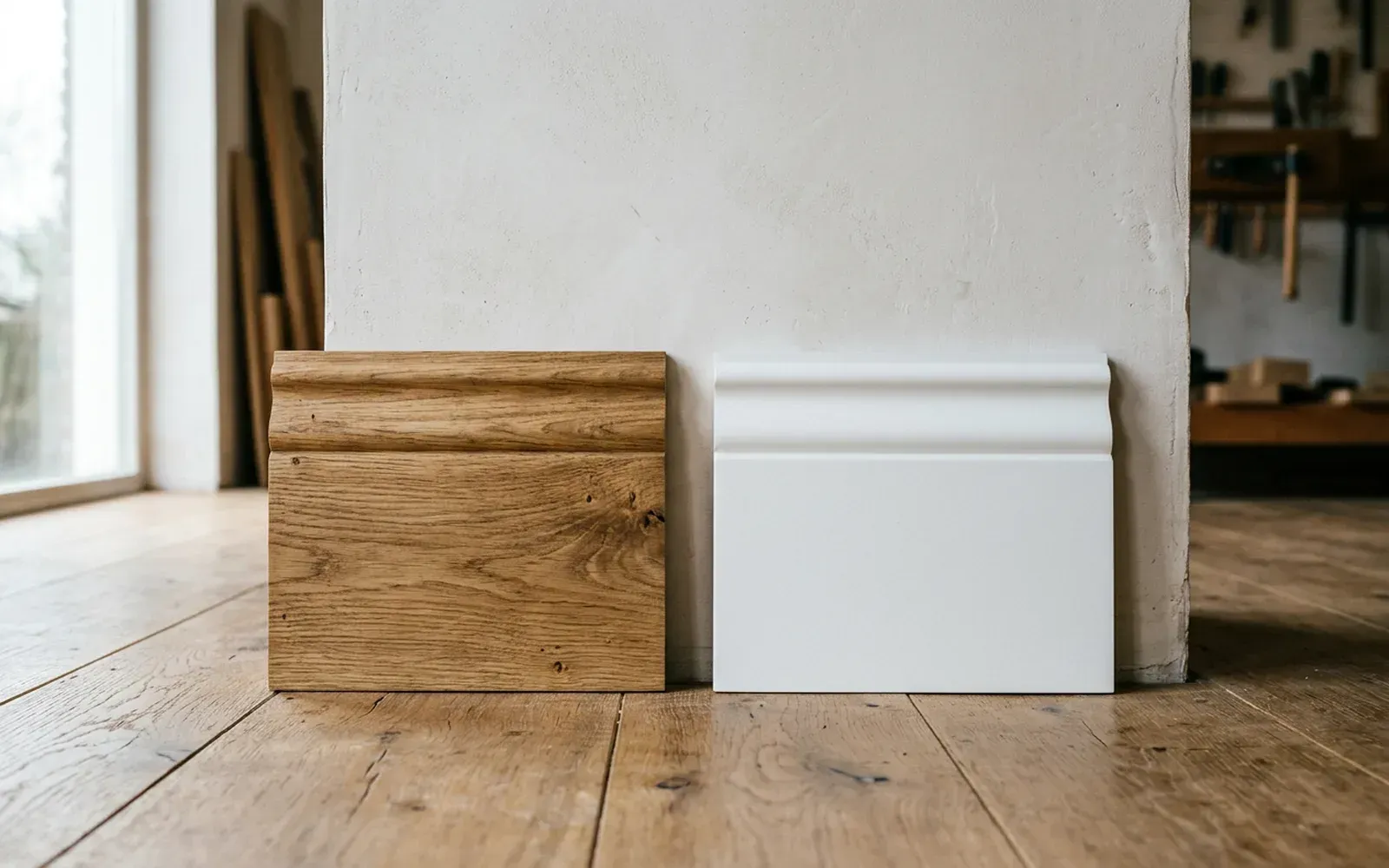
Choosing skirting
Wooden skirting boards or MDF: which suits your home?
Solid wood skirting or MDF? Both materials have clear pros and cons. We compare the differences side by side so you can choose skirting that suits your floor, interior and use.
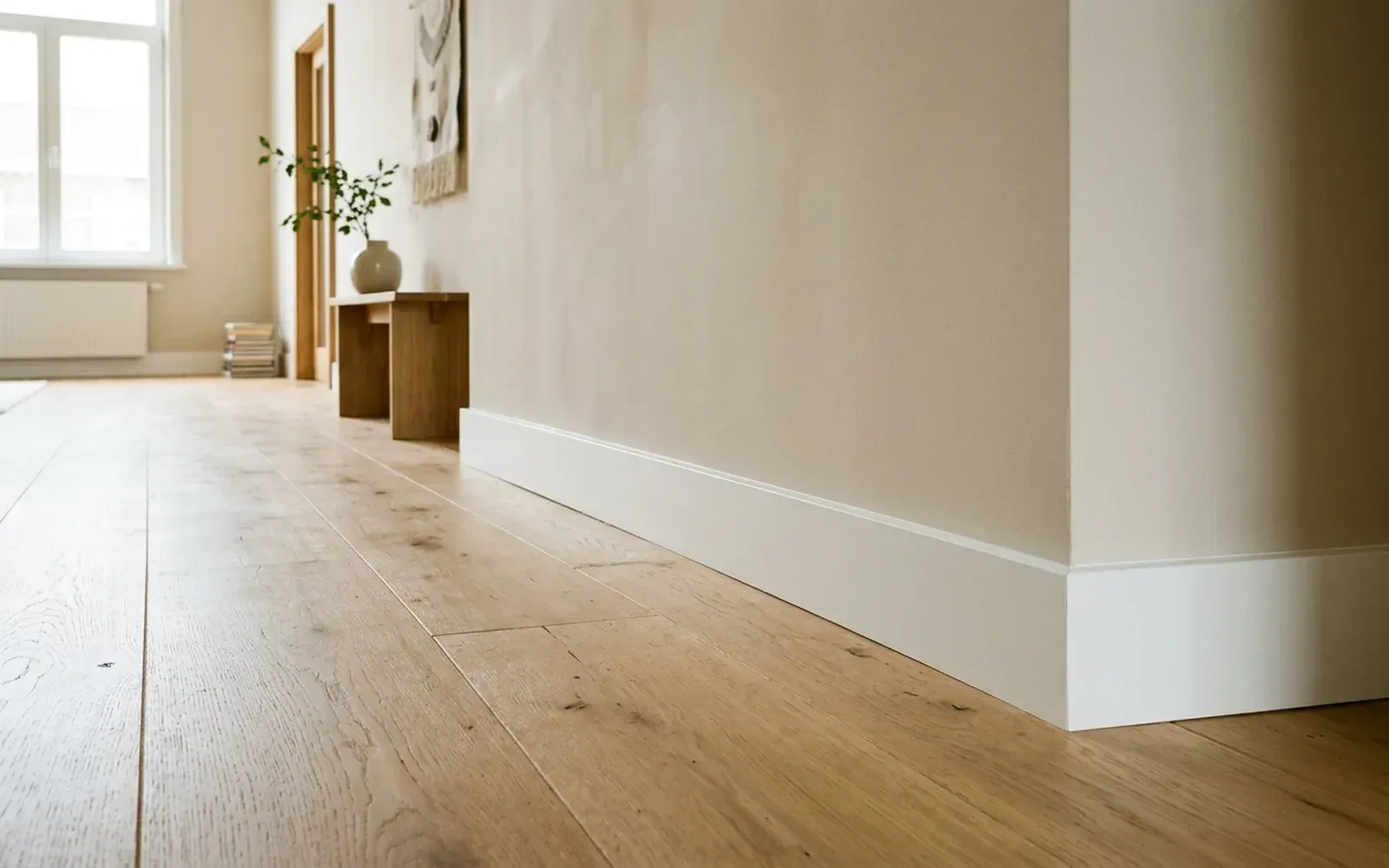
Installation & finishing
Painting skirting boards or choosing pre-finished: which is the smarter option?
Pre-finished skirting boards are ready straight away, while painting them yourself gives more freedom in colour. Here is how to choose and how to paint skirting boards neatly.
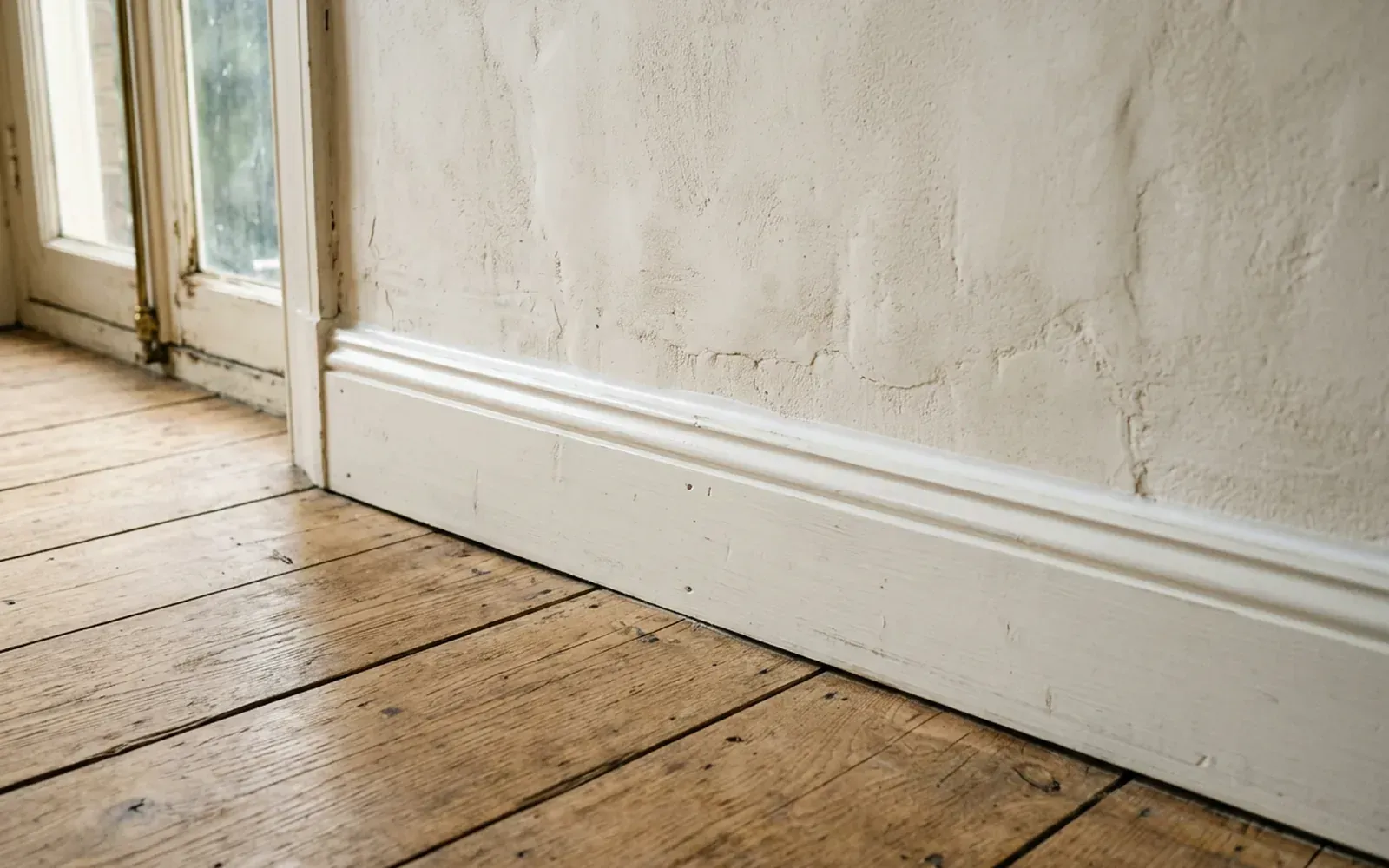
Installation & finishing
Skirting boards for uneven walls: made-to-measure skirting for irregular walls
With out-of-true, wavy or subsided walls, standard skirting won't sit flush. This is how a made-to-measure skirting board is fitted to the wall, floor and corner.
Skirting board installation by a specialist skirting fitter
TipTop Plinten fits skirting boards in MDF, solid wood and aluminium, finished in any RAL colour and neatly matched to any floor, even with uneven walls.
Skirting board installation? Request a free quote
On-site measurement €75 incl. VAT (credited for orders above a minimum project size)