
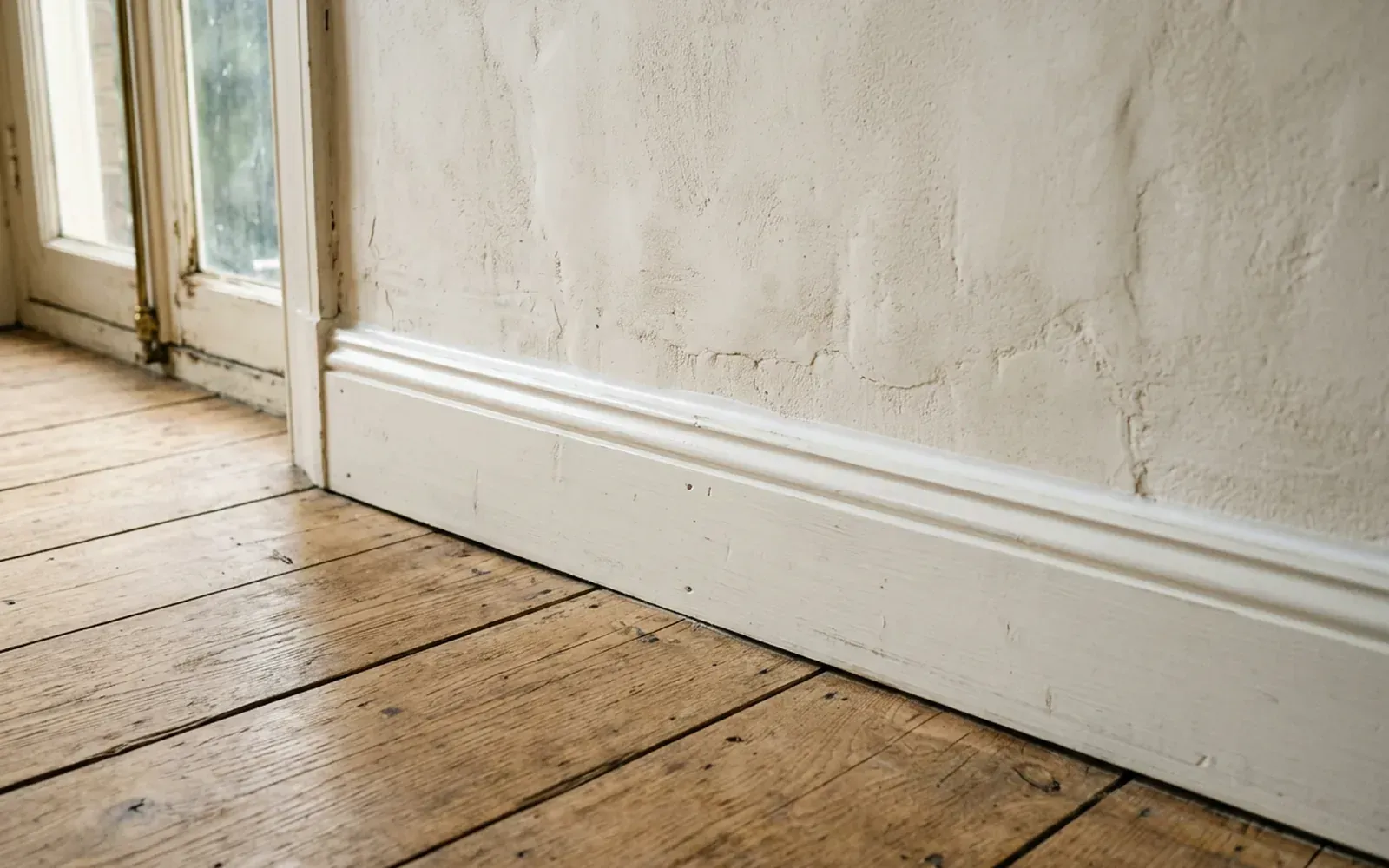
Made-to-measure skirting is needed as soon as a wall is out of true, wavy or has subsided: a standard skirting board then won't sit tight against the wall, and the gap above or below the skirting visibly varies. A professional solves this by adapting the skirting to the wall and the floor, by scribing it, fitting it in shorter lengths or pulling it tight against the wall, and by measuring corners first and only then cutting. Caulk only takes care of the last small joint; the real work is in the fitting.
Why are walls out of true?
A perfectly straight, flat and square wall does not really exist. Deviations have various causes:
- Older buildings. Walls may have subsided or started to lean over the years, and floors may slope.
- Plaster layers. A thick or uneven coat of plaster creates a wavy wall.
- Renovations. Where an old wall meets a new one, there is often a step.
- New builds with tolerances. Even in new builds, corners are far from always exactly 90 degrees.
For a skirting board, that means three possible problems: the wall is not flat, the floor is not flat, or the corner is not square. Often it is a combination.
How can you tell the wall is not flat?
Hold a straight edge or a long spirit level horizontally against the wall at the height where the skirting will go. If you see a varying gap behind it, the wall is wavy. Do the same on the floor along the wall to see whether it slopes. Measure the corners with an angle finder. That way you know in advance whether standard skirting will do or whether made-to-measure work is needed.
Solutions for a wavy wall
Pulling the skirting against the wall
A low or medium-height skirting board can follow a slightly wavy wall if it is fixed at enough points. Adhesive alone does not always hold a stiff skirting board tight against a hollow spot; extra mechanical fixing pulls the skirting in. More on this in fixing skirting boards: glue, screws or nails.
Shorter lengths
With a strongly undulating wall, a long, stiff skirting board cannot follow the shape. By fitting the skirting in shorter lengths, with a neat butt joint or small mitre between them, the skirting follows the wall better. The joints are then touched up.
Adapting the back
Where part of the wall protrudes, for example because of a thick layer of plaster, the back of the skirting can be taken down slightly in that spot. This requires precise work so that the face of the skirting stays straight.
Solutions for an uneven floor
If the floor slopes, a varying gap appears under the skirting. A professional solves this by scribing the bottom of the skirting: the line of the floor is transferred onto the skirting and the skirting is cut or planed along that line. That way the bottom fits everywhere.
The choice is then usually: the skirting follows the floor, not the spirit level. A skirting board that meets the floor tightly looks calmer than one that is exactly horizontal but shows a tapering gap.
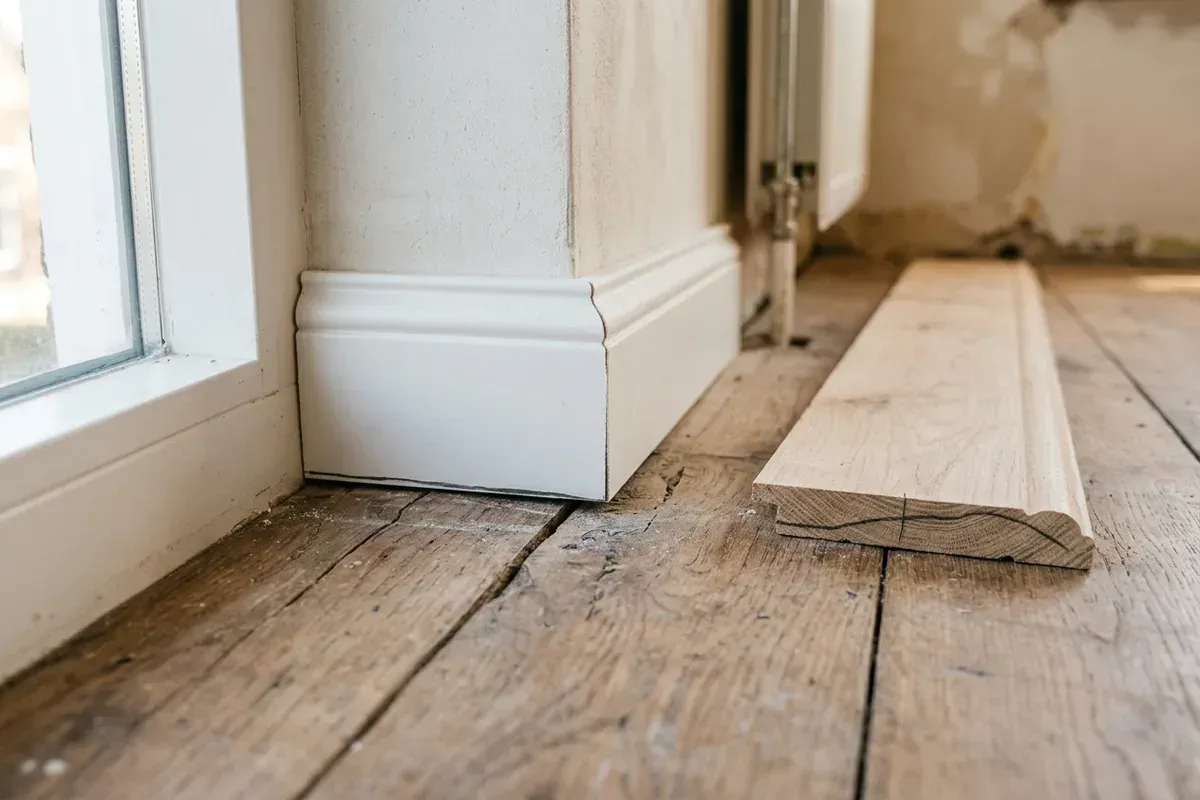
Note with floating floors: the skirting is fixed to the wall and the floor must be able to move underneath it. Scribing is therefore done to the floor line without pinning the floor down.
Solutions for corners that are not square
With a corner that deviates from 90 degrees, a standard 45-degree mitre won't fit. The actual angle is measured and halved; each piece gets half. In internal corners with profiled skirting, scribing or coping is sometimes chosen, where one skirting board follows the profile of the other. You will find a detailed explanation in mitre-cutting skirting corners and in the glossary under mitre joint.
When is caulk enough?
Paintable acrylic caulk fills a narrow joint between skirting and wall perfectly well. It is also the final step in every installation. However, caulk is not a filler for large gaps: a wide bead sinks, shrinks and can crack, and a strongly varying caulk line stands out. Rule of thumb: first make the skirting fit as well as possible, then caulk the remaining joint. See also caulking.
Overview: which problem, which solution?
| Situation | Common solution |
|---|---|
| Slightly wavy wall | Fix the skirting at more points, caulk the joint |
| Strongly wavy wall | Shorter lengths, adapt the back locally |
| Sloping floor | Scribe the bottom of the skirting |
| Corner not square | Measure and halve the angle, or scribe internal corners |
| Step in the wall | Adapt the skirting locally or add an extra mitre |
Which skirting for an old or out-of-true building?
- Height: a lower skirting board follows a wavy wall more easily than a tall one. With tall skirting, every deviation is more noticeable.
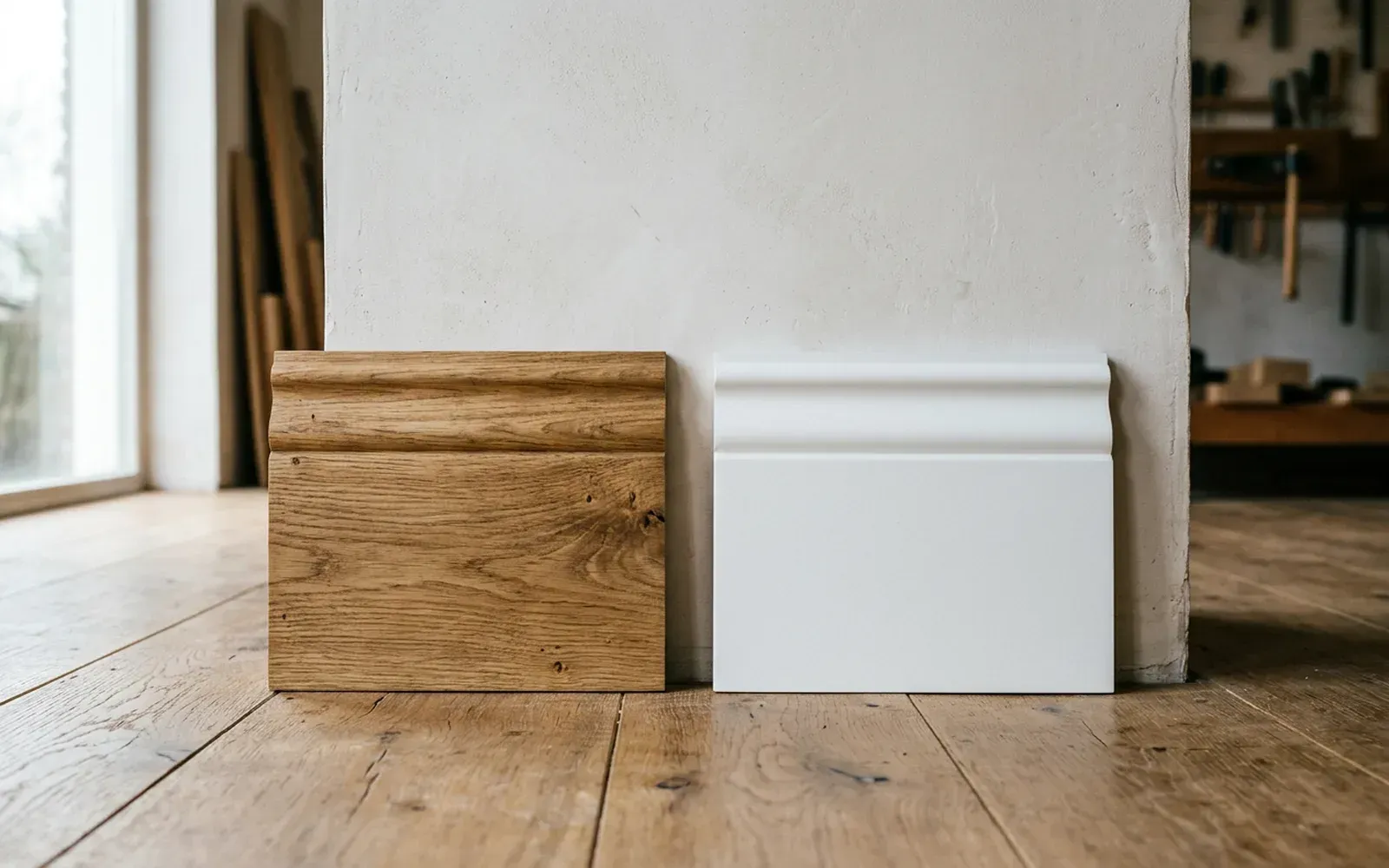
- Material: MDF is stable and paints well. Solid wood suits classic and listed interiors. More in wooden skirting or MDF.
- Colour: light skirting in the wall colour shows unevenness less than dark, contrasting skirting.
Made-to-measure work in practice
In the flat in Oss with irregular walls and unusual corners, the skirting boards were fully made and fitted to measure. In the historic home in Apeldoorn, a 19th-century building with subsided walls, made-to-measure skirting boards were fitted with respect for the historic character of the home. In both cases it was about fitting the skirting to the wall, not about caulking over gaps.
Having made-to-measure skirting fitted
On our skirting board installation page you can read how TipTop Plinten approaches made-to-measure work for out-of-true or irregular walls. Finishing the joints is part of our caulking and finishing service.
Request a quote
Do you have out-of-true or wavy walls? Send photos of the walls, the corners and the junction with the floor via contact, plus an estimate of the number of metres. We are happy to communicate in English. The quote is free and without obligation. With tricky walls, an on-site measurement is often useful; it costs €75 incl. VAT and is deducted for projects above a minimum size.
Frequently asked questions
To a certain extent. A low, somewhat flexible skirting board can follow a slightly wavy wall if it is fixed properly. With larger deviations, the skirting is adapted to measure, for example by scribing the back or bottom, or by fitting the skirting in shorter lengths.
Caulk is meant for joints and small gaps. A narrow joint between skirting and wall can be finished neatly with acrylic caulk. Large or strongly varying gaps look messy with caulk and the caulk can sink or crack; adapting the skirting is better there.
Usually the skirting follows the floor, because a skirting board with a varying gap at the bottom stands out more than one that is slightly off level. With a strongly sloping floor, the calmest result is assessed room by room.
That depends on the interior. Solid wood often suits classic and listed interiors, while MDF is stable and paints well. With a historic building, the main thing is that the profile and height suit the character of the home.
Yes. Made-to-measure work for out-of-true and irregular walls is part of fitting skirting boards, just like mitres on irregular angles. Examples are the flat in Oss with unusual corners and the 19th-century home in Apeldoorn.
Related articles
Installation & finishing
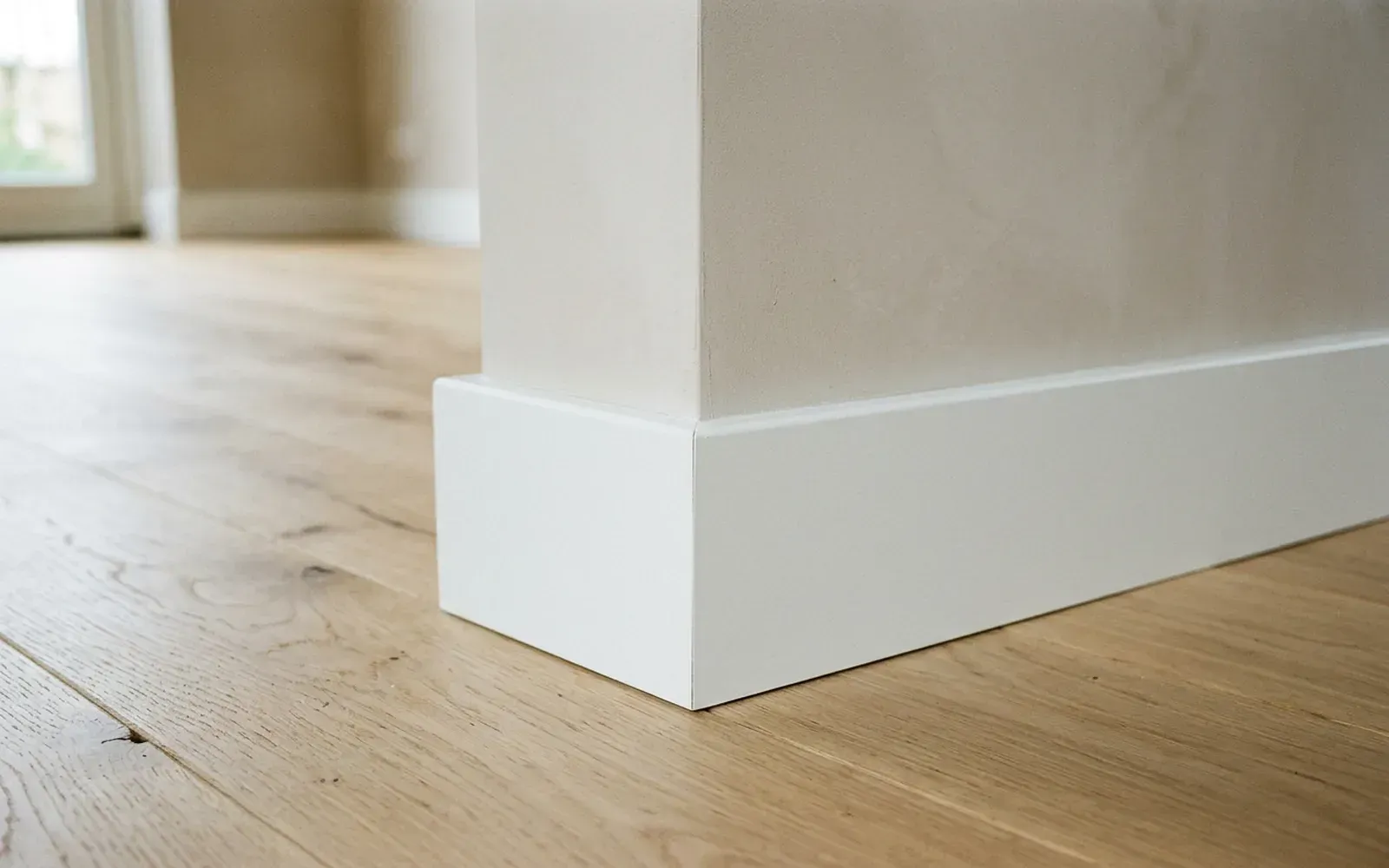
Mitre cutting skirting boards: how to get tight corners
For a square corner you cut both skirting boards at 45 degrees; for any other angle you halve the measured angle. That is how you get tight internal and external corners.
Installation & finishing
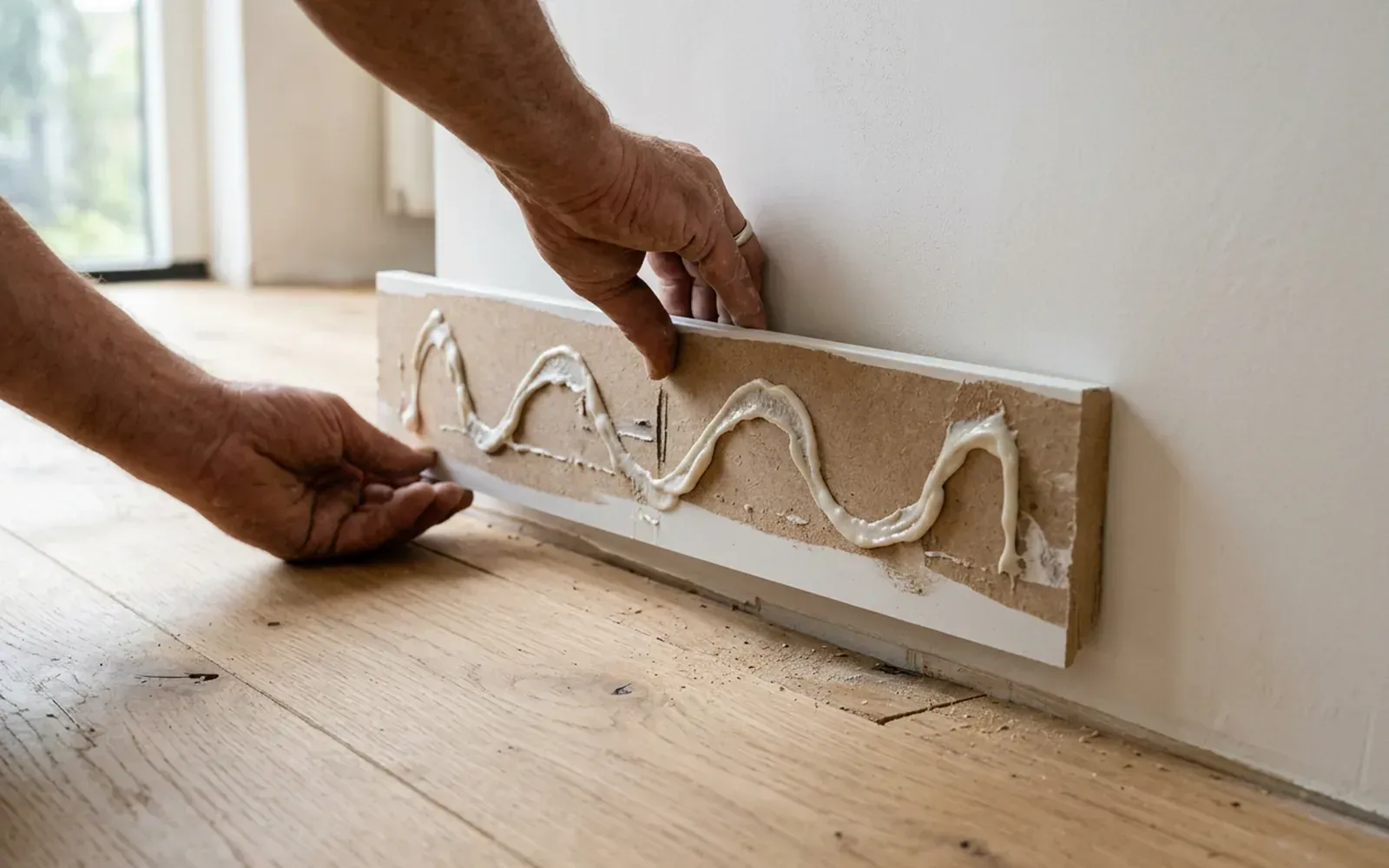
Fixing skirting boards: glue, screws or nails?
Glue, screws or nails: the right fixing depends on the wall, the skirting and the floor. Here is how to choose a method that stays put.
Choosing skirting
Wooden skirting boards or MDF: which suits your home?
Solid wood skirting or MDF? Both materials have clear pros and cons. We compare the differences side by side so you can choose skirting that suits your floor, interior and use.
Related
Skirting board
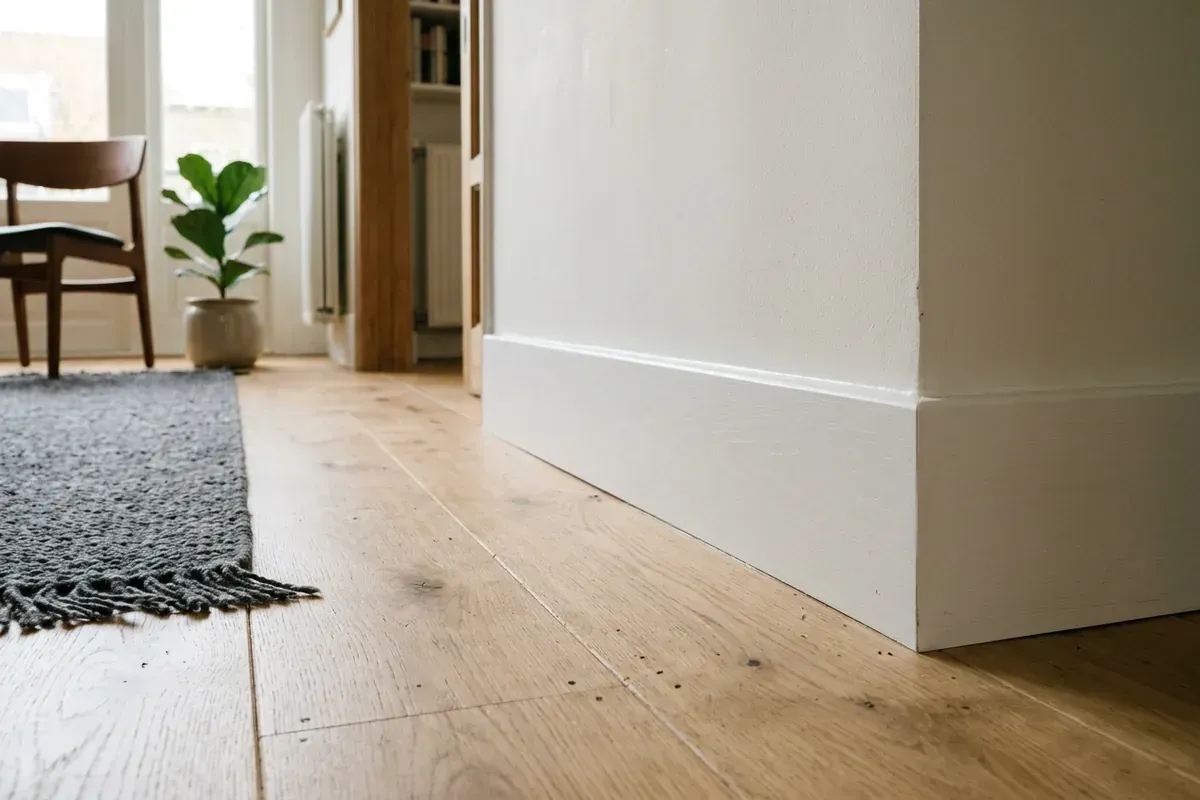
A skirting board is the moulding at the base of the wall that finishes the transition to the floor and protects the wall. Here is how it works and what to look out for.
Mitre joint
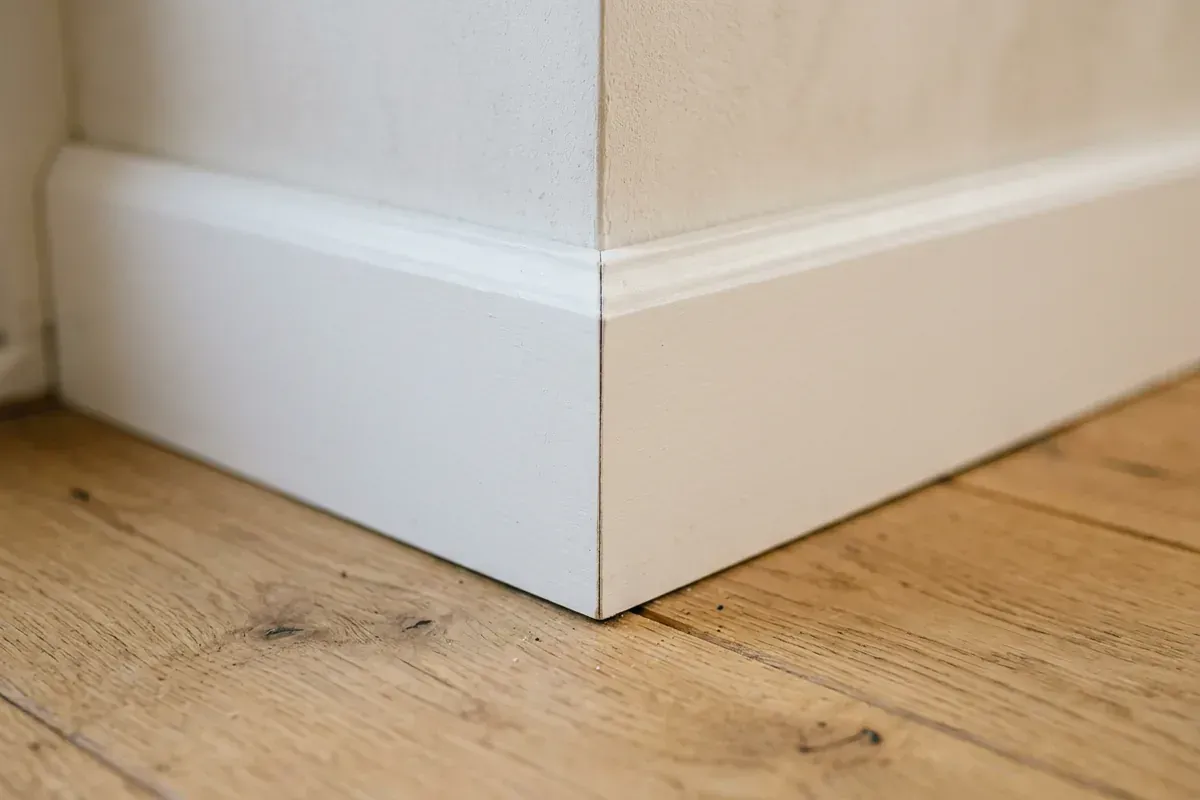
A mitre is an angled cut that lets two mouldings meet seamlessly in a corner. For a right angle, that is usually 2 x 45 degrees.
Caulking
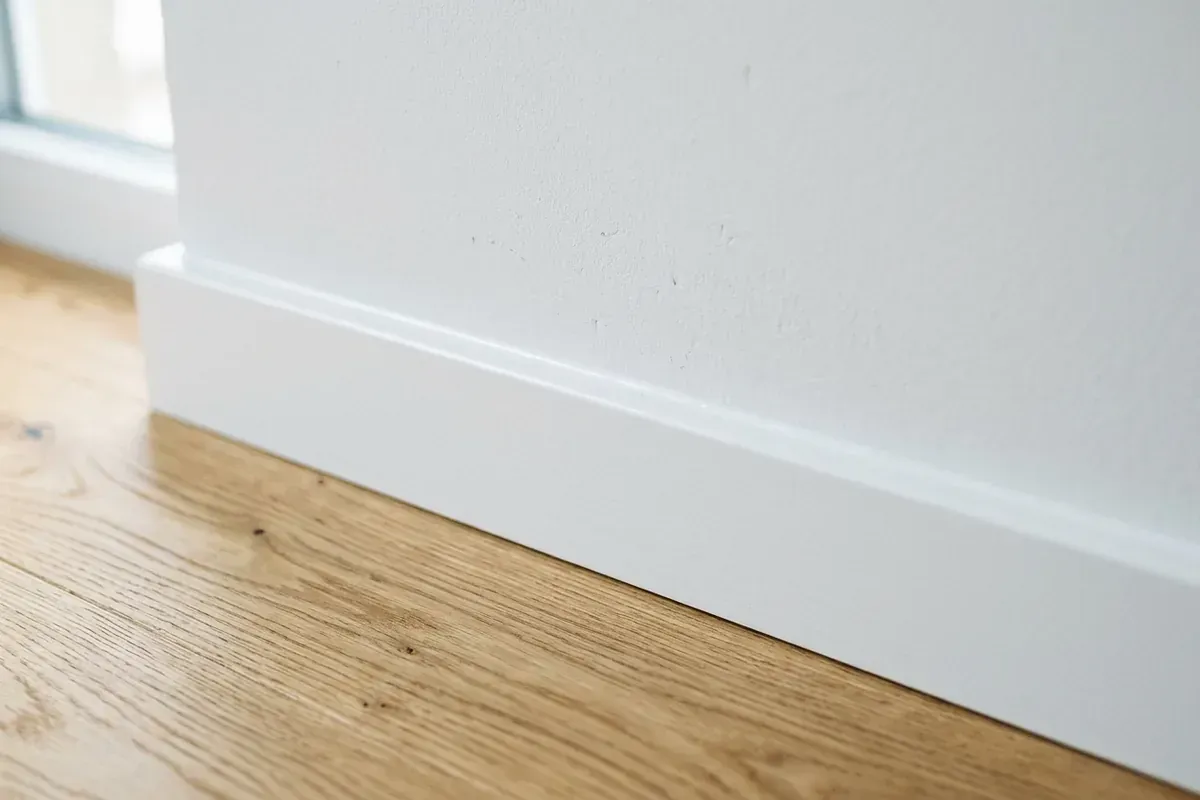
Caulking means sealing joints with a flexible sealant. With skirting boards and mouldings, it makes the transition to the wall crisp and seamless.
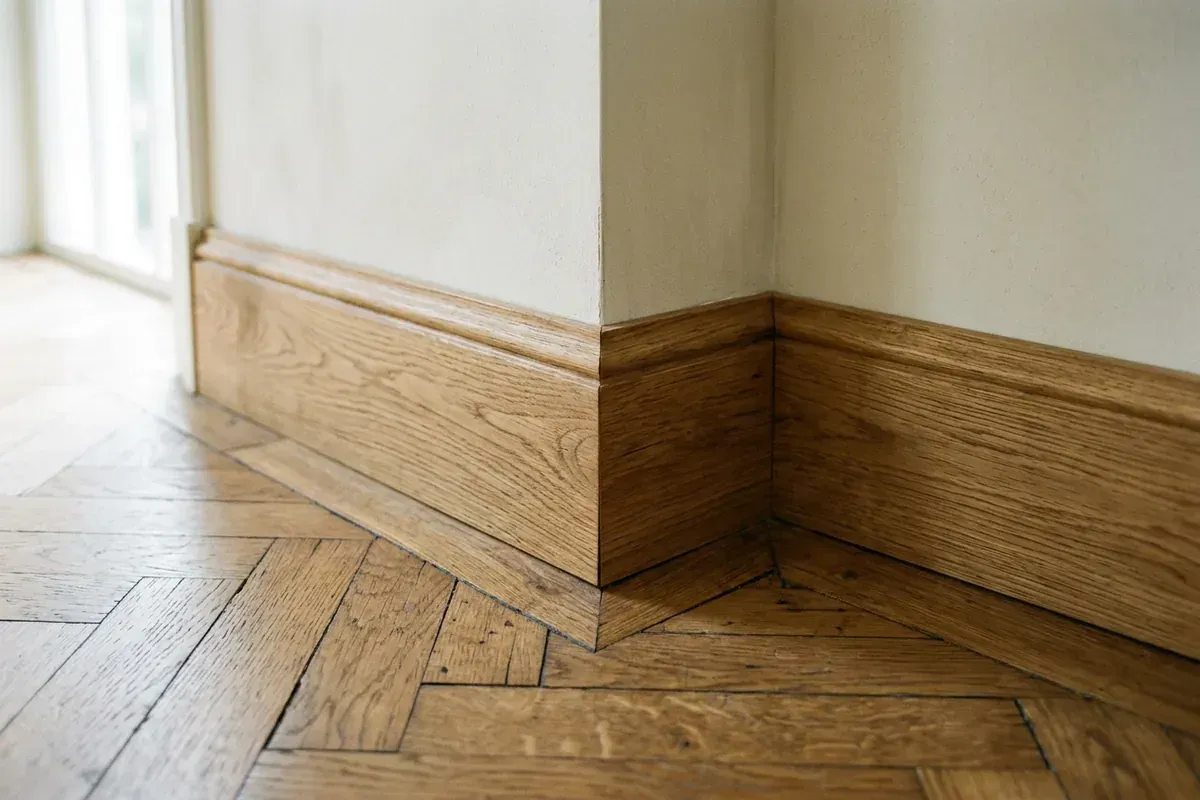
Solid wood
Solid wood is timber in one piece, without pressed fibres. It gives skirting boards a natural look, but moves with temperature and humidity.
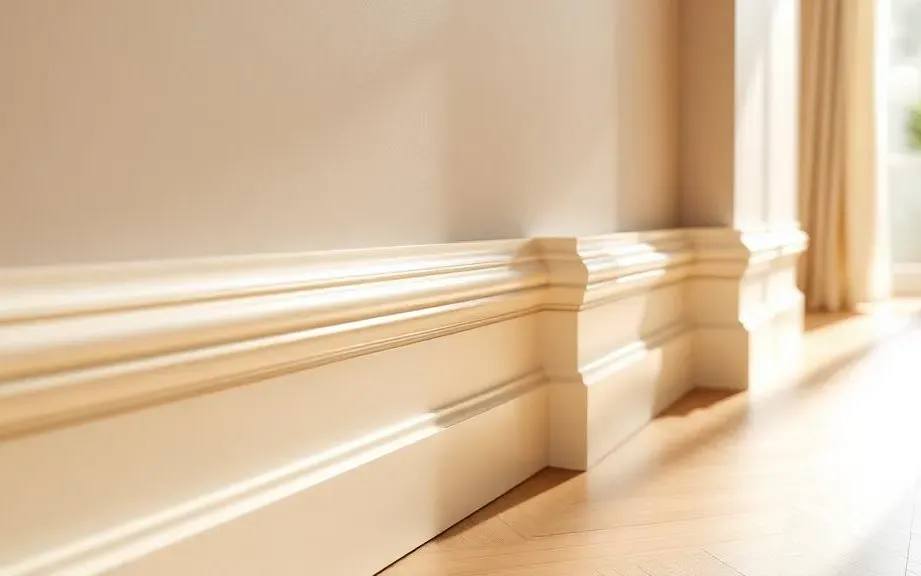
Skirting board installation by a specialist skirting fitter
TipTop Plinten fits skirting boards in MDF, solid wood and aluminium, finished in any RAL colour and neatly matched to any floor, even with uneven walls.
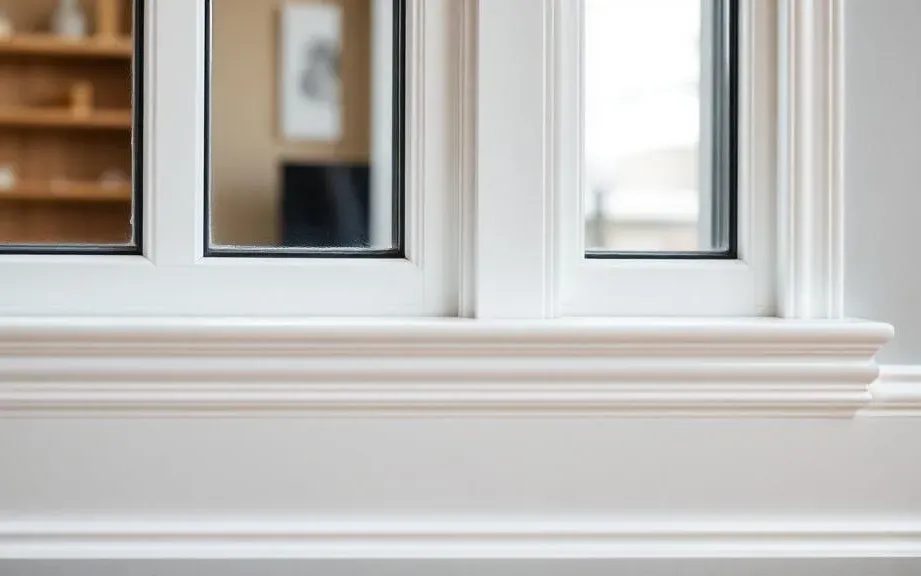
Caulking skirting boards and sealant work for a seamless finish
Caulking is the final step that makes skirting boards, mouldings and panels look seamless. TipTop Plinten uses acrylic or silicone, paint-ready or in colour.
Skirting board installation? Request a free quote
On-site measurement €75 incl. VAT (credited for orders above a minimum project size)