
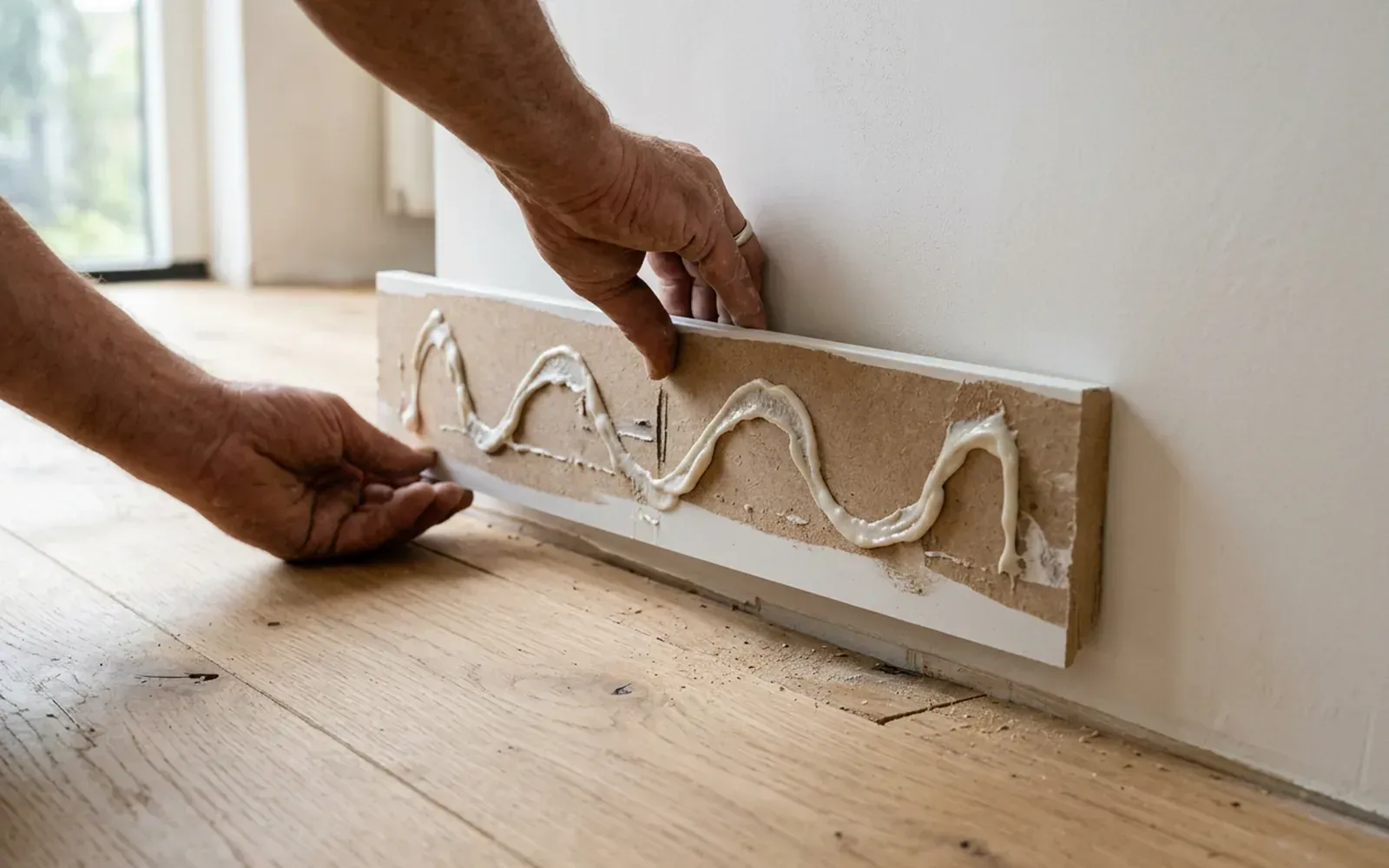
Skirting boards can be fixed in three ways: gluing with construction adhesive, screwing with wall plugs or nailing (or pinning) into timber. The right choice depends mainly on the wall: on a flat brick or plastered wall, gluing is often enough; on an uneven wall you combine adhesive with a few screws; and on timber battens or a timber wall, nailing works well. In all cases, the skirting is fixed to the wall, never to the floor.
What does the fixing method depend on?
A skirting board must sit tight against the wall, must not shift or pull away and must leave the floor free. Four factors determine which method does that best:
- The substrate. Concrete, calcium silicate blocks, gypsum blocks, plasterboard on metal studs or timber battens each need a slightly different approach.
- The flatness of the wall. The more the wall undulates, the more the skirting has to be pulled tight against it.
- The skirting itself. A low, flexible skirting board follows the wall more easily than a tall, stiff one. With tall skirting boards, good fixing is especially important.
- The finish. If you don't want visible holes, adhesive or a clip system is preferable.
Gluing skirting boards with construction adhesive
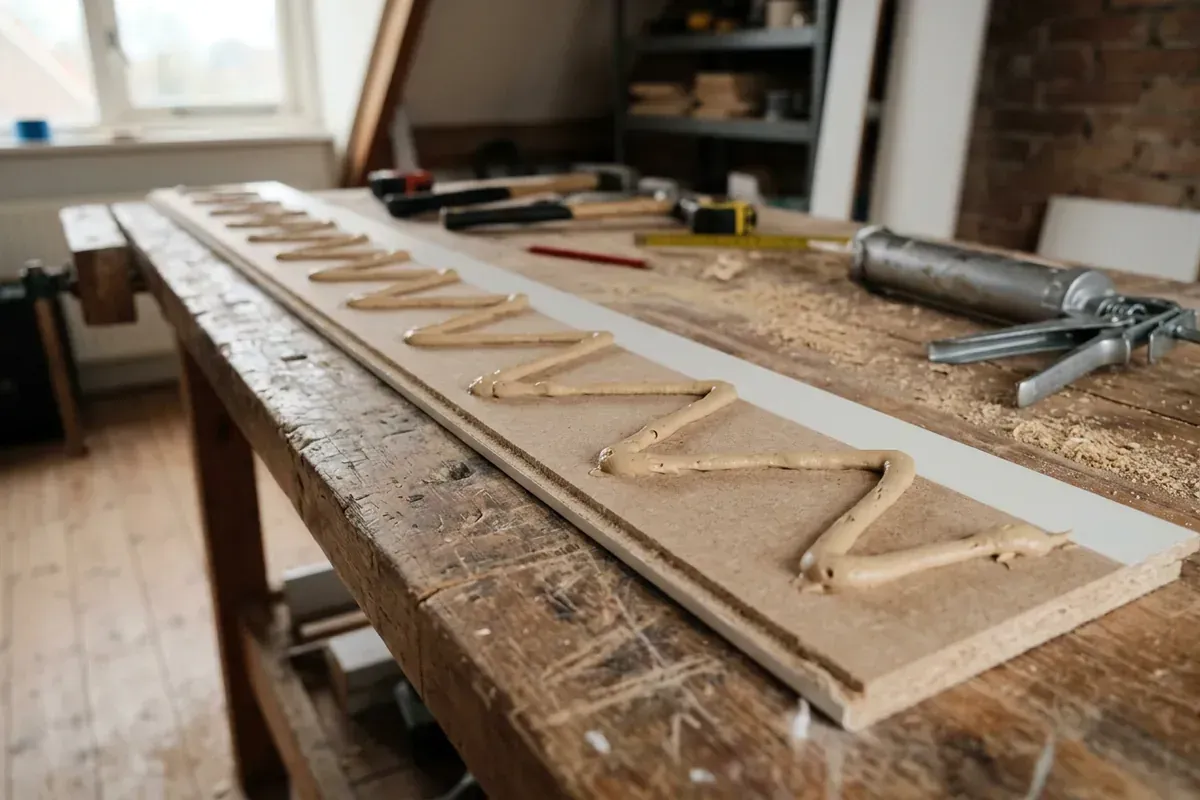
Construction adhesive is the most common way to fix MDF skirting boards. You apply beads or dabs of adhesive to the back of the skirting and press it against the wall. No screw holes are needed, so the face of the skirting stays intact.
What should you look out for when gluing skirting boards?
- A clean, dry, sound surface. Adhesive does not bond well to dust, flaking emulsion or a powdery wall.
- Choose an adhesive that suits the skirting and wall. Not every adhesive is suitable for every combination of materials. Follow the application instructions on the packaging.
- Not too much adhesive at the bottom. Adhesive that squeezes out under the skirting can fix the skirting to the floor.
- Hold it in place while it cures. On a wall that is not perfectly flat, temporary support or a few mechanical fixings are needed.
Screwing skirting boards with wall plugs
Screwing gives a mechanical fixing that holds immediately, even on a less flat wall. In brick or concrete you pre-drill and use a plug that suits the material. With plasterboard, special cavity fixings or fixing into the studs are needed.
The drawbacks are the larger holes in the skirting and the risk of hitting cables or pipes. Electrical cables to wall sockets can run low in the wall, and near radiators pipes sometimes run just above the floor. Use a detector and do not drill in line above or beside a socket.
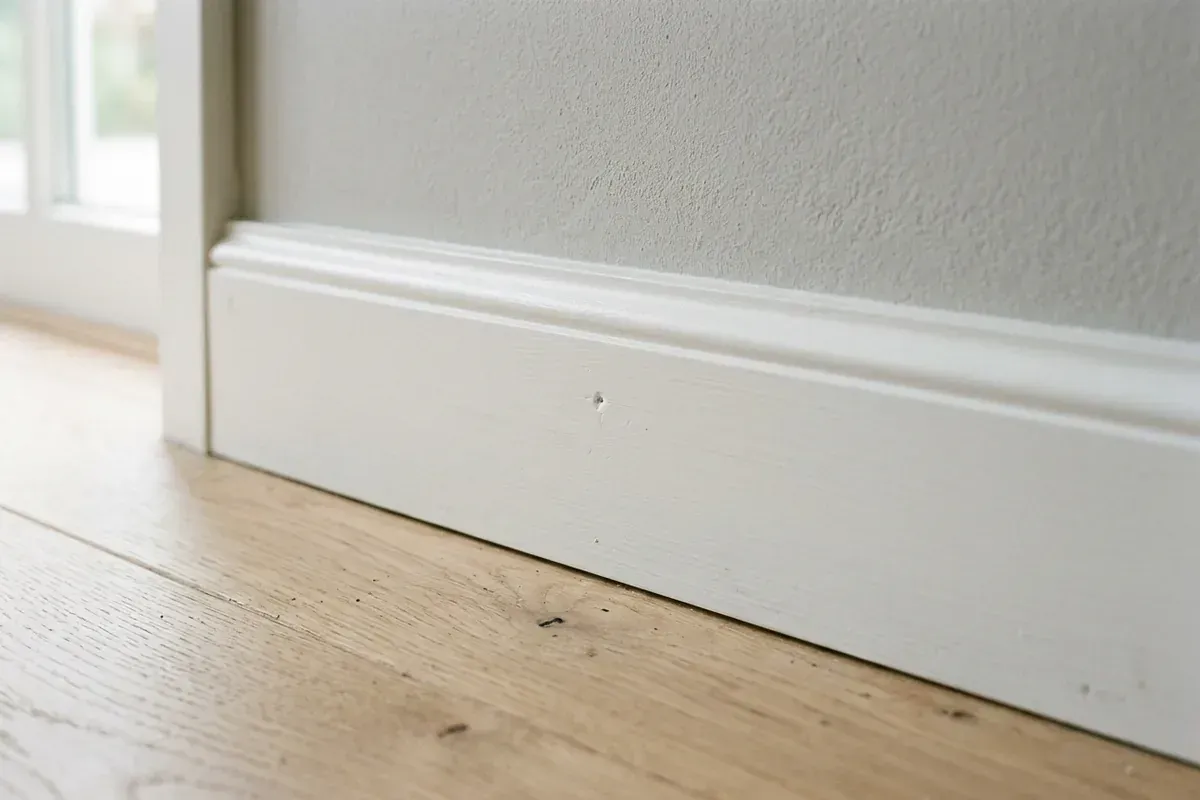
After fitting, the screw holes are countersunk, filled and touched up in the colour of the skirting. With pre-finished skirting, making the spot invisible takes precise work.
Nailing or pinning skirting boards
Nailing skirting boards works on surfaces where a nail can get a grip: timber battens, a timber wall or a timber door jamb. Professionals often use a nail gun with thin pins that leave a very small hole.
On a brick or concrete wall, a nail without a plug does not hold well enough. There, nailing is at most used to hold a glued skirting board in place temporarily until the adhesive has cured.
The combination: adhesive plus mechanical fixing
In practice, a combination is often the best solution. The adhesive provides lasting adhesion along the whole length, while a few thin nails or screws keep the skirting tight against the wall while the adhesive cures. Especially with long lengths, tall skirting and walls that are not completely flat, this prevents the skirting from coming away in places.
Overview: which fixing for which wall?
| Wall | Common method | Note |
|---|---|---|
| Plastered brick or concrete, flat | Construction adhesive | Surface dust-free and sound |
| Brick or concrete, uneven | Adhesive + screws with plugs | Check for cables and pipes |
| Plasterboard on studs | Adhesive, or fixing into the studs | Do not screw into plasterboard alone without a suitable fixing |
| Timber wall or battens | Pinning or nailing, possibly with adhesive | Fill and touch up the holes |
Common mistakes when fixing skirting
- Gluing onto dust or flaking emulsion. The skirting comes away over time.
- Too few fixing points. On an uneven wall, gaps then appear between the points.
- Screws without plugs in brick. The screw cannot get a grip.
- Caulking straight away. Caulking before the adhesive has cured or the skirting is properly fixed leads to cracks in the joint.
Leaving the floor free
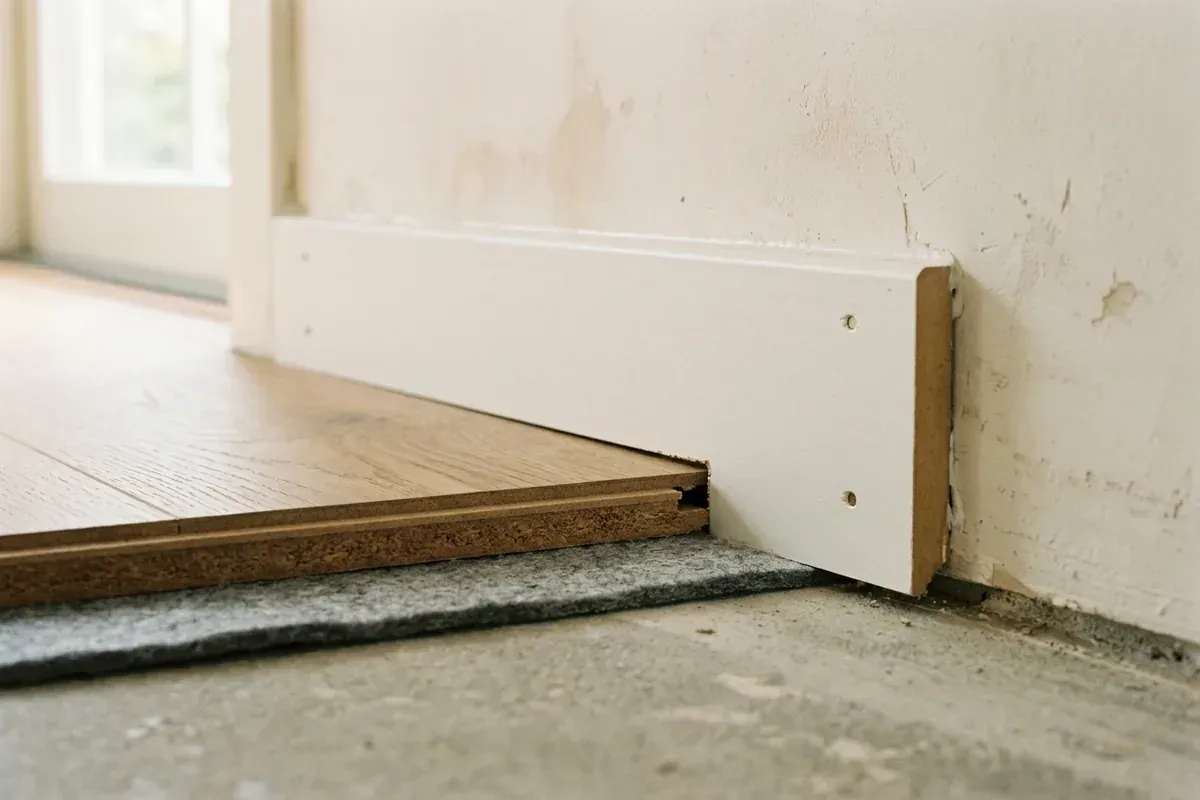
With a floating floor, such as laminate or click vinyl, the floor lies loose on the underlay and has an expansion gap along the walls all the way round. The skirting covers that gap, but must not press the floor down. That is why the skirting is fixed to the wall just clear of the floor. More on this in skirting boards for laminate.
After fixing: caulking and touching up
Once the skirting is secure, the finishing follows: the joint between skirting and wall is sealed with paintable acrylic caulk and holes are filled and touched up. Skirting that still moves will crack the caulk later, so fix it properly first, then caulk. See caulking skirting boards: which sealant? and the glossary under caulking.
Fixing on difficult walls
Not every wall cooperates. In the historic home in Apeldoorn, a 19th-century building with subsided walls, made-to-measure skirting boards were fitted that respect its historic character. With walls like that, it is about more than a fixing method: the skirting itself is adapted to the wall. More on this in made-to-measure skirting for uneven walls.
If you are wondering whether to do it yourself, read fitting skirting: DIY or professional. On our skirting board installation page you can read how TipTop Plinten approaches fitting, mitres and caulking.
Request a quote
Would you like your skirting boards fixed by a professional? Send photos of the walls and the floor, and the estimated number of metres, via contact. We are happy to communicate in English. The quote is free and without obligation. If you would rather have measurements taken on site, an on-site measurement is available for €75 incl. VAT, deducted for projects above a minimum size.
Frequently asked questions
On a flat, clean and sound wall, skirting can be fixed with construction adhesive. On a less flat wall or with a long, stiff skirting board, adhesive is often combined with a few mechanical fixing points so the skirting stays tight against the wall while it cures.
Screws with wall plugs give the strongest fixing in brick and concrete, but leave larger holes. Nailing or pinning works on timber surfaces or battens and leaves small holes that are easy to fill. On a brick wall, a nail without a plug does not hold well enough.
No, the skirting is fixed to the wall, not the floor. Especially with a floating floor such as laminate or click vinyl, the floor must be able to move freely under the skirting. Glue or screws in the floor can lead to gaps or a floor that lifts.
Electrical cables and water pipes can also run low in the wall, for example to wall sockets. Check with a cable and pipe detector and look at where sockets and radiator connections are. Gluing largely avoids this risk.
Yes, with construction adhesive or with a clip system in which the skirting clicks onto pre-fixed clips. TipTop Plinten offers hidden fixing where the situation allows. Which method fits depends on the wall and the type of skirting.
Related articles
Installation & finishing
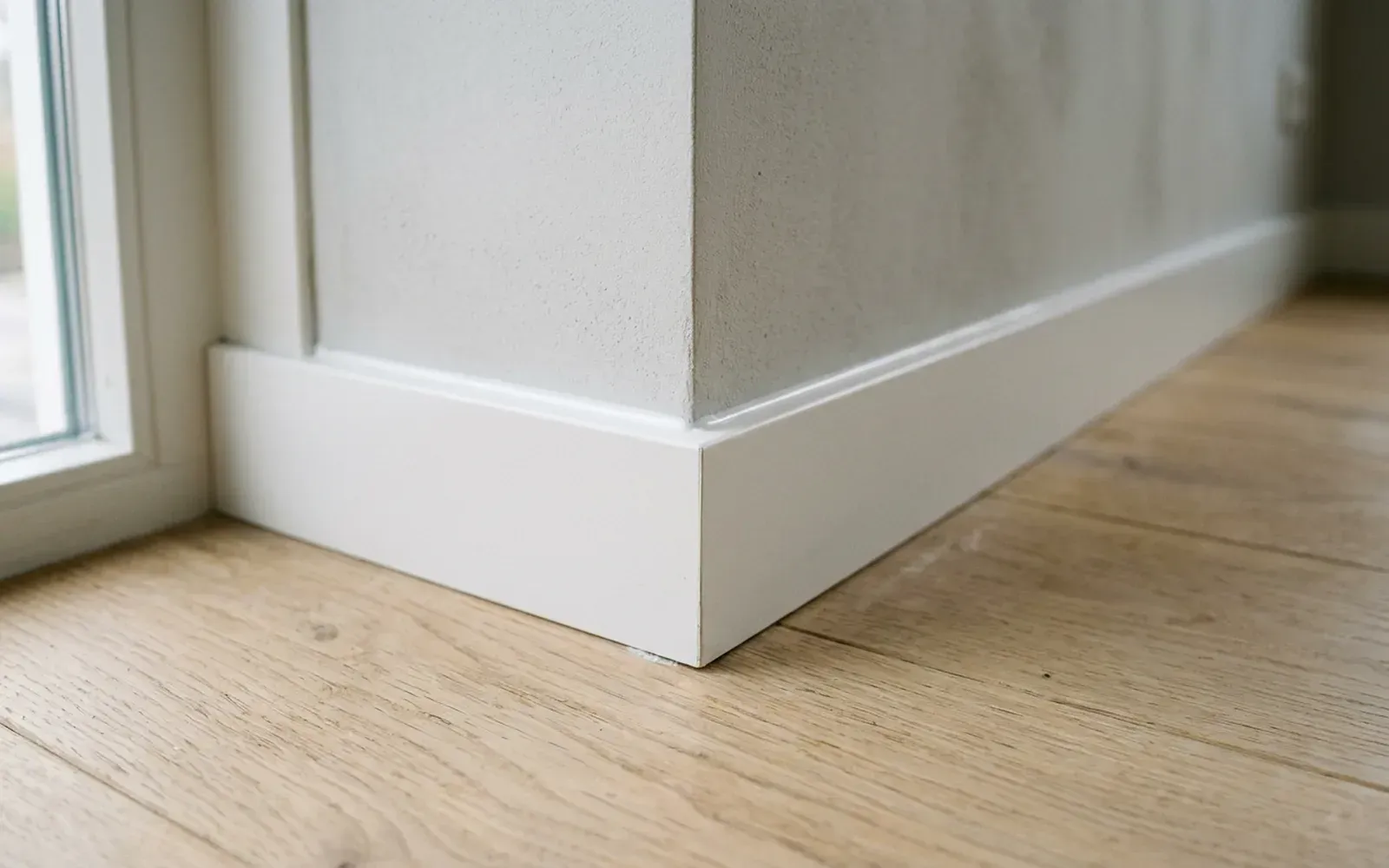
Caulking skirting boards: which sealant should you use and how do you get a neat finish?
For the joint between skirting board and wall you use paintable acrylic caulk, and silicone only where water is involved. Here is how to run a clean caulk line.
Installation & finishing
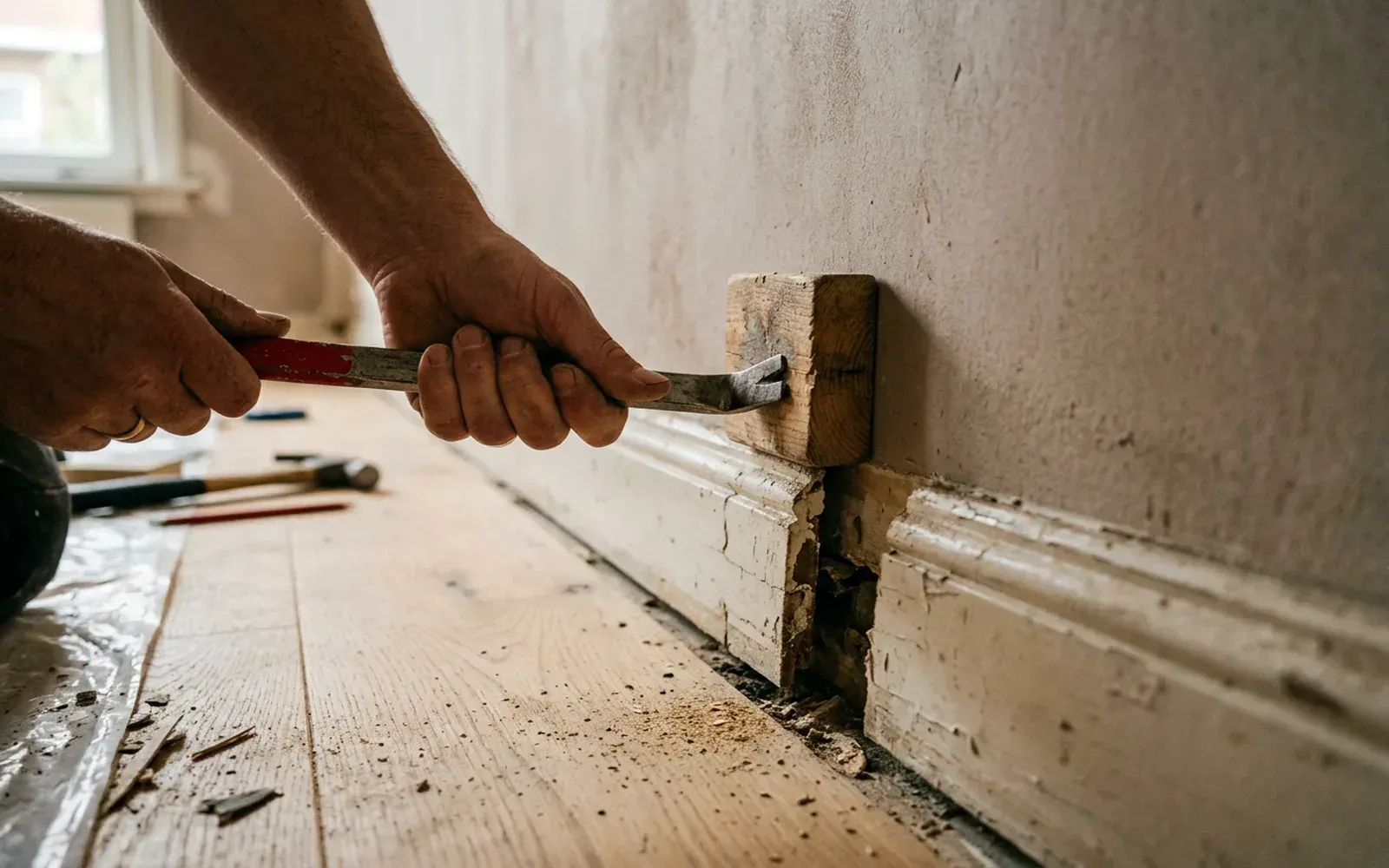
Removing skirting boards without damaging the wall or floor
Old skirting boards are best removed step by step: cut through the caulk line, find out how they are fixed and prise them off carefully while protecting the wall.
Costs & process
Fitting skirting boards: do it yourself or hire a professional?
Fitting skirting boards yourself works well in a simple room. With lots of corners, uneven walls or a striking colour, a professional pays off. Here is how to weigh it up.
Related
Construction adhesive
Construction adhesive is a strong glue or sealant used to fix skirting boards, mouldings and panels to the wall, often combined with nails or screws.
Skirting board
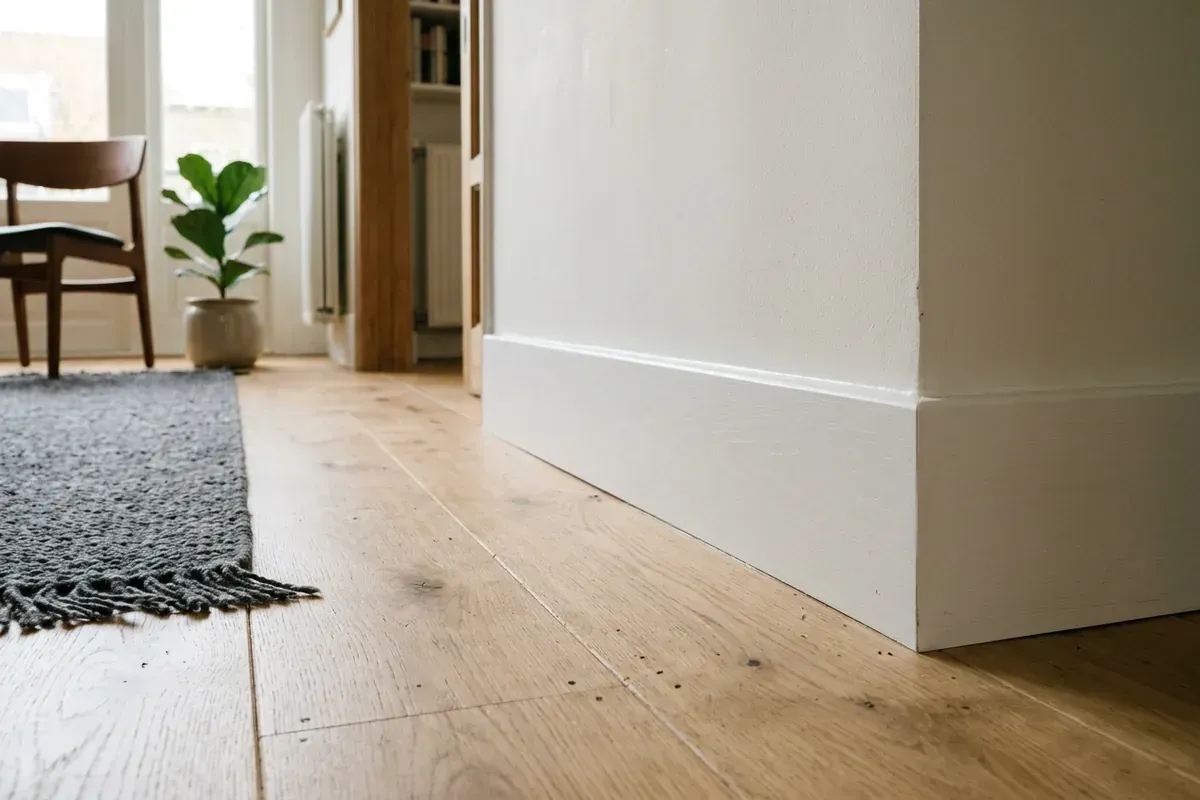
A skirting board is the moulding at the base of the wall that finishes the transition to the floor and protects the wall. Here is how it works and what to look out for.
Expansion gap
An expansion gap is an open space along the edge of a floor, so it can expand and contract. The skirting board covers the gap without fixing it.
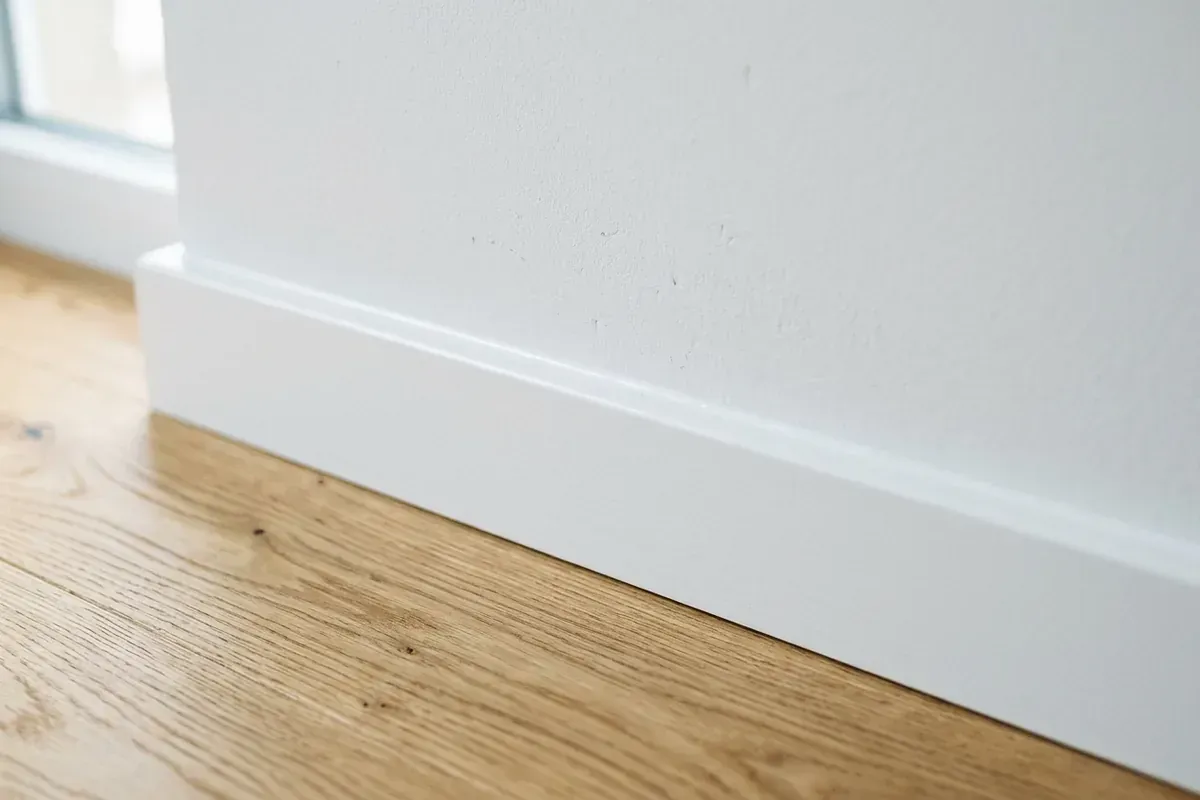
Caulking
Caulking means sealing joints with a flexible sealant. With skirting boards and mouldings, it makes the transition to the wall crisp and seamless.
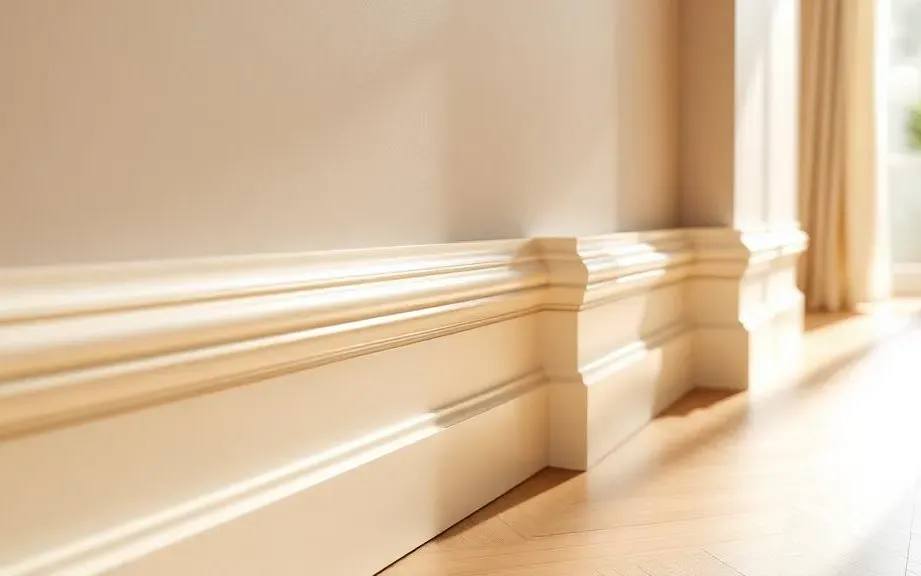
Skirting board installation by a specialist skirting fitter
TipTop Plinten fits skirting boards in MDF, solid wood and aluminium, finished in any RAL colour and neatly matched to any floor, even with uneven walls.
Skirting board installation? Request a free quote
On-site measurement €75 incl. VAT (credited for orders above a minimum project size)