
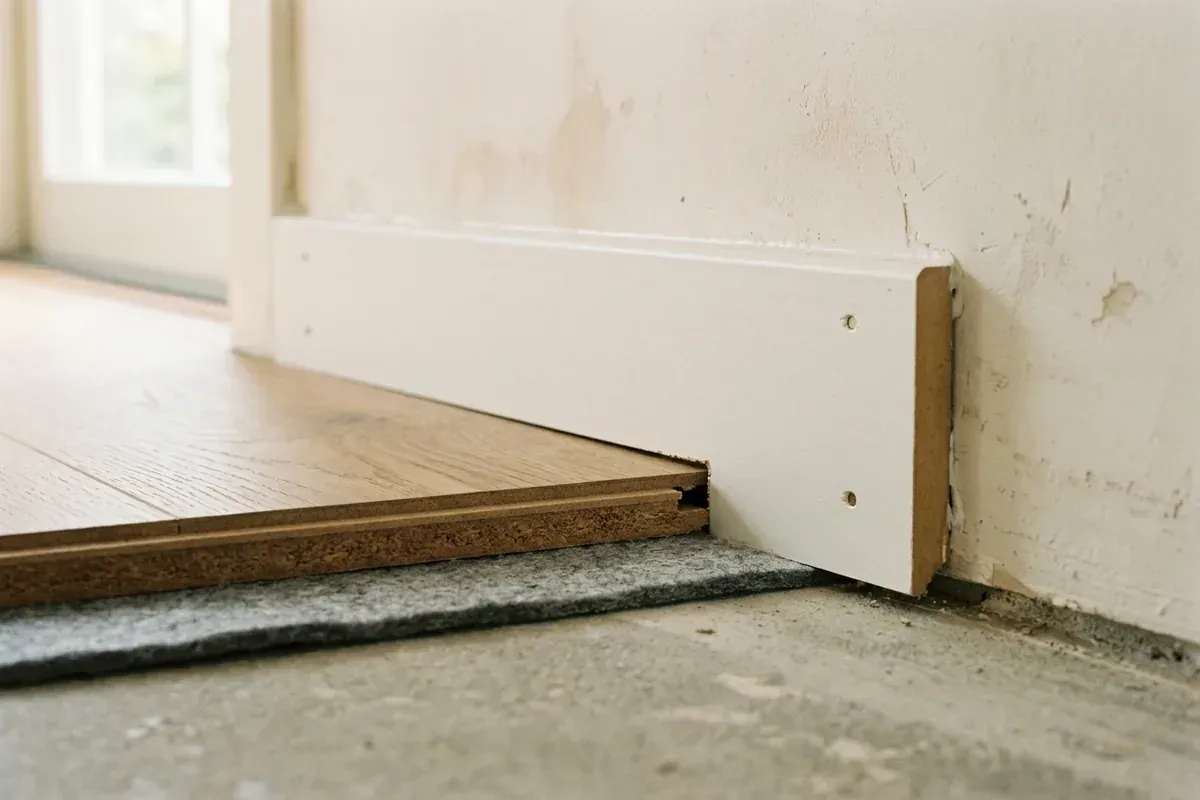
An expansion gap is an open space along the edge of a floor or between two floor sections, so the floor can expand and contract. Floating floors in particular, such as laminate, click vinyl and floating parquet, move with temperature and humidity. Without an expansion gap the floor can buckle or creak. The skirting board covers the gap without fixing it.
What is an expansion gap?
The gap allows for expansion, which is where the name comes from. It is also called a perimeter gap or expansion joint. There are two types:
- Perimeter gap: along all walls, frames, pipes and fixed objects.
- Intermediate joint: in large rooms or at openings between rooms, often covered with a threshold profile.
The required width depends on the type of floor and the dimensions of the room. The floor manufacturer's installation instructions take precedence.
Where is it used?
- With laminate, which is almost always laid as a floating floor.
- With click vinyl, a widely used variant of vinyl flooring.
- With floating parquet.
- To a lesser extent with fully bonded floors, although these sometimes also need a perimeter gap according to the instructions.
What should you look out for?
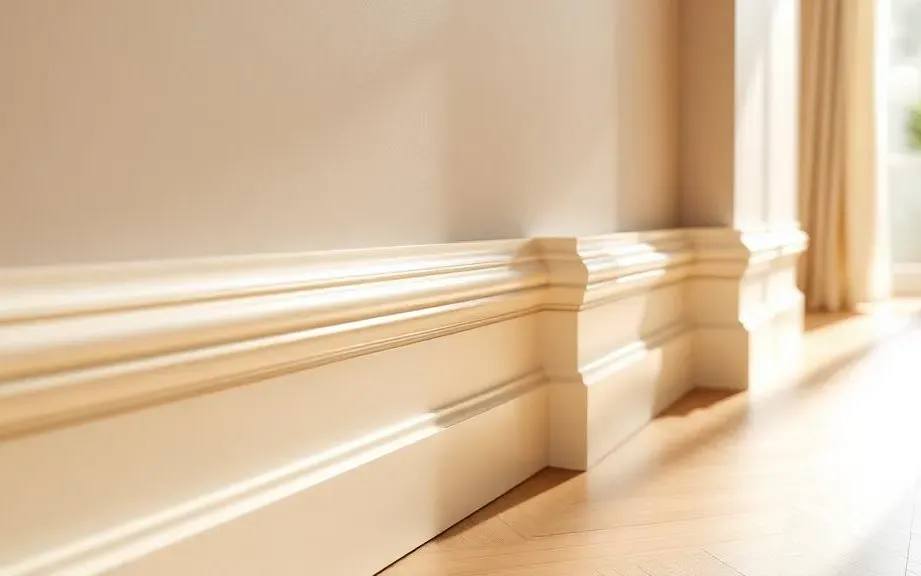
- Skirting on the wall: the skirting board is fixed to the wall, never to the floating floor.
- Space under the skirting: the skirting does not press on the floor, so it can slide freely.
- No rigid caulk: the joint between skirting and floating floor is not sealed rigidly. The top edge of the skirting, against the wall, can be caulked.
- Coverage: the skirting must be thick enough to cover the gap completely. Skirting that is too thin leaves the gap visible.
- Frames and pipes: space must remain there too, for example with pipe collars around pipes or an undercut beneath the frame.
Also read which skirting boards for laminate? and skirting boards for vinyl floors.
At TipTop Plinten
TipTop Plinten fits skirting boards to laminate, vinyl, parquet, herringbone and tiled floors, taking the movement of the floor into account. Read more about skirting board installation.
Frequently asked questions
That depends on the type of floor, the size of the room and the floor manufacturer's instructions. It is often a few millimetres up to about a centimetre. Always follow the floor's installation instructions.
Not with a rigid filler. The gap must leave room for movement. That is why the skirting board is fixed to the wall and not to the floor, and the joint between skirting and floating floor is not sealed rigidly.
Related
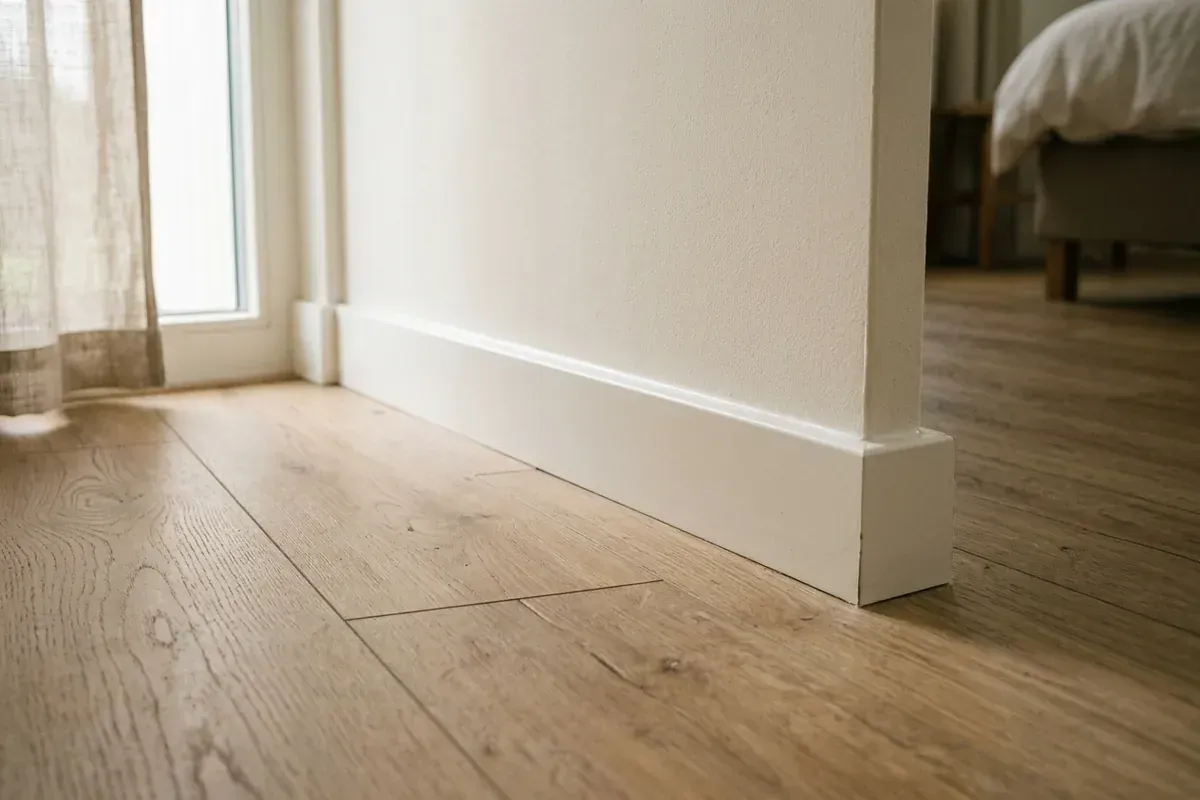
Laminate
Laminate is a floating floor made of pressed board with a printed layer. The skirting covers the perimeter gap and is fixed to the wall, not the floor.
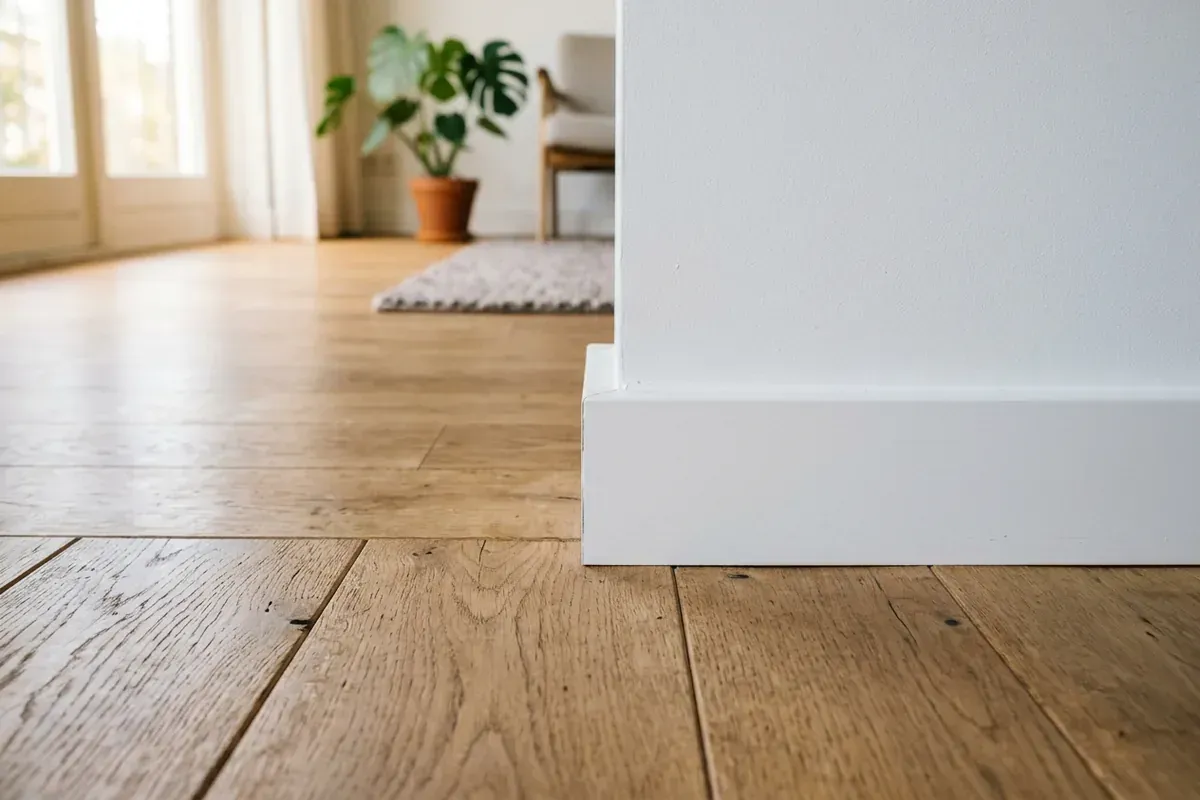
Parquet
Parquet is a floor with a top layer of real wood. Timber moves with the indoor climate, so the skirting must leave the floor room to move.
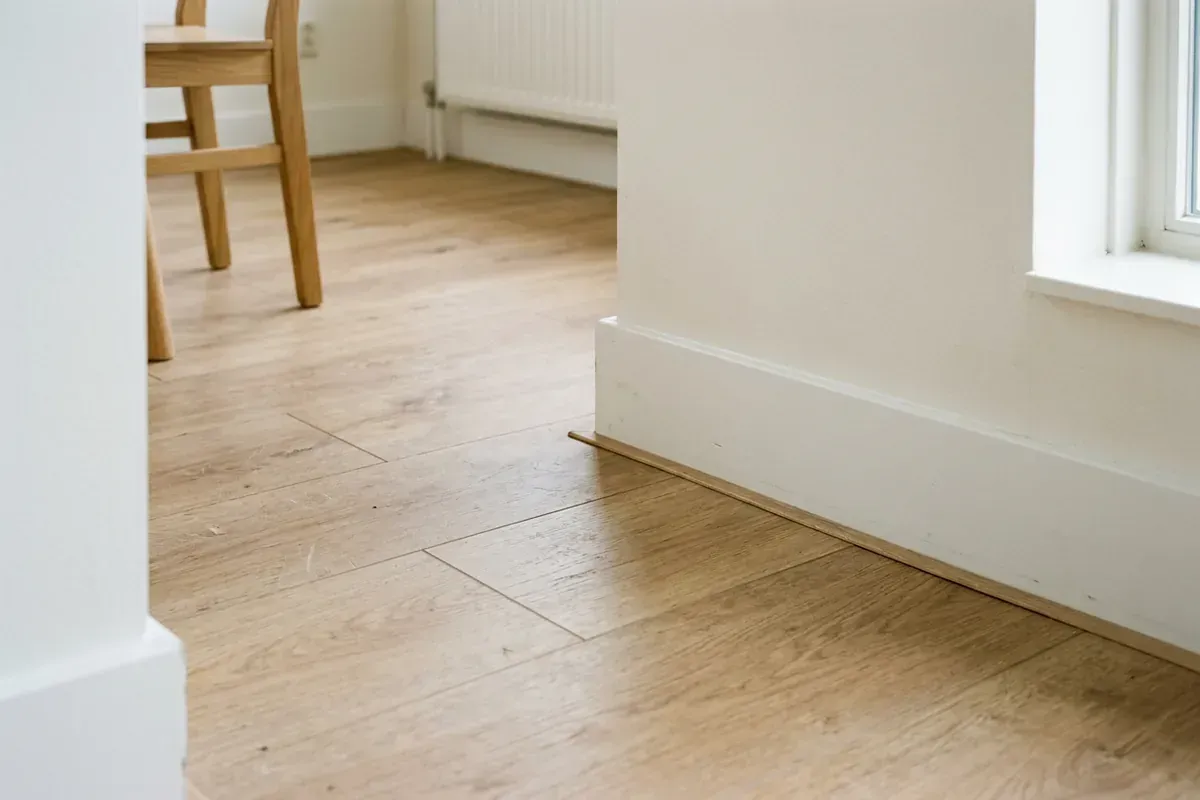
Vinyl flooring
Vinyl (PVC) flooring is a synthetic floor printed with a wood or stone look. Whether it floats or is glued down determines how the skirting meets it.
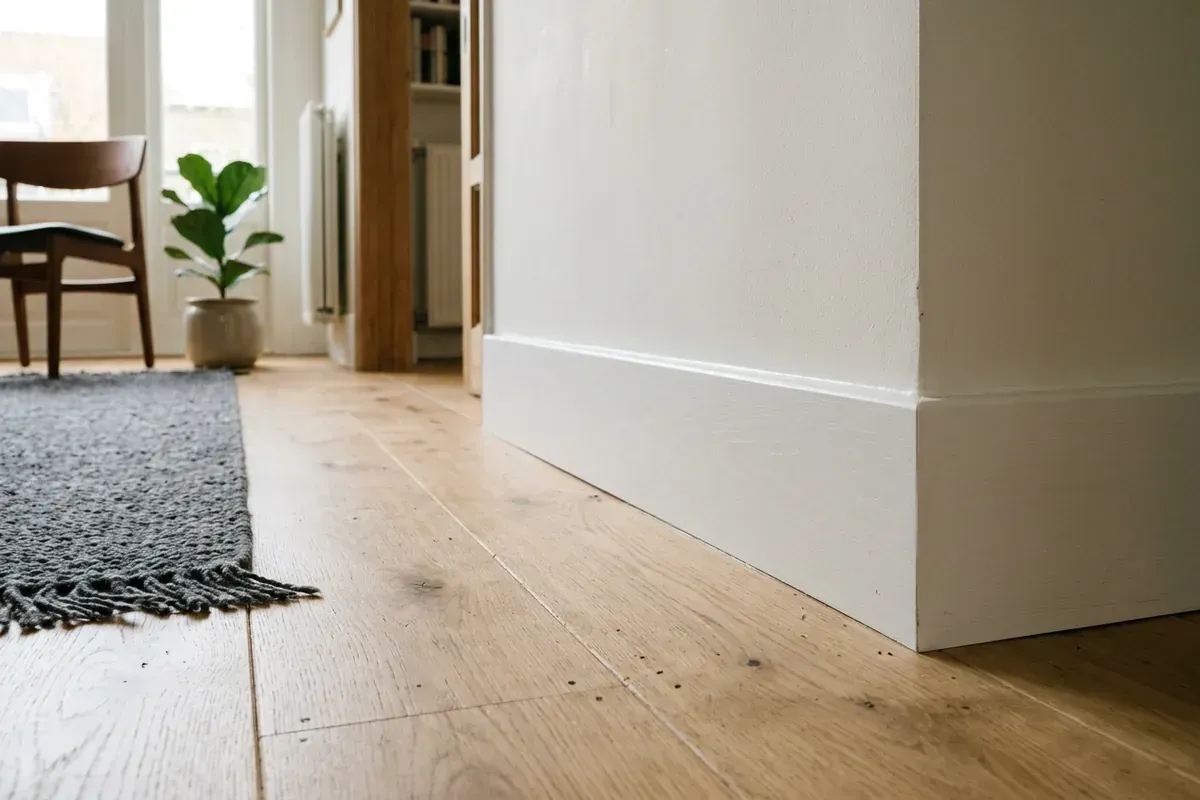
Skirting board
A skirting board is the moulding at the base of the wall that finishes the transition to the floor and protects the wall. Here is how it works and what to look out for.
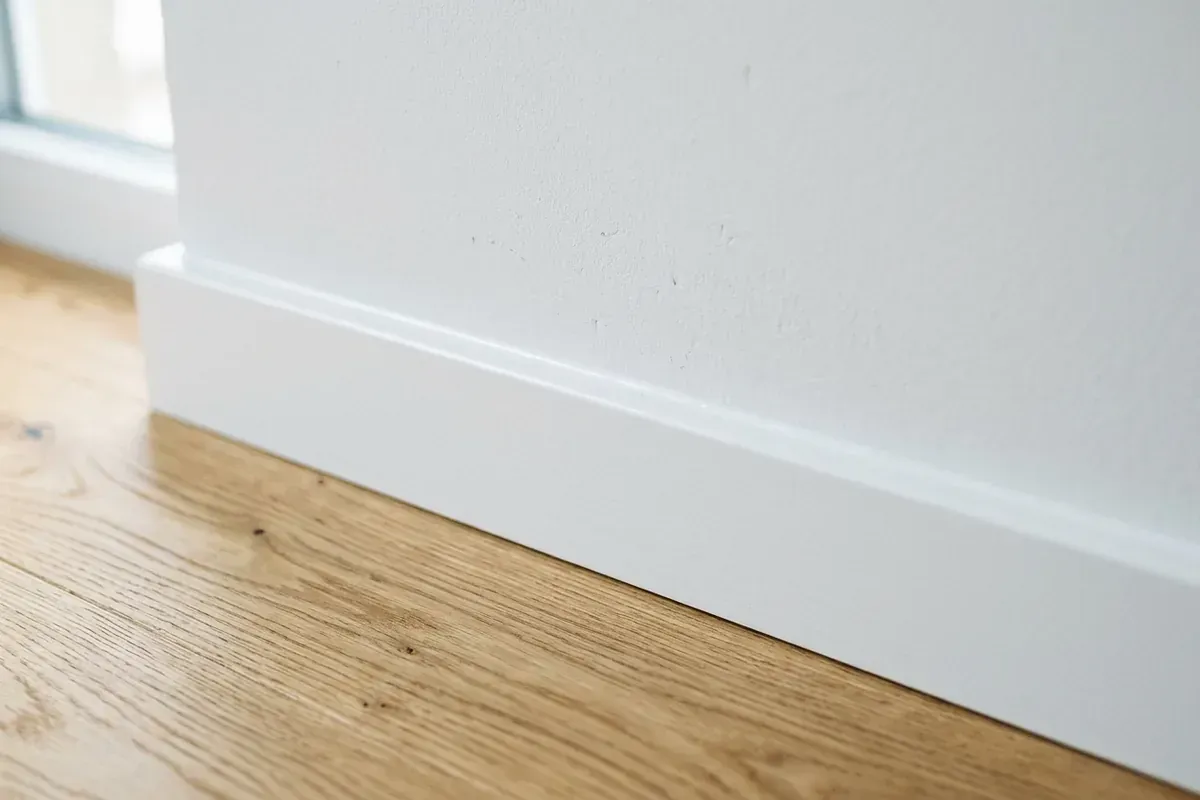
Caulking
Caulking means sealing joints with a flexible sealant. With skirting boards and mouldings, it makes the transition to the wall crisp and seamless.
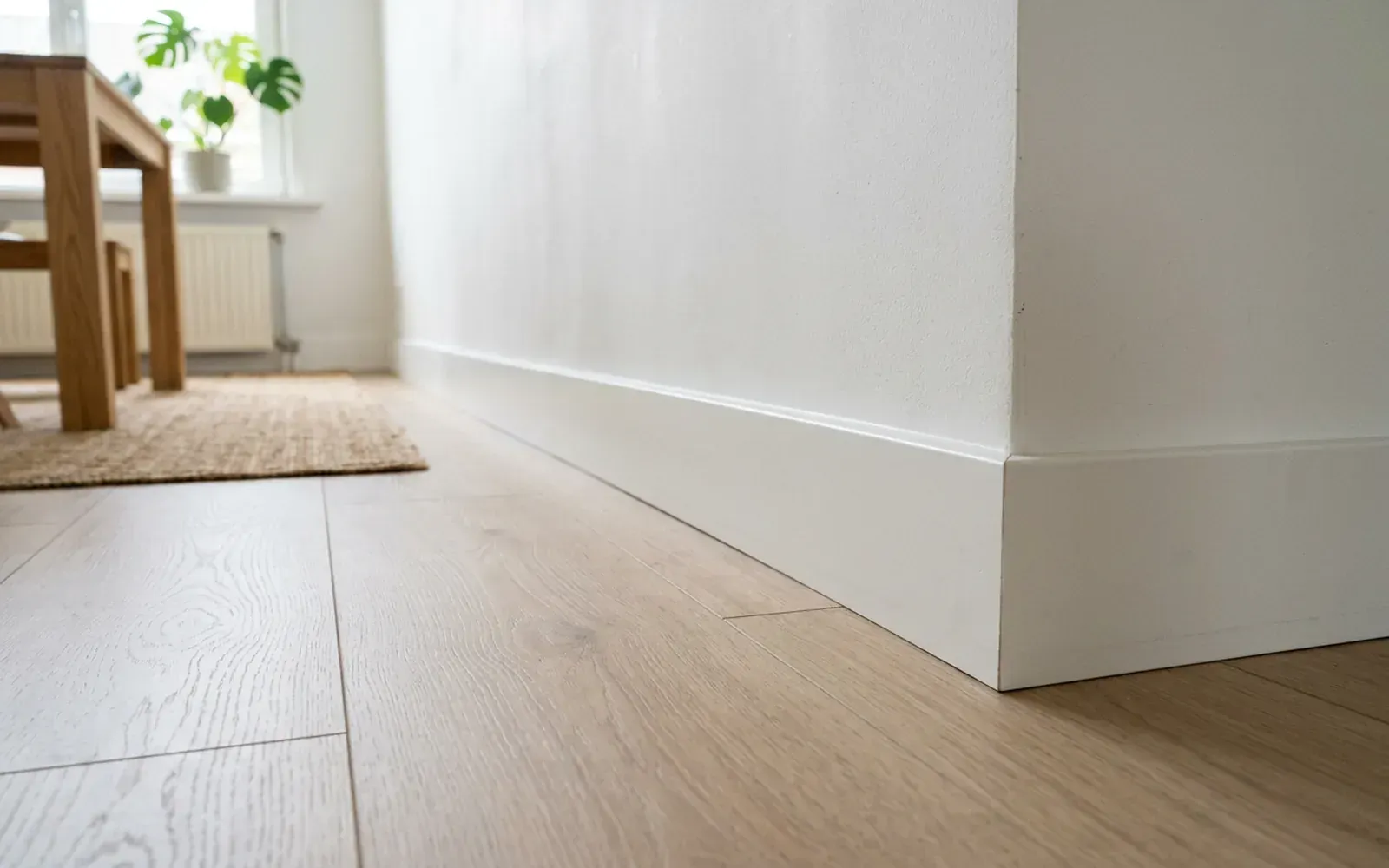
Floors & skirting
Which skirting boards suit a laminate floor?
With laminate, the skirting board has a technical job: covering the expansion gap without pinning the floor down. Here is how to choose the right skirting and fixing method.
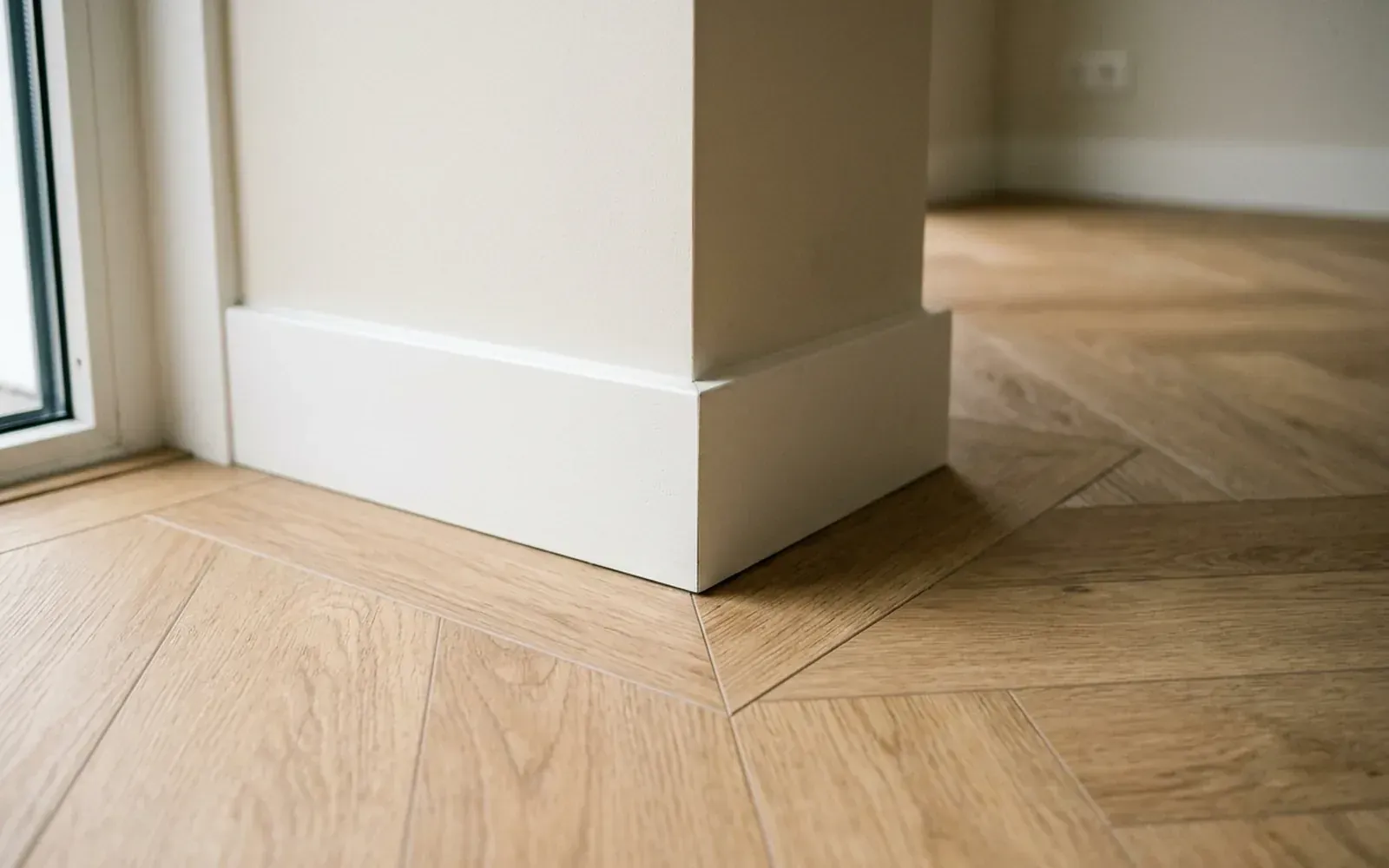
Floors & skirting
Skirting boards for a vinyl (PVC) floor: what should you look out for?
A vinyl (PVC) floor is thin and sleek, so the junction with the skirting stands out straight away. This is the difference between glue-down and click vinyl and what it means for your skirting.
Skirting board installation by a specialist skirting fitter
TipTop Plinten fits skirting boards in MDF, solid wood and aluminium, finished in any RAL colour and neatly matched to any floor, even with uneven walls.
Skirting board installation? Request a free quote
On-site measurement €75 incl. VAT (credited for orders above a minimum project size)