
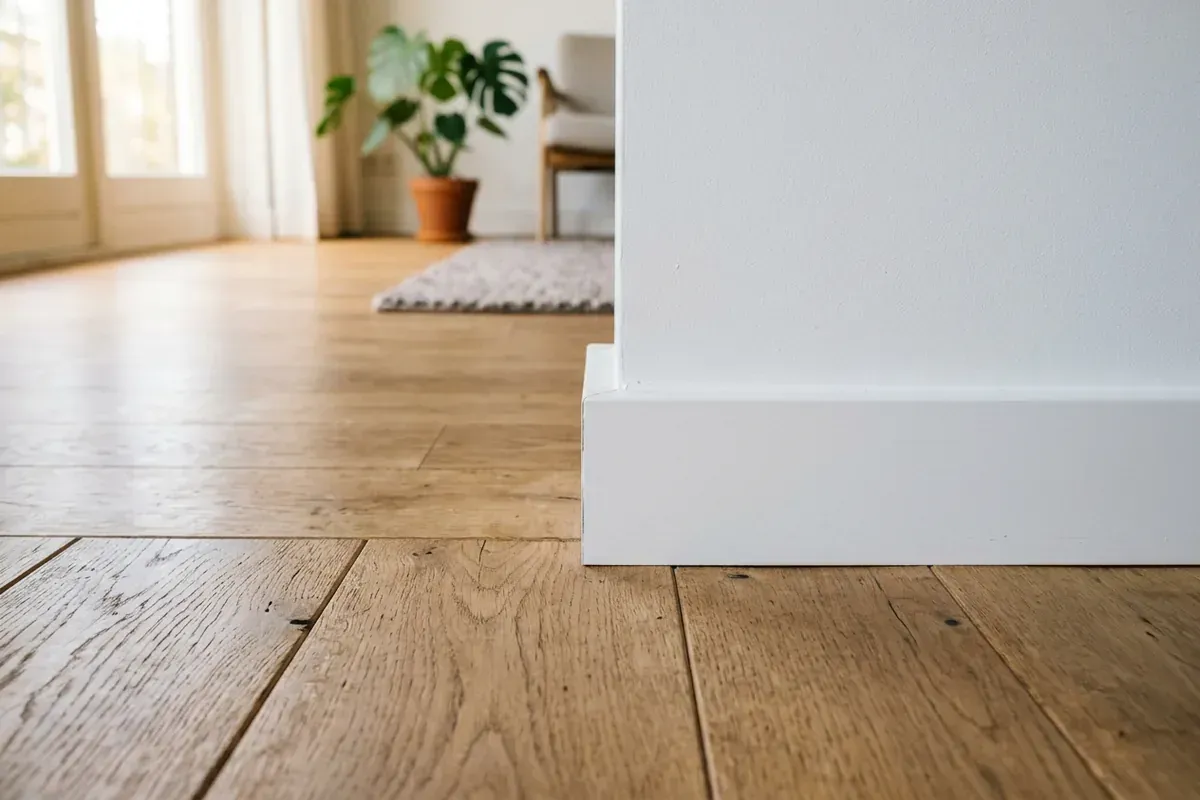
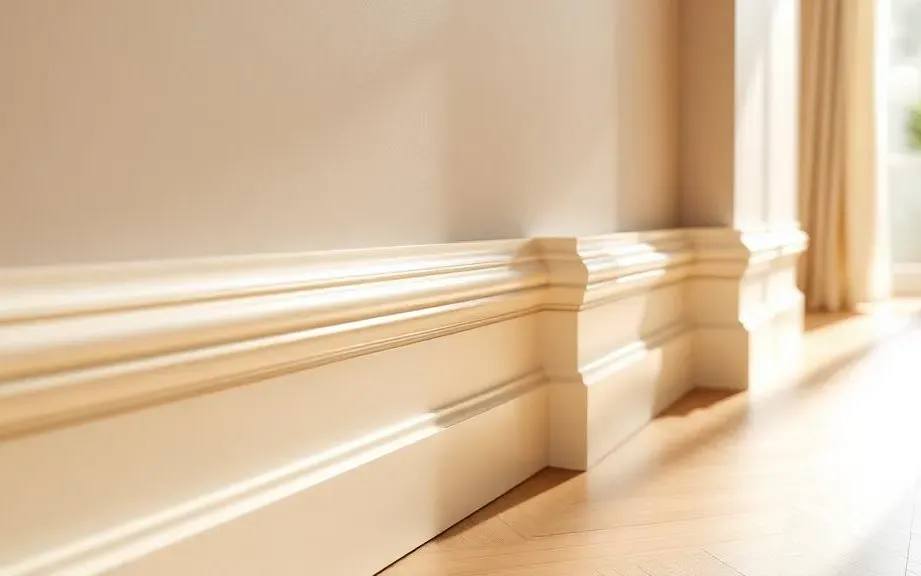
Parquet is a floor with a top layer of real wood. It can consist of solid timber boards or multi-layer planks with a timber top layer on a stable base. Parquet can be laid floating or bonded, and in various patterns, such as straight planks or herringbone. Because timber moves with the indoor climate, the skirting board must leave the floor room to move.
What is parquet?
Common types of parquet are:
- Solid parquet: boards made from a single piece of wood, often bonded to the subfloor.
- Engineered or multi-layer parquet: a timber top layer on a base of timber or board material. More stable and often laid floating or bonded.
- Pattern parquet: such as herringbone, chevron or tapis.
Parquet can be finished with oil, lacquer or wax. Oak is the most widely used species.
Where is it used?
In living rooms, dining rooms, bedrooms and halls, in new builds and in older buildings. When renovating a historic property, existing parquet is sometimes restored, with the skirting boards also replaced or supplemented.
What should you look out for?
- Movement: timber expands and shrinks with humidity. Floating parquet needs an expansion gap along the wall.
- Fixing: the skirting is fixed to the wall, not to the floor.
- Order: skirting boards are usually fitted after the parquet has been laid and finished, so the lacquer or oil is not damaged.
- Protection: during installation, the floor is protected against scratches and caulk residue.
- Choice of skirting: solid wood skirting in the same species, or painted MDF skirting in the wall colour.
You can read more about skirting for pattern floors in skirting for herringbone floors.
At TipTop Plinten
TipTop Plinten fits skirting boards to parquet floors, including herringbone parquet, and works with MDF, solid wood and aluminium. TipTop also works for floor fitters, fitting the skirting boards once the floor has been laid. Read more about skirting board installation.
Frequently asked questions
It can be, and that gives a warm, continuous look. Today, however, painted skirting in the wall colour is the most popular combination, because it looks calmer and lets the floor take centre stage.
Along the top edge, against the wall, yes. With floating parquet the joint between skirting and floor is not sealed rigidly, because the timber needs to be able to move. With bonded parquet it depends on the situation.
Related
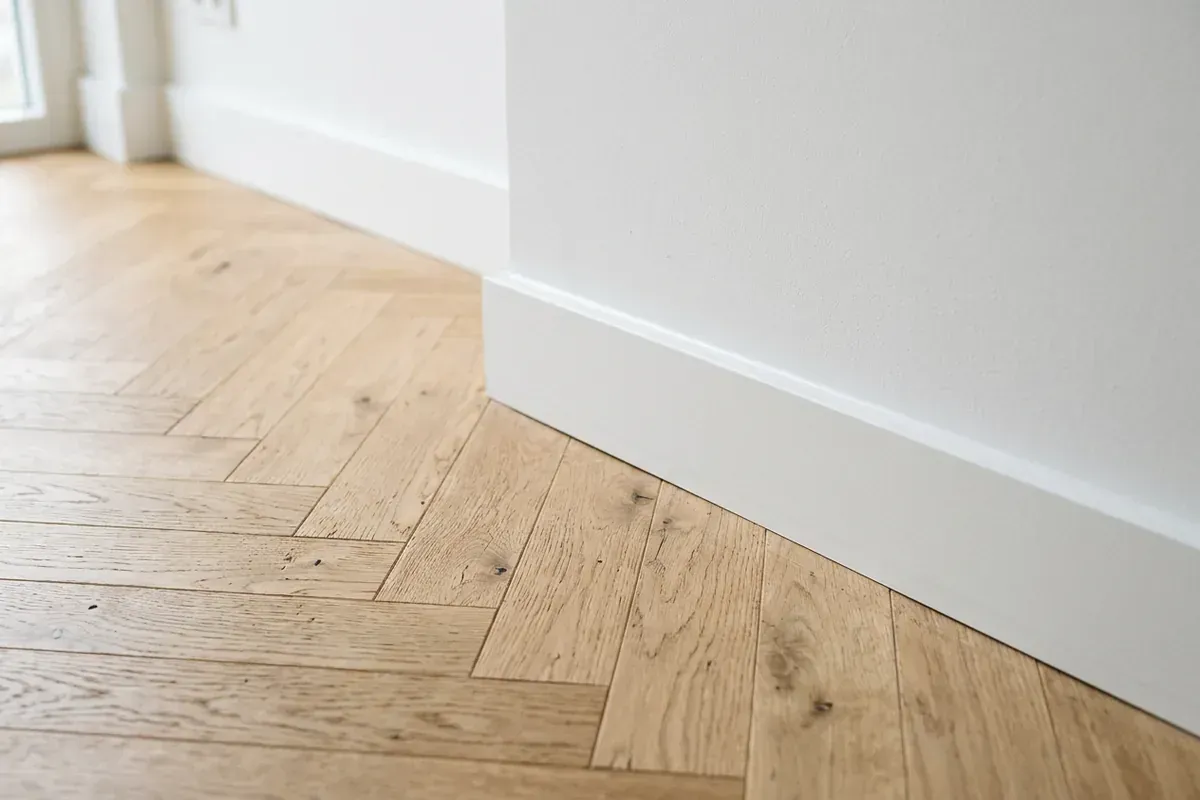
Herringbone floor
A herringbone floor consists of rectangular blocks laid in a zigzag pattern. The skirting calms the edge and hides the perimeter gap.
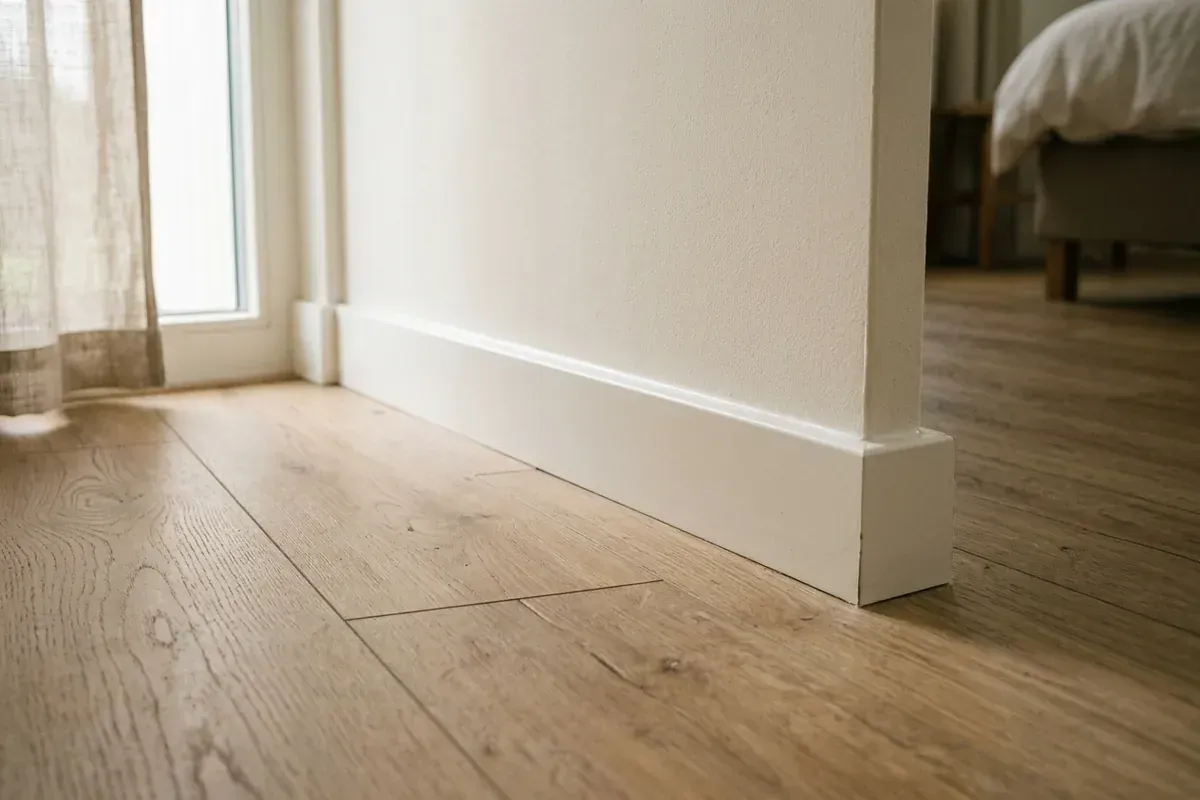
Laminate
Laminate is a floating floor made of pressed board with a printed layer. The skirting covers the perimeter gap and is fixed to the wall, not the floor.
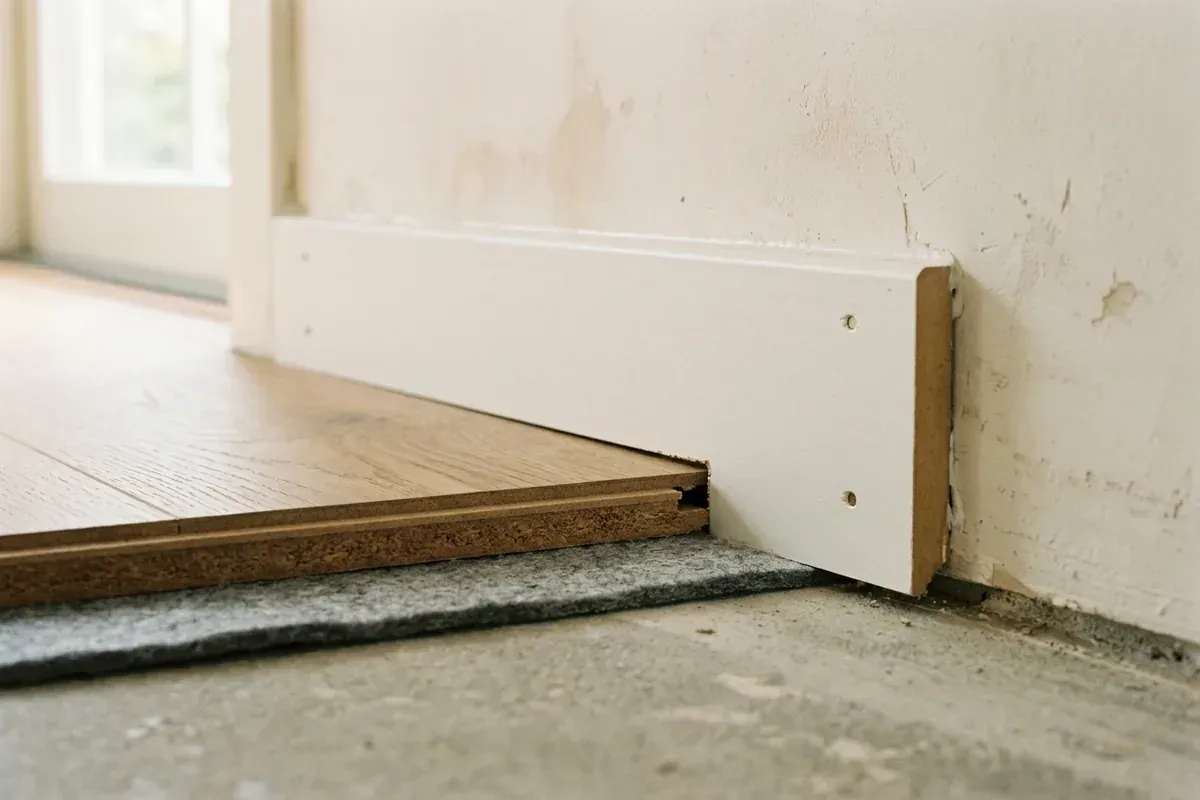
Expansion gap
An expansion gap is an open space along the edge of a floor, so it can expand and contract. The skirting board covers the gap without fixing it.
Solid wood
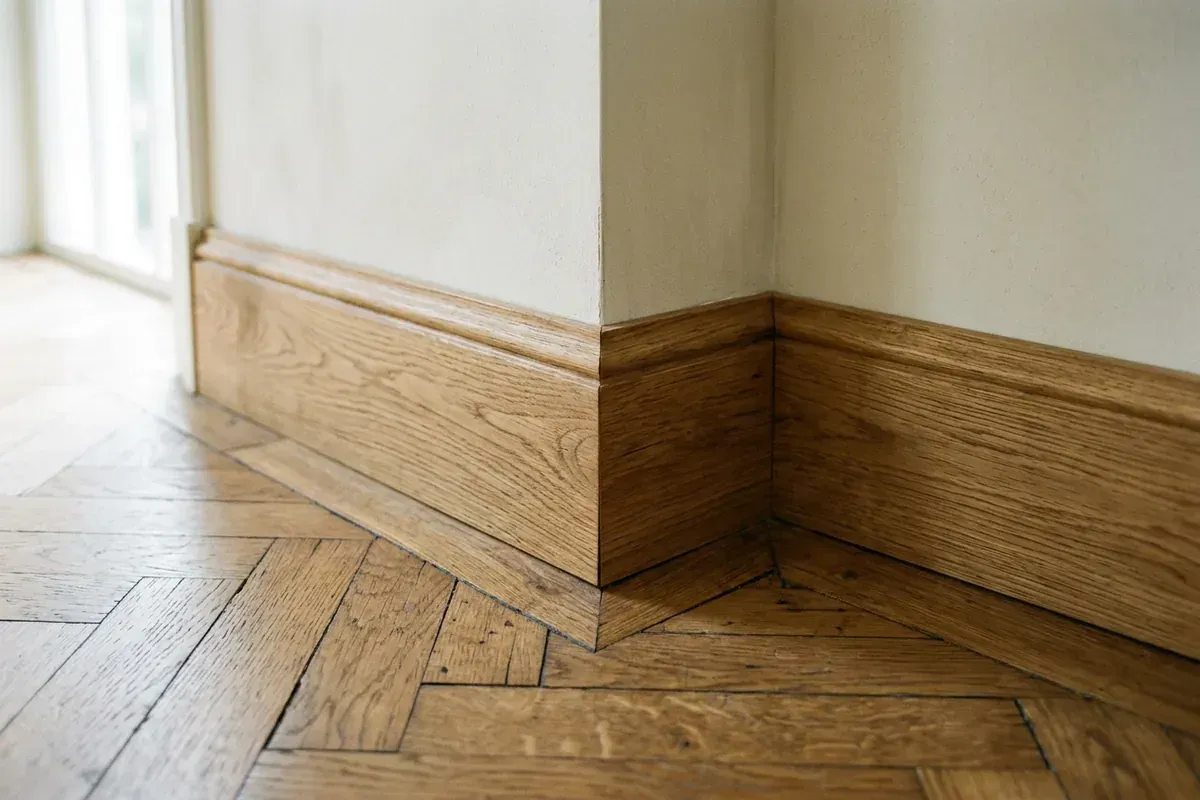
Solid wood is timber in one piece, without pressed fibres. It gives skirting boards a natural look, but moves with temperature and humidity.
Skirting board
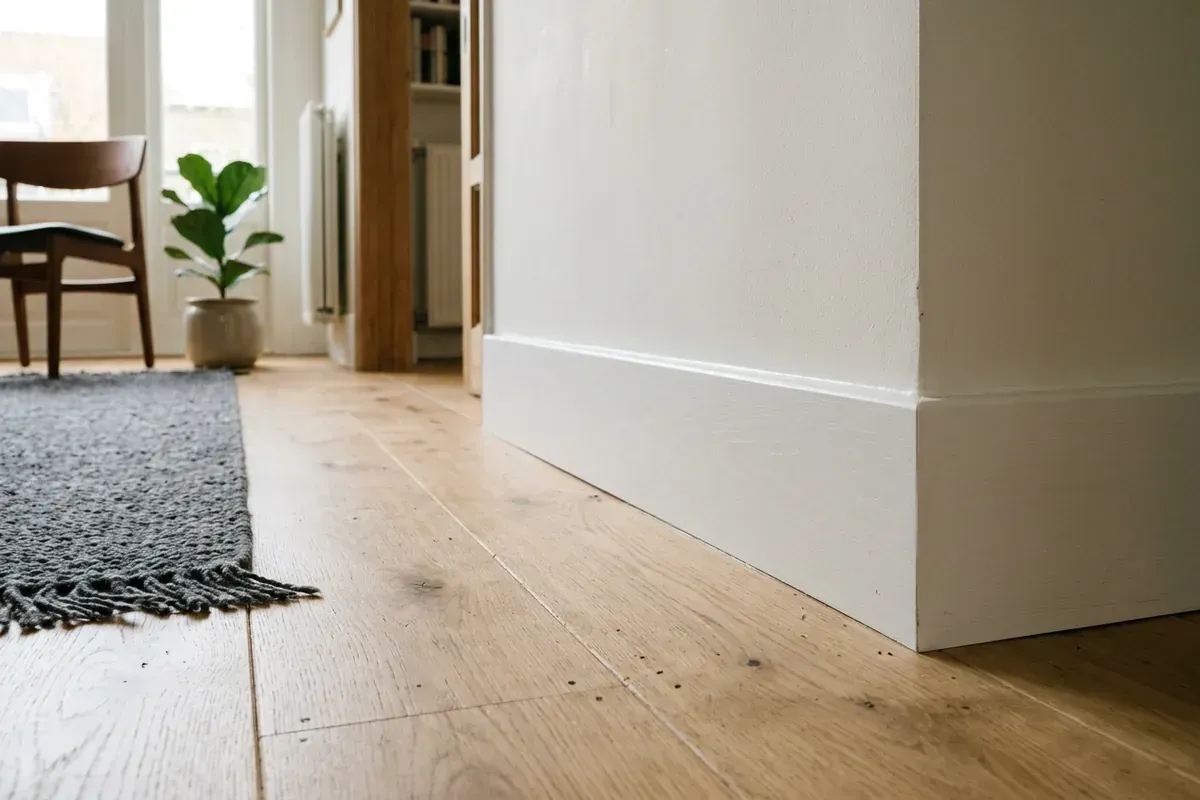
A skirting board is the moulding at the base of the wall that finishes the transition to the floor and protects the wall. Here is how it works and what to look out for.
Floors & skirting
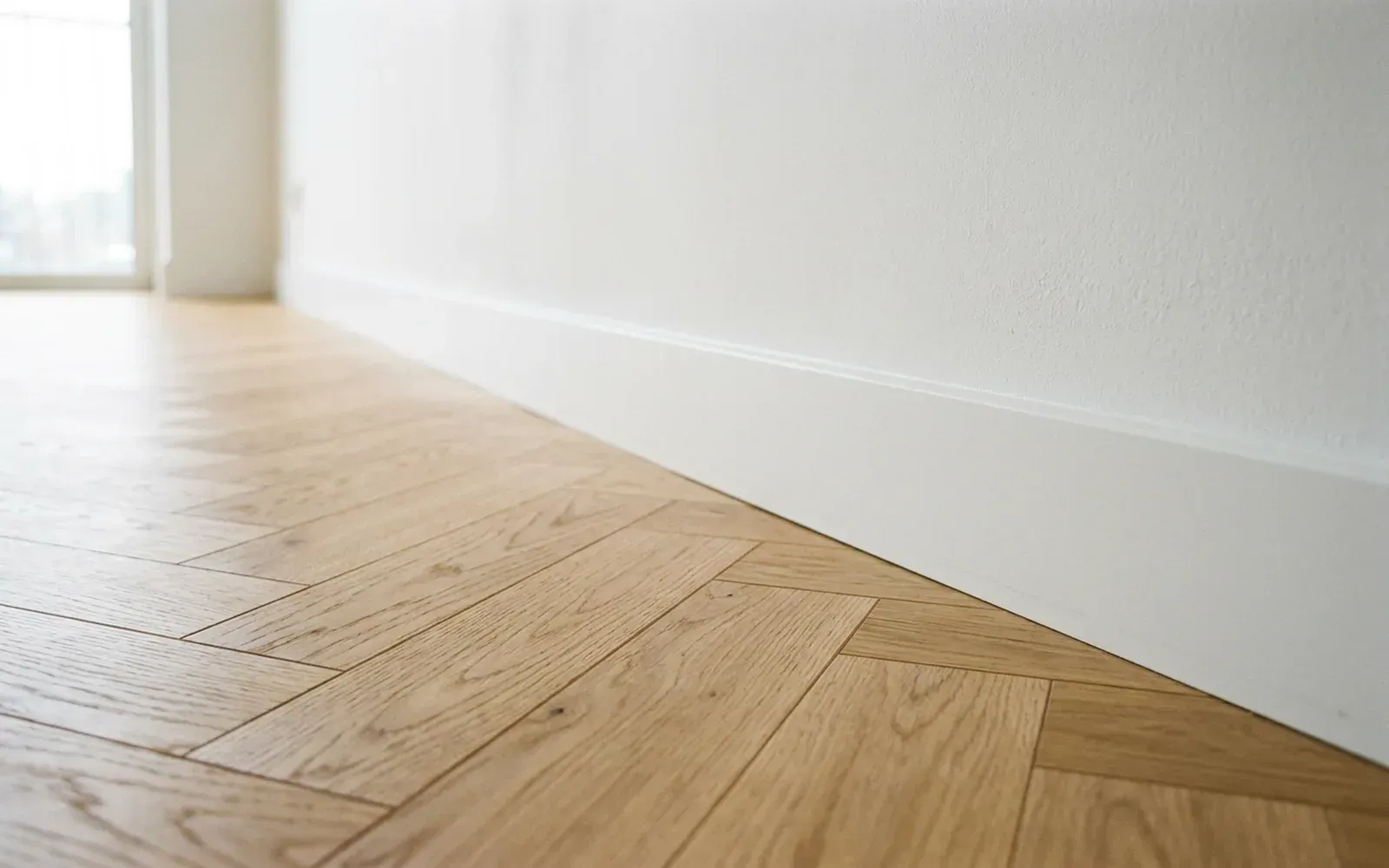
Skirting for a herringbone floor: how to finish the edge
A herringbone floor deserves skirting that gives the edge a calm finish. Here is how to choose material, colour and height, and avoid a messy zigzag edge.
Choosing skirting
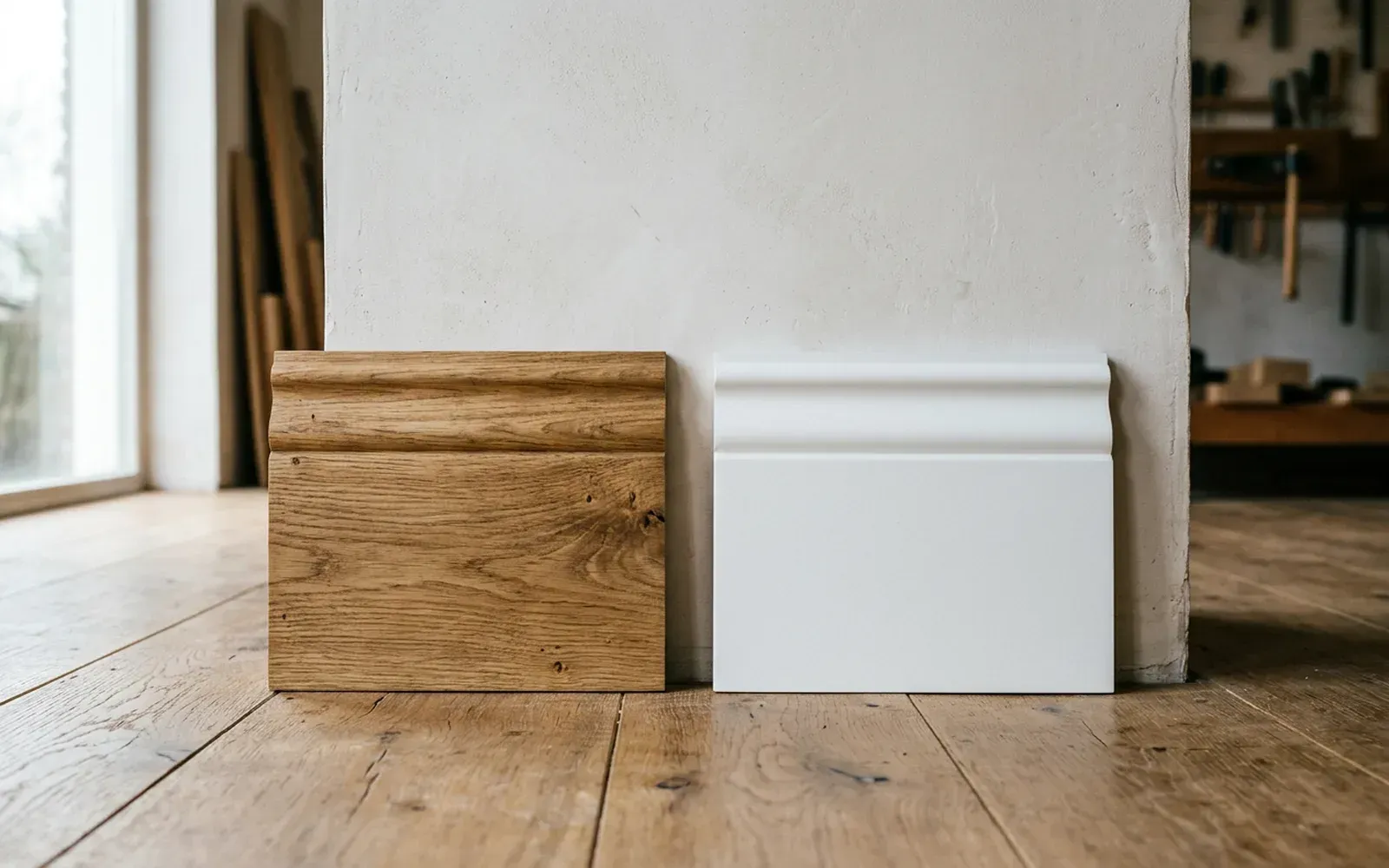
Wooden skirting boards or MDF: which suits your home?
Solid wood skirting or MDF? Both materials have clear pros and cons. We compare the differences side by side so you can choose skirting that suits your floor, interior and use.
Skirting board installation by a specialist skirting fitter
TipTop Plinten fits skirting boards in MDF, solid wood and aluminium, finished in any RAL colour and neatly matched to any floor, even with uneven walls.
Skirting board installation? Request a free quote
On-site measurement €75 incl. VAT (credited for orders above a minimum project size)