
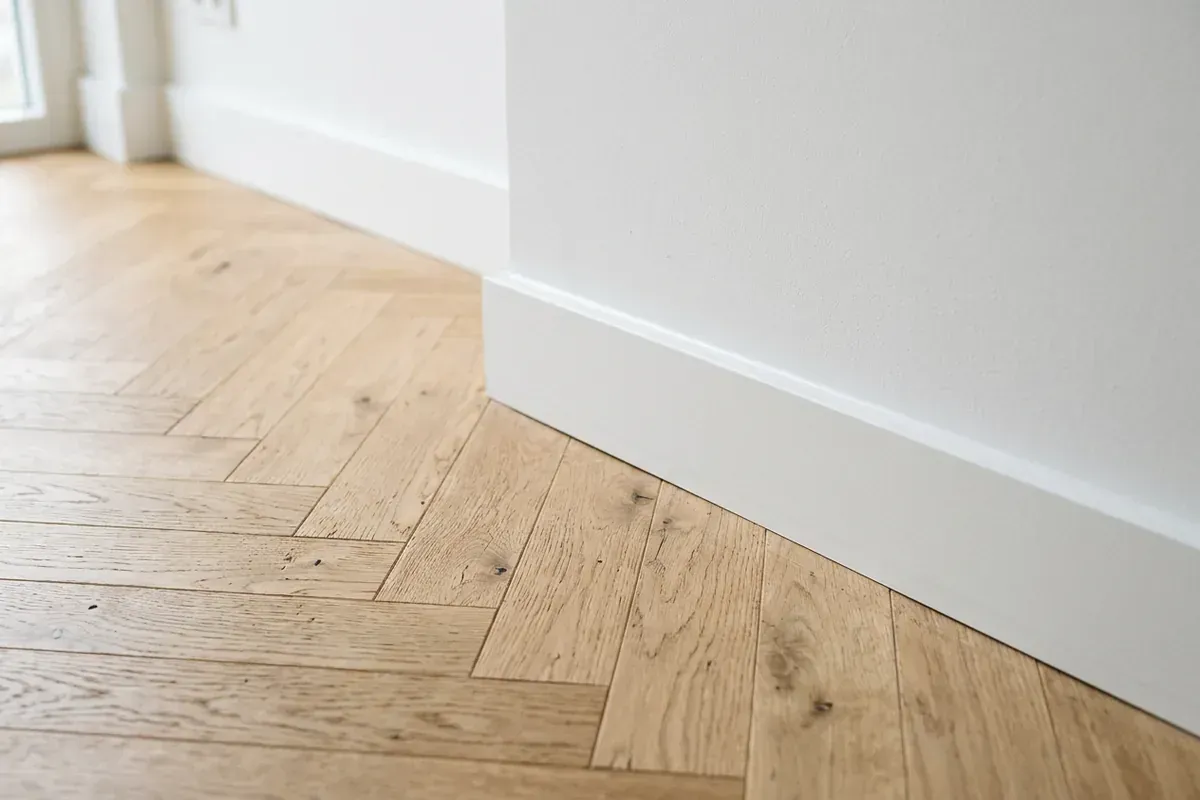
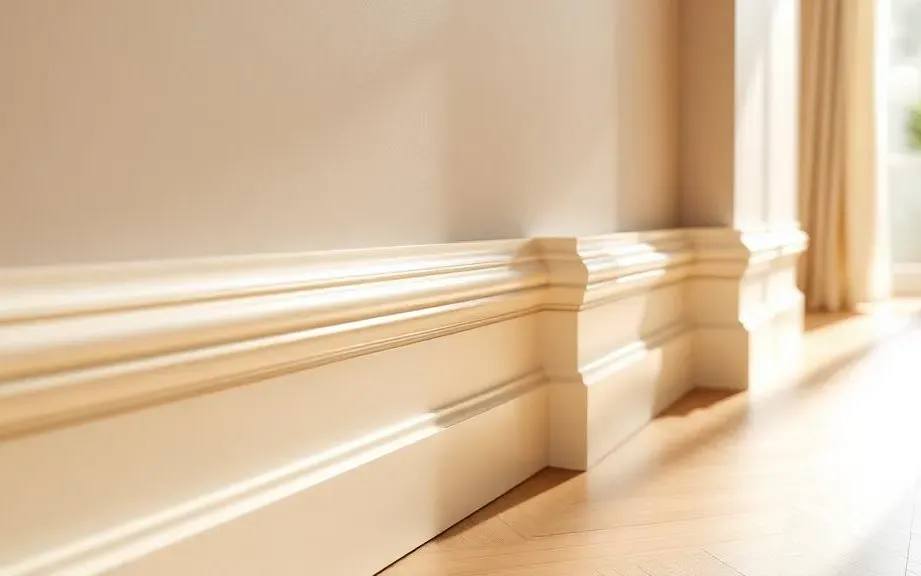
A herringbone floor is made of rectangular blocks laid in a zigzag pattern, with the end of one block placed against the side of the next. The pattern is reminiscent of a fish's skeleton. Herringbone comes in parquet, vinyl and laminate. Along the walls the blocks are cut at an angle; the skirting board covers that edge and the perimeter gap.
What is a herringbone floor?
In herringbone, the blocks lie at right angles to each other. A related pattern is chevron, where the blocks are cut at an angle and meet in a point. Herringbone is often combined with a border along the wall, but can also run right up to the wall.
A herringbone floor can be made of:
- Parquet: real wood, often bonded to the subfloor.
- Vinyl: glue-down (dryback) or as a click floor.
- Laminate: usually as a floating click floor.
Where is it used?
Herringbone floors are popular in flats, town houses and modern homes. They give a room direction and a classic or distinctly contemporary character, depending on colour and finish.
What should you look out for?
- Edge finish: along the walls there are many blocks cut at an angle. The skirting must be thick enough to fully cover that edge and the expansion gap.
- Floating or bonded: with a floating floor the skirting is fixed to the wall and not to the floor. A bonded floor moves less.
- Calm skirting: the pattern is already busy. Plain skirting provides balance.
- Colour: white in the wall colour looks light; black such as RAL 9005 gives contrast.
- Caulking: the top edge is caulked; the joint with a floating floor is not sealed rigidly.
You can read more in skirting for herringbone floors.
At TipTop Plinten
TipTop Plinten fits skirting boards to herringbone floors in parquet and vinyl. In a flat in Oss, MDF skirting boards with caulking were fitted on a herringbone floor, and in Rotterdam on a vinyl herringbone floor. Read more about skirting board installation.
Frequently asked questions
A plain, calm skirting board usually works best, because the floor pattern already creates plenty of movement. White skirting in the wall colour gives a light overall look; black or dark skirting makes the edge of the floor stand out.
The skirting must fully cover the perimeter gap and the cut ends of the blocks. With a floor that has a wide perimeter gap, slightly thicker skirting may be needed. This is checked during the site survey.
Related
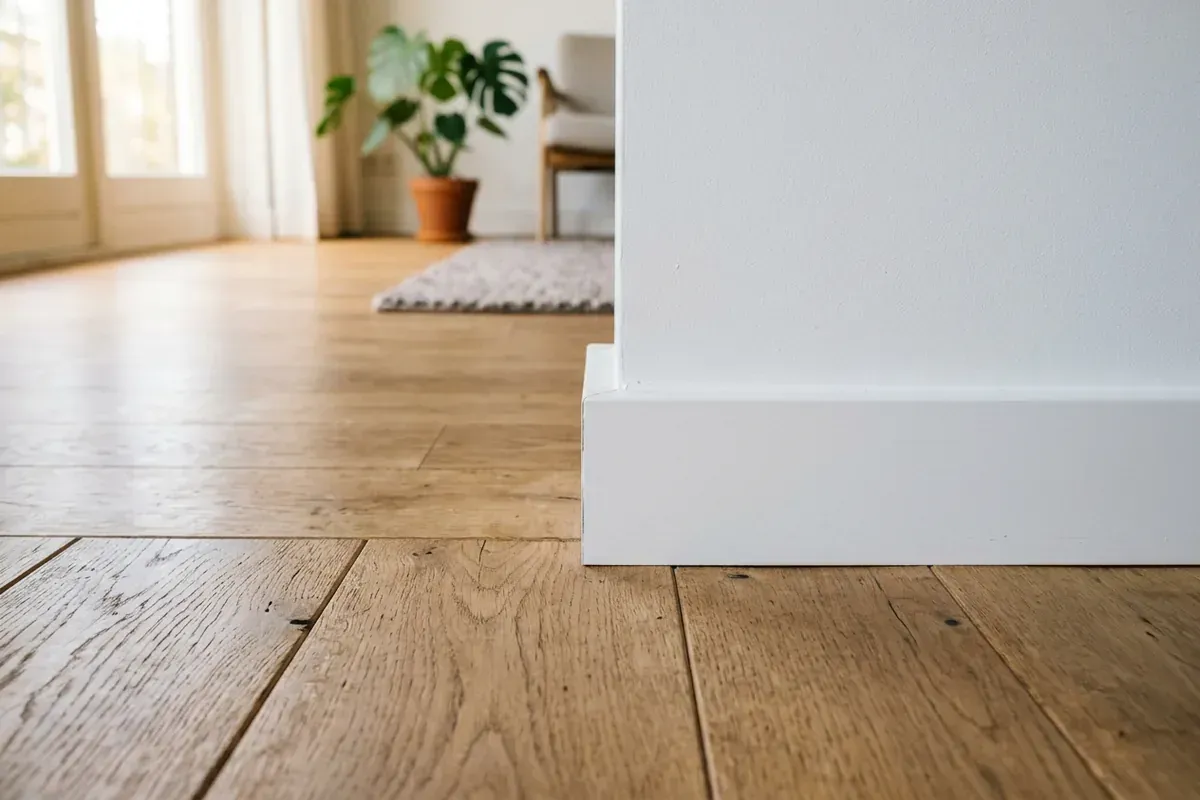
Parquet
Parquet is a floor with a top layer of real wood. Timber moves with the indoor climate, so the skirting must leave the floor room to move.
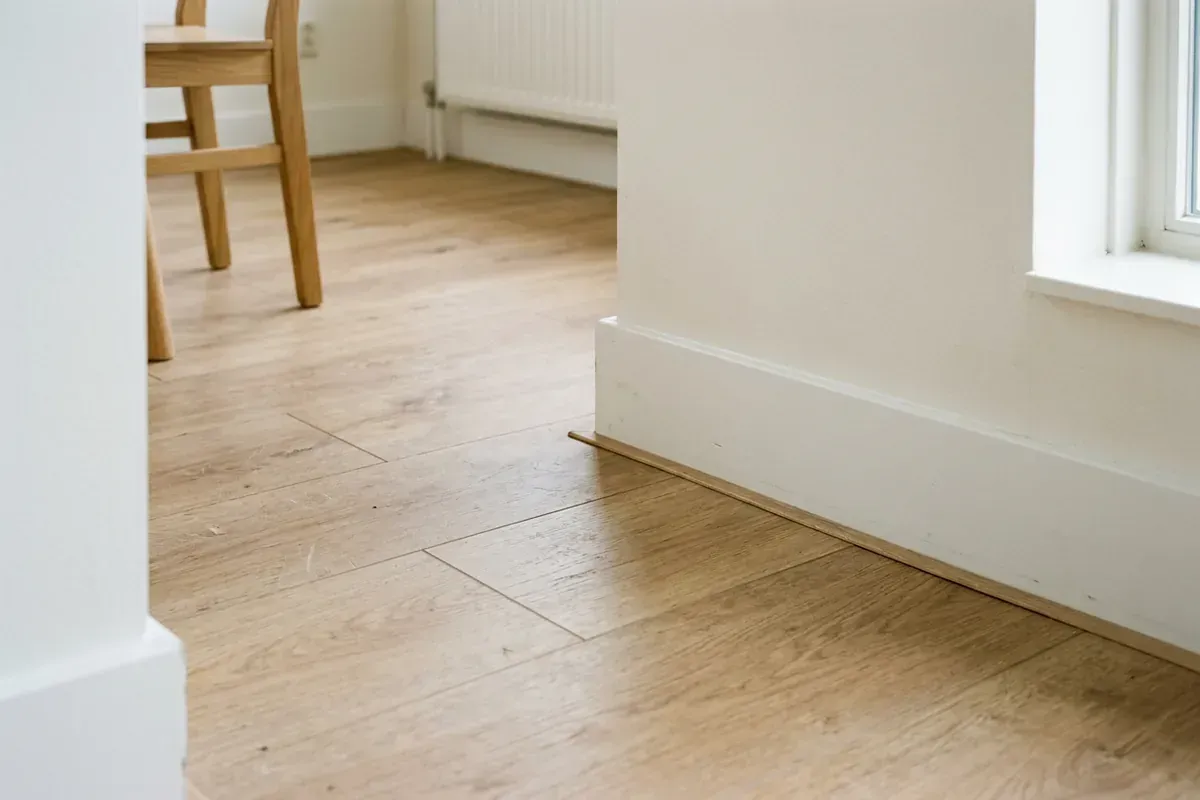
Vinyl flooring
Vinyl (PVC) flooring is a synthetic floor printed with a wood or stone look. Whether it floats or is glued down determines how the skirting meets it.
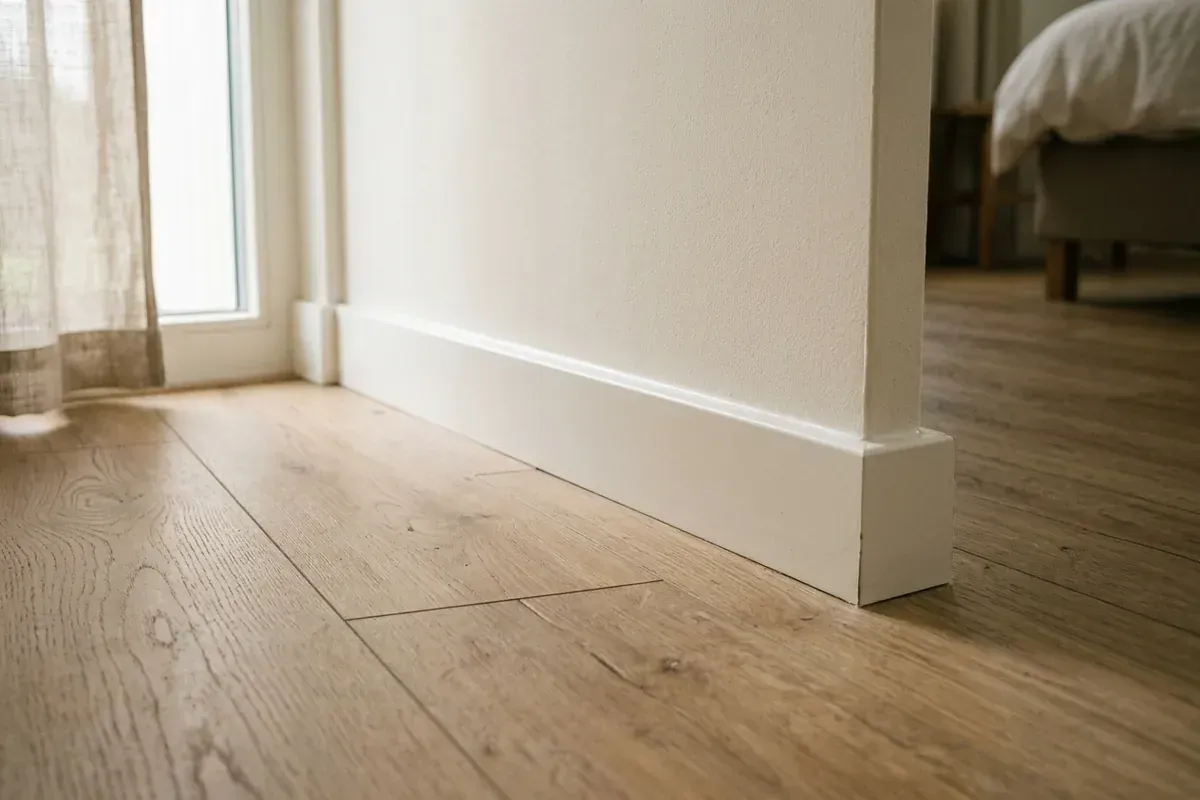
Laminate
Laminate is a floating floor made of pressed board with a printed layer. The skirting covers the perimeter gap and is fixed to the wall, not the floor.
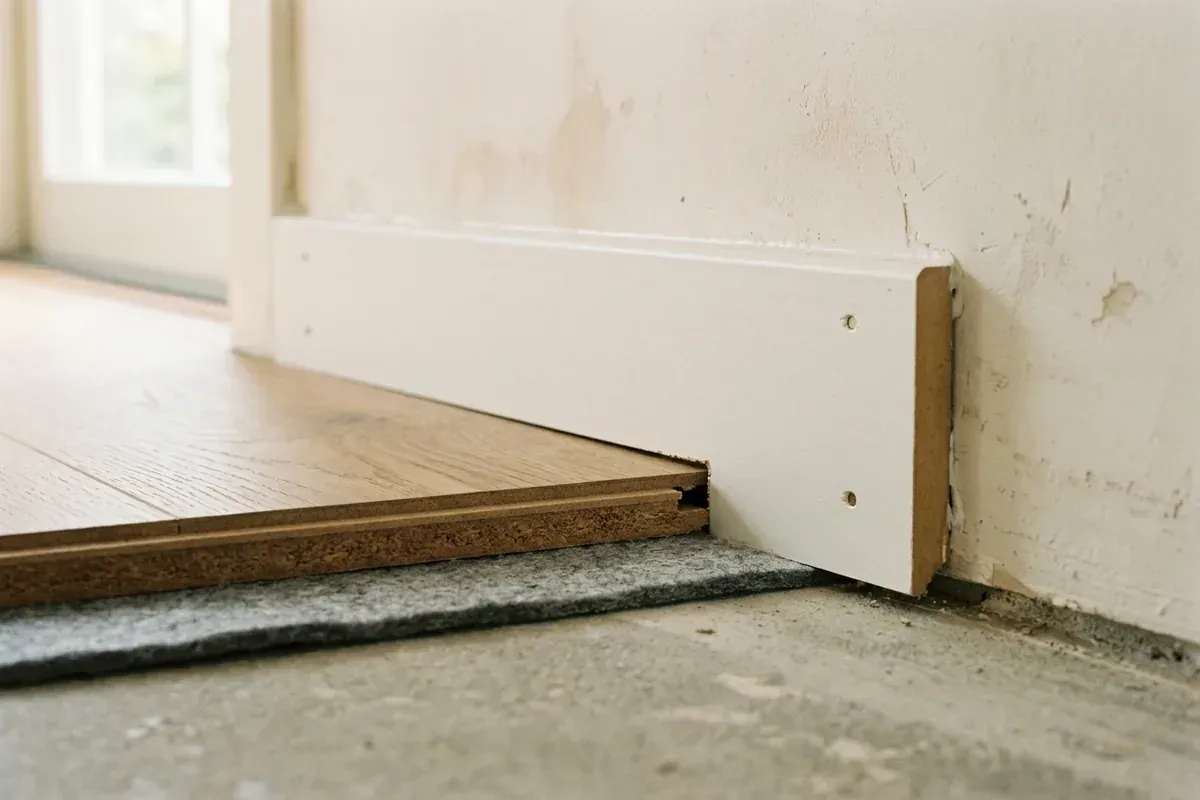
Expansion gap
An expansion gap is an open space along the edge of a floor, so it can expand and contract. The skirting board covers the gap without fixing it.
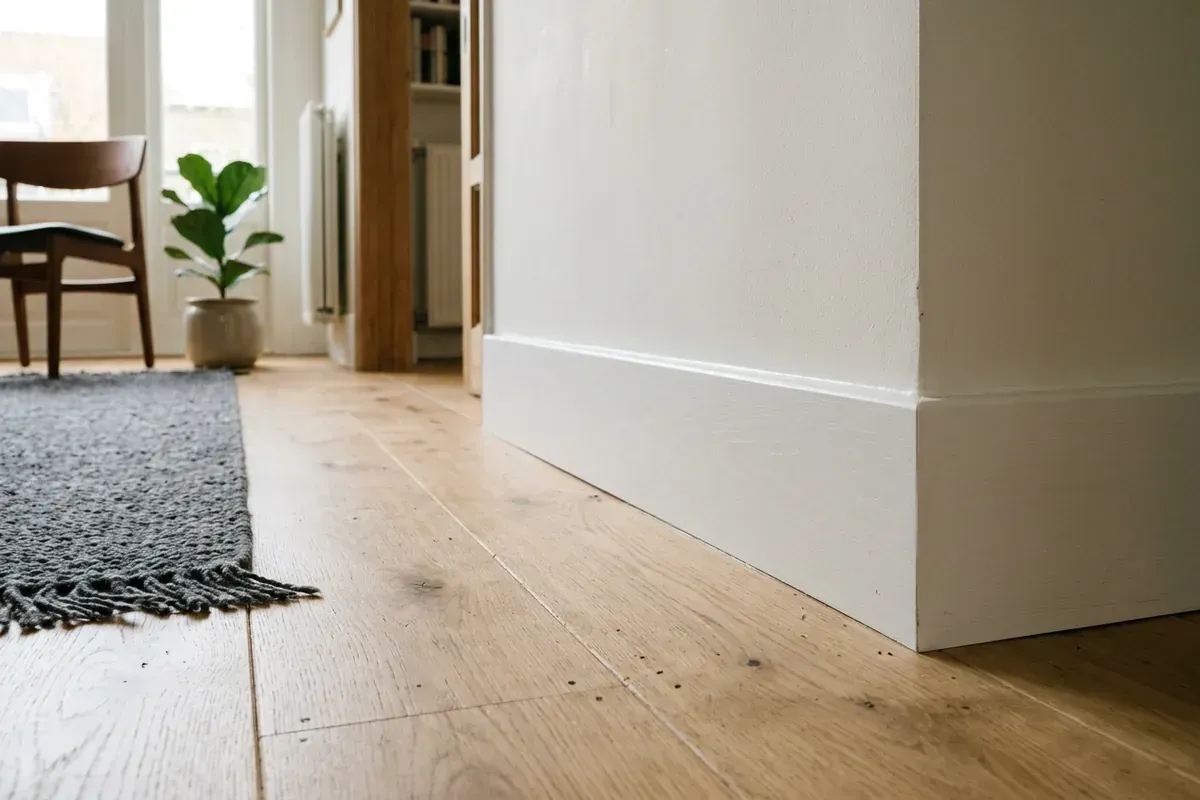
Skirting board
A skirting board is the moulding at the base of the wall that finishes the transition to the floor and protects the wall. Here is how it works and what to look out for.
Floors & skirting
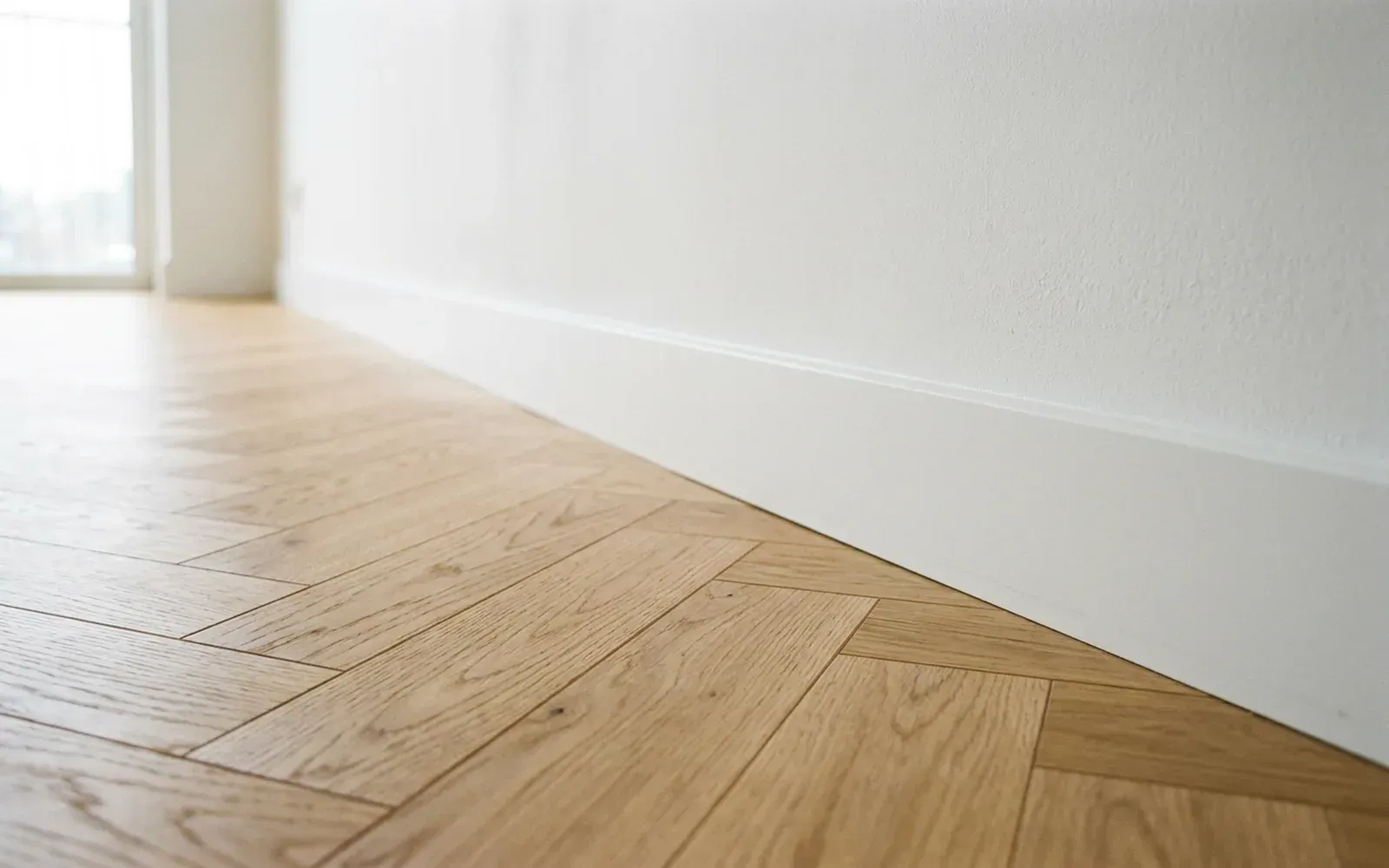
Skirting for a herringbone floor: how to finish the edge
A herringbone floor deserves skirting that gives the edge a calm finish. Here is how to choose material, colour and height, and avoid a messy zigzag edge.
Floors & skirting
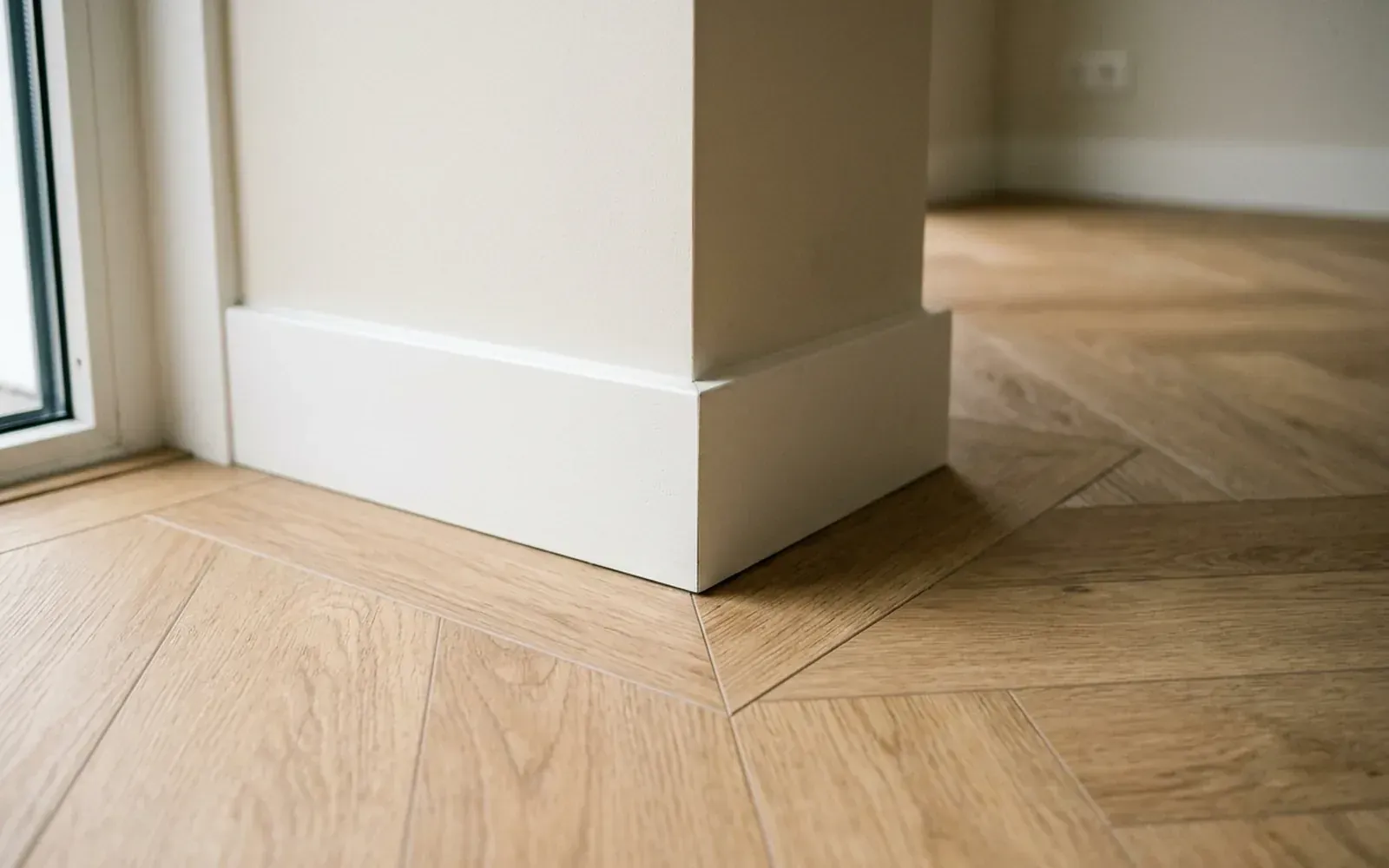
Skirting boards for a vinyl (PVC) floor: what should you look out for?
A vinyl (PVC) floor is thin and sleek, so the junction with the skirting stands out straight away. This is the difference between glue-down and click vinyl and what it means for your skirting.
Skirting board installation by a specialist skirting fitter
TipTop Plinten fits skirting boards in MDF, solid wood and aluminium, finished in any RAL colour and neatly matched to any floor, even with uneven walls.
Skirting board installation? Request a free quote
On-site measurement €75 incl. VAT (credited for orders above a minimum project size)