
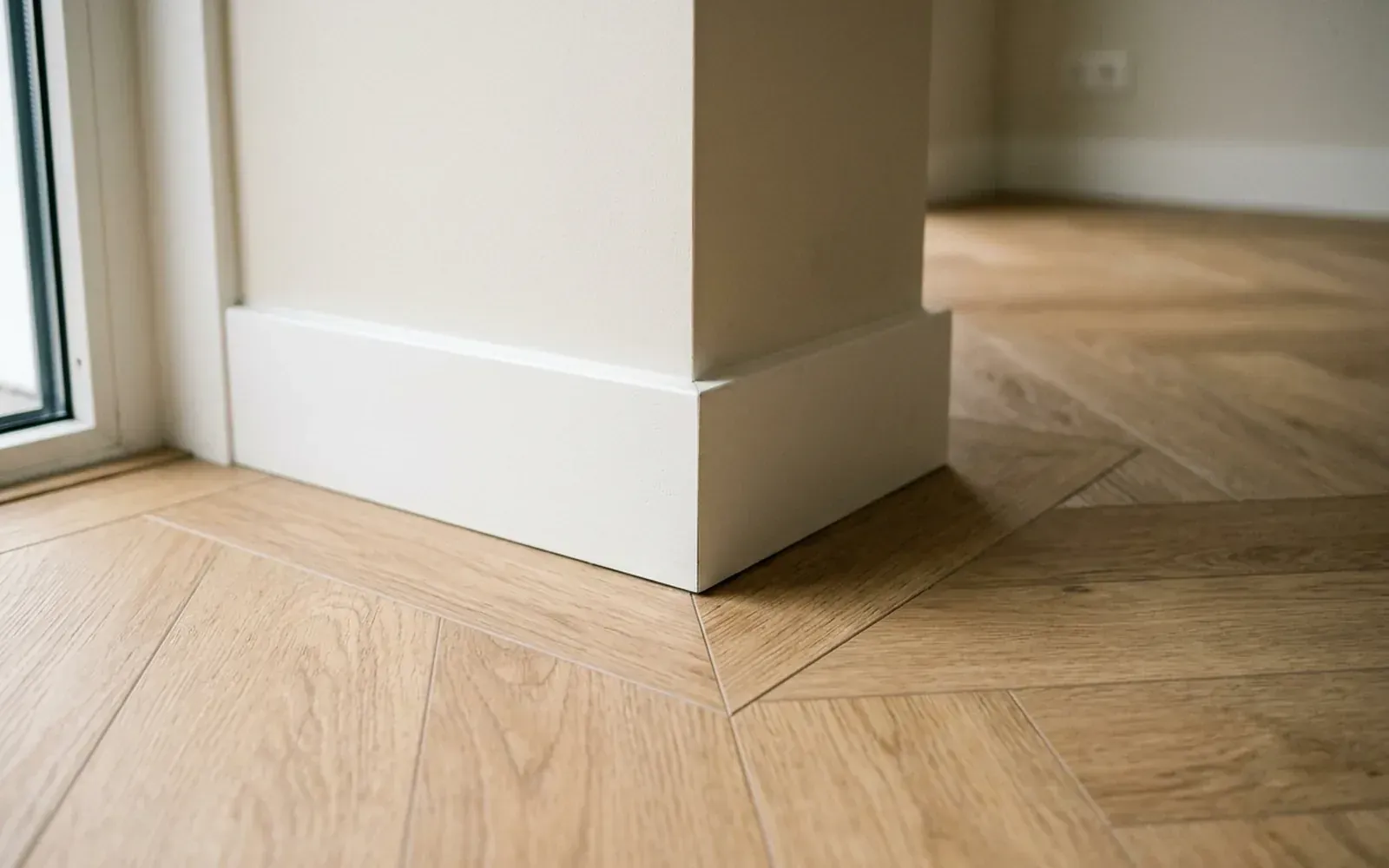
For a vinyl (PVC) floor, you choose a sleek skirting board that is fixed to the wall and meets the floor neatly. The key difference lies in the type of vinyl: click vinyl is floating and needs an expansion gap that the skirting has to cover, while glue-down vinyl is bonded in place and allows an almost seamless junction. Because vinyl is thin and even, you notice any irregularity in the skirting or the caulk line more quickly than with a thick wooden floor.
In this article you will learn what that means for the choice of skirting, the installation and the caulking.
Click vinyl or glue-down vinyl: the difference for the skirting
A vinyl floor, known in the Netherlands as a PVC floor, comes in two main forms. For the skirting, that difference matters more than the colour or pattern.
| Click vinyl | Glue-down vinyl (dryback) | |
|---|---|---|
| Laying method | Floating, panels click together | Fully bonded to a level subfloor |
| Expansion gap | Usually needed, per manufacturer | Usually little or none |
| Job of the skirting | Cover the gap, don't pin down the floor | Neat finish of the edge |
| Caulk on the floor side | Careful, not rigid | Neat caulking possible |
Click vinyl
Click vinyl behaves partly like laminate: the floor lies loose and can expand and shrink with changes in temperature. This is particularly noticeable with large south-facing windows, where the floor can warm up considerably. So an expansion gap is left open along the walls, which the skirting has to cover. Read more about this technique in skirting boards for laminate; the principles are similar.
Glue-down vinyl
Glue-down vinyl is bonded across its entire surface to a levelled subfloor. The floor is fixed and barely moves. This lets the floor fitter lay the floor almost up to the wall, and the skirting can meet it tightly. That makes a very calm end result possible, but it also requires the wall to be straight at the bottom: there is little room to hide irregularities.
Which skirting should you choose for vinyl?
Material
MDF is the most popular option with vinyl. It is dimensionally stable and can be finished crisply in any RAL colour. If the vinyl floor is in a room where water gets on the floor more often, such as a kitchen or utility room, moisture-resistant MDF is the wiser choice. Solid wood and aluminium are also possible; aluminium particularly suits sleek, minimalist interiors.
Vinyl floors are often chosen precisely because they can cope with moisture. That does not mean every skirting board can. So bear that in mind when choosing the material.
Colour
With vinyl, white is the most popular colour, often matched to the doors. You can read more about the differences between shades in white skirting: RAL 9010 or RAL 9016. Skirting in the wall colour or in matt black is also a popular choice, especially with light wood-look vinyl.
Profile and height
Because vinyl is thin, the floor sits visually 'low'. A sleek, straight profile suits it best. Match the height to the room: in tall skirting boards: which height? you can read how ceiling height and skirting height relate.
The junction: where it often goes wrong
Too much space under the skirting
With a thin floor, a gap under the skirting is noticeable straight away. If the skirting is fitted before the floor is laid, or if the height is misjudged, a visible gap remains. That is why skirting boards are preferably fitted after the vinyl floor has been laid.
Uneven wall at the bottom
Especially with glue-down vinyl, where the floor runs close to the wall, undulations in the wall show up as a varying joint between skirting and wall. Neat caulking along the top solves a lot, but large deviations need correcting on the wall first.
The wrong colour or type of caulk
Along the wall, paintable acrylic caulk is usually used. On the floor side, it depends on the type of vinyl. With glue-down vinyl, a fine caulk line can close the transition completely. With click vinyl, the floor is not fixed there. A caulk line in a different shade from the skirting or floor stands out all the more on an even vinyl floor.
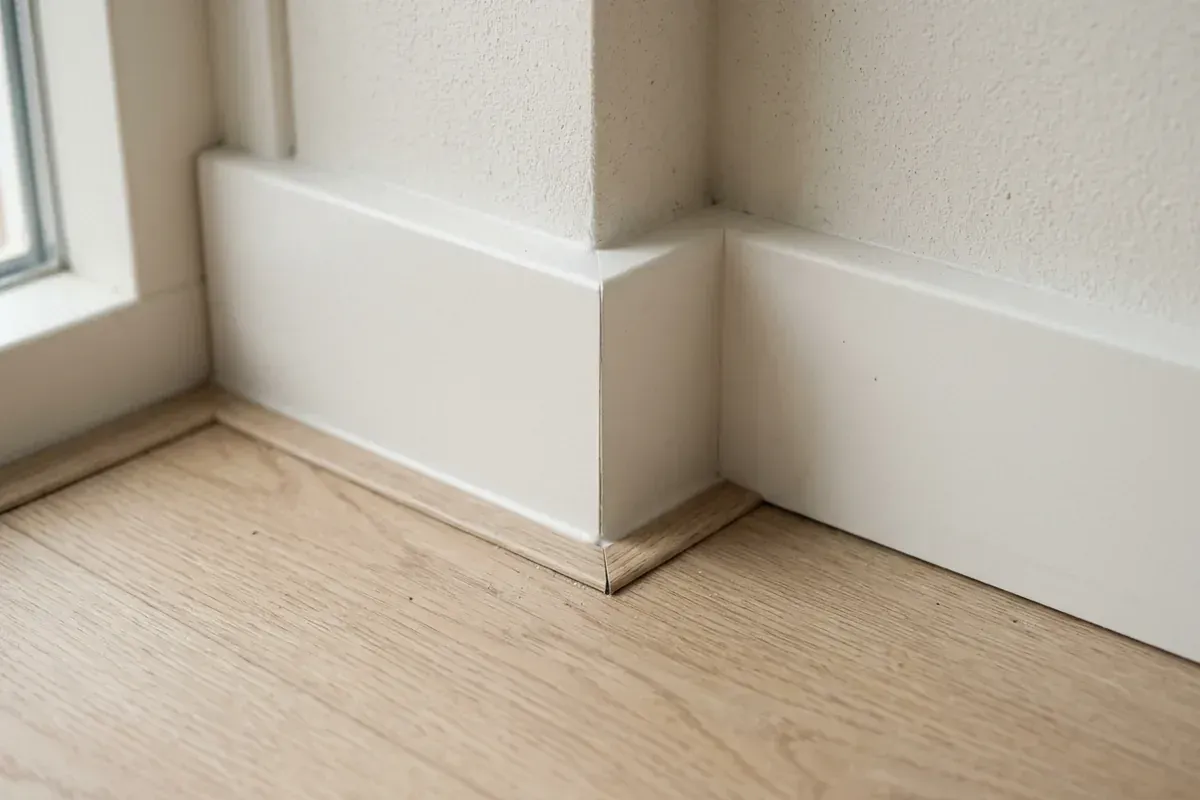
Vinyl herringbone: extra attention to the edges
With a vinyl herringbone floor, the planks run diagonally into the wall. This creates a zigzag pattern of cuts along the edges. The skirting has to cover all those cuts neatly, including in the corners. One example is the flat in Rotterdam with vinyl herringbone, where the skirting boards meet the floor type seamlessly. We go into this in more depth in our article on skirting for herringbone floors.
Underfloor heating and large windows
Vinyl is often laid over underfloor heating. Especially with click vinyl, the floor can then expand and shrink more than in an unheated room. The same applies to parts of the floor that get a lot of sun through large windows. Keep to the perimeter gap specified by the manufacturer and make sure the skirting is thick enough to still cover it when the floor shrinks.
Common mistakes with skirting on vinyl
- Gluing the skirting to the floor. With click vinyl, this blocks the floor's movement.
- A gap under the skirting. With a thin floor, it is noticeable immediately.
- Fitting skirting before the floor is laid. The skirting then doesn't meet the final floor height.
- A caulk line in the wrong colour. On an even floor, every deviation is visible.
Order: floor first, then skirting
The most logical order is:
- The walls are finished (plastering and any painting on the wall).
- The vinyl floor is laid.
- The skirting boards are fitted and caulked.
- Any final painting on the skirting or caulk line.
For contractors and floor fitters, this means the skirting installation can follow straight after the floor is laid. TipTop Plinten also works for floor fitters and contractors. When we can fit into your schedule depends on the number of metres, the corners and the wall surface; we agree this with the quote.
Having skirting fitted to your vinyl floor?
Take a look at our skirting board installation and caulking services. Send a few photos, the type of vinyl (click or glue-down) and an estimate of the number of linear metres via the contact page. We are happy to communicate in English. The quote is free and without obligation. If you would like us to assess the situation on site, an on-site measurement is available for €75 incl. VAT; this amount is deducted as a discount for projects above a minimum size.
Frequently asked questions
Sleek MDF skirting boards are often chosen for vinyl, in white, in the wall colour or in a contrasting colour. Because vinyl is thin, the skirting stands out relatively more; a clean profile and a neat joint make the difference. Solid wood and aluminium skirting are also possible.
Click vinyl is laid as a floating floor and, according to most manufacturers, needs an expansion gap. Glue-down vinyl is fully bonded to the subfloor and generally needs little or no perimeter gap. Always follow the instructions of your floor's manufacturer.
The joint between skirting and wall is usually caulked with paintable acrylic caulk. With glue-down vinyl, the bottom can also be neatly caulked, because the floor is fixed. With click vinyl, care is needed on the floor side so the floor can keep moving.
The skirting is fixed to the wall, not to the vinyl floor. With floating click vinyl, gluing it to the floor would block its movement. With glue-down vinyl, too, the wall is the logical surface for fixing.
Yes. One example is a flat in Rotterdam with a vinyl herringbone floor, where the skirting boards meet the floor seamlessly. You will find the project on our projects page.
Related articles
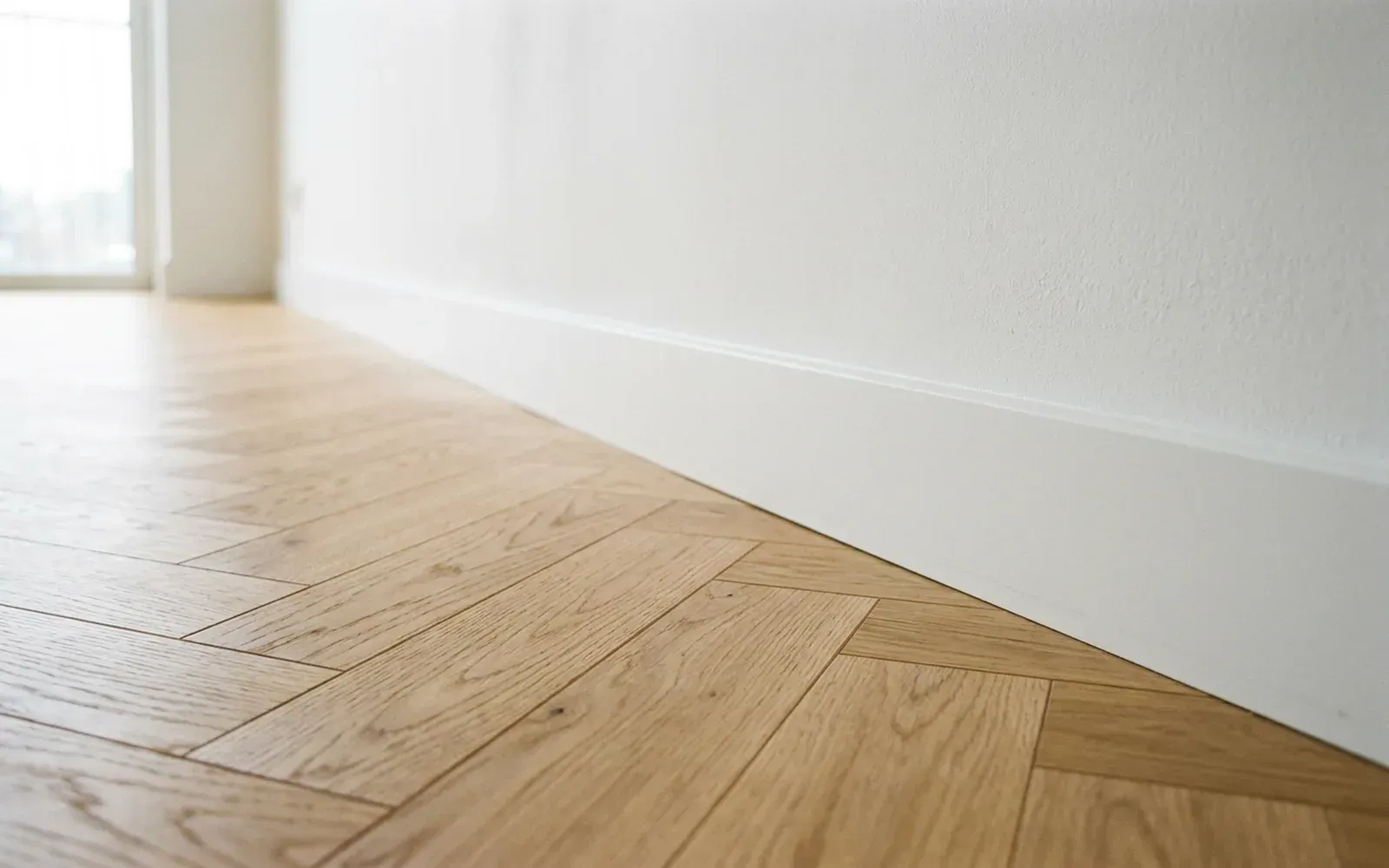
Floors & skirting
Skirting for a herringbone floor: how to finish the edge
A herringbone floor deserves skirting that gives the edge a calm finish. Here is how to choose material, colour and height, and avoid a messy zigzag edge.
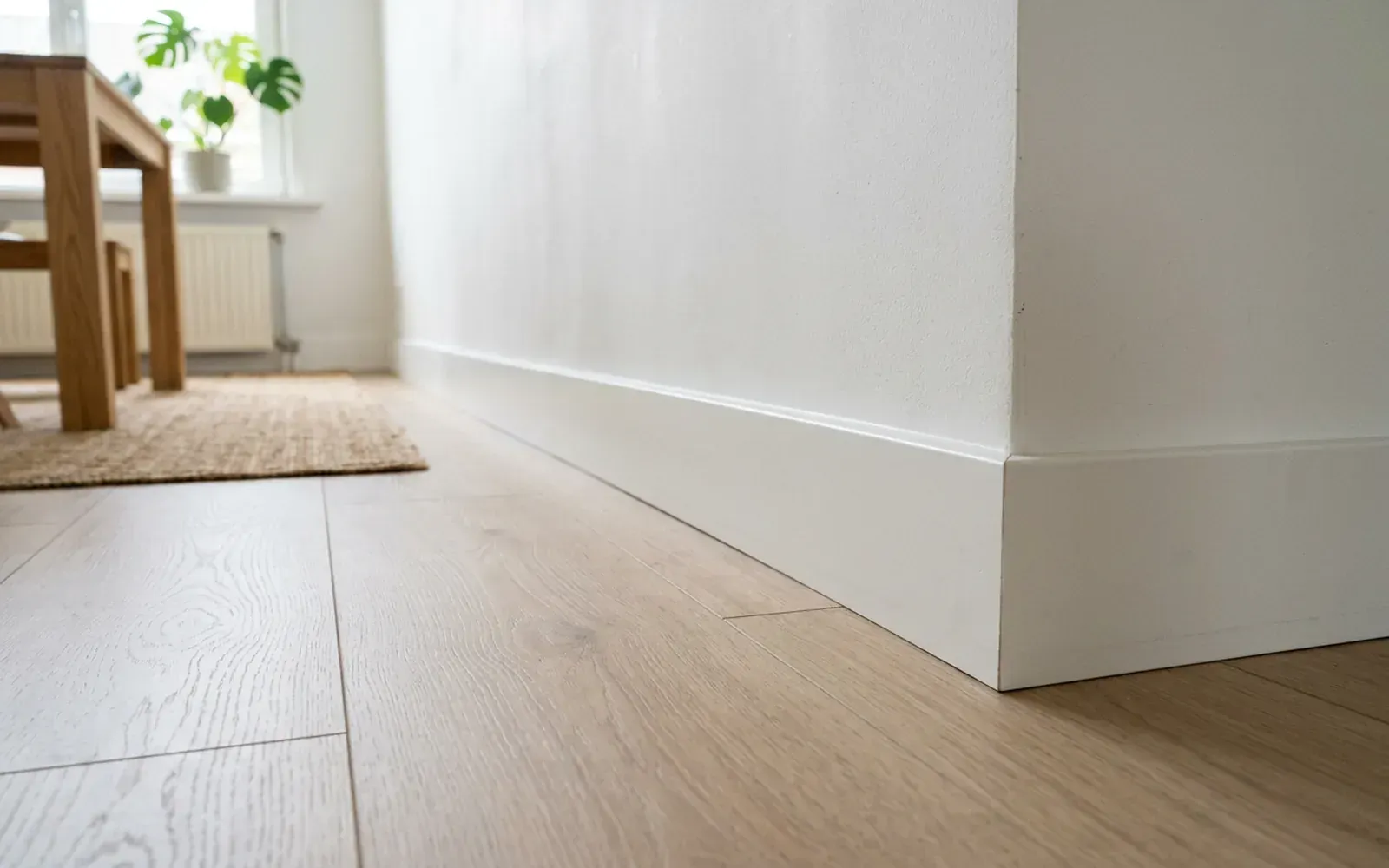
Floors & skirting
Which skirting boards suit a laminate floor?
With laminate, the skirting board has a technical job: covering the expansion gap without pinning the floor down. Here is how to choose the right skirting and fixing method.
Choosing skirting
White skirting boards: RAL 9010 or RAL 9016?
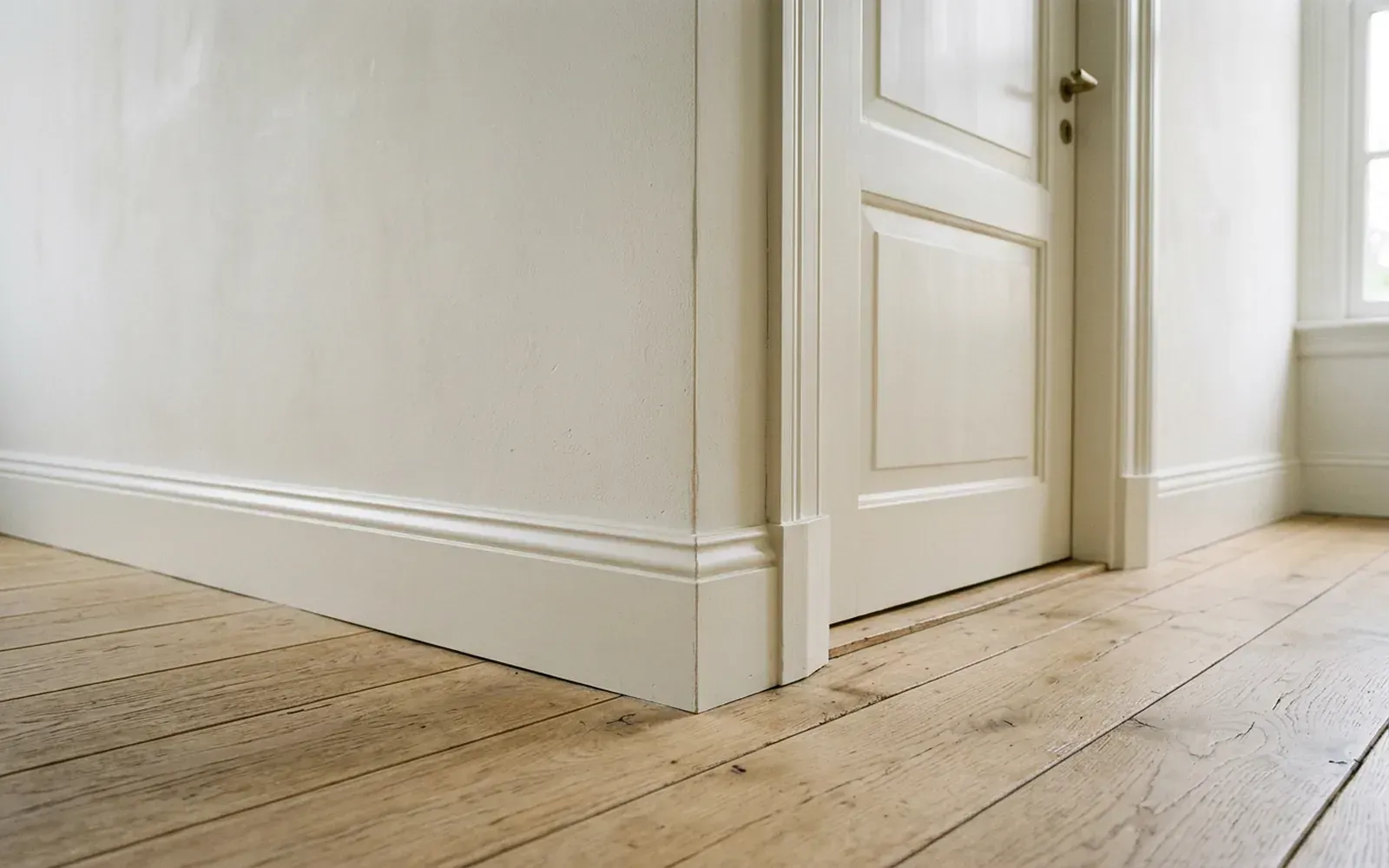
White is not just white. The difference between RAL 9010 and RAL 9016 seems small, but next to a white door or wall you notice it straight away.
Related
Vinyl flooring
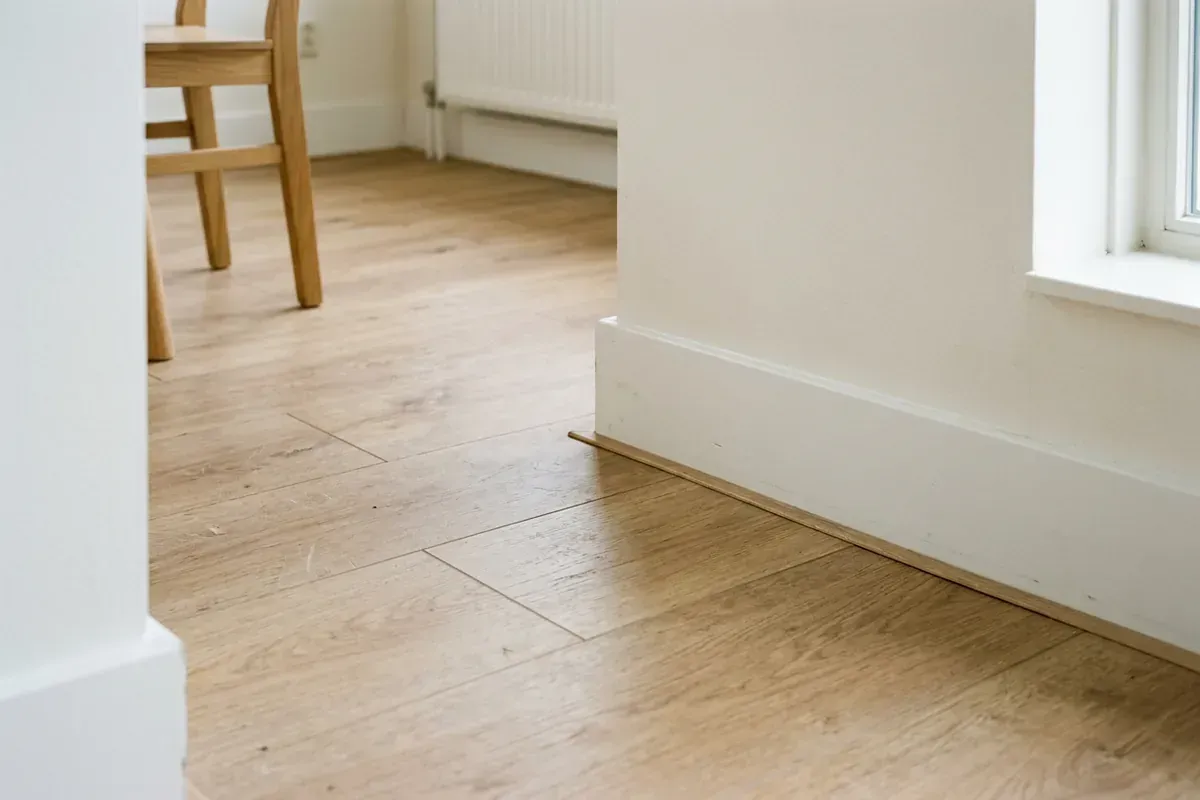
Vinyl (PVC) flooring is a synthetic floor printed with a wood or stone look. Whether it floats or is glued down determines how the skirting meets it.
Expansion gap
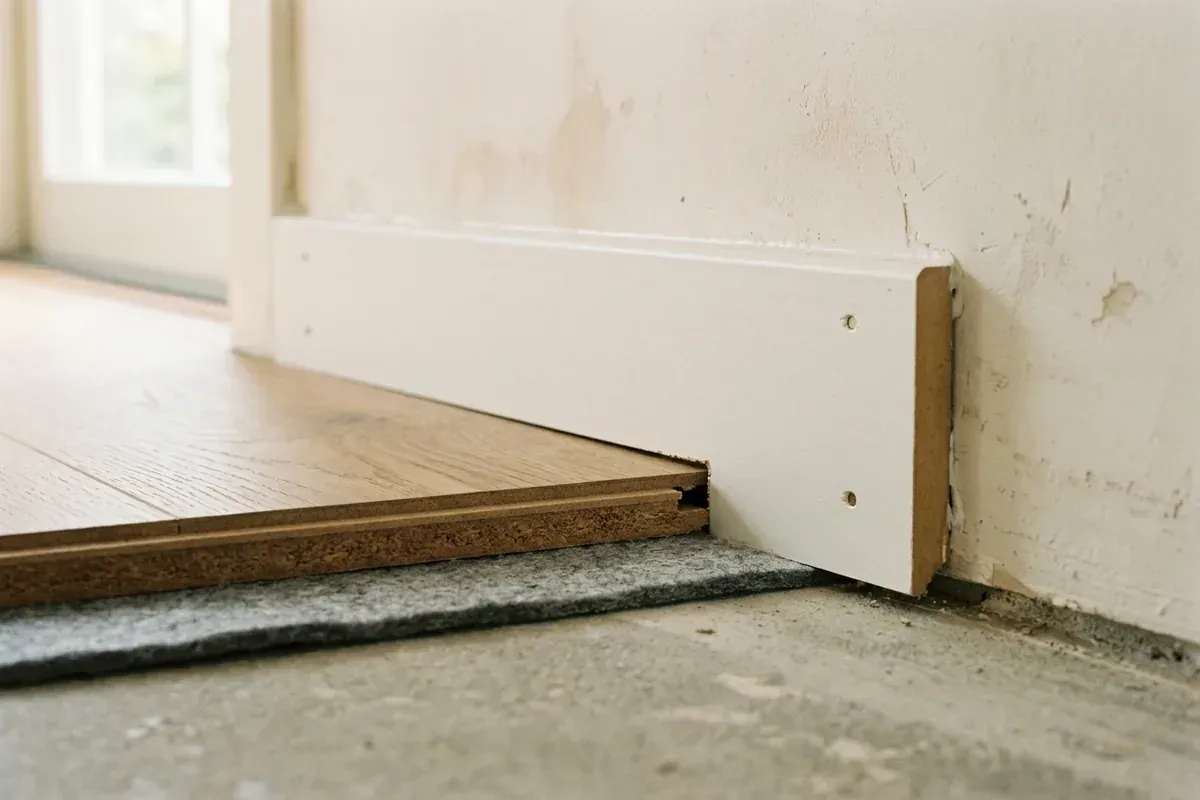
An expansion gap is an open space along the edge of a floor, so it can expand and contract. The skirting board covers the gap without fixing it.
Caulking
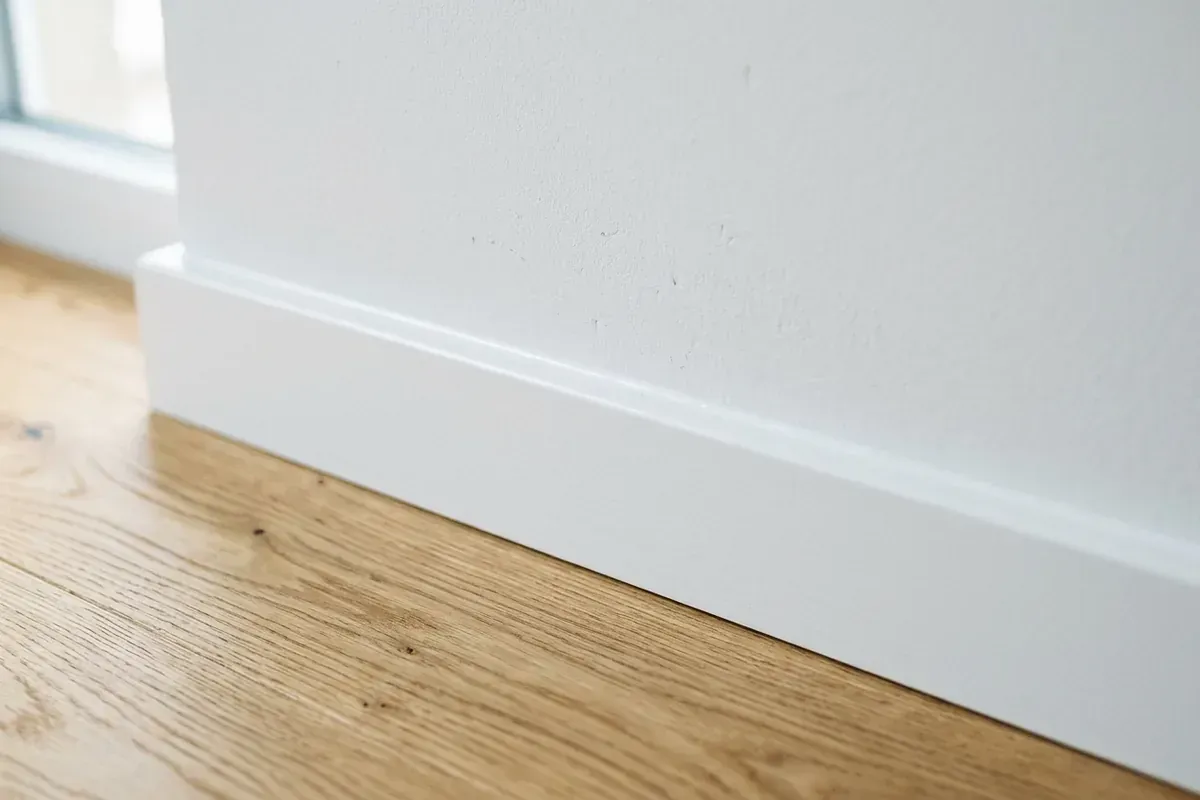
Caulking means sealing joints with a flexible sealant. With skirting boards and mouldings, it makes the transition to the wall crisp and seamless.
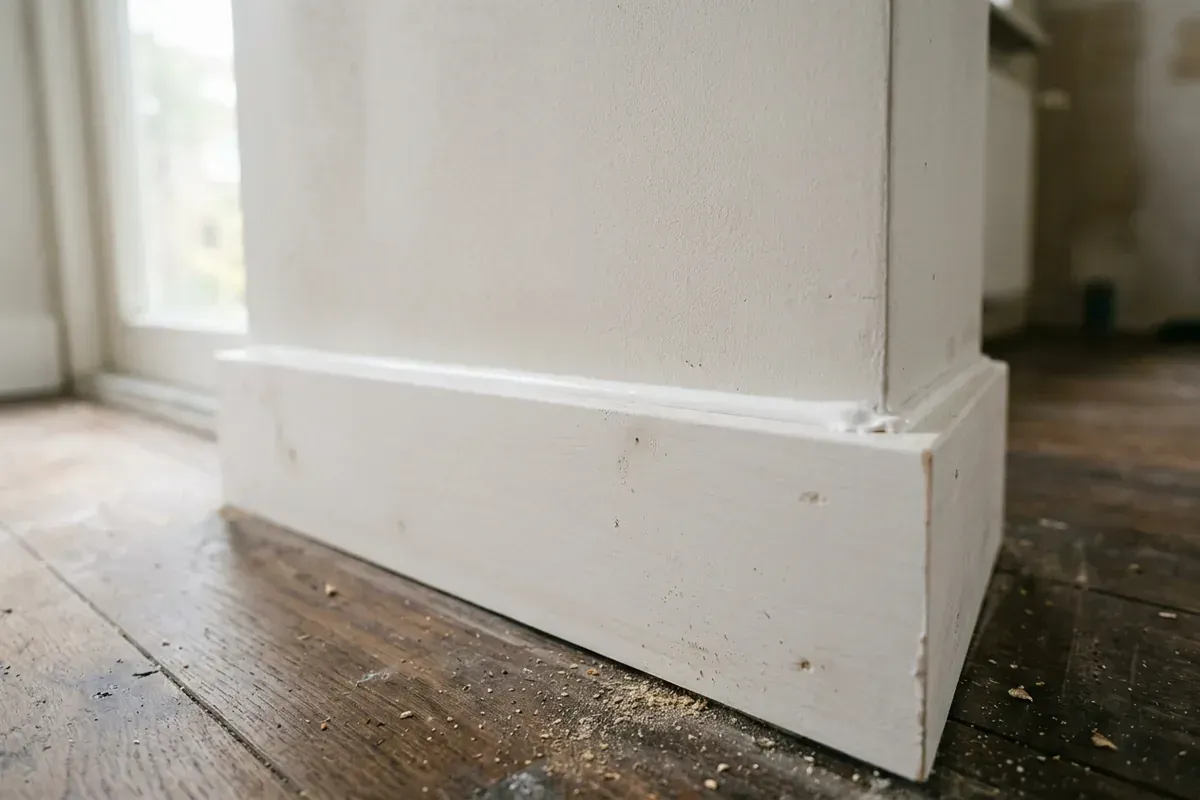
Acrylic caulk
Acrylic caulk is a water-based sealant that can be painted once cured. It is the usual choice for skirting boards, mouldings and frames in dry rooms.
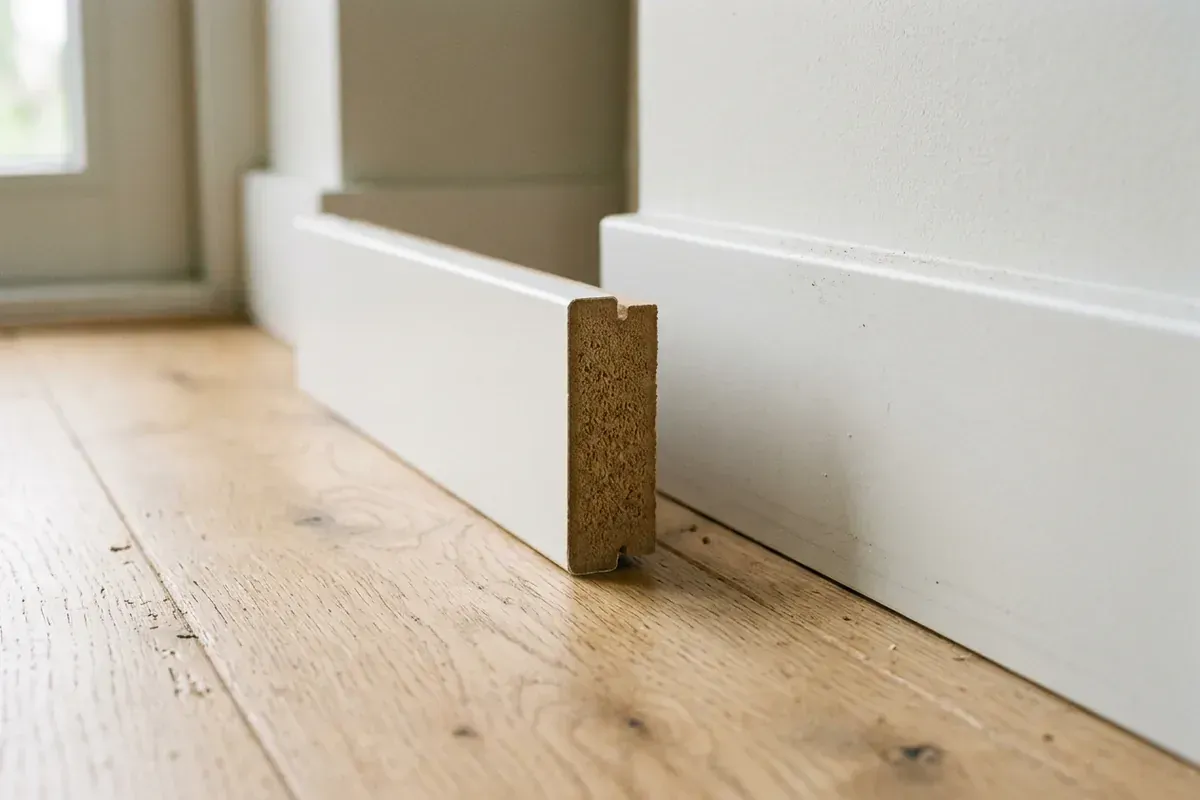
MDF
MDF is a sheet material made of pressed wood fibres. It is stable, smooth and easy to paint, which makes it the most popular material for skirting boards.
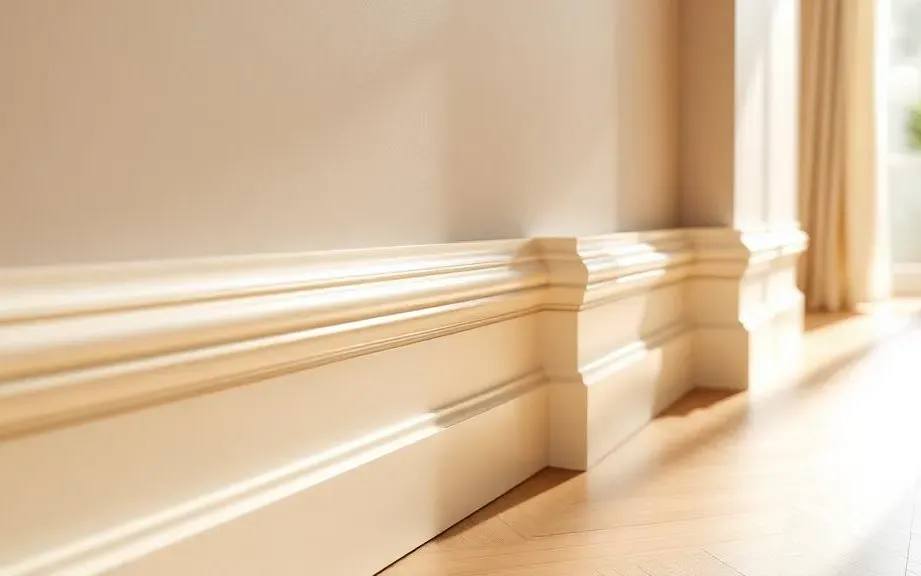
Skirting board installation by a specialist skirting fitter
TipTop Plinten fits skirting boards in MDF, solid wood and aluminium, finished in any RAL colour and neatly matched to any floor, even with uneven walls.
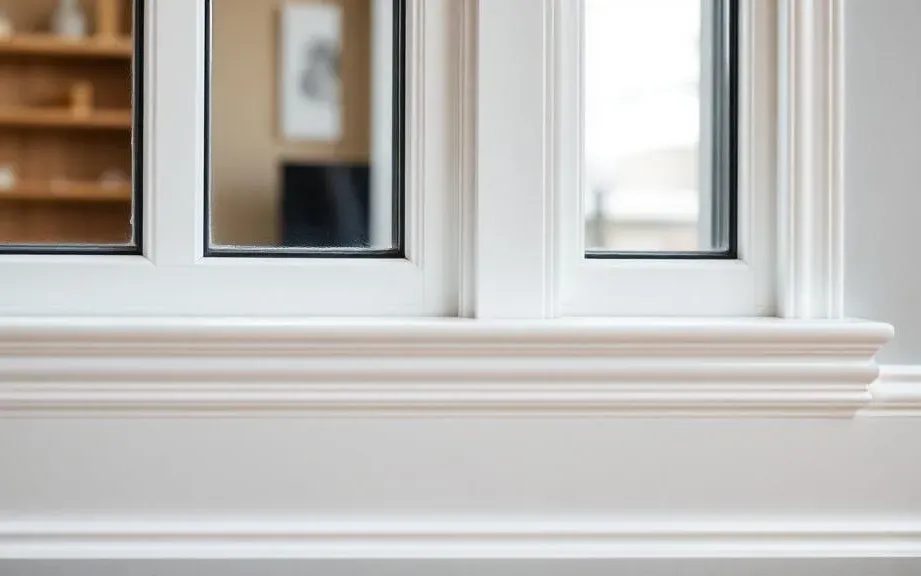
Caulking skirting boards and sealant work for a seamless finish
Caulking is the final step that makes skirting boards, mouldings and panels look seamless. TipTop Plinten uses acrylic or silicone, paint-ready or in colour.
Skirting board installation? Request a free quote
On-site measurement €75 incl. VAT (credited for orders above a minimum project size)