
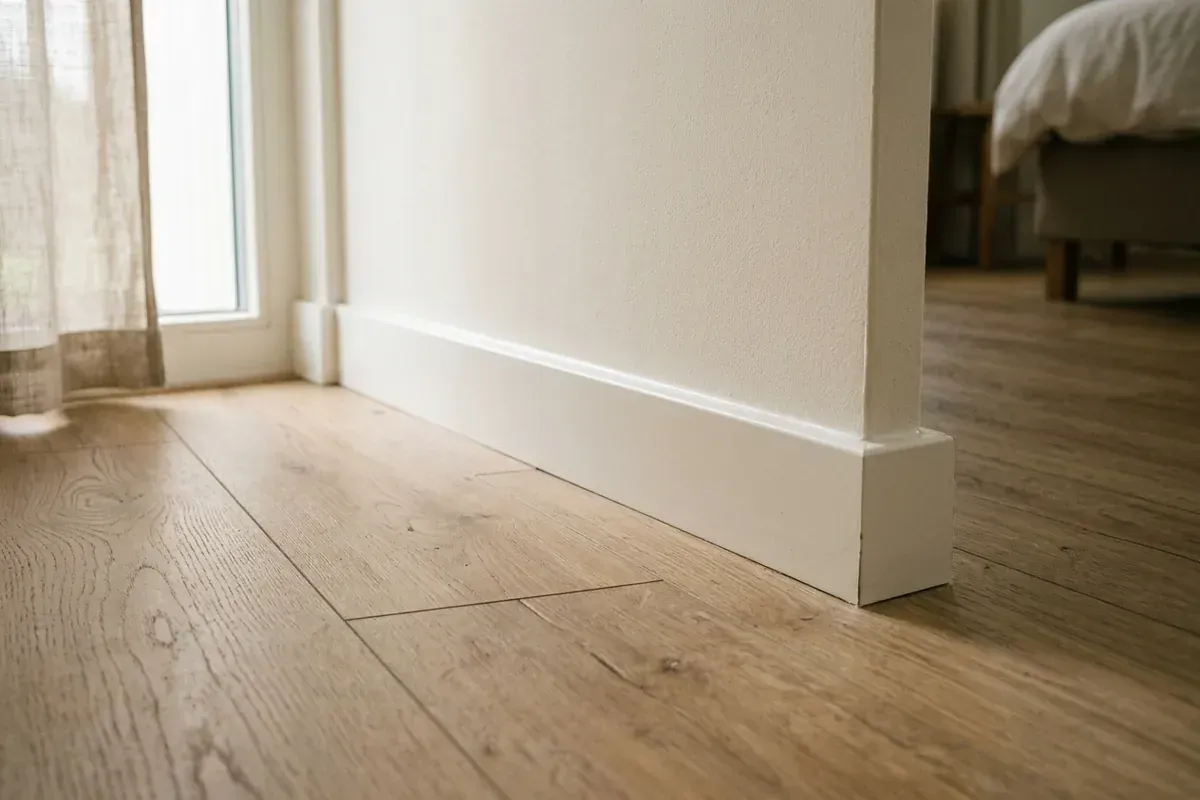
Laminate is a floor made of planks with a core of pressed fibreboard, a decor layer printed with a wood or stone pattern and a hard-wearing top layer. Laminate is almost always laid as a floating floor with a click system. The floor therefore needs a perimeter gap along the walls, which is covered by the skirting board.
What is laminate?
A laminate plank is built up in layers:
- Top layer: a hard, transparent wear layer.
- Decor layer: a print, usually a wood or stone look.
- Core: a board of pressed wood fibres.
- Balancing layer: a backing layer that keeps the plank straight.
Laminate is laid on an underlay for sound reduction and levelling, without adhesive to the screed.
Where is it used?
Laminate is common in living rooms, bedrooms, studies and hallways. It is an affordable alternative to parquet. Standard laminate is used less in wet rooms, because the core can absorb moisture; vinyl flooring or tiles are more often chosen there.
What should you look out for?
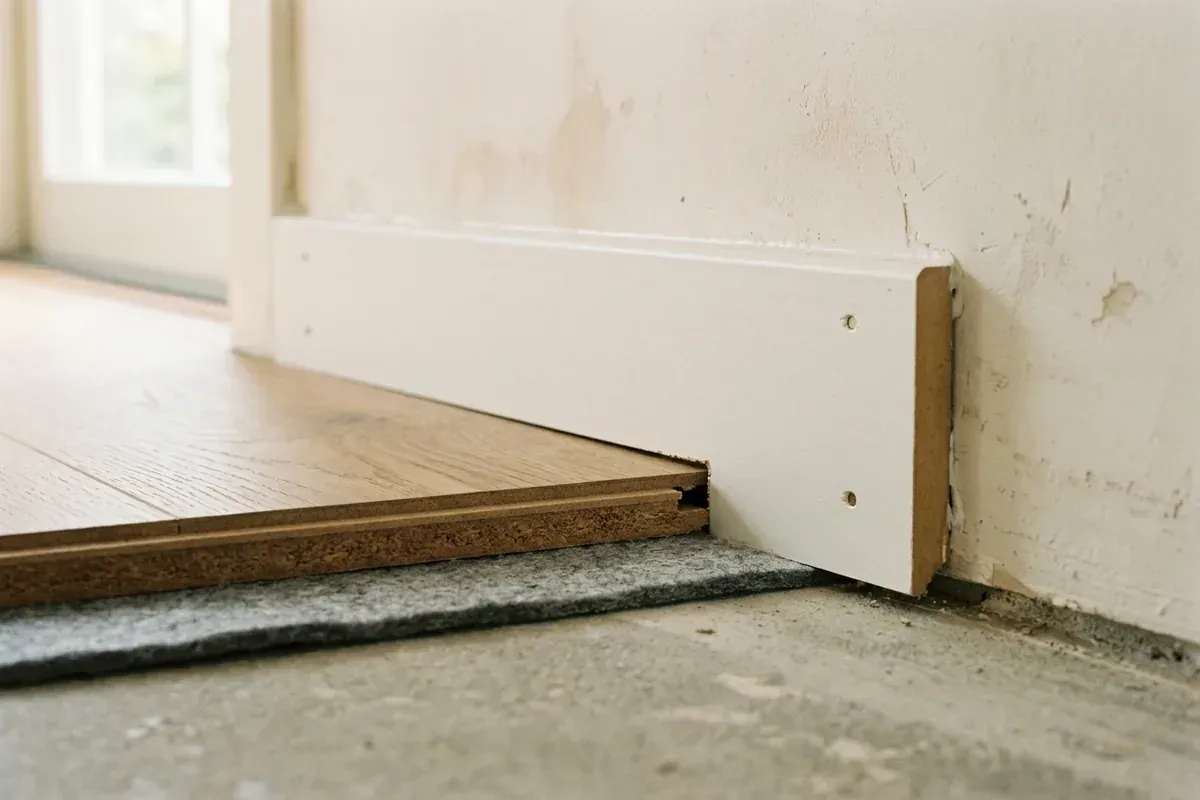
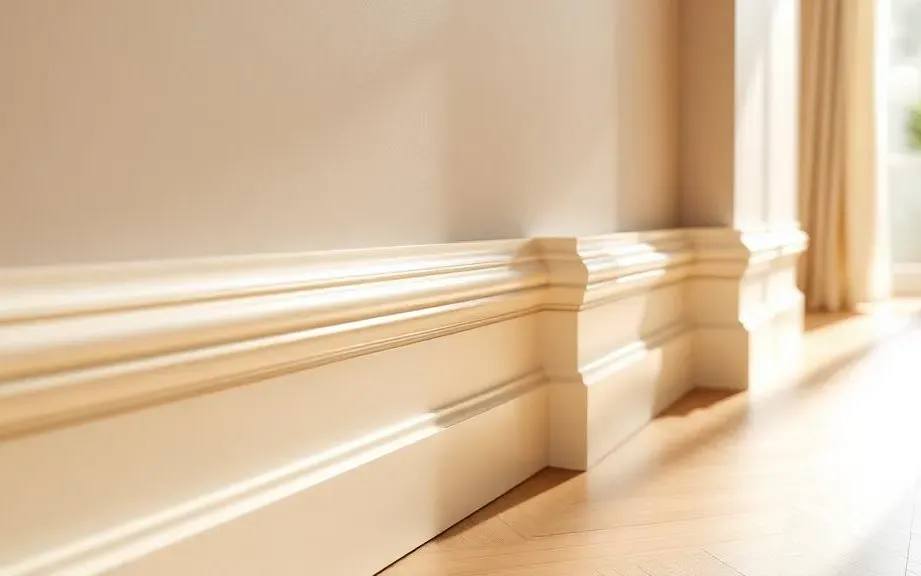
- Perimeter gap: the floor has an expansion gap along the wall. The skirting must be thick enough to cover it completely.
- Fixing: the skirting is fixed to the wall, not to the laminate.
- Colour: skirting in the wall colour, for example white MDF, is a calm and popular combination.
- Caulking: the top edge against the wall is caulked; the joint between skirting and laminate is not sealed rigidly.
- Old skirting: if new laminate goes down at a different height, existing skirting boards often no longer fit properly. Replacing them is then usually neater.
You can find more help choosing in which skirting boards for laminate?.
At TipTop Plinten
TipTop Plinten fits skirting boards along laminate floors in MDF, solid wood and aluminium, with attention to the movement of the floor and a crisp caulk line along the wall. Read more about skirting board installation.
Frequently asked questions
They don't have to. Skirting in the floor colour was long the norm, but today white or wall-coloured skirting is often chosen. It gives a calmer, more modern look and stands out less if the floor's decor cannot be matched exactly.
Laminate floats and expands and contracts with the seasons. If the skirting is fixed to the floor, the floor cannot move. It can then buckle or creak, or gaps can appear.
Related
Expansion gap
An expansion gap is an open space along the edge of a floor, so it can expand and contract. The skirting board covers the gap without fixing it.
Vinyl flooring
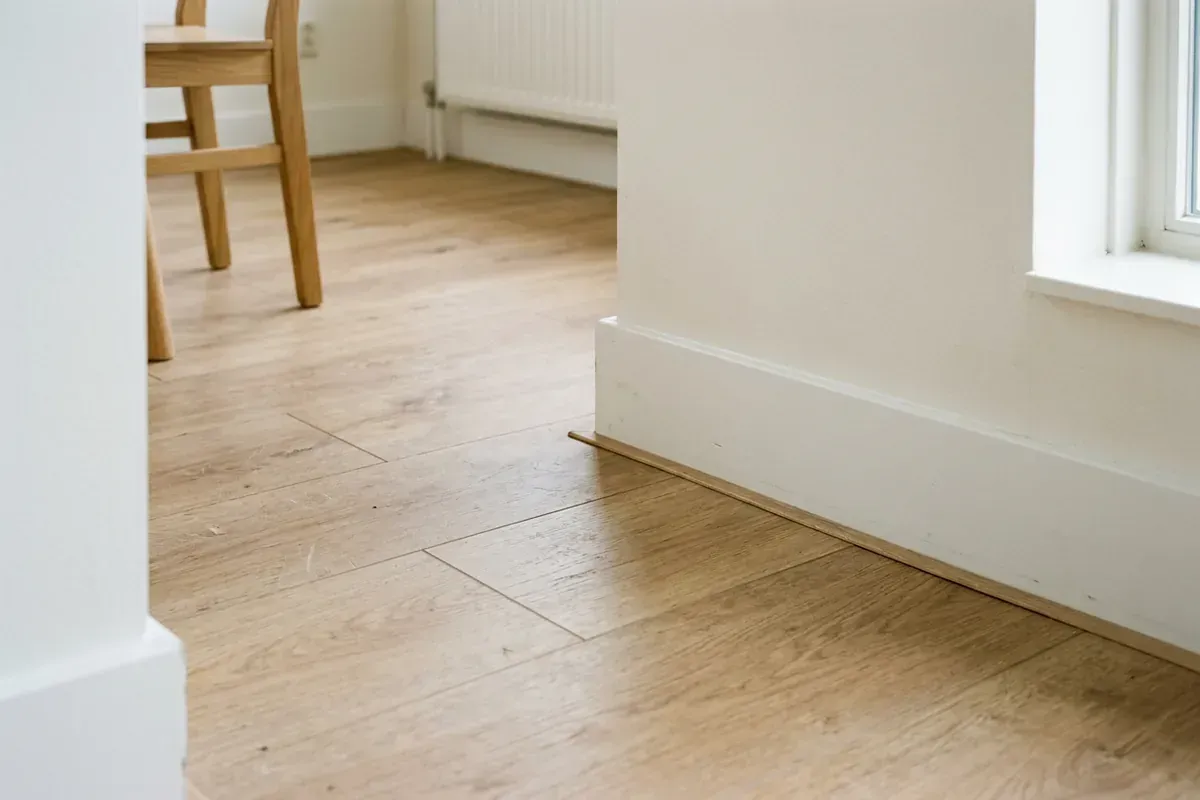
Vinyl (PVC) flooring is a synthetic floor printed with a wood or stone look. Whether it floats or is glued down determines how the skirting meets it.
Parquet
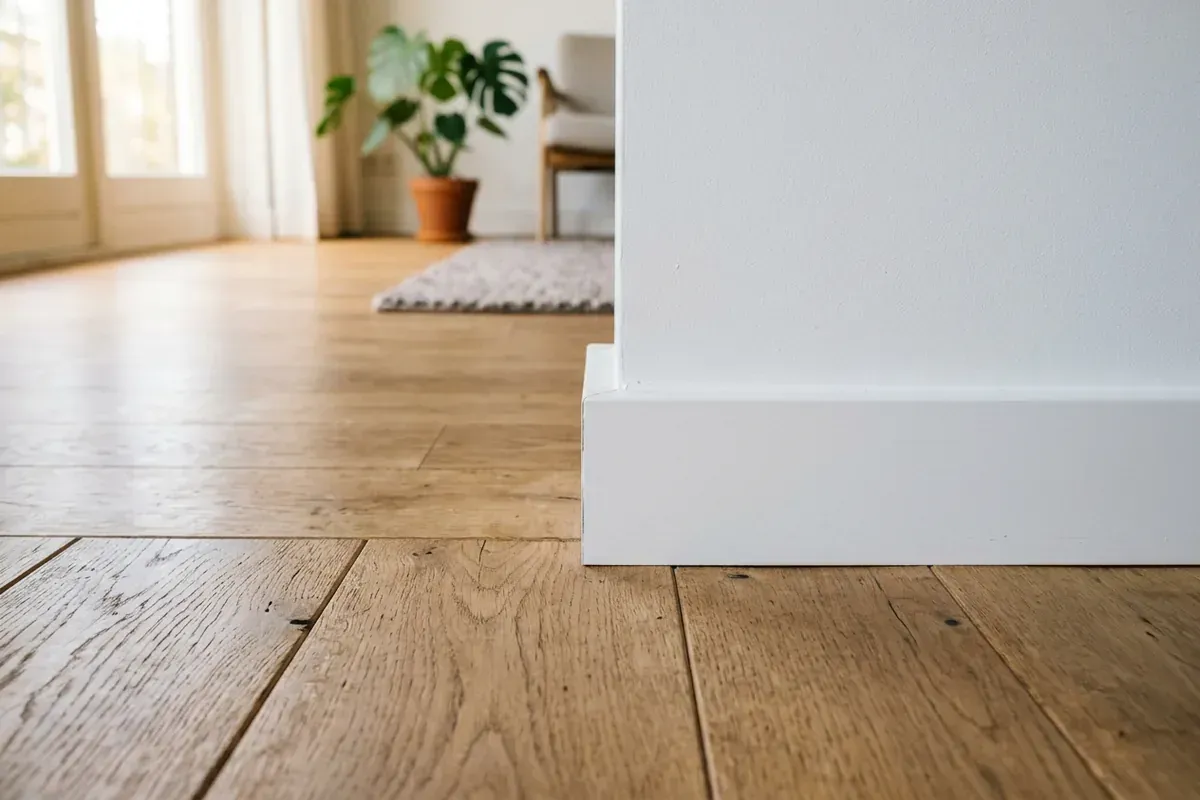
Parquet is a floor with a top layer of real wood. Timber moves with the indoor climate, so the skirting must leave the floor room to move.
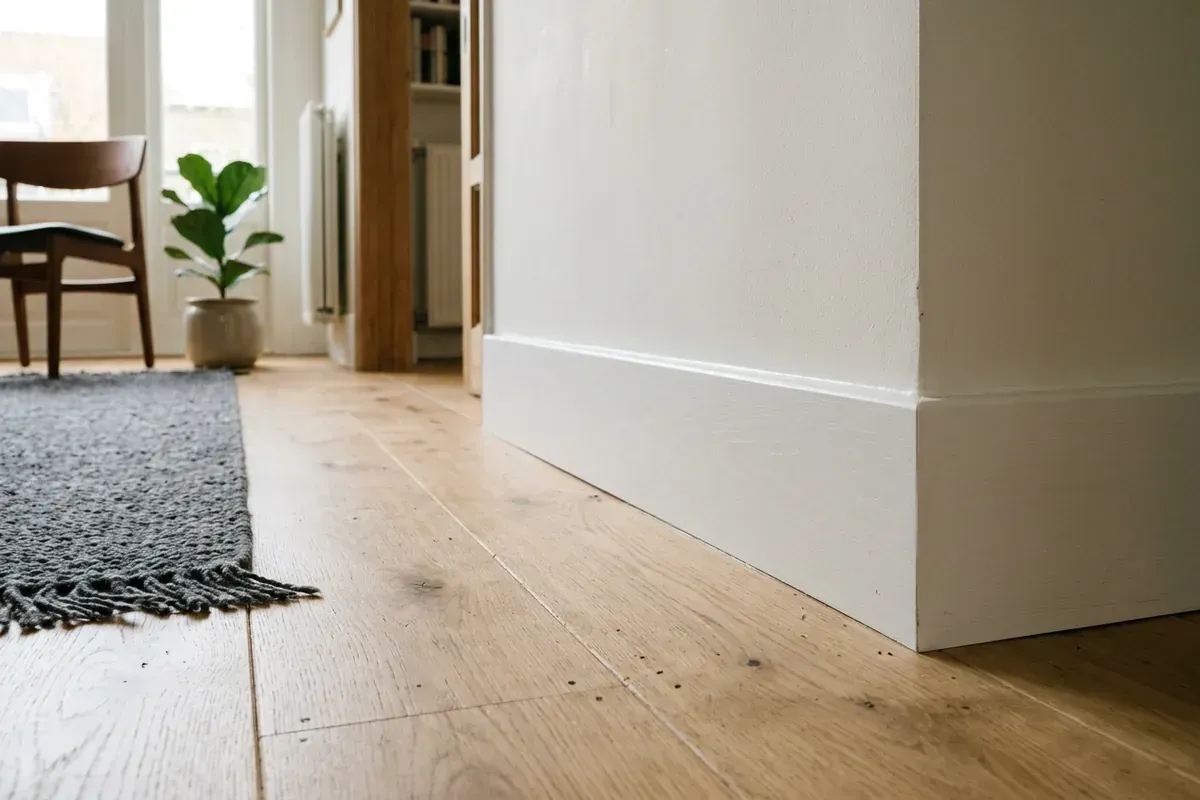
Skirting board
A skirting board is the moulding at the base of the wall that finishes the transition to the floor and protects the wall. Here is how it works and what to look out for.
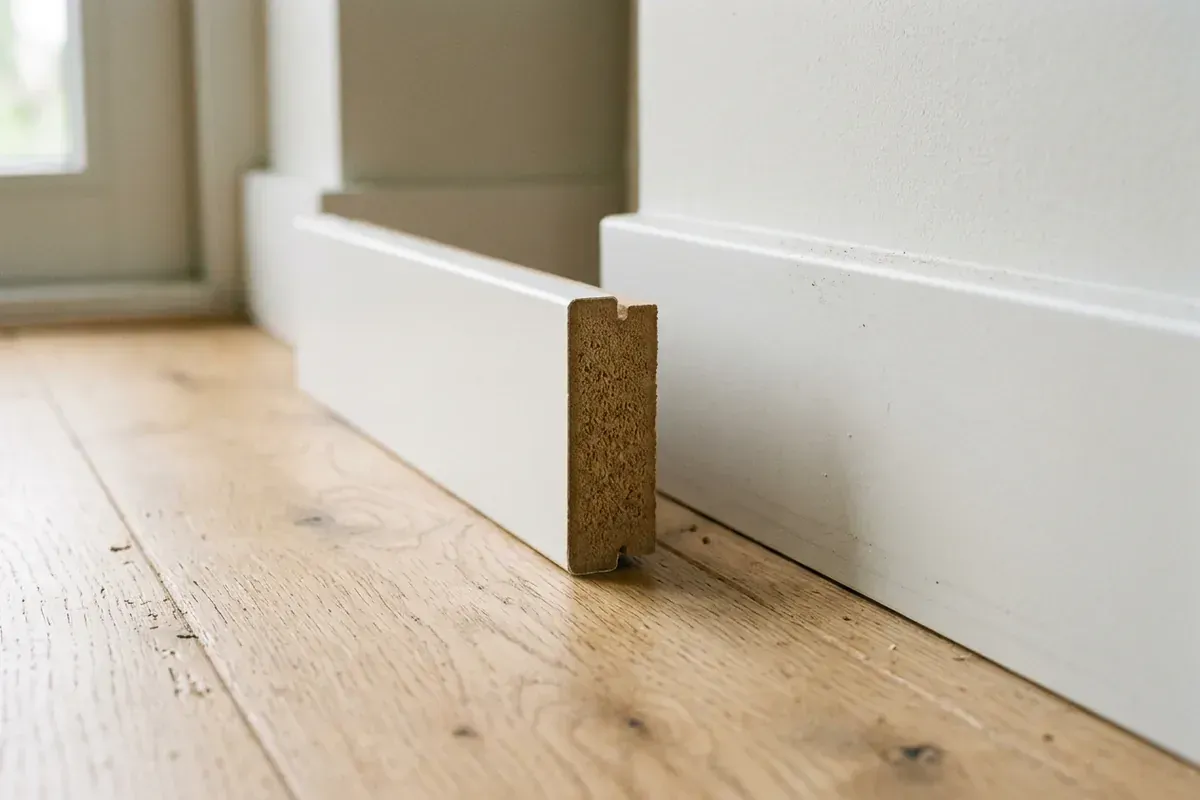
MDF
MDF is a sheet material made of pressed wood fibres. It is stable, smooth and easy to paint, which makes it the most popular material for skirting boards.
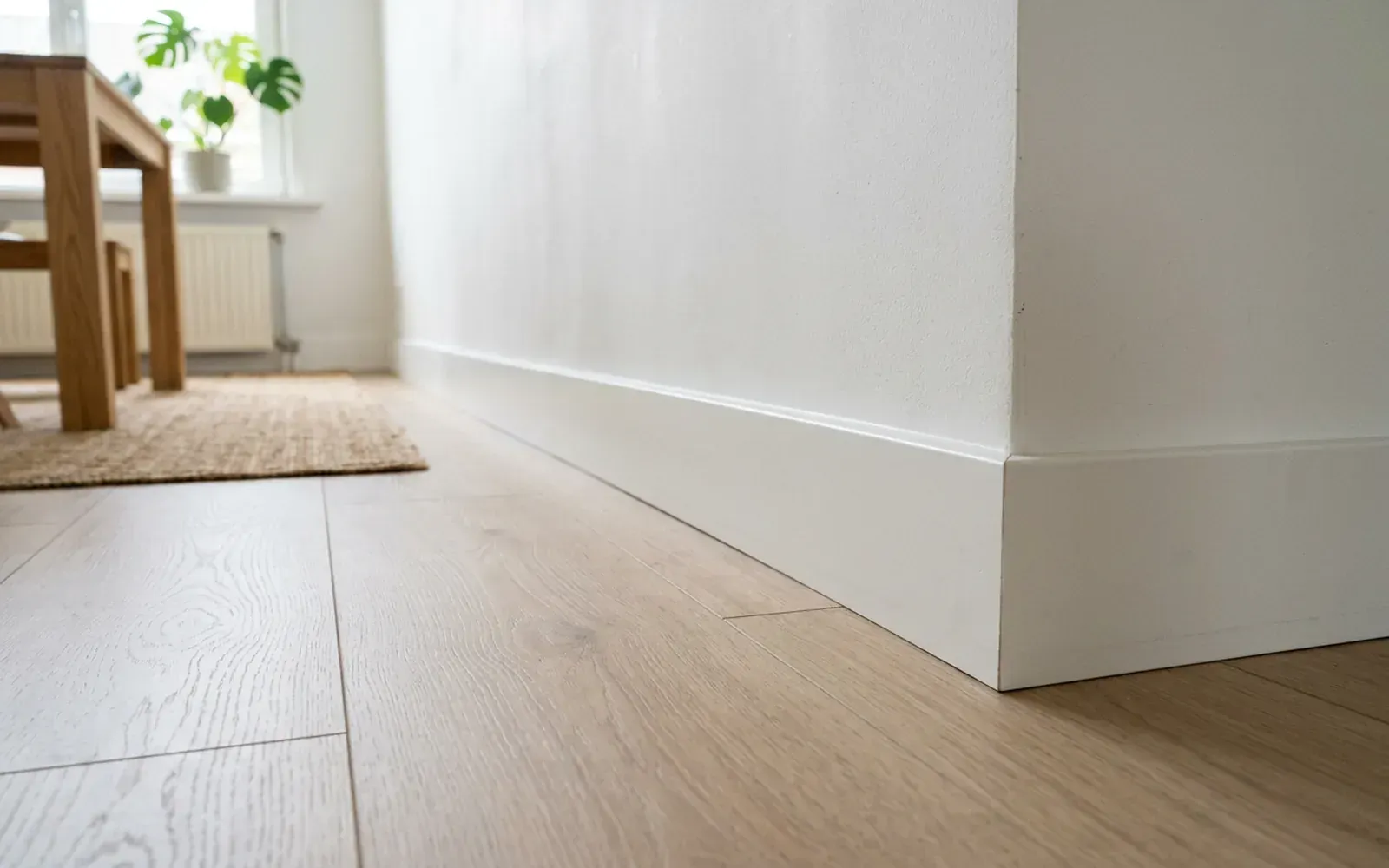
Floors & skirting
Which skirting boards suit a laminate floor?
With laminate, the skirting board has a technical job: covering the expansion gap without pinning the floor down. Here is how to choose the right skirting and fixing method.
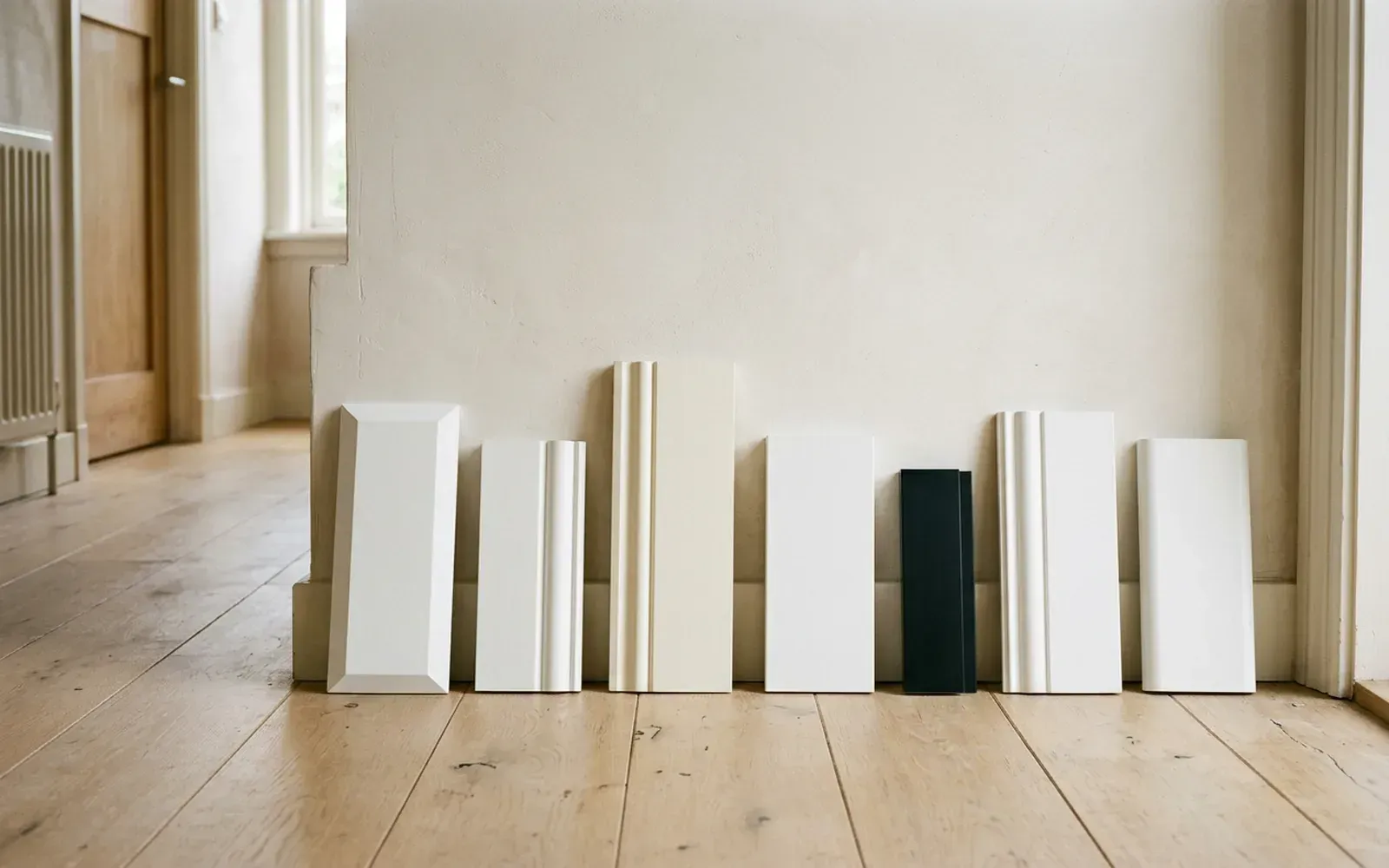
Choosing skirting
Which skirting boards to choose? A checklist for types, height and colour
Not sure which skirting boards to choose? This checklist takes you through every decision, from material and height to colour, floor and fixing, so you choose a skirting board that fits.
Skirting board installation by a specialist skirting fitter
TipTop Plinten fits skirting boards in MDF, solid wood and aluminium, finished in any RAL colour and neatly matched to any floor, even with uneven walls.
Skirting board installation? Request a free quote
On-site measurement €75 incl. VAT (credited for orders above a minimum project size)