
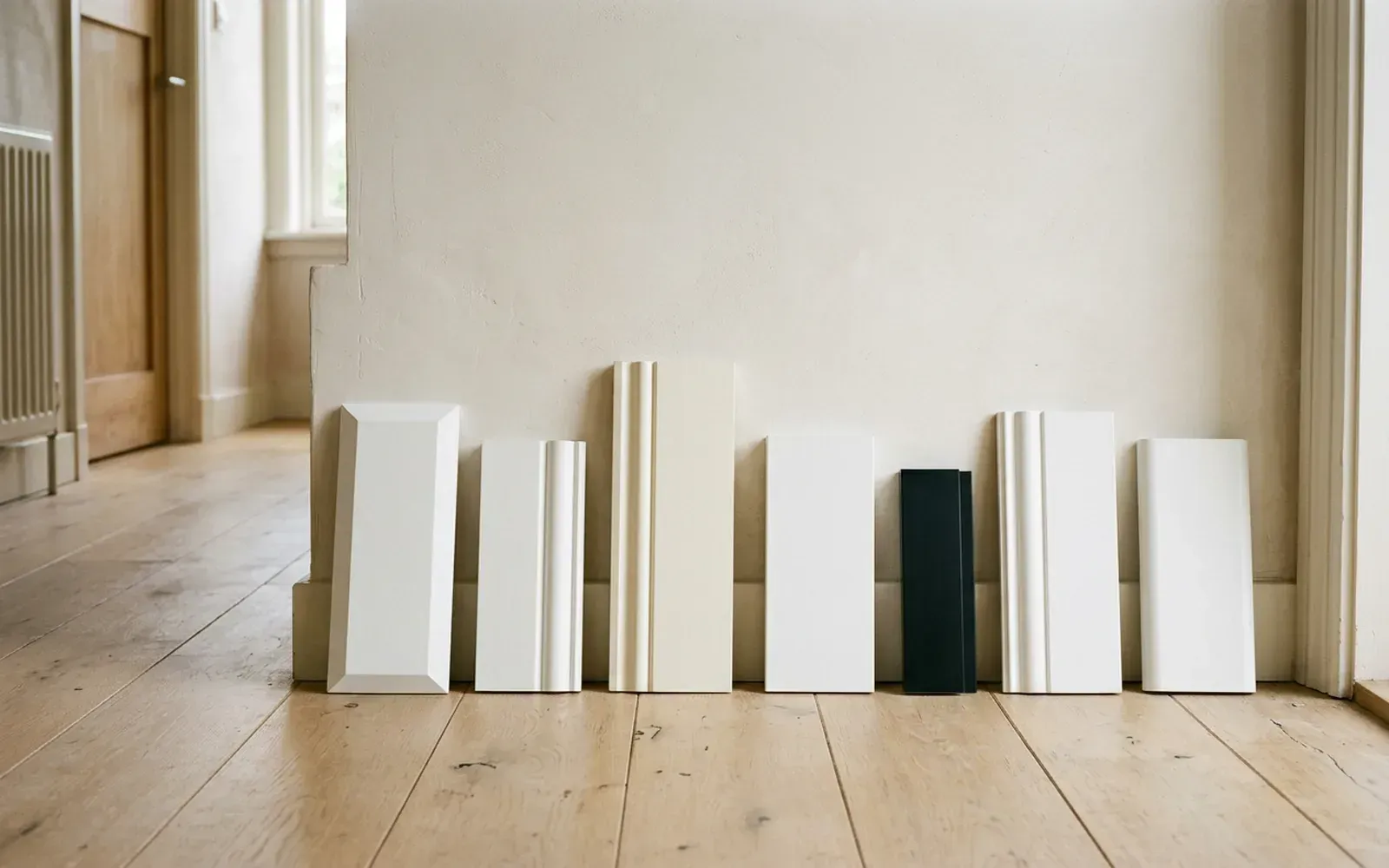
Which skirting boards to choose? You decide that by answering six questions: which material, which height, which profile, which colour, which floor and which fixing method. For most homes, an MDF skirting board in white or the wall colour is a safe, clean choice. But a tall skirting board, a black one, solid wood or aluminium may just as well be the better choice for your interior. This checklist takes you through every decision step by step.
Step 1: which material suits you?
The material determines the look, the finish and how the skirting board behaves in the room. TipTop Plinten works with three materials:
| Material | Suitable for | Point to note |
|---|---|---|
| MDF | Painted skirting in any colour, the most popular choice | Moisture-resistant MDF in damp areas |
| Solid wood | Visible grain, classic and characterful interiors | Wood moves with moisture and temperature |
| Aluminium | Sleek, modern, moisture-resistant | Needs a flat surface |
TipTop Plinten deliberately does not fit plastic skirting boards. If you are torn between wood and MDF, read our article wooden skirting or MDF.
Questions to ask yourself:
- Do you want to paint the skirting board or see the wood grain?
- Will it be exposed to moisture, for example in a bathroom, toilet, utility room or entrance hall?
- Does a metal skirting board suit your interior?
Step 2: which height do you choose?
The height of a skirting board has a big effect on how a room looks. A low skirting board is modest; a tall skirting board adds proportion and a solid base.
When choosing, consider:
- Ceiling height: the higher the ceiling, the taller the skirting can be.
- Size of the room: in a small room a tall skirting board can become dominant.
- Architraves: the skirting board must be able to finish neatly against the door trim.
- Radiators, sockets and pipes: these can determine the maximum height.
- Style: period properties often have tall profiled skirting boards; modern interiors often go for tall and straight, or low and slim.
You can read more about the right height in tall skirting boards: which height should you choose?.
Step 3: which profile suits your interior?
Types of skirting boards are mainly distinguished by their profile:
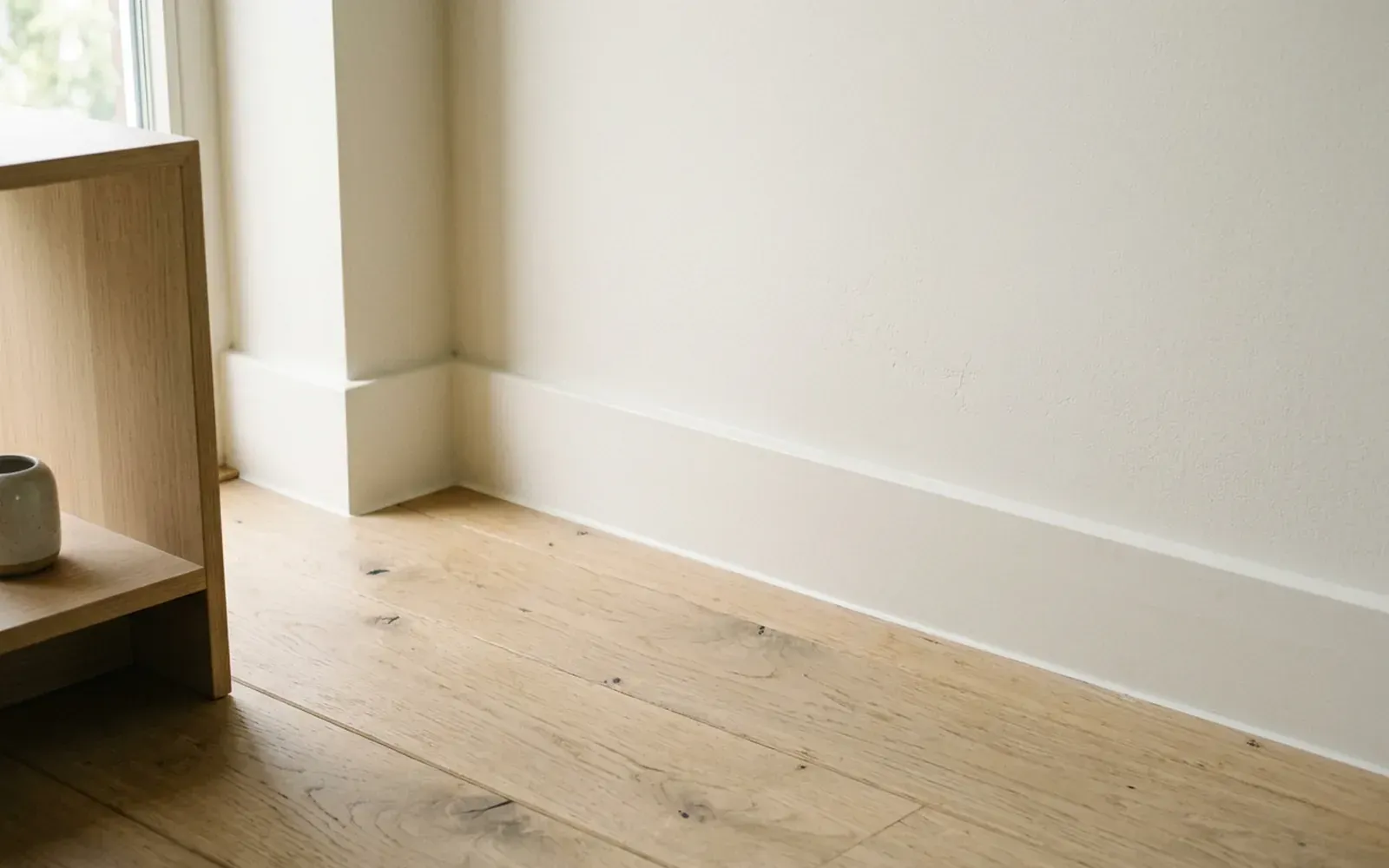
- Square: a flat skirting board with a straight top edge. Clean and modern.
- Rounded or chamfered: a square profile with a slight rounding or bevelled edge at the top. Calm, but a little softer.
- Classic profiled: concave and convex lines, suited to 1930s homes, townhouses and characterful properties.
- Shadow gap skirting: a recessed or set-back solution for a floating effect, usually prepared during the construction phase.
For inspiration for a clean, contemporary interior, read about modern skirting boards.
Step 4: which colour do you choose?
| Colour | Effect |
|---|---|
| White, e.g. RAL 9010 or RAL 9016 | Classic, light and timeless |
| Wall colour | The skirting blends in, a calm overall look |
| Matt black, RAL 9005 | Graphic contrast, modern |
| Another RAL colour | Matched to frames, doors or interior |
A finish in any RAL colour is possible. Ideally, choose a colour that goes with the frames, doors and architraves, so that the joinery in the room forms one whole.
Question to ask yourself: do you want the skirting board to stand out or to blend in?
Step 5: what kind of floor do you have?
The floor partly determines which skirting board looks good and how it is fitted.
- Laminate, vinyl and floating parquet: the skirting board must cover the expansion gap along the wall and is fixed to the wall, not to the floor.
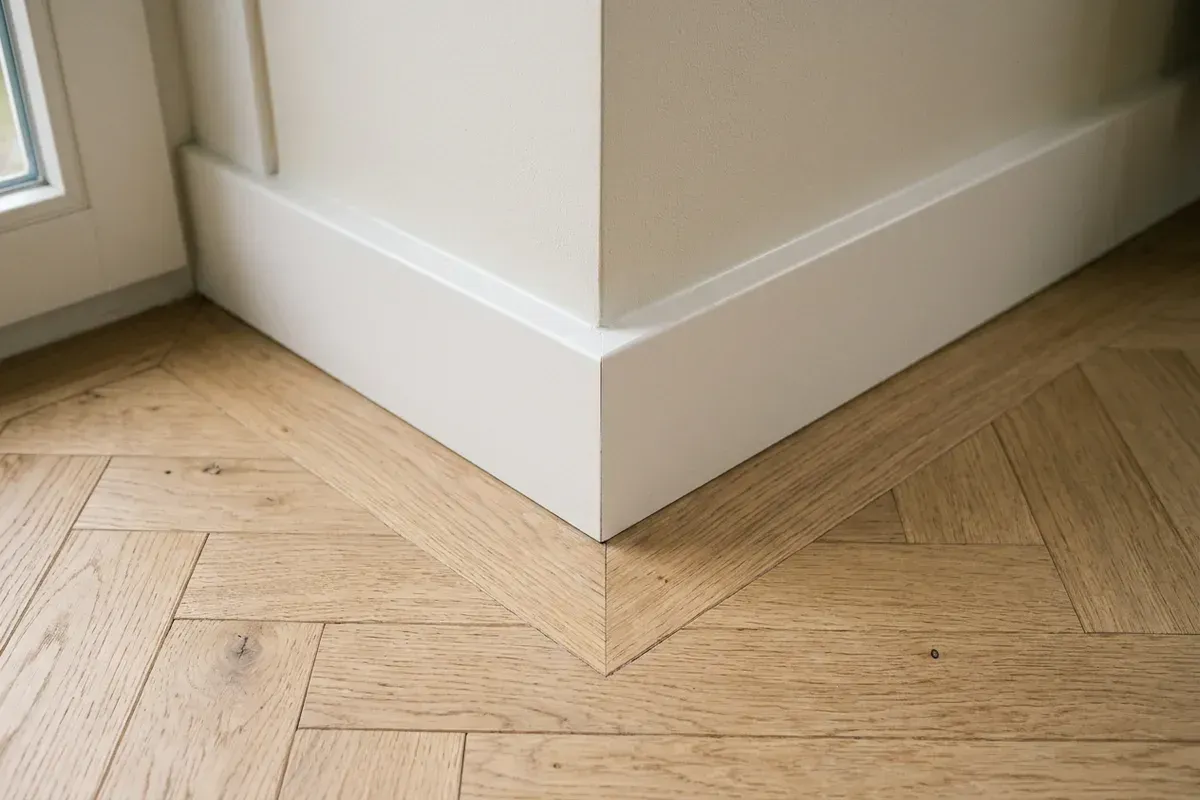
- Herringbone floor: the pattern is busy enough; a calm skirting board lets the floor do the talking.
- Tiled floor: the junction between skirting and tile calls for a neat sealant joint or a clean solution with a tile skirting.
- Uneven floor: with larger differences in height, the skirting board has to be adjusted or the junction taken up with caulk.
You can read more per floor type in skirting boards for laminate, skirting boards for vinyl floors and skirting for herringbone floors. A real-life example is the apartment in Oss with a herringbone floor and MDF skirting boards.
Step 6: do you have any special requirements?
- Hiding cables: cable skirting has space for cables behind the board. Read more in skirting boards with a cable channel.
- Leaving old skirting boards in place: overlay skirting goes over the existing skirting. See overlay skirting boards: when is it a smart choice?.
- Uneven walls: irregular walls and unusual corners call for made-to-measure work. An example is the apartment in Oss where the skirting boards were made entirely to measure and fitted on site.
- Invisible fixing: skirting boards can be glued or fixed in such a way that no screw holes are visible.
Step 7: how is the skirting board fixed and finished?
Skirting boards are glued, screwed or nailed, or fixed with a combination of these. The choice depends on the wall, the material and whether you want invisible fixing. You can read more in fixing skirting boards: glue, screws or nails.
Then comes the caulking. The joint between skirting board and wall is usually sealed with paintable acrylic caulk. This makes small gaps disappear and the skirting looks as if it is one with the wall. Read more on the caulking page.
Corners, end pieces and transitions
A skirting board is only as good as its corners. Internal and external corners are usually mitred, so the profile runs on uninterrupted. Because walls are rarely perfectly square in practice, every corner has to be fitted. The places where a skirting board ends, for example against a frame, a staircase or a cupboard, also deserve attention: a neat end or a matching end piece avoids a messy detail. So when choosing, also count how many corners and transitions the room has. You can read more about corners in mitre cutting skirting boards.
Quick checklist to keep
- Material: MDF, moisture-resistant MDF, solid wood or aluminium?
- Height: in proportion to the ceiling, room and architraves?
- Profile: square, rounded, classic or shadow gap?
- Colour: white, wall colour, black or another RAL colour?
- Floor: laminate, vinyl, parquet, herringbone or tiles?
- Special points: cables, old skirting boards, uneven walls?
- Fixing and finishing: glue, screws, caulking?
- Corners: how many internal and external corners, and are they square?
- Linear metres: roughly how many metres of skirting are needed?
With these answers a skirting board fitter can also put together an accurate quote. Useful to include: the location, the type of room, the estimated number of linear metres, the material and colour you want, and the type of floor. You can read what happens next in having skirting boards fitted: how it works.
Having skirting boards fitted by TipTop Plinten
TipTop Plinten from 's-Hertogenbosch fits MDF, solid wood and aluminium skirting boards throughout the Netherlands, on any floor and in any RAL colour, including made-to-measure work, mitres and caulking. Read more on the skirting board installation page.
Still not sure which skirting boards to choose? Get in touch for advice and a free quote without obligation. We communicate in English, as well as Dutch, German, Turkish, Persian and Arabic. An on-site measurement with personal advice is optionally available for €75 incl. VAT; this amount is credited as a discount on jobs above a minimum project size.
Frequently asked questions
MDF skirting boards are the most popular option. They are dimensionally stable, have a smooth surface and can be finished in any RAL colour. Solid wood and aluminium are alternatives for specific styles and situations.
There is no fixed standard. Lower skirting boards often suit compact rooms and apartments, taller ones suit spacious rooms and high ceilings. What matters is that the height is in proportion to the room and works with the architraves.
Popular choices are white (RAL 9010 or RAL 9016), the wall colour and matt black (RAL 9005). White and the wall colour create a calm look, black adds contrast. Also consider the colour of the frames and doors, so that everything works together.
Yes, with overlay skirting, which is fitted over an existing skirting board. Whether that is a good solution depends on the condition and shape of the old skirting and the look you want.
With laminate, vinyl and floating parquet, the skirting board must cover the expansion gap along the wall. The skirting is fixed to the wall and not to the floor, so the floor can still move.
Related articles
Choosing skirting
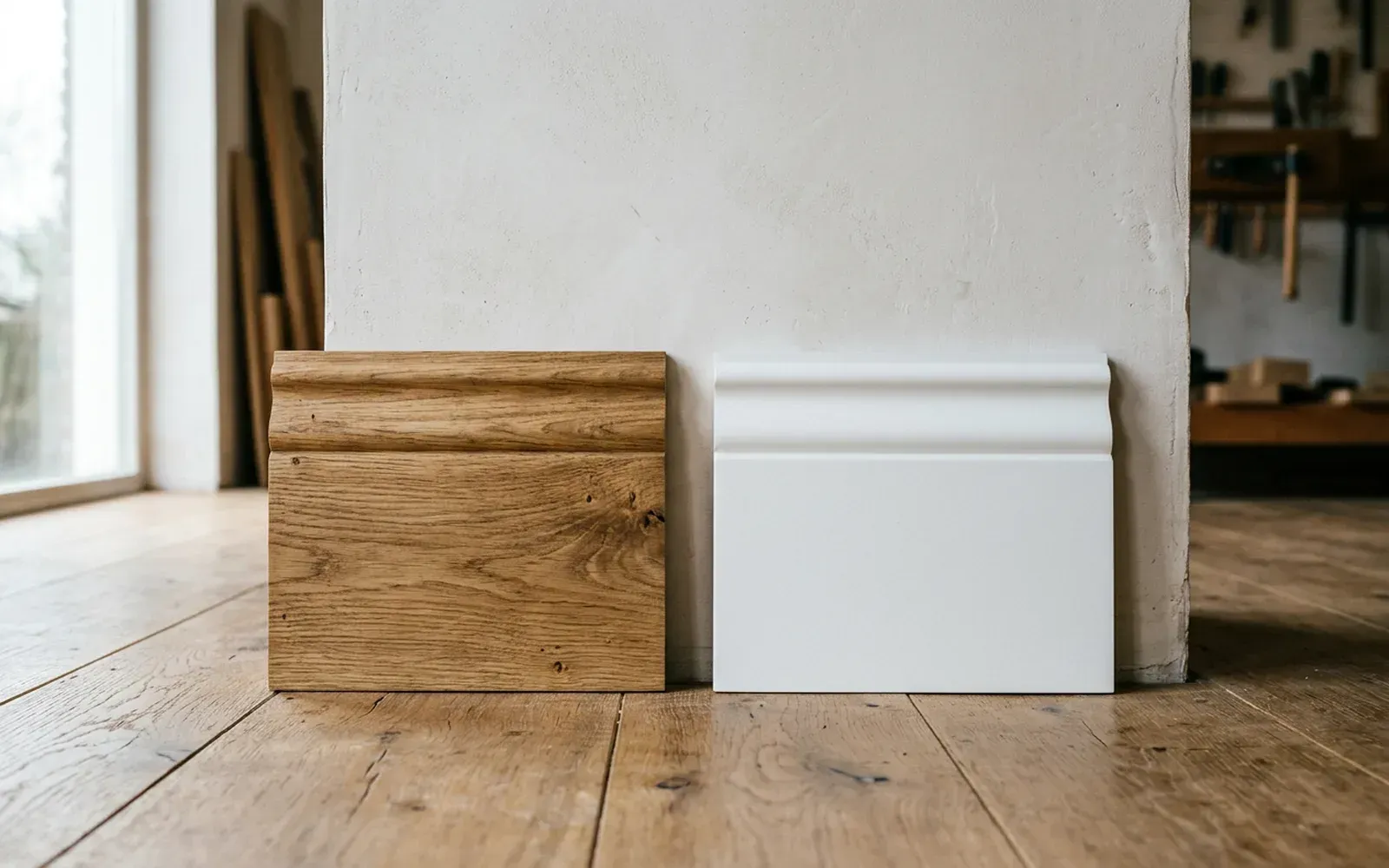
Wooden skirting boards or MDF: which suits your home?
Solid wood skirting or MDF? Both materials have clear pros and cons. We compare the differences side by side so you can choose skirting that suits your floor, interior and use.
Choosing skirting
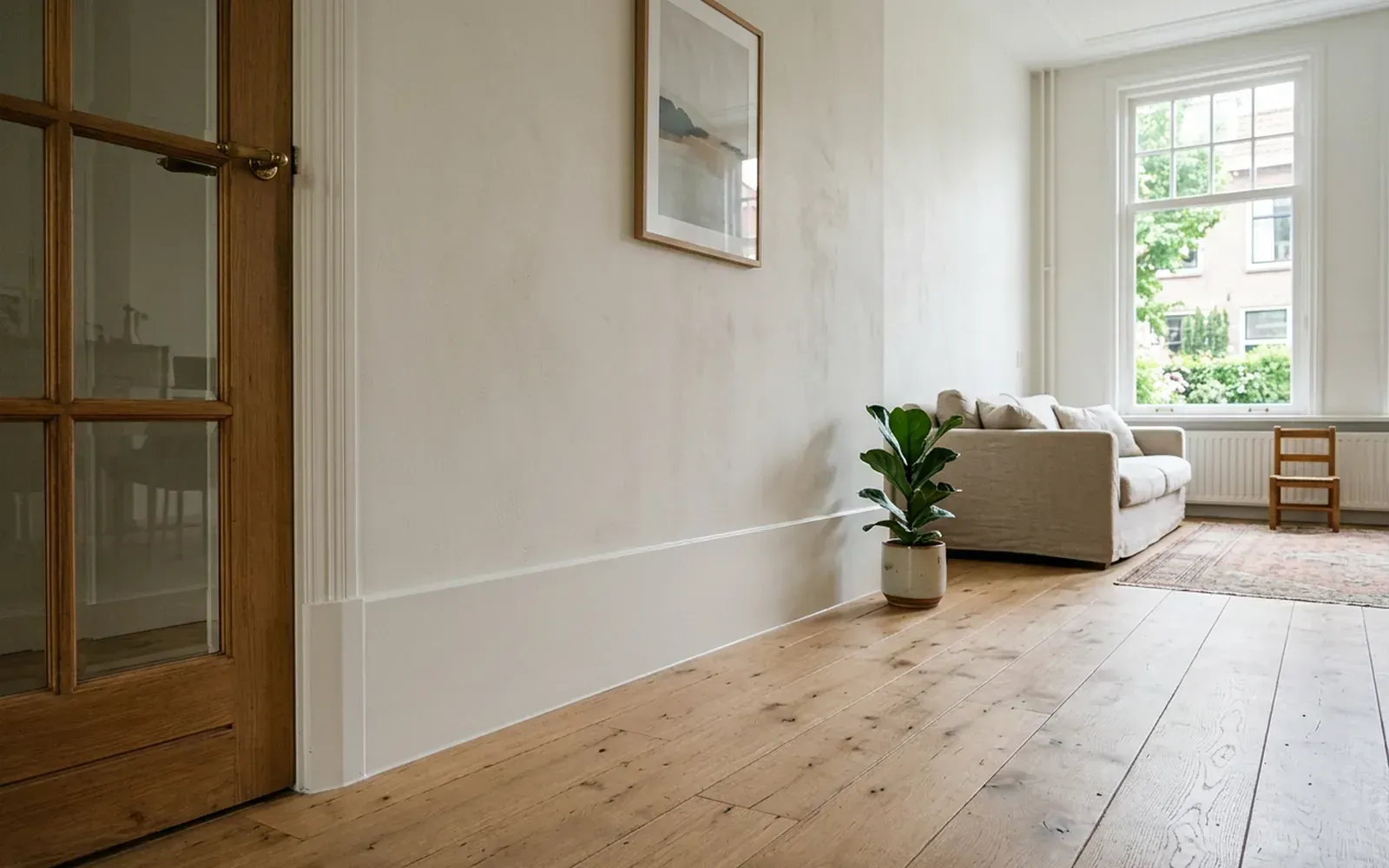
Tall skirting boards: which height suits your room?
Tall skirting boards give a room calm and character, as long as the height is right. Here is how to work out which skirting height suits your ceiling, floor and interior.
Choosing skirting
Modern skirting boards: the styles that suit a sleek interior today
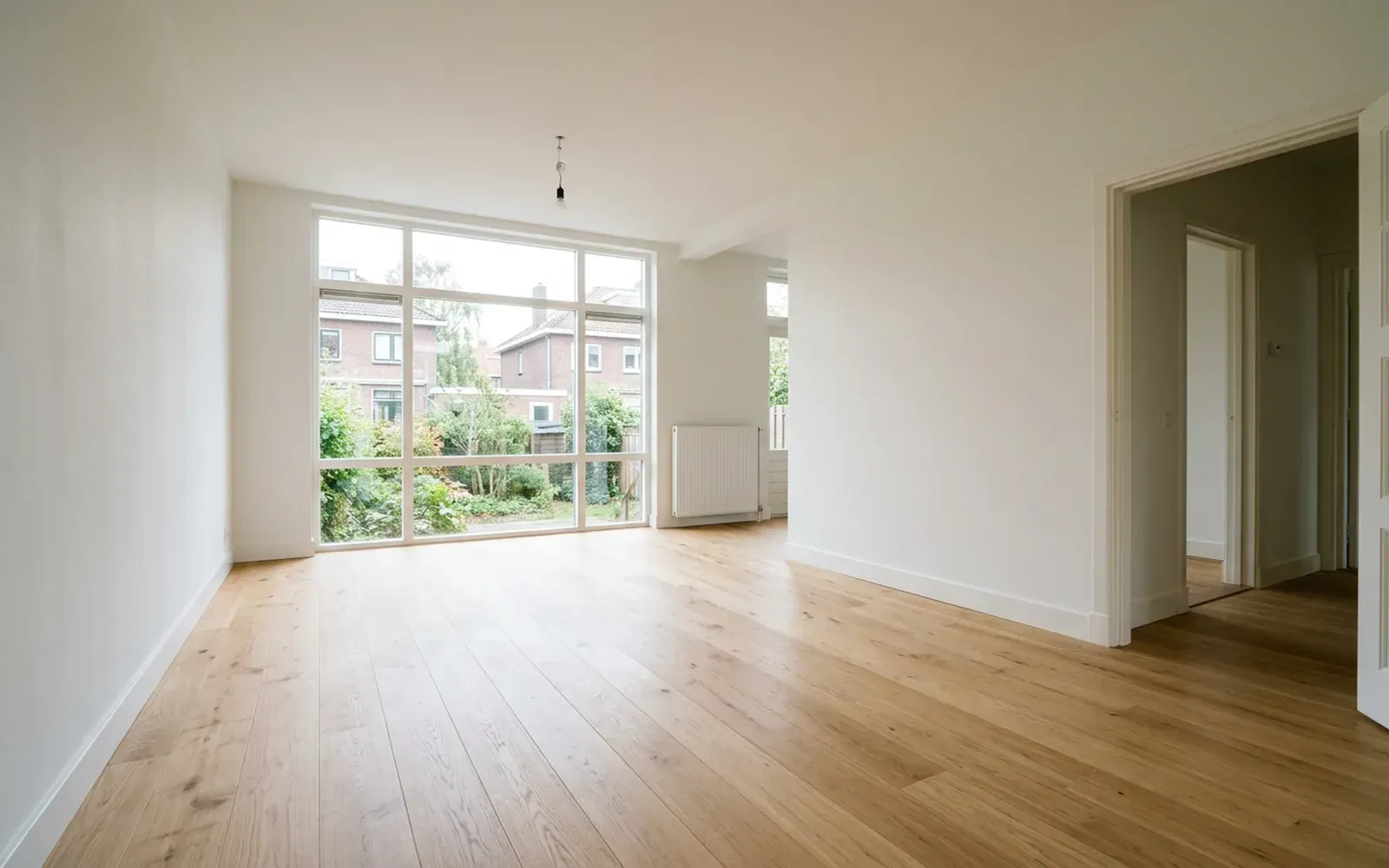
Modern skirting boards are all about calm and clean lines. From shadow gap skirting to tall skirting in the wall colour or an aluminium profile: these are the styles that suit a contemporary interior.
Costs & process
Having skirting boards fitted: how it works from enquiry to finish
From the first message to the final caulk line: this is how having skirting boards fitted by TipTop Plinten works, and what you can arrange yourself beforehand.
Related
Skirting board
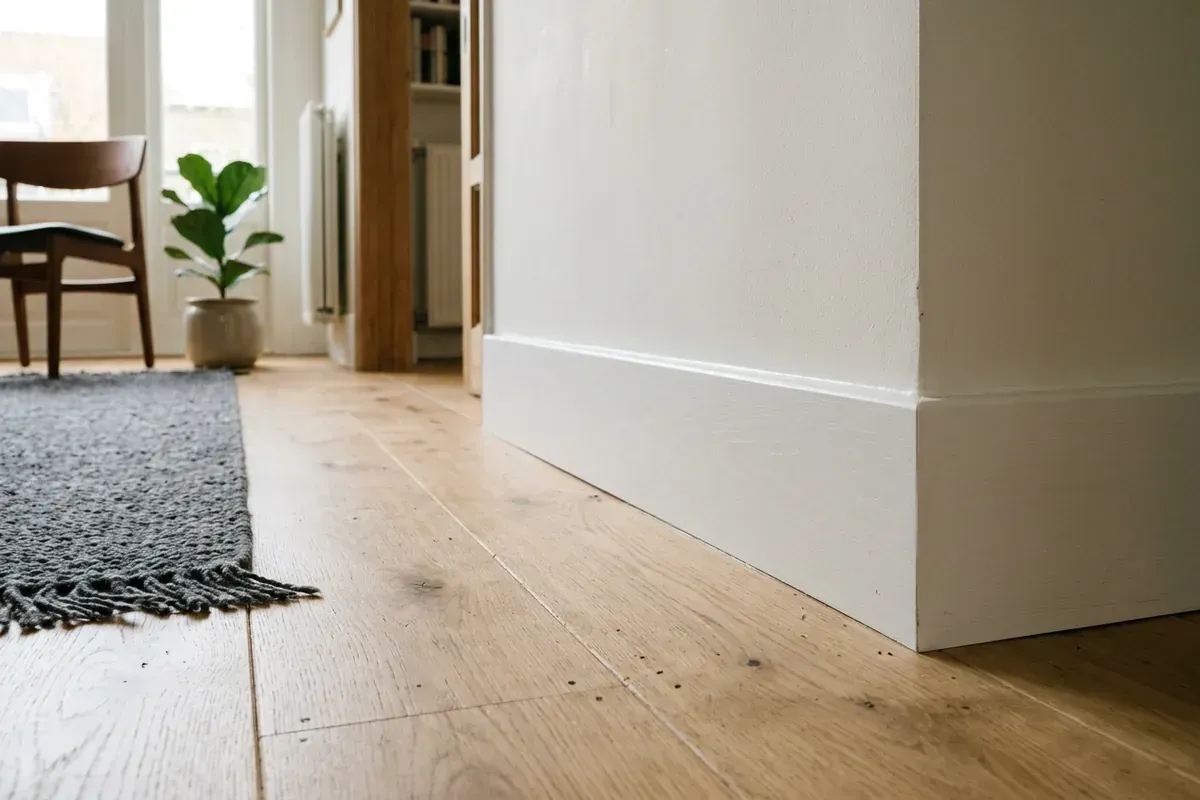
A skirting board is the moulding at the base of the wall that finishes the transition to the floor and protects the wall. Here is how it works and what to look out for.
Tall skirting
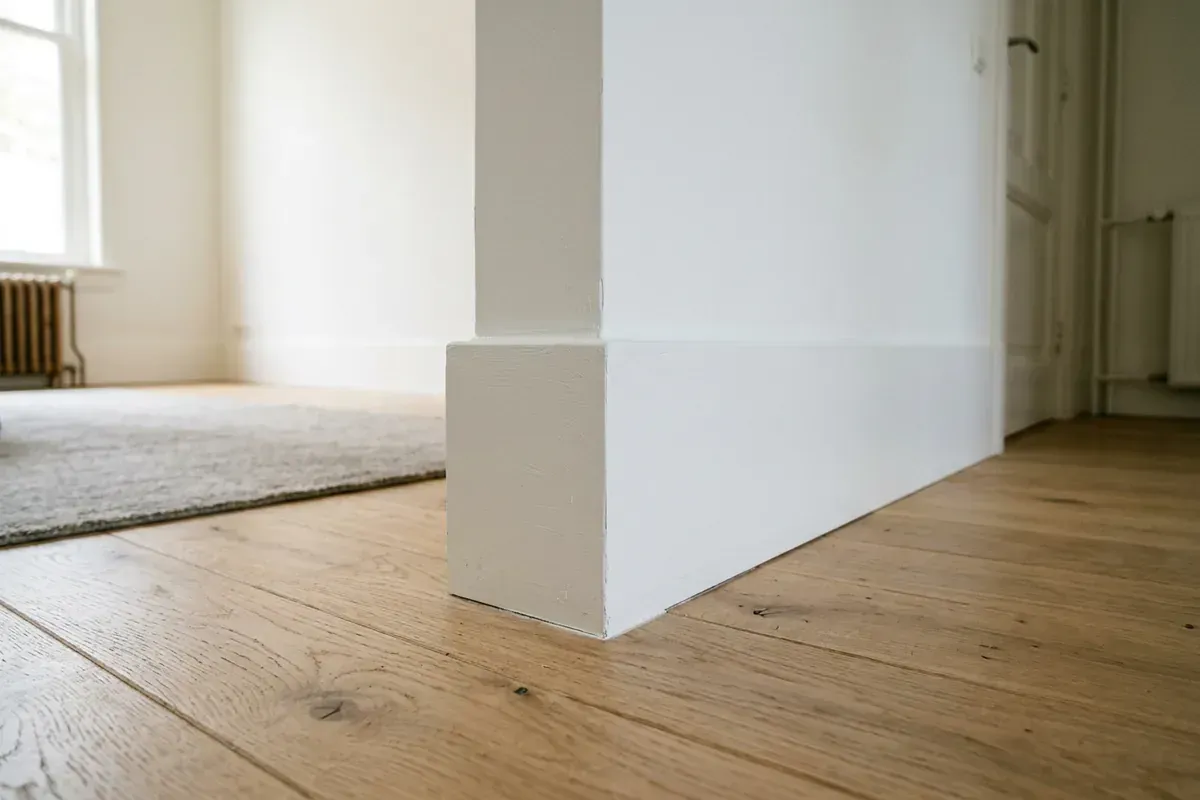
Tall skirting is usually 12 cm or higher. It gives a room calm and elegance, provided the height suits the ceiling and the interior.
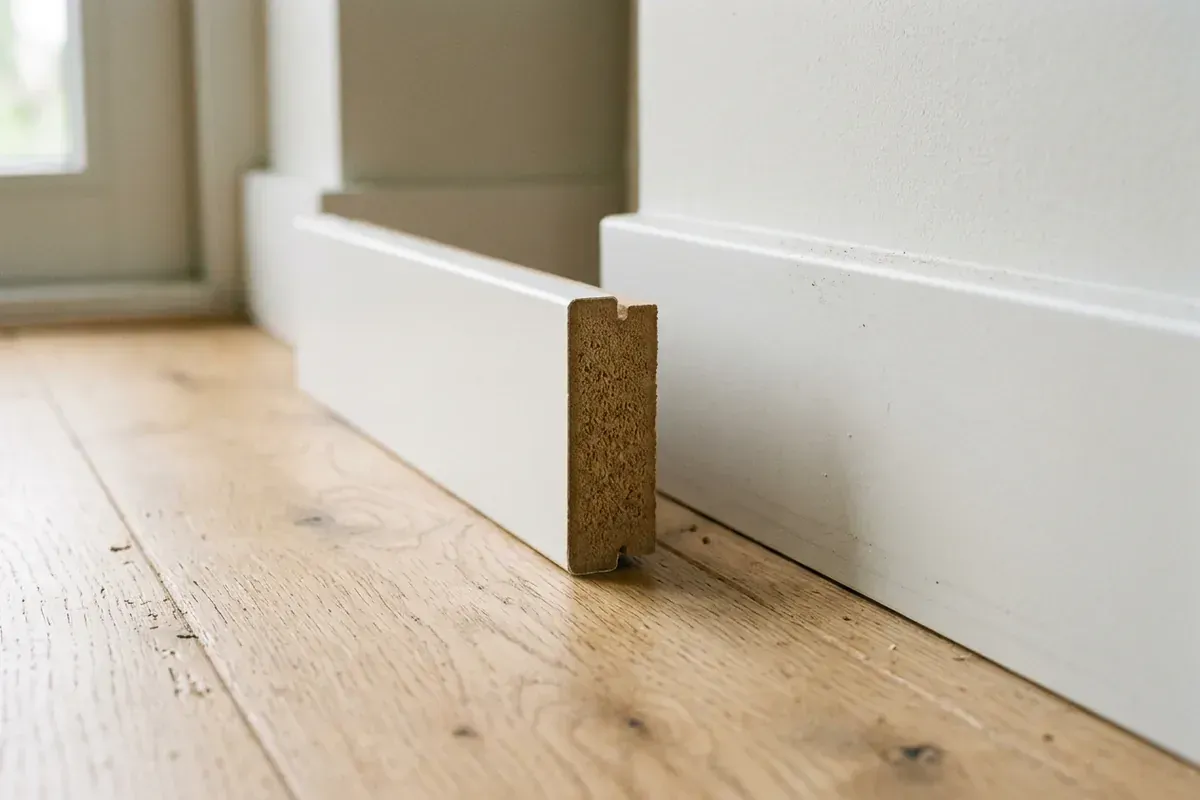
MDF
MDF is a sheet material made of pressed wood fibres. It is stable, smooth and easy to paint, which makes it the most popular material for skirting boards.
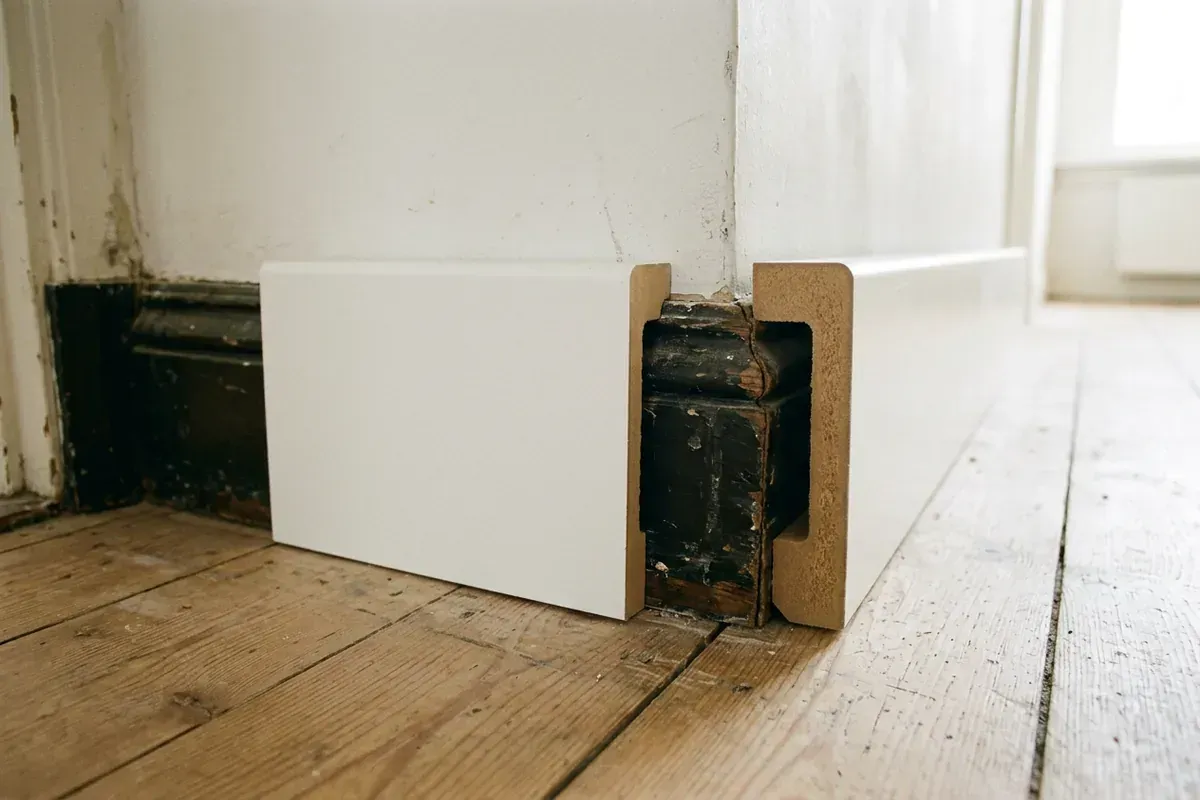
Overlay skirting
Overlay skirting is routed out at the back so it fits over an existing skirting board. Useful during renovation, provided the substrate allows it.
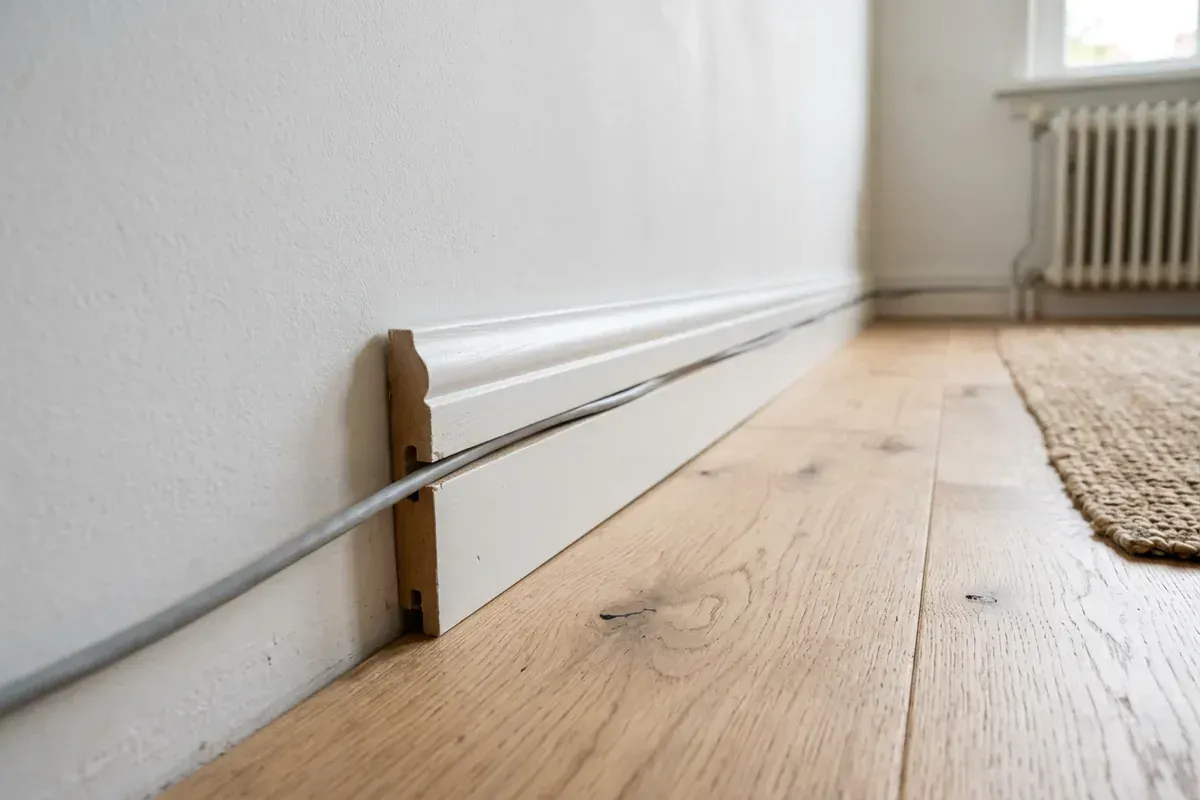
Cable skirting
Cable skirting has space for cables at the back. That way, leads for the TV, internet or speakers disappear neatly out of sight.
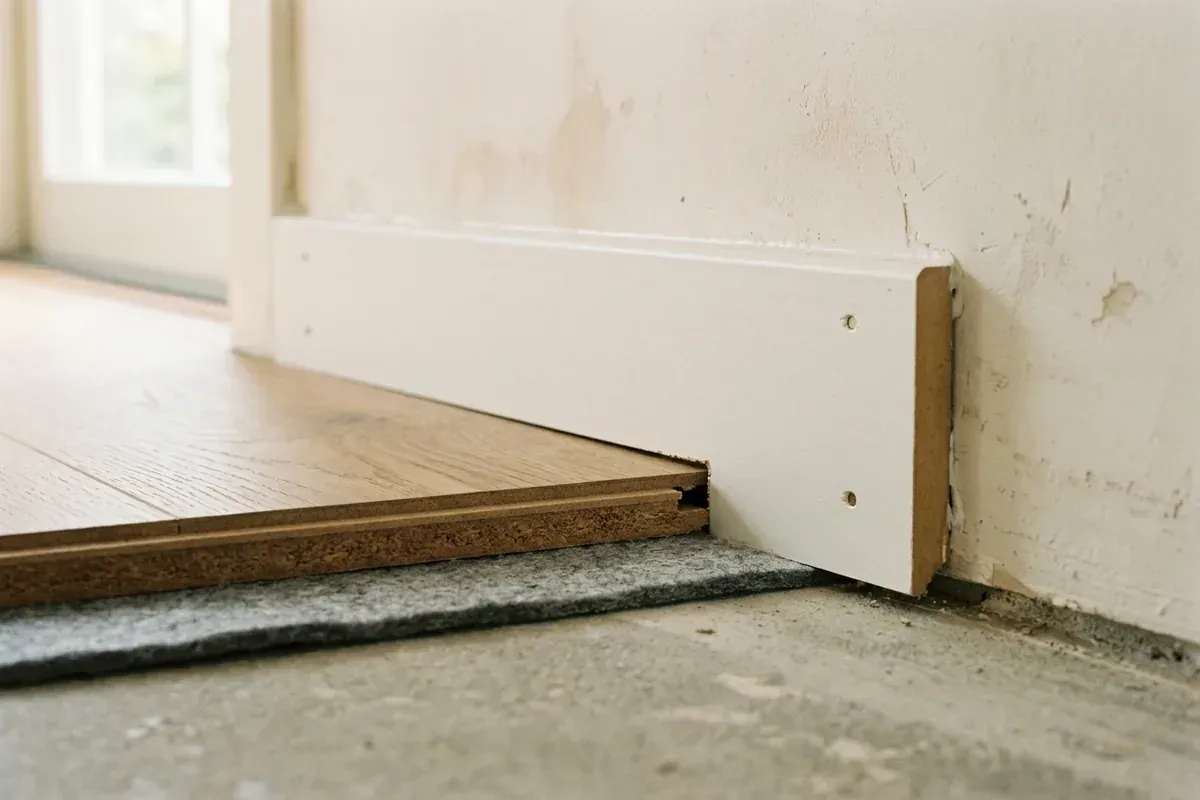
Expansion gap
An expansion gap is an open space along the edge of a floor, so it can expand and contract. The skirting board covers the gap without fixing it.
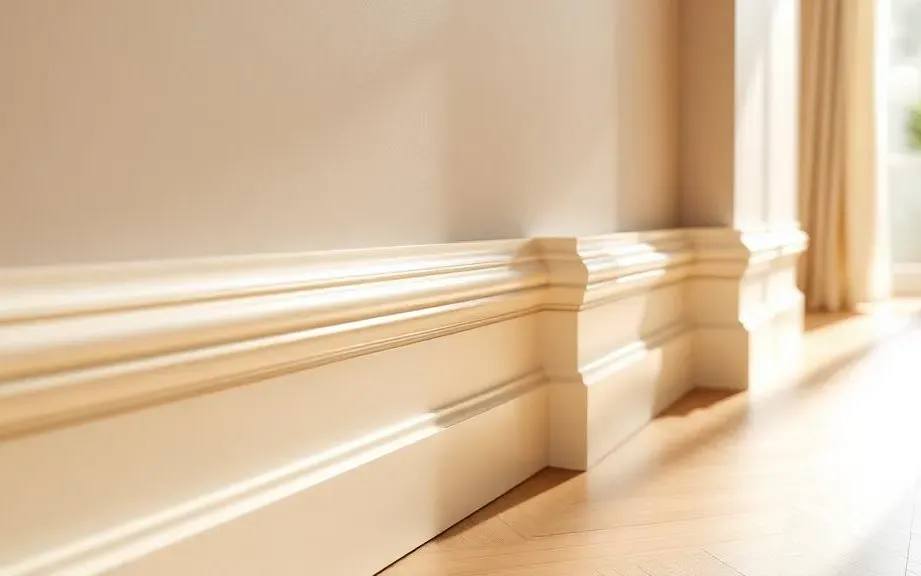
Skirting board installation by a specialist skirting fitter
TipTop Plinten fits skirting boards in MDF, solid wood and aluminium, finished in any RAL colour and neatly matched to any floor, even with uneven walls.
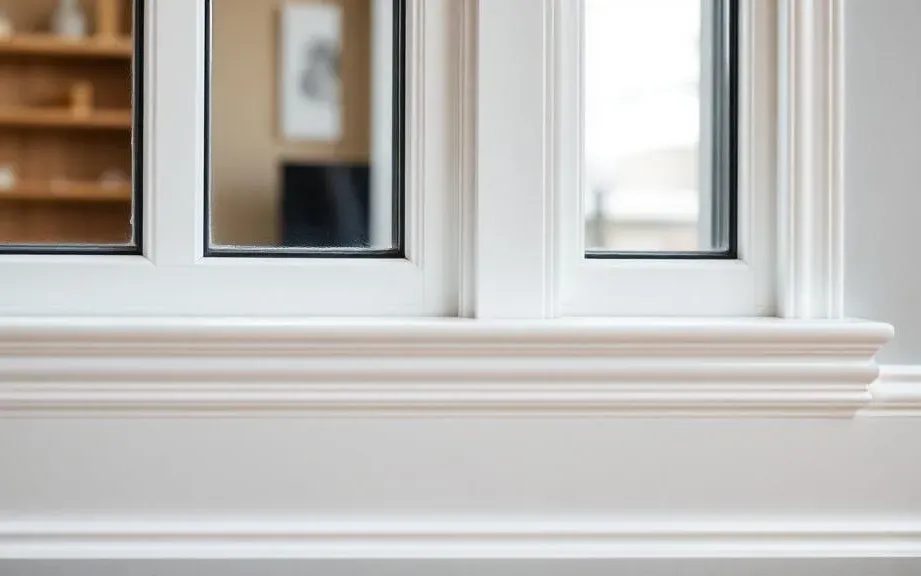
Caulking skirting boards and sealant work for a seamless finish
Caulking is the final step that makes skirting boards, mouldings and panels look seamless. TipTop Plinten uses acrylic or silicone, paint-ready or in colour.
Skirting board installation? Request a free quote
On-site measurement €75 incl. VAT (credited for orders above a minimum project size)