
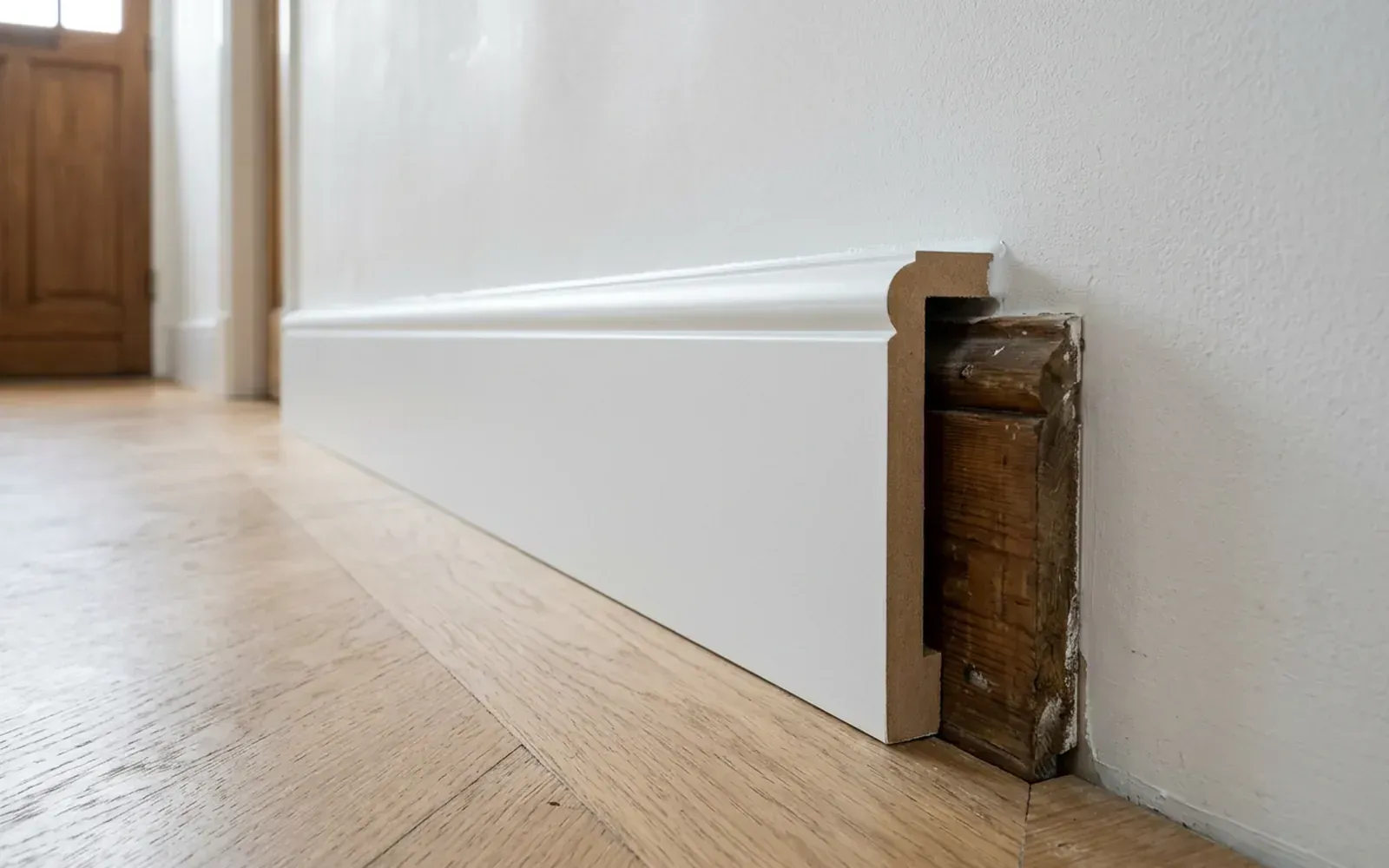
Overlay skirting boards are skirting boards with a hollow or routed back that you fit over existing skirting. They are a smart choice if removing the old skirting would cause damage, for example with tile skirting or old skirting boards set into plaster, and if the old skirting itself is still firmly fixed. They are less suitable if the old skirting is loose or damp, if the new skirting would be too thick at door frames, or if a new floor is going down that needs to be finished differently.
Below you can read when overlay skirting works, when it doesn't, and which dimensions to check in advance.
What is overlay skirting?
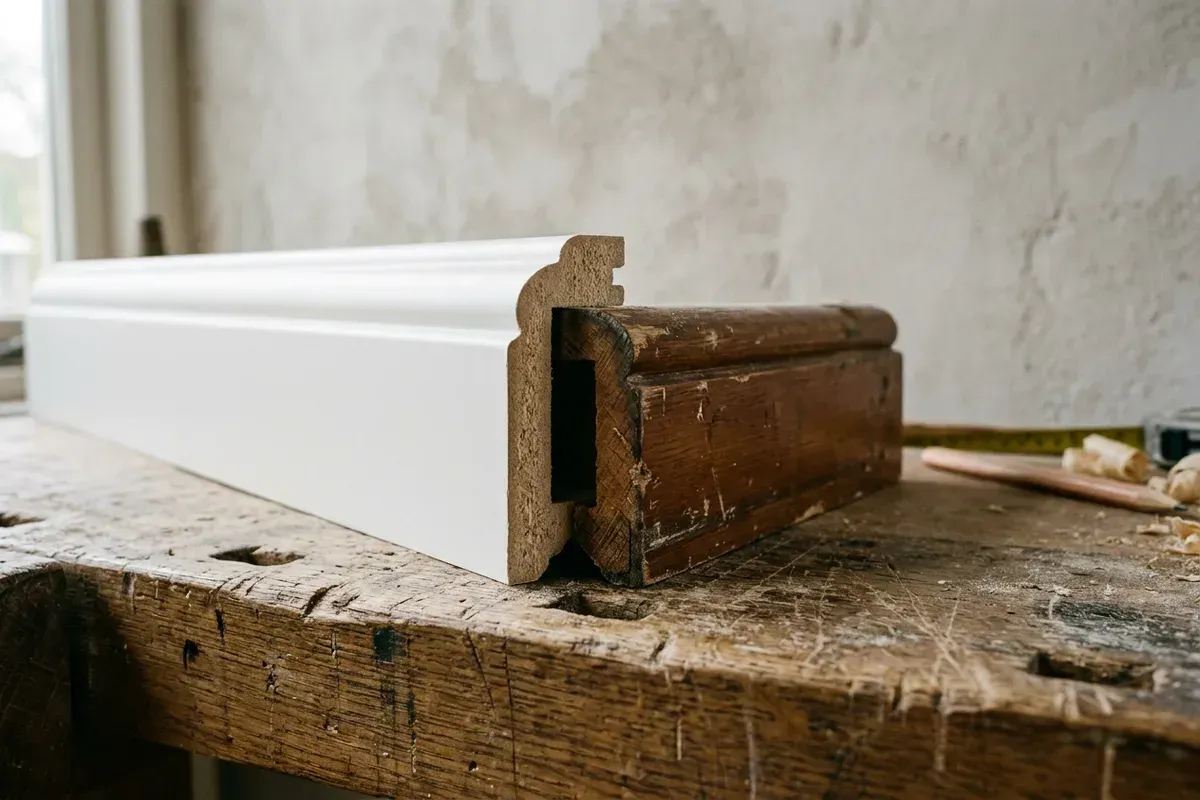
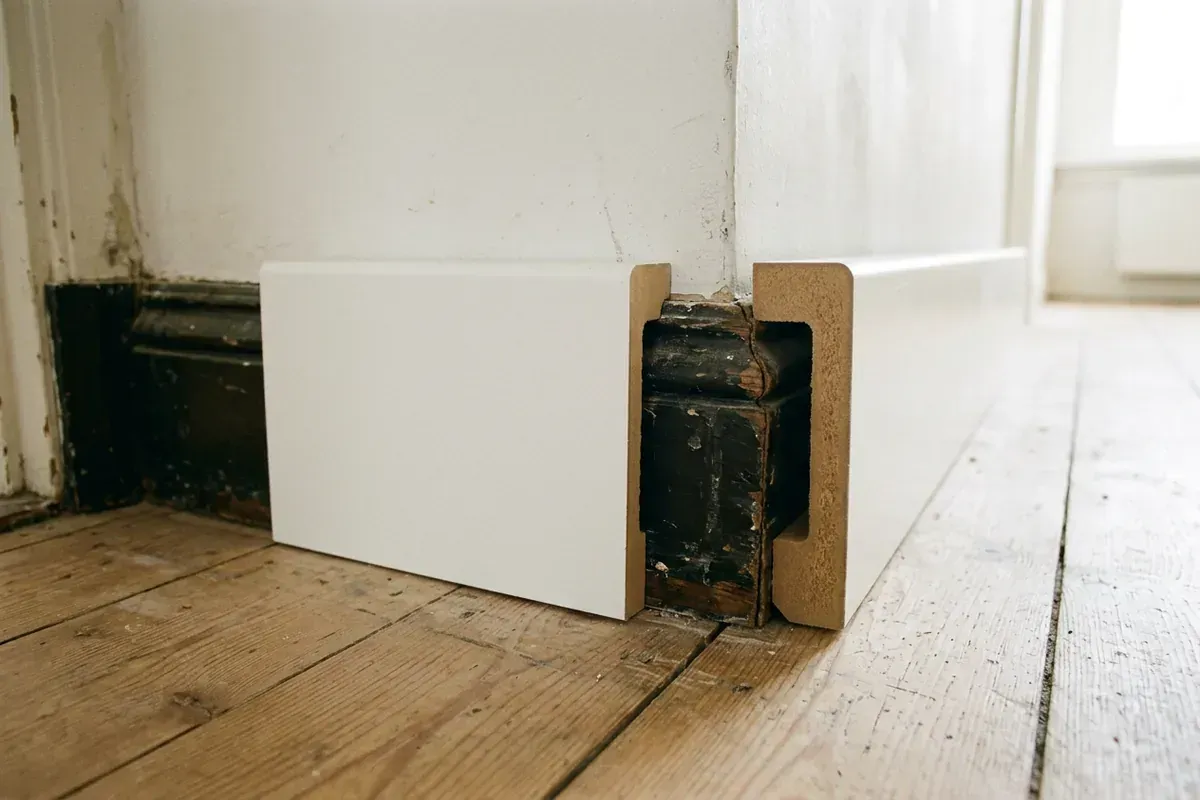
Overlay skirting looks like an ordinary skirting board from the front, but is hollowed out at the back. That space fits over the old skirting. The new skirting is fixed to the wall above the old skirting, and often to the old skirting itself as well. This covers the old skirting completely.
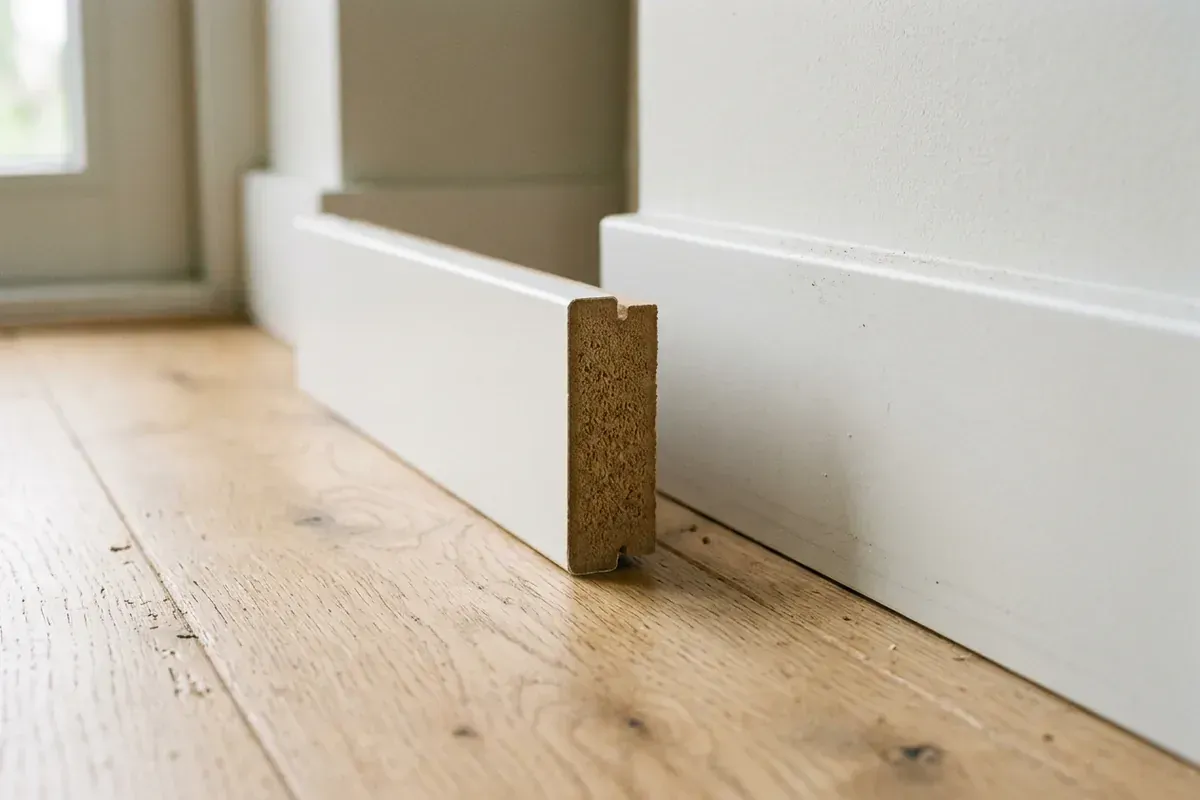
Overlay skirting boards come in various heights, but they are always somewhat taller and thicker than the skirting they cover. They are often made of MDF, so they can be painted in any colour.
When is overlay skirting a smart choice?
With tile skirting
Tile skirting is often fixed in tile adhesive or cement. Removing it almost never happens without damage to the wall: chunks of plaster come away and the wall then has to be repaired. Overlay skirting avoids that demolition and repair work.
With old skirting boards set into plaster
In older homes, skirting boards were sometimes fitted before the plastering, so the plaster runs up against or even over the skirting. When it is removed, the plaster edge breaks off. Overlay skirting covers both the old skirting and that edge.
For a quick refresh without a new floor
If the floor is staying and you just want a different look, for example tall skirting boards in a modern colour, overlay skirting over the existing skirting can be a neat solution.
If the old skirting may contain asbestos
In Dutch homes built before 1994, some old building materials may contain asbestos. If in doubt, have it tested first. Overlay skirting is sometimes used in such situations to avoid disturbing the material, but that is a decision you make based on an expert assessment, not on guesswork.
When is overlay skirting not a good idea?
| Situation | Why not |
|---|---|
| Old skirting is loose | The new skirting is partly fixed to a loose base |
| Old skirting is damp or deteriorated | The problem is hidden from view, but remains |
| New floating floor | The skirting has to cover the expansion gap; the old skirting is in the way |
| Too thick at door frames | The skirting sticks out beyond the frame or architrave |
| Very irregular old skirting | Unevenness shows through in the new skirting |
With a new floor
If new laminate, vinyl (PVC) or another floating floor is going down, the skirting has to cover the expansion gap along the wall. The old skirting is then often exactly where the floor needs to go. In that case it is usually better to remove the old skirting boards first. More on this in skirting boards for laminate.
What should you measure beforehand?
- Height of the old skirting. The overlay skirting has to be taller, with enough space to fix it to the wall above the old skirting.
- Thickness of the old skirting. The hollow in the overlay skirting has to fit. Overlay skirting that is too tight will not sit against the wall.
- Depth of door frames and architraves. If the new skirting sticks out further than the frame or architrave, the junction looks unfinished.
- Corners. With overlay skirting too, internal and external corners have to be crisply mitred. The old skirting may be off in the corner, which makes fitting harder.
Solving the door frame problem
If the overlay skirting is thicker than the frame, there are a few options: fit a thicker architrave around the door, neatly bevel the skirting at the frame or use a skirting end cap. Which solution looks best depends on the door and the skirting. See also our architraves service.
The finish: caulk and colour
Overlay skirting is also caulked against the wall along the top, so that no shadow gap remains visible. Because the new skirting can be quite a bit taller than the old, the top edge sits on a different part of the wall. If the wall is less flat there, neat caulking is especially important.
As for colour, the same applies as with any skirting: match it to doors and frames, or deliberately choose a contrast. Also read MDF skirting boards: pros and cons for the choice of material.
Overlay skirting or removing the old skirting: an overview
| Overlay skirting | Removing old skirting | |
|---|---|---|
| Damage to the wall | Avoided | Risk of damage, repair needed |
| Skirting thickness | Thicker | Normal thickness |
| Suitable with a new floating floor | Usually not | Yes |
| Junction with frames | Point to watch | Simpler |
| Requires firmly fixed old skirting | Yes | No |
Overlay skirting or made-to-measure in old buildings?
In old buildings with out-of-true or subsided walls, overlay skirting is not always the best solution. The old skirting often already fails to follow the wall properly, and overlay skirting on top does not improve that. Then it is sometimes wiser to remove the old skirting and fit new skirting boards to measure, as at the historic home in Apeldoorn, where made-to-measure skirting boards were fitted with respect for the character of the building.
Unsure? Have it assessed
Whether overlay skirting is a smart choice in your home depends on the condition of the old skirting, the wall, the floor and the frames. That is often best assessed on site. Take a look at our skirting board installation service or send photos of the old skirting, a corner and a door frame via the contact page, with an estimate of the number of linear metres. We are happy to communicate in English. The quote is free and without obligation. An optional on-site measurement is available for €75 incl. VAT; this amount is deducted as a discount for projects above a minimum size.
Frequently asked questions
Overlay skirting is a skirting board with a routed or hollow back that is fitted over an existing skirting board. The old skirting stays in place and disappears behind the new one. It is also called renovation skirting or cover skirting.
Yes, that is one of the most common uses. Tile skirting is often fixed in tile adhesive or cement, so removing it can damage the wall. Overlay skirting covers the tile skirting, provided the height and thickness fit.
Overlay skirting is always somewhat thicker than a regular skirting board, because the old skirting sits behind it. How thick depends on the old skirting. At door frames and architraves in particular, you need to check whether the junction will still look neat.
If the old skirting is loose, wet or deteriorated, or if a new floor is going down whose expansion gap needs to be covered differently. If the overlay skirting would be too thick at door frames, removal is often better too.
TipTop Plinten fits skirting boards in MDF, solid wood and aluminium, including in renovation situations. Whether overlay skirting or replacing the old skirting is best is assessed case by case, for example during a site survey.
Related articles
Choosing skirting
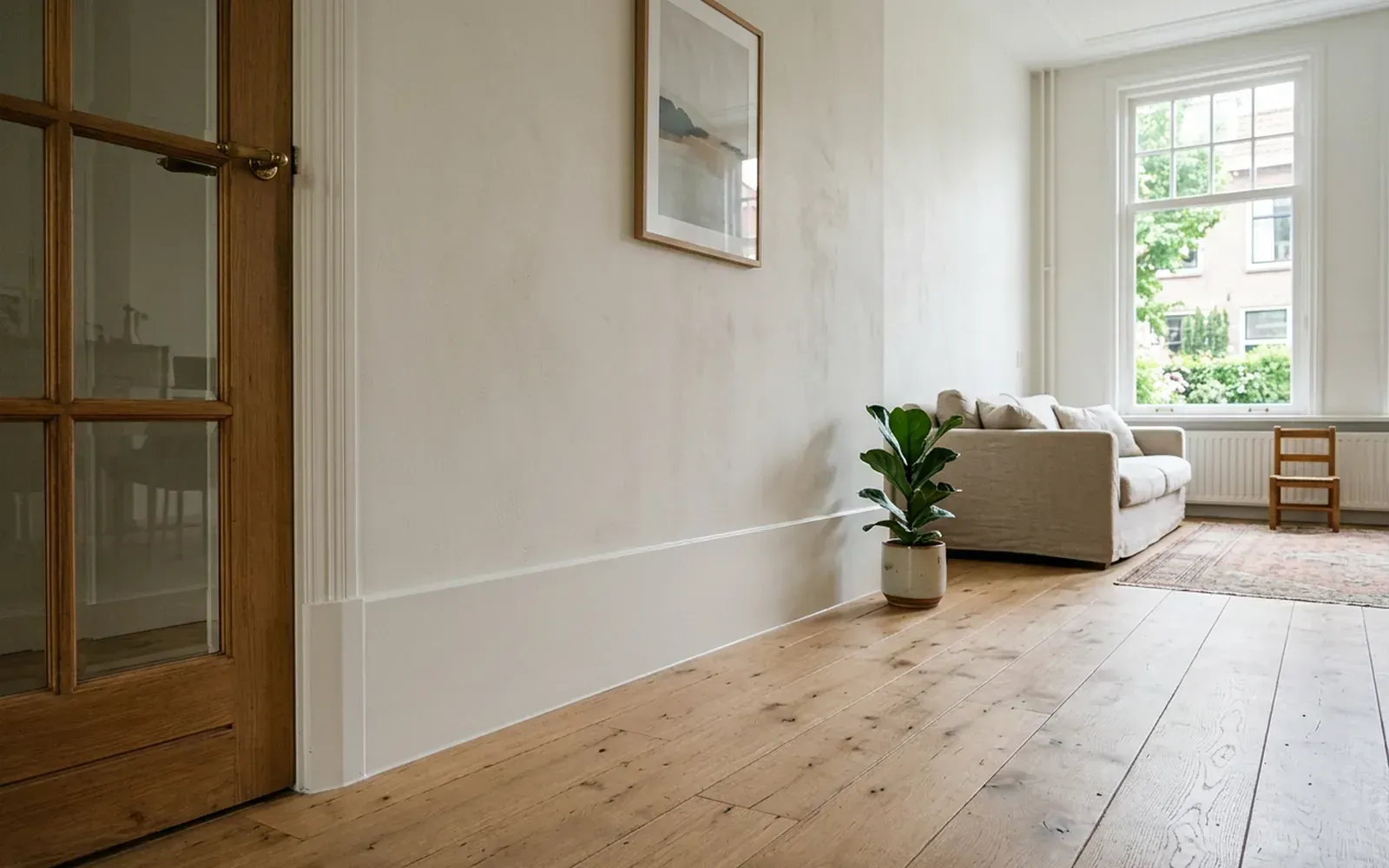
Tall skirting boards: which height suits your room?
Tall skirting boards give a room calm and character, as long as the height is right. Here is how to work out which skirting height suits your ceiling, floor and interior.
Floors & skirting
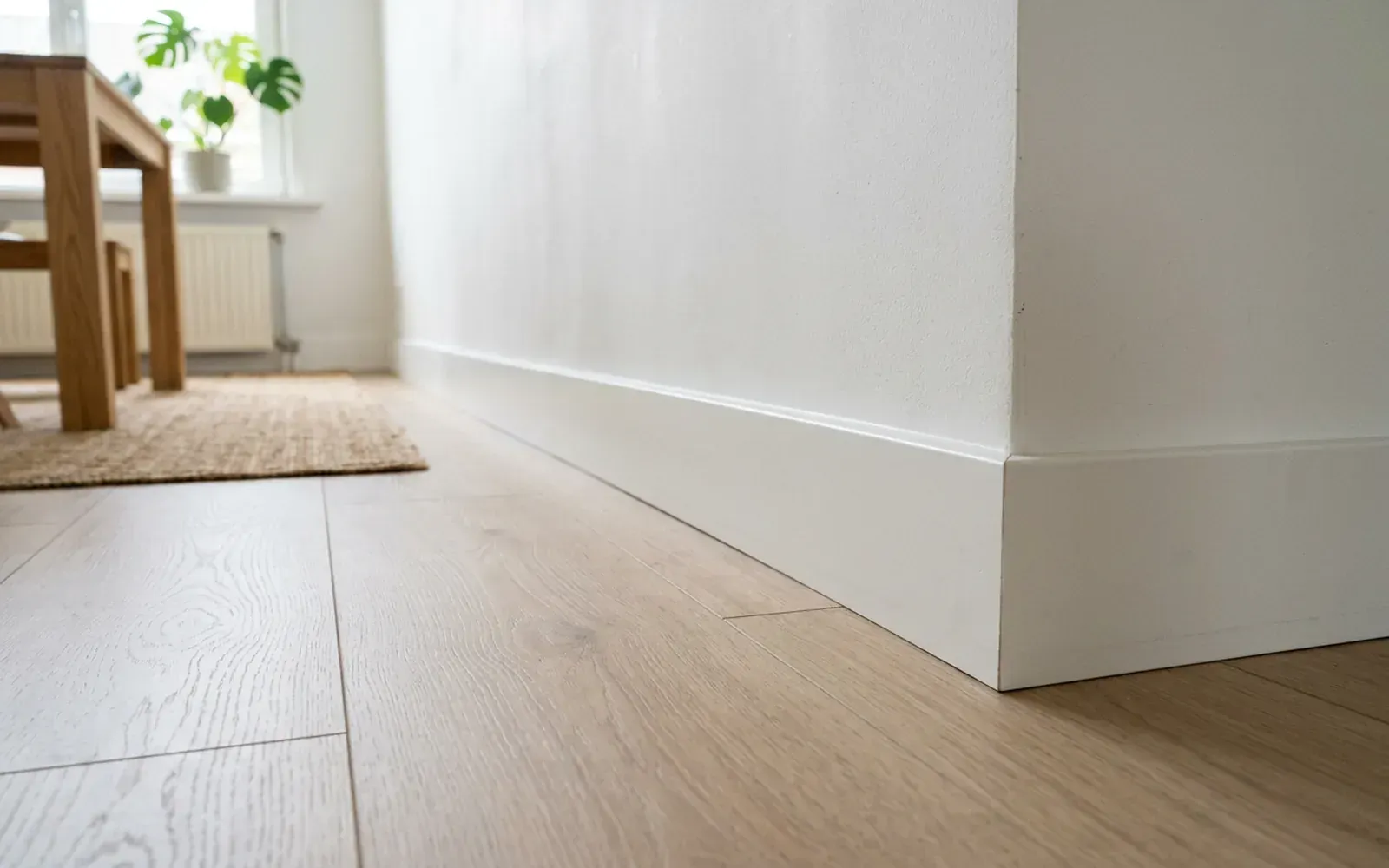
Which skirting boards suit a laminate floor?
With laminate, the skirting board has a technical job: covering the expansion gap without pinning the floor down. Here is how to choose the right skirting and fixing method.
Choosing skirting
MDF skirting boards: pros, cons and when to choose them
MDF is the most popular material for skirting boards, but not the best choice in every situation. These are the advantages, the disadvantages and the pitfalls.
Related
Overlay skirting
Overlay skirting is routed out at the back so it fits over an existing skirting board. Useful during renovation, provided the substrate allows it.
Skirting board
A skirting board is the moulding at the base of the wall that finishes the transition to the floor and protects the wall. Here is how it works and what to look out for.
MDF
MDF is a sheet material made of pressed wood fibres. It is stable, smooth and easy to paint, which makes it the most popular material for skirting boards.
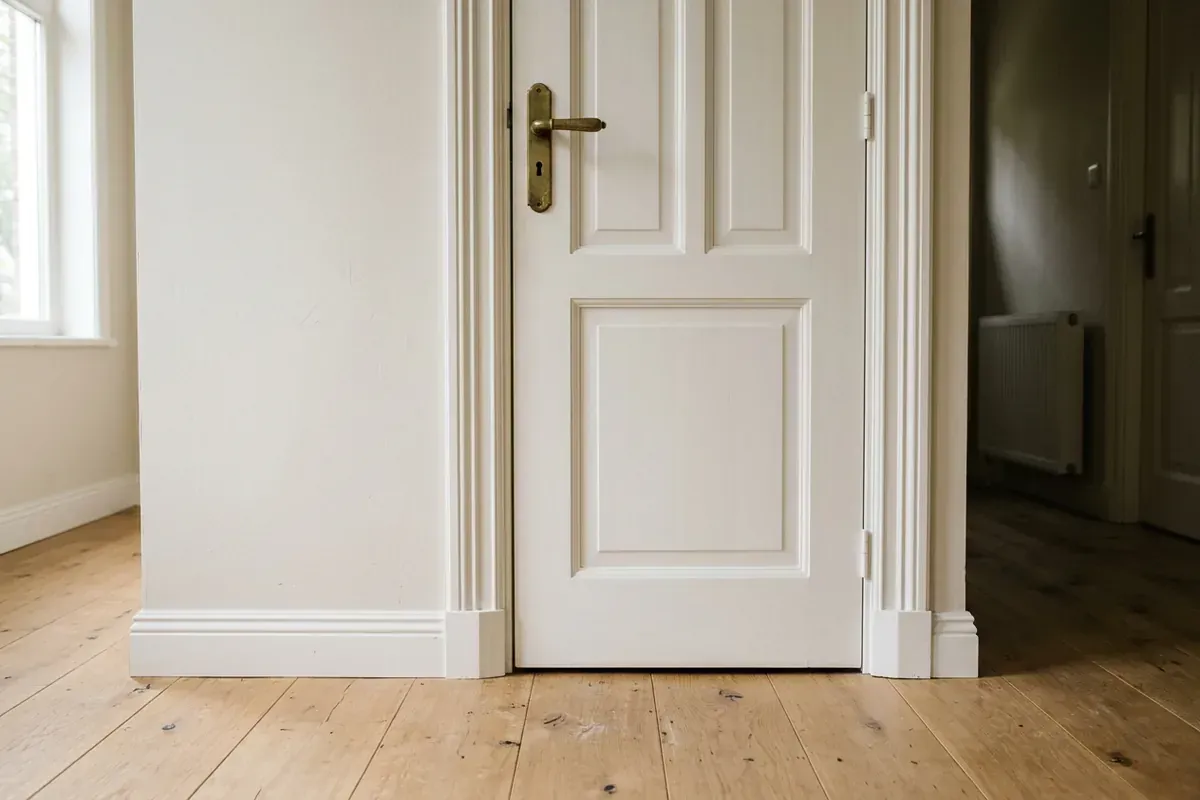
Architrave
An architrave is the moulding fitted around a door or window frame. It covers the joint between the frame and the wall and gives the opening a surround.
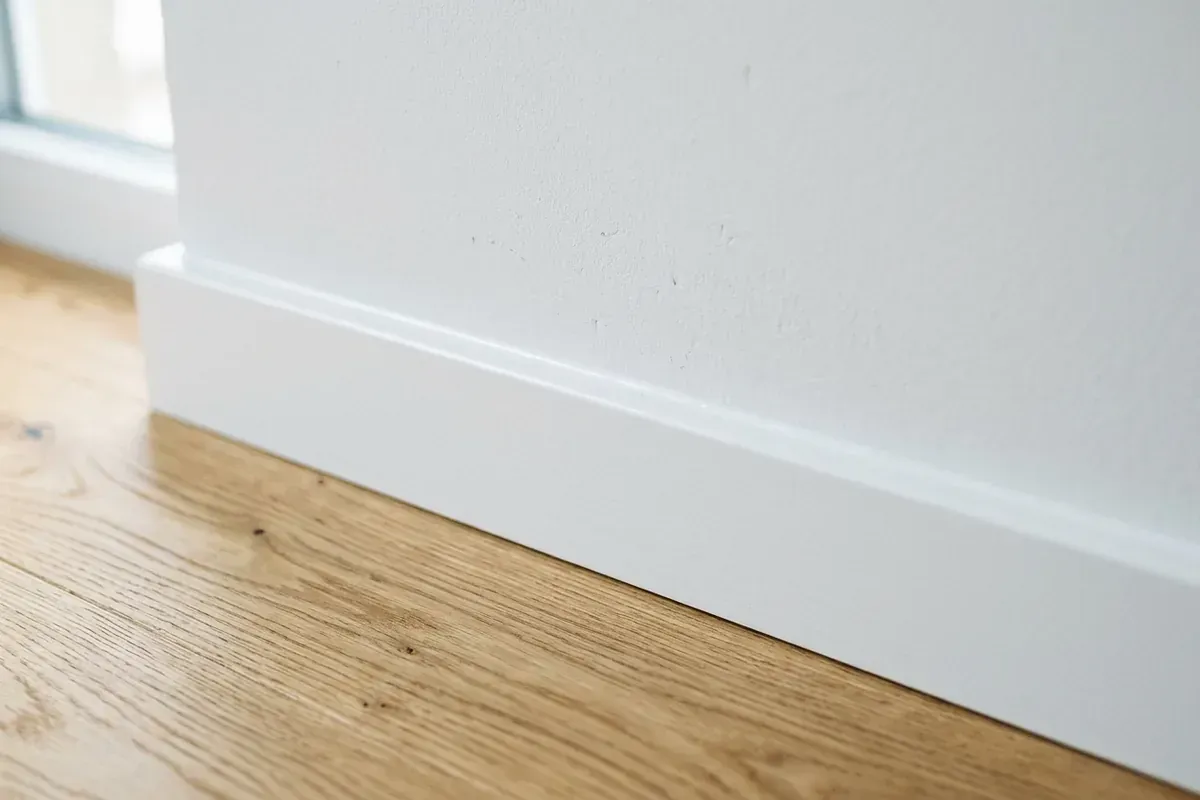
Caulking
Caulking means sealing joints with a flexible sealant. With skirting boards and mouldings, it makes the transition to the wall crisp and seamless.
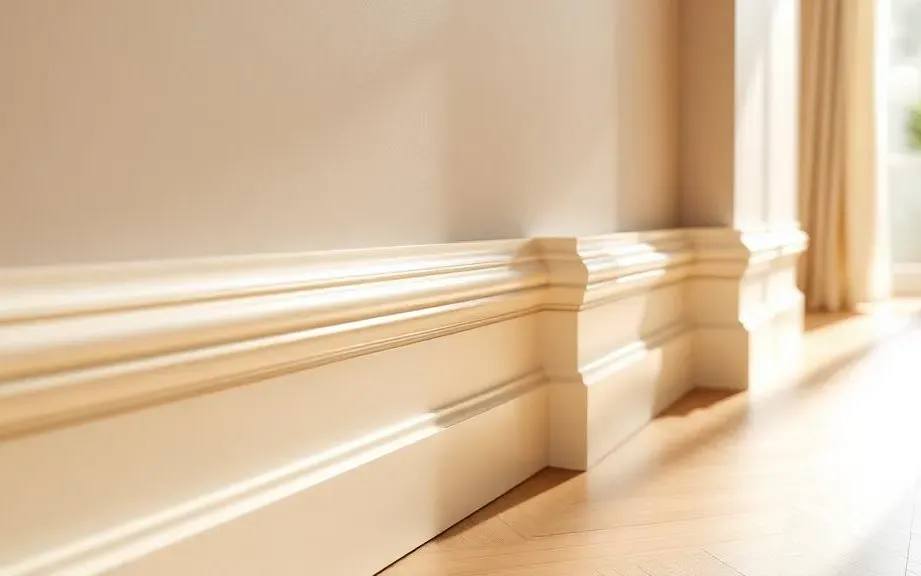
Skirting board installation by a specialist skirting fitter
TipTop Plinten fits skirting boards in MDF, solid wood and aluminium, finished in any RAL colour and neatly matched to any floor, even with uneven walls.
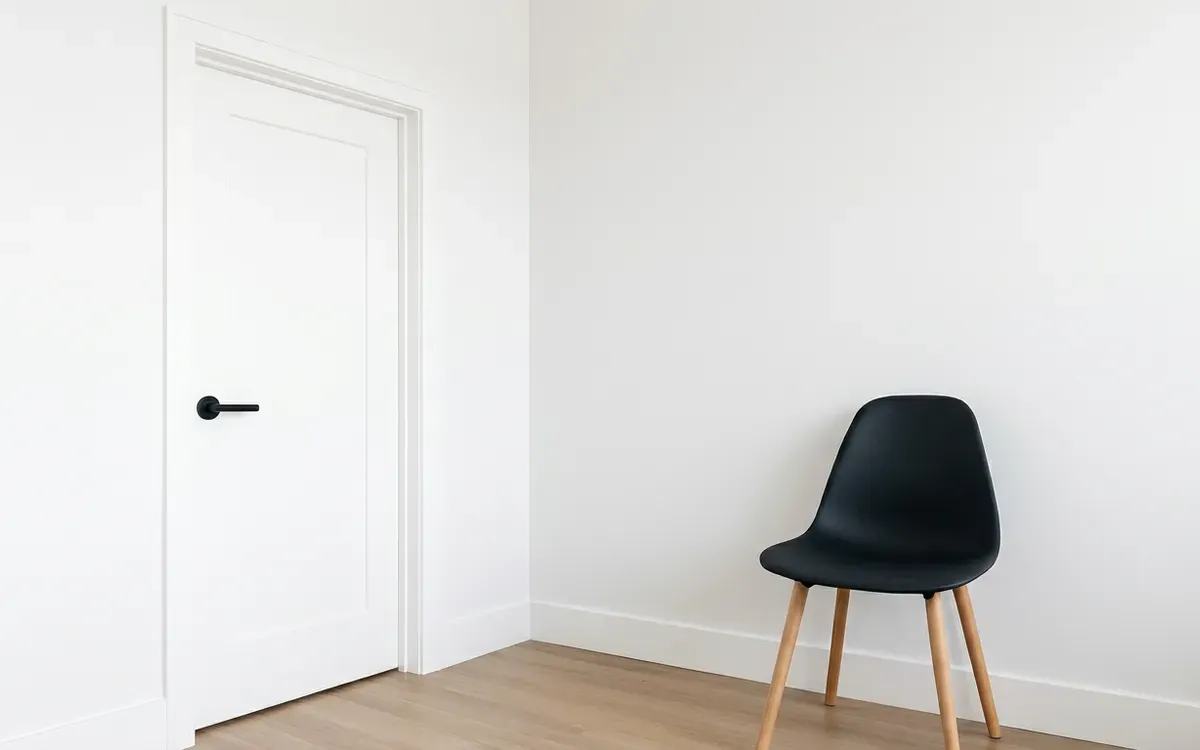
Architrave fitting around doors, frames and openings
An architrave gives a door or opening a neat surround and covers the joint between frame and wall. TipTop Plinten fits made-to-measure architraves.
Skirting board installation? Request a free quote
On-site measurement €75 incl. VAT (credited for orders above a minimum project size)