
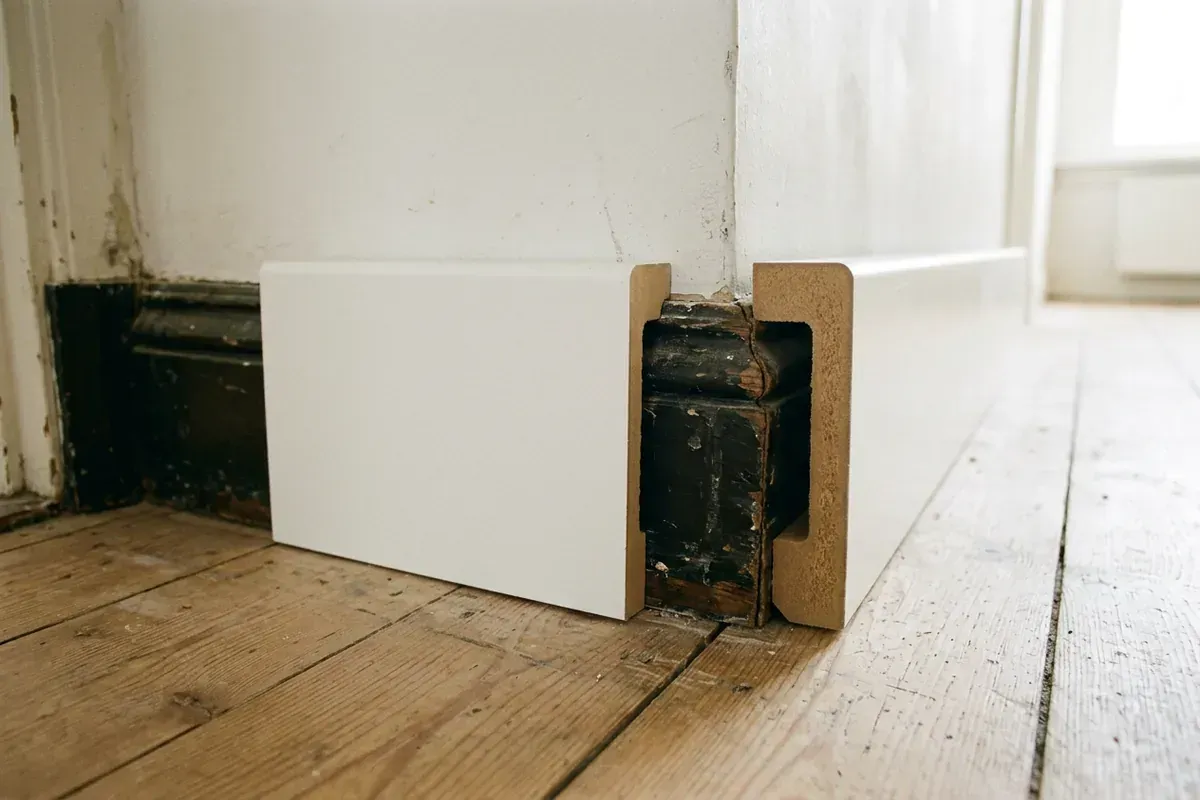
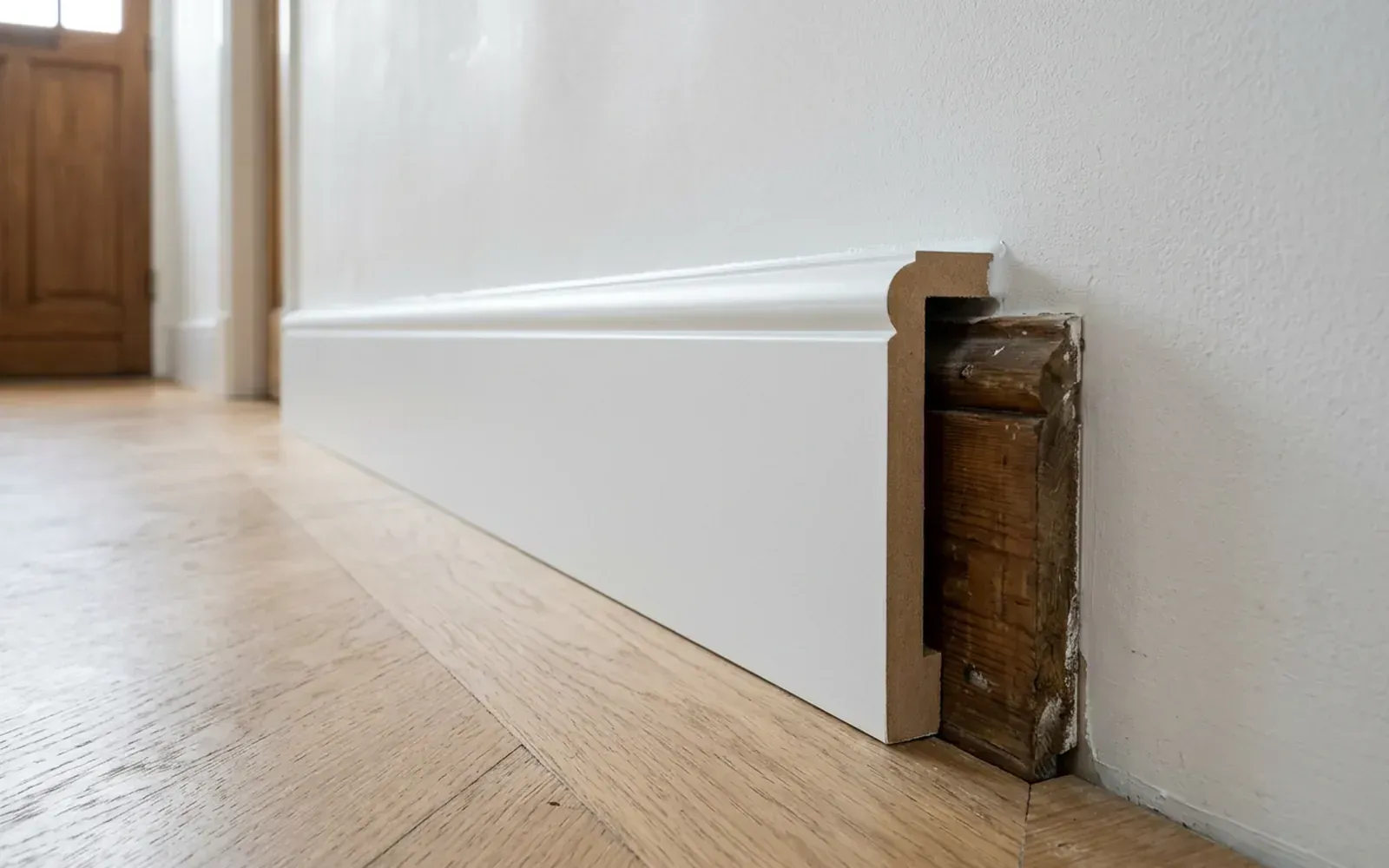
Overlay skirting is a skirting board with a routed or hollow back, so it can be fitted over an existing skirting board. The old skirting then does not need to be removed. That saves demolition work and limits the risk of damage to plaster or tiles. Overlay skirting is mainly used during renovation and to cover old tiled skirting.
What is overlay skirting?
The front of overlay skirting looks like an ordinary skirting board. At the back there is a recess of a certain height and depth, into which the old skirting fits. Because the new board goes over the old one, it is usually somewhat thicker and often taller as well, so the old skirting disappears completely.
Where is it used?
- With old tiled skirting that is fixed into the tiled floor or the wall.
- With timber skirting boards that are still firmly fixed but look worn.
- During a renovation where you do not want to damage the wall.
- When taller skirting is wanted, for example as tall skirting.
What should you look out for?
- Dimensions: measure the height and thickness of the old skirting in several places. The recess must fit, including where the old skirting is slightly thicker.
- Condition of the old skirting: repair or remove loose, damp or damaged skirting first.
- Fixing: overlay skirting is fixed with construction adhesive and/or mechanically, so it sits tight against the wall and the old skirting.
- Corners and door posts: because of the extra thickness, the skirting projects further. At door frames and architraves, that calls for a neat solution.
- Floor height: if a new floor is going down at the same time, the bottom of the skirting must meet it.
When it is a smart choice and when it is not, you can read in overlay skirting boards: when do they make sense?. If you would rather remove the old skirting, read removing skirting boards without damage.
At TipTop Plinten
During the site survey, TipTop Plinten assesses whether overlay skirting works in your situation or whether removal is better. The skirting boards are supplied in MDF or solid wood, finished in any RAL colour. Read more under skirting board installation.
Frequently asked questions
Often, yes. With old tiled skirting in particular, which is hard to remove without damaging the wall or floor, overlay skirting is a common solution. The recess must then match the height and thickness of the tiled skirting.
If the old skirting is loose, has absorbed moisture or does not fit in the recess, removal is better. And with a new floor that ends up higher than the old one, overlay skirting does not always fit properly any more.
Related
Skirting board
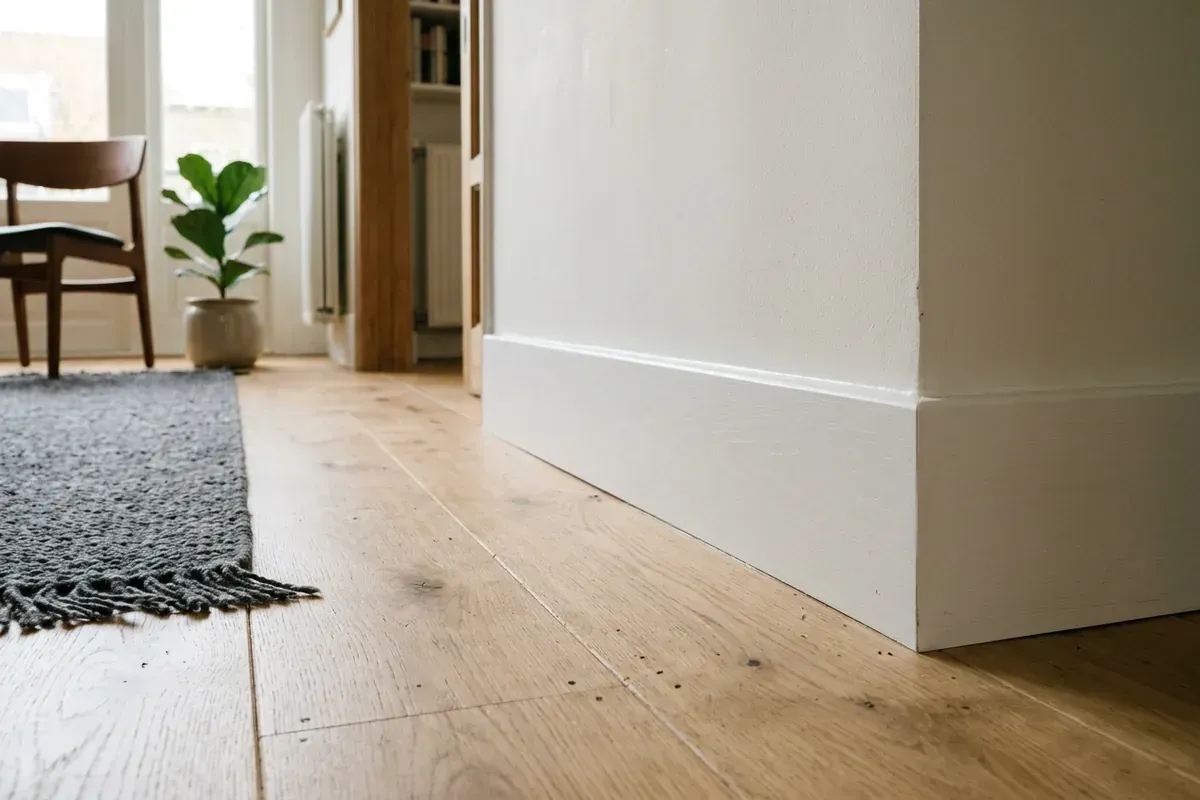
A skirting board is the moulding at the base of the wall that finishes the transition to the floor and protects the wall. Here is how it works and what to look out for.
Tall skirting
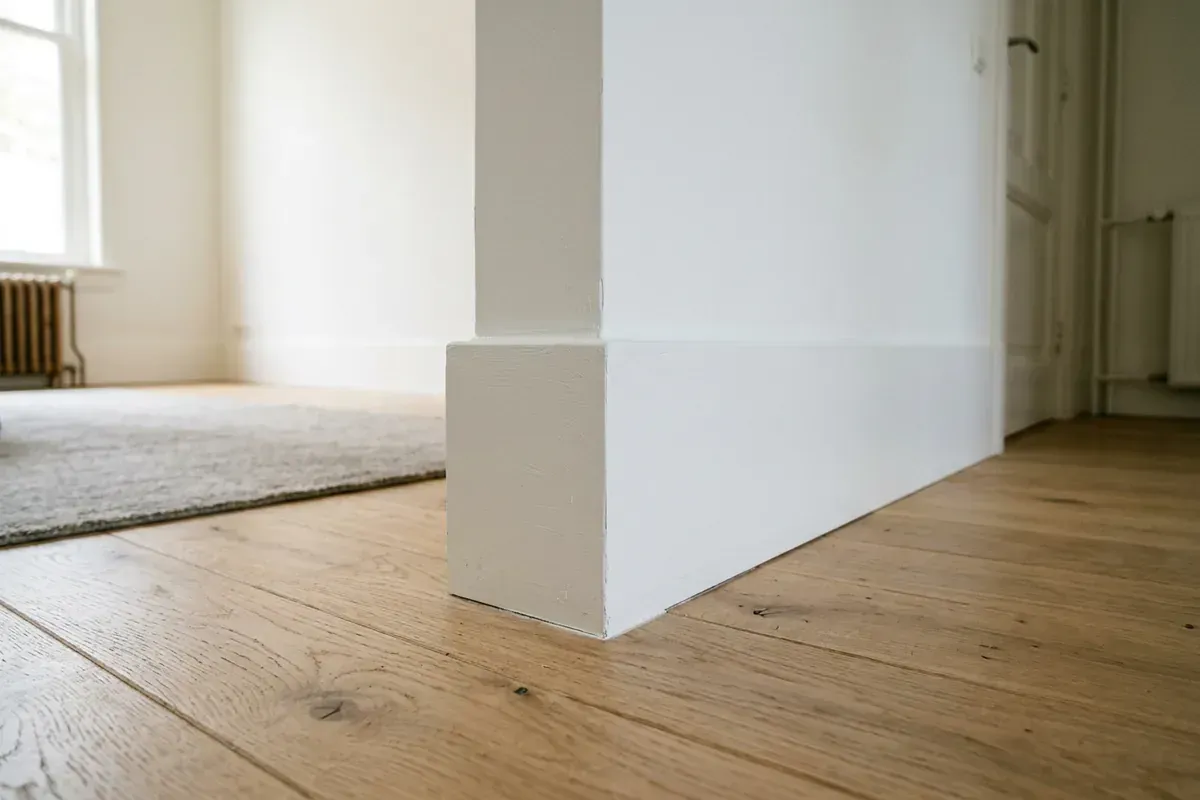
Tall skirting is usually 12 cm or higher. It gives a room calm and elegance, provided the height suits the ceiling and the interior.
Construction adhesive
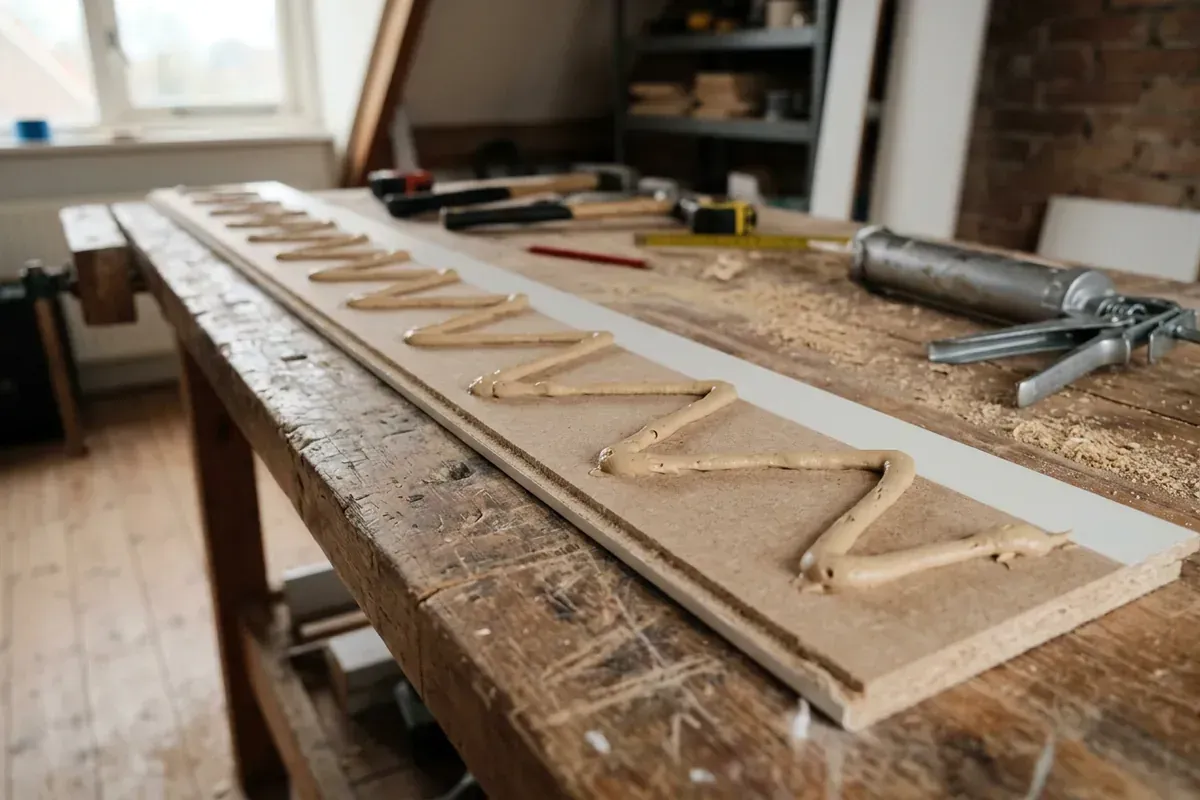
Construction adhesive is a strong glue or sealant used to fix skirting boards, mouldings and panels to the wall, often combined with nails or screws.
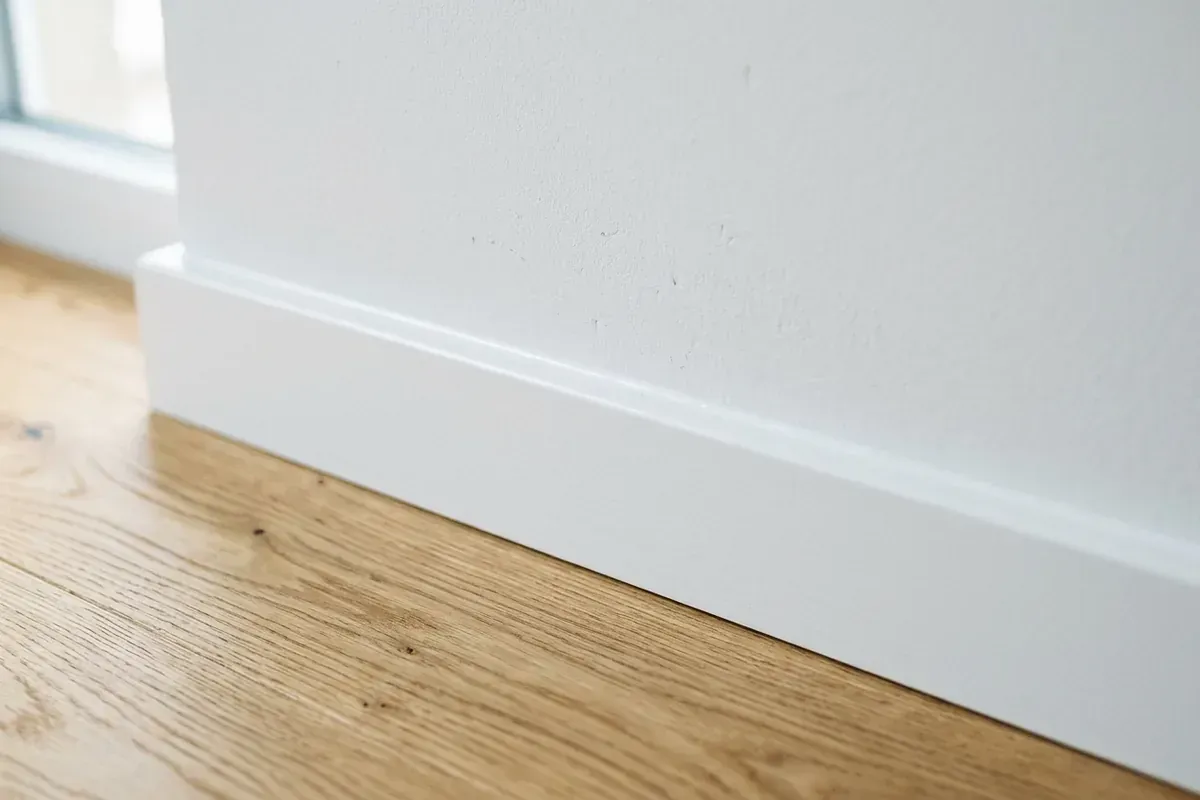
Caulking
Caulking means sealing joints with a flexible sealant. With skirting boards and mouldings, it makes the transition to the wall crisp and seamless.
Choosing skirting
Overlay skirting boards: when are they a smart choice?
Removing old skirting can damage plaster or tiles. Overlay skirting goes over the top instead. Here is how to tell whether that is sensible in your situation.

Installation & finishing
Removing skirting boards without damaging the wall or floor
Old skirting boards are best removed step by step: cut through the caulk line, find out how they are fixed and prise them off carefully while protecting the wall.
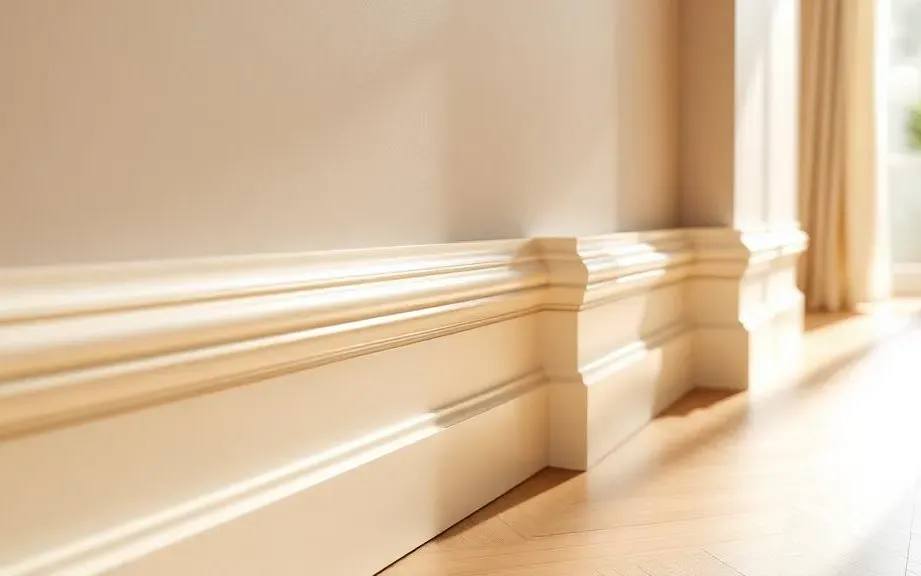
Skirting board installation by a specialist skirting fitter
TipTop Plinten fits skirting boards in MDF, solid wood and aluminium, finished in any RAL colour and neatly matched to any floor, even with uneven walls.
Skirting board installation? Request a free quote
On-site measurement €75 incl. VAT (credited for orders above a minimum project size)