
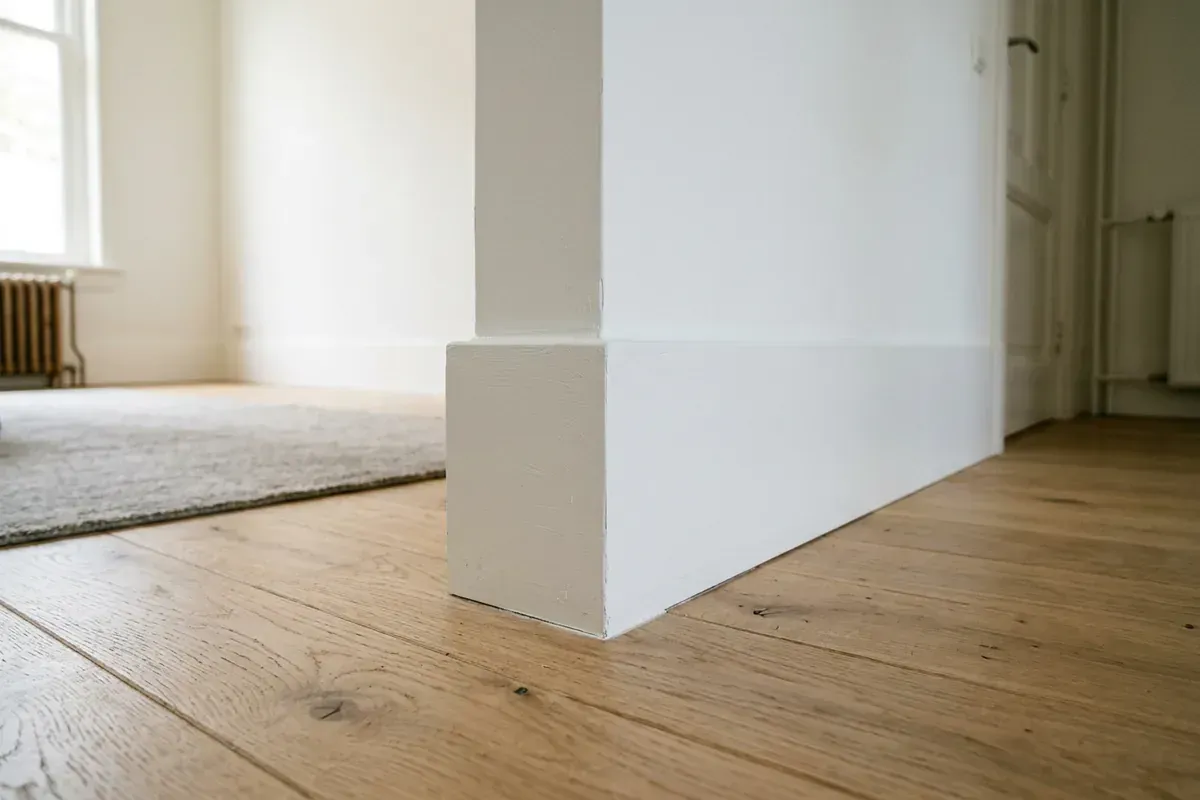
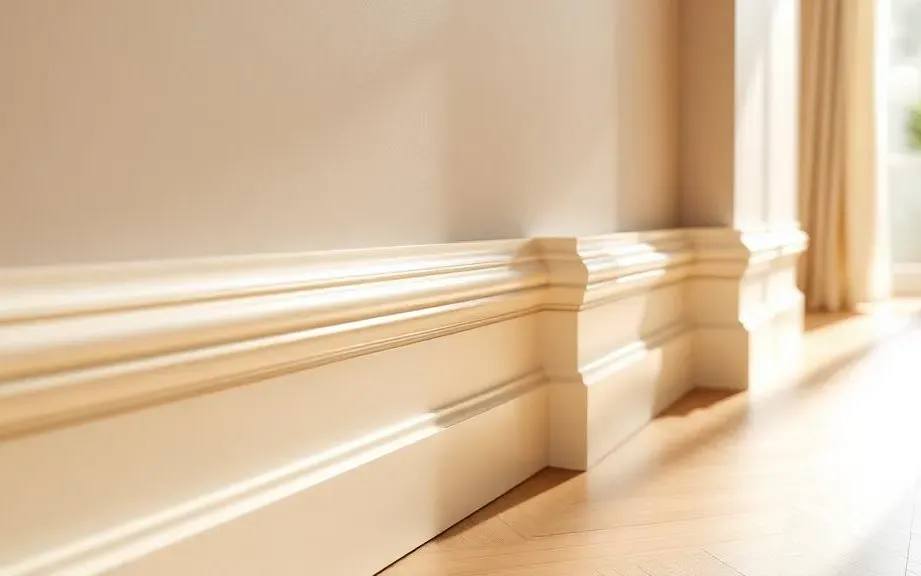
Tall skirting is skirting that is noticeably higher than the standard size. In practice, skirting is usually called tall from about 12 centimetres. Tall skirting boards bring calm to a room, make the transition between floor and wall more defined and suit both classic townhouses and sleek, modern interiors.
What is tall skirting?
Standard skirting boards are often 7 to 9 cm high. Tall skirting starts at around 12 cm; popular heights are 12, 15 and 18 cm. The face can be plain and straight or profiled with a decorative edge at the top. Tall skirting is usually made from MDF or solid wood.
Where is it used?
- In rooms with a higher ceiling, where low skirting looks lost.
- In older town houses and period homes, where tall skirting belongs to the original style.
- In modern interiors, often in the wall colour, as a calm base for the wall.
- During renovation, to cover traces of an old, lower skirting board or damage at the bottom of the wall.
What should you look out for?
- Proportion: the ceiling height is the best starting point. The higher the ceiling, the taller the skirting can be.
- Colour: skirting in the wall colour, for example RAL 9010, looks less tall than skirting in a contrasting colour.
- Wall flatness: the taller the skirting, the more you notice that a wall is not flat. The top edge is therefore fixed carefully and finished with caulking.
- Sockets: low-mounted wall sockets can get in the way. This is checked during the site survey.
- Doors and architraves: the skirting must meet the architrave or frame logically.
You can find a guideline per ceiling height in tall skirting boards: which height suits?.
At TipTop Plinten
TipTop Plinten fits tall skirting boards in MDF, solid wood and aluminium, finished in any RAL colour. On uneven or irregular walls the skirting is fitted to measure. Read more about skirting board installation.
Frequently asked questions
There is no official threshold, but in practice skirting is considered tall from about 12 cm. Common heights are 12, 15 and 18 cm, and taller profiles are also available for rooms with a high ceiling.
Sometimes. Overlay skirting is routed out at the back so it fits over an existing skirting board. That only works if the old skirting is firmly fixed and the size of the recess fits. Otherwise, removing the old skirting is the better choice.
Related
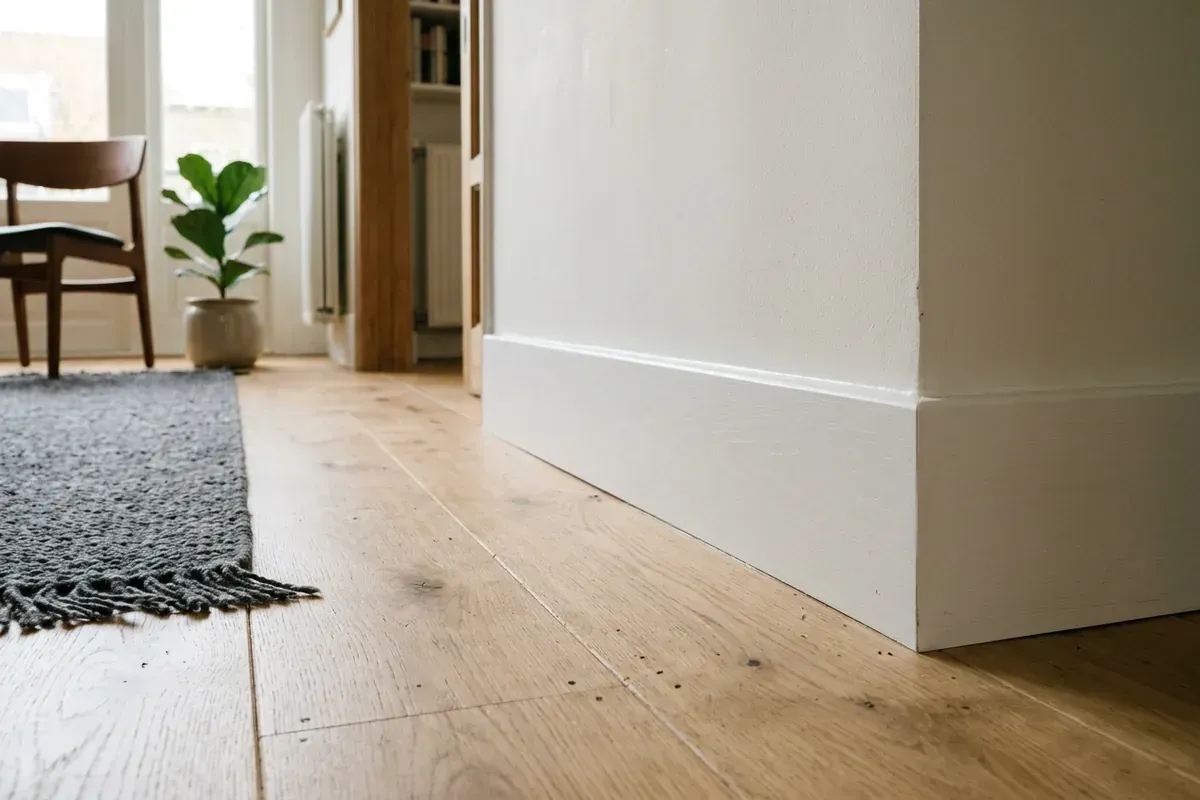
Skirting board
A skirting board is the moulding at the base of the wall that finishes the transition to the floor and protects the wall. Here is how it works and what to look out for.
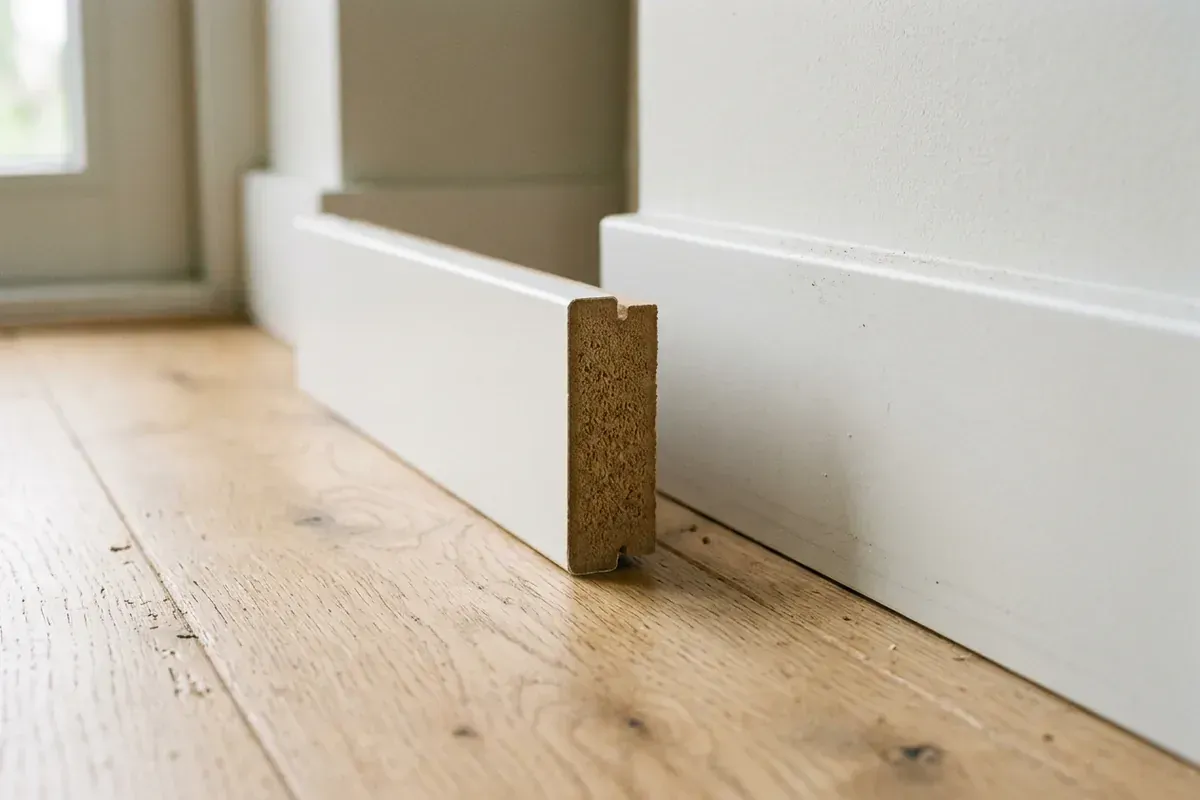
MDF
MDF is a sheet material made of pressed wood fibres. It is stable, smooth and easy to paint, which makes it the most popular material for skirting boards.
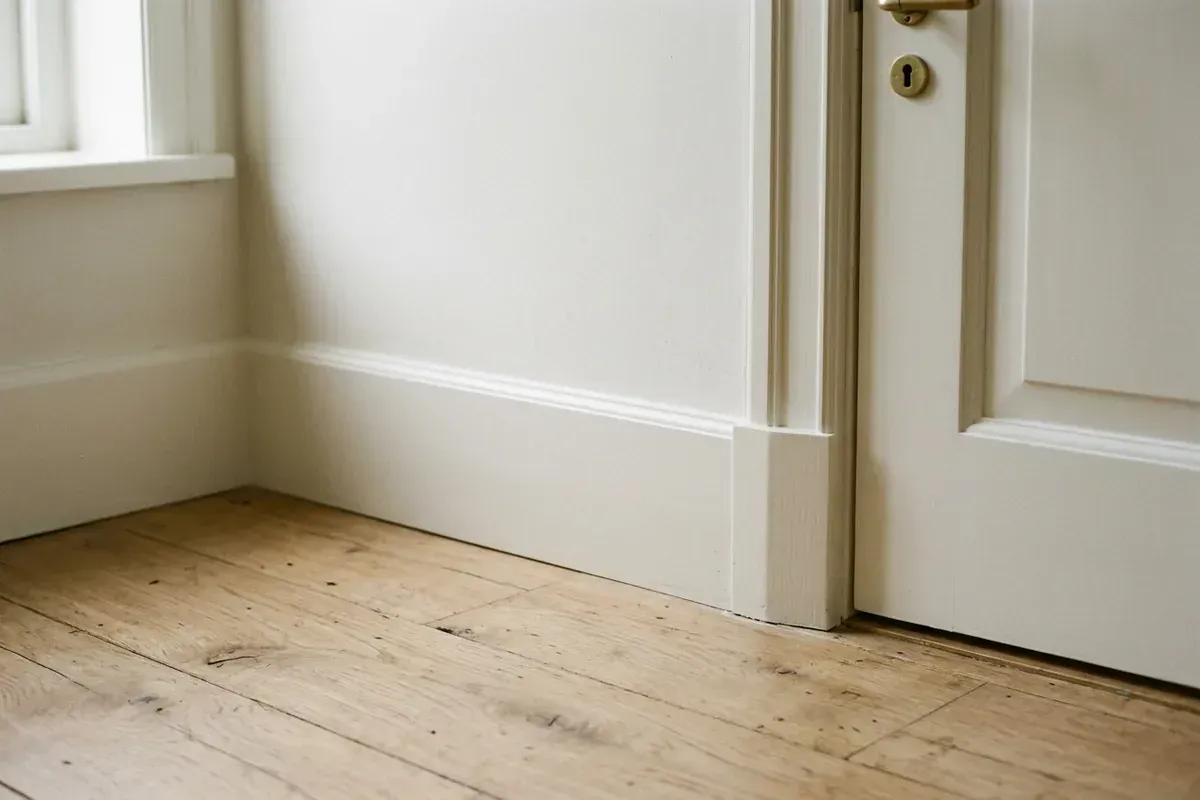
RAL 9010
RAL 9010 is called pure white and is a slightly warm, soft white. It is one of the most popular colours for skirting boards, doors and mouldings.
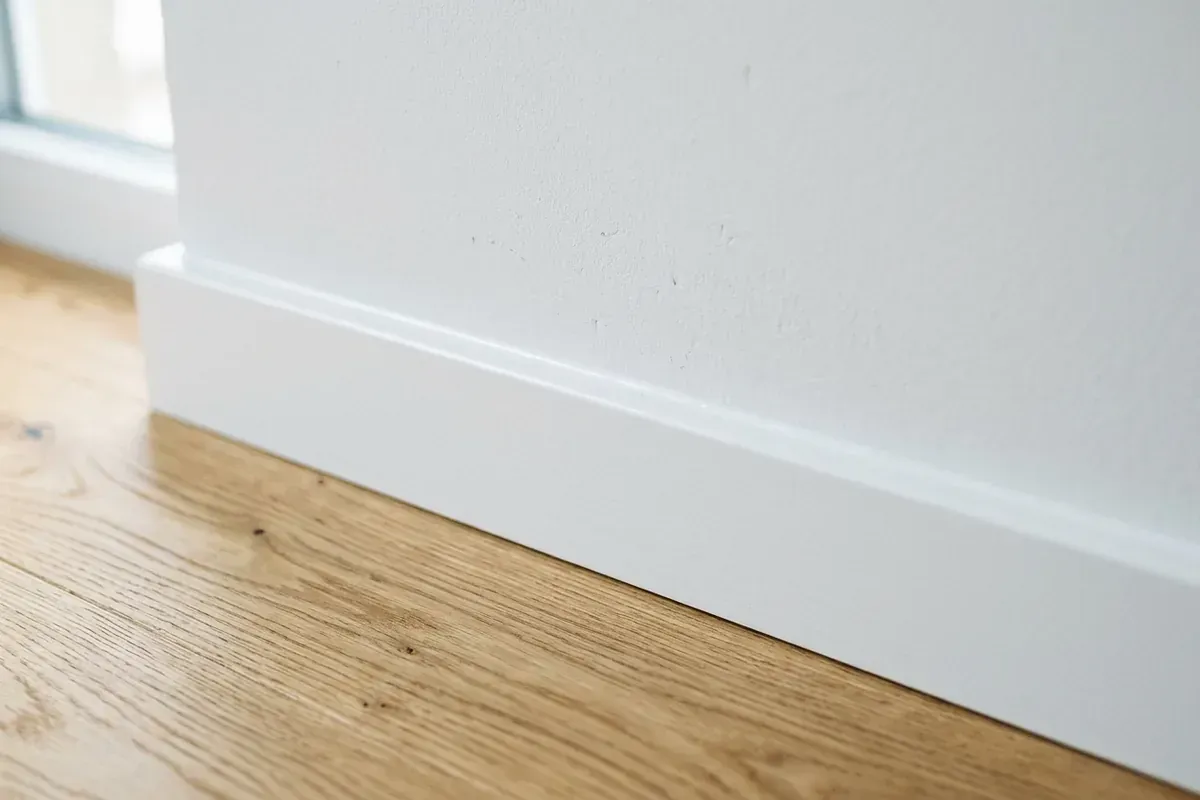
Caulking
Caulking means sealing joints with a flexible sealant. With skirting boards and mouldings, it makes the transition to the wall crisp and seamless.
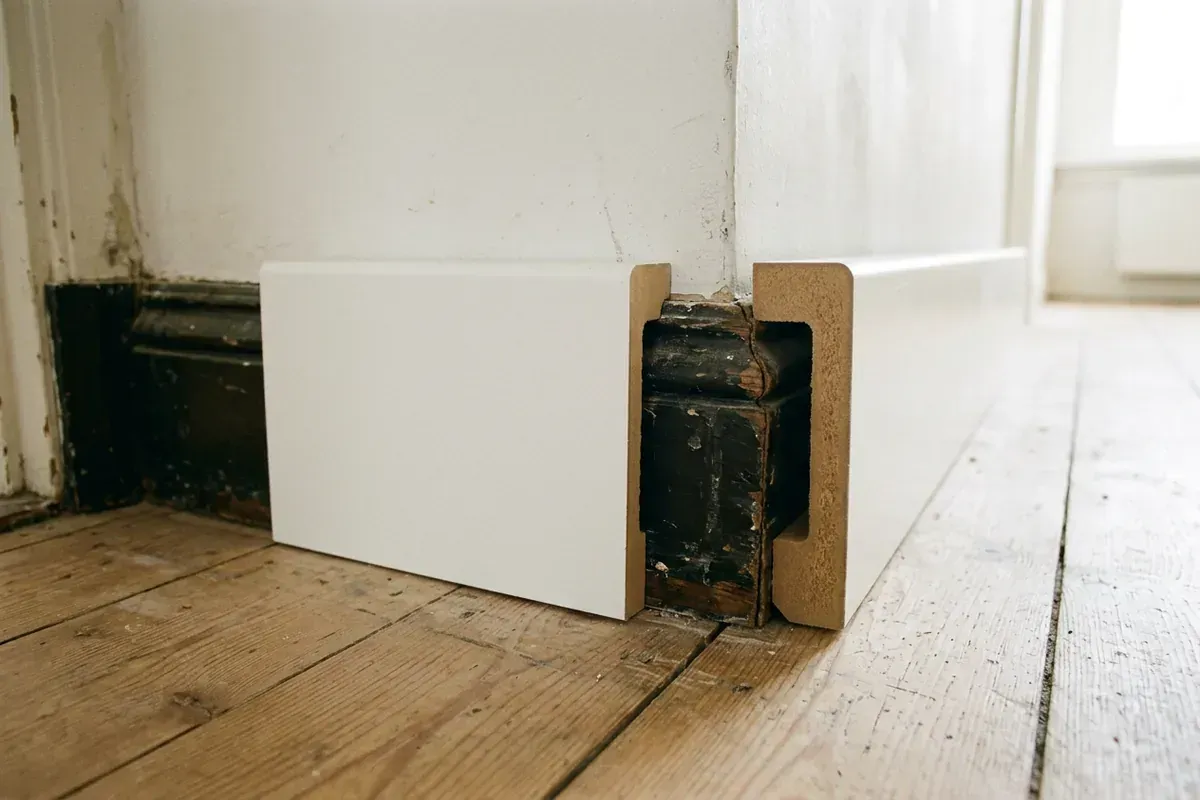
Overlay skirting
Overlay skirting is routed out at the back so it fits over an existing skirting board. Useful during renovation, provided the substrate allows it.
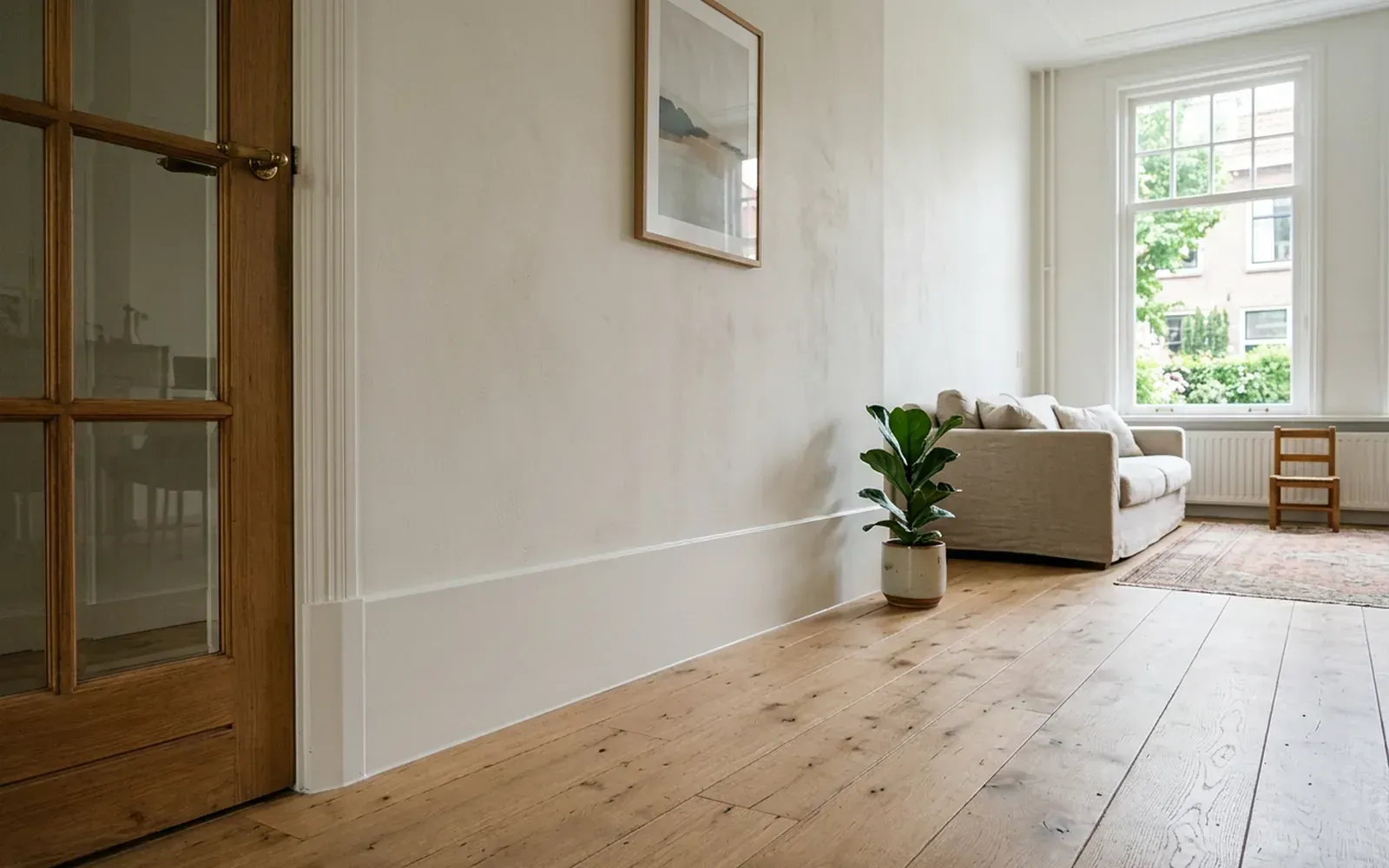
Choosing skirting
Tall skirting boards: which height suits your room?
Tall skirting boards give a room calm and character, as long as the height is right. Here is how to work out which skirting height suits your ceiling, floor and interior.
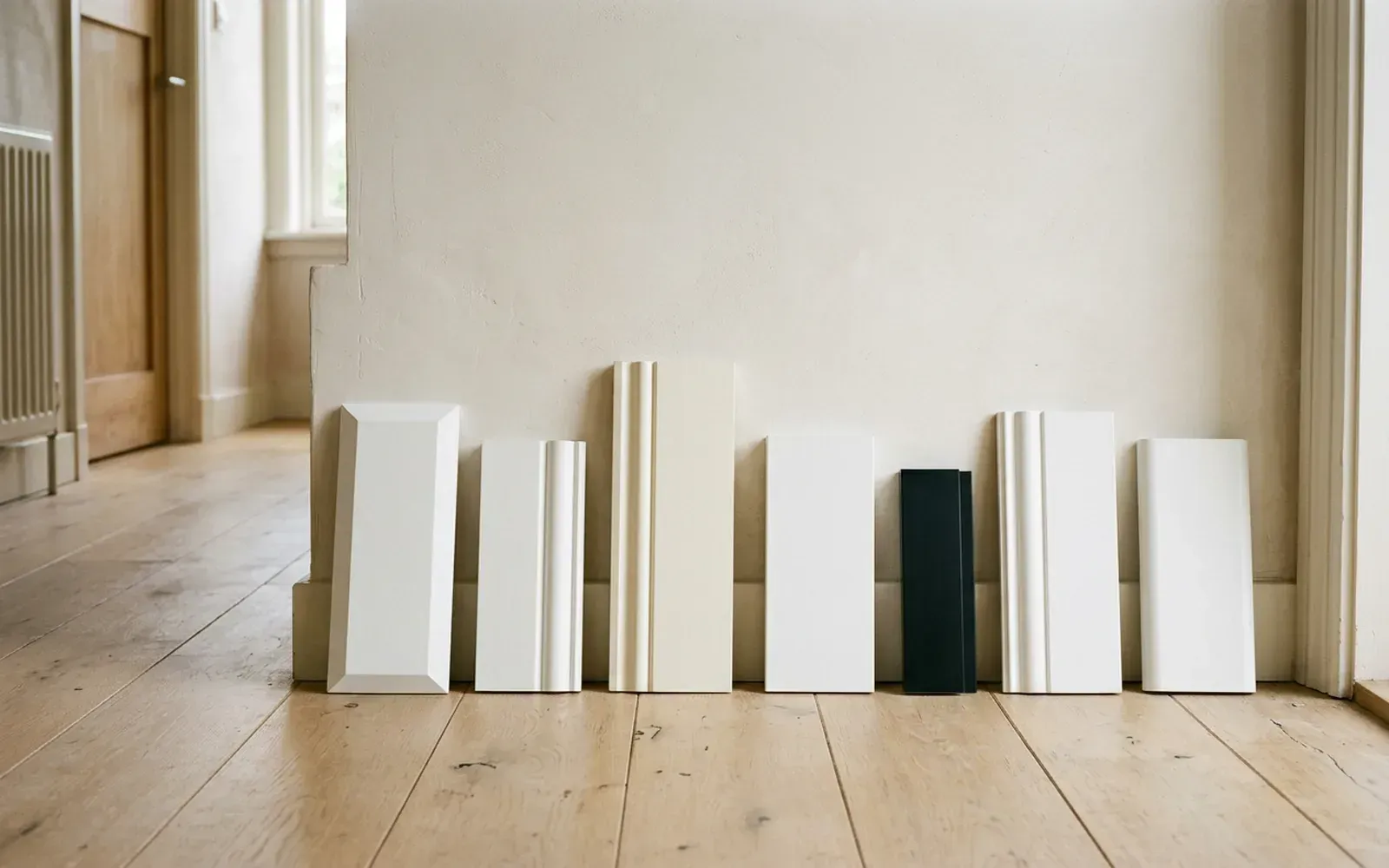
Choosing skirting
Which skirting boards to choose? A checklist for types, height and colour
Not sure which skirting boards to choose? This checklist takes you through every decision, from material and height to colour, floor and fixing, so you choose a skirting board that fits.
Skirting board installation by a specialist skirting fitter
TipTop Plinten fits skirting boards in MDF, solid wood and aluminium, finished in any RAL colour and neatly matched to any floor, even with uneven walls.
Skirting board installation? Request a free quote
On-site measurement €75 incl. VAT (credited for orders above a minimum project size)