
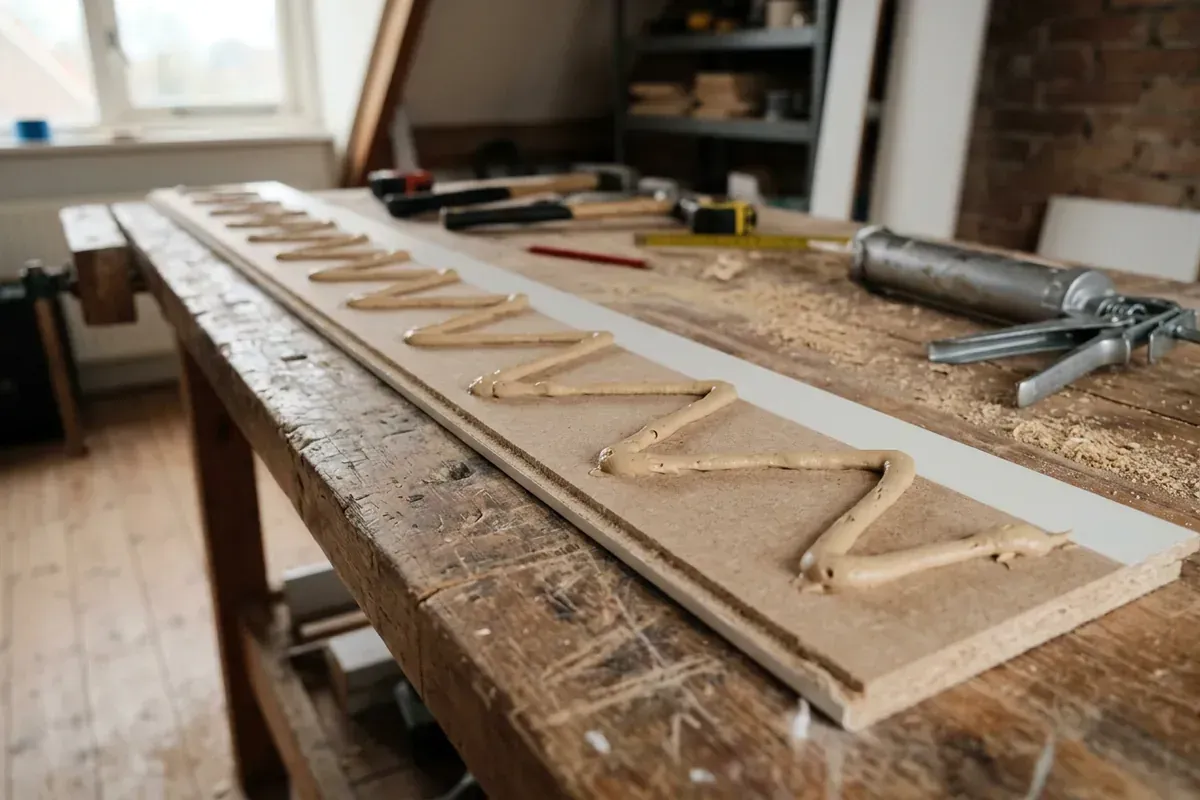
Construction adhesive is a strong glue or sealant used to fix skirting boards, mouldings and panels to a wall or ceiling. It is also known as grab adhesive or mounting adhesive. Construction adhesive bonds to many surfaces, fills small irregularities and makes it possible to fix skirting boards without visible screws. It is often combined with nails or screws.
What is construction adhesive?
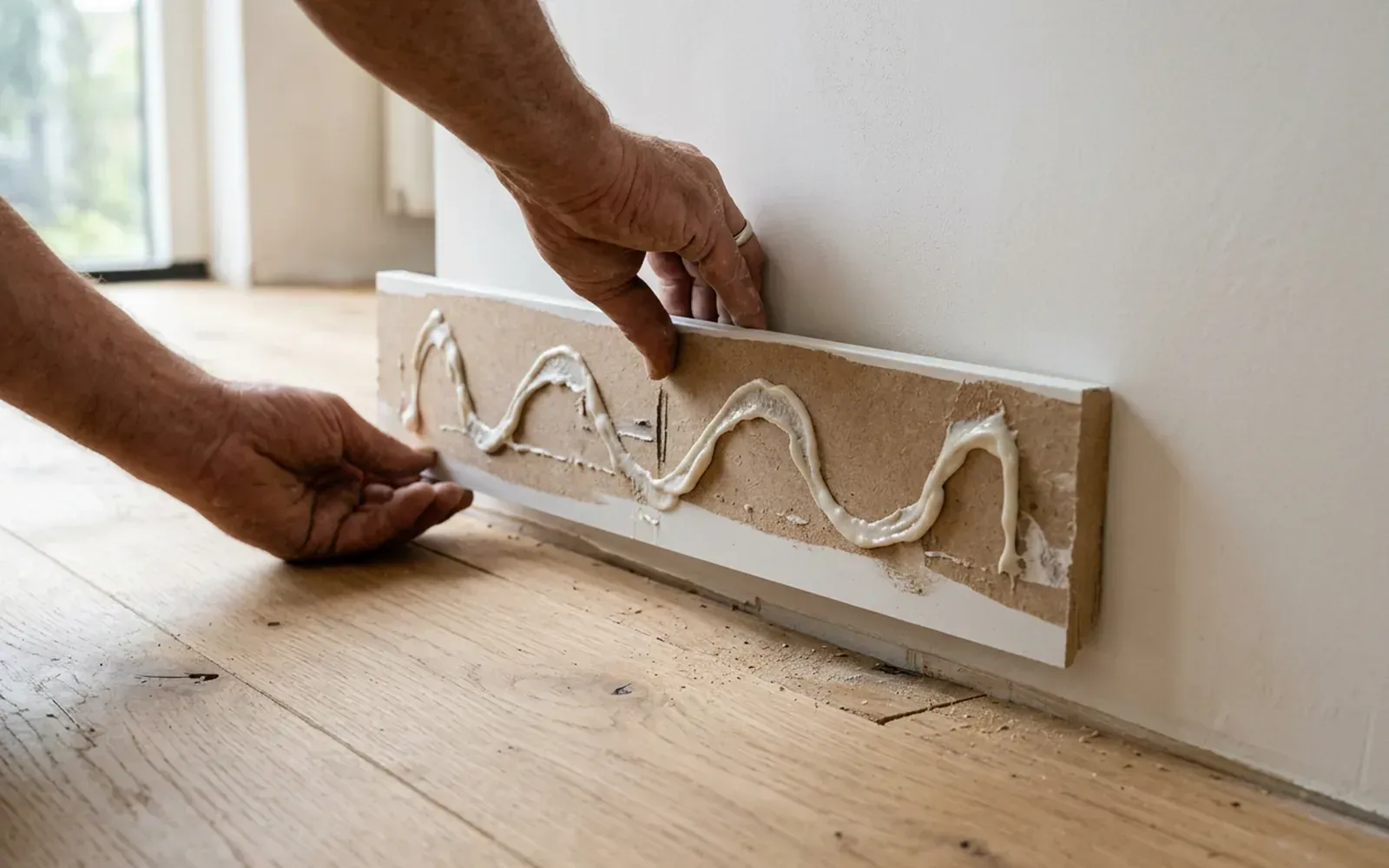
Construction adhesive comes in a cartridge and is applied with a caulking gun. There are various types, such as MS polymer or hybrid polymer adhesives, and water-based or solvent-based adhesives. Properties that vary by product:
- Initial grab: how quickly the adhesive holds the material.
- Curing time: how long it takes for the adhesive to reach full strength.
- Surfaces: suitable for masonry, plaster, timber, metal or combinations of these.
- Flexibility: some adhesives remain slightly flexible after curing.
Where is it used?
- When fixing skirting boards to plaster, plasterboard or concrete.
- For decorative mouldings, coving and a ceiling rose.
- For wall mouldings and wall panels.
- In mitres, to keep corners closed.
What should you look out for?
- Surface: the wall must be clean, dry, dust-free and sound. On loose paint or crumbly plaster, the skirting bonds to the paint layer, not the wall.
- Combined with mechanical fixing: on uneven walls, with tall skirting and with timber, nails or screws hold the skirting in place while the adhesive cures.
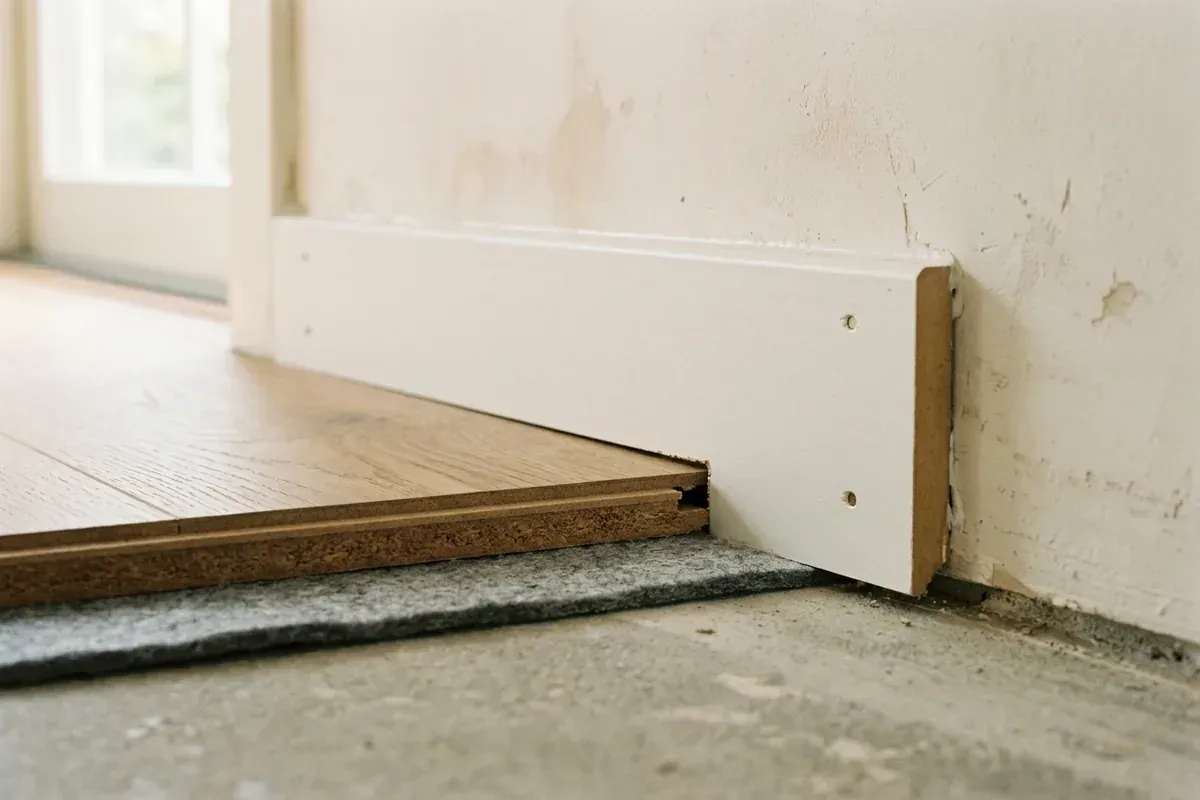
- Floating floor: glue the skirting to the wall, never to the floor, so the floor can move freely. See expansion gap.
- Quantity: enough for a good bond, but not so much that it squeezes out at the top.
- Not a substitute for caulk: construction adhesive fixes, caulking finishes the joint.
You can find a comparison of the methods in fixing skirting boards: glue or screws?.
At TipTop Plinten
TipTop Plinten chooses the fixing method for each situation, using construction adhesive and, where needed, mechanical fixings, including concealed ones. Read more about skirting board installation.
Frequently asked questions
On a flat, sound wall, skirting can be held firmly with a good construction adhesive. On uneven walls, with tall skirting or with solid wood, adhesive is often combined with nails or screws, so the skirting stays tight against the wall while the adhesive cures.
Yes, but it takes care. Construction adhesive bonds strongly, so bits of plaster or paint can come away during removal. With the right tools and patience, the damage usually stays limited.
Related
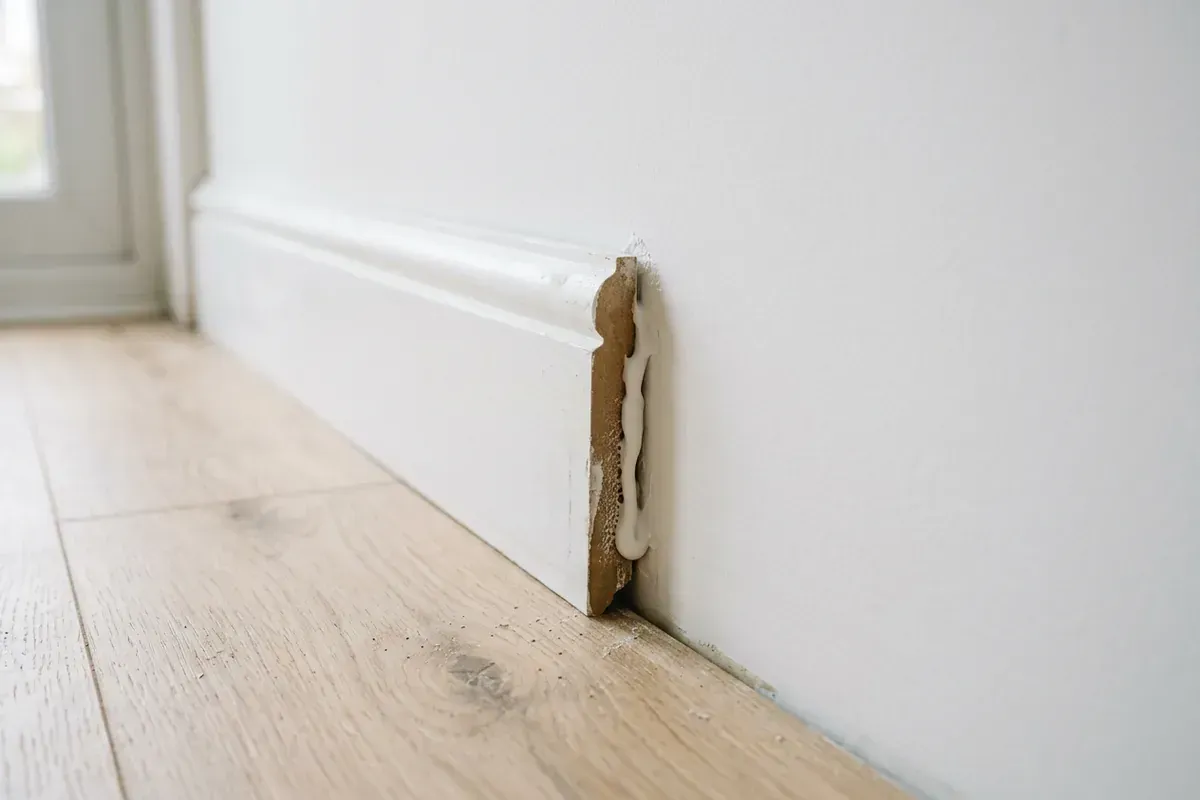
Self-adhesive skirting
Self-adhesive skirting is a thin, often flexible skirting with a sticky back. Quick to apply, but limited in appearance and lifespan.
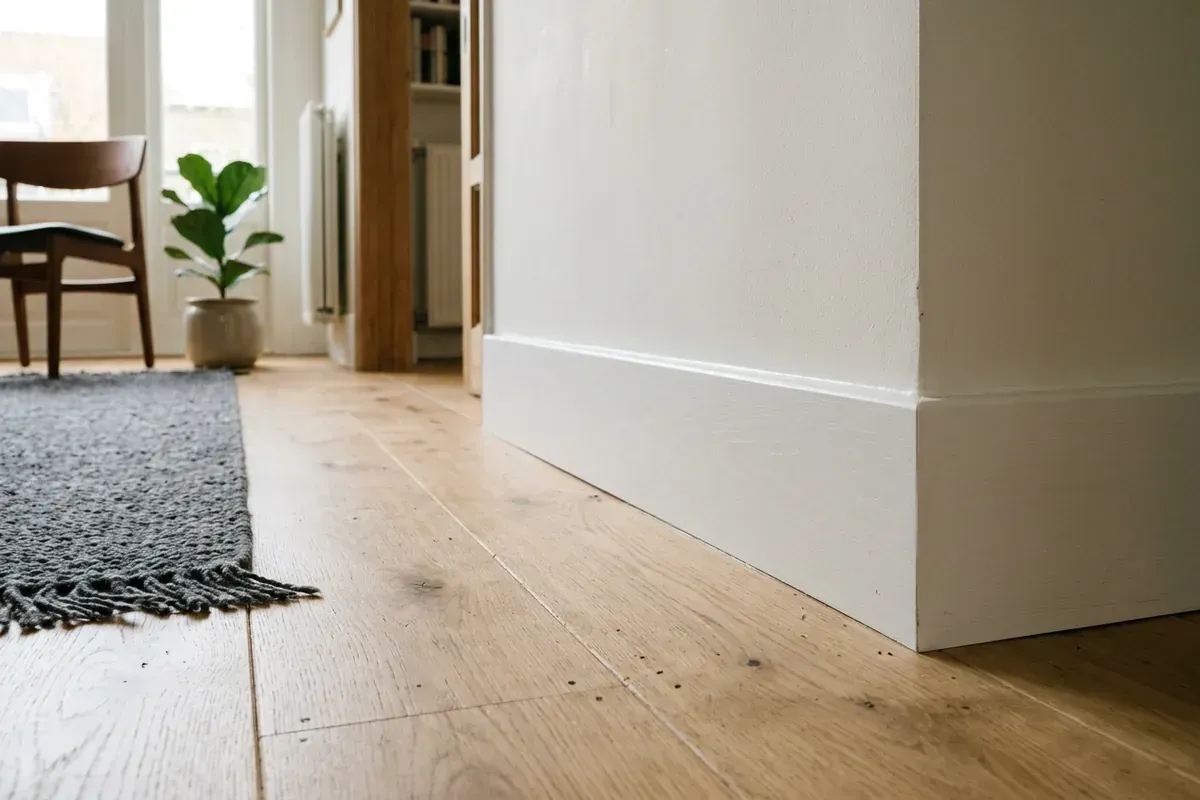
Skirting board
A skirting board is the moulding at the base of the wall that finishes the transition to the floor and protects the wall. Here is how it works and what to look out for.
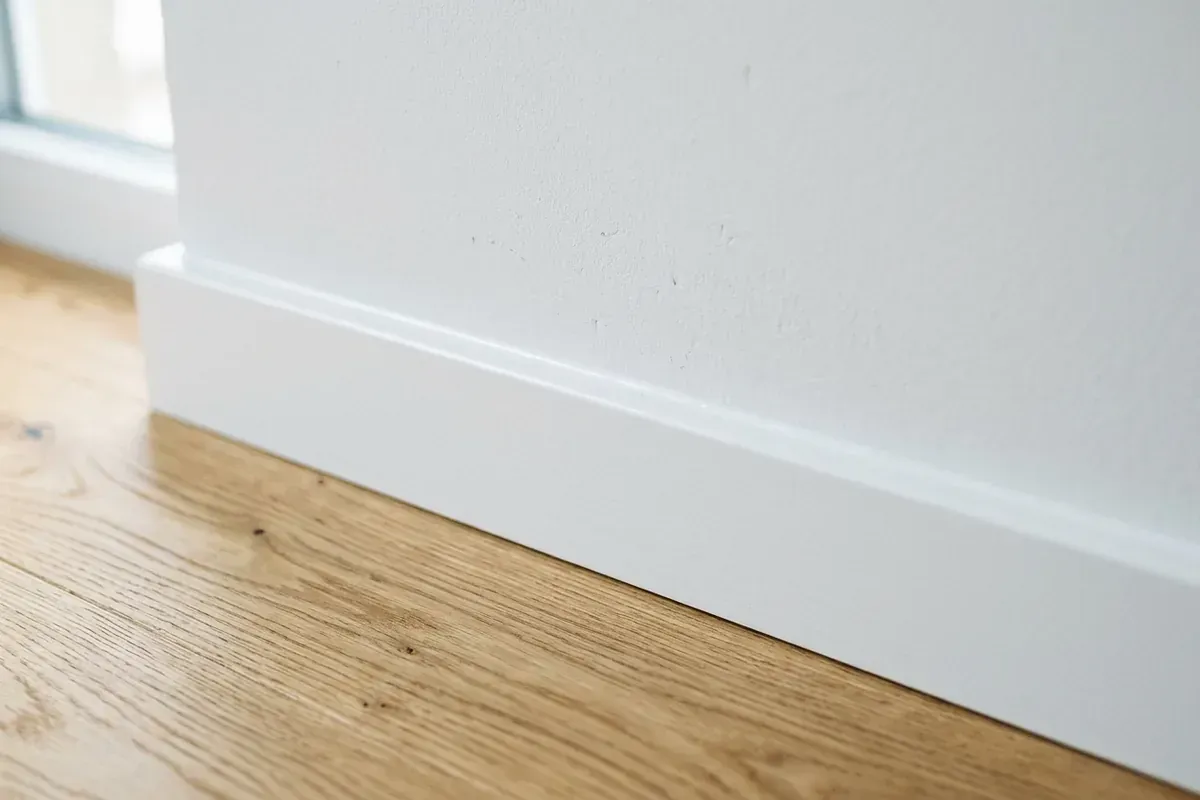
Caulking
Caulking means sealing joints with a flexible sealant. With skirting boards and mouldings, it makes the transition to the wall crisp and seamless.
Expansion gap
An expansion gap is an open space along the edge of a floor, so it can expand and contract. The skirting board covers the gap without fixing it.
Installation & finishing
Fixing skirting boards: glue, screws or nails?
Glue, screws or nails: the right fixing depends on the wall, the skirting and the floor. Here is how to choose a method that stays put.
Installation & finishing
Removing skirting boards without damaging the wall or floor
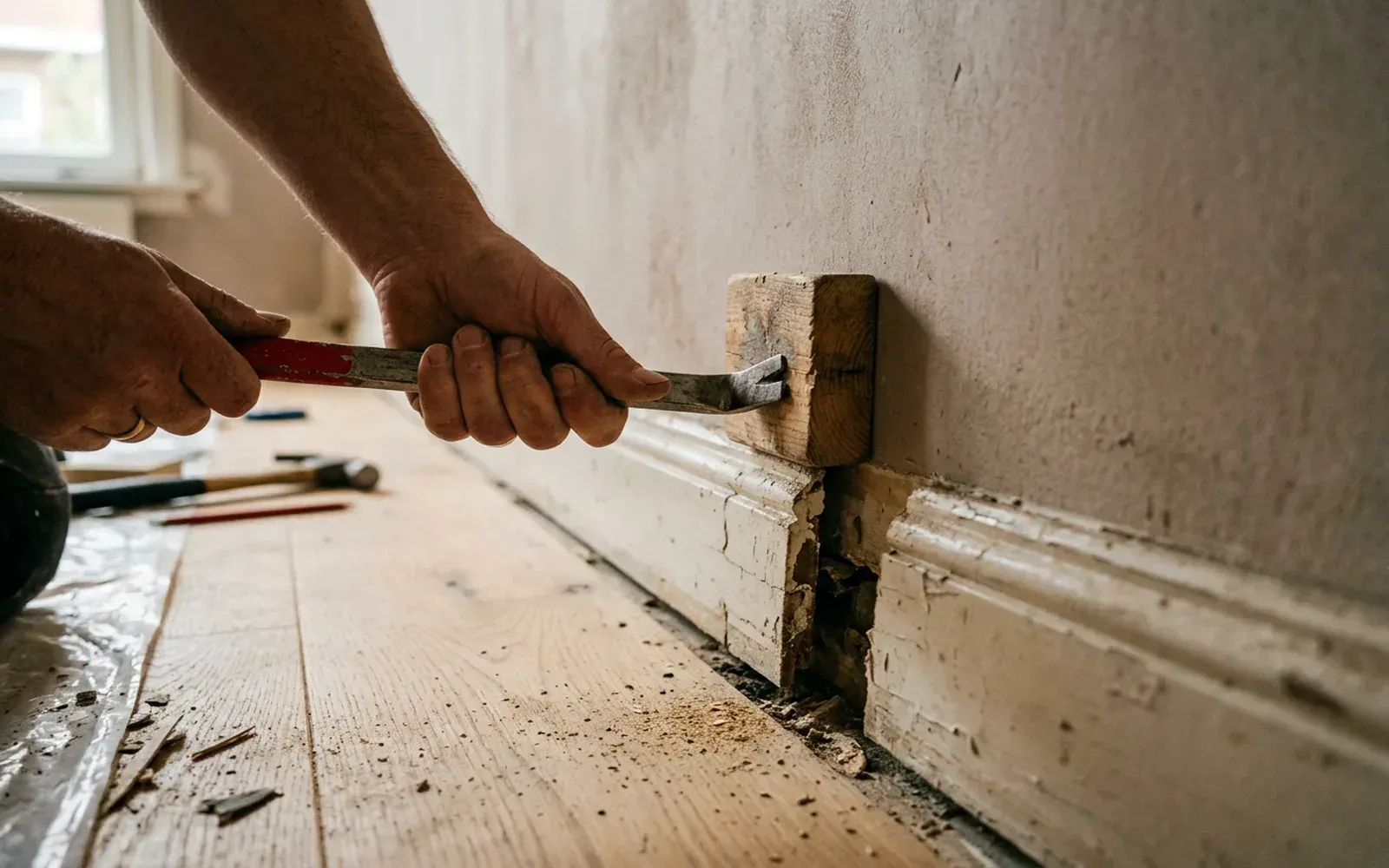
Old skirting boards are best removed step by step: cut through the caulk line, find out how they are fixed and prise them off carefully while protecting the wall.
Skirting board installation by a specialist skirting fitter
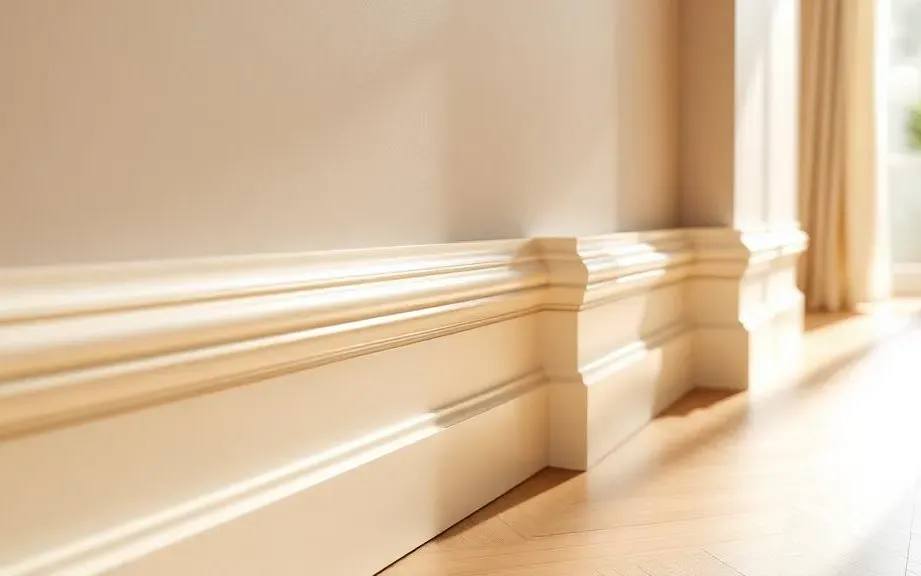
TipTop Plinten fits skirting boards in MDF, solid wood and aluminium, finished in any RAL colour and neatly matched to any floor, even with uneven walls.
Skirting board installation? Request a free quote
On-site measurement €75 incl. VAT (credited for orders above a minimum project size)