
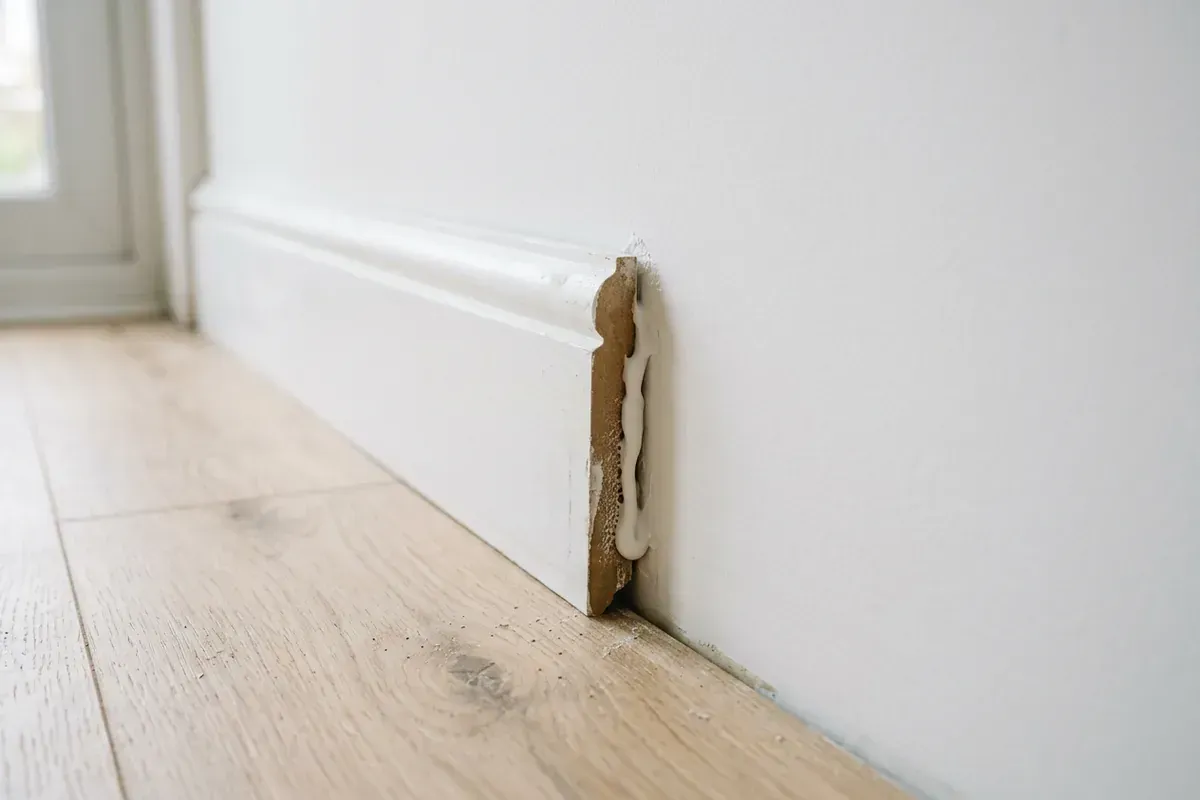
Self-adhesive skirting is a thin skirting with a sticky strip on the back, pressed against the wall without glue or nails. It is usually made of flexible plastic and is often used as a quick, cheap solution, for example in rented homes or as a temporary finish. It is easy to apply, but has clear limitations.
What is self-adhesive skirting?
In practice, the term is used for two things:
- Self-adhesive skirting: a flexible profile on a roll or in strips with an adhesive strip. Because it is flexible, it follows irregularities in the wall.
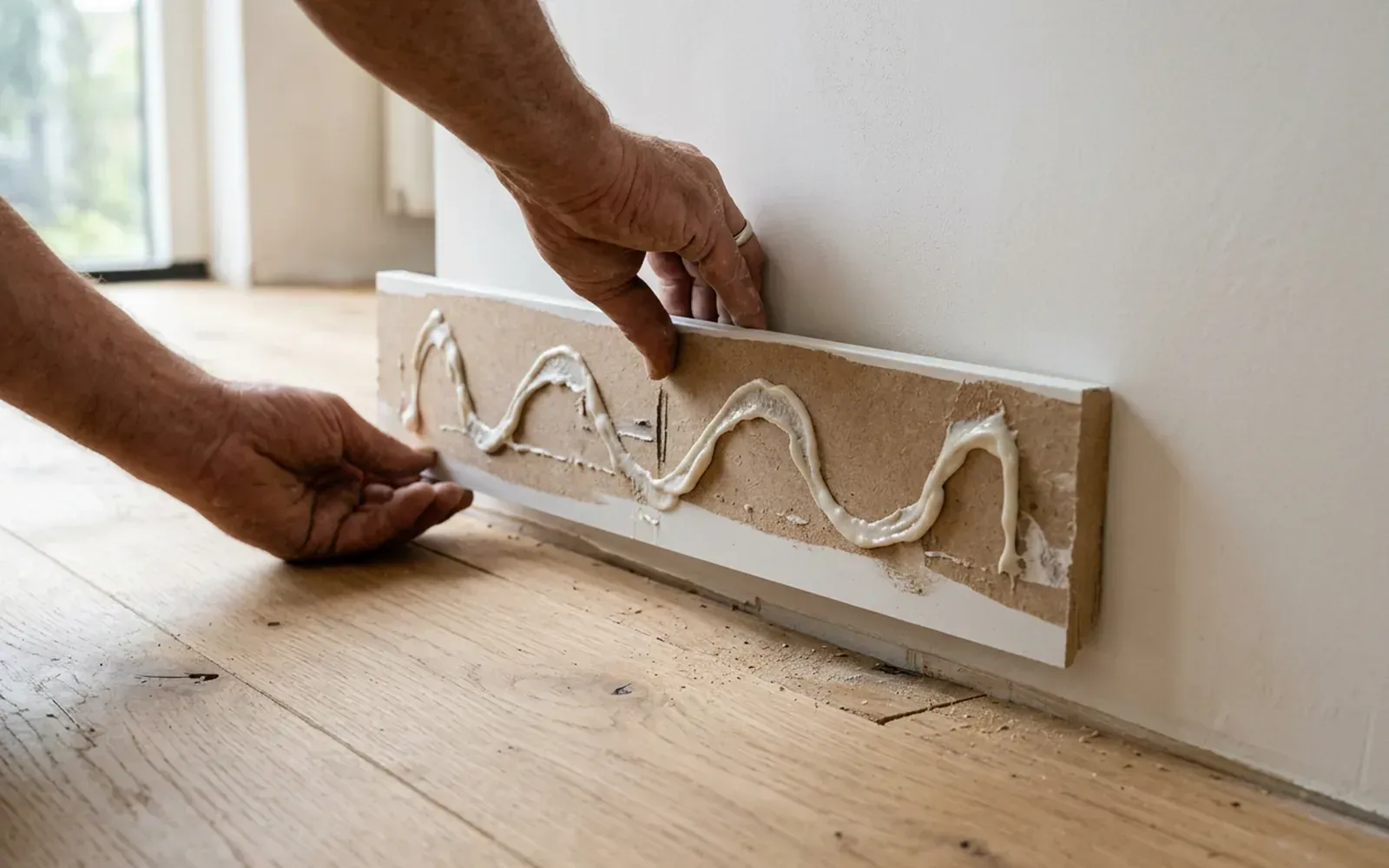
- Glued skirting: an ordinary skirting board in MDF, timber or aluminium fixed with construction adhesive. This is not self-adhesive skirting in the true sense, but is sometimes loosely called that.
Where is it used?
Self-adhesive skirting is mainly seen on small jobs, in storage rooms, behind furniture or as a temporary solution. It is also popular with DIYers, because no mitre cutting is needed at bends.
What should you look out for?
- Adhesion: an adhesive strip only bonds well to a clean, dry and dust-free surface. On porous plaster or flaking paint it can come loose.
- Appearance: a thin, flexible profile follows every irregularity, so the skirting looks less crisp than a rigid skirting board.
- Corners: without proper mitre joints, corners are often folded or solved with accessories.
- Durability: knocks from vacuum cleaners and furniture can make self-adhesive skirting come loose or get damaged more quickly.
- Alternative: a rigid MDF skirting board, glued and mechanically fixed where needed, sits more crisply and can be caulked and painted.
You can read how skirting boards are fixed professionally in fixing skirting boards: glue or screws.
At TipTop Plinten
TipTop Plinten does not fit self-adhesive skirting and deliberately does not work with plastic. The materials used are MDF, solid wood and aluminium, fixed with construction adhesive and mechanically where needed, and finished with caulking. Read more about skirting board installation.
Frequently asked questions
No. Self-adhesive skirting has a sticky strip and is usually thin and flexible. Glued skirting is an ordinary MDF, timber or aluminium skirting board fixed with construction adhesive, often combined with nails or screws.
No. Self-adhesive skirting is usually made of plastic, and TipTop Plinten deliberately does not work with plastic skirting. The materials used are MDF, solid wood and aluminium.
Related
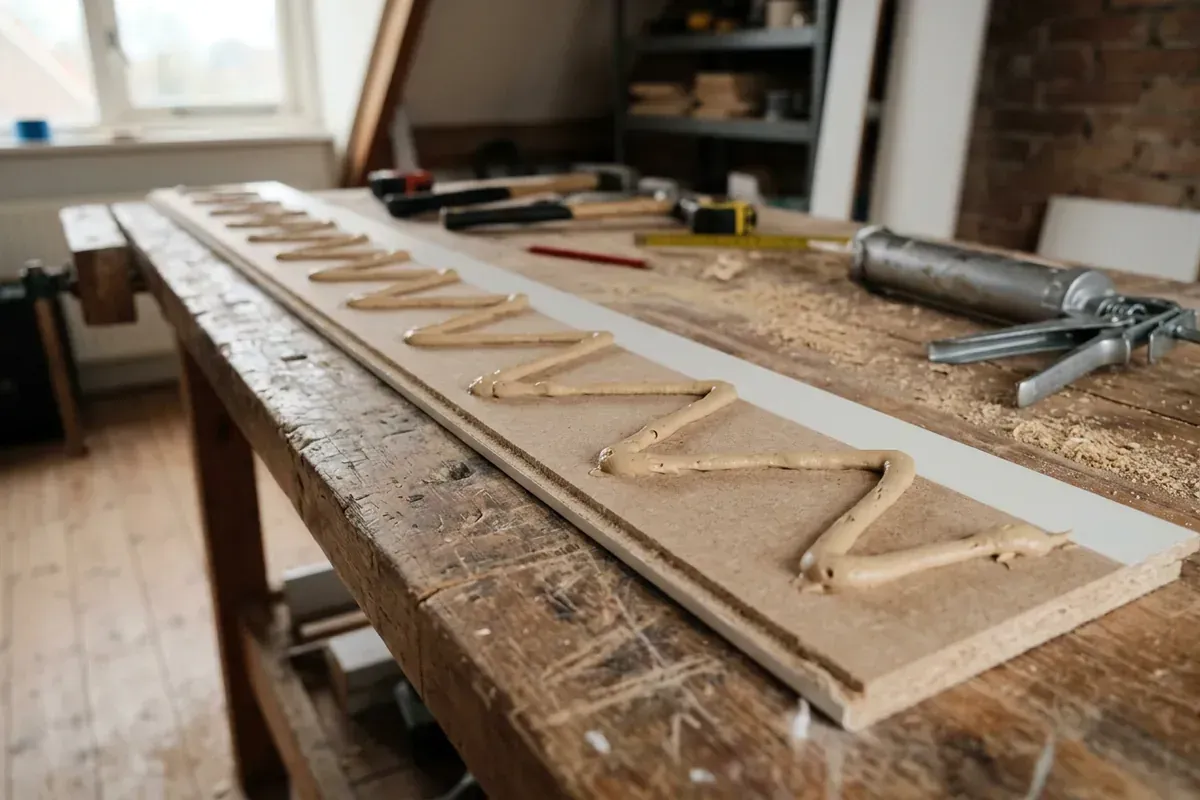
Construction adhesive
Construction adhesive is a strong glue or sealant used to fix skirting boards, mouldings and panels to the wall, often combined with nails or screws.
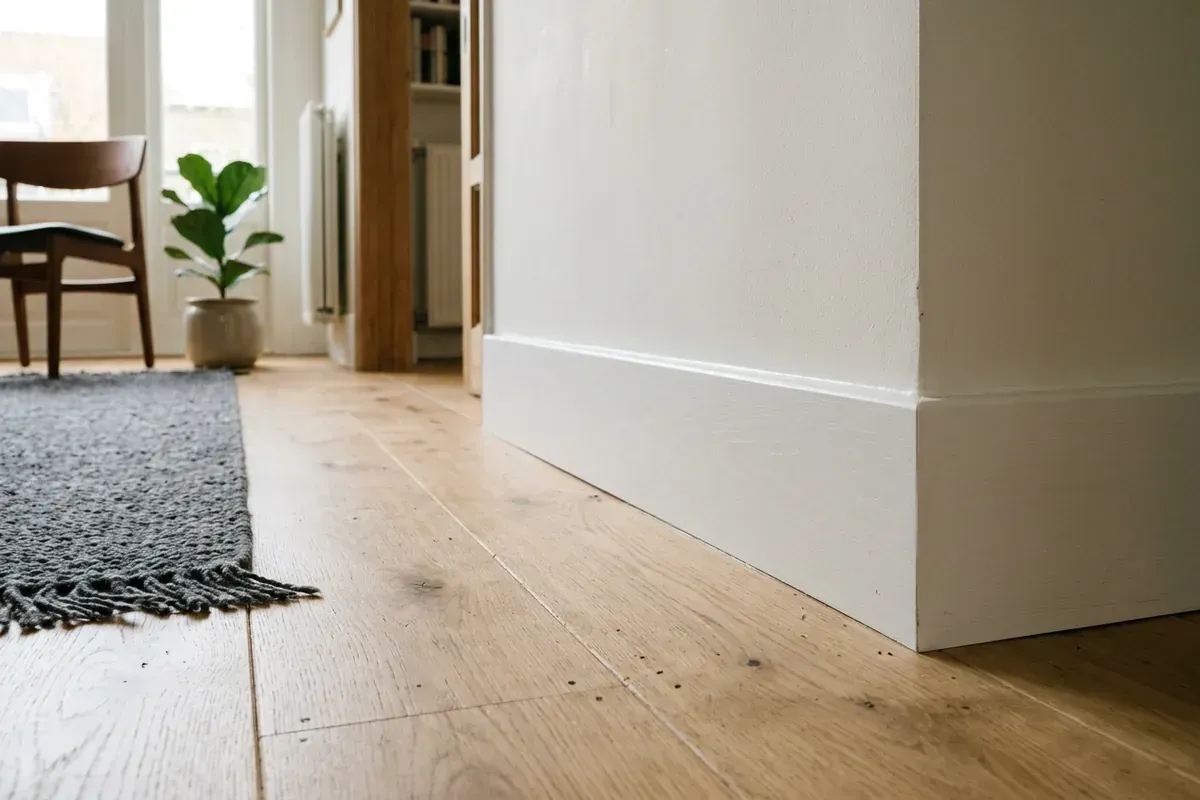
Skirting board
A skirting board is the moulding at the base of the wall that finishes the transition to the floor and protects the wall. Here is how it works and what to look out for.
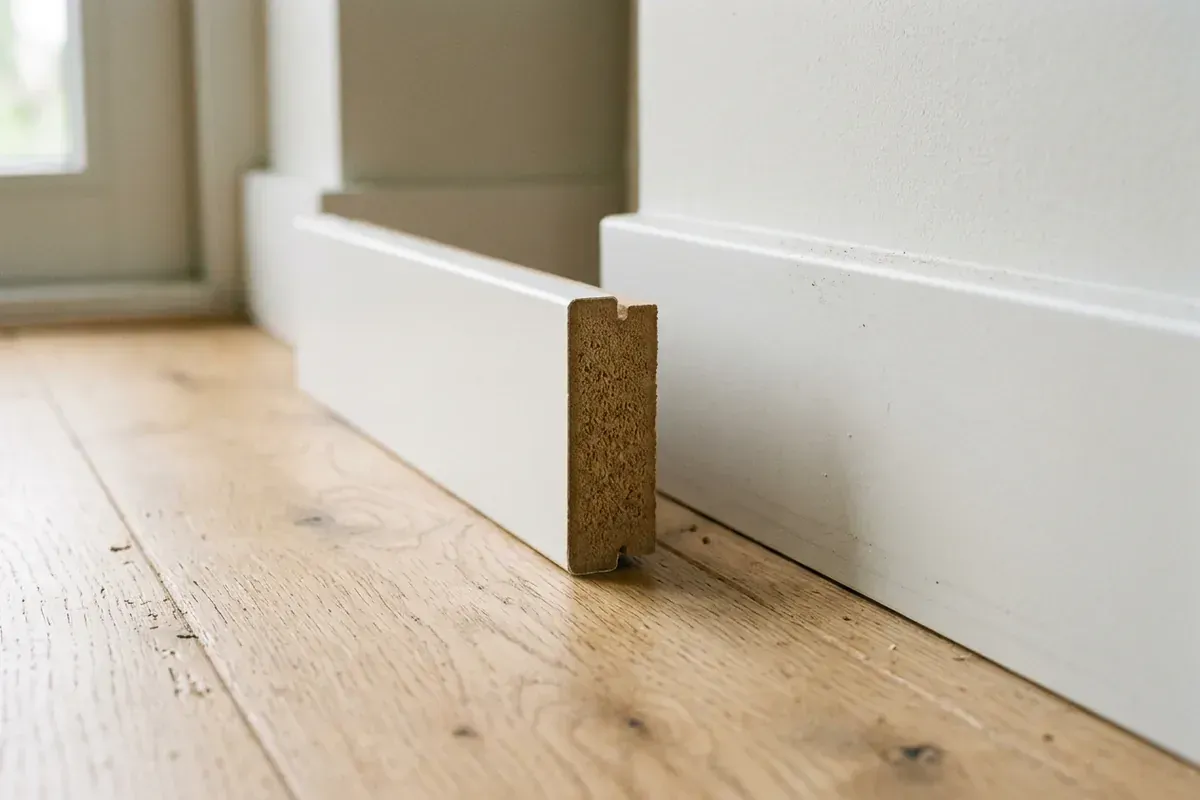
MDF
MDF is a sheet material made of pressed wood fibres. It is stable, smooth and easy to paint, which makes it the most popular material for skirting boards.
Caulking
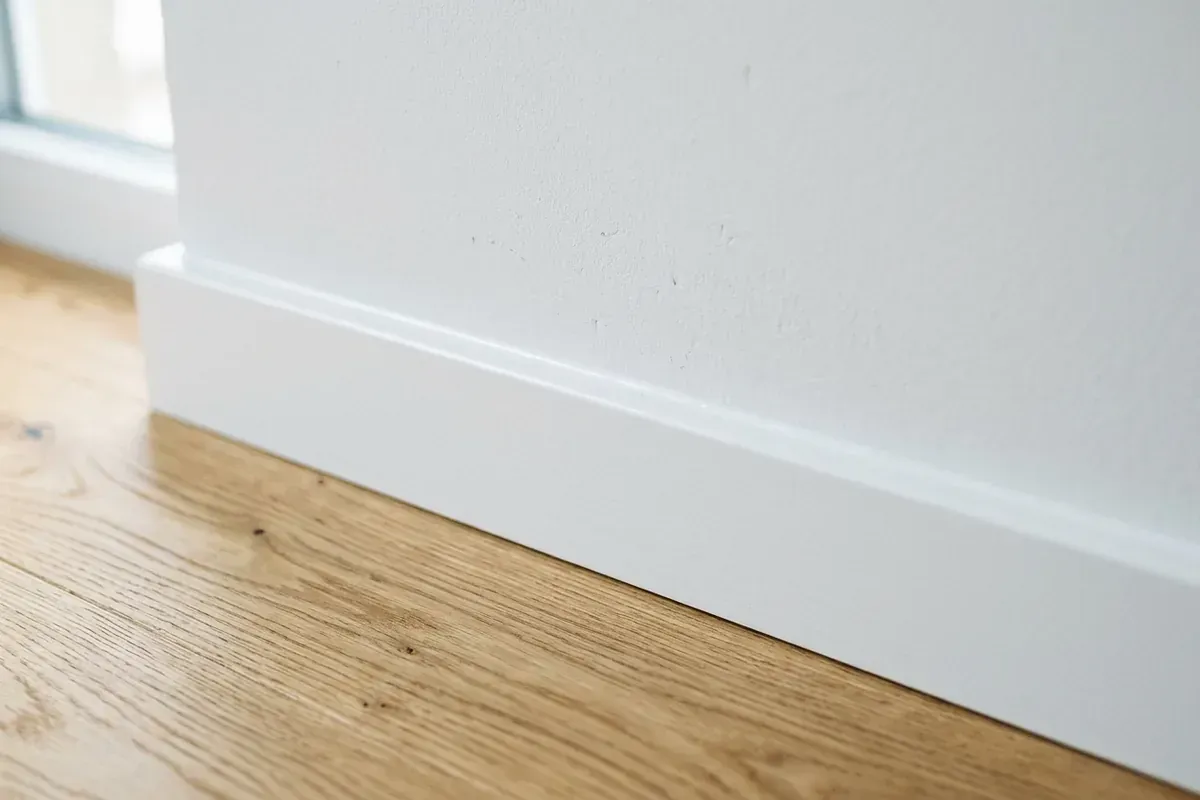
Caulking means sealing joints with a flexible sealant. With skirting boards and mouldings, it makes the transition to the wall crisp and seamless.
Installation & finishing
Fixing skirting boards: glue, screws or nails?
Glue, screws or nails: the right fixing depends on the wall, the skirting and the floor. Here is how to choose a method that stays put.
Costs & process
Fitting skirting boards: do it yourself or hire a professional?
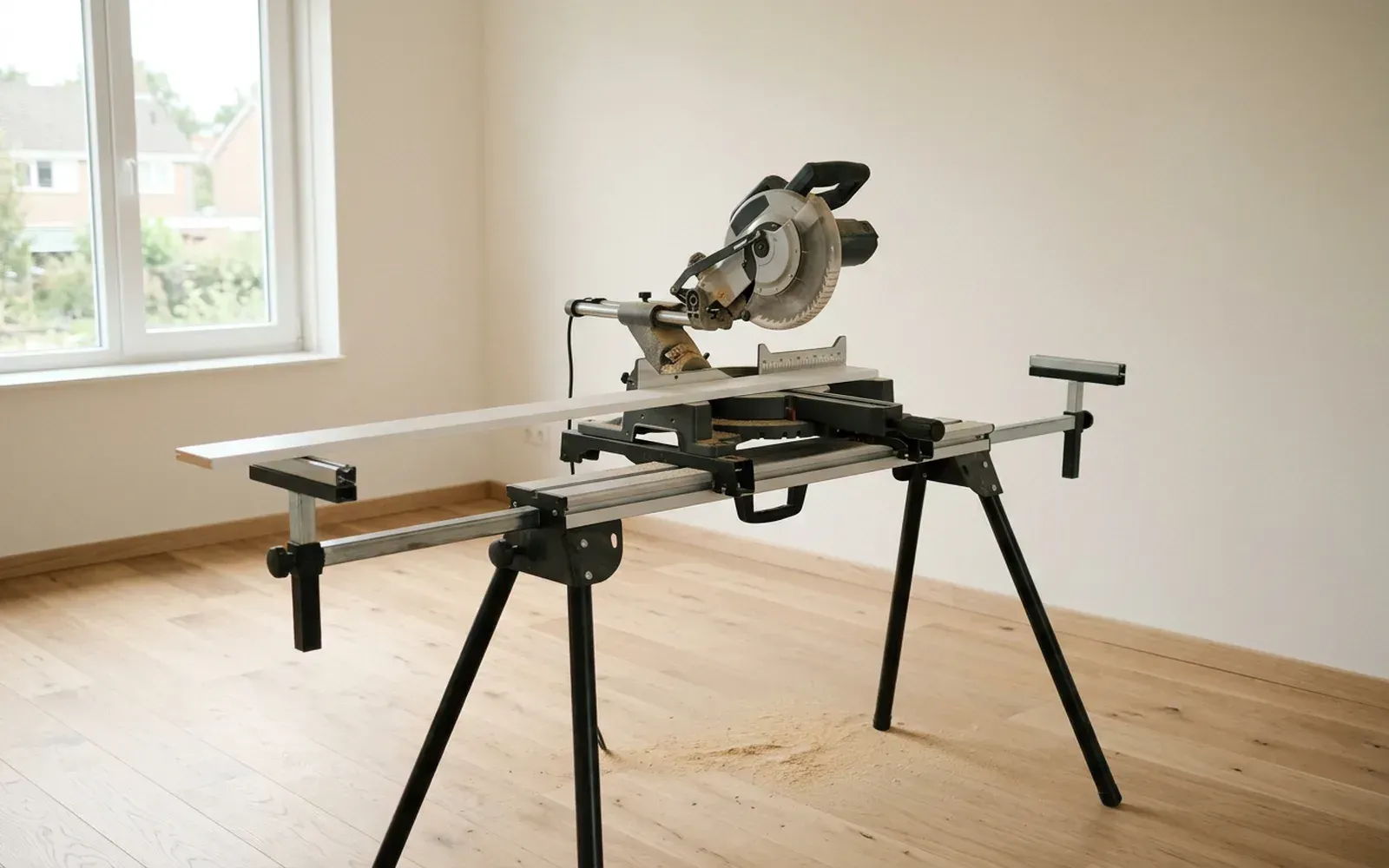
Fitting skirting boards yourself works well in a simple room. With lots of corners, uneven walls or a striking colour, a professional pays off. Here is how to weigh it up.
Skirting board installation by a specialist skirting fitter
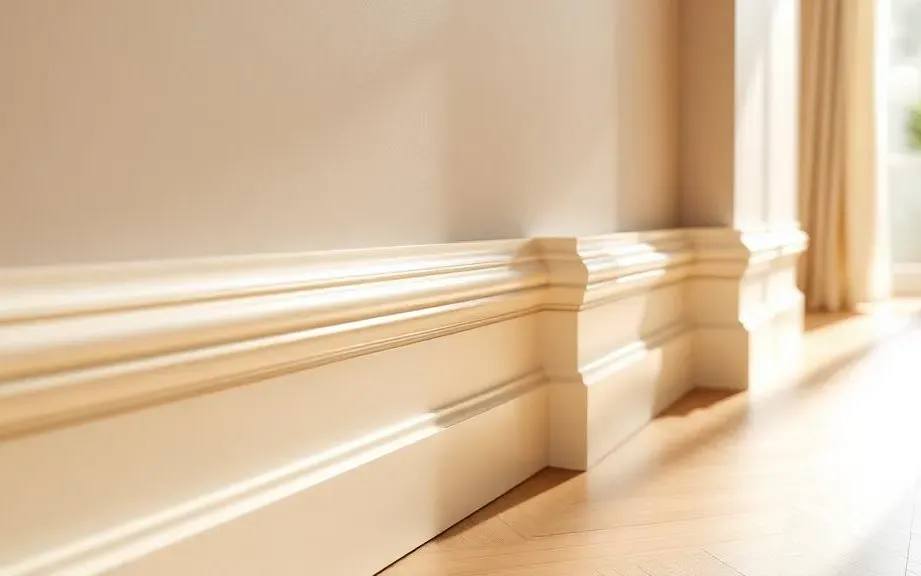
TipTop Plinten fits skirting boards in MDF, solid wood and aluminium, finished in any RAL colour and neatly matched to any floor, even with uneven walls.
Skirting board installation? Request a free quote
On-site measurement €75 incl. VAT (credited for orders above a minimum project size)