
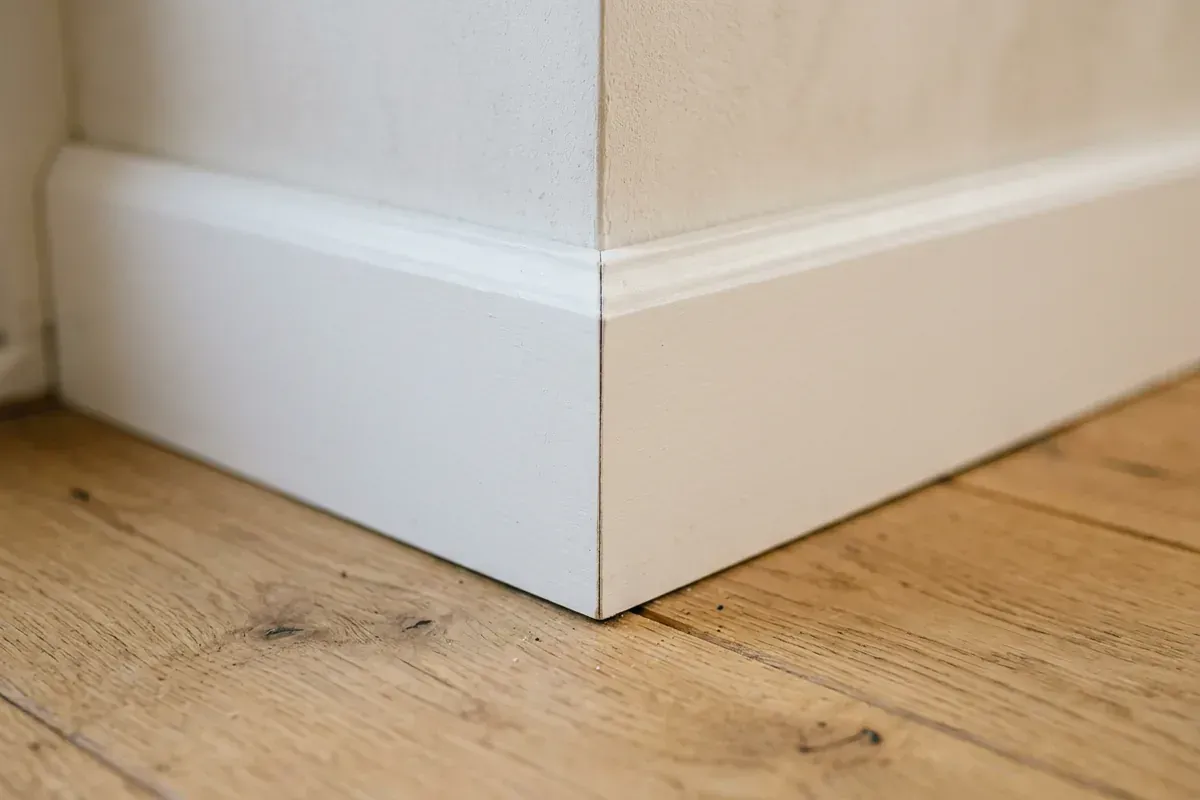
A mitre is an angled cut at the end of a skirting board or moulding, so two pieces meet seamlessly in a corner. For a right angle of 90 degrees, both pieces are usually cut at 45 degrees. A good mitre joint is barely visible from the outside and largely determines how crisp the end result looks.
What is a mitre joint?
The term comes from woodworking and refers to a corner joint where the seam runs diagonally across the corner. The seam divides the angle between the two walls exactly in half. Each piece therefore gets half of the wall angle:
| Angle between the walls | Half per piece |
|---|---|
| 90 degrees (square corner) | 45 degrees |
| 92 degrees (slightly out of square) | 46 degrees |
| 135 degrees (angled corner, e.g. at a bay window) | 67.5 degrees |
Note: many mitre saws show the deviation from a square cut. For a corner of 135 degrees, the saw is then set to 22.5 degrees.
As well as the mitre across the width, coving also uses the compound mitre, where the cut is made at an angle and a bevel at the same time.
Where is it used?
Mitre joints are used for skirting boards, architraves, decorative mouldings, coving, wall mouldings and the frames of wall panels. A small mitre is also often cut for a skirting end that returns to the wall.
What should you look out for?
- Measuring: walls are rarely exactly square. Measure the angle with an angle finder and halve it.
- Internal or external: an internal and an external corner need opposite cutting directions.
- Tools: a sharp blade and an accurately set mitre saw give a clean cut.
- Glue and fixing: glue in the mitre and fixings close to the corner keep the joint closed.
- Finishing: a small hairline gap is filled and touched up; caulking is no substitute for a badly fitting mitre.
You can find a detailed explanation in mitred skirting: finishing corners neatly.
At TipTop Plinten
Crisp mitred corner joints are part of every skirting installation by TipTop Plinten. On uneven walls and unusual angles, each corner is measured and fitted individually, as in the made-to-measure project in Oss. Read more about skirting board installation.
Frequently asked questions
Only if the corner in the wall is exactly 90 degrees. In practice walls often deviate slightly. The actual angle is then measured and halved, so both pieces meet neatly.
Often because the material moves, especially with solid wood, or because the skirting was not fixed firmly enough near the corner. Glue in the mitre and good fixing on both sides help keep the corner closed.
Related
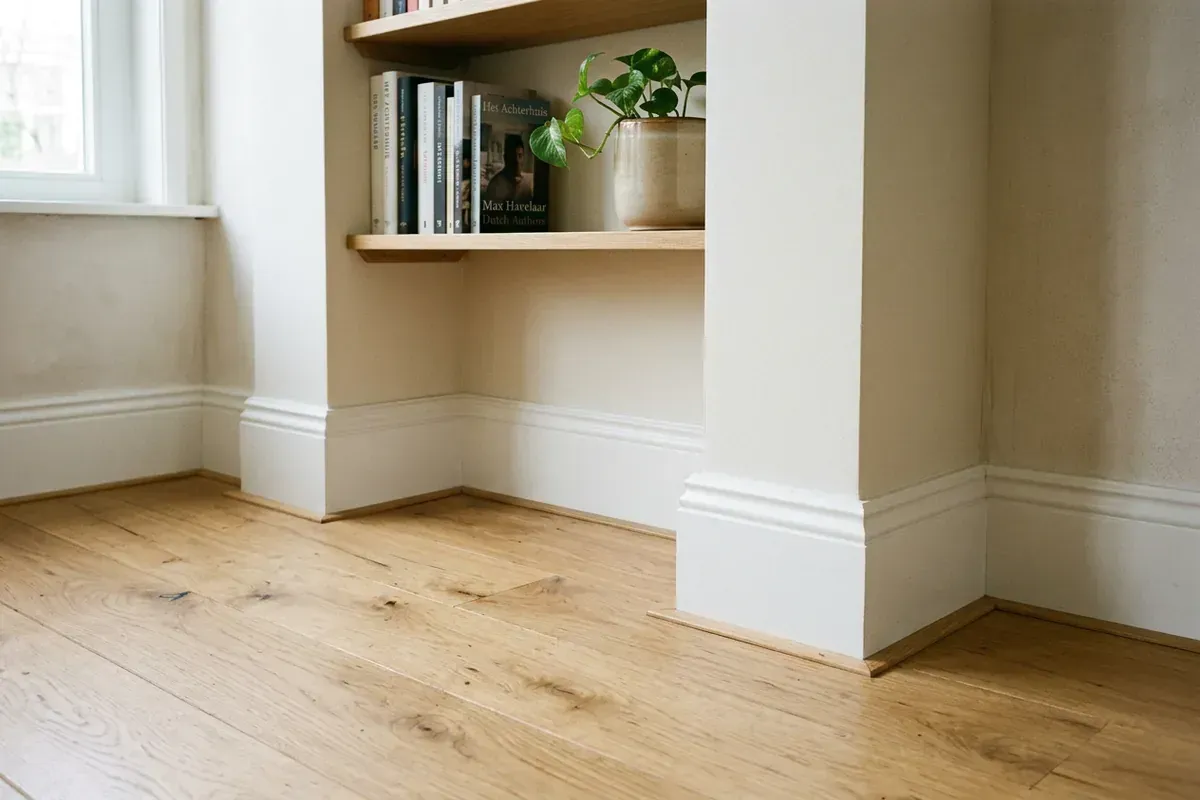
Internal & external corner
An internal corner points away from you, an external corner points towards you. With skirting boards, each type of corner needs its own cutting direction and approach.
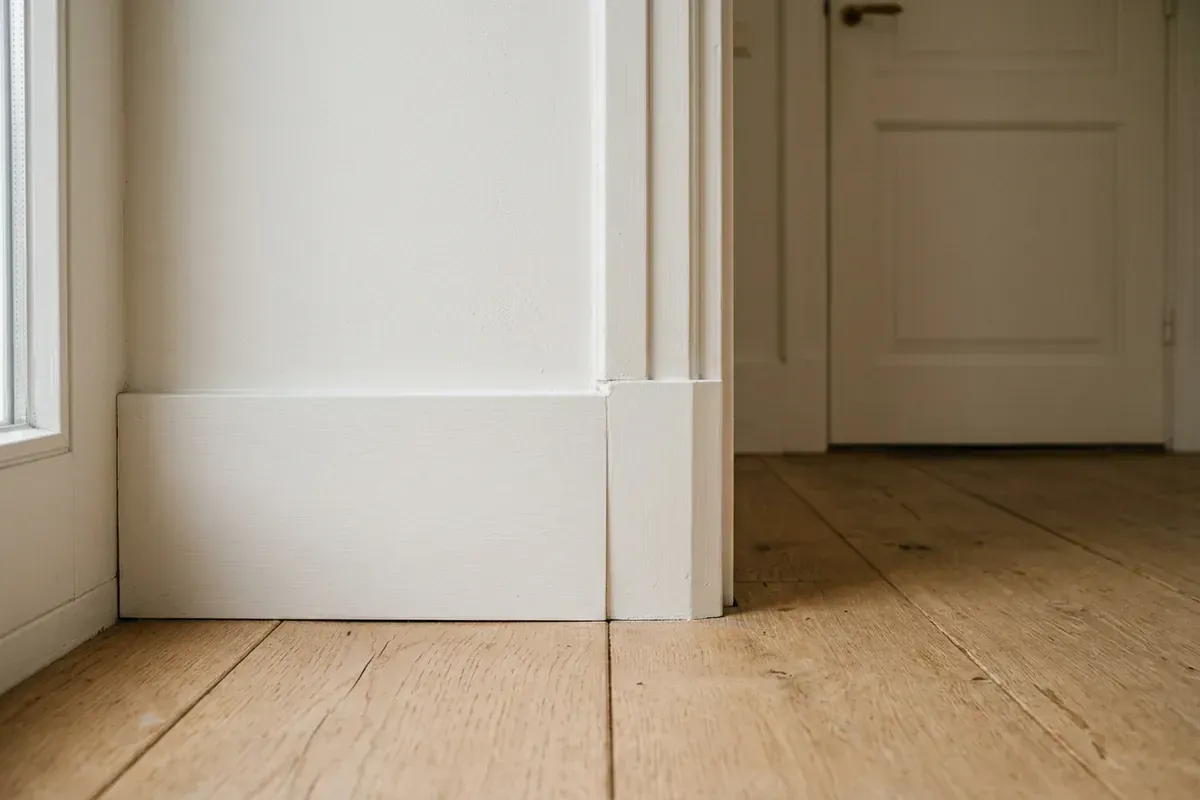
Skirting end
A skirting board that stops somewhere needs a neat finish. That can be a mitred return, an end cap or a junction with an architrave.
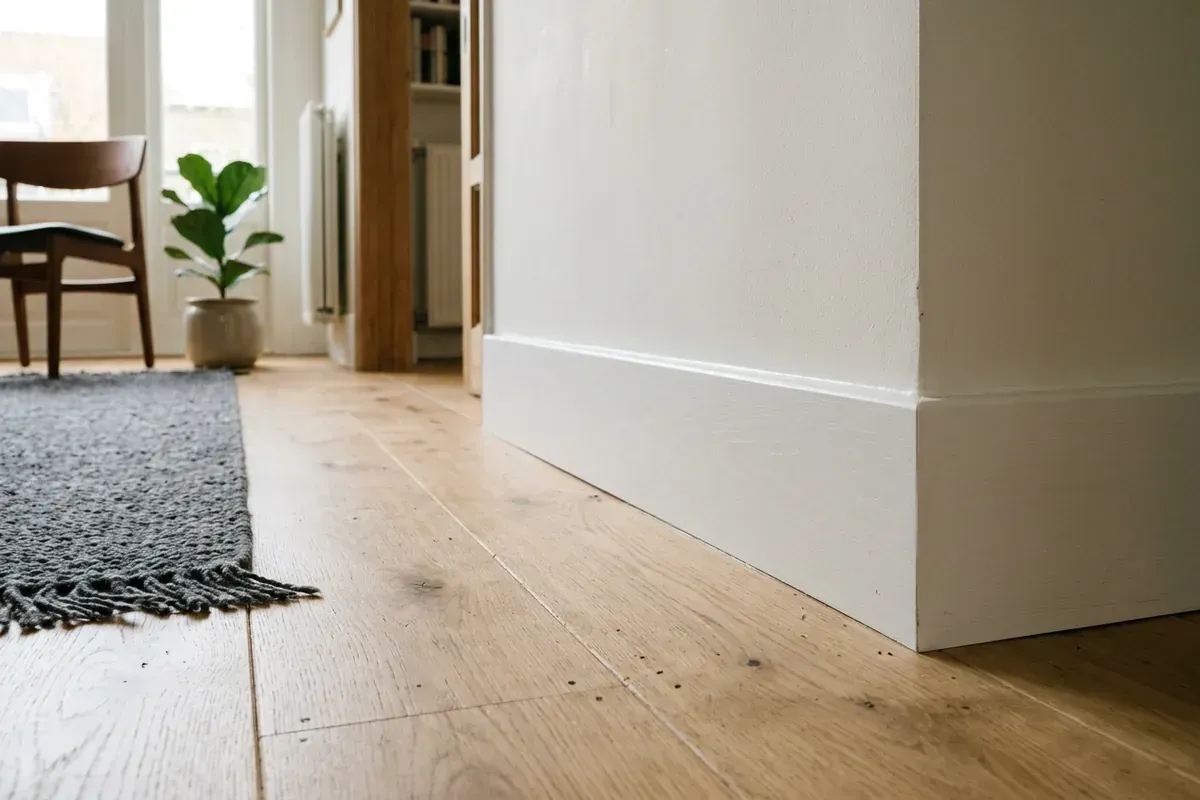
Skirting board
A skirting board is the moulding at the base of the wall that finishes the transition to the floor and protects the wall. Here is how it works and what to look out for.
Caulking
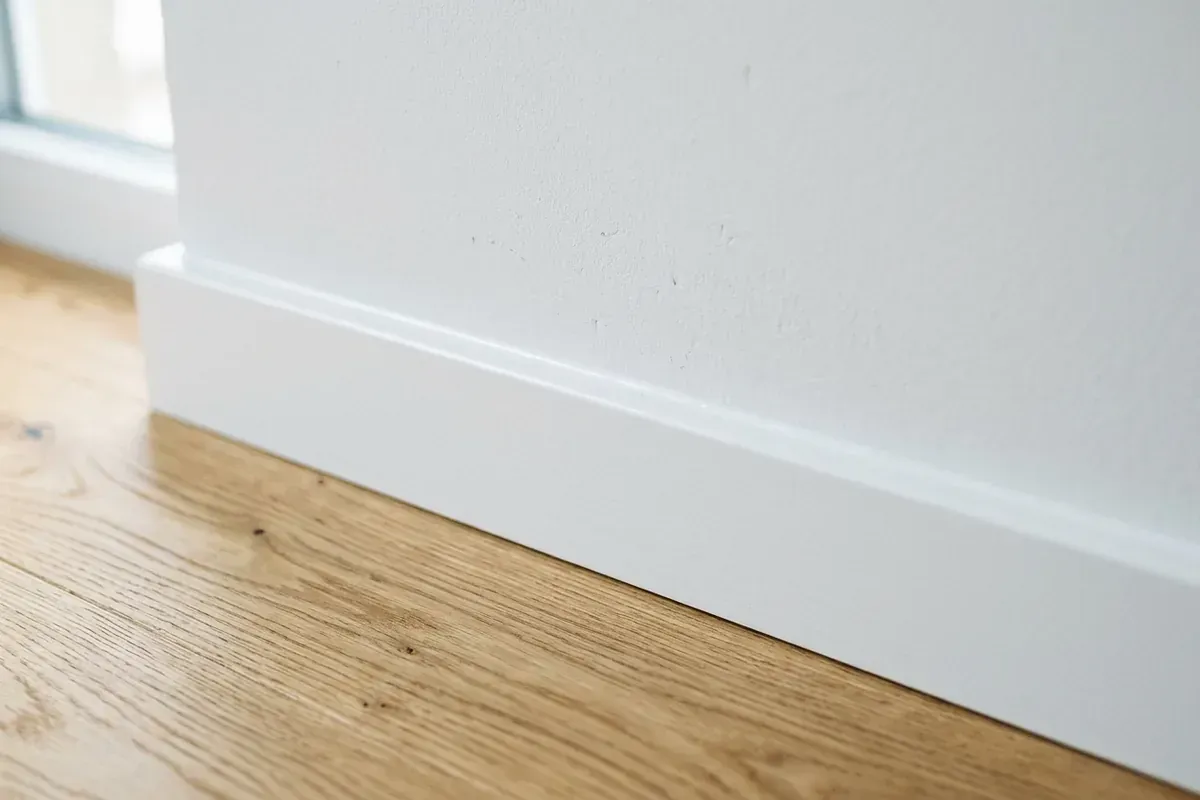
Caulking means sealing joints with a flexible sealant. With skirting boards and mouldings, it makes the transition to the wall crisp and seamless.
Decorative moulding
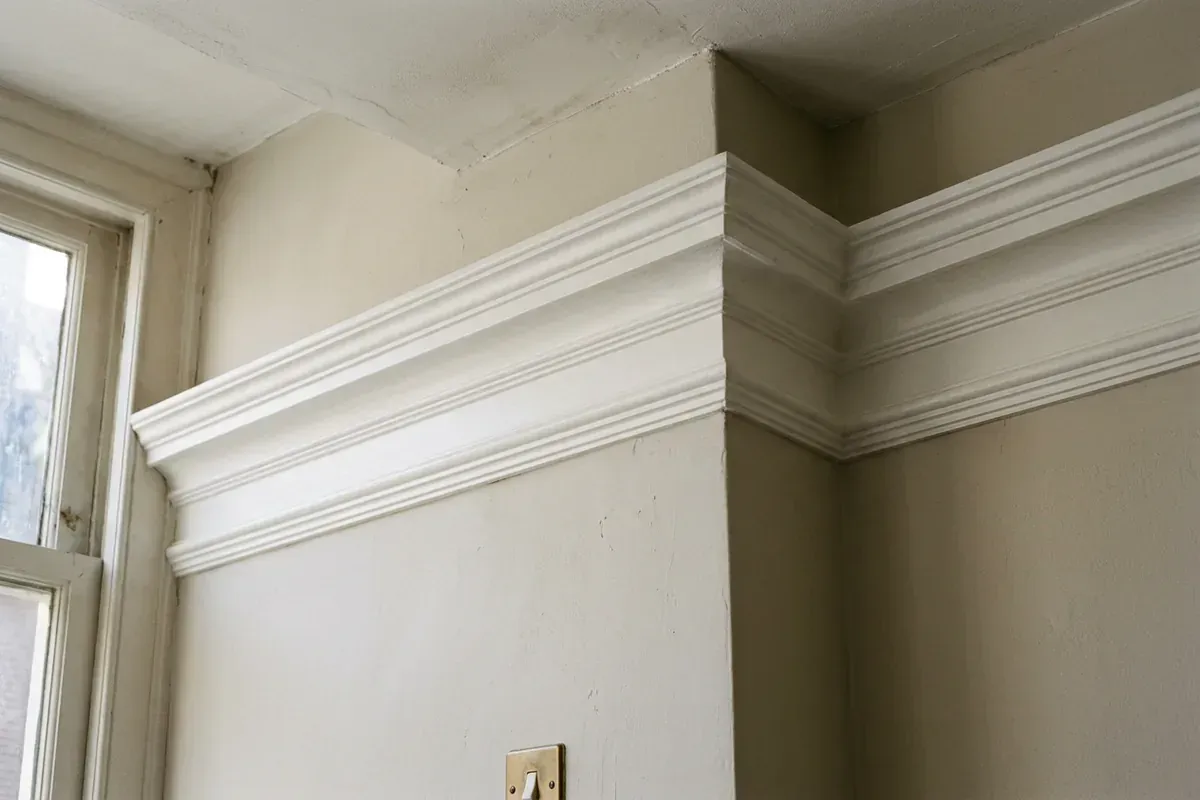
A decorative moulding is an ornamental profile on a wall or ceiling. It gives a room character, from classic ornament to a sleek modern line.
Installation & finishing
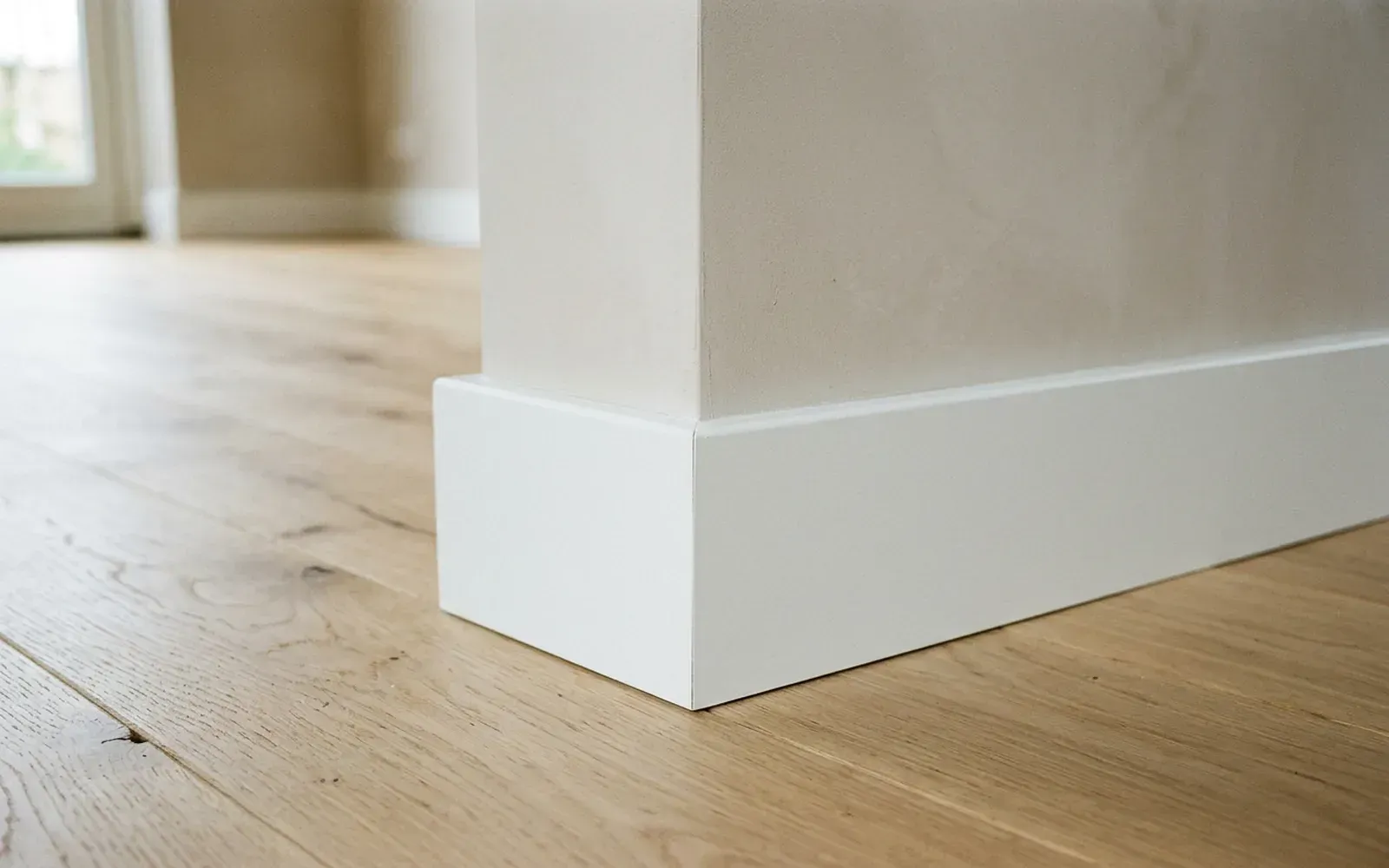
Mitre cutting skirting boards: how to get tight corners
For a square corner you cut both skirting boards at 45 degrees; for any other angle you halve the measured angle. That is how you get tight internal and external corners.
Installation & finishing
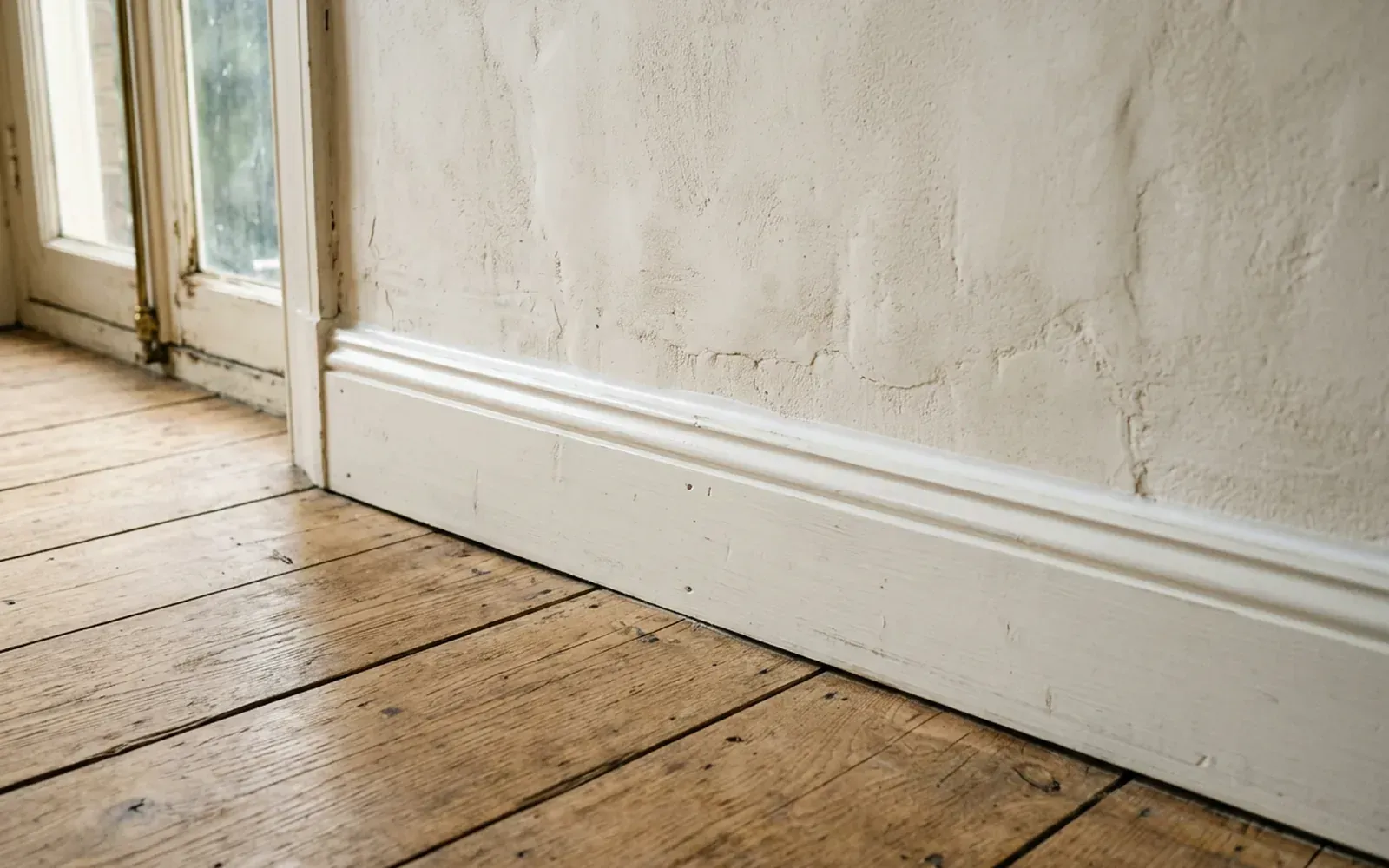
Skirting boards for uneven walls: made-to-measure skirting for irregular walls
With out-of-true, wavy or subsided walls, standard skirting won't sit flush. This is how a made-to-measure skirting board is fitted to the wall, floor and corner.
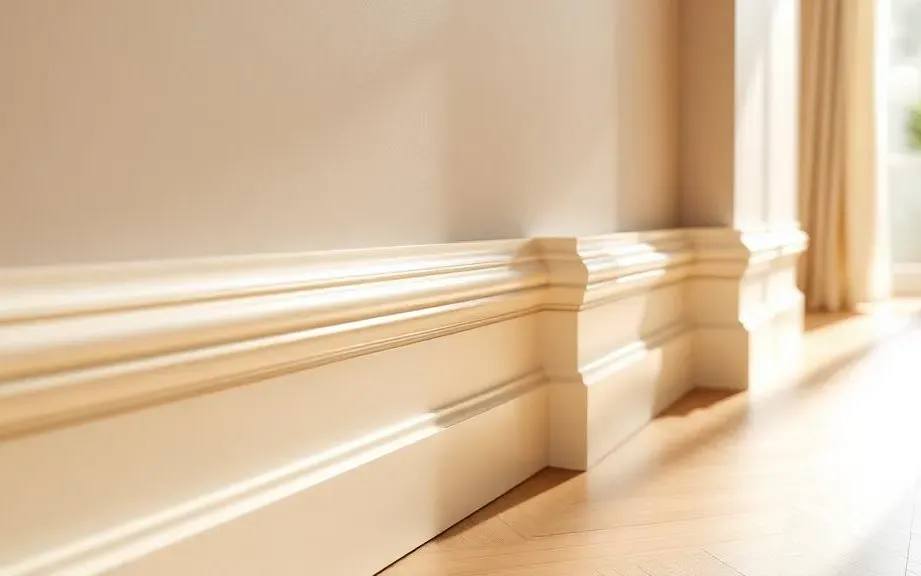
Skirting board installation by a specialist skirting fitter
TipTop Plinten fits skirting boards in MDF, solid wood and aluminium, finished in any RAL colour and neatly matched to any floor, even with uneven walls.
Skirting board installation? Request a free quote
On-site measurement €75 incl. VAT (credited for orders above a minimum project size)