
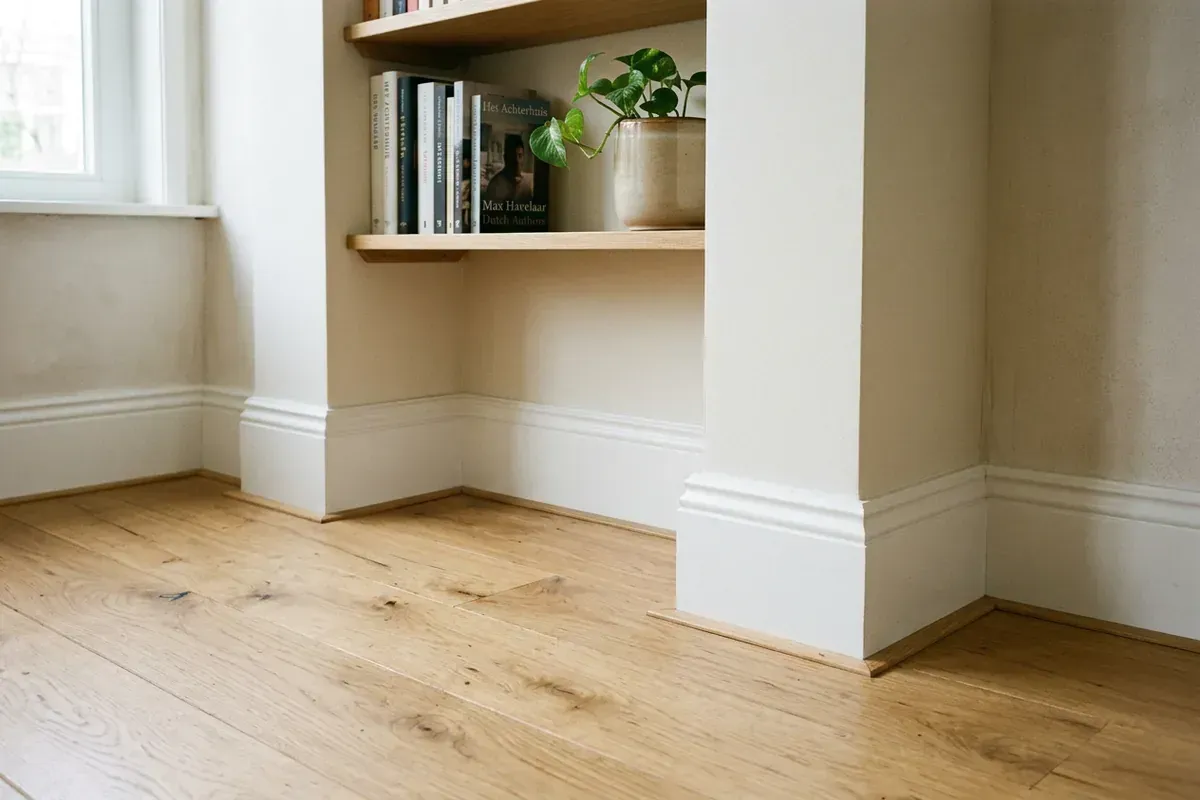
With skirting boards, there are two types of corner. An internal corner points away from you, as where two walls meet in the corner of a room. An external corner points towards you, for example at a chimney breast, an alcove or a wall pier. Both corners are usually cut as a mitre joint, but each with its own cutting direction and its own points of attention.
What are internal and external corners?
- Internal corner: the skirting boards run towards each other at an angle of less than 180 degrees as seen from the room. The long side of the mitre lies against the wall.
- External corner: the skirting boards run around a projecting corner. The long side of the mitre is at the front, visible in the room.
If you accidentally reverse the cutting direction, the board ends up just too short or the wrong way round. That is why every corner is marked beforehand.
Where is it used?
Every room has internal corners. External corners are found at chimney breasts, built-in wardrobes, alcoves, stairwells, pipe boxings and wall piers next to doors. Older homes and flats with lots of boxings have a surprising number of external corners, often not quite square.
What should you look out for?
- Squareness: measure every corner. A room corner of 88 or 93 degrees is not unusual.
- Scribing internal corners: with profiled skirting boards, the profile can be cut out so one board fits exactly over the other. That often stays closed better than a mitre.
- Strength at external corners: glue in the mitre and fixings on both sides prevent the point from coming loose.
- Small external corners: with short pieces around a boxing, precision is especially important, because a small deviation is immediately visible.
- Finishing: a hairline gap is filled and touched up, then the caulking goes along the top edge.
You can find a step-by-step guide in mitred skirting: finishing corners neatly.
At TipTop Plinten
TipTop Plinten cuts and fits internal and external corners to measure, including on uneven walls and unusual angles. One example is the flat in Oss with irregular walls. Read more about skirting board installation.
Frequently asked questions
No. An internal corner can be mitred, but it can also be scribed by cutting the profile of one board so that it fits over the other. That method often stays closed better if the wall is not square or the timber moves.
An external corner projects into the room and takes knocks from vacuum cleaners, furniture and shoes. The mitre joint therefore needs to be particularly well glued and fixed, so the point does not come loose or get damaged.
Related
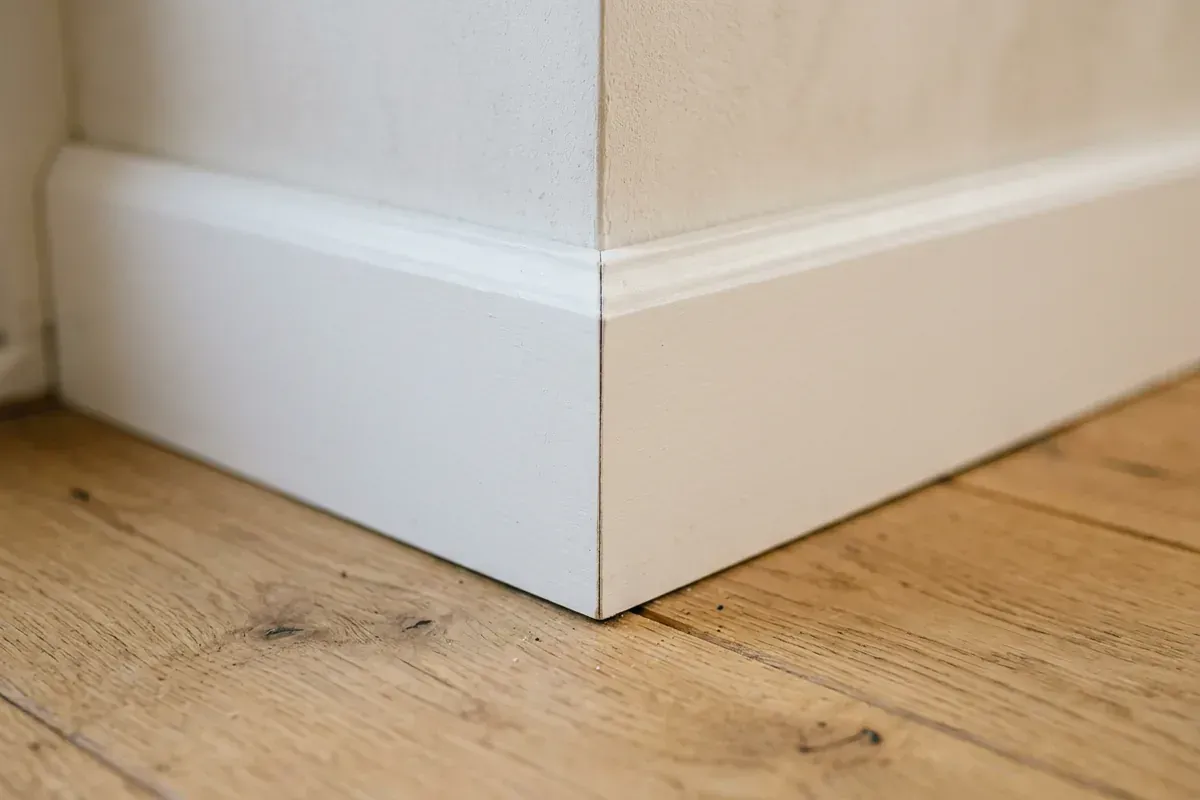
Mitre joint
A mitre is an angled cut that lets two mouldings meet seamlessly in a corner. For a right angle, that is usually 2 x 45 degrees.
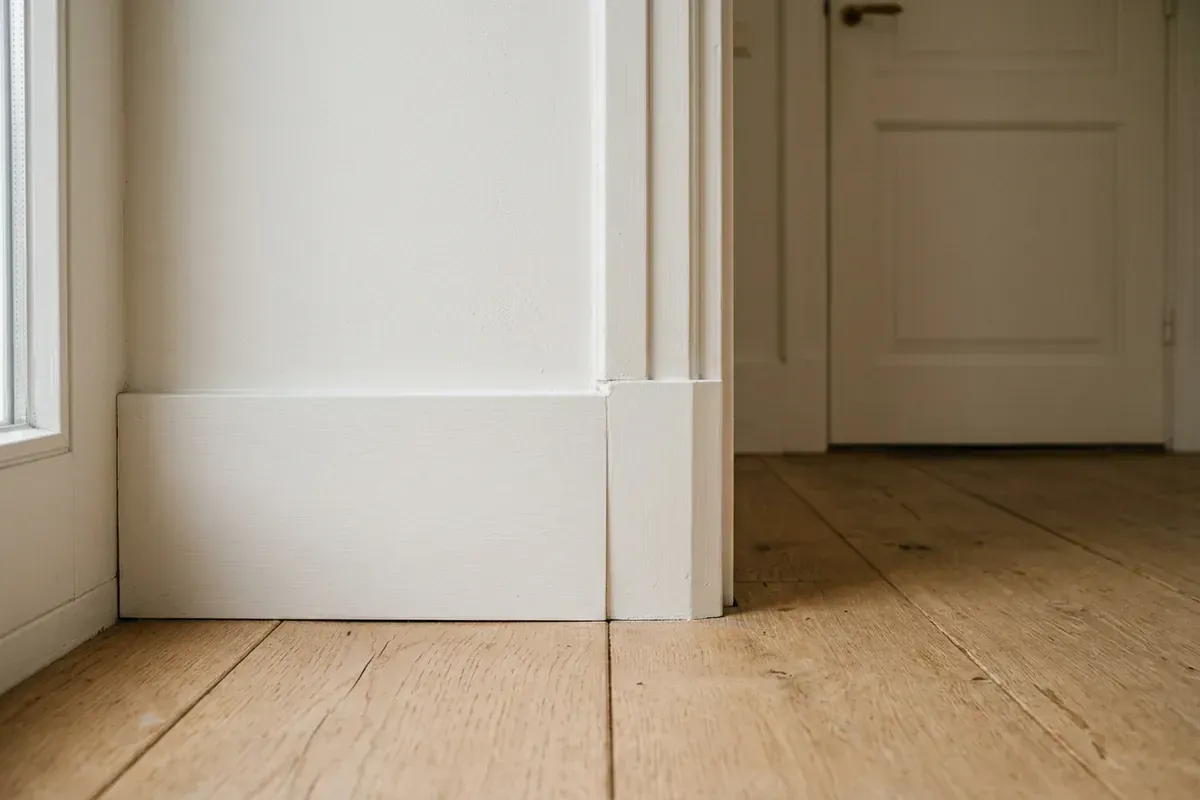
Skirting end
A skirting board that stops somewhere needs a neat finish. That can be a mitred return, an end cap or a junction with an architrave.
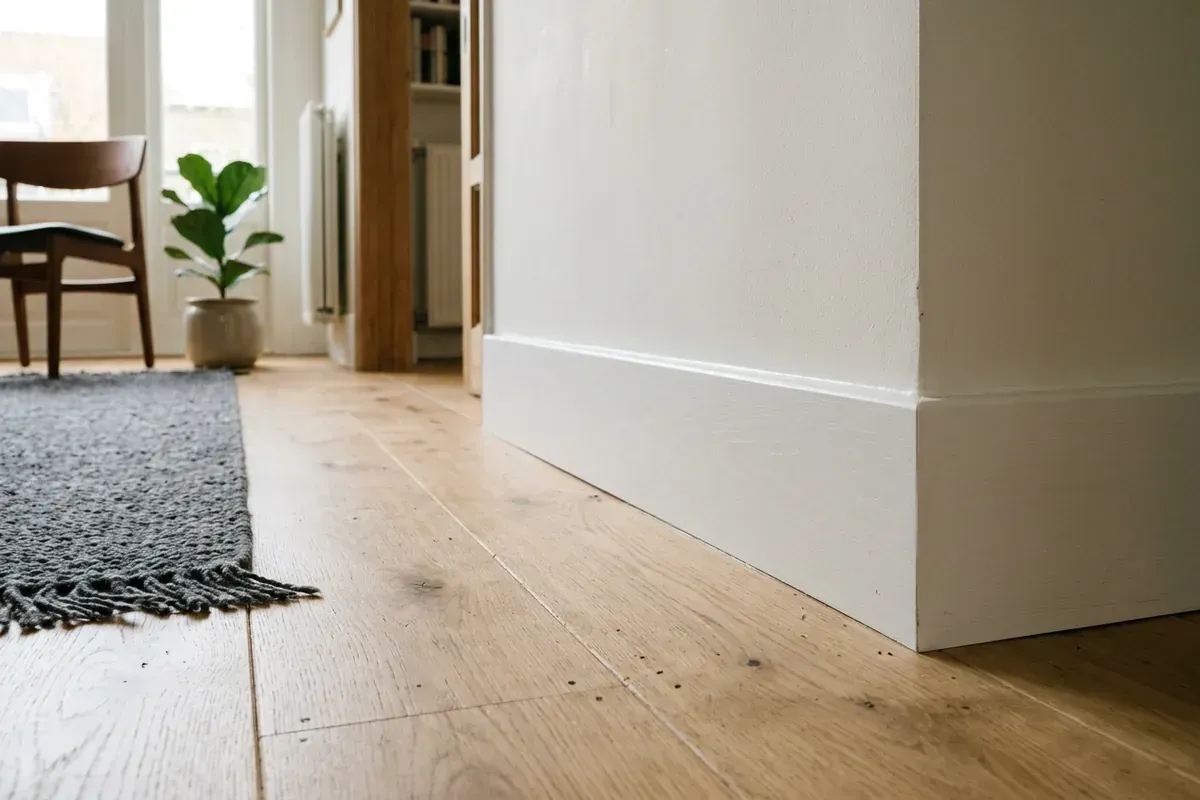
Skirting board
A skirting board is the moulding at the base of the wall that finishes the transition to the floor and protects the wall. Here is how it works and what to look out for.
Caulking
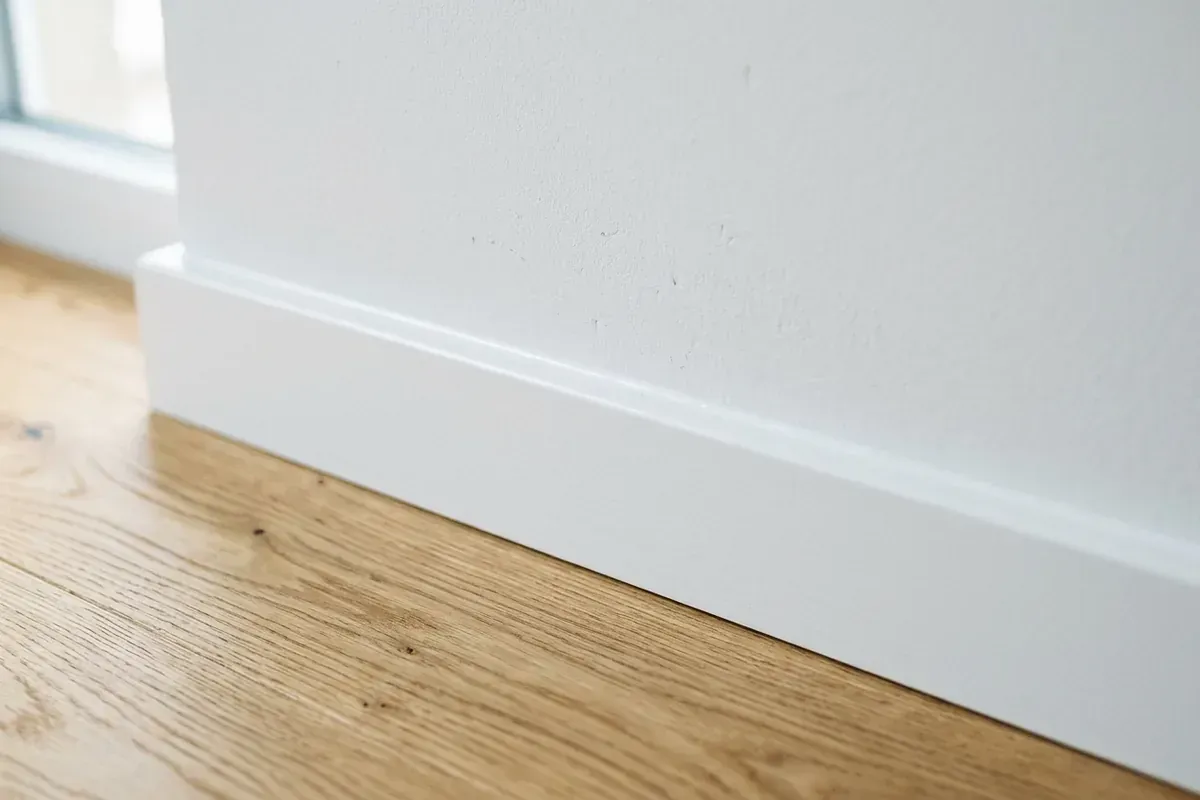
Caulking means sealing joints with a flexible sealant. With skirting boards and mouldings, it makes the transition to the wall crisp and seamless.
Installation & finishing
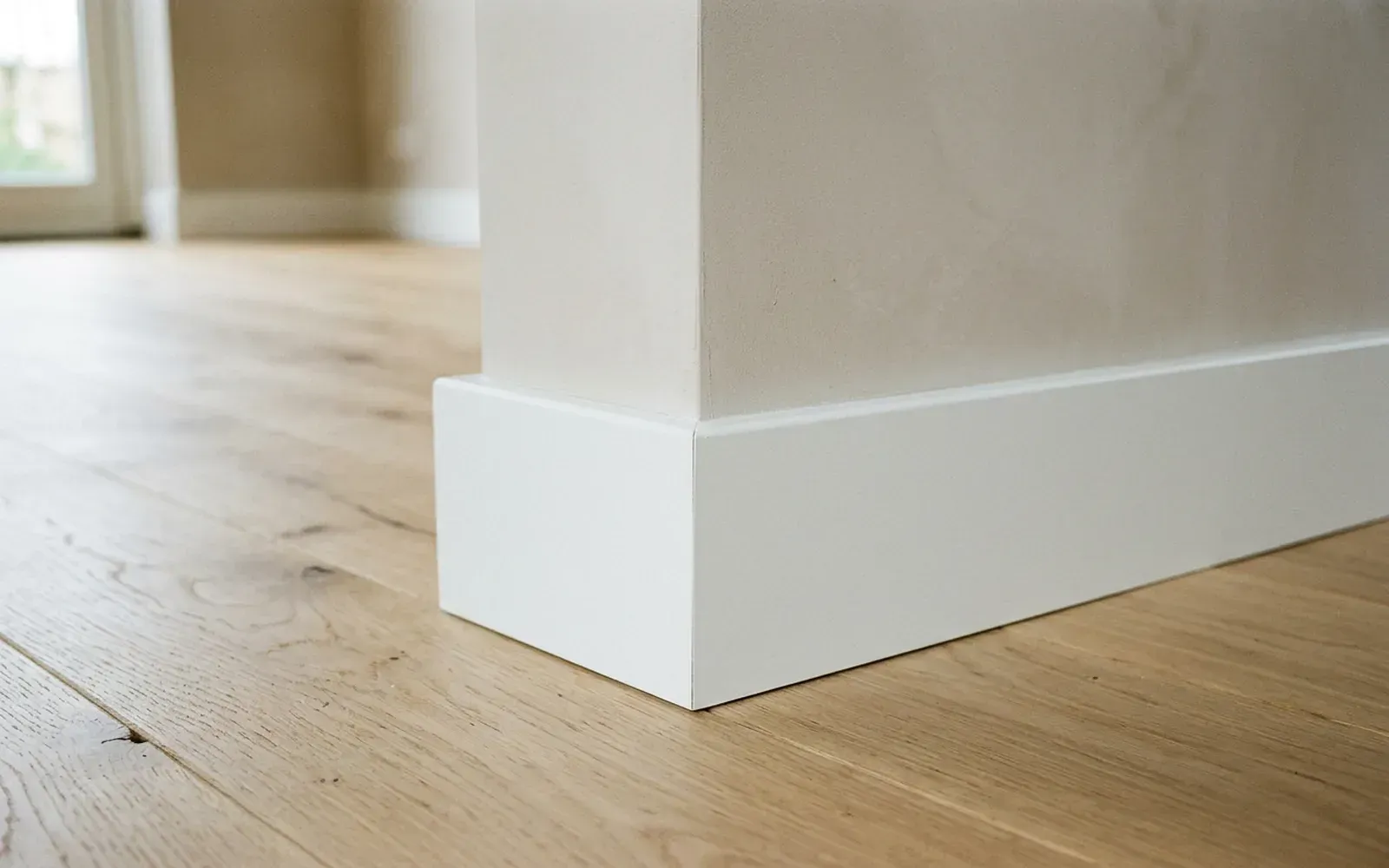
Mitre cutting skirting boards: how to get tight corners
For a square corner you cut both skirting boards at 45 degrees; for any other angle you halve the measured angle. That is how you get tight internal and external corners.
Installation & finishing
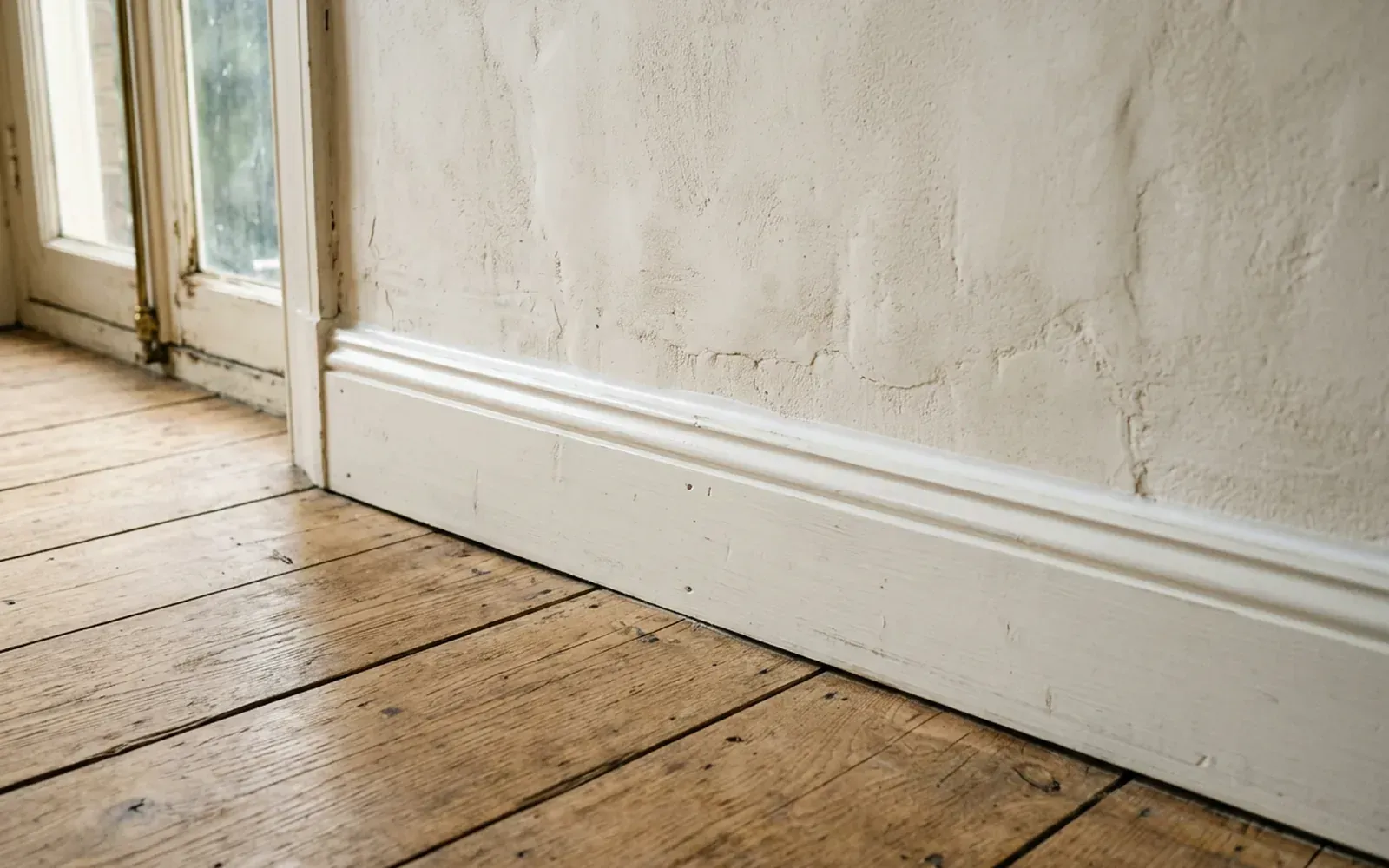
Skirting boards for uneven walls: made-to-measure skirting for irregular walls
With out-of-true, wavy or subsided walls, standard skirting won't sit flush. This is how a made-to-measure skirting board is fitted to the wall, floor and corner.
Skirting board installation by a specialist skirting fitter
TipTop Plinten fits skirting boards in MDF, solid wood and aluminium, finished in any RAL colour and neatly matched to any floor, even with uneven walls.
Skirting board installation? Request a free quote
On-site measurement €75 incl. VAT (credited for orders above a minimum project size)