
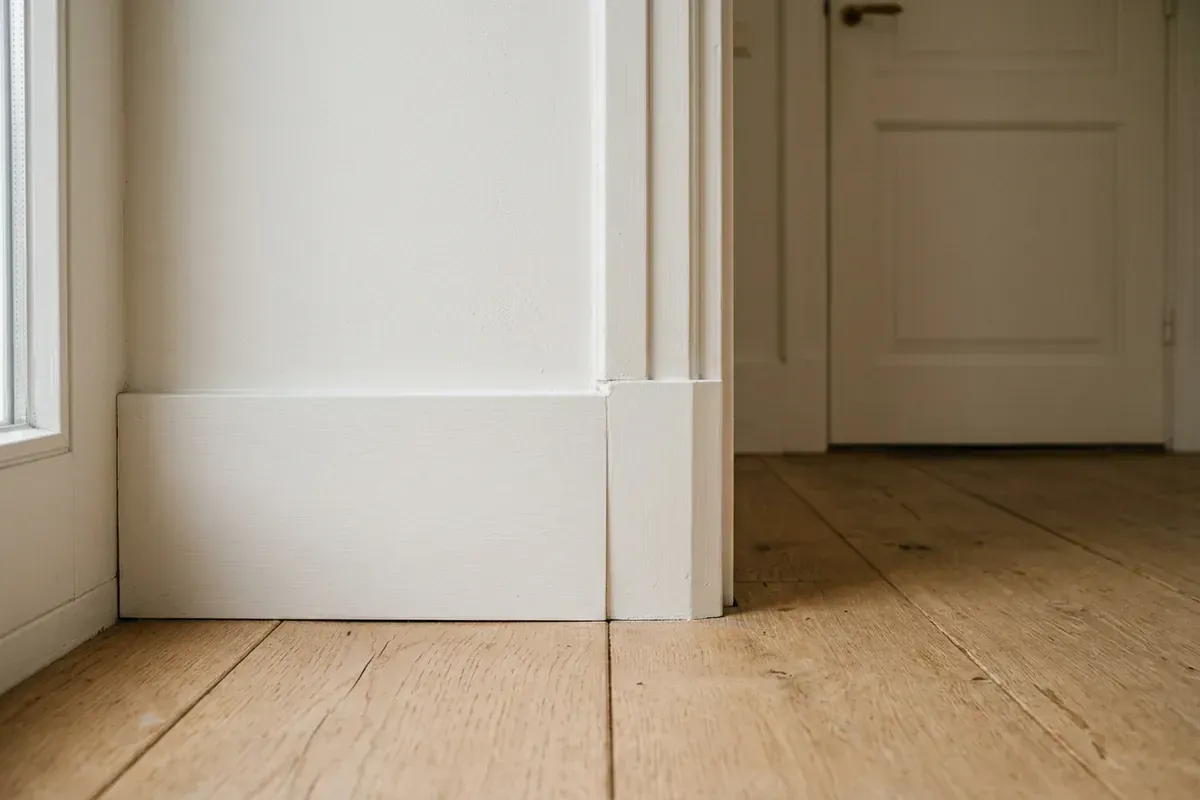
A skirting end is the finish where a skirting board stops, for example at a door frame, an open passage, a staircase or a built-in cupboard. A skirting board that is simply cut off square there shows a visible cut face. With a neat end detail the skirting finishes logically and the whole looks complete.
What is a skirting end?
There are several ways to end a skirting board:
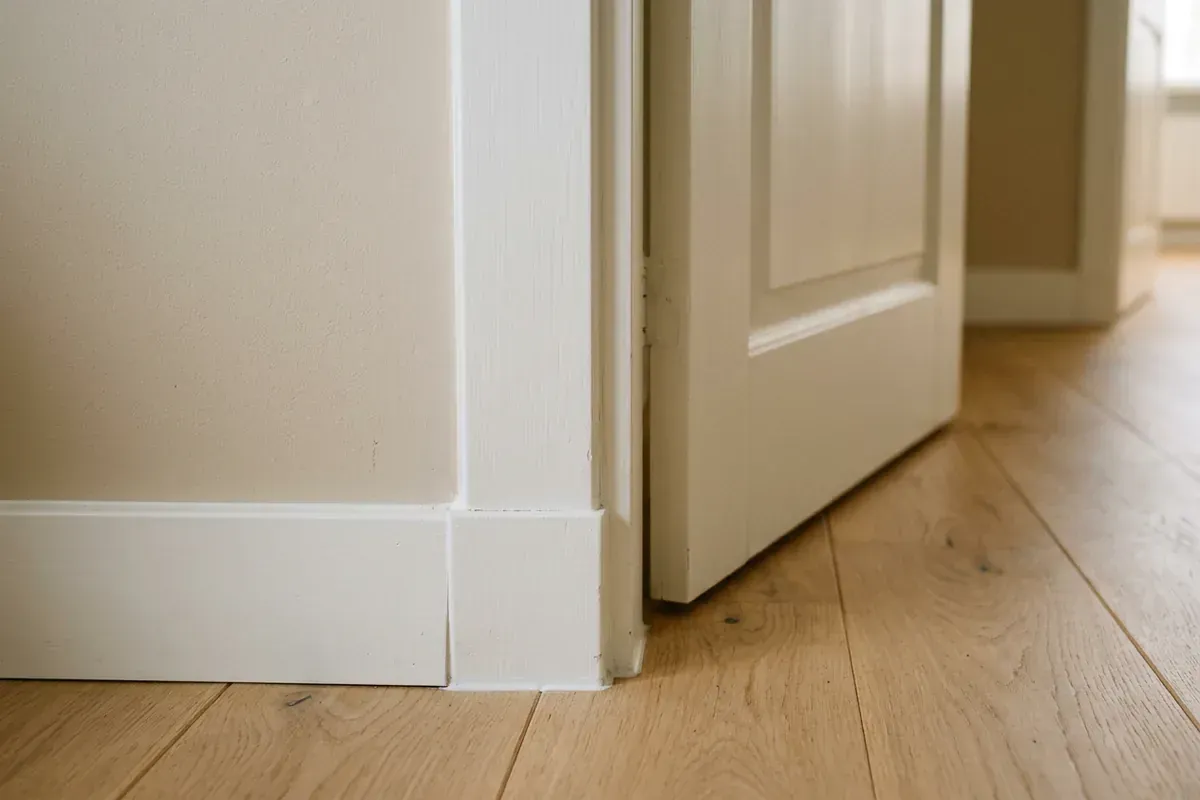
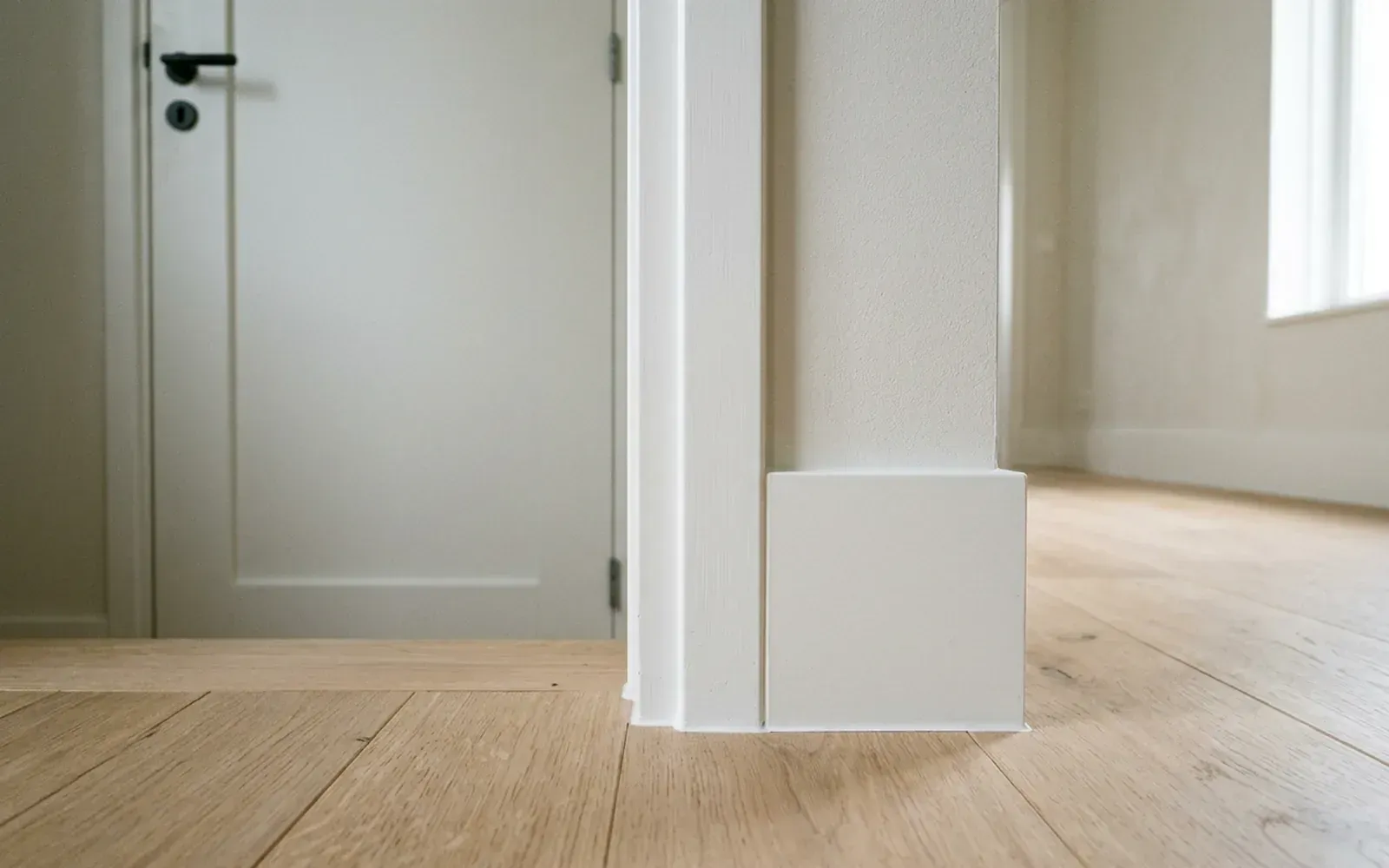
- Junction with architrave or frame: the skirting stops against an architrave or the frame. This is the most common situation.
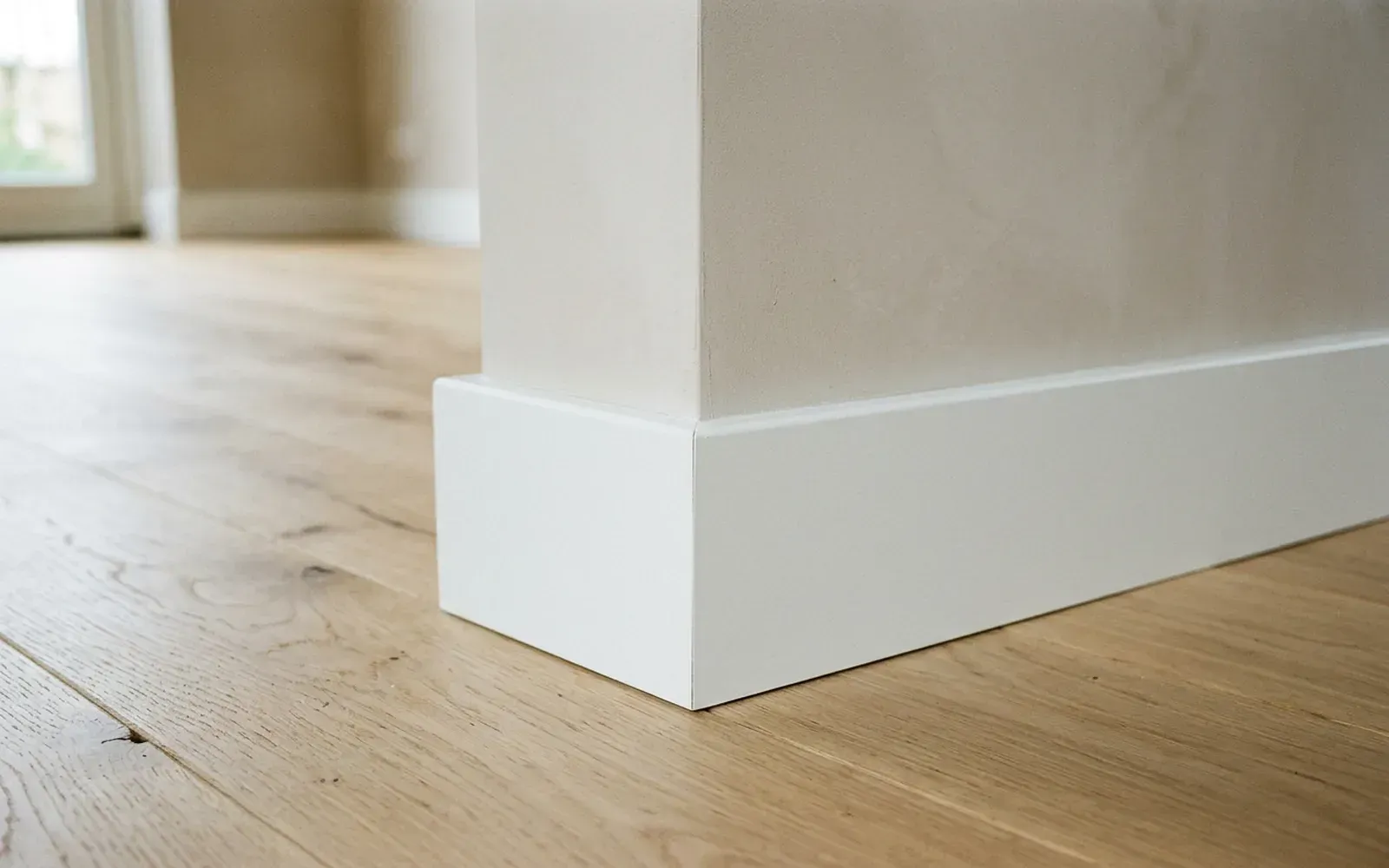
- Mitred return: a short piece of skirting is mitred onto the end and runs back to the wall. The profile thus continues around the corner.
- End cap or end profile: particularly with aluminium skirting, a matching end piece is supplied.
- Chamfered end: the skirting is cut at an angle at the end and finished, so it tapers off gradually.
Where is it used?
At door frames, open passages between rooms, at the foot of a staircase, next to built-in cupboards, at a transition to a tiled floor and at radiator pipes or other pipes that pass through the skirting.
What should you look out for?
- Thickness: an architrave thicker than the skirting gives the best junction.
- Steel frames: with a steel door frame the skirting meets the frame directly. A clean, straight cut and a thin bead of caulk are important here.
- Short pieces: a return is sometimes only a few centimetres long. It must be glued well, or it will come loose.
- Consistency: in one room, always choose the same way of ending the skirting.
- Finishing: cut edges of MDF are touched up, so they do not swell and are the same colour.
Also read finishing door trims and frames.
At TipTop Plinten
TipTop Plinten finishes skirting boards right up to the junction with frames, architraves and openings, as part of the skirting installation. Read more about skirting board installation.
Frequently asked questions
At an open end, for example in an opening without a door, a short return is often made: a small piece of skirting mitred back to the wall. That way the cut face is not visible and the profile continues neatly.
Ideally the architrave is slightly thicker than the skirting board, so the skirting meets it neatly. If the skirting is thicker, it sticks out. That can be solved with skirting in a different thickness or an adapted junction.
Related
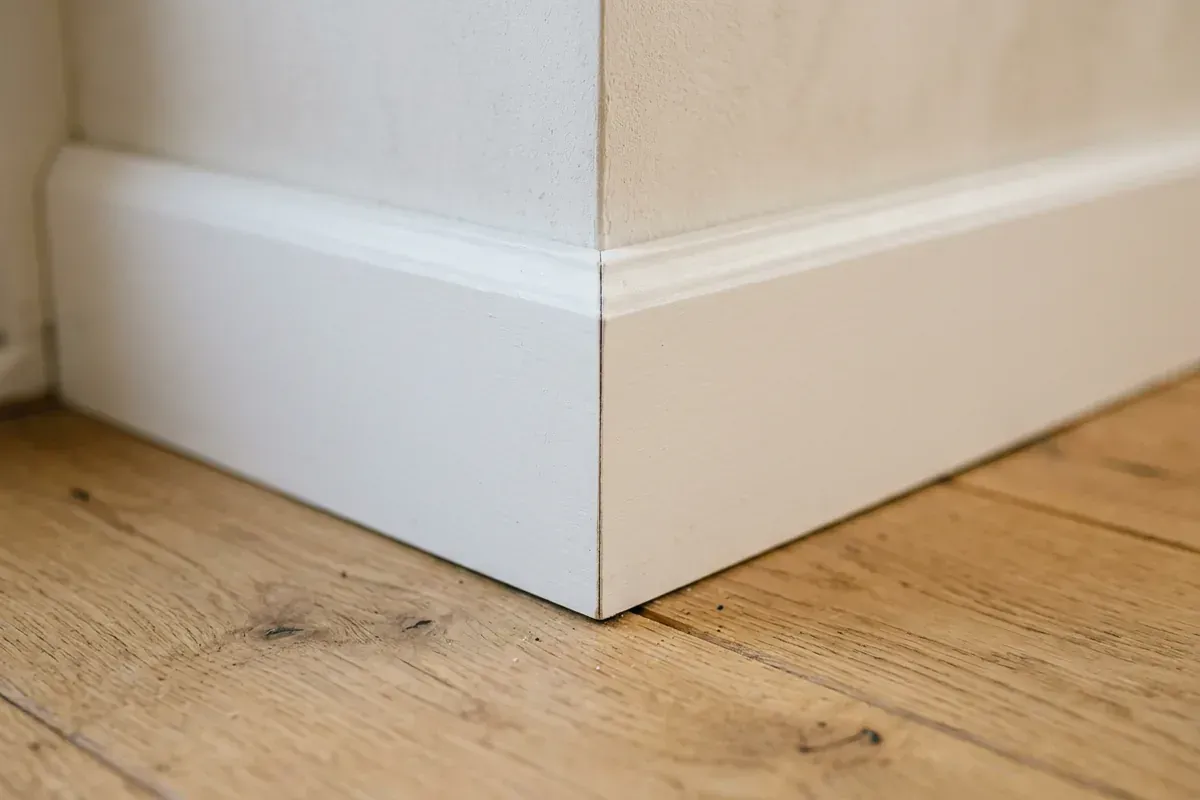
Mitre joint
A mitre is an angled cut that lets two mouldings meet seamlessly in a corner. For a right angle, that is usually 2 x 45 degrees.
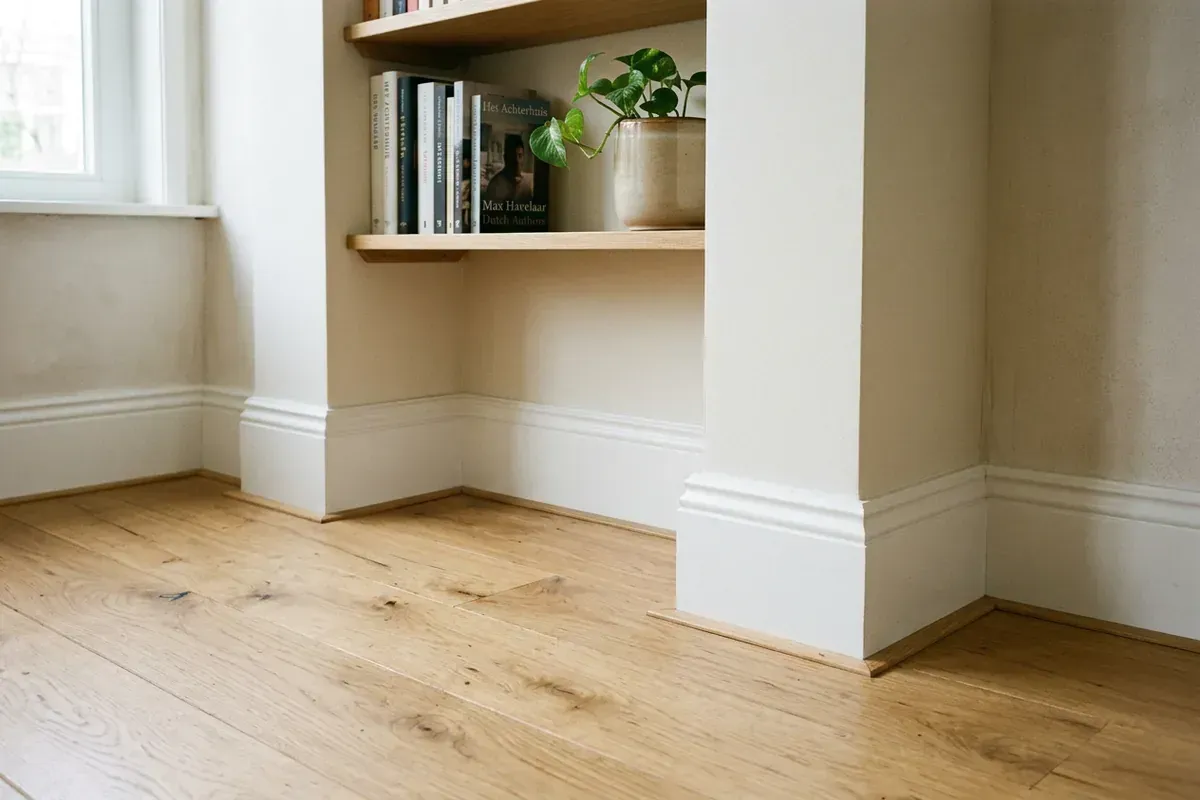
Internal & external corner
An internal corner points away from you, an external corner points towards you. With skirting boards, each type of corner needs its own cutting direction and approach.
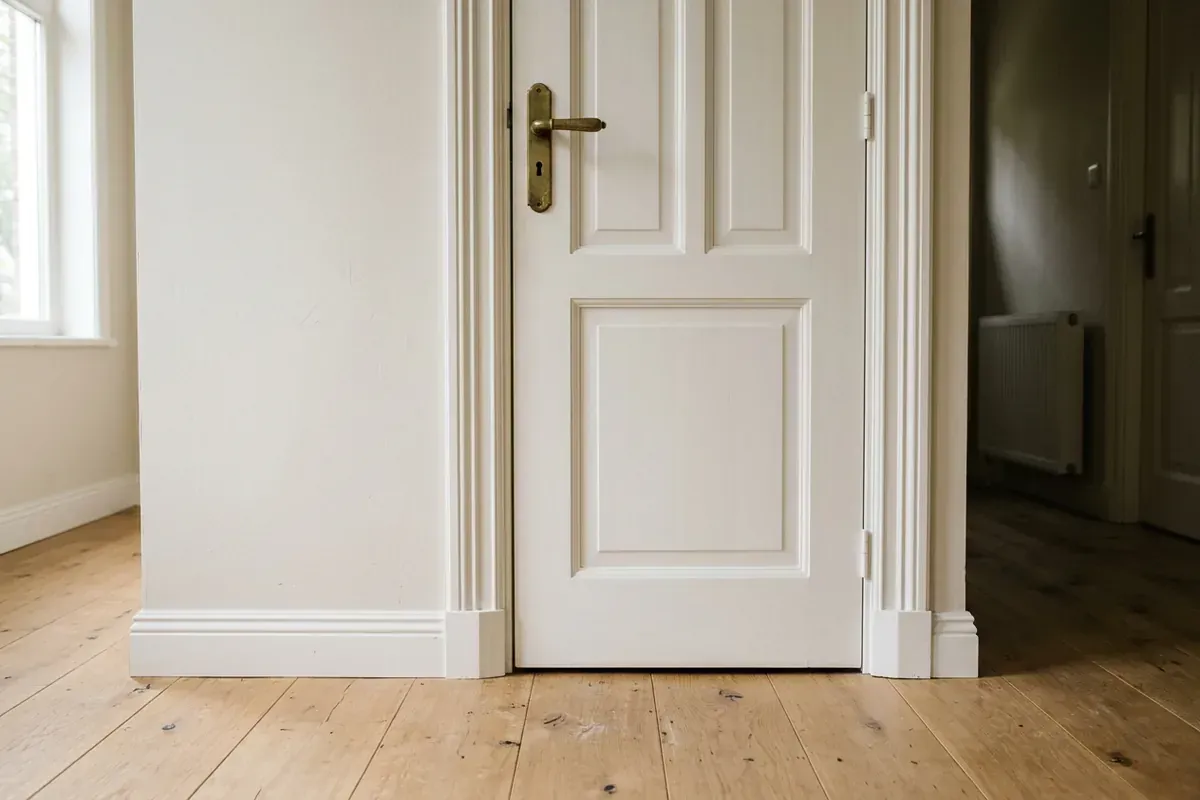
Architrave
An architrave is the moulding fitted around a door or window frame. It covers the joint between the frame and the wall and gives the opening a surround.
Frame
A frame is the fixed surround in the wall in which a door or window hangs. For a crisp interior, the junction with the wall and skirting matters.
Installation & finishing
Mitre cutting skirting boards: how to get tight corners
For a square corner you cut both skirting boards at 45 degrees; for any other angle you halve the measured angle. That is how you get tight internal and external corners.
Installation & finishing
Finishing door trim and frames: how to get a crisp doorway
You finish the gap between frame and wall with door trim, a cover strip or neat caulking. We list the options and show how skirting, frame and trim come together neatly.
Skirting board installation by a specialist skirting fitter
TipTop Plinten fits skirting boards in MDF, solid wood and aluminium, finished in any RAL colour and neatly matched to any floor, even with uneven walls.
Skirting board installation? Request a free quote
On-site measurement €75 incl. VAT (credited for orders above a minimum project size)