
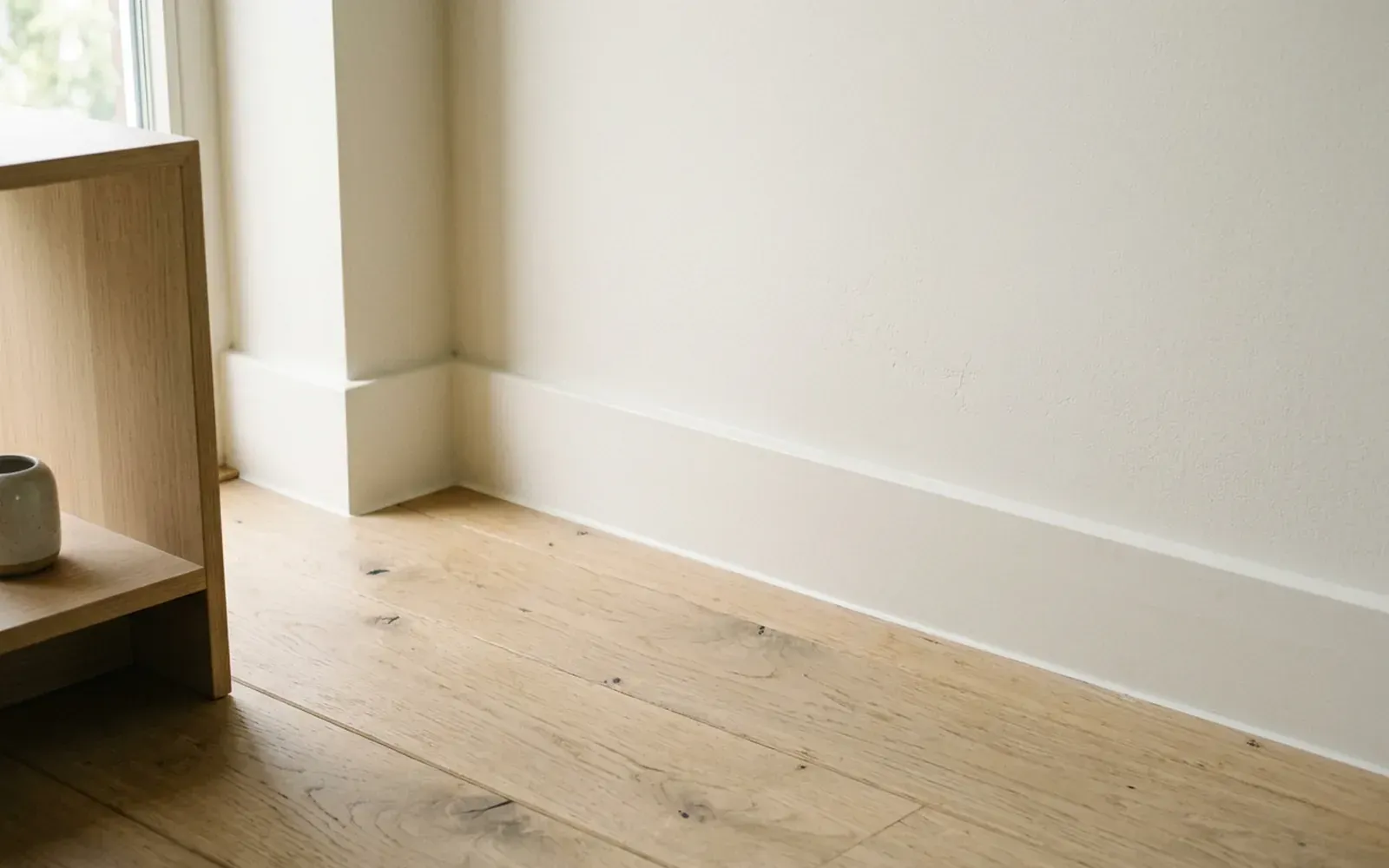
You can recognise modern skirting boards by a calm, sleek profile, an even paint finish and a colour that either disappears against the wall or deliberately contrasts with it. Popular styles are straight skirting in the wall colour, tall skirting, matt black skirting and shadow gap skirting. In this article you will learn which styles there are, where they fit and what to look out for.
What makes a skirting board modern?
A modern skirting board is all about simplicity. Whereas classic skirting boards are often profiled with concave and convex lines, a modern skirting board has a straight face, sometimes with a small rounding or a bevel at the top. That makes the skirting calmer and lets the floor and wall speak for themselves.
There are also a few features that keep coming back:
- Crisp mitres in internal and external corners, with no visible joints.
- A neat caulk line between skirting and wall, so the skirting looks like one with the wall.
- An even, solid paint finish in a deliberately chosen colour.
- A considered height, matched to the room and the ceiling height.
Style 1: straight skirting in the wall colour
Skirting in exactly the same colour as the wall is one of the calmest solutions. The skirting largely disappears and the wall visually continues down to the floor. This works especially well in rooms where you want to keep the attention on the floor, the furniture or the art on the wall.
What should you look out for? Choose a hard-wearing paint for the skirting, even if the wall has emulsion. Skirting gets more knocks and cleaning than a wall. The colour can be matched with a RAL colour or with the exact wall colour; discuss how the finish will match best when you request a quote.
Style 2: tall skirting
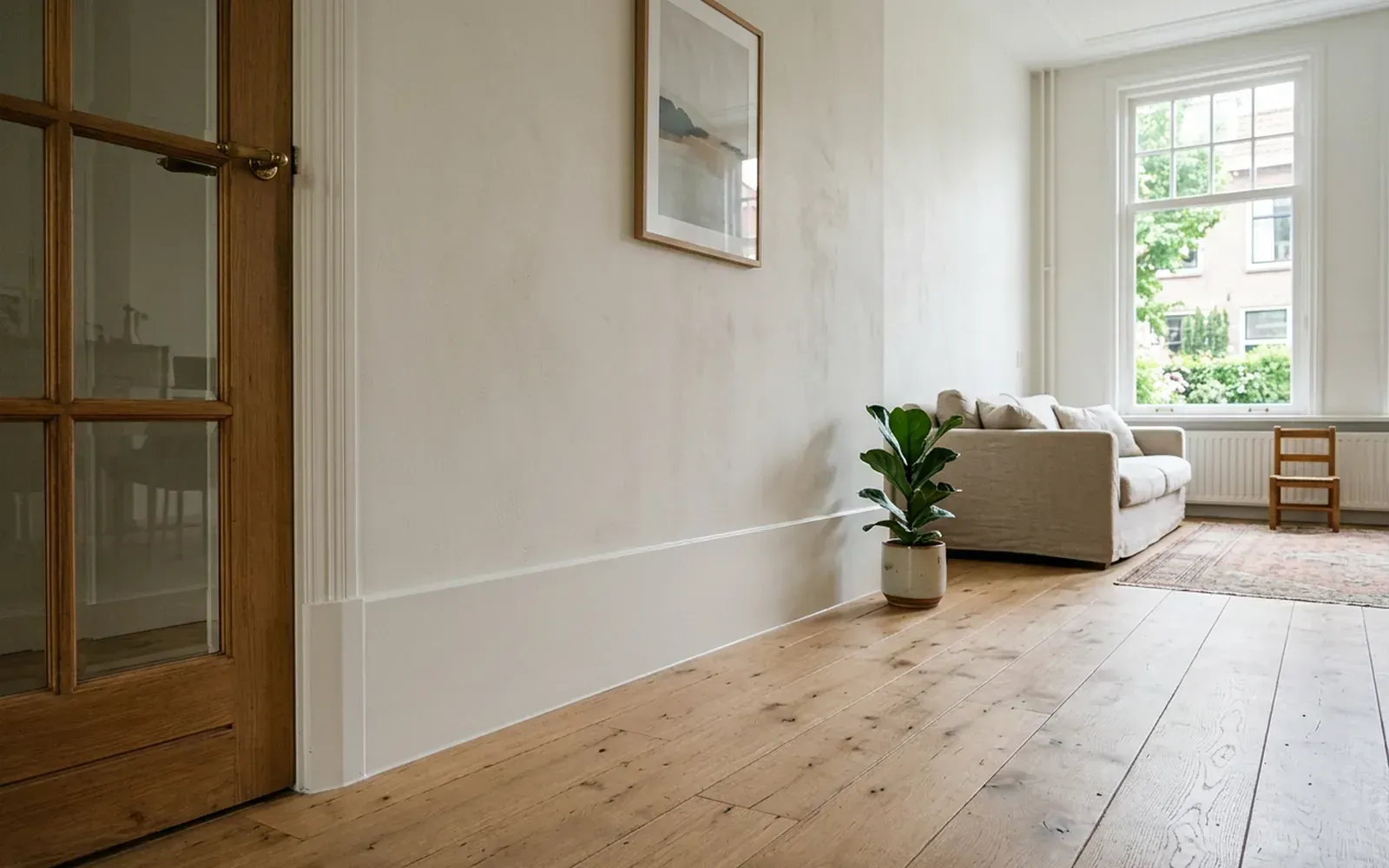
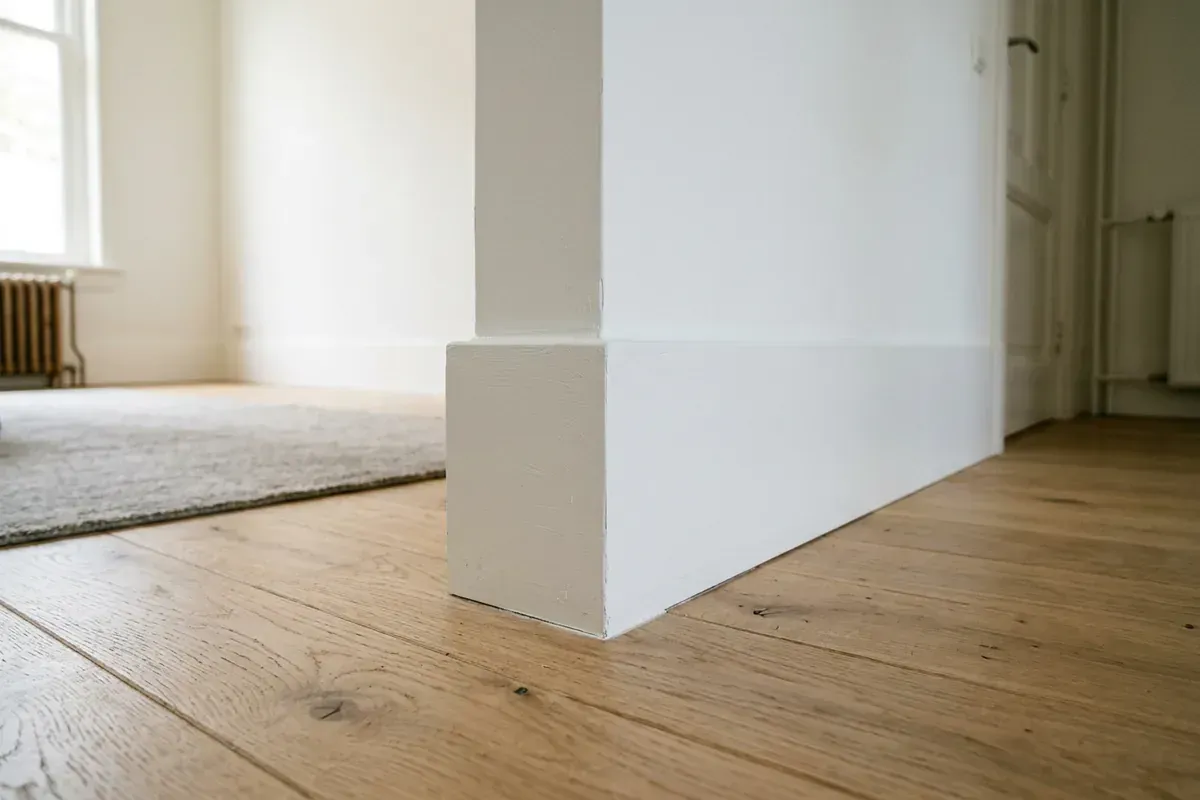
Tall skirting is popular in modern interiors, often with a completely straight profile. A tall skirting board gives the room proportion, protects the wall and can give the bottom of a wall a solid base. Tall skirting really comes into its own with higher ceilings and large wall surfaces.
Which height fits depends on the ceiling height, the doors and architraves, and the style of the interior. You can read more about this in the article tall skirting boards: which height?
Style 3: matt black skirting
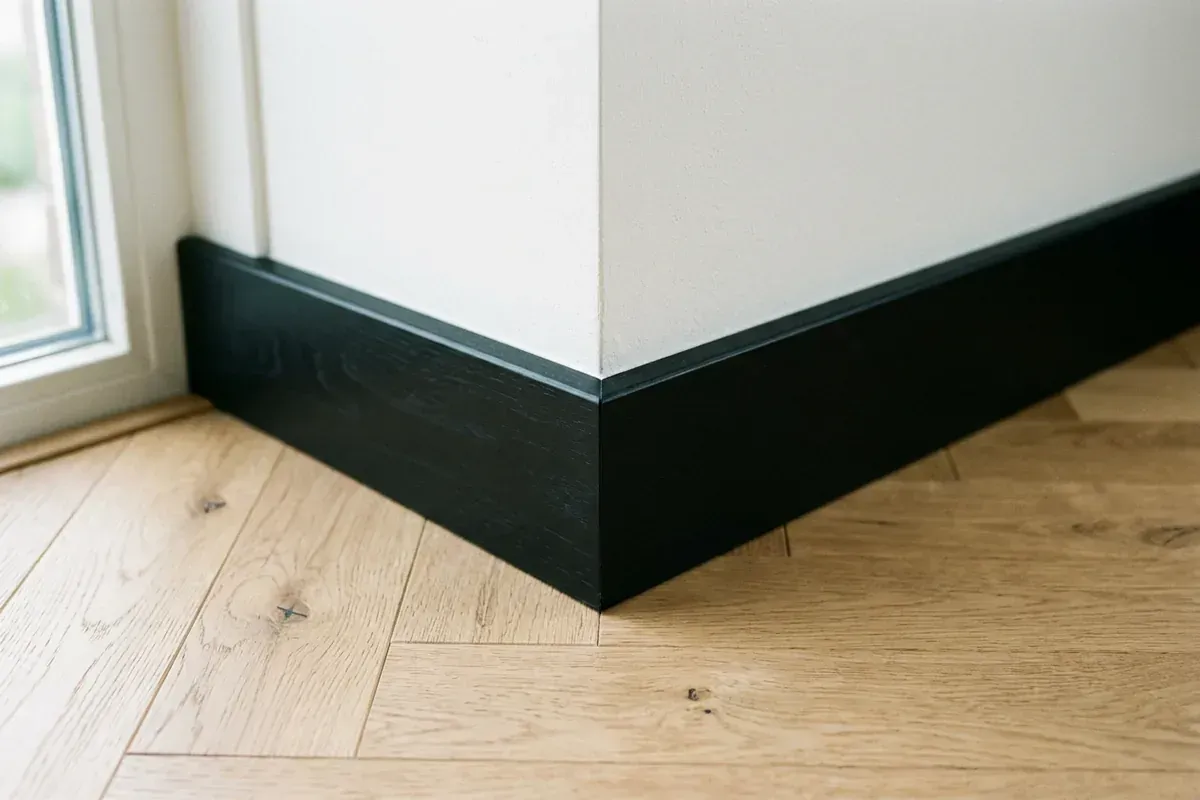
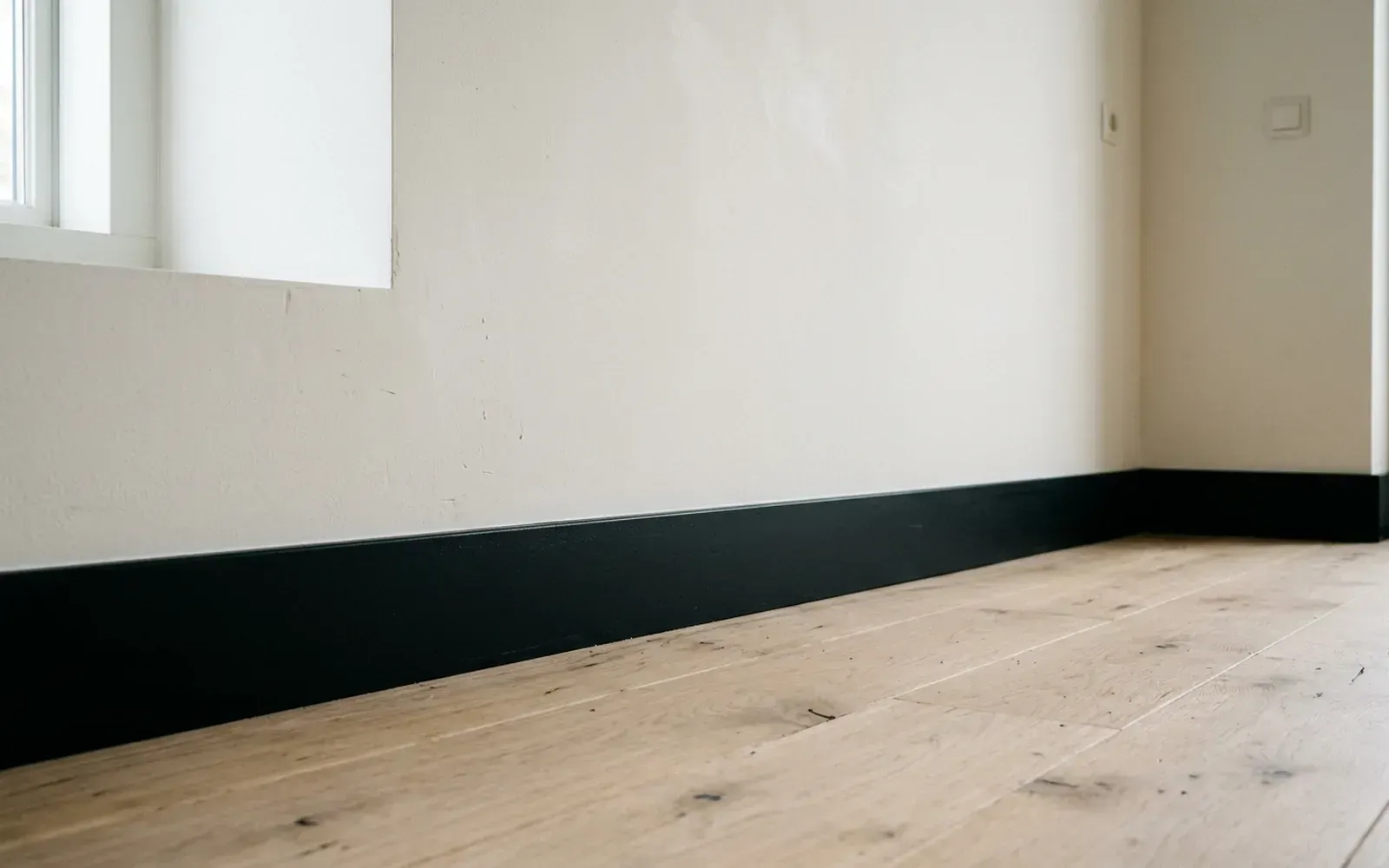
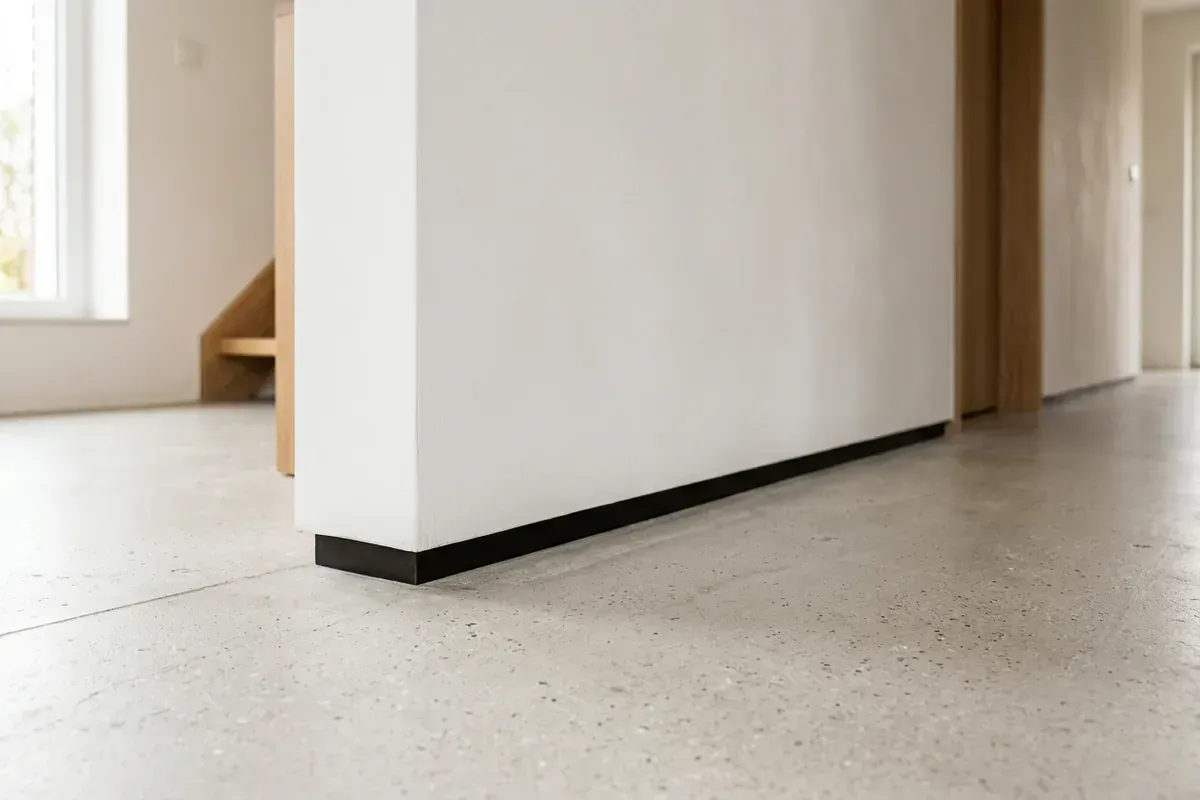
Black skirting in RAL 9005 creates a graphic, striking effect. Against a light wall and a light floor, the skirting forms a clear line that frames the room. That suits interiors with black window frames, black door handles or steel doors.
An example: in a flat in Leerdam, matt black skirting in RAL 9005 was fitted as a contrast with light floors and walls. Read more about this choice in our article on black skirting.
Note: with dark skirting, any irregularity in a mitre or caulk line is more visible. Precise work is especially important here.
Style 4: shadow gap skirting
Shadow gap skirting is the most minimalist option. The skirting is recessed into the wall, or a narrow recessed joint is deliberately created between wall and floor. The effect is a thin dark shadow line that makes the wall appear to float.
The advantage is a very clean look. The disadvantage is that true shadow gap skirting usually has to be prepared during the building or renovation phase, for example with a special profile fitted before the plastering or wall finishing. In an existing, finished home this is harder. An alternative is a low, sleek skirting board that is set back slightly or finished in a dark colour, which creates a similar effect.
Style 5: aluminium skirting
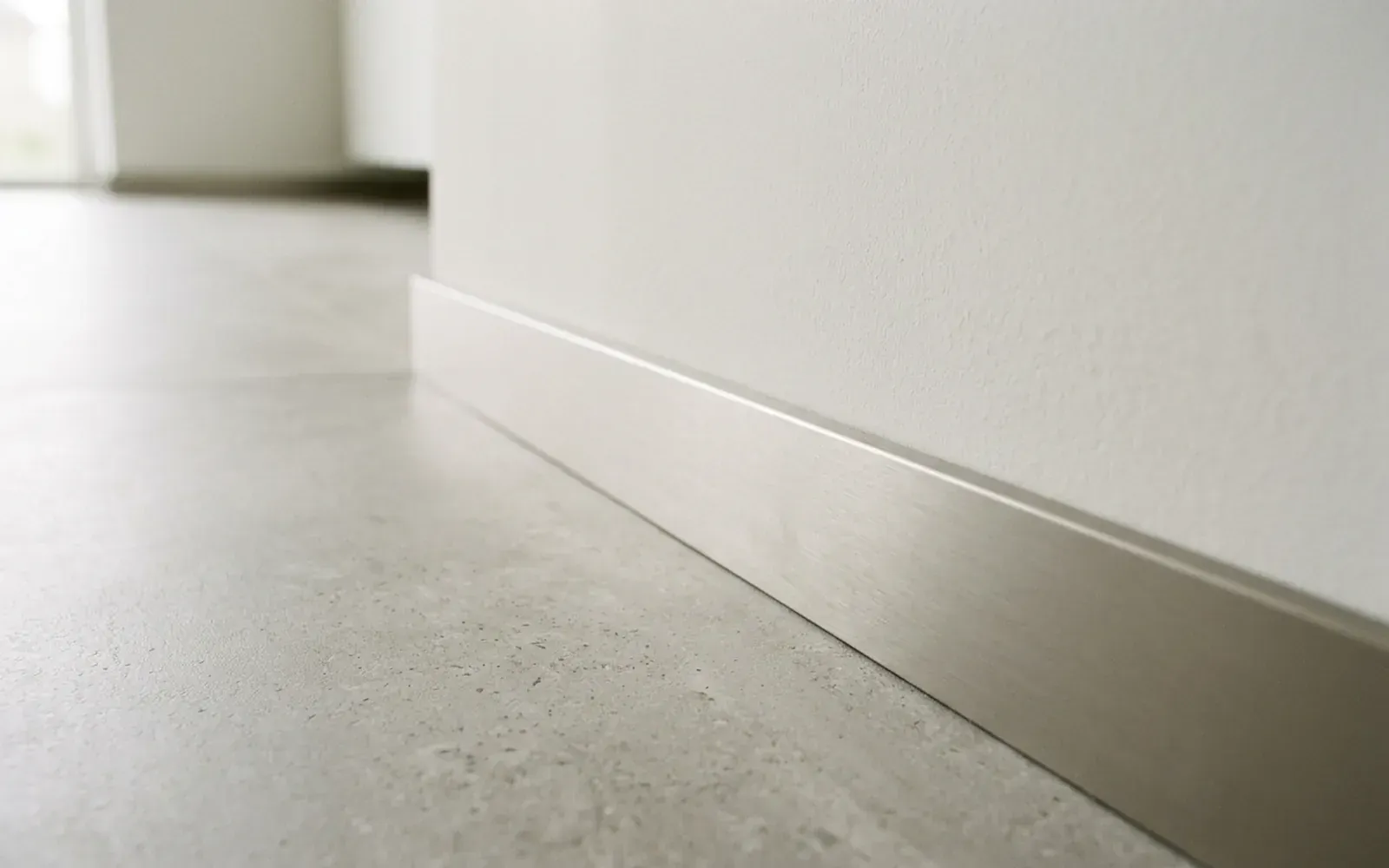
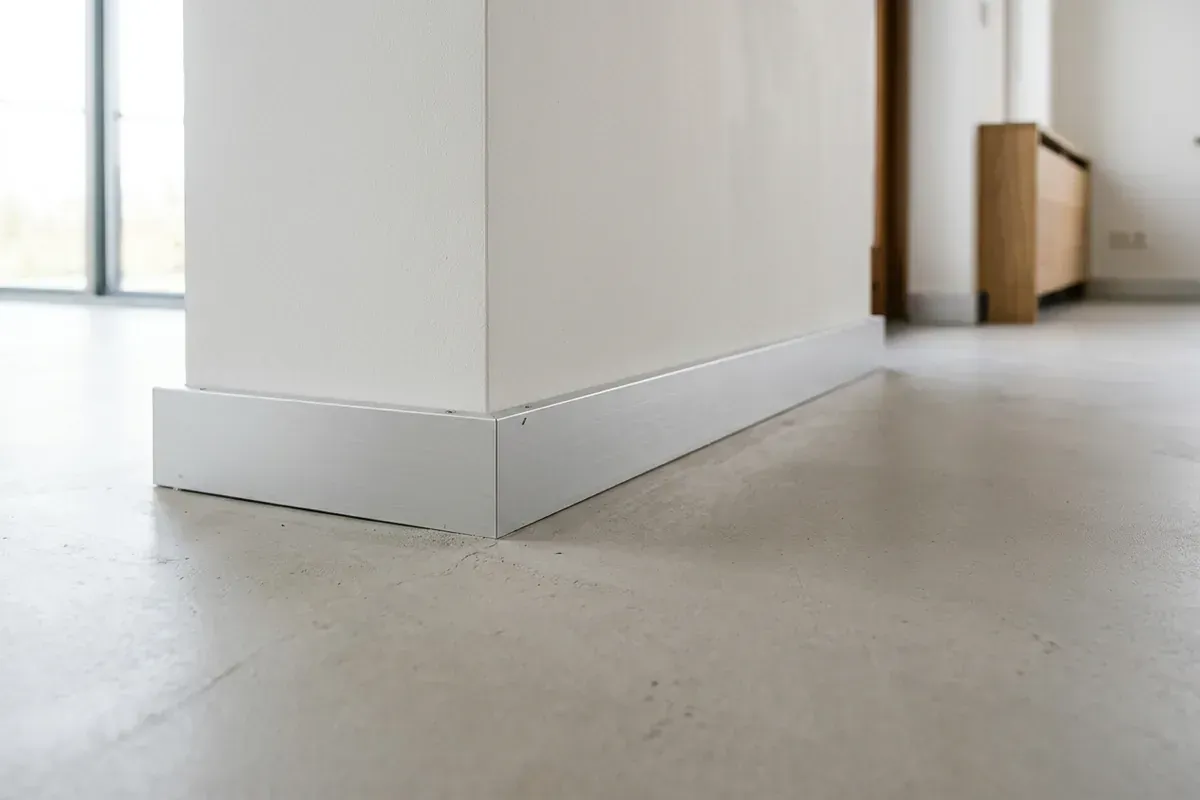
Aluminium skirting suits sleek, modern and industrial interiors. It is thin, dimensionally stable and moisture-resistant. Some aluminium profiles can incorporate LED lighting, giving a subtle line of light along the floor. Read more about this material in our article on aluminium skirting boards.
Style 6: thin, low skirting
Not every modern interior calls for tall skirting. A low, thin skirting board is very understated and works well in compact rooms, flats and interiors with lots of furniture along the walls. Self-adhesive skirting is sometimes mentioned in this context too: a thin skirting board that is glued to the wall.
Which materials suit modern skirting boards?
Three materials are common for modern skirting boards:
| Material | Suits | Note |
|---|---|---|
| MDF | Painted skirting in any colour, straight or tall | Choose moisture-resistant MDF in damp rooms |
| Solid wood | Warmer modern interiors, or with visible wood | Wood moves with moisture and temperature |
| Aluminium | Sleek, industrial, optionally with LED lighting | Requires a flat wall surface |
MDF is by far the most popular base for modern skirting boards, because it paints evenly and is dimensionally stable. TipTop Plinten works with MDF, solid wood and aluminium; plastic skirting boards are deliberately not fitted.
Modern skirting boards and the floor
The floor also determines which skirting looks good. With a light oak floor or a herringbone floor, many people choose white skirting or skirting in the wall colour so that the floor pattern keeps the attention. With a concrete-look or vinyl (PVC) floor in an even colour, black or tall skirting can create an attractive line.
With floating floors such as laminate and vinyl, the skirting has to cover the expansion gap along the wall. So a modern, thin skirting board still needs to be thick enough to bridge that gap neatly.
Modern skirting boards and architraves
A sleek interior calls for cohesion. If you choose modern skirting boards, it is wise to look at the door surrounds as well. A sleek, straight architrave in the same colour as the skirting keeps everything calm. Read more about this finish in our article what is an architrave?
What should you look out for when choosing a modern skirting board?
- Colour: wall colour, white or black, or another RAL colour?
- Height: low and understated, or tall as an architectural element?
- Profile: completely straight, with a small rounding or with a bevel?
- Material: MDF, moisture-resistant MDF, solid wood or aluminium?
- Wall surface: are the walls straight enough for a crisp result, or is made-to-measure work needed?
- Cohesion: do skirting, architrave and frames work together?
Also use our checklist for choosing skirting boards if you want all the choices in one place.
Having modern skirting boards fitted
TipTop Plinten, based in 's-Hertogenbosch, fits modern skirting boards throughout the Netherlands: straight, tall, in the wall colour, in matt black or in aluminium, including crisp mitres and caulking. You can read more about how we work on our skirting board installation page.
Would you like to know which modern skirting board best suits your interior? Get in touch for advice and a free, no-obligation quote. We are happy to communicate in English. An optional on-site measurement is available for €75 incl. VAT, deducted as a discount for projects above a minimum size.
Frequently asked questions
Modern skirting boards have a calm, sleek profile without much ornamentation, often straight or with a small rounding or bevel at the top. They are usually finished in the wall colour, white or matt black and come in low and tall versions.
Shadow gap skirting is a solution where the skirting does not sit on the wall but is slightly recessed, or where a narrow recessed joint is created between wall and floor. This gives a floating effect with a dark shadow line. It usually needs preparation during the building phase.
Yes, tall skirting boards are widely used in modern interiors, especially with a straight profile and in the wall colour. They give a room calm and proportion, particularly with higher ceilings.
Popular choices are white (such as RAL 9010 or RAL 9016), the wall colour and matt black (RAL 9005). Skirting in the wall colour makes the skirting disappear, while black creates a graphic contrast.
Yes. Most modern skirting boards are simply mounted on the wall, so they are also suitable for existing homes. Only true recessed shadow gap skirting requires alterations to the wall.
Related articles
Choosing skirting
Tall skirting boards: which height suits your room?
Tall skirting boards give a room calm and character, as long as the height is right. Here is how to work out which skirting height suits your ceiling, floor and interior.
Choosing skirting
Black skirting boards in RAL 9005: when do they work and what should you look out for?
Black skirting boards give an interior a graphic, contemporary look. Here is how to choose the right finish and keep dust and scratches from spoiling the effect.
Choosing skirting
Aluminium skirting boards: sleek, modern and when they fit
Aluminium skirting boards suit sleek, modern interiors and commercial spaces. Here is how to choose between surface-mounted and recessed, and what it asks of your walls.
Related
Shadow gap skirting
Shadow gap skirting sits flush with or behind the wall, with a narrow shadow line above it. The result is a minimalist wall that seems almost to float.
Tall skirting
Tall skirting is usually 12 cm or higher. It gives a room calm and elegance, provided the height suits the ceiling and the interior.
Aluminium skirting
Aluminium skirting is a slim metal profile at the base of the wall. It suits sleek, modern interiors and can be combined with LED lighting.
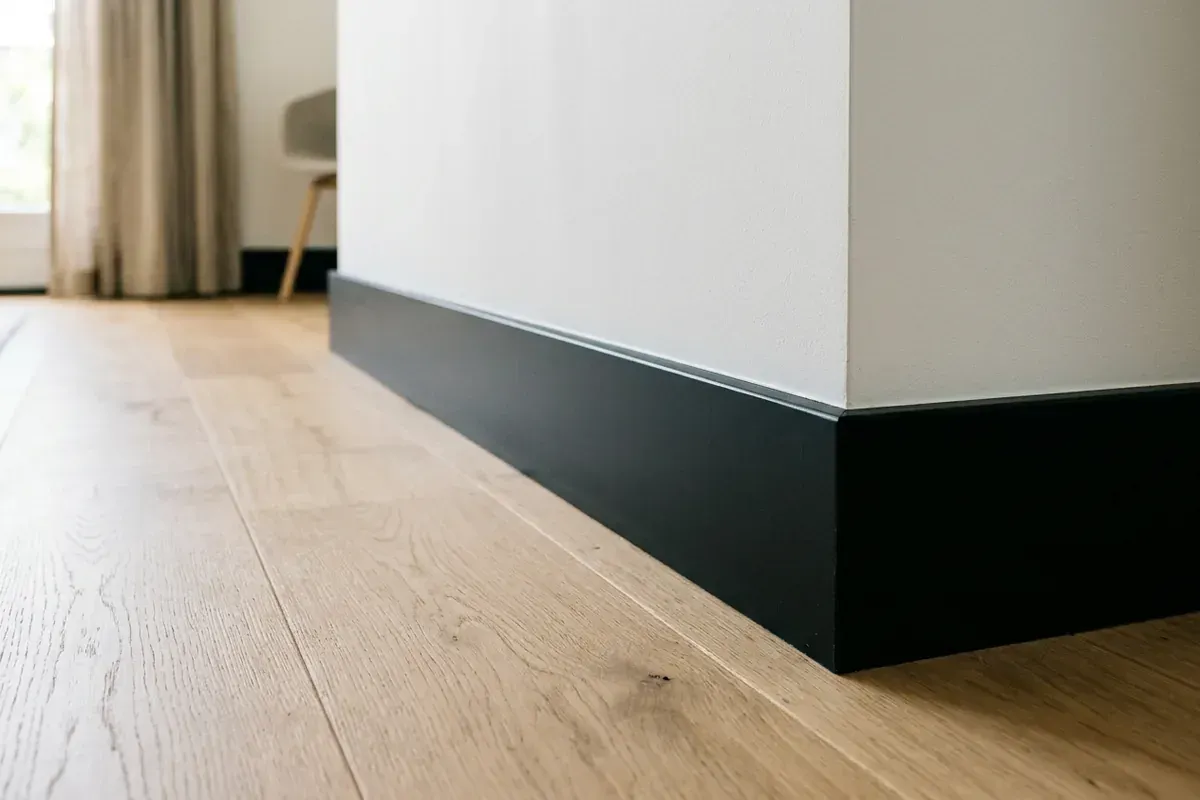
RAL 9005
RAL 9005 is called jet black: a deep, neutral black. As matt black skirting, it creates a crisp contrast with light floors and walls.
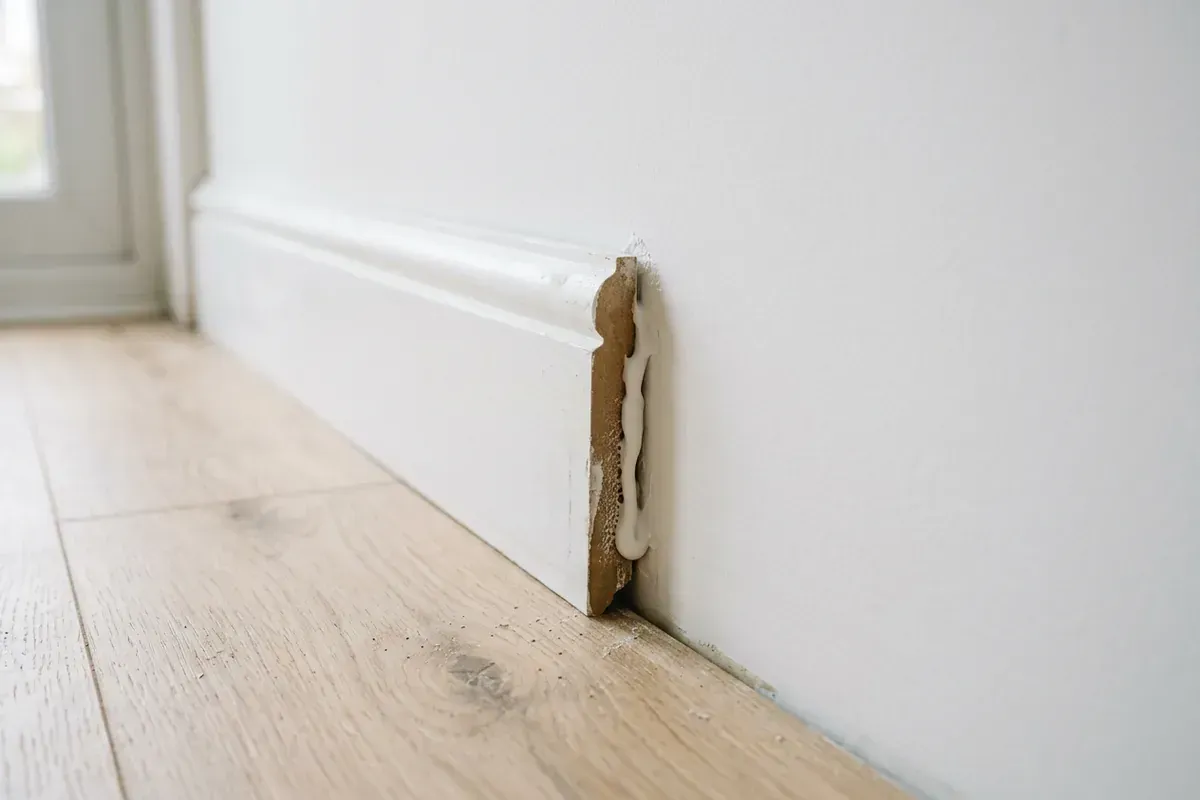
Self-adhesive skirting
Self-adhesive skirting is a thin, often flexible skirting with a sticky back. Quick to apply, but limited in appearance and lifespan.
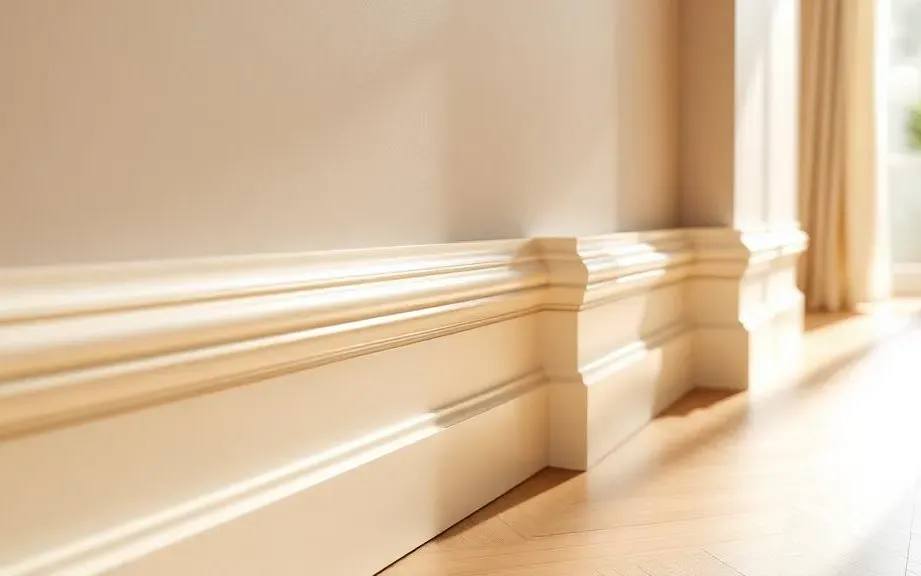
Skirting board installation by a specialist skirting fitter
TipTop Plinten fits skirting boards in MDF, solid wood and aluminium, finished in any RAL colour and neatly matched to any floor, even with uneven walls.
Skirting board installation? Request a free quote
On-site measurement €75 incl. VAT (credited for orders above a minimum project size)