
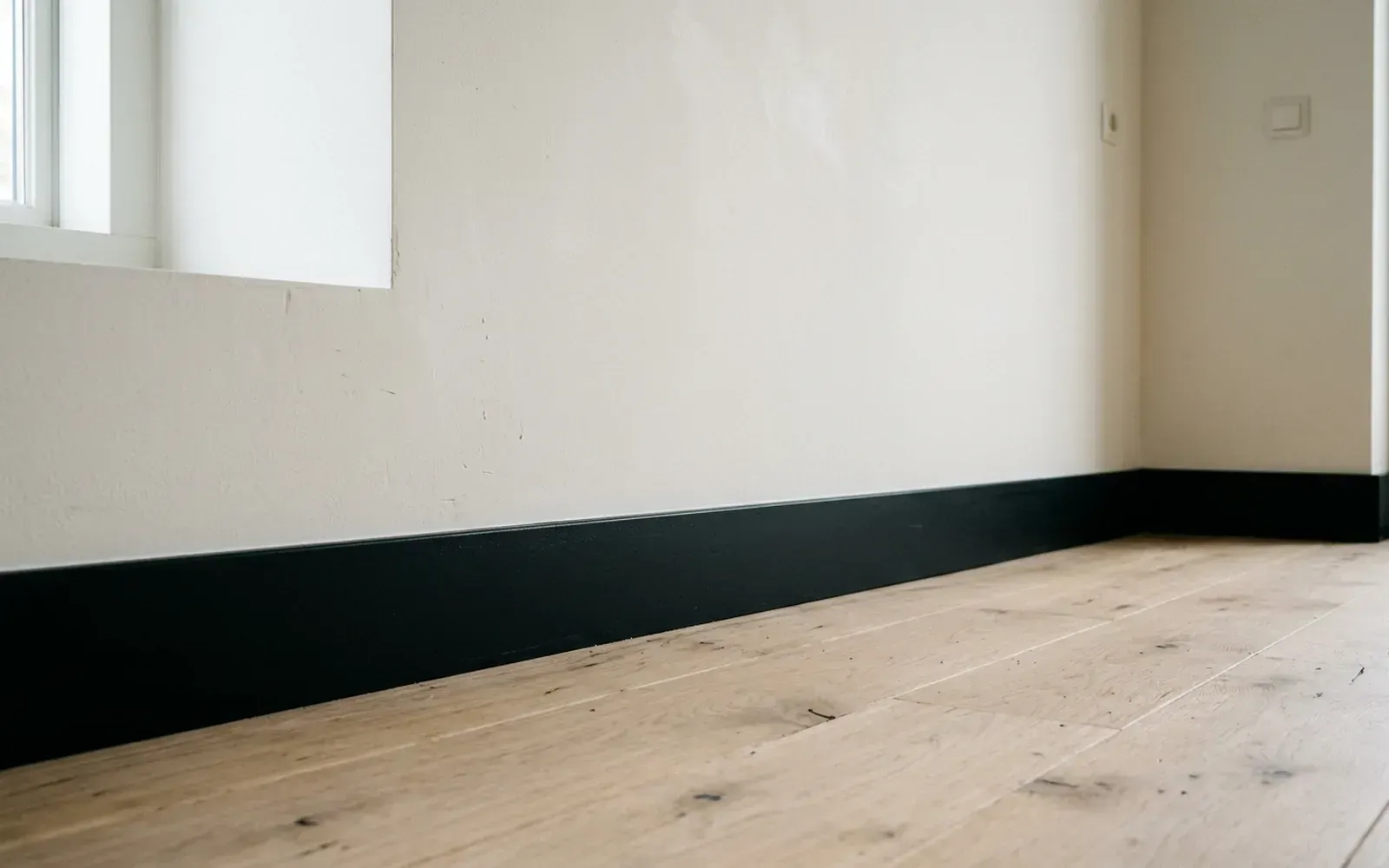
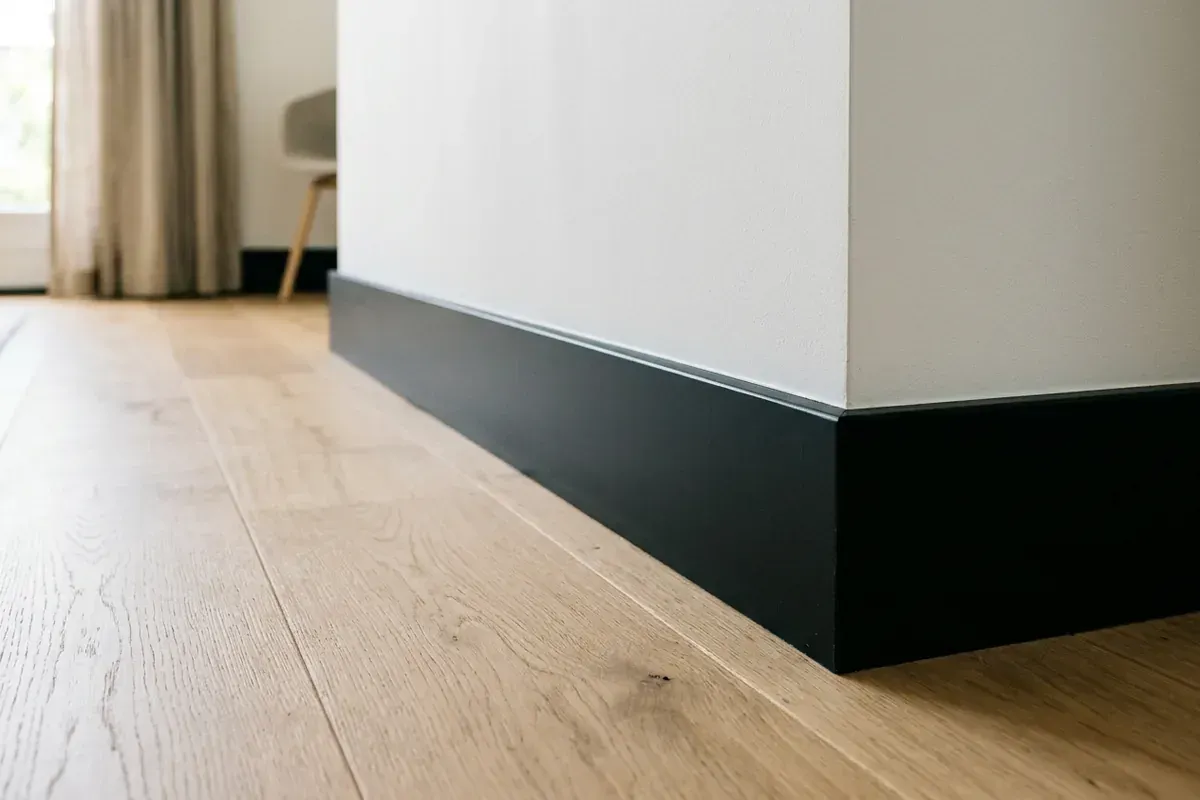
Black skirting boards, usually in RAL 9005 (jet black), give an interior contrast and a graphic, contemporary look. They work best with light floors and light walls, in rooms where other black accents also appear. Points to watch are the finish (matt or eggshell), how visible dust and scratches are, and a caulk line in the right colour. With the right choices, black skirting boards are just as practical as white ones.
In this article you can read when black skirting boards are a good choice, which finish is most practical and which details make the difference between crisp and messy.
Why choose black skirting boards?
White skirting boards have been the standard for decades. Black skirting boards deliberately break with that. They draw a clear line along the floor and give the room a frame. Especially in modern and industrial interiors, and with light oak or herringbone floors, they create a distinctive result.
A good example is the apartment in Leerdam, where we fitted matt black skirting boards in RAL 9005 as a contrast with light floors and walls.
What is RAL 9005?
RAL 9005 is a standardised colour from the RAL colour system, commonly known as jet black. It is a deep, neutral black without a distinct blue or brown undertone. Because it is a fixed standard, you can have doors, frames, radiators or steel elements finished in the same colour, and the shades will match well. Sheen level and substrate can, however, make the colour look slightly different.
Which floors and walls do black skirting boards suit?
| Situation | Effect of black skirting boards |
|---|---|
| Light wooden floor, white wall | Maximum contrast, graphic and crisp |
| Light floor, dark or black wall | Skirting blends into the wall, calm and elegant |
| Dark floor, light wall | Floor appears to continue into the skirting |
| Dark floor, dark wall | Very moody; needs good lighting |
| Grey concrete-look floor or tiles | Industrial, works well with steel accents |
Combining with other black accents
Black skirting boards look most convincing when black reappears elsewhere in the room: steel doors, black door hardware, lamps, window frames or furniture. If the skirting boards stand alone, the effect can look a little disconnected.
Take care in small, dark rooms
In a small room with little daylight, black skirting can make the floor look smaller. That need not be a problem, but it is good to be aware of it beforehand. In that case, you might choose a slightly lower skirting board. In our article on tall skirting boards you can read how height and colour together determine the look.
Matt or eggshell?
Black skirting boards are usually finished in matt or eggshell. High-gloss black is rarely chosen for skirting, because every imperfection in the wall and every scratch then shows.
- Matt: the most distinctive, modern look. Downside: dust and fingerprints show more quickly, and a matt paint is slightly more prone to shiny patches if rubbed hard.
- Eggshell: a little more sheen, easier to keep clean and somewhat more resistant to scuffs from vacuum cleaners and shoes.
For a busy hallway or a living room with children or pets, eggshell is often the more practical compromise.
Material: MDF, solid wood or aluminium
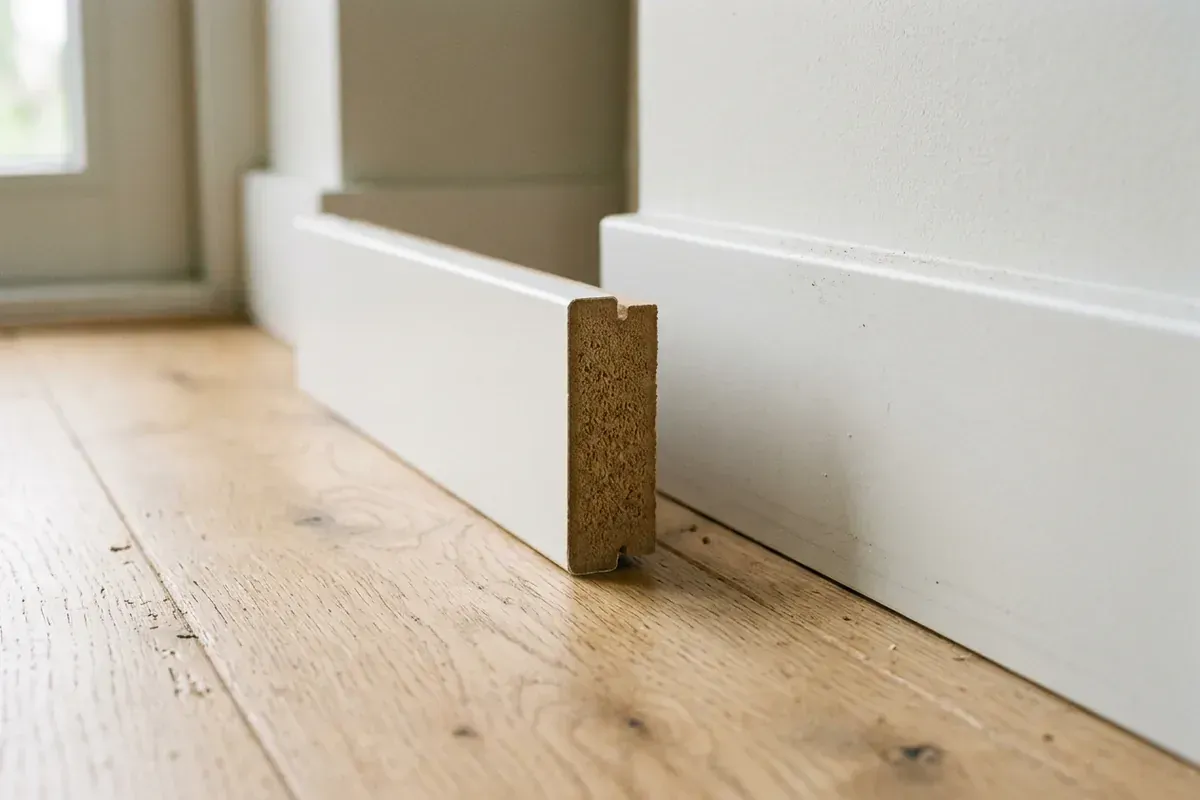
- MDF takes an even finish in RAL 9005. Because there is no grain, the black looks deep and calm. More on this in MDF skirting boards: pros and cons.
- Solid wood can also be painted or stained black. With stain, the wood grain remains visible, which gives a different, warmer effect.
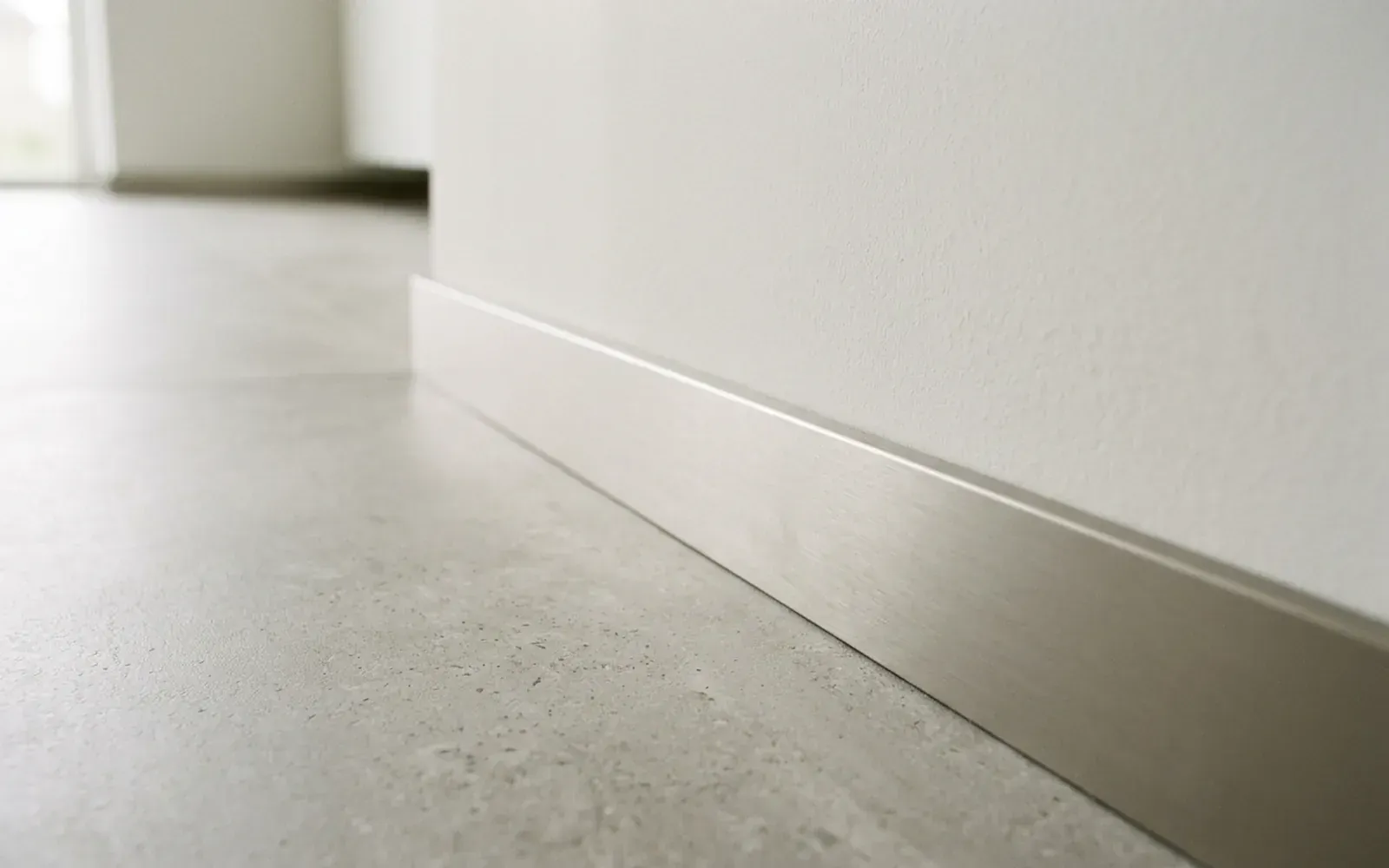
- Aluminium in black is a sleek, modern option that goes well with steel doors and minimalist interiors. See our article on aluminium skirting boards.
The details that make the difference
The caulk line
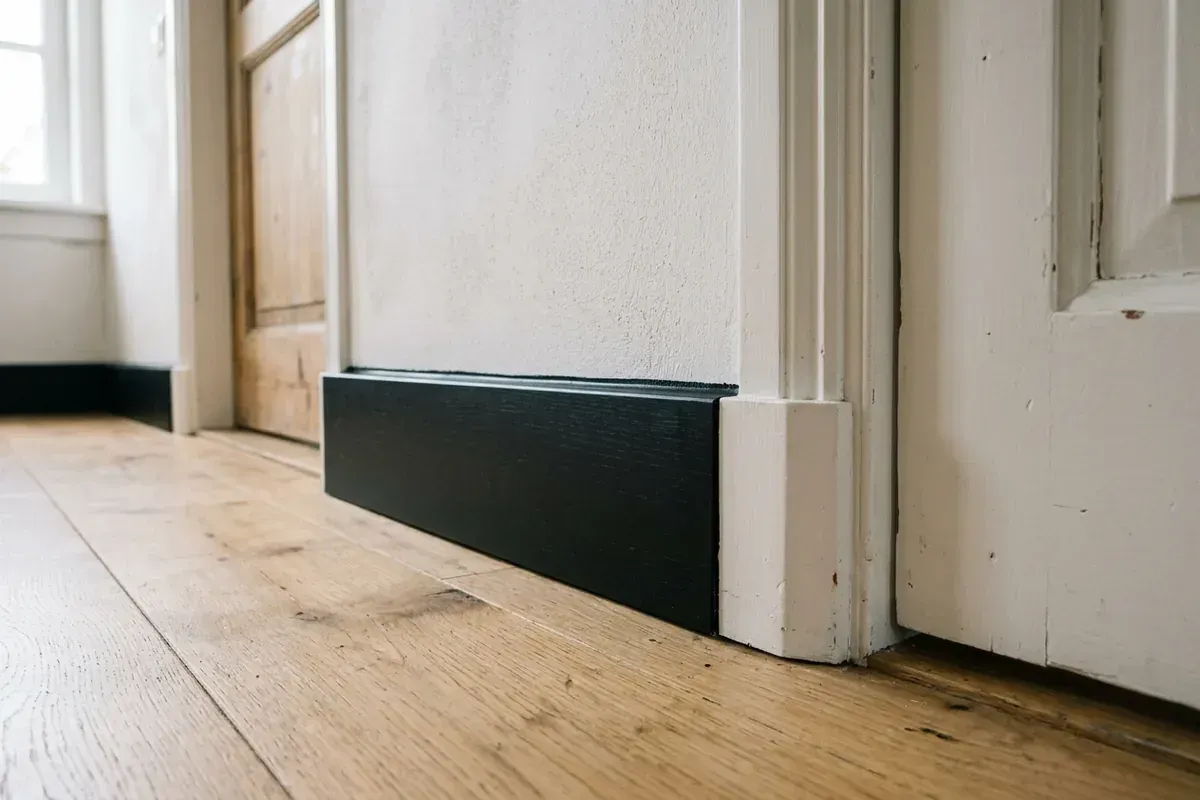
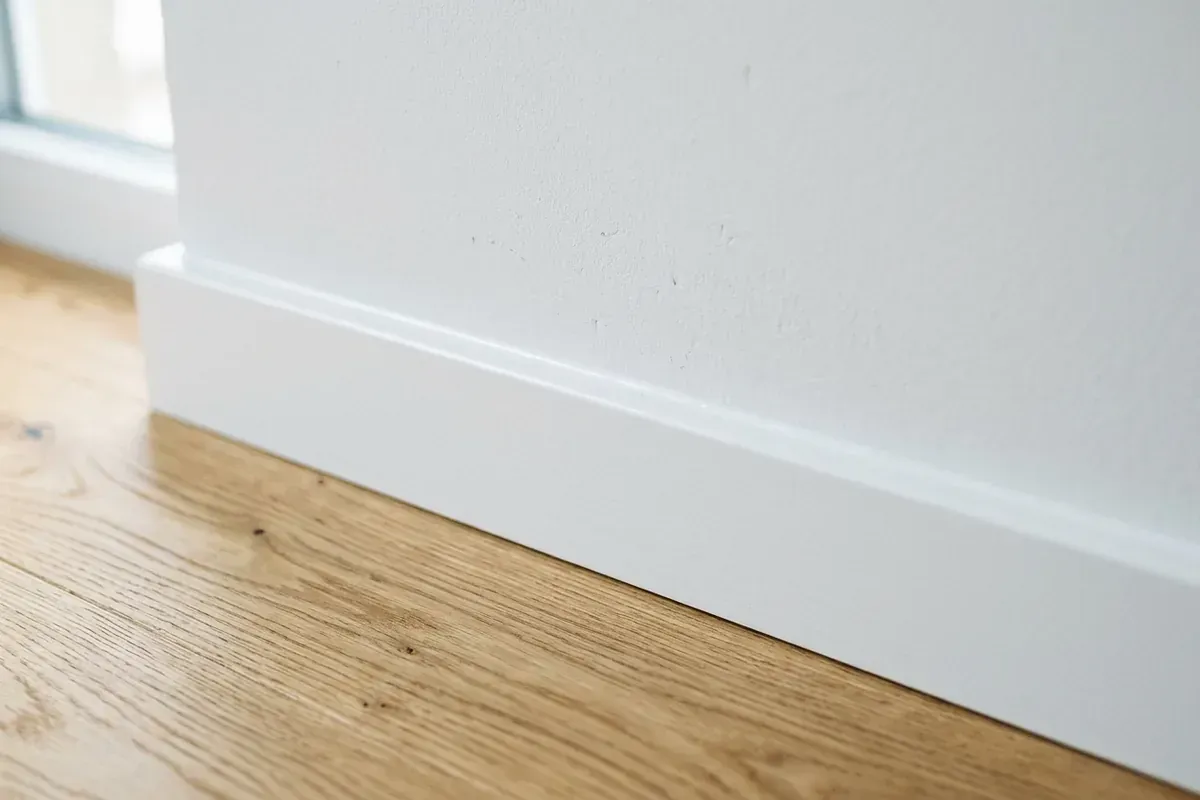
With a white skirting board against a white wall, a caulk line is barely noticeable. With a black skirting board, it is different. A white joint along the top of a black skirting board is immediately visible. That is why a paintable acrylic caulk is usually used and then painted over, or a sealant in a matching colour. Exactly where the joint goes and in which colour depends on the wall colour. You can read more about caulking on our caulking service page.
Junctions with white frames and doors
Where a black skirting board meets a white door frame or white architrave, the end must be crisp and straight. A crooked or open joint stands out immediately against the contrast. Often the skirting is cut square at that point and neatly finished, or an end cap is used.
Mitres and corners
On a dark skirting board, you can see the light wall through any open mitre. Inside and outside corners must therefore be measured and cut to size one by one. Even small damage to the mitre edge is touched up with black paint, so the line remains unbroken.
Damage and maintenance
Scratches in black paint reveal the lighter substrate. With a little matching paint, small damage is easy to touch up. So always ask for the exact RAL code and sheen level, so you can touch up later.
Common mistakes with black skirting boards
- A white or grey caulk line. It stands out immediately and makes the line look busy.
- High gloss on an uneven wall. Every undulation and every scratch becomes visible.
- Black as the only accent. Without other dark elements in the room, the skirting can look disconnected.
- Not keeping leftover paint. Without the right colour and sheen level, touching up later is difficult.
Having black skirting boards fitted
TipTop Plinten fits skirting boards in any RAL colour, including RAL 9005 matt black, in MDF, solid wood or aluminium. This includes made-to-measure mitres, clean junctions with frames and caulking in the right colour. Would you like to see what it looks like first? Take a look at the project in Leerdam or other work on the projects page.
A quote for black skirting boards
Send us photos of the room, the floor type and an estimate of the number of linear metres via the contact page. You will receive a free, no-obligation quote. If you would like on-site advice on colour, sheen level and junctions, you can opt for an on-site measurement for €75 incl. VAT, which is credited as a discount on jobs above a minimum project size. We are happy to communicate in English, as well as in Dutch, German, Turkish, Persian and Arabic.
Frequently asked questions
The most commonly used colour is RAL 9005, also known as jet black. It is a deep, neutral black. For skirting boards it is often chosen in a matt or eggshell finish.
Yes, light dust and fluff show up sooner on a dark skirting board than on a white one. An eggshell finish is somewhat easier to keep clean than a fully matt one. Wiping regularly with a slightly damp cloth is usually enough.
Yes, that combination in particular gives the most contrast and a graphic look. It works best when other black accents appear in the room, such as door hardware, frames, lighting or furniture.
Along the wall, paintable acrylic caulk is usually used, which is then painted over in the colour of the wall or skirting, or a sealant in a matching colour. A white caulk line next to a black skirting board stands out immediately, so it is not a good idea.
Yes. MDF skirting boards can be painted in RAL 9005, and aluminium skirting boards can be powder-coated or anodised in black. TipTop Plinten works with MDF, solid wood and aluminium and can finish in any RAL colour.
Related articles
Choosing skirting
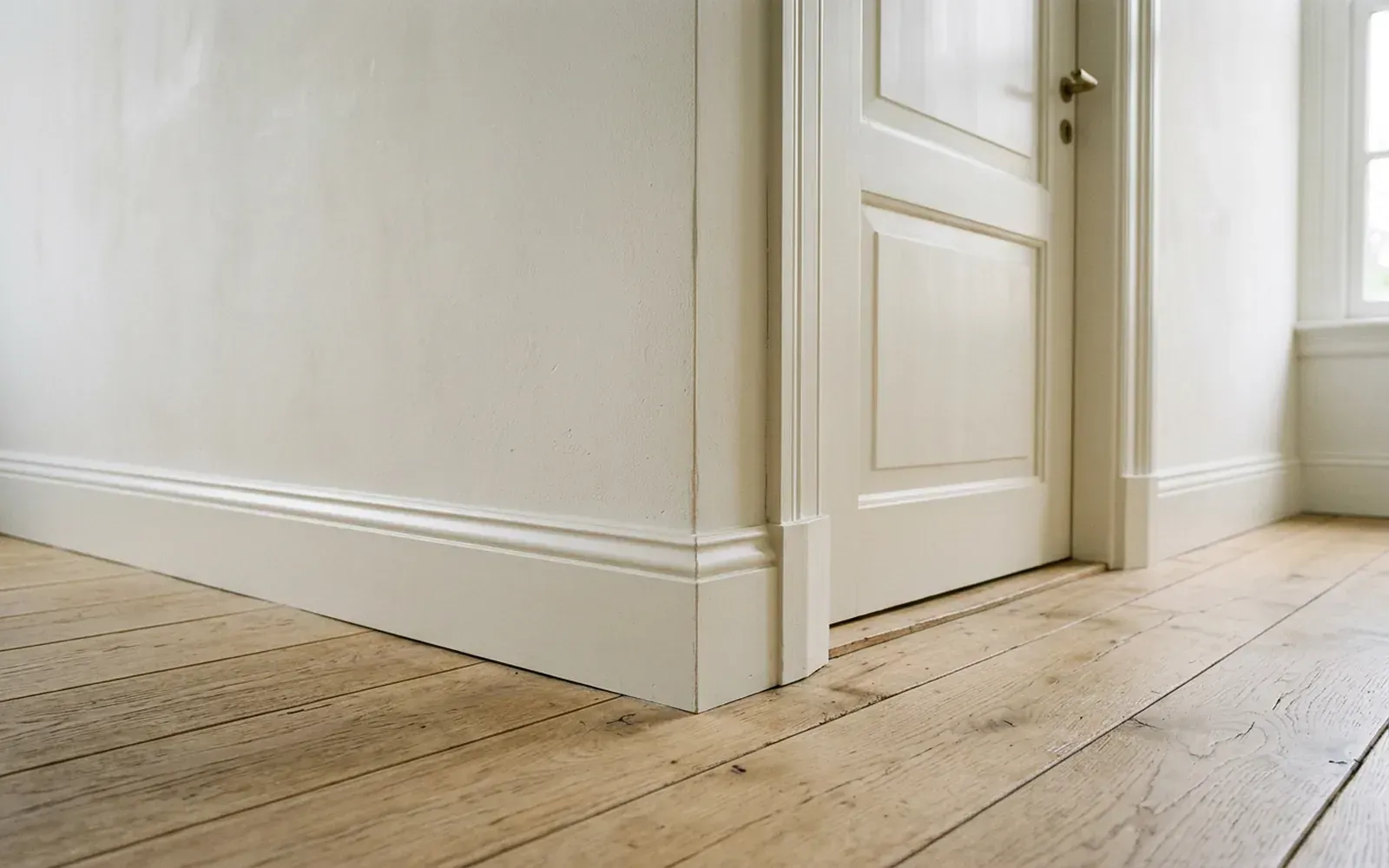
White skirting boards: RAL 9010 or RAL 9016?
White is not just white. The difference between RAL 9010 and RAL 9016 seems small, but next to a white door or wall you notice it straight away.
Choosing skirting
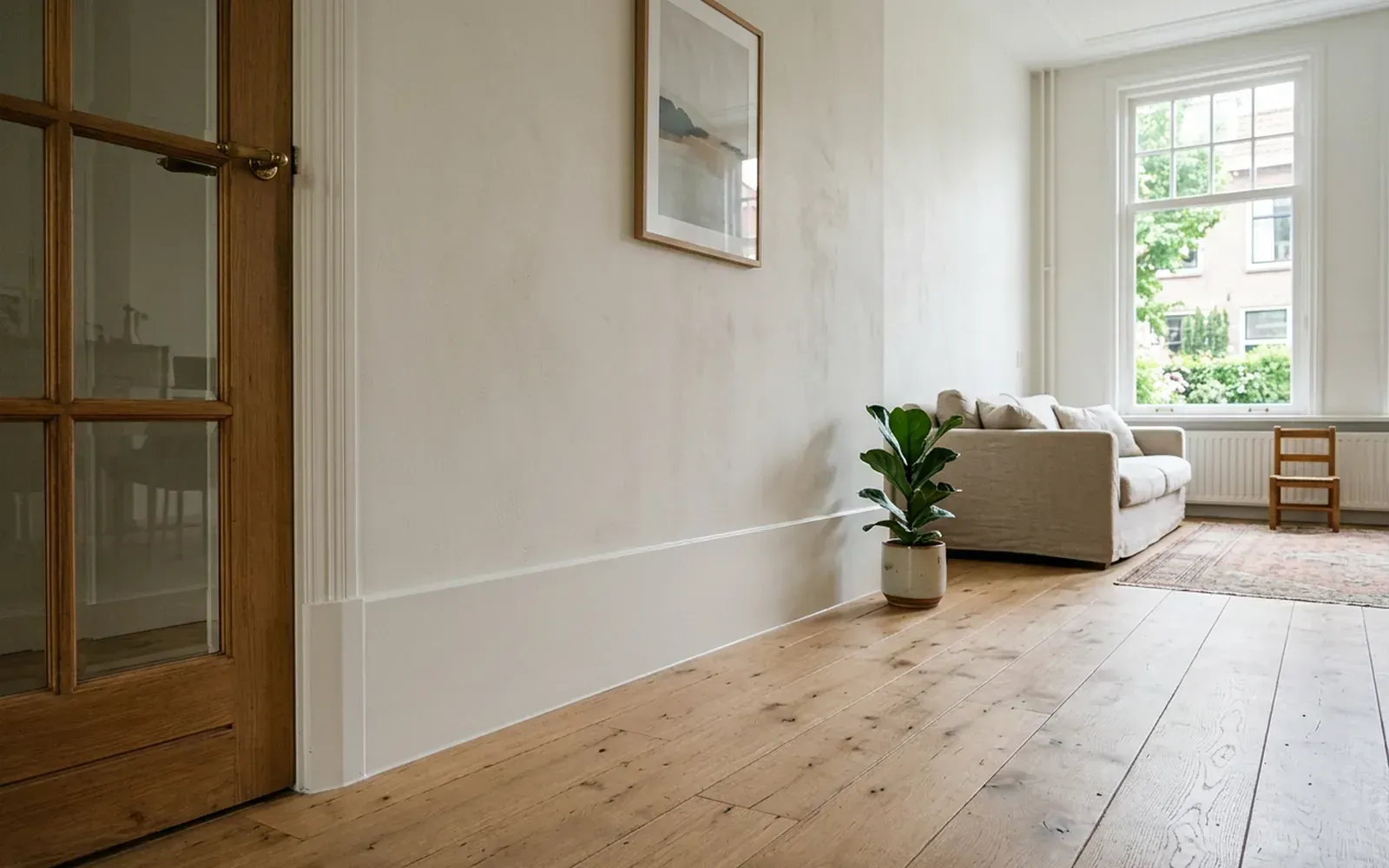
Tall skirting boards: which height suits your room?
Tall skirting boards give a room calm and character, as long as the height is right. Here is how to work out which skirting height suits your ceiling, floor and interior.
Choosing skirting
Aluminium skirting boards: sleek, modern and when they fit
Aluminium skirting boards suit sleek, modern interiors and commercial spaces. Here is how to choose between surface-mounted and recessed, and what it asks of your walls.
Related
RAL 9005
RAL 9005 is called jet black: a deep, neutral black. As matt black skirting, it creates a crisp contrast with light floors and walls.
MDF
MDF is a sheet material made of pressed wood fibres. It is stable, smooth and easy to paint, which makes it the most popular material for skirting boards.
Caulking
Caulking means sealing joints with a flexible sealant. With skirting boards and mouldings, it makes the transition to the wall crisp and seamless.
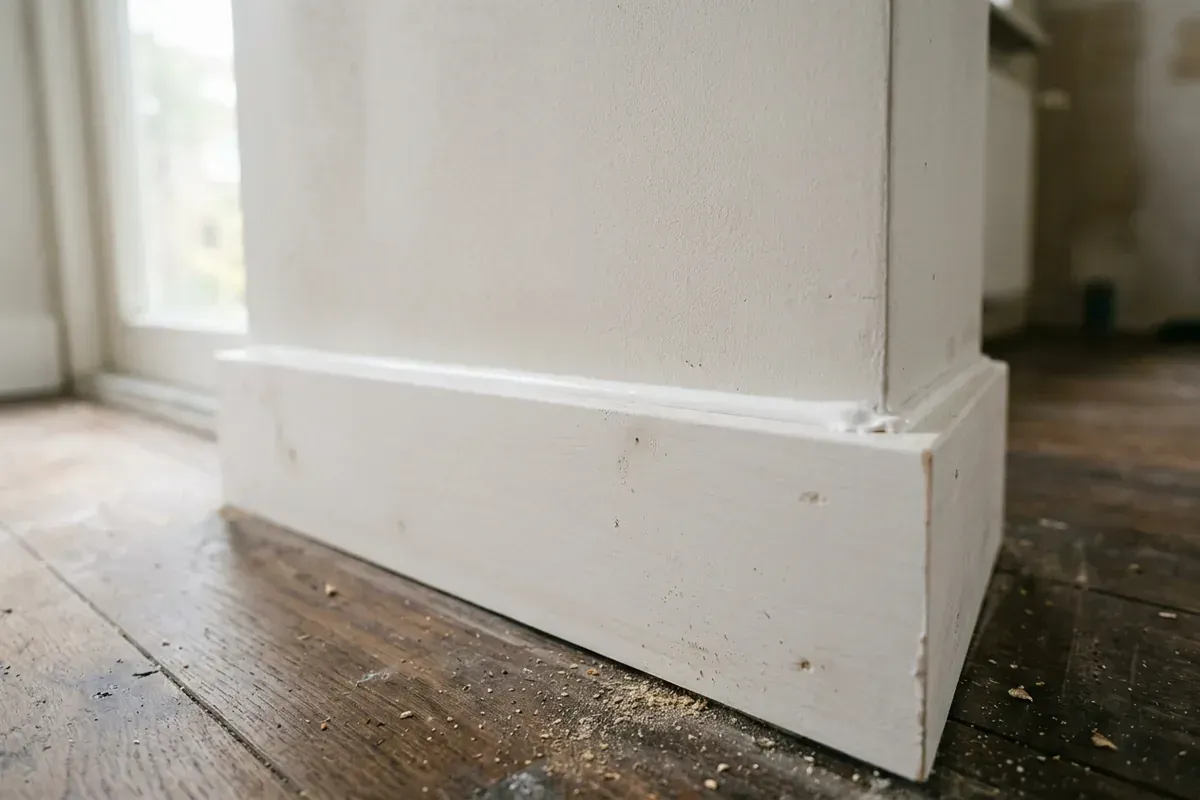
Acrylic caulk
Acrylic caulk is a water-based sealant that can be painted once cured. It is the usual choice for skirting boards, mouldings and frames in dry rooms.
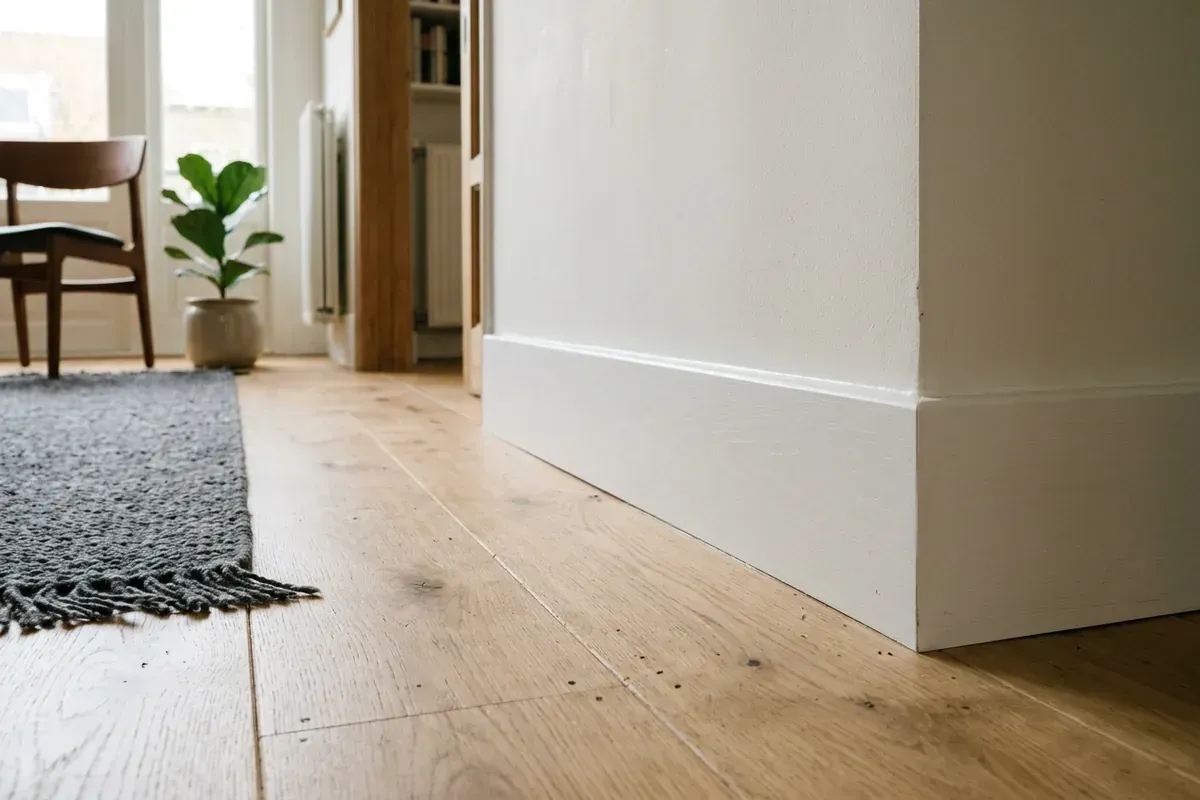
Skirting board
A skirting board is the moulding at the base of the wall that finishes the transition to the floor and protects the wall. Here is how it works and what to look out for.
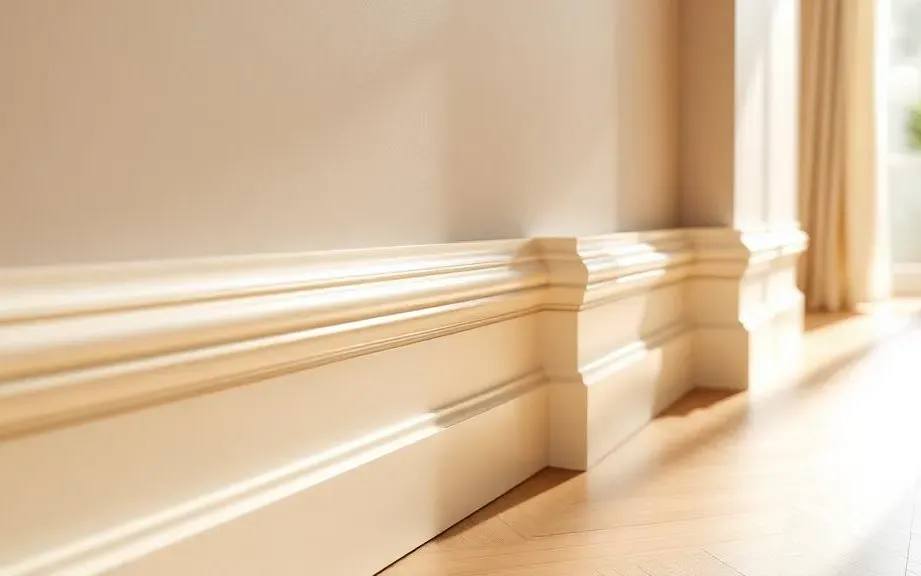
Skirting board installation by a specialist skirting fitter
TipTop Plinten fits skirting boards in MDF, solid wood and aluminium, finished in any RAL colour and neatly matched to any floor, even with uneven walls.
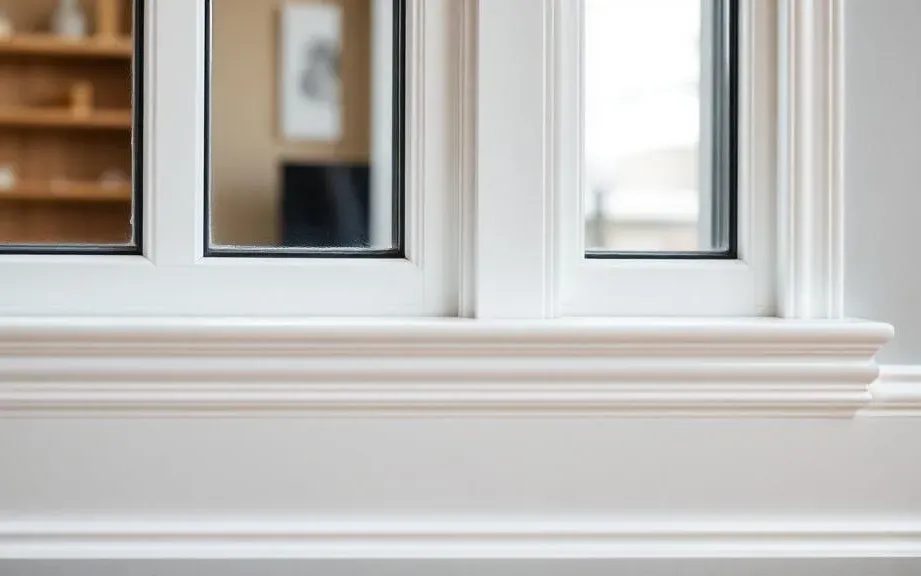
Caulking skirting boards and sealant work for a seamless finish
Caulking is the final step that makes skirting boards, mouldings and panels look seamless. TipTop Plinten uses acrylic or silicone, paint-ready or in colour.
Skirting board installation? Request a free quote
On-site measurement €75 incl. VAT (credited for orders above a minimum project size)