
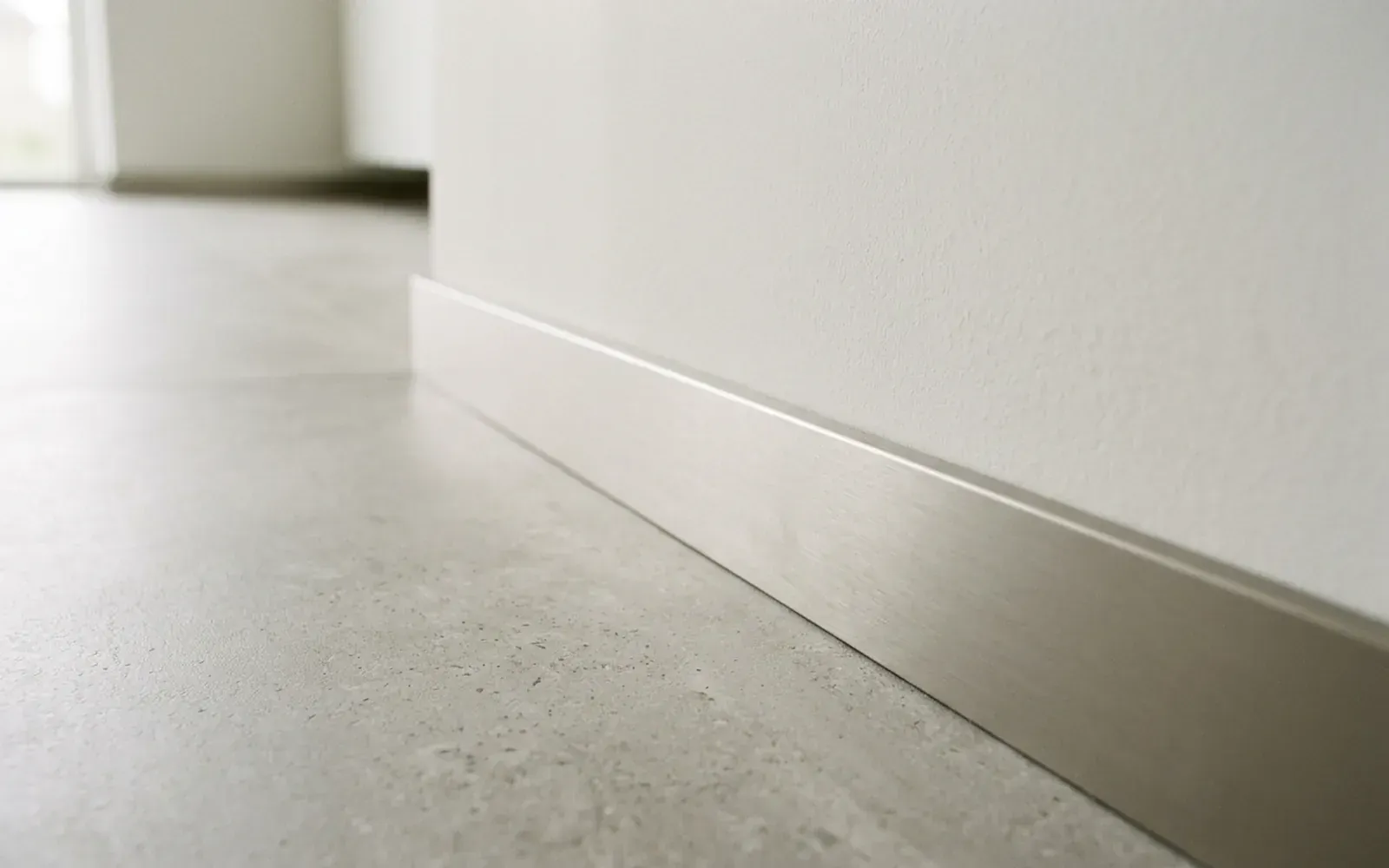
Aluminium skirting boards are metal skirting profiles that create a sleek, modern line along the floor. They are dimensionally stable, hard-wearing and unaffected by moisture, and they suit minimalist interiors, concrete-look floors, steel doors and commercial spaces. There are surface-mounted profiles that are fixed to the wall and recessed or shadow gap skirting boards that sit set back into the wall. The main point to watch: aluminium needs straight, flat walls and precise installation.
In this article you will learn which types of aluminium skirting boards are available, when they are a good choice and what to consider beforehand.
What are aluminium skirting boards?
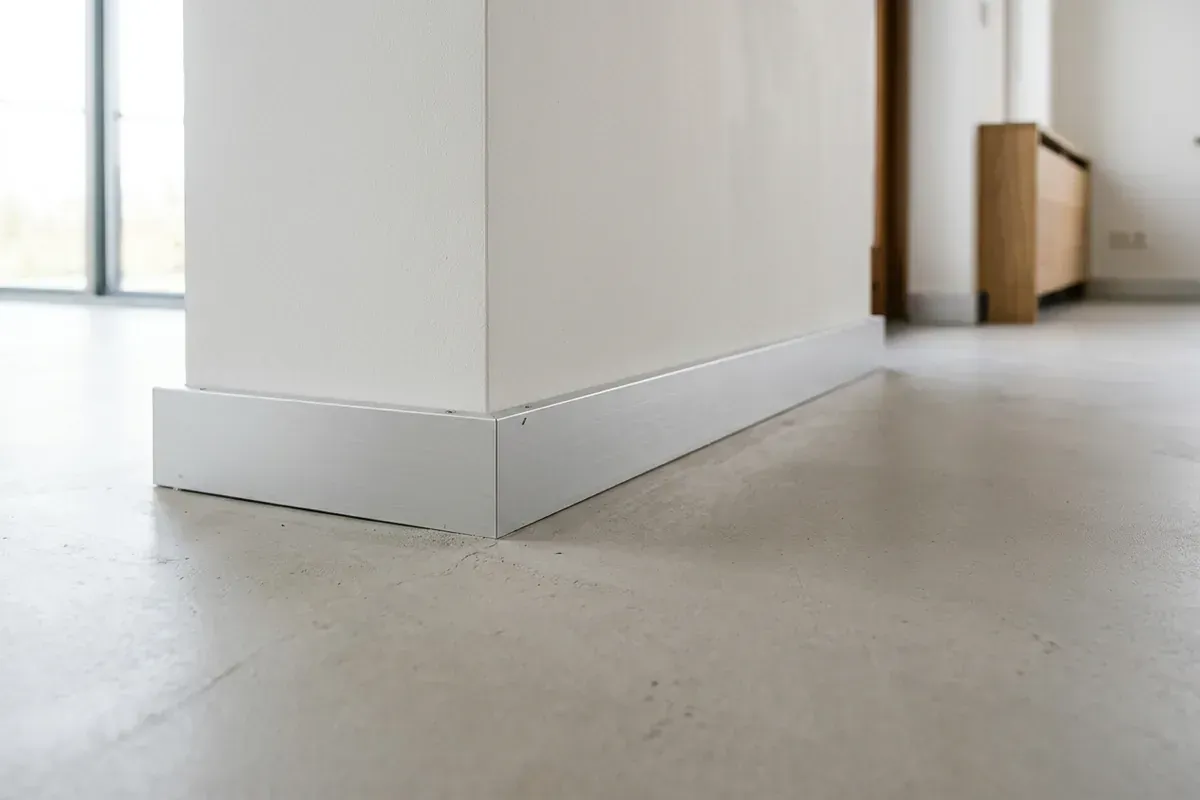
Aluminium skirting is an extruded aluminium profile, often narrower and thinner than a wooden or MDF skirting board. The material is light, strong and barely moves with temperature or humidity. The finish is usually anodised (natural or in a colour), brushed or powder-coated.
Many aluminium skirting boards are supplied as a system: a profile or clip system on the wall, with matching corner pieces, end caps and sometimes a cover for cables or a slot for LED lighting.
Surface-mounted or recessed?
Surface-mounted skirting
Surface-mounted skirting is fixed to the finished wall, just like a regular skirting board. That means it can also be fitted in an existing home. The skirting sticks out slightly from the wall, but the thin profile keeps this to a minimum.
Recessed or shadow gap skirting
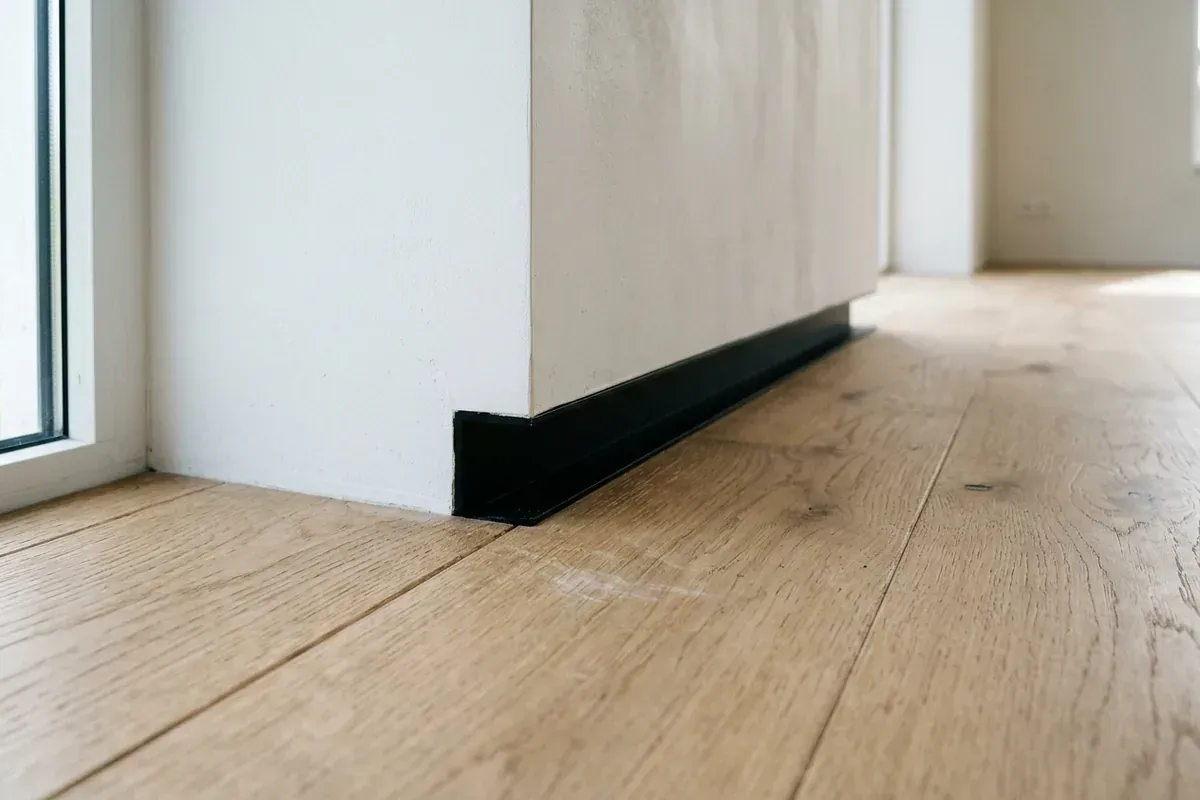
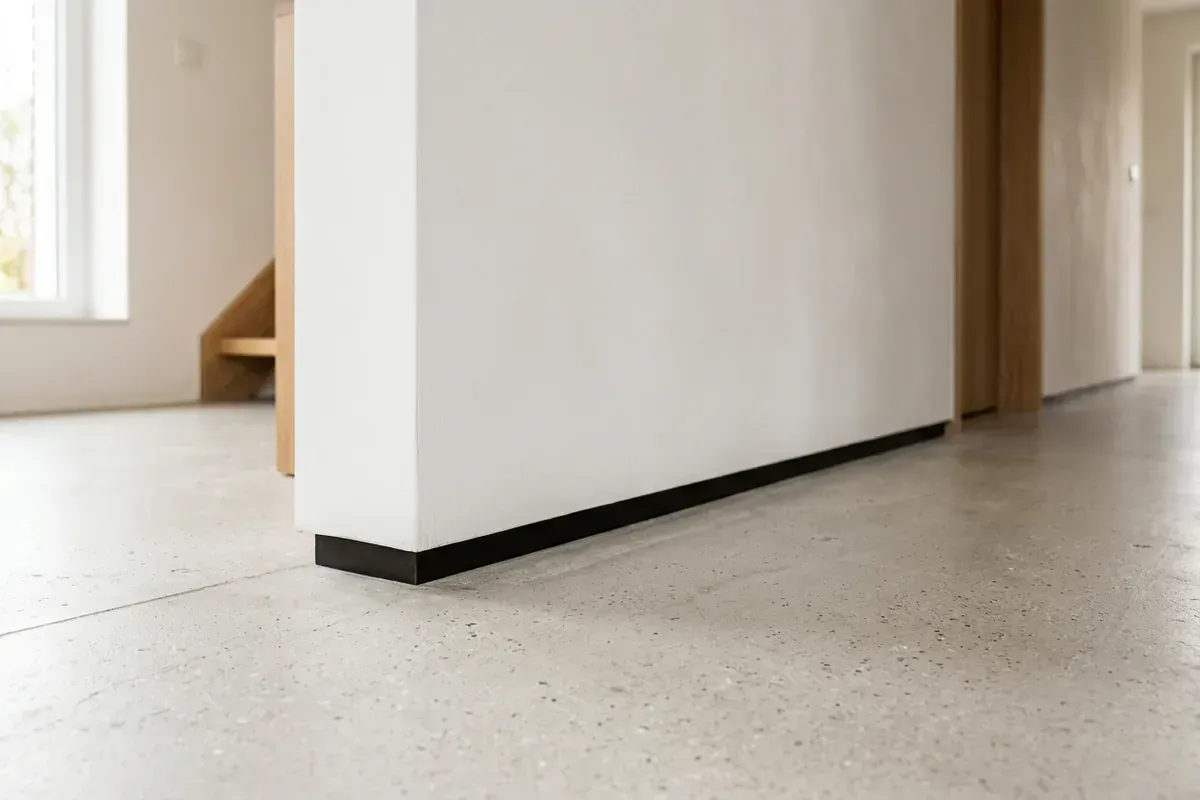
Recessed skirting sits flush with or slightly behind the wall surface. This creates a crisp shadow line between wall and floor, also known as shadow gap skirting. The effect is minimalist: the wall appears to float above the floor.
Recessed skirting does need to be planned in early in the building process. The profile is fitted before the plastering or wall finishing, so the plasterer can work neatly up to it. Retrofitting it into a finished wall is a major job.
| Surface-mounted | Recessed / shadow gap | |
|---|---|---|
| When it is fitted | After wall and floor finishing | Before plastering or wall finishing |
| Suitable for renovation | Yes | Limited, requires alterations |
| Look | Sleek, thin profile | Minimalist, floating wall |
| Coordination needed with | Floor fitter | Contractor, plasterer, floor fitter |
Advantages of aluminium skirting boards
- Unaffected by moisture. Suitable for areas where water gets on the floor more often, such as a hallway by the front door or a utility room.
- Hard-wearing. Vacuum cleaners, floor cleaning machines and furniture are less likely to leave marks. That makes aluminium popular in offices, shops and hospitality venues.
- Dimensionally stable. Aluminium does not warp or shrink.
- Room for extra functions. Some systems have a cable channel or a slot for an LED strip. You can read more about cables in the skirting in skirting boards with a cable channel.
Disadvantages and points to watch
Not very forgiving
An MDF skirting board flexes slightly along a gently undulating wall, and caulking takes care of the rest. An aluminium profile does this far less. Uneven walls therefore show up more quickly as a varying gap or a skirting board that does not sit tight everywhere. With surface-mounted skirting, a flat wall at the bottom is important; with recessed skirting, the plasterer has to take it into account.
Corners and end pieces
With aluminium, corners are mitre-cut or made with matching corner pieces. Both require precision. Walls that are not square make this harder. The junction with door frames also needs to be thought through properly.
A different look from wood
Aluminium is cool and technical. In a classic or country-style interior it often fits less well. There, MDF or solid wood skirting is the more obvious choice. In MDF skirting boards: pros and cons you will find a comparison of the materials.
Colours and finishes
Aluminium skirting boards are available in, among others:
- Natural anodised or brushed: the classic metal look.
- Powder-coated in a RAL colour: for example black or white, or a colour that matches your window frames or steel doors.
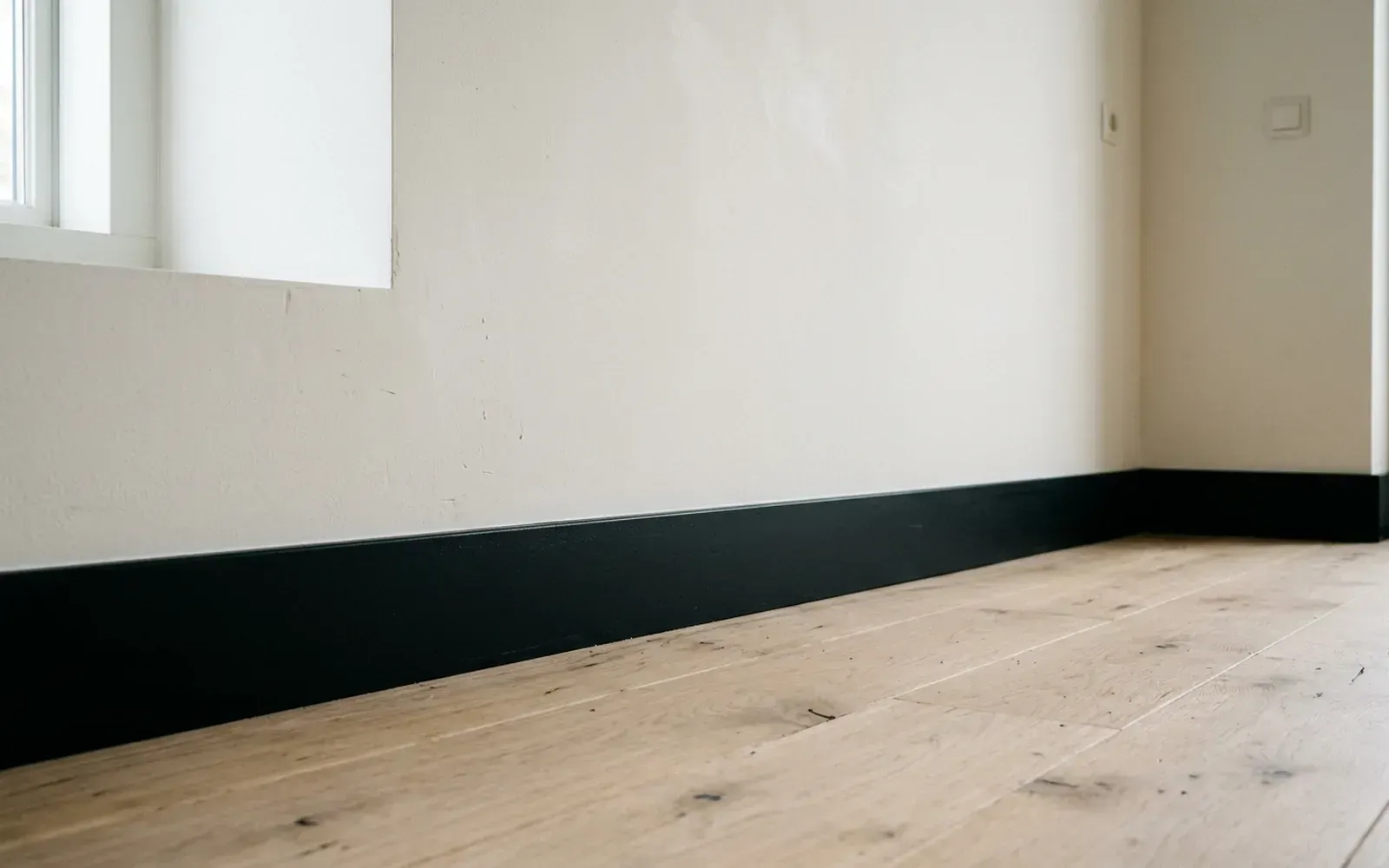
Black aluminium is popular in combination with steel doors and black accents. Also read our article on black skirting in RAL 9005.
Where do aluminium skirting boards work well?
- Modern homes with a sleek, minimalist interior.
- With concrete-look floors, poured floors, large tiles or sleek vinyl (PVC).
- In offices, shops, hospitality venues and hotels, where durability counts.
- In combination with sleek wall panels or slats. See also our wall panels and mouldings service.
Aluminium in new builds
In new builds in particular, where walls and floors have not yet been finished, recessed skirting is easy to plan in. That requires coordination between the contractor, plasterer and skirting fitter. In the new-build home in Boxtel, for example, the skirting installation was included right from the shell construction stage, along with the caulking. That kind of early coordination makes all the difference with crisp details.
Aluminium or MDF: which suits you?
| Aluminium | MDF | |
|---|---|---|
| Look | Technical, minimalist | Sleek or classic, evenly painted |
| Moisture | Unaffected | Standard MDF sensitive, moisture-resistant MDF better |
| Durability | High | Good, edges can get damaged |
| Forgiving on uneven walls | Not very | More so, partly thanks to caulking |
| Choice of profiles | Limited, mainly sleek | Very wide |
If you are unsure, think about what the room should mainly convey. If the skirting should disappear into a sleek, technical look, aluminium is a strong candidate. If it needs to match classic doors, profiles or decorative mouldings, MDF or solid wood is usually the more logical choice.
Looking after aluminium skirting boards
Aluminium skirting boards are easy to keep clean with a slightly damp cloth and a mild cleaning product. Avoid scouring pads and harsh products, as they can damage the anodised or powder-coated layer. Small scratches in powder coating can be touched up with matching paint, so always ask for the exact colour code.
Having aluminium skirting boards installed?
TipTop Plinten installs skirting boards in aluminium, MDF and solid wood, finished in any RAL colour, for homeowners, contractors, interior fitters and hotels. How long the installation takes depends on the number of metres, the corners and the wall surface; you will hear this with the quote. Take a look at our skirting board installation service or send photos, the floor type and an estimate of the number of linear metres via the contact page. Please also mention whether it concerns surface-mounted or recessed skirting. We are happy to communicate in English. The quote is free and without obligation. An optional on-site measurement is available for €75 incl. VAT, deducted from the price for projects above a minimum size.
Frequently asked questions
Aluminium is dimensionally stable, hard-wearing and unaffected by moisture. It gives a sleek, modern line and is available in anodised or powder-coated finishes, including RAL colours. Some systems have space for cables or LED lighting.
Aluminium is not very forgiving: uneven or out-of-true walls show up more quickly, because the profile does not flex the way an MDF skirting board can a little. Corners and end pieces also call for precise work or matching fittings.
Surface-mounted skirting is fixed to the finished wall, just like a regular skirting board. Recessed or shadow gap skirting sits flush with or behind the wall surface. It has to be planned in before the plastering or wall finishing.
Yes. Aluminium skirting is available in natural anodised, brushed and powder-coated finishes in RAL colours such as black or white, among others. TipTop Plinten offers finishing in any RAL colour.
They are widely used in commercial spaces, but they also work well in modern homes, for example with a concrete-look floor, steel doors or a minimalist interior. It mainly comes down to the look you want.
Related articles
Choosing skirting
Skirting boards with a cable channel: hiding cables neatly
Want network, TV and speaker cables out of sight along the wall? A skirting board with a cable channel can do that. Here are the types, the possibilities and the limits.
Choosing skirting
MDF skirting boards: pros, cons and when to choose them
MDF is the most popular material for skirting boards, but not the best choice in every situation. These are the advantages, the disadvantages and the pitfalls.
Choosing skirting
Black skirting boards in RAL 9005: when do they work and what should you look out for?
Black skirting boards give an interior a graphic, contemporary look. Here is how to choose the right finish and keep dust and scratches from spoiling the effect.
Related
Aluminium skirting
Aluminium skirting is a slim metal profile at the base of the wall. It suits sleek, modern interiors and can be combined with LED lighting.
Shadow gap skirting
Shadow gap skirting sits flush with or behind the wall, with a narrow shadow line above it. The result is a minimalist wall that seems almost to float.
Cable skirting
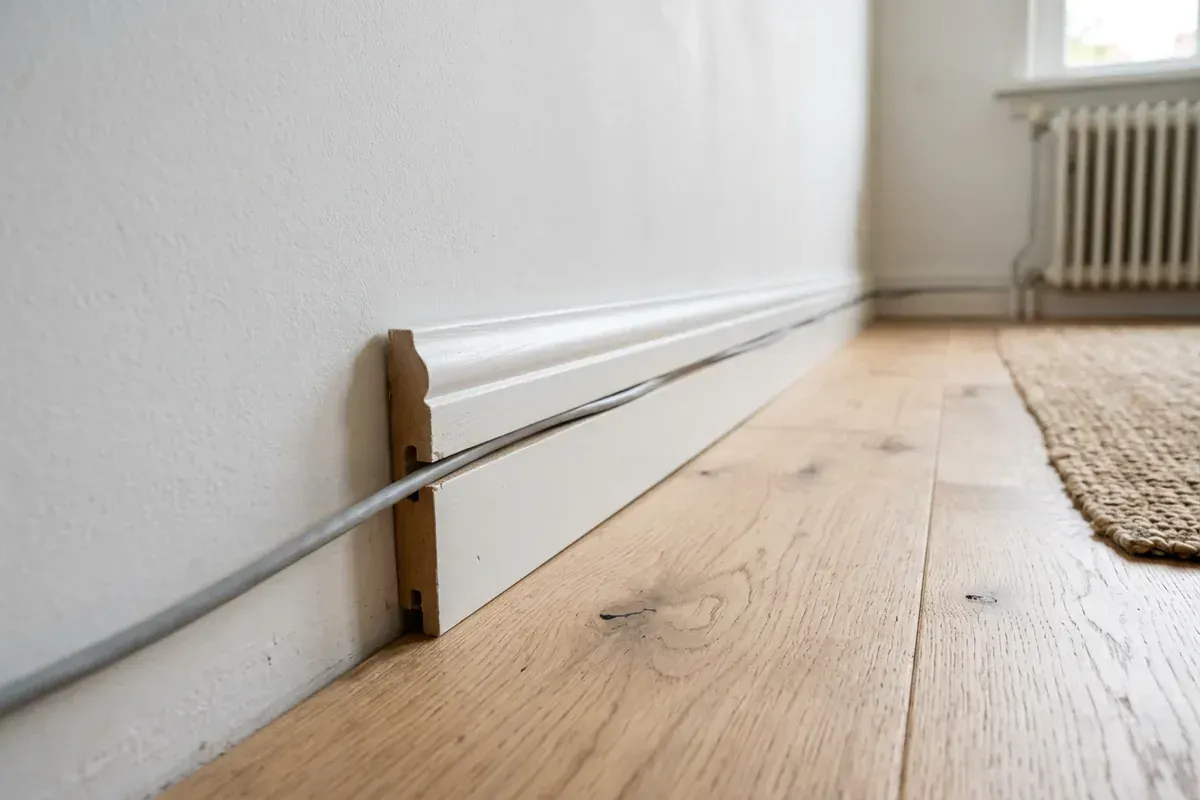
Cable skirting has space for cables at the back. That way, leads for the TV, internet or speakers disappear neatly out of sight.
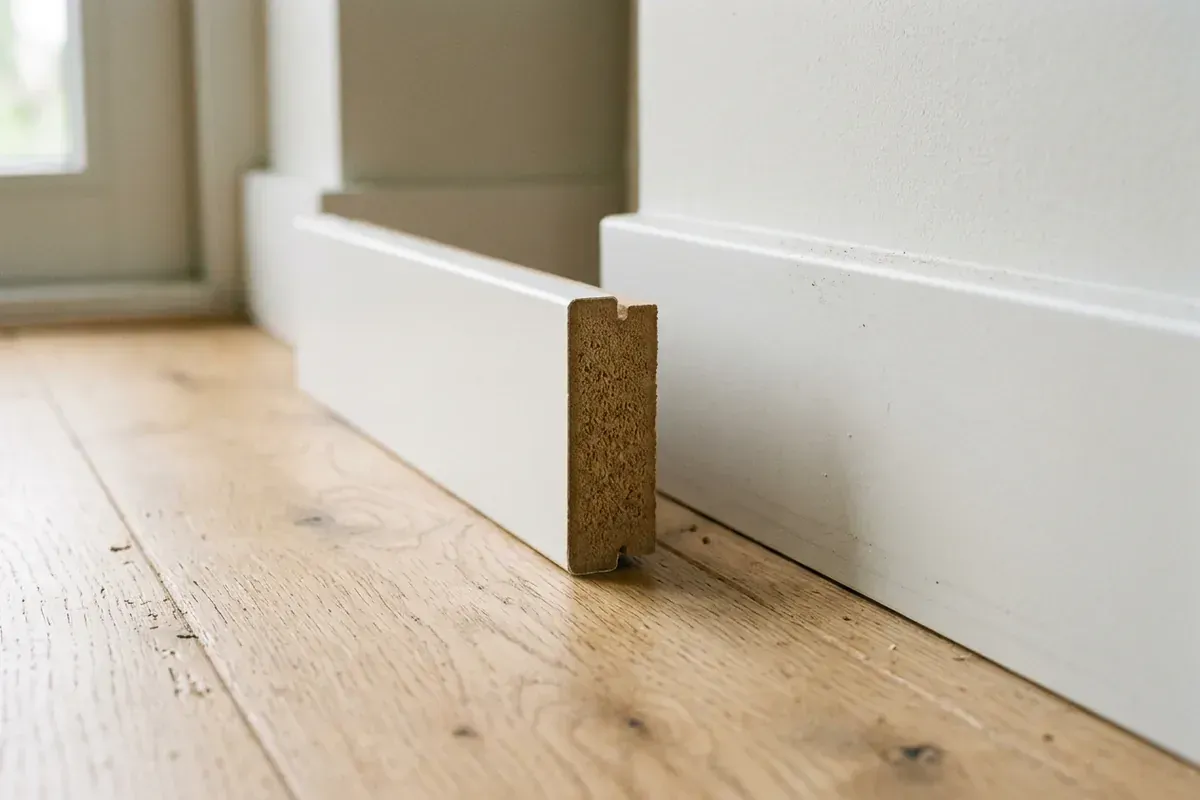
MDF
MDF is a sheet material made of pressed wood fibres. It is stable, smooth and easy to paint, which makes it the most popular material for skirting boards.
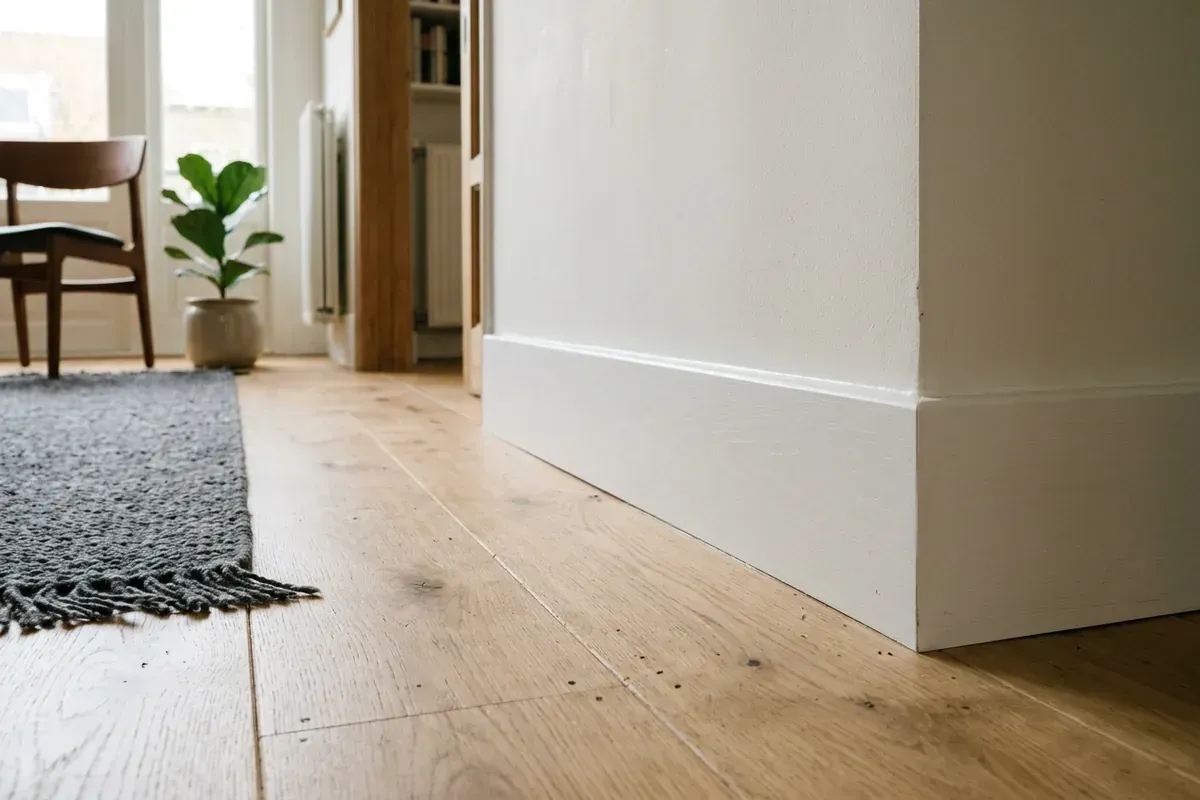
Skirting board
A skirting board is the moulding at the base of the wall that finishes the transition to the floor and protects the wall. Here is how it works and what to look out for.
Skirting board installation by a specialist skirting fitter
TipTop Plinten fits skirting boards in MDF, solid wood and aluminium, finished in any RAL colour and neatly matched to any floor, even with uneven walls.
Wall panelling installation and wall mouldings fitted
TipTop Plinten fits wall panels, wall mouldings, slat panels and acoustic panels in homes, offices and hotels, with tight mitres and clean caulking.
Skirting board installation? Request a free quote
On-site measurement €75 incl. VAT (credited for orders above a minimum project size)