
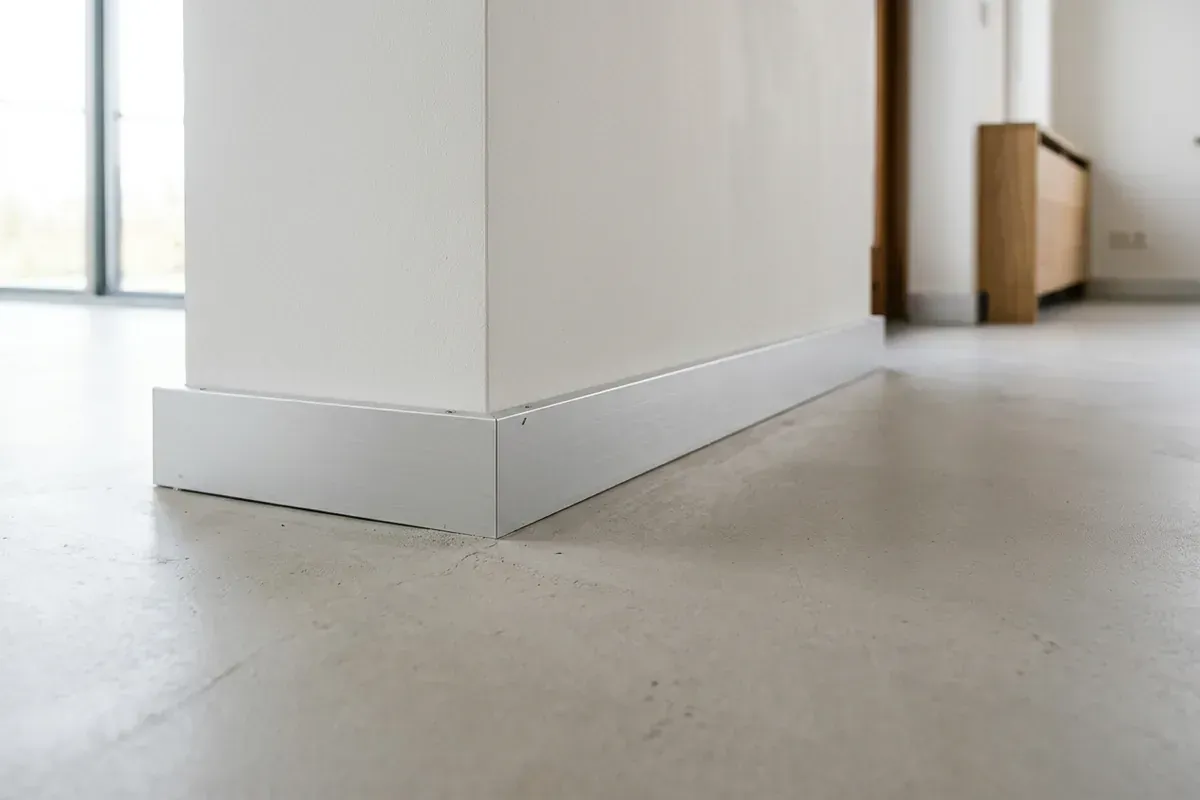
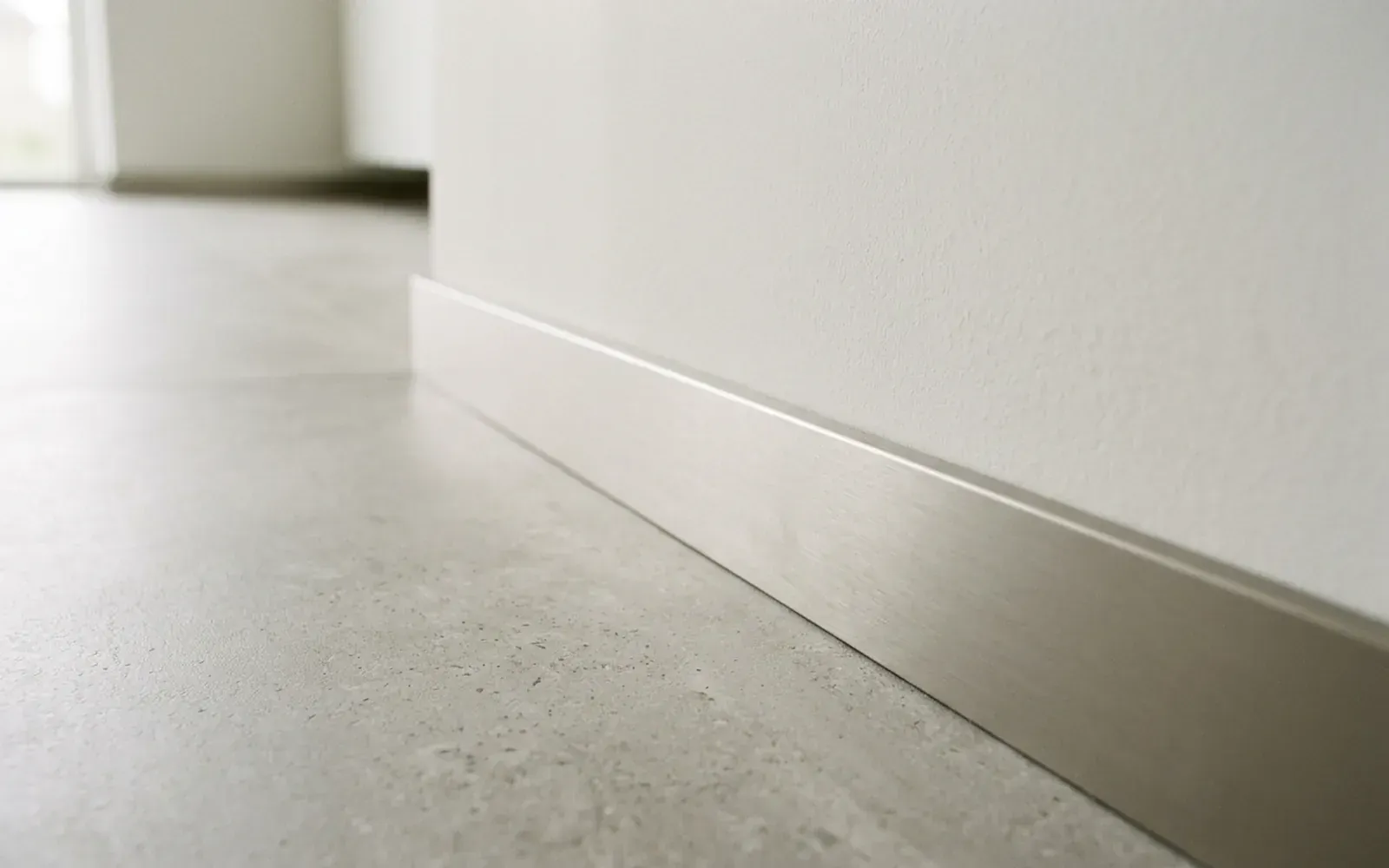
Aluminium skirting is made from extruded aluminium: a thin, sleek metal profile fitted at the base of the wall. Aluminium skirting boards keep their shape, resist knocks and moisture and give a minimalist look. They are mainly chosen for modern homes, offices and shops, with or without LED lighting.
What is aluminium skirting?
Aluminium skirting comes in various heights and finishes, such as natural or anodised aluminium and powder-coated in a colour. There are two main types:
- Surface-mounted skirting: fitted against the finished wall, just like ordinary skirting, but much thinner.
- Recessed or shadow gap skirting: fitted in or against the wall before plastering, so the skirting sits flush with the wall or set back from it.
Some profiles have space for cables or an LED strip.
Where is it used?
Aluminium skirting suits sleek interiors with poured floors, large floor tiles, a concrete look or vinyl. It is also practical in wet or high-traffic areas, because aluminium does not swell. In commercial spaces it is chosen for its durability.
What should you look out for?
- Timing: a recessed profile has to be included at the shell stage, before plastering. Surface-mounted skirting can also be fitted later.
- Straight walls: a thin metal profile is not forgiving. Unevenness in the wall shows more readily.
- Corners and ends: corners and end caps need matching accessories or precise mitres.
- Colour: natural aluminium looks cool; a powder coating in a RAL colour makes it part of the colour scheme.
You can find more background in the article on aluminium skirting boards.
At TipTop Plinten
Alongside MDF and solid wood, aluminium is one of the materials TipTop Plinten works with. It is used in sleek, modern interiors and wherever the skirting needs to be extra resistant to knocks or moisture. Read more about the options under skirting board installation.
Frequently asked questions
It can be used with most floors, but it looks best with sleek floors such as poured floors, large-format tiles or vinyl. With a floating floor the skirting is fixed to the wall, so the floor can move freely.
There are aluminium profiles with a channel for an LED strip, creating a line of light along the floor. The electrical connection must be made by a qualified electrician; the skirting itself is fitted afterwards.
Related
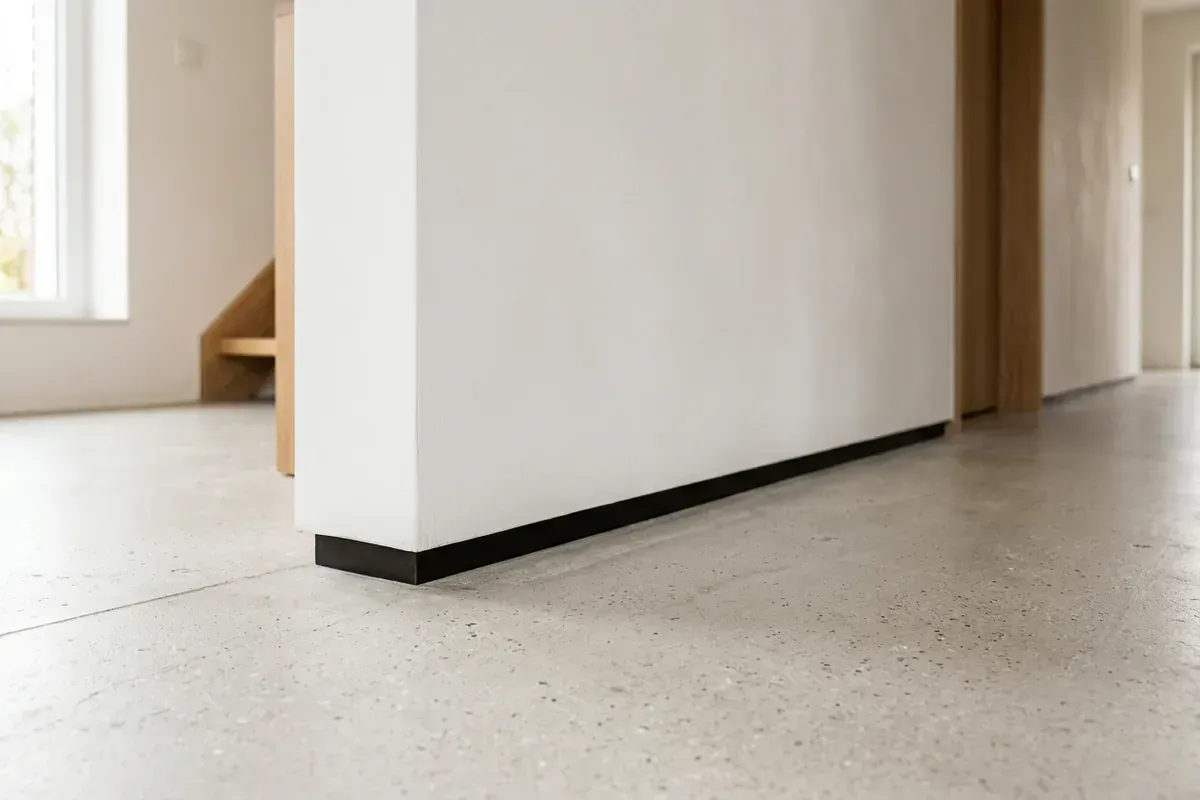
Shadow gap skirting
Shadow gap skirting sits flush with or behind the wall, with a narrow shadow line above it. The result is a minimalist wall that seems almost to float.
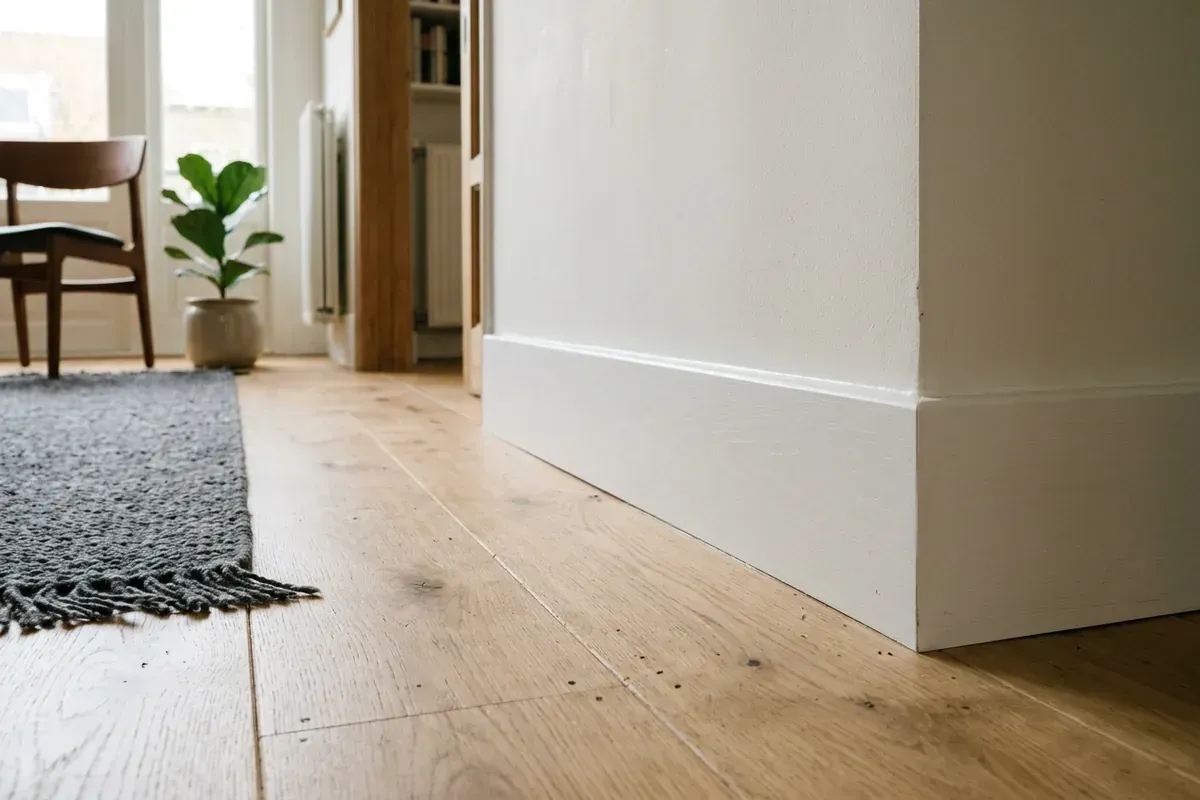
Skirting board
A skirting board is the moulding at the base of the wall that finishes the transition to the floor and protects the wall. Here is how it works and what to look out for.
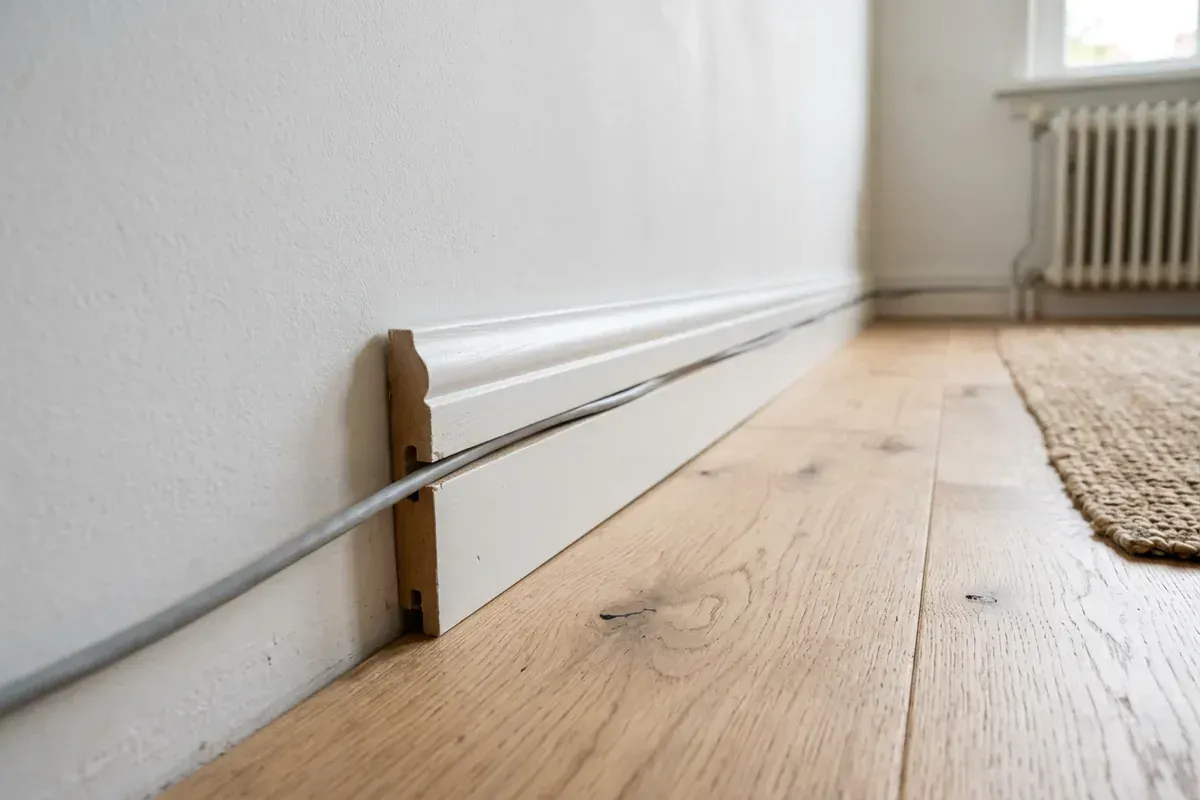
Cable skirting
Cable skirting has space for cables at the back. That way, leads for the TV, internet or speakers disappear neatly out of sight.
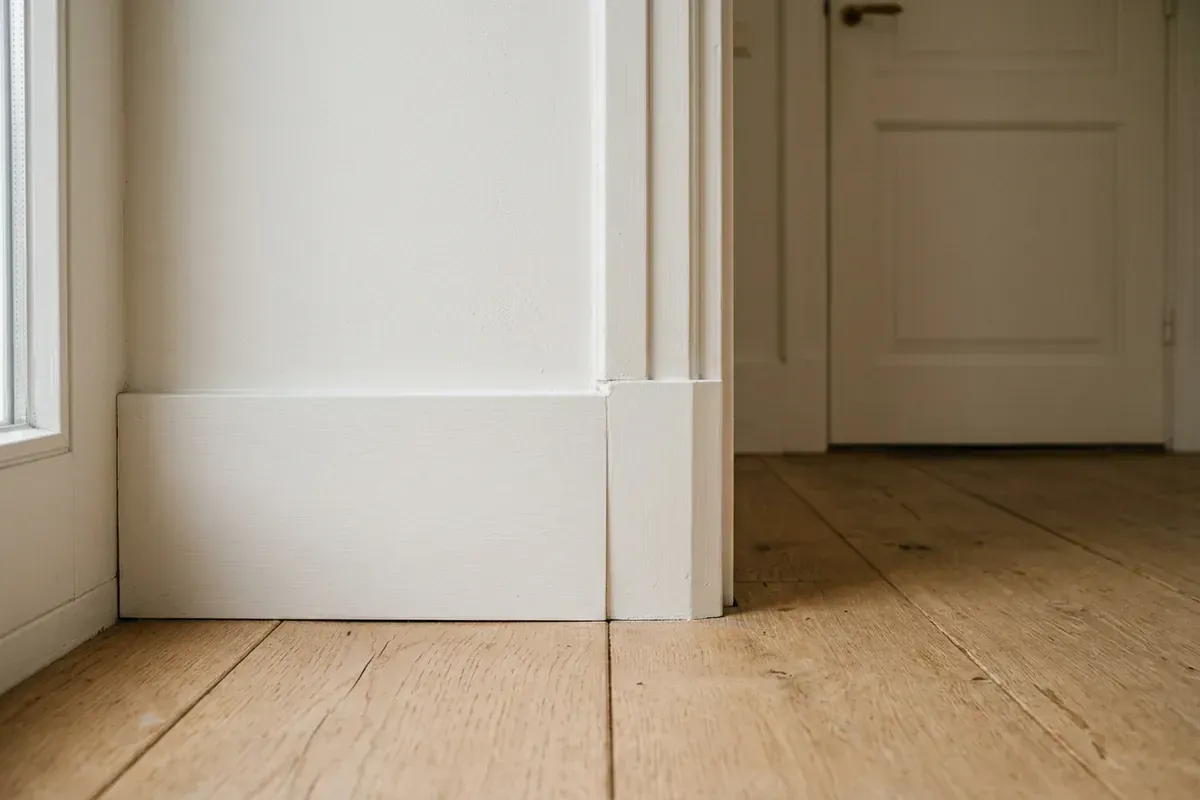
Skirting end
A skirting board that stops somewhere needs a neat finish. That can be a mitred return, an end cap or a junction with an architrave.
Choosing skirting
Aluminium skirting boards: sleek, modern and when they fit
Aluminium skirting boards suit sleek, modern interiors and commercial spaces. Here is how to choose between surface-mounted and recessed, and what it asks of your walls.
Choosing skirting
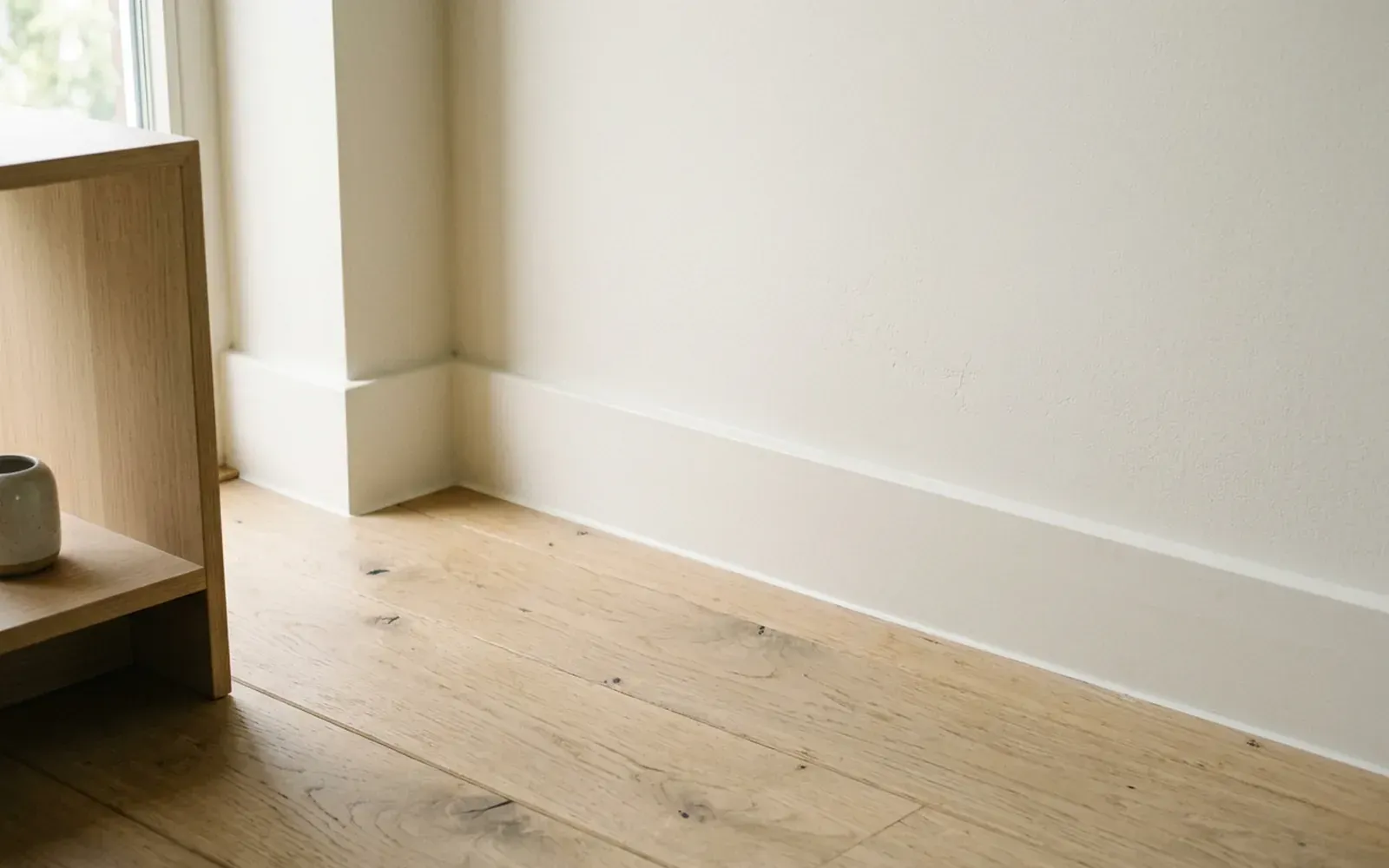
Modern skirting boards: the styles that suit a sleek interior today
Modern skirting boards are all about calm and clean lines. From shadow gap skirting to tall skirting in the wall colour or an aluminium profile: these are the styles that suit a contemporary interior.
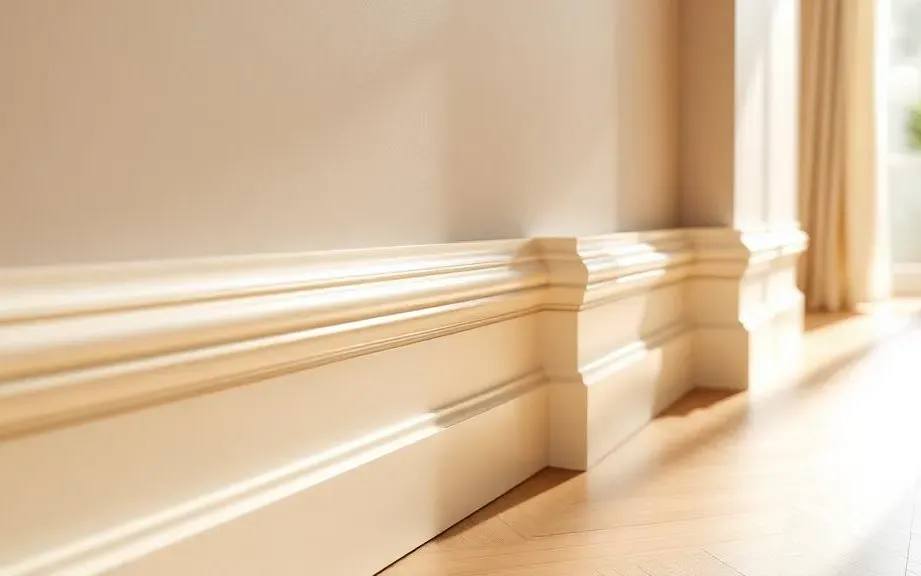
Skirting board installation by a specialist skirting fitter
TipTop Plinten fits skirting boards in MDF, solid wood and aluminium, finished in any RAL colour and neatly matched to any floor, even with uneven walls.
Skirting board installation? Request a free quote
On-site measurement €75 incl. VAT (credited for orders above a minimum project size)