
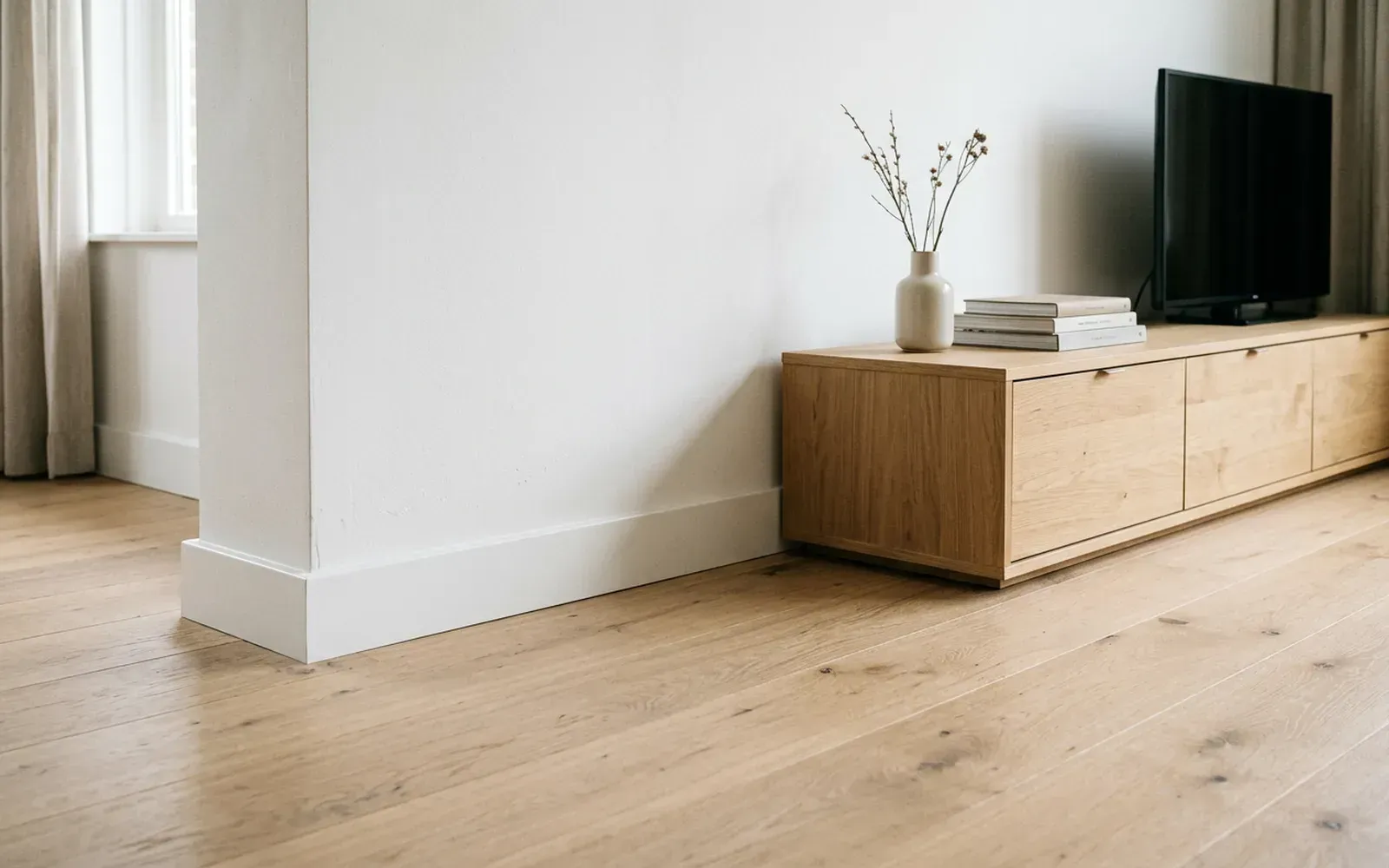
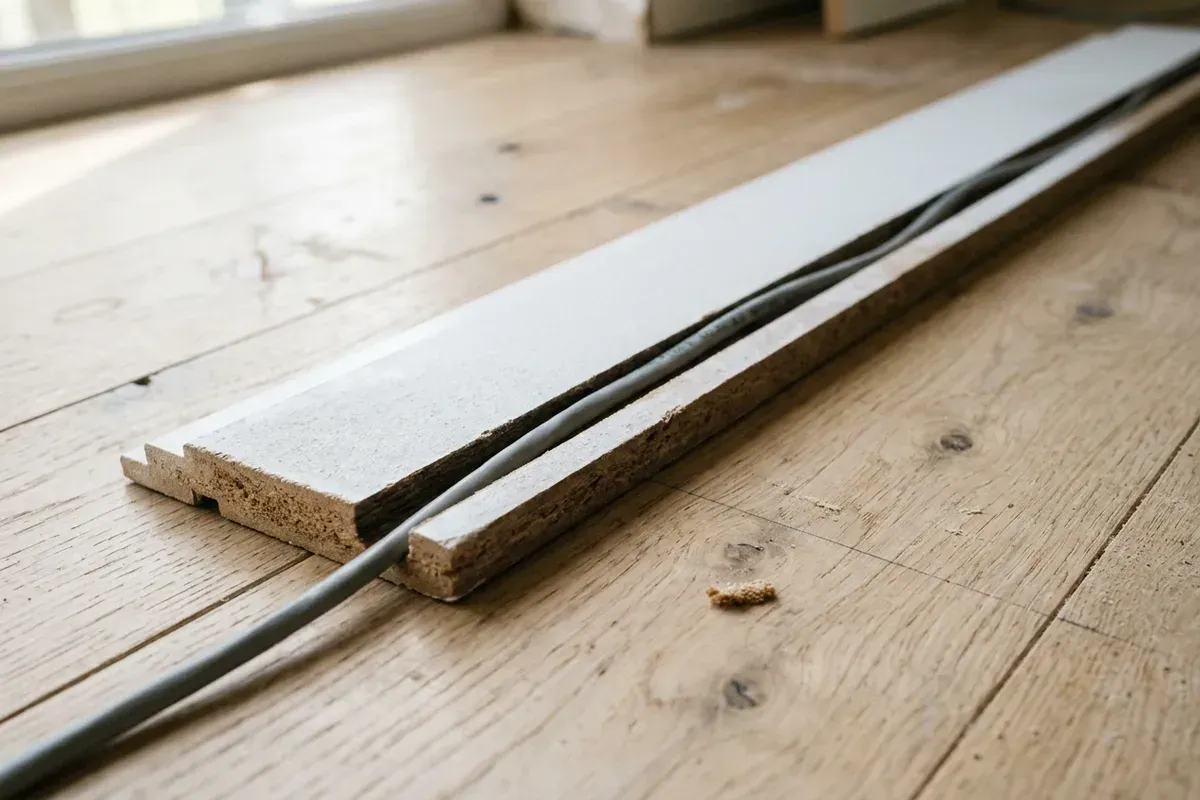
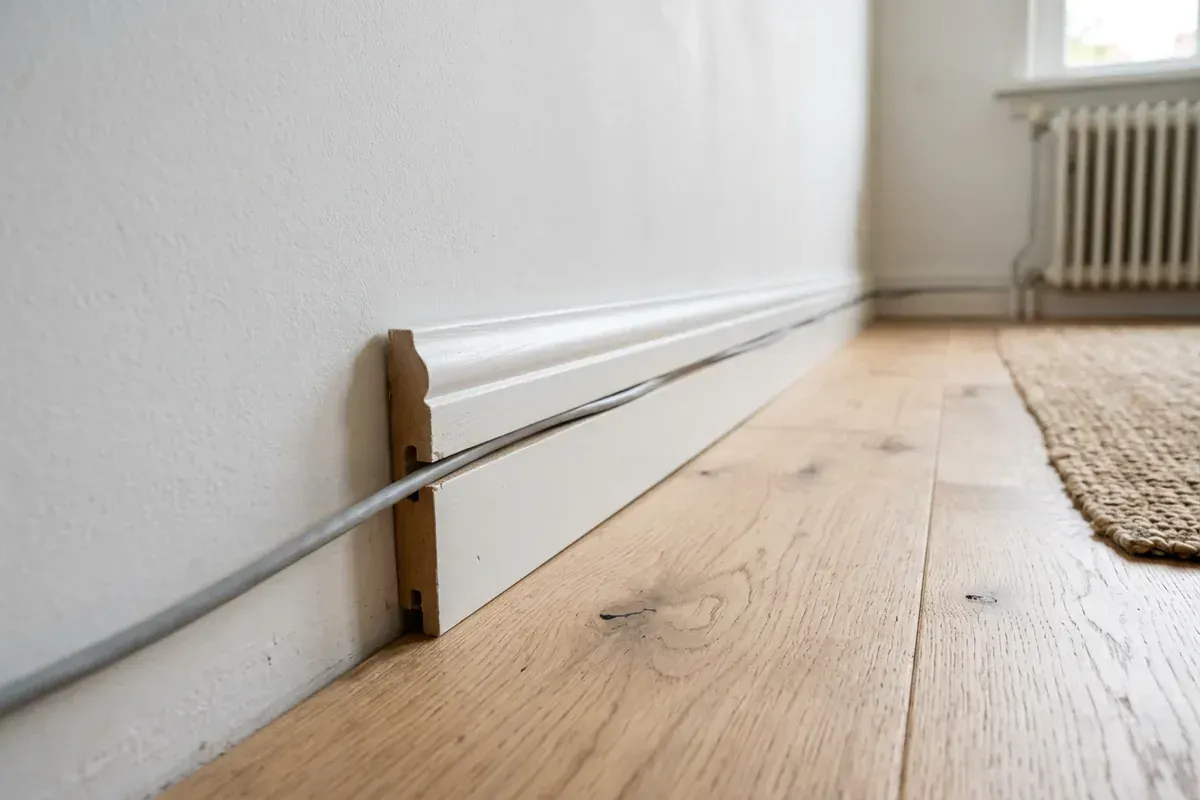
A skirting board with a cable channel has a hollow space, groove or removable cover at the back through which cables can run along the wall. This takes network, TV, coaxial and speaker cables out of sight, without you having to chase grooves into the wall or stick on separate trunking. They are available in MDF, with a routed groove, and in aluminium, often with a clip-on cover. Power cables are subject to separate rules: have those assessed by a qualified electrician.
In this article you can read which types there are, what they are suitable for and what you need to think about beforehand.
Why choose a skirting board with a cable channel?
A lot is wireless these days, but not everything. A fixed network cable to the desk, a speaker cable to the back of the sofa or a coaxial cable to a second TV: in many homes, cables still run along the wall. Cable skirting hides them in the skirting board that has to go in anyway.
Advantages:
- No chasing or breaking out. You do not need to cut grooves into plaster or brick.
- A calm look. No cables with clips or surface trunking along the wall.
- Accessibility. With some systems, cables can be added later.
What types of cable skirting are there?
MDF skirting board with a groove at the back
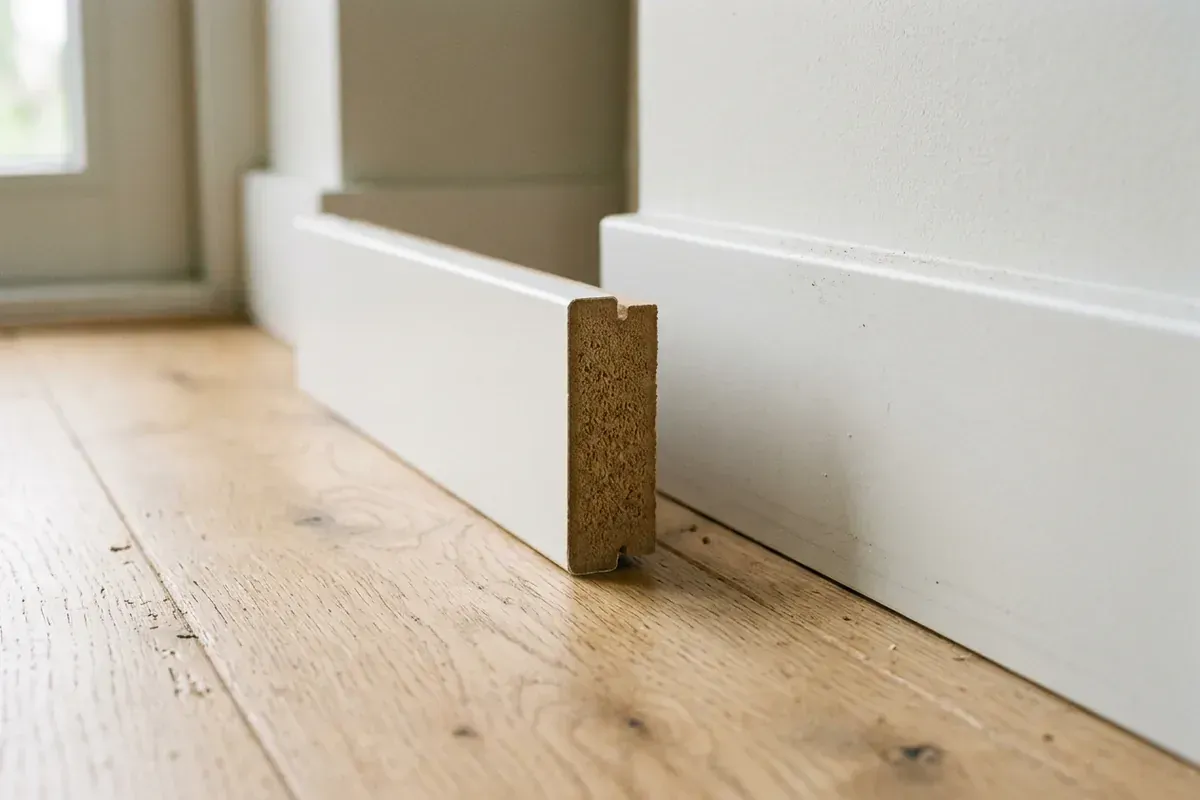
An MDF skirting board can be given a routed groove at the back. The cables are laid in it, after which the skirting board is fixed to the wall. From the front, the board looks the same as any other skirting board. It can therefore be supplied in any RAL colour and any profile.
Point to note: to add cables later, the skirting board has to come off. If it has been fixed with construction adhesive, that is more difficult. With MDF cable skirting, a fixing method that makes removal easier is therefore often chosen.
Aluminium skirting with a clip-on cover or cable duct
Aluminium skirting is often supplied as a system with a profile on the wall and a cover or duct in which cables can be laid. Because the cover is removable, the cables remain accessible. Aluminium suits sleek, modern and commercial interiors in particular. You can read more about it in our article on aluminium skirting boards.
Solid wood skirting board with a groove
Solid wood can also be routed out at the back. This is less common, but it is an option in classic interiors where you still want to hide cables.
Which cables can and cannot go in?
| Type of cable | Suitable for cable skirting? |
|---|---|
| Network cable (UTP) | Yes, commonly used |
| Coaxial cable (TV) | Yes |
| Speaker cable | Yes |
| HDMI or USB cable | Yes, provided the plug fits through the entry point |
| Mains voltage (230 V) | Only after assessment by a qualified electrician |
In the Netherlands, there are rules for how electrical wiring is installed and protected. A skirting board is not automatically a suitable route for mains wiring. TipTop Plinten fits the skirting boards; the electrical part is a job for an electrician.
What should you consider when choosing?
Height and thickness
The more cables, the more space you need. A slightly taller or thicker skirting board leaves room for the channel and still has enough material to fix the board firmly. With tall skirting boards, that space is often there anyway. The entry on tall skirting in our glossary explains more about this.
Where do the cables come out?
A cable in the skirting board has to go in and come out somewhere. Think beforehand about:
- the location of the router or network point;
- where the TV or speakers will go;
- whether the cables need to reach the other side of a door frame (a doorway interrupts the skirting).
At doorways, a cable often has to take a different route or run under the floor. That is something to agree with the electrician or contractor.
Corners and mitres
Cables cannot be bent sharply in a corner, especially network and coaxial cables. At an internal corner, the groove or channel has to continue with a gentle curve. This is taken into account during installation, so that the mitre joint stays tight and the cable is not damaged.
Fixing
With an ordinary skirting board, construction adhesive is a common fixing method. With cable skirting, it is important that the adhesive does not get into the channel and that the board can be removed again if needed. Often the solution is a combination of adhesive in the right places and mechanical fixing.
Cable skirting in new builds or renovations
In new builds, cables are often already routed through the wall or floor. Cable skirting is then mainly useful for extra connections added afterwards. In renovations, where you do not want to cut into the walls, a skirting board with a cable channel is often the most practical solution.
Tips before you start
- Make a sketch of where cables start and end, including doorways.
- Lay a spare cable or draw wire if you expect to expand later.
- Choose cables that can handle the bend in corners; thick cables are hard to bend.
- Coordinate with your electrician if power or new connection points are also needed.
- Keep the height of sockets low on the wall in mind, so that the skirting board does not run over them.
If you would like to see what a complete skirting finish in a home looks like, take a look at the house in Monster, where all the skirting boards were fitted neatly.
Why not plastic?
Plastic cable skirting is widely sold, often with a clip-on cover. TipTop Plinten deliberately does not fit plastic skirting boards. With an MDF skirting board with a groove or an aluminium system, you get the same function, with a finish that matches the rest of the interior. In MDF skirting boards: pros and cons you can read more about choosing the material.
Having skirting boards with a cable channel fitted?
Take a look at our skirting board installation service or send us a short description via the contact page of which cables you want to hide, a few photos of the room and an estimate of the number of linear metres. The quote is free and without obligation. An on-site measurement is optionally available for €75 incl. VAT; that amount is credited as a discount on jobs above a minimum project size. We are happy to communicate in English, and also in Dutch, German, Turkish, Persian and Arabic.
Frequently asked questions
A skirting board with a hollow space, groove or removable cover at the back, through which cables can run along the wall. This means you do not need loose cables or surface-mounted trunking along the wall.
Mainly low-voltage cables, such as network, coaxial, speaker and HDMI cables. Mains voltage (230 volts) is subject to separate rules for wiring and protection. Always have a qualified electrician assess this before any power cables disappear behind a skirting board.
With a skirting board that has a removable cover or clip system, yes. With a skirting board that has a groove at the back, the board has to come off, which is harder if it has been glued. So think beforehand about what you want to connect now and in the future.
Not necessarily, but there must be enough room for the cables. A slightly taller or thicker skirting board gives more space and is easier to fix securely above and below the groove.
No. TipTop Plinten works with MDF, solid wood and aluminium. Plastic skirting boards, including cable channel versions, are deliberately not fitted.
Related articles
Choosing skirting
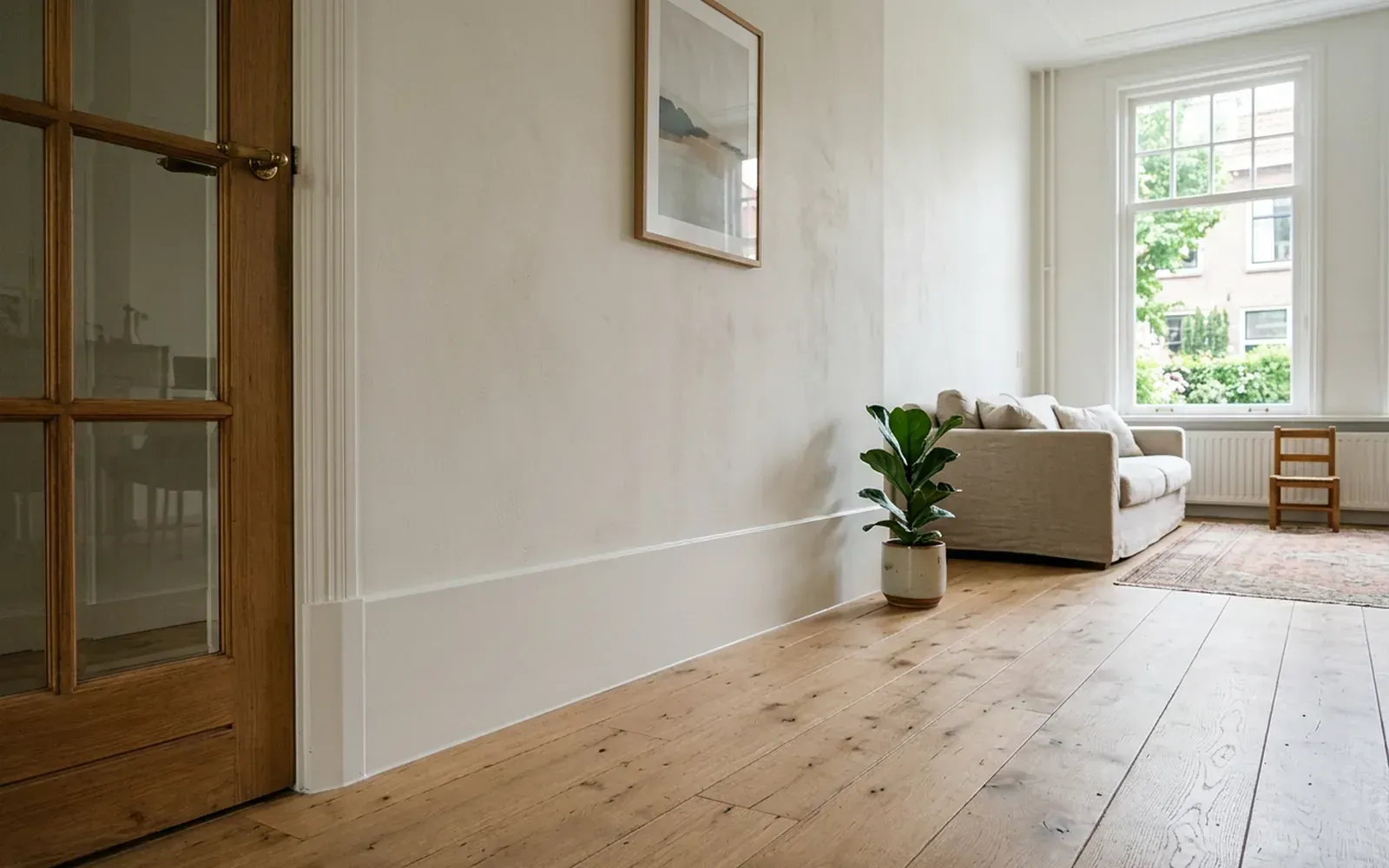
Tall skirting boards: which height suits your room?
Tall skirting boards give a room calm and character, as long as the height is right. Here is how to work out which skirting height suits your ceiling, floor and interior.
Choosing skirting
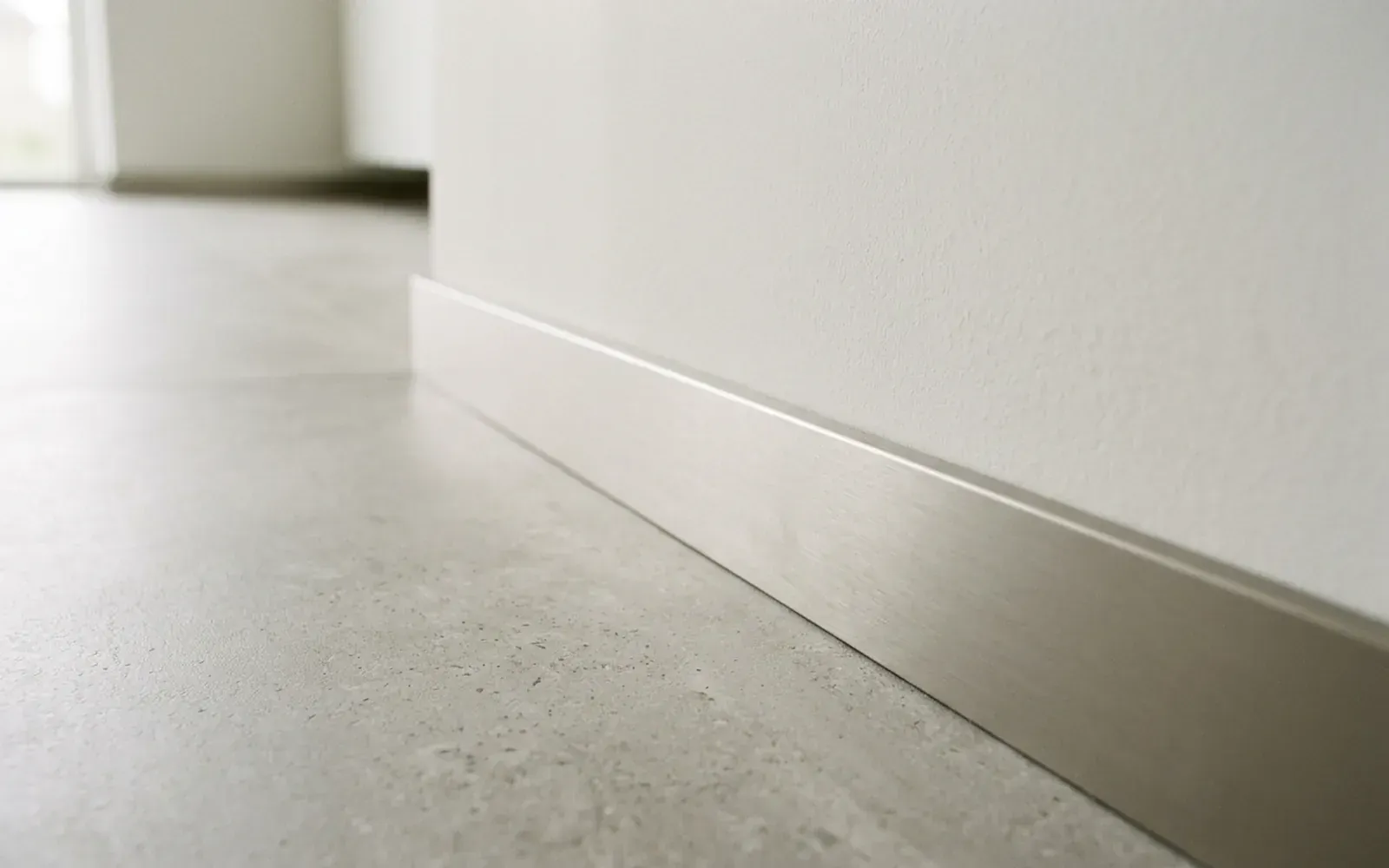
Aluminium skirting boards: sleek, modern and when they fit
Aluminium skirting boards suit sleek, modern interiors and commercial spaces. Here is how to choose between surface-mounted and recessed, and what it asks of your walls.
Choosing skirting
MDF skirting boards: pros, cons and when to choose them
MDF is the most popular material for skirting boards, but not the best choice in every situation. These are the advantages, the disadvantages and the pitfalls.
Related
Cable skirting
Cable skirting has space for cables at the back. That way, leads for the TV, internet or speakers disappear neatly out of sight.
Skirting board
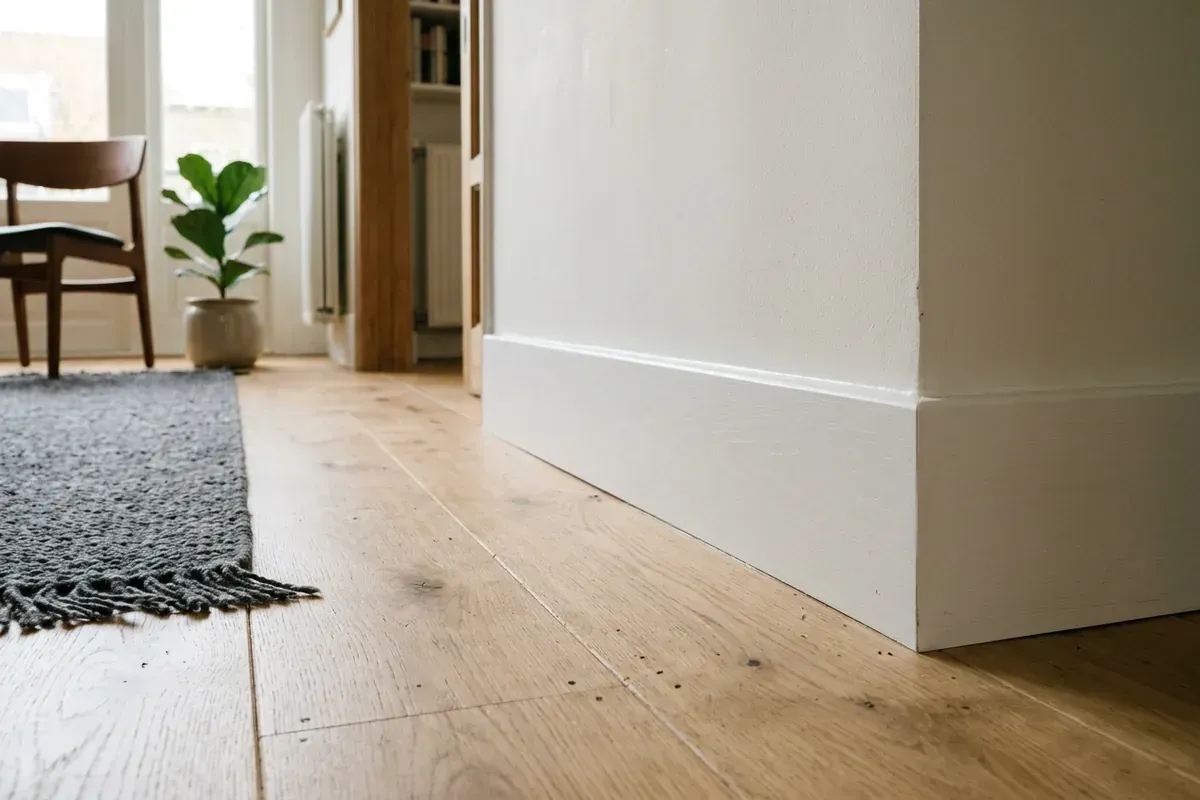
A skirting board is the moulding at the base of the wall that finishes the transition to the floor and protects the wall. Here is how it works and what to look out for.
MDF
MDF is a sheet material made of pressed wood fibres. It is stable, smooth and easy to paint, which makes it the most popular material for skirting boards.
Aluminium skirting
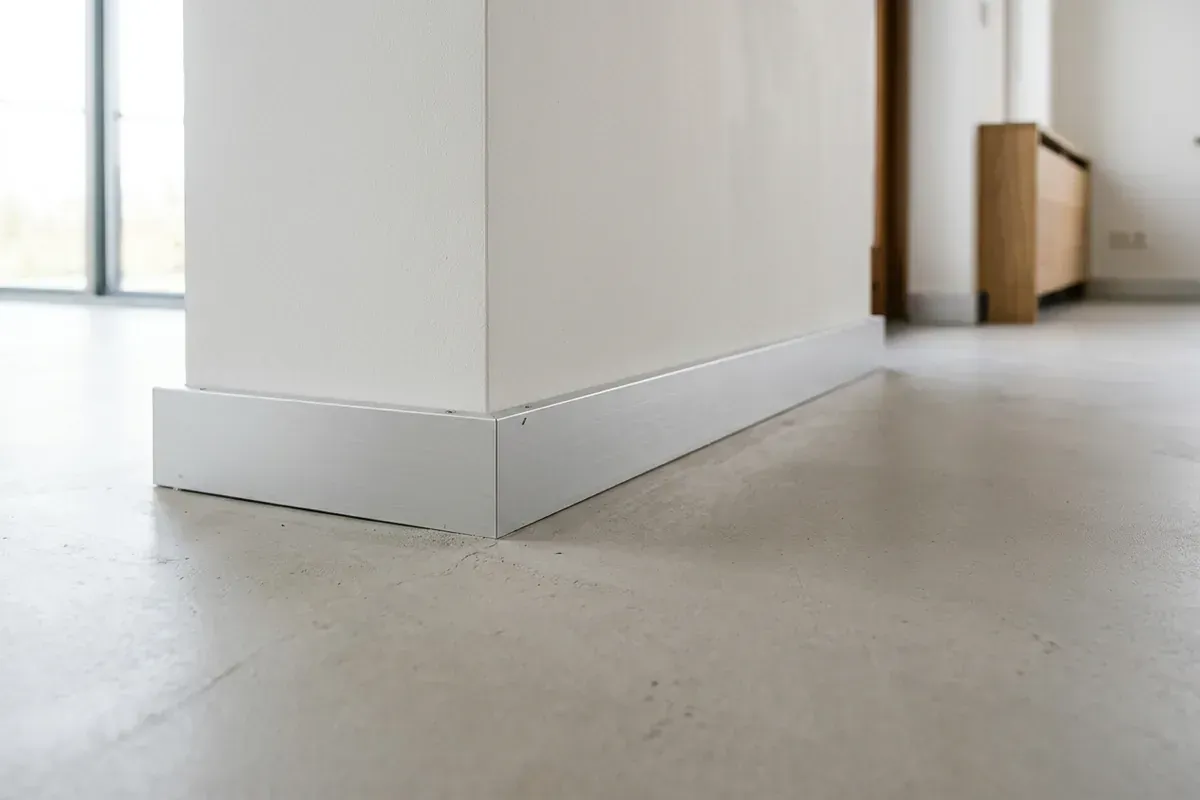
Aluminium skirting is a slim metal profile at the base of the wall. It suits sleek, modern interiors and can be combined with LED lighting.
Tall skirting
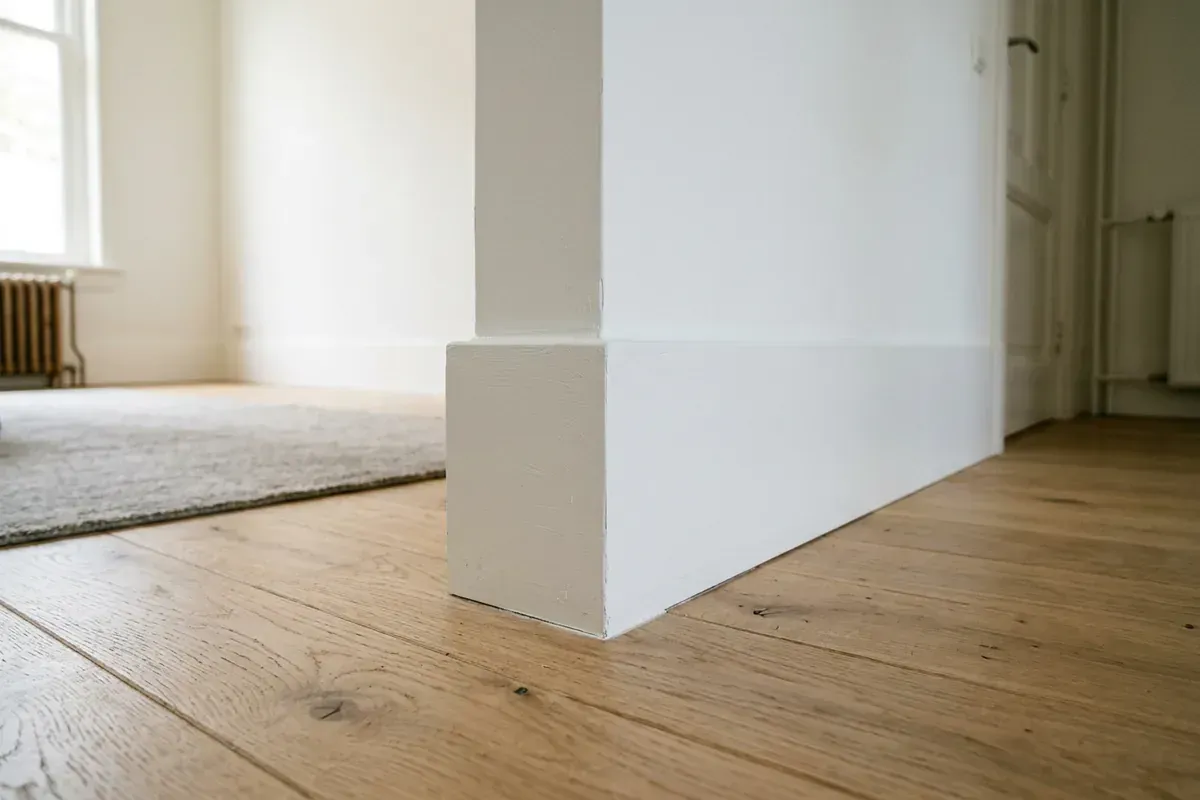
Tall skirting is usually 12 cm or higher. It gives a room calm and elegance, provided the height suits the ceiling and the interior.
Skirting board installation by a specialist skirting fitter
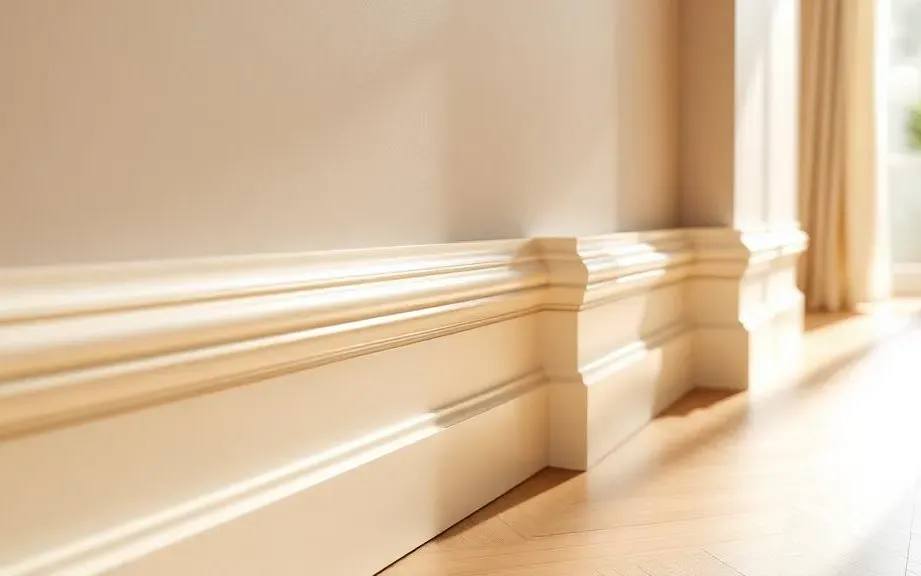
TipTop Plinten fits skirting boards in MDF, solid wood and aluminium, finished in any RAL colour and neatly matched to any floor, even with uneven walls.
Skirting board installation? Request a free quote
On-site measurement €75 incl. VAT (credited for orders above a minimum project size)