
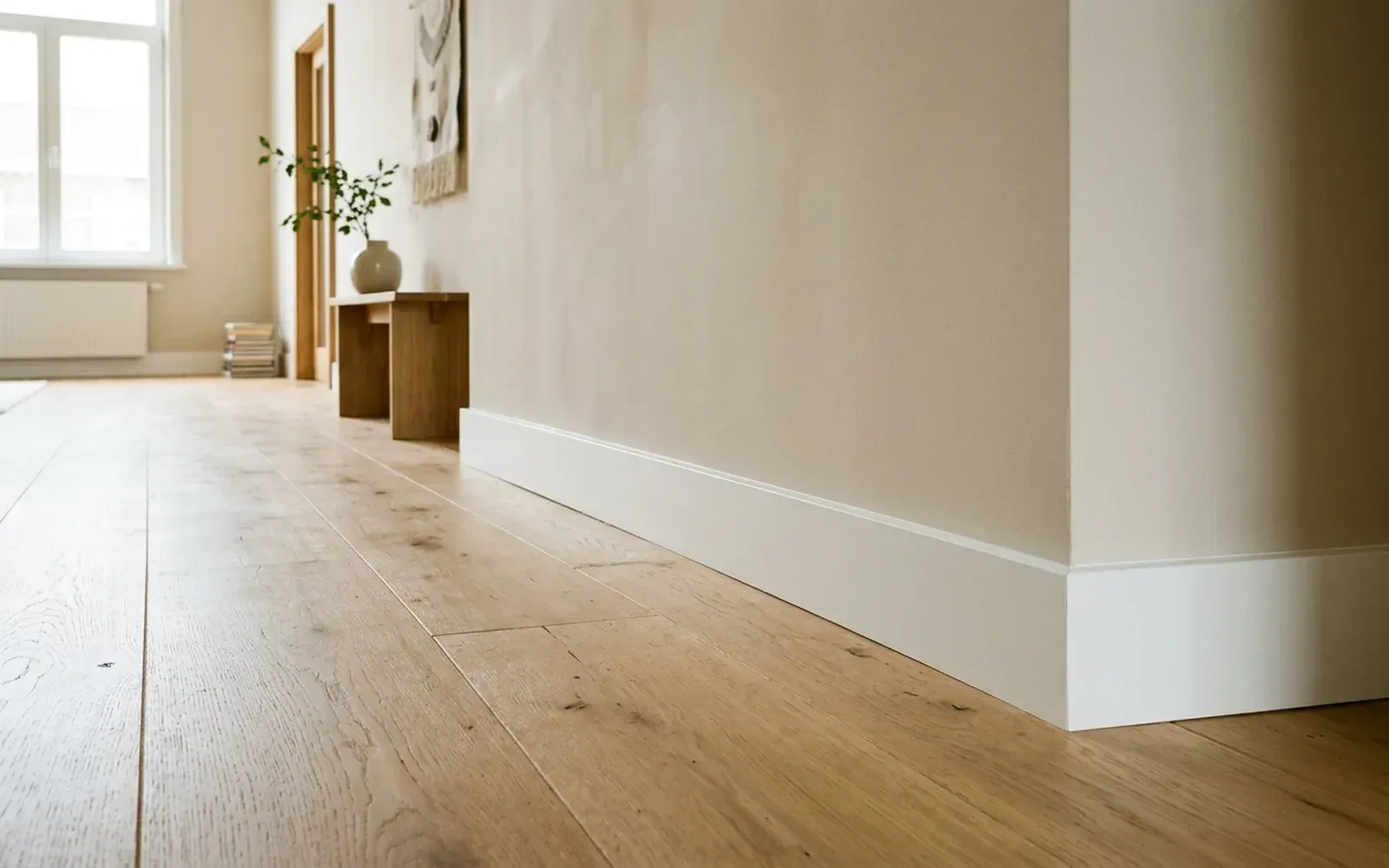
Paint your skirting boards or choose pre-finished ones? For most homes, pre-finished skirting boards are the quickest and cleanest choice: they come lacquered from the factory and only need touching up at the joints and holes after fitting. Painting skirting boards yourself gives more freedom in colour and sheen, but requires good preparation and several thin coats. What suits you best depends on the colour you want, the condition of the skirting boards and how much painting you want to do yourself.
Pre-finished, paint-ready or untreated?
Skirting boards are supplied in roughly three versions. The difference lies in how much finishing is still needed after fitting.
| Version | What is it? | Work after fitting |
|---|---|---|
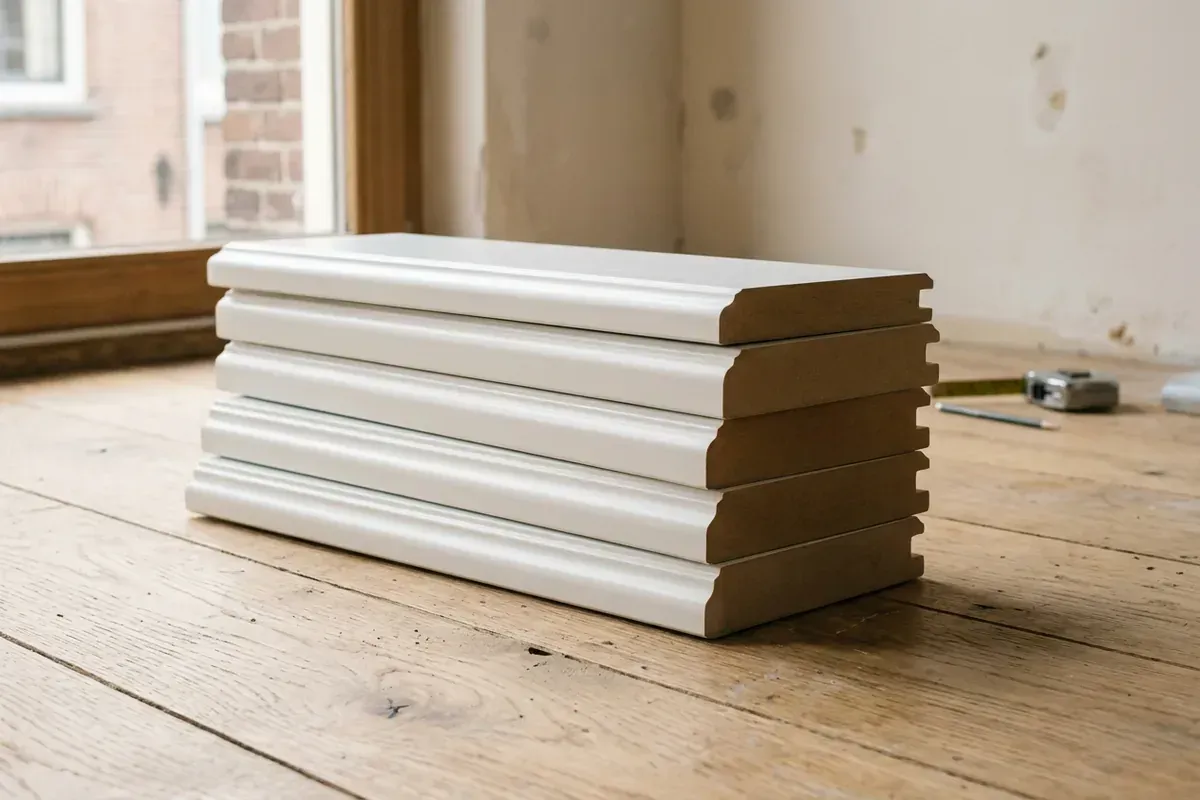
| Pre-finished skirting board | Lacquered at the factory in a final colour | Touch up caulked joints, mitres and holes |
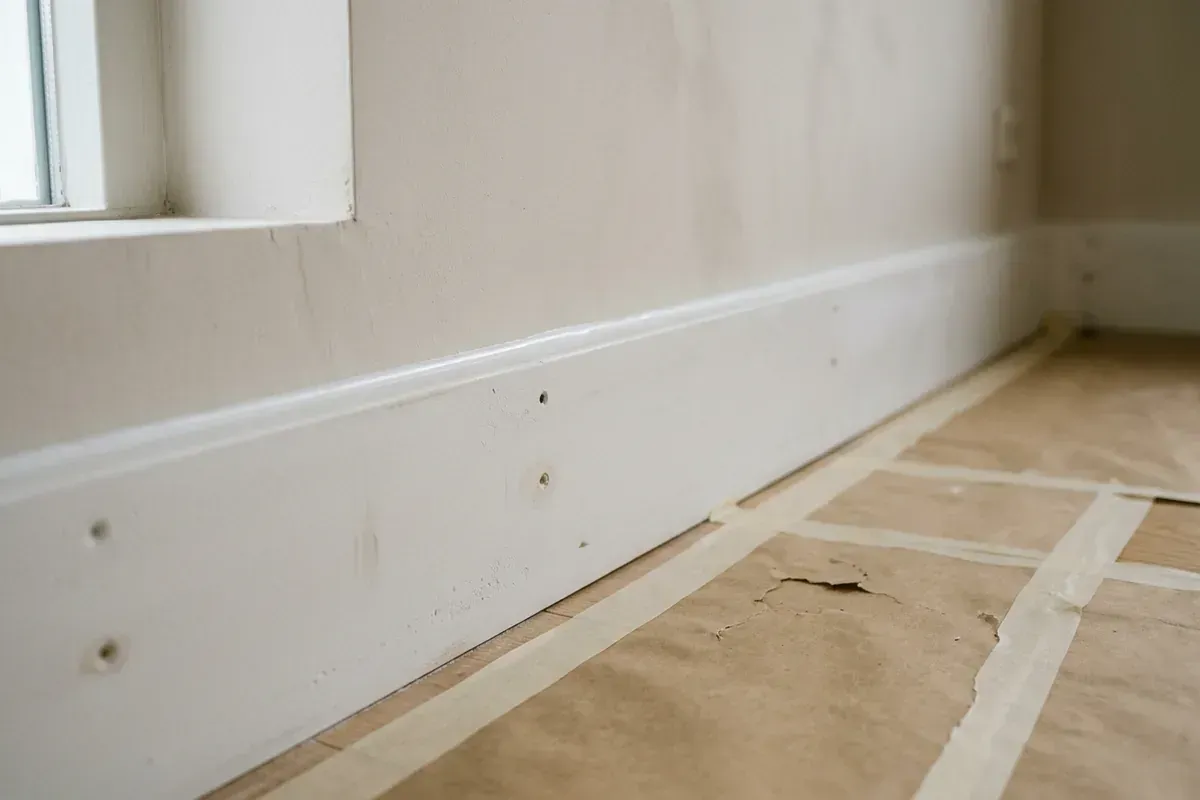
| Paint-ready skirting board | Supplied with a primer coat | Fill holes, caulk, apply top coat in final colour |
| Untreated | Bare wood or MDF | Prime, fill, caulk, apply top coat |
With MDF skirting boards, people usually choose pre-finished or paint-ready. Bare MDF absorbs paint unevenly and the fibres swell if you do not prime it first. You can read more about the material in MDF skirting boards: pros and cons.
When should you choose pre-finished skirting boards?
Pre-finished skirting boards are a logical choice if:
- you want a standard colour, such as white in RAL 9010 or RAL 9016;
- you want as little painting in the house as possible;
- the floor has already been laid and you do not want to risk paint splashes;
- you are looking for an even, factory-quality lacquer finish.
A few things still need touching up after fitting. A mitre is touched up on the cut edge after sawing, acrylic caulk joints are painted over and any fixing holes are filled and spot-painted. If you are torn between two shades of white, read white skirting boards: RAL 9010 or 9016.
When is painting skirting boards the better choice?
Painting skirting boards yourself or after fitting makes sense if:
- you want a non-standard colour, or want the skirting board to match the wall colour exactly;
- you are refreshing existing skirting boards rather than replacing them;
- the skirting boards are solid wood and you want them in a particular paint or stain colour;
- you want the skirting board, caulked joint and wall finished in one continuous colour.
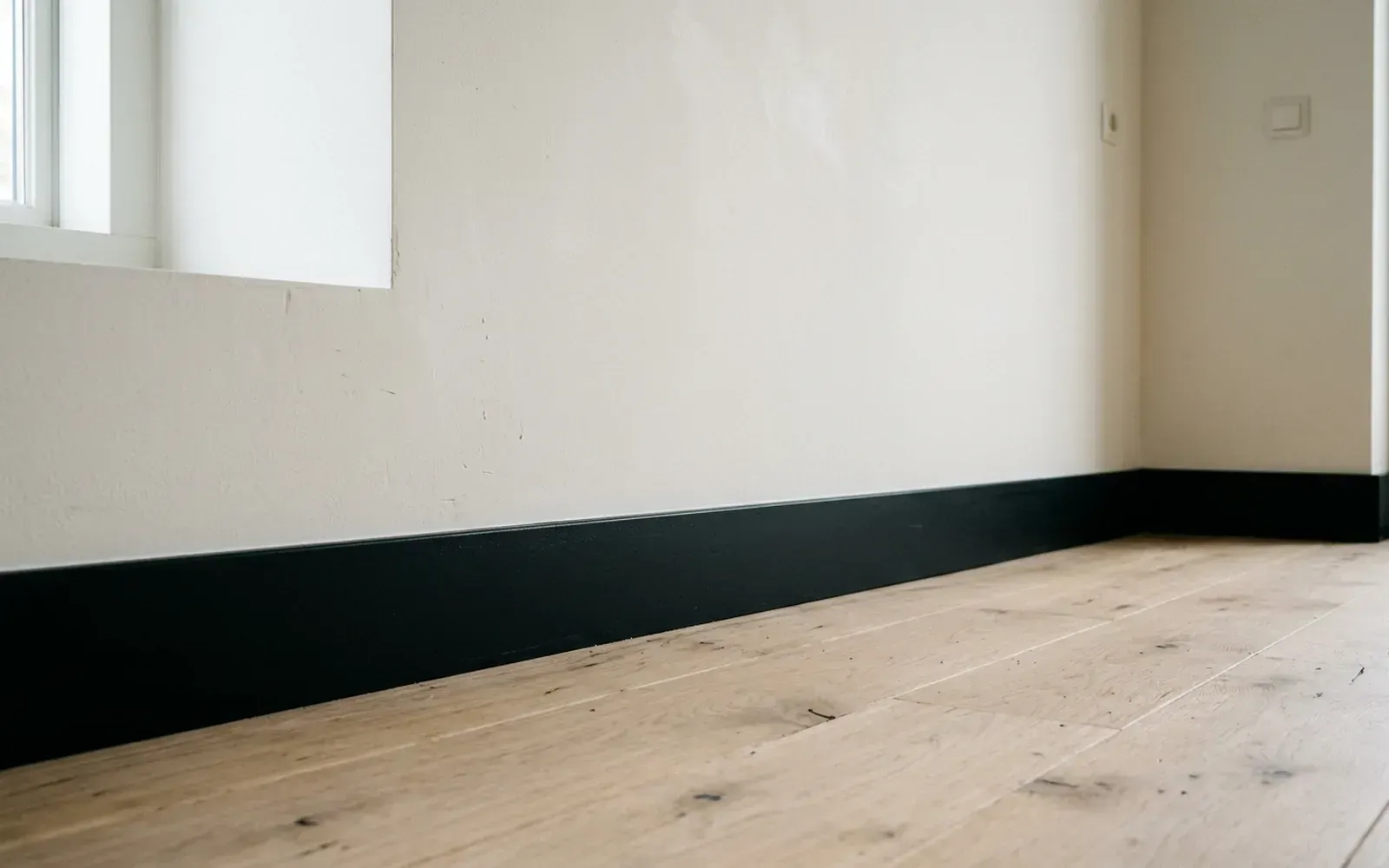
Black skirting boards are a special case. A matt black finish such as RAL 9005 shows every imperfection, every speck of dust and every brush mark. An even coat of paint is especially important there. More on this in black skirting boards in RAL 9005.
Painting skirting boards: how to go about it
If you are going to paint skirting boards, the preparation determines the result.
1. Clean and sand lightly
Make the skirting boards free of grease and dust. Lightly sand an existing coat of paint with fine sandpaper so that the new coat adheres well. Then thoroughly vacuum up the sanding dust, including in the corner between the skirting board and the floor.
2. Mask off
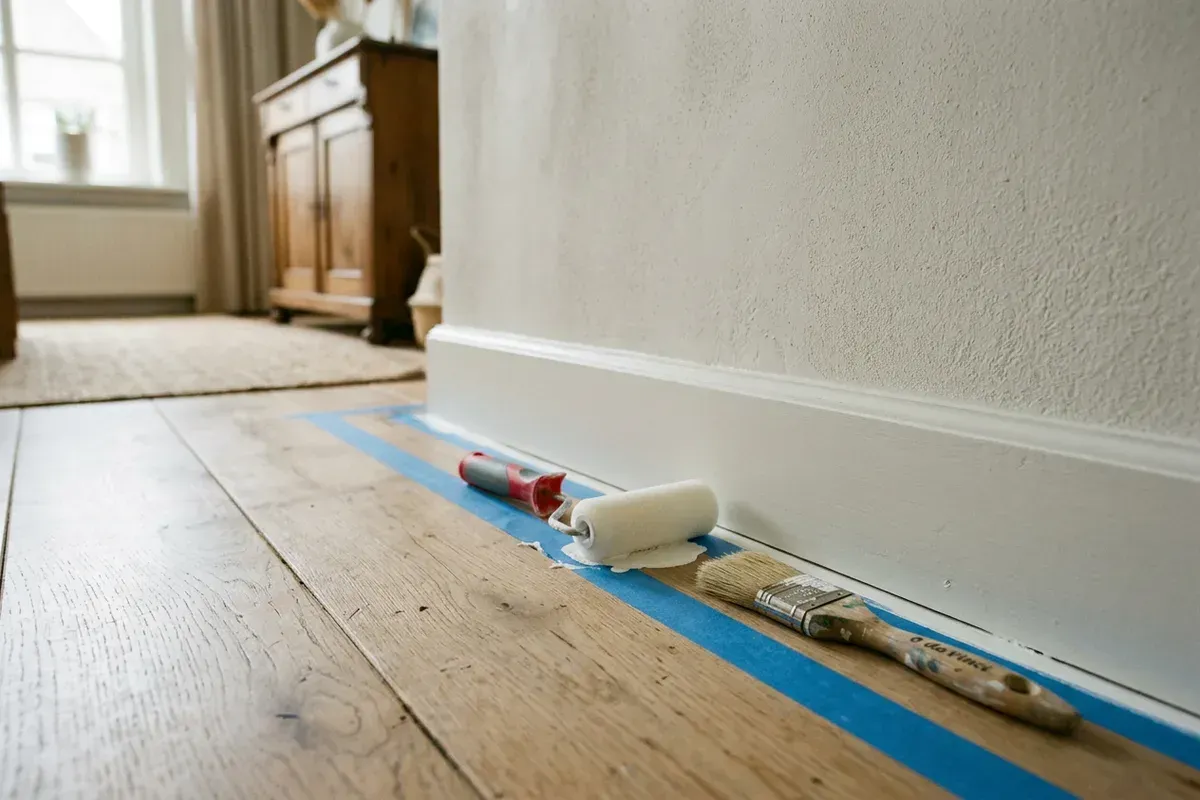
Mask off the floor along the skirting board with painter's tape. If you do not want to paint the wall as well, mask off the wall above the skirting board too. With a floating floor, make sure no paint runs into the gap under the skirting board.
3. Fill holes and caulk joints
Fill nail and screw holes with a filler suitable for interior woodwork. Caulk the joint between the skirting board and the wall with paintable acrylic caulk. Do not use silicone sealant here: paint does not adhere to it. In caulking skirting boards: which sealant? you can read how to run a neat bead.
4. Prime where necessary
Bare wood, bare MDF and spots where you have sanded through first get a suitable primer. On a pre-finished skirting board that is only being touched up, this is usually not necessary.
5. Apply the top coat in thin layers
Use a small paint roller for the flat parts and a fine brush for profiles and corners. Two thin coats give a smoother result than one thick coat, which will sag or drip. Follow the paint manufacturer's drying and recoating times, and sand lightly between coats if that is recommended.
Common mistakes when painting skirting boards
- Painting over dust. Every speck shows up in the paint, especially with satin.
- Coats that are too thick. The paint runs and forms drips at the bottom of the skirting board.
- Painting over silicone sealant. The paint beads up and peels off.
- Not priming MDF. The fibres swell and the surface becomes rough.
- Leaving tape on too long. Pull the tape off as soon as the last coat is no longer wet, otherwise the paint edge can tear with it.
Matt, satin or gloss?
Besides the colour, the sheen level determines how the skirting board looks. A matt paint is calm and hides small imperfections better, but is sometimes slightly more prone to marks. Satin is a popular middle ground: easy to keep clean and not too shiny. High gloss gives a pronounced, sleek effect, but shows every imperfection in the surface underneath.
Combination: fitting pre-finished and touching up the colour
In practice, many clients choose a middle way: having pre-finished skirting boards fitted and having the caulked joints and mitres touched up in the same colour after fitting. That way you have a factory-quality lacquer finish and a seamless connection to the wall.
In the apartment in Leerdam, matt black skirting boards in RAL 9005 were fitted as a contrast to light floors and walls. With such a dark colour in particular, the finishing of joints and corners determines how clean the end result looks.
Have skirting boards fitted in the colour you want
TipTop Plinten fits MDF, solid wood and aluminium skirting boards and finishes them in any RAL colour. On the skirting board installation page you can read which materials and finishes are possible. Caulking and touching up joints are part of the finishing; more on this under caulking and finishing.
Request a quote
Do you already know which colour you want, or are you unsure whether to go for pre-finished or painting? Send a few photos of the room, the estimated number of metres and the colour you have in mind via contact. The quote is free and without obligation. An on-site measurement is optional and costs €75 incl. VAT; for jobs above a minimum project size, that amount is credited. We are happy to communicate in English, and also in Dutch, German, Turkish, Persian and Arabic.
Frequently asked questions
A pre-finished skirting board has been lacquered at the factory and can be fitted straight away. A paint-ready skirting board has a primer coat and still needs a top coat after fitting. With both, the caulked joints and any fixing holes still need finishing after installation.
On a properly primed MDF skirting board, use a paint suitable for interior woodwork, often a water-based paint in satin or matt. Bare MDF must be primed first, as otherwise the fibres swell and the paint is absorbed unevenly.
Yes. Mask off the floor and wall, clean the skirting board and give it a light sand, fill the joints with acrylic caulk and then paint in thin coats. Make sure you do not seal the floor and the expansion gap under the skirting board with paint.
TipTop Plinten can have skirting boards finished in any RAL colour, for example RAL 9010 white or RAL 9005 matt black. If you want a specific colour, mention it in your enquiry so that it can be included in the quote.
Usually only touching up. Acrylic caulk joints, the mitres and any nail or screw holes are touched up in the same colour after fitting, so that no mismatched spots remain visible.
Related articles
Installation & finishing
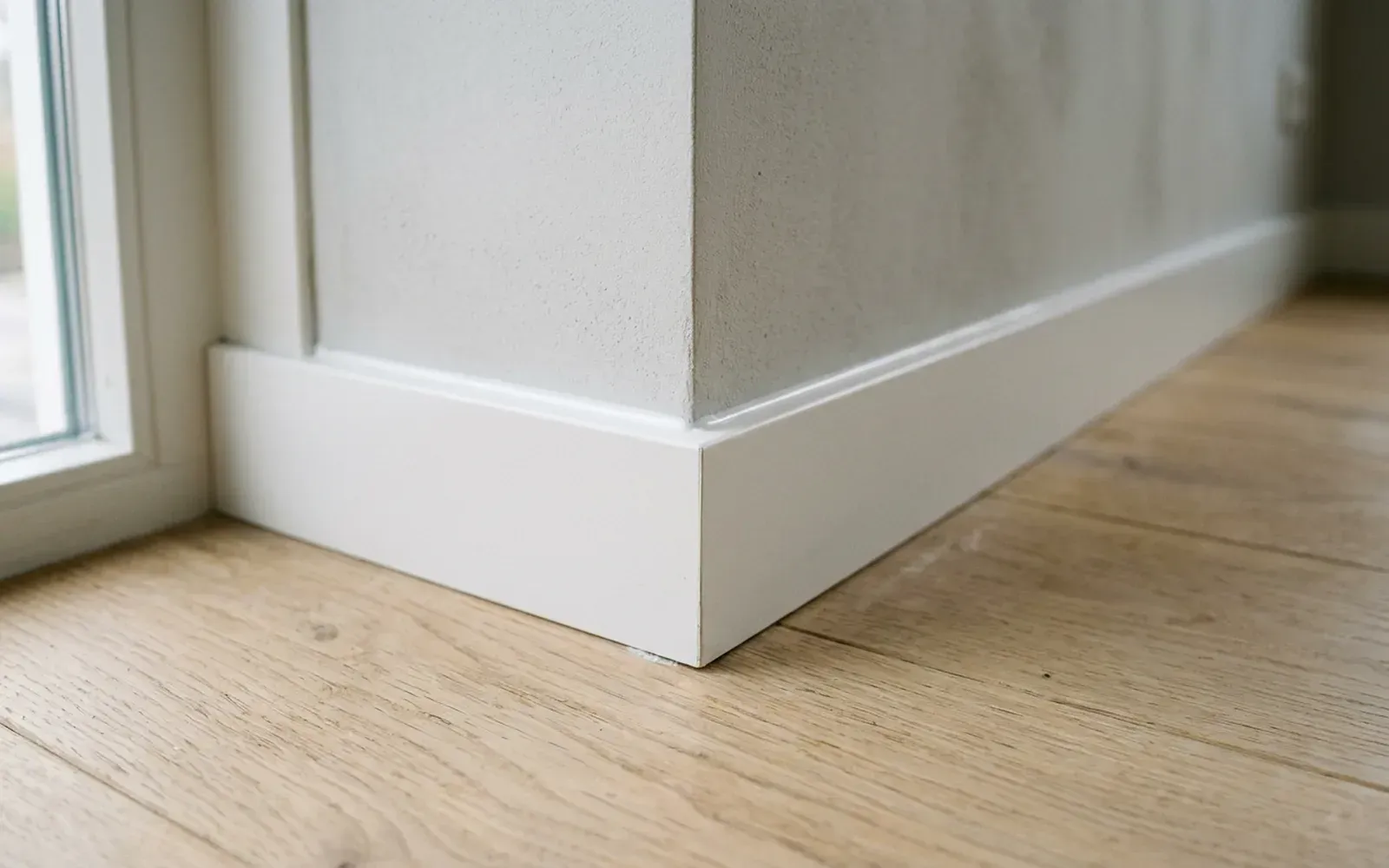
Caulking skirting boards: which sealant should you use and how do you get a neat finish?
For the joint between skirting board and wall you use paintable acrylic caulk, and silicone only where water is involved. Here is how to run a clean caulk line.
Choosing skirting
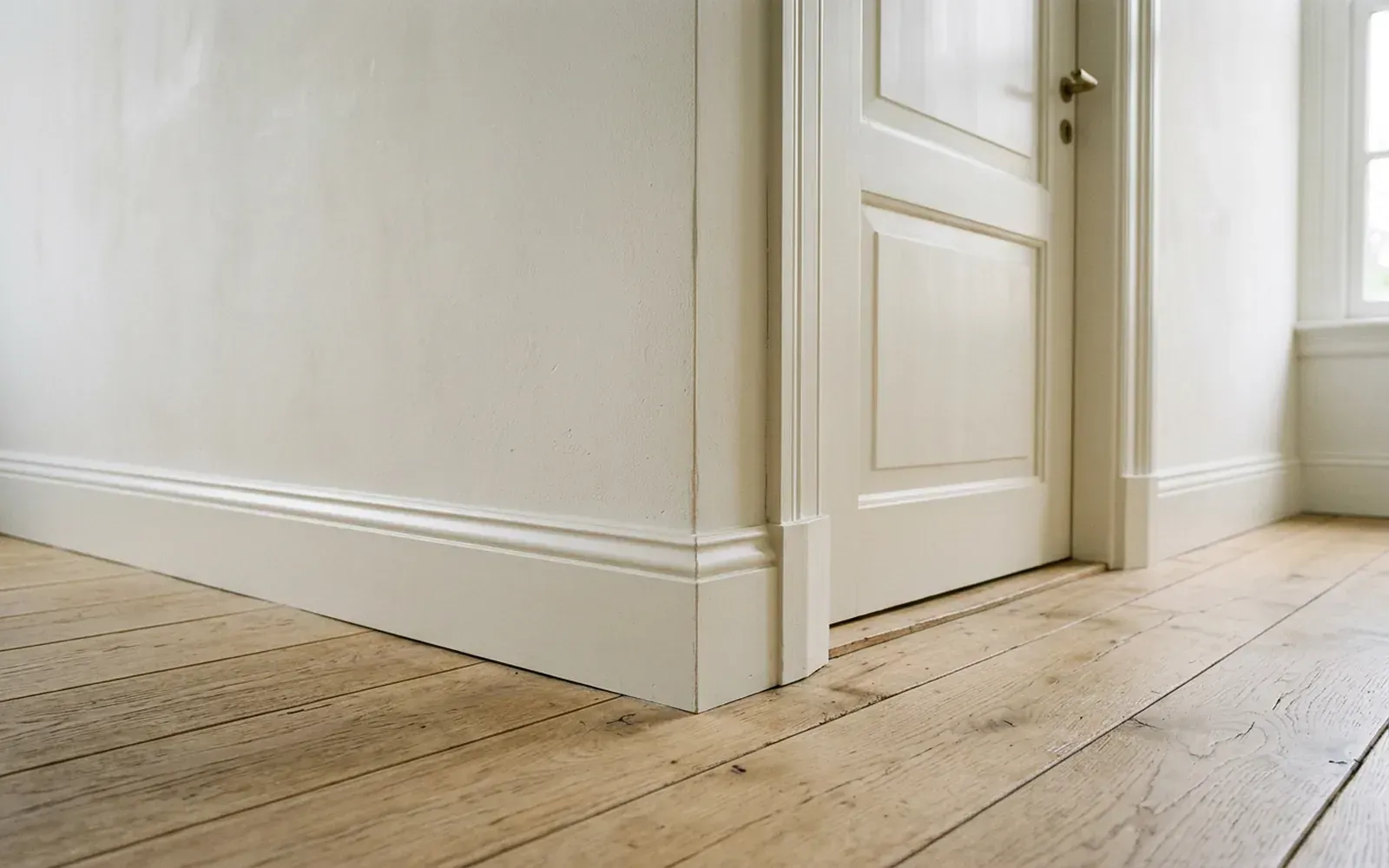
White skirting boards: RAL 9010 or RAL 9016?
White is not just white. The difference between RAL 9010 and RAL 9016 seems small, but next to a white door or wall you notice it straight away.
Choosing skirting
Black skirting boards in RAL 9005: when do they work and what should you look out for?
Black skirting boards give an interior a graphic, contemporary look. Here is how to choose the right finish and keep dust and scratches from spoiling the effect.
Related
Pre-finished skirting
Pre-finished skirting has already been painted at the factory. That saves painting, but the joints and corners need neat touching up.
Paint-ready
Paint-ready means skirting boards and mouldings have been fitted, filled and caulked, so only the final coat of paint still needs to be applied.
RAL 9010
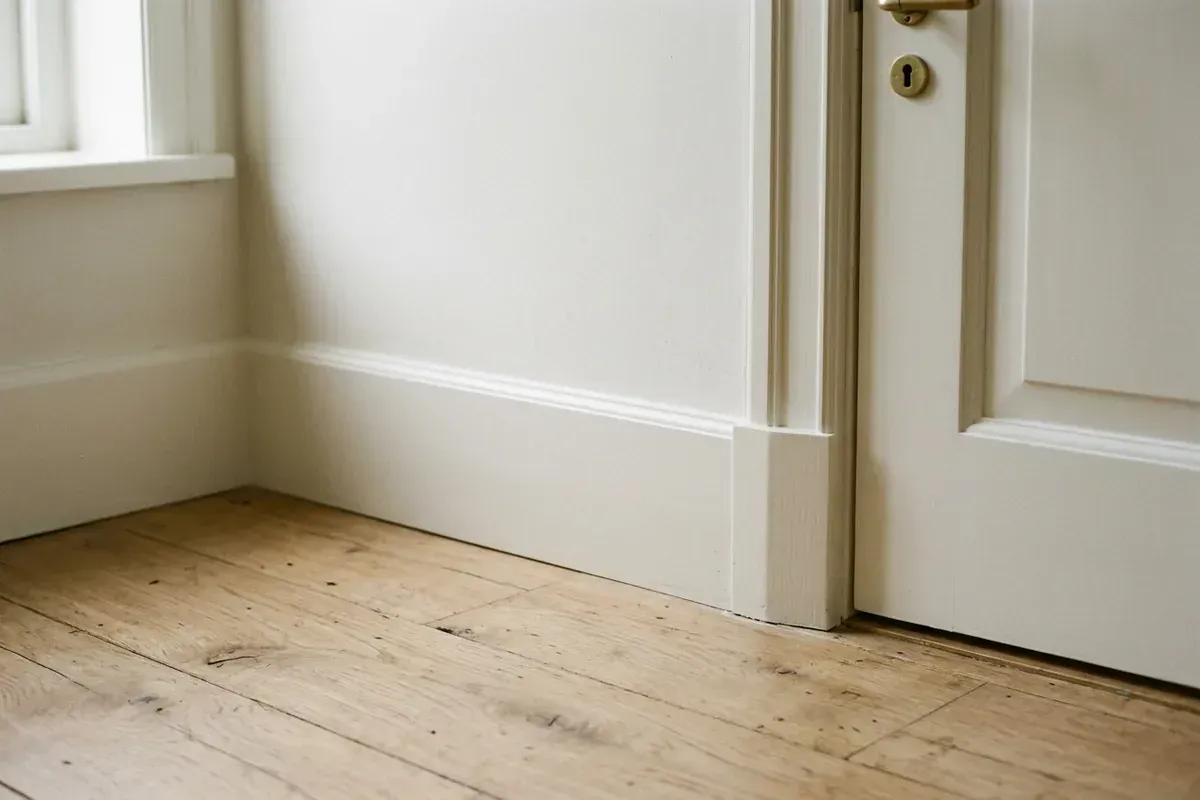
RAL 9010 is called pure white and is a slightly warm, soft white. It is one of the most popular colours for skirting boards, doors and mouldings.
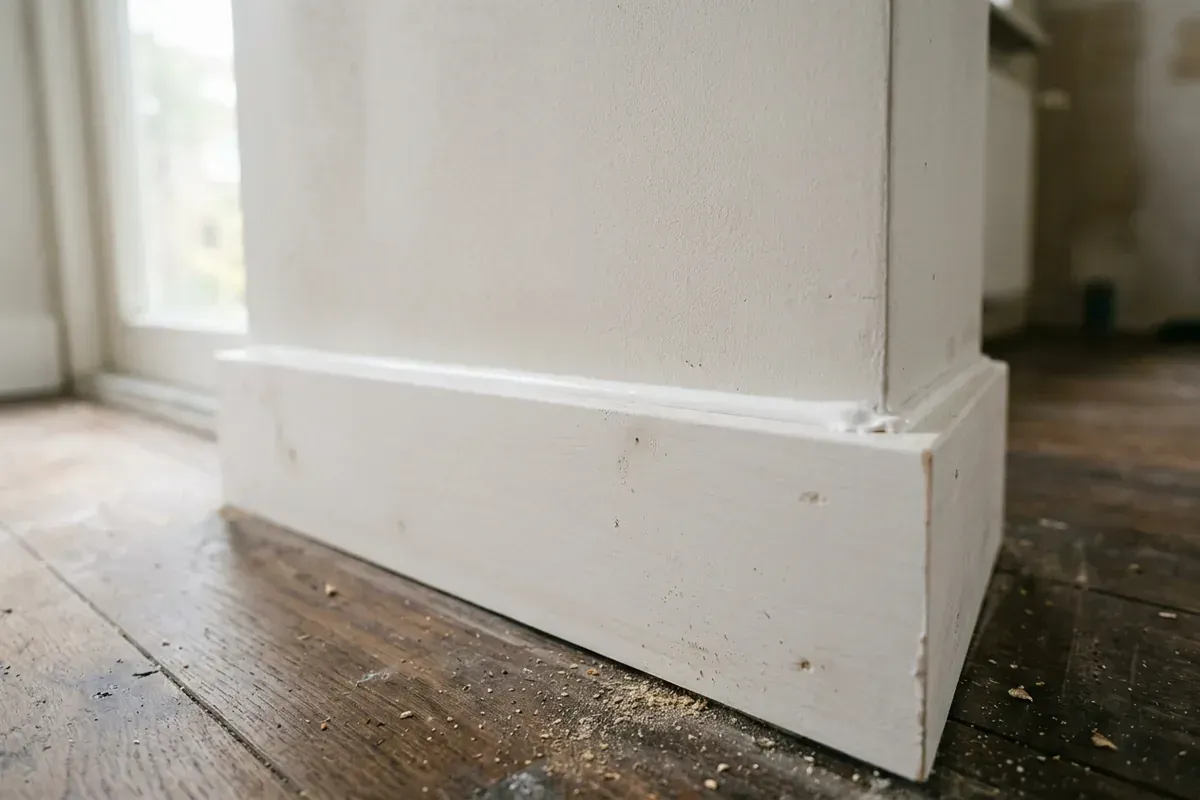
Acrylic caulk
Acrylic caulk is a water-based sealant that can be painted once cured. It is the usual choice for skirting boards, mouldings and frames in dry rooms.
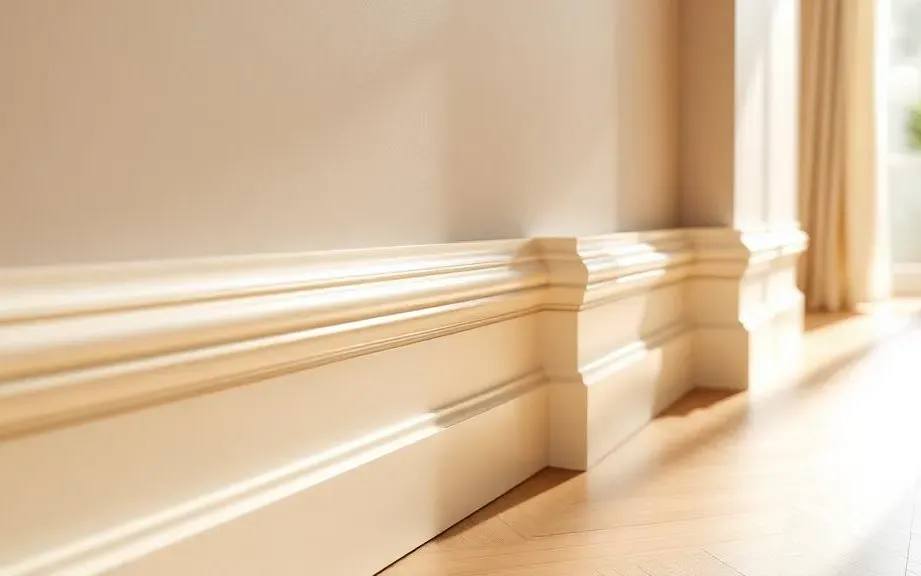
Skirting board installation by a specialist skirting fitter
TipTop Plinten fits skirting boards in MDF, solid wood and aluminium, finished in any RAL colour and neatly matched to any floor, even with uneven walls.
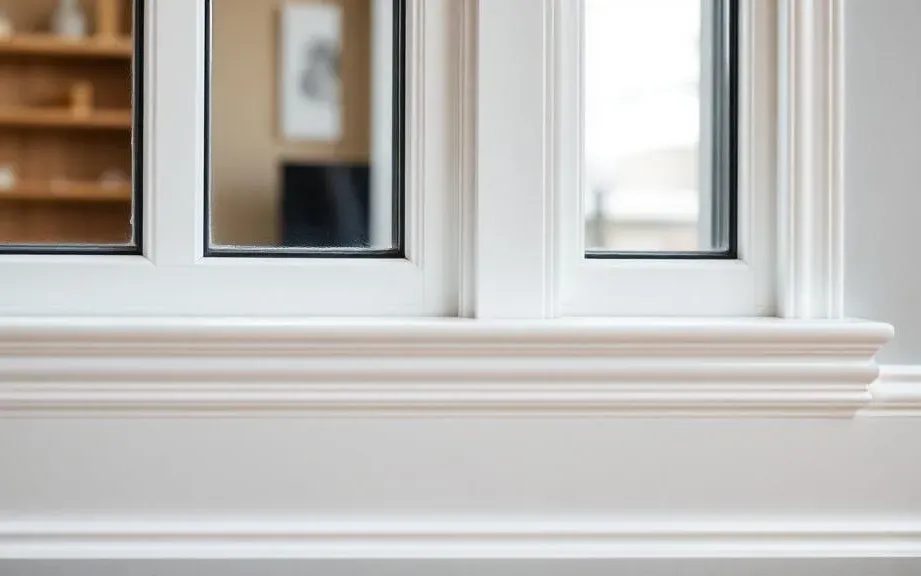
Caulking skirting boards and sealant work for a seamless finish
Caulking is the final step that makes skirting boards, mouldings and panels look seamless. TipTop Plinten uses acrylic or silicone, paint-ready or in colour.
Skirting board installation? Request a free quote
On-site measurement €75 incl. VAT (credited for orders above a minimum project size)