
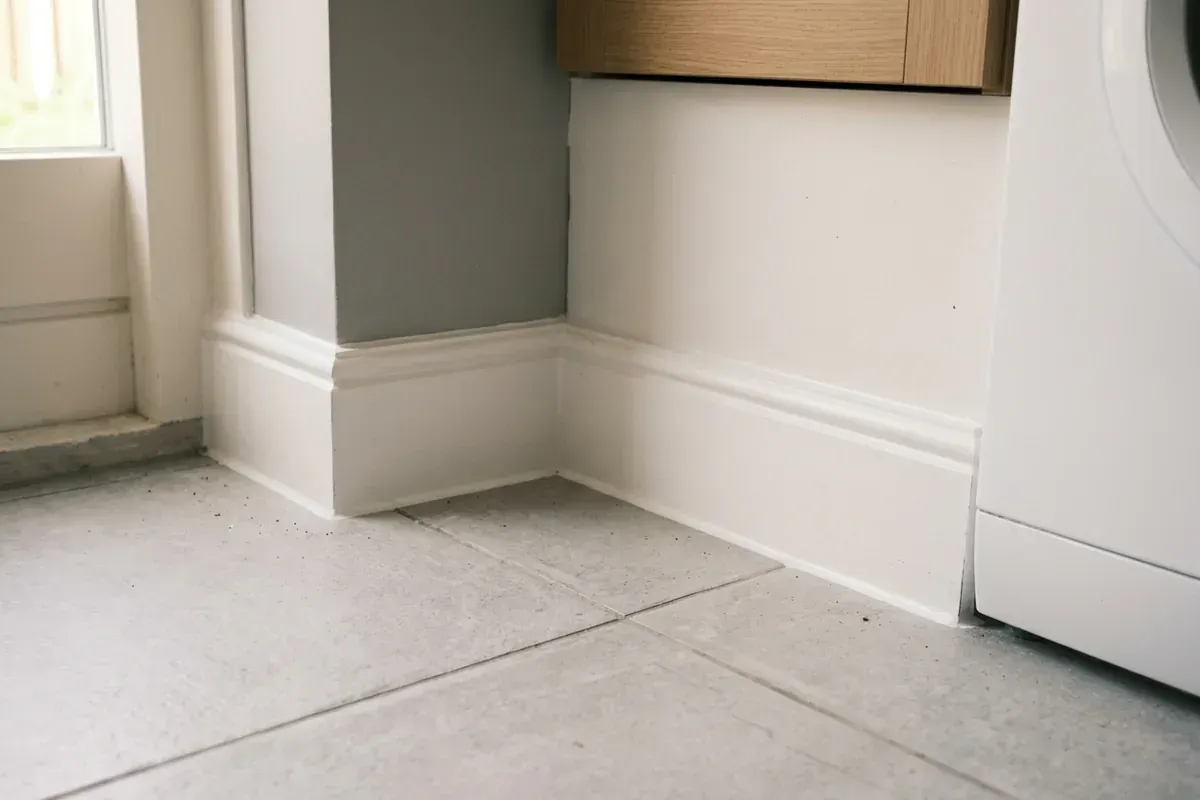
Moisture-resistant MDF is MDF to which moisture-repellent agents have been added during production. As a result it absorbs moisture less quickly and swells less than standard MDF. Moisture-resistant MDF is used for skirting boards and mouldings in rooms with higher humidity or where water can occasionally reach the skirting.
What is moisture-resistant MDF?
Standard MDF consists of wood fibres pressed with resin into a board. With prolonged exposure to moisture, those fibres can swell, especially at the cut edges and the bottom. Moisture-resistant MDF, often labelled MR MDF, is treated to cope better with moisture. Many manufacturers give it a green core, so it is easy to recognise.
| Standard MDF | Moisture-resistant MDF | |
|---|---|---|
| Use | Dry living spaces | Rooms with more moisture |
| Swelling with moisture | Faster | Slower |
| Waterproof | No | No |
Where is it used?
- In utility rooms, laundry rooms and toilets.
- In entrance halls, where wet shoes and mop water reach the skirting.
- In kitchens, along the skirting at the kitchen island or worktop.
- In bathrooms, outside the directly wet zone.
What should you look out for?
- Not waterproof: moisture-resistant does not mean waterproof. For places that really get wet, tiles or aluminium are better.
- Cut edges: even with moisture-resistant MDF, cut edges are the weak spot. They are sealed after cutting.
- Finish: a good coat of paint and a closed caulk joint keep moisture out. In wet zones, silicone sealant belongs there too.
- Bottom edge: the bottom of the skirting must not stand in a puddle of water; make sure water can be wiped up quickly.
- Choice per room: there is no need to use moisture-resistant MDF throughout the home; only where it is useful.
You can read more about the properties of MDF in MDF skirting boards: pros and cons.
At TipTop Plinten
TipTop Plinten works with MDF and uses moisture-resistant MDF where needed. Solid wood and aluminium are also possible. Read more about skirting board installation.
Frequently asked questions
No. Moisture-resistant MDF absorbs moisture less quickly and swells less than standard MDF, but it is not suitable for prolonged wetting. For places that really get wet, such as the shower area, tiles or aluminium are better.
Moisture-resistant MDF is often labelled MR MDF (moisture resistant) and, with many manufacturers, has a green-coloured core. With pre-finished skirting boards the core is not visible; the type is then stated in the product information.
Related
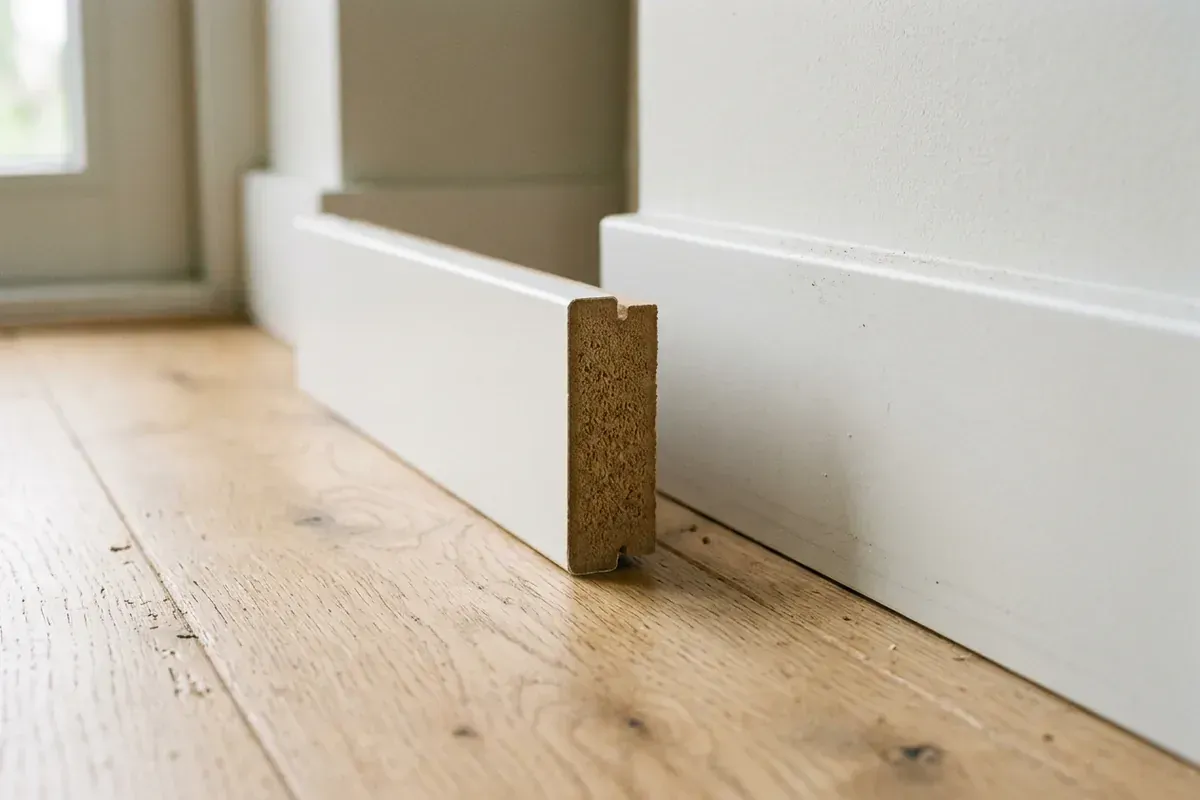
MDF
MDF is a sheet material made of pressed wood fibres. It is stable, smooth and easy to paint, which makes it the most popular material for skirting boards.
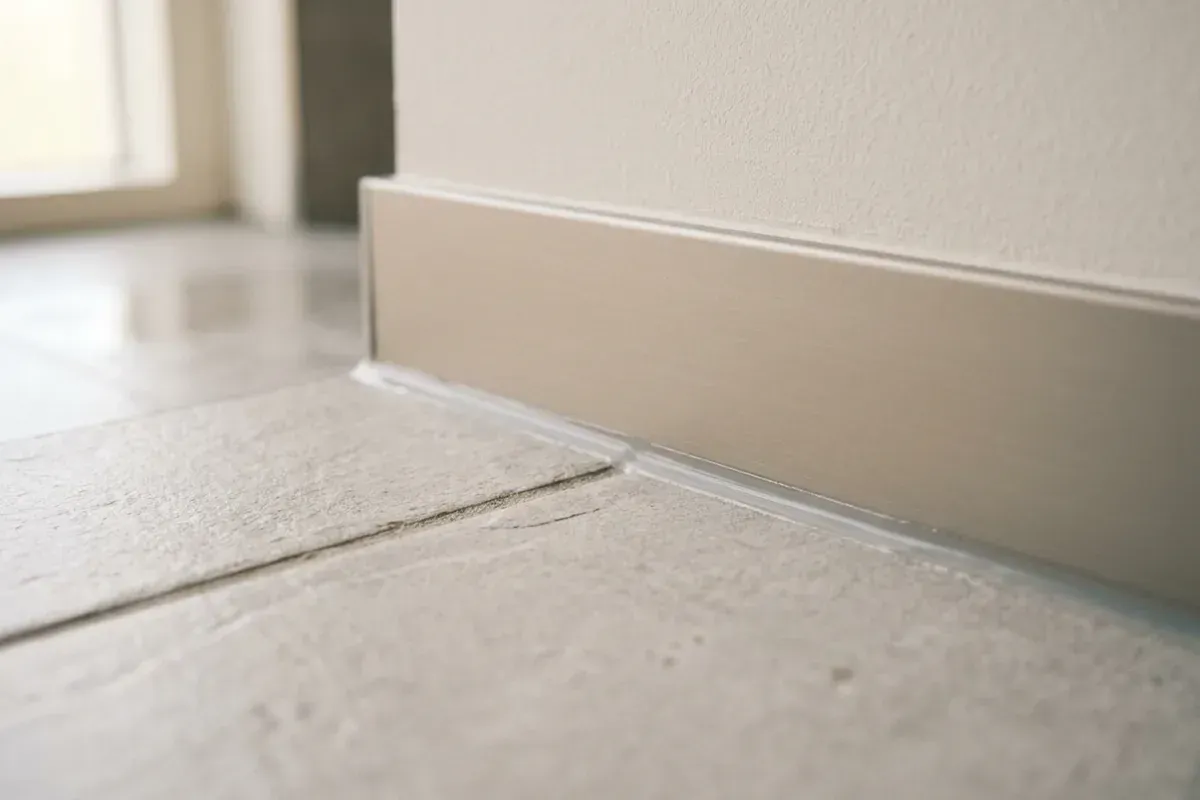
Silicone sealant
Silicone sealant is highly flexible and water-resistant, but cannot be painted. It belongs in wet rooms, not along painted skirting boards.
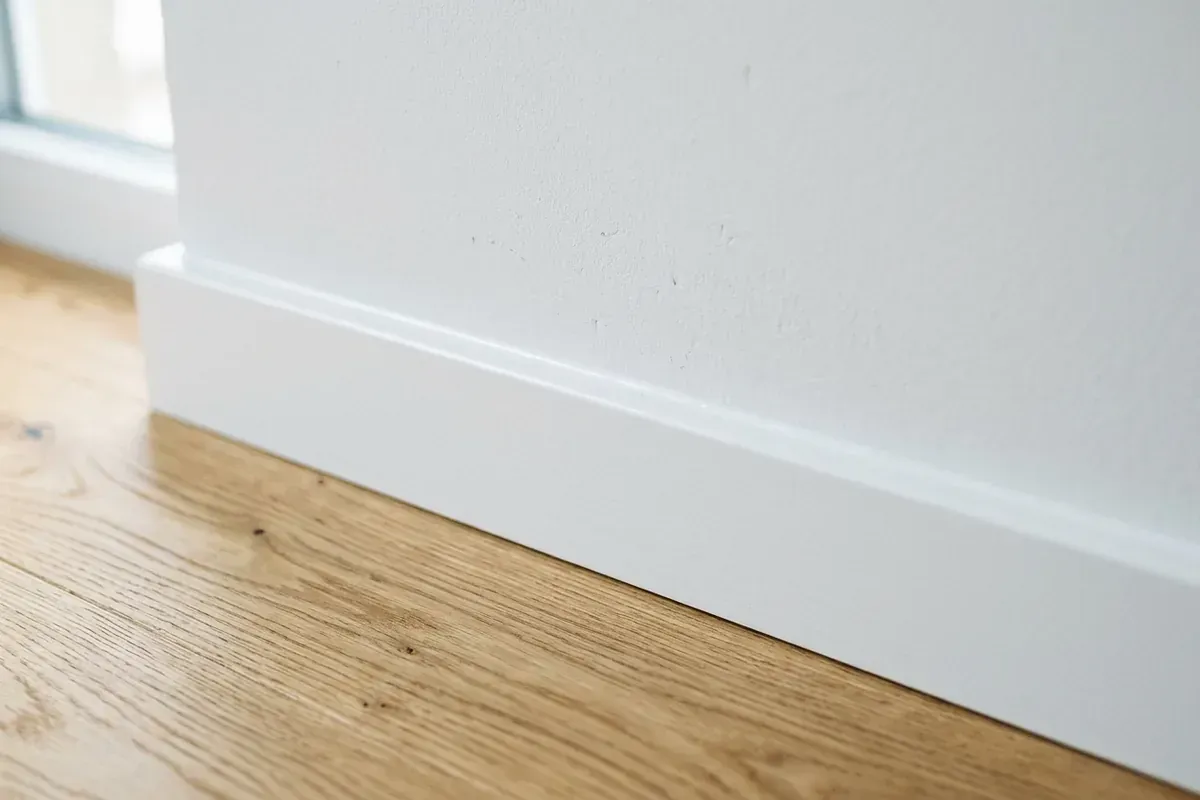
Caulking
Caulking means sealing joints with a flexible sealant. With skirting boards and mouldings, it makes the transition to the wall crisp and seamless.
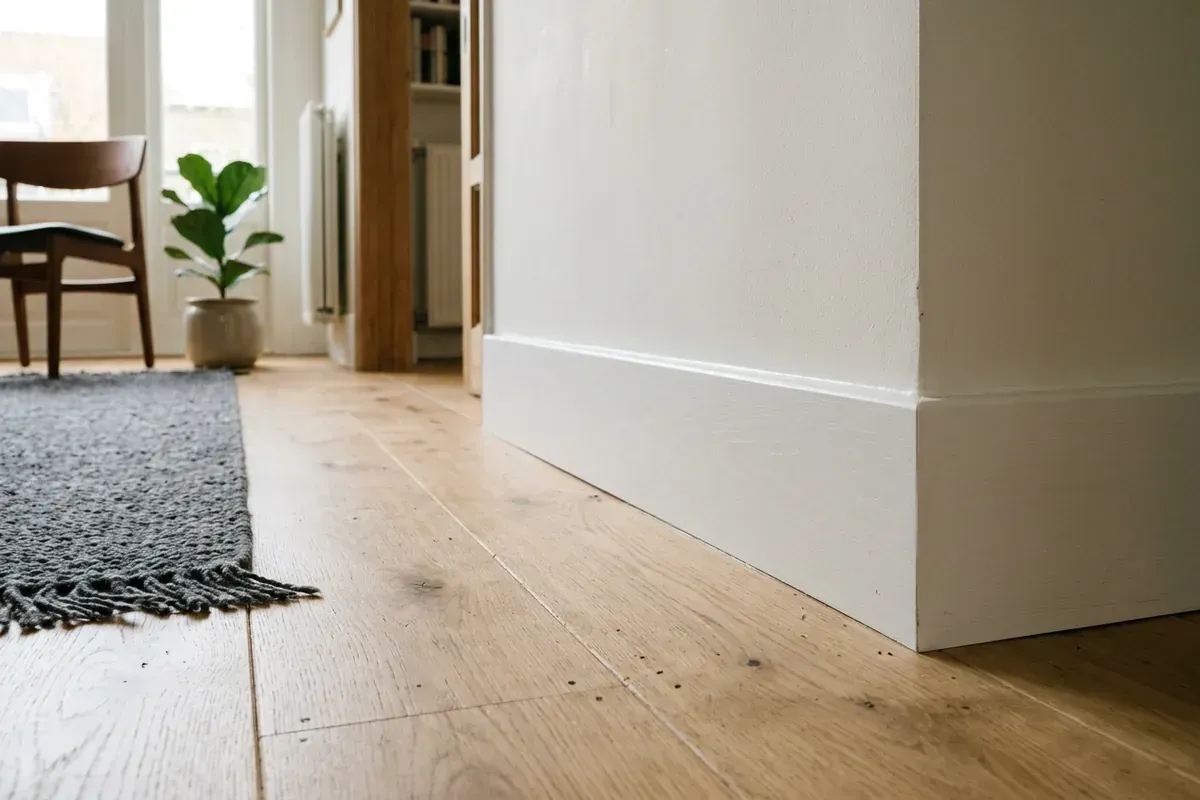
Skirting board
A skirting board is the moulding at the base of the wall that finishes the transition to the floor and protects the wall. Here is how it works and what to look out for.
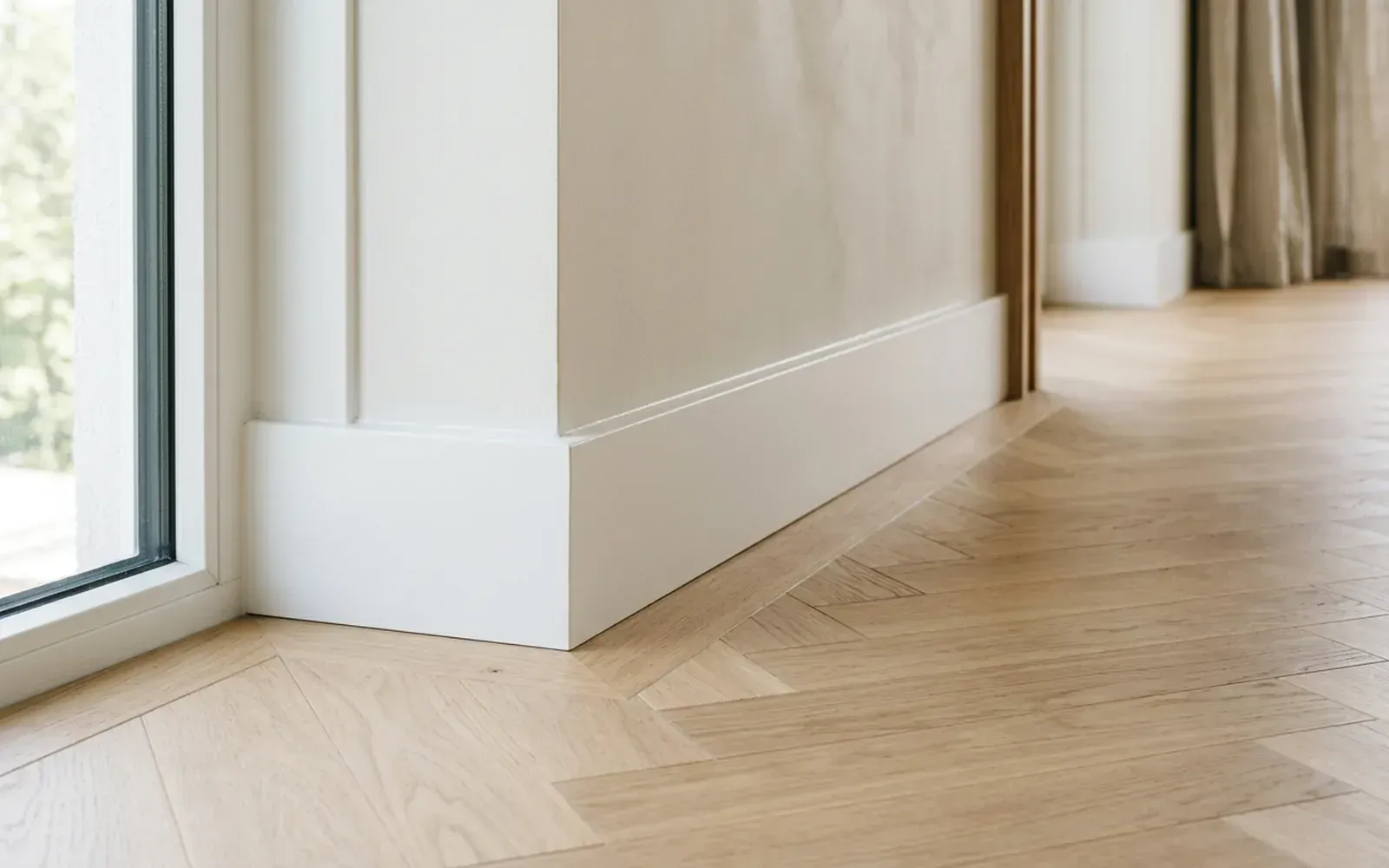
Choosing skirting
MDF skirting boards: pros, cons and when to choose them
MDF is the most popular material for skirting boards, but not the best choice in every situation. These are the advantages, the disadvantages and the pitfalls.
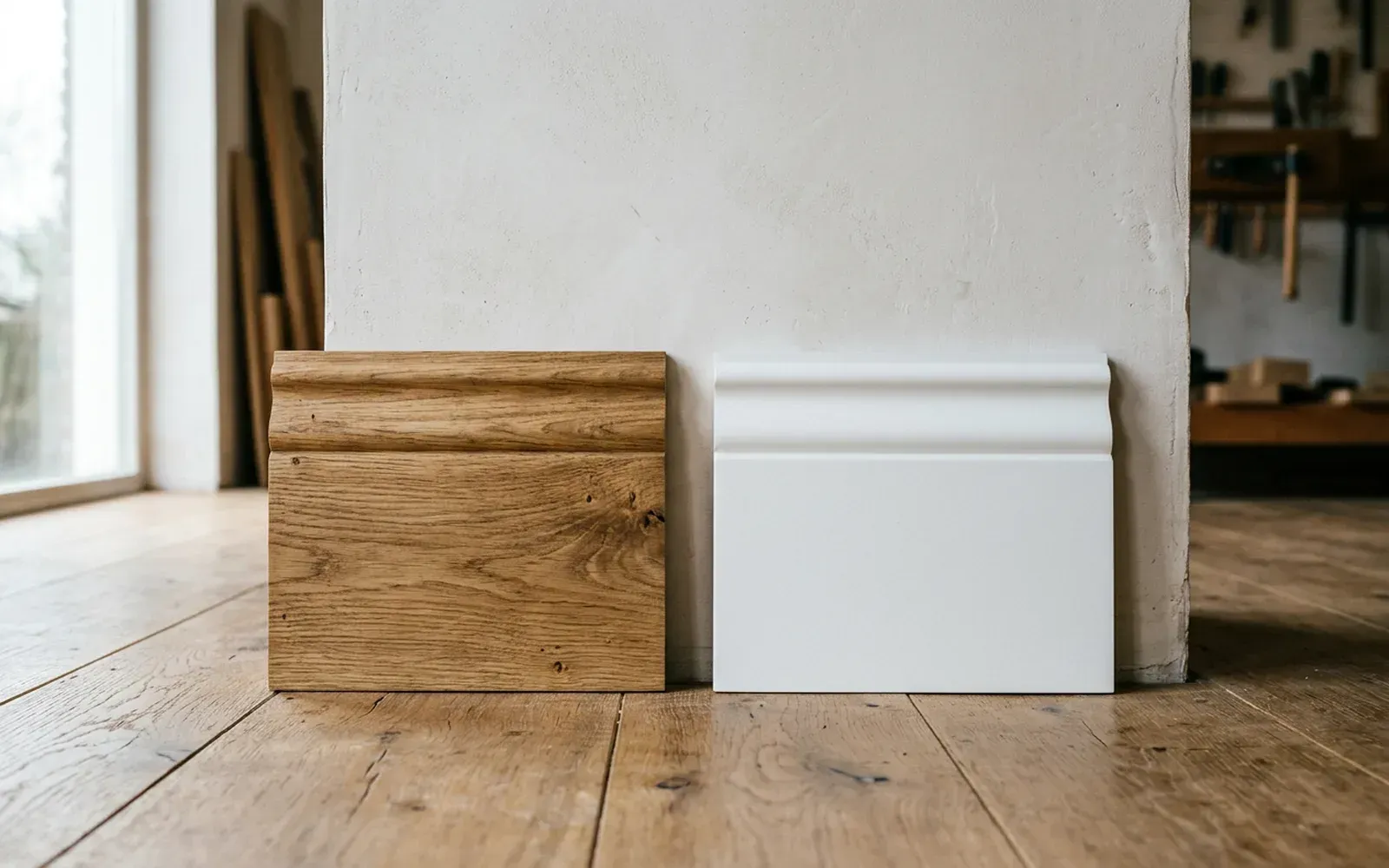
Choosing skirting
Wooden skirting boards or MDF: which suits your home?
Solid wood skirting or MDF? Both materials have clear pros and cons. We compare the differences side by side so you can choose skirting that suits your floor, interior and use.
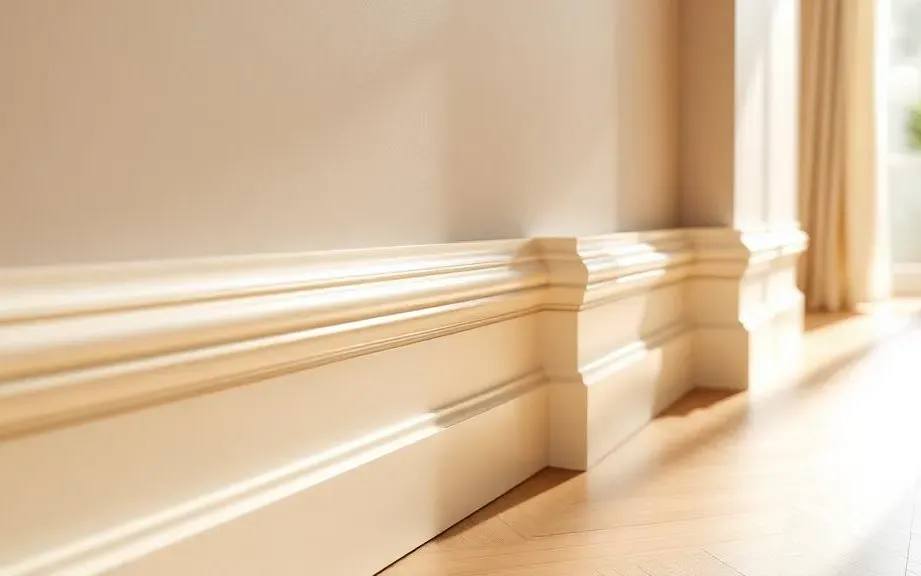
Skirting board installation by a specialist skirting fitter
TipTop Plinten fits skirting boards in MDF, solid wood and aluminium, finished in any RAL colour and neatly matched to any floor, even with uneven walls.
Skirting board installation? Request a free quote
On-site measurement €75 incl. VAT (credited for orders above a minimum project size)