
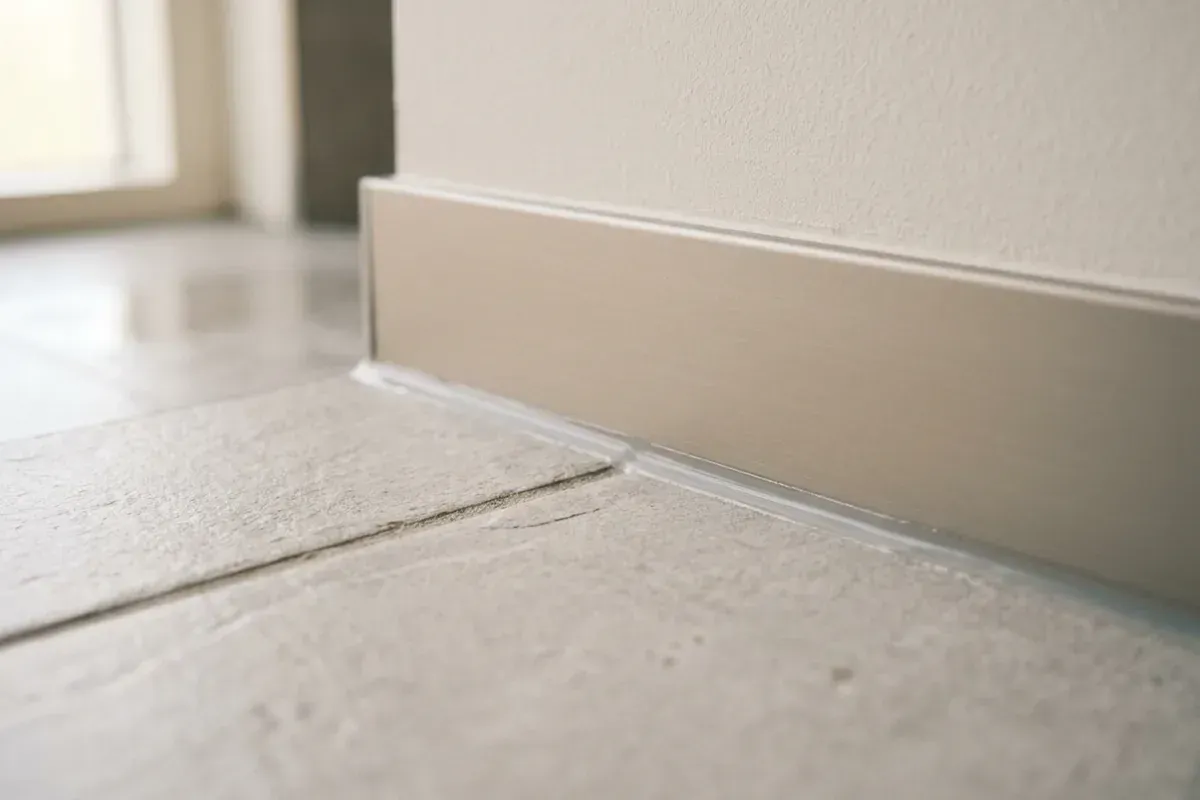
Silicone sealant is a highly flexible, water-resistant sealant that stays flexible after curing. It is mainly used in wet rooms, such as around baths, showers, washbasins and worktops. The key difference from acrylic caulk: silicone sealant cannot be painted. Along painted skirting boards and mouldings it is therefore usually not the right choice.
What is silicone sealant?
Silicone sealant cures by reacting with moisture in the air. The result is a rubbery, highly flexible joint. Its main properties:
- Highly flexible: absorbs movement between materials well.
- Water-resistant: suitable for joints that get wet.
- Not paintable: paint does not adhere to it.
- Hard to remove: residue on the surface stops paint and new sealant from adhering properly.
There are versions for sanitaryware, with anti-mould additives, and for other surfaces such as natural stone.
Where is it used?
- In bathrooms, toilets and kitchens, along sanitaryware and worktops.
- With tiling, for example in the corners of wall tiles.
- At junctions that can get wet, such as an aluminium skirting on a tiled floor in a wet room.
- With glass and metal, where a flexible, watertight joint is needed.
What should you look out for?
- Not along painted mouldings: for skirting boards, architraves and mouldings in dry rooms, acrylic caulk is better.
- Colour: because silicone sealant cannot be painted, its colour must suit the surroundings.
- Adhesion: the surface must be clean, dry and grease-free.
- Removal: remove old silicone completely before applying new sealant or paint.
- Floating floor: even with flexible sealant, a floating floor is not fixed rigidly to the skirting; see expansion gap.
You can read more in caulking skirting boards: which sealant should you use?.
At TipTop Plinten
TipTop Plinten works with acrylic caulk and silicone sealant and chooses the right type for each location, with a colour match to the mouldings. Read more about caulking and finishing.
Frequently asked questions
No. Paint does not adhere to silicone and will contract or peel. The edges next to the sealant are also hard to paint if there is silicone residue on them. That is why acrylic caulk is used for painted skirting boards and mouldings.
Mainly where water can reach the joint, such as with skirting in a wet room or an aluminium skirting on tiles. Joints that move a lot may also need a flexible sealant. For painted skirting boards in dry rooms, acrylic caulk is the usual choice.
Related
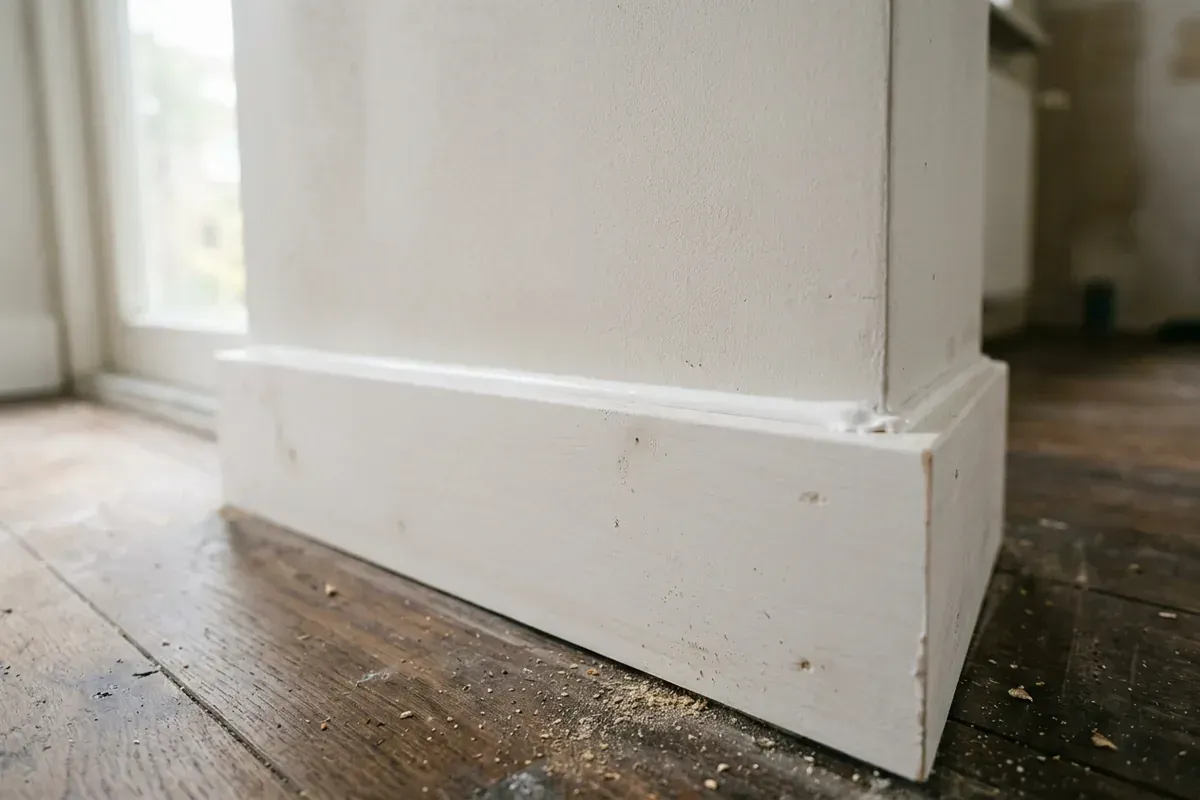
Acrylic caulk
Acrylic caulk is a water-based sealant that can be painted once cured. It is the usual choice for skirting boards, mouldings and frames in dry rooms.
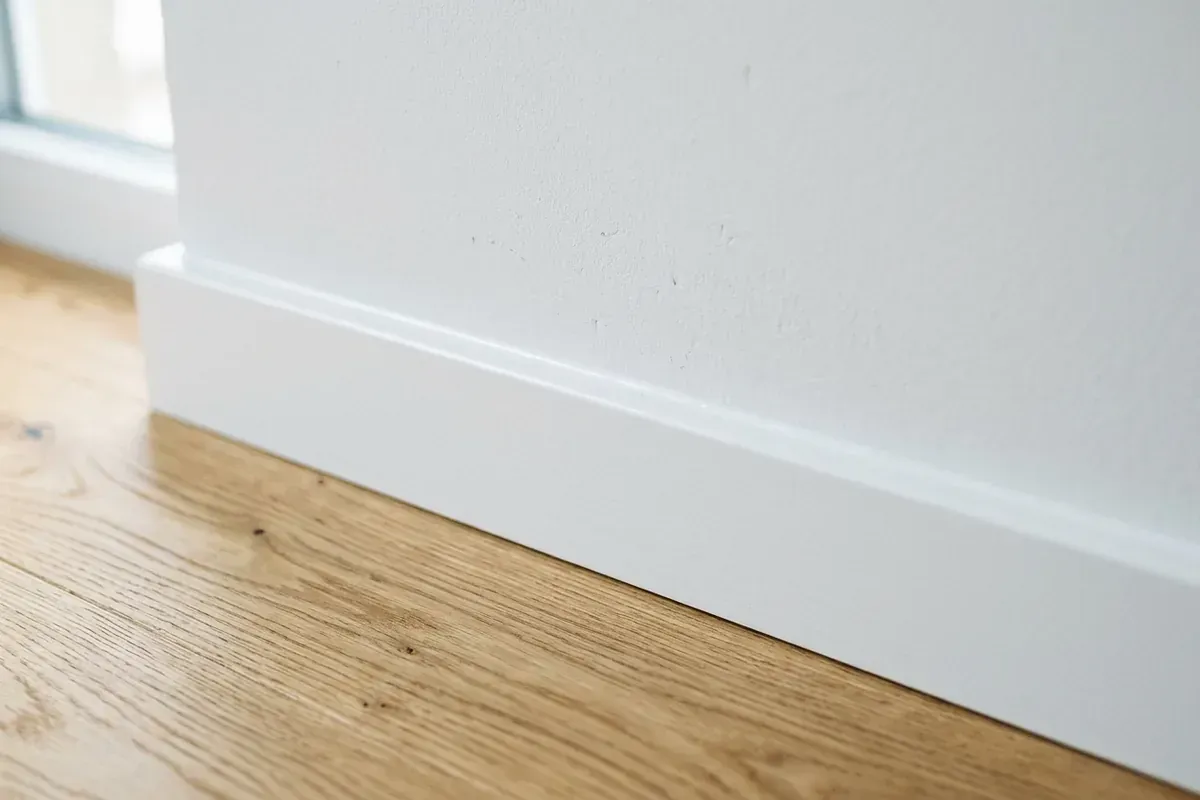
Caulking
Caulking means sealing joints with a flexible sealant. With skirting boards and mouldings, it makes the transition to the wall crisp and seamless.
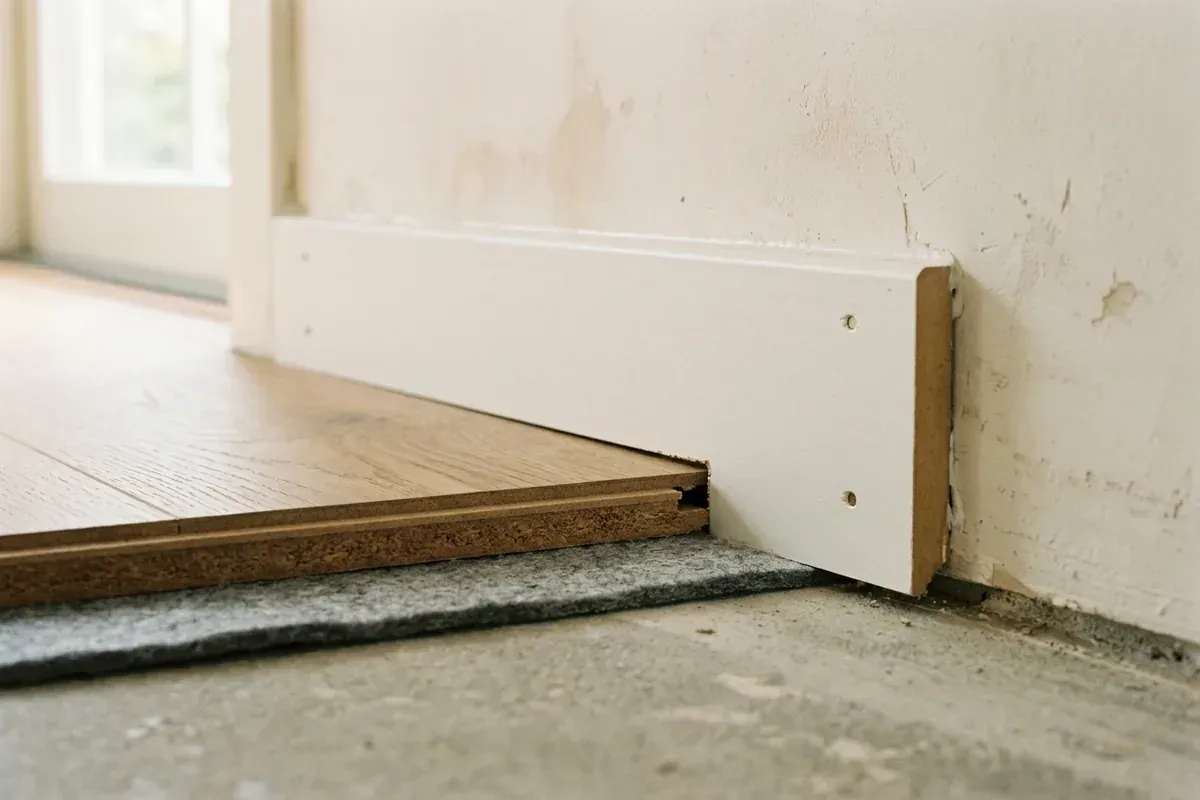
Expansion gap
An expansion gap is an open space along the edge of a floor, so it can expand and contract. The skirting board covers the gap without fixing it.
Vinyl flooring
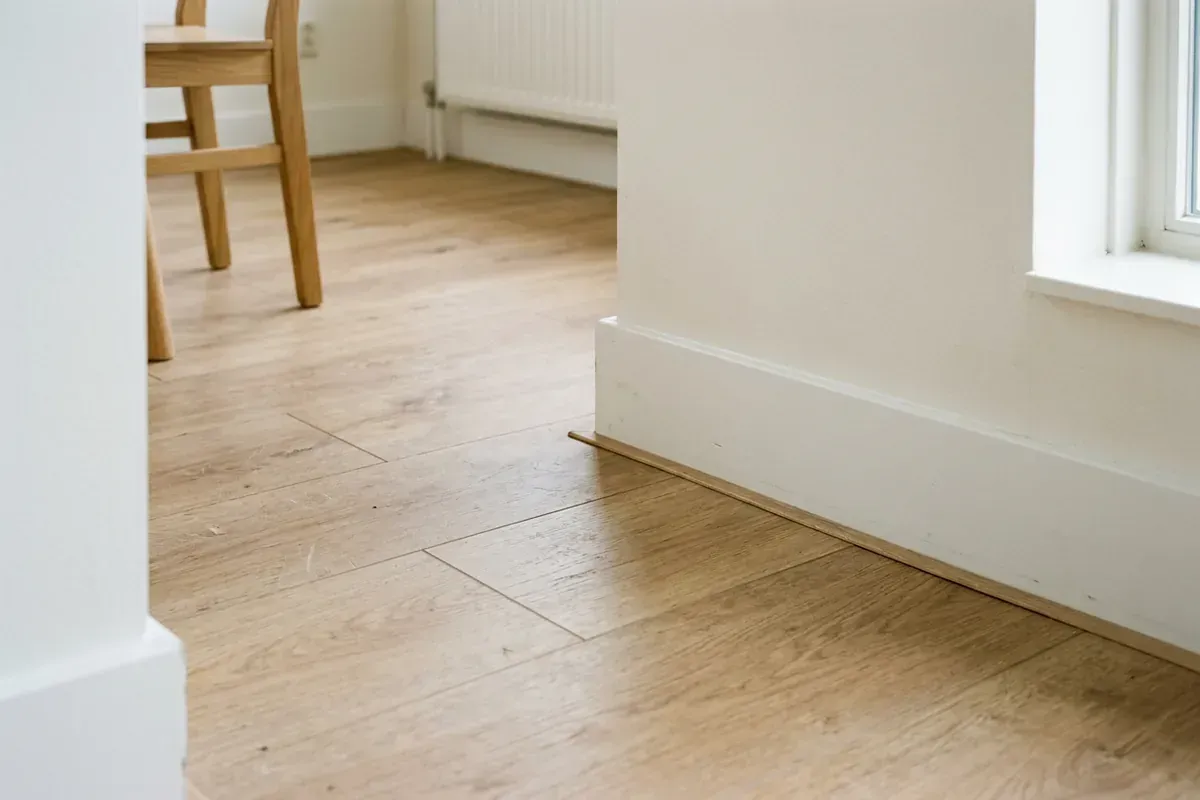
Vinyl (PVC) flooring is a synthetic floor printed with a wood or stone look. Whether it floats or is glued down determines how the skirting meets it.
Installation & finishing
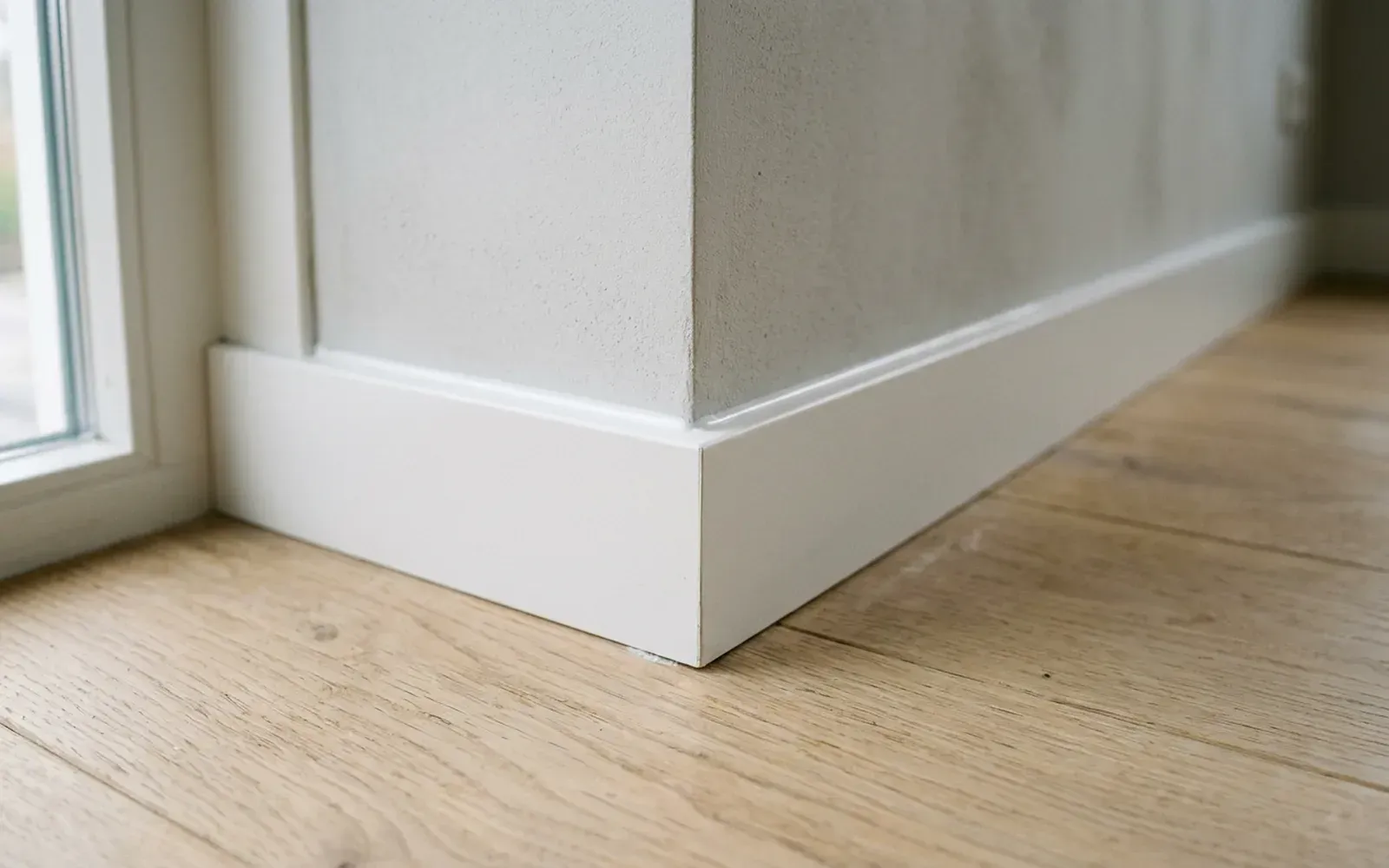
Caulking skirting boards: which sealant should you use and how do you get a neat finish?
For the joint between skirting board and wall you use paintable acrylic caulk, and silicone only where water is involved. Here is how to run a clean caulk line.
Caulking skirting boards and sealant work for a seamless finish
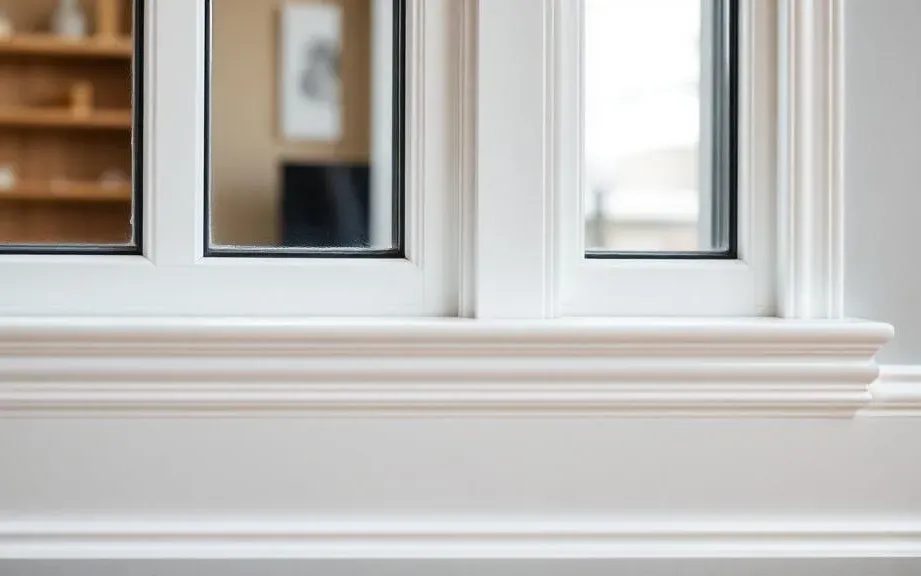
Caulking is the final step that makes skirting boards, mouldings and panels look seamless. TipTop Plinten uses acrylic or silicone, paint-ready or in colour.
Skirting board installation? Request a free quote
On-site measurement €75 incl. VAT (credited for orders above a minimum project size)