
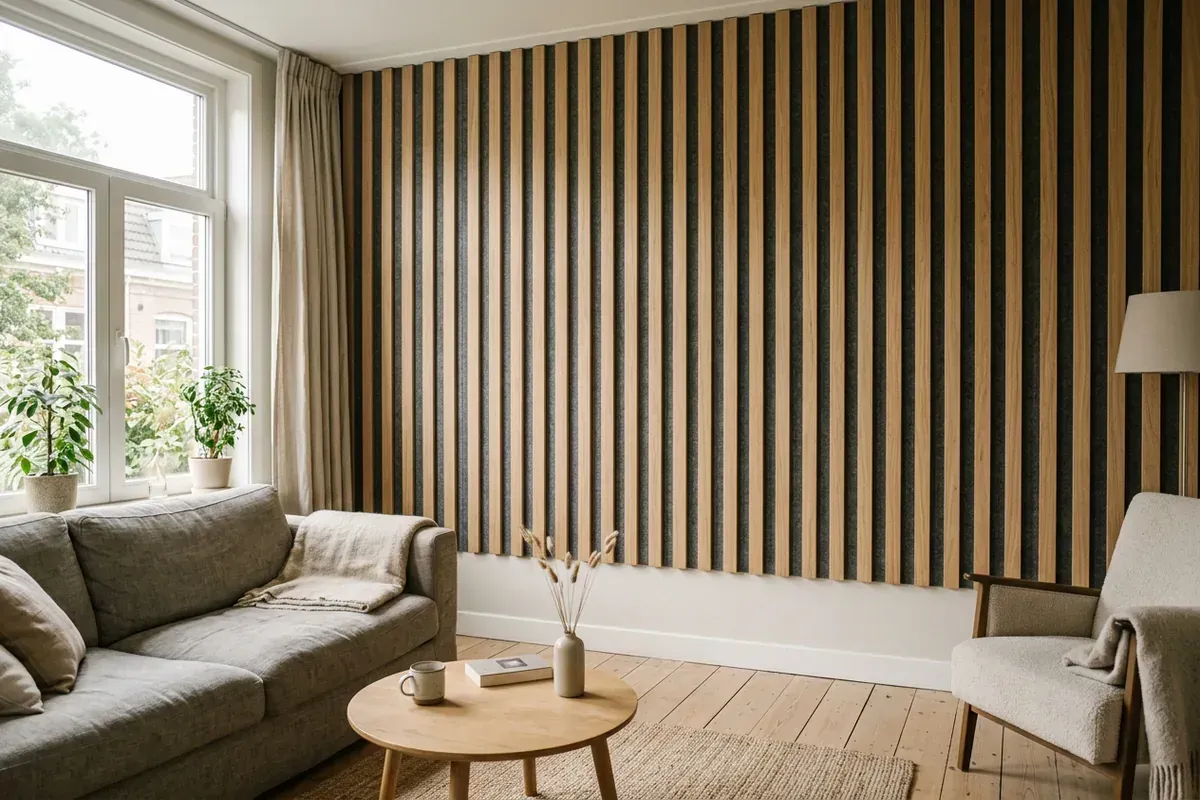
An acoustic panel is a wall panel that absorbs sound rather than reflecting it. This reduces the echo in a room, so voices, music and footsteps sound calmer. In homes, acoustic panels with timber slats on a felt backing are the best-known type. They combine sound absorption with a warm, modern look.
What is an acoustic panel?
Hard surfaces such as glass, concrete, tiles and a smooth floor reflect sound. In modern homes with large windows, a poured resin floor or an open-plan kitchen, echo builds up quickly. An acoustic panel contains a porous material, such as felt or foam, that absorbs part of the sound energy.
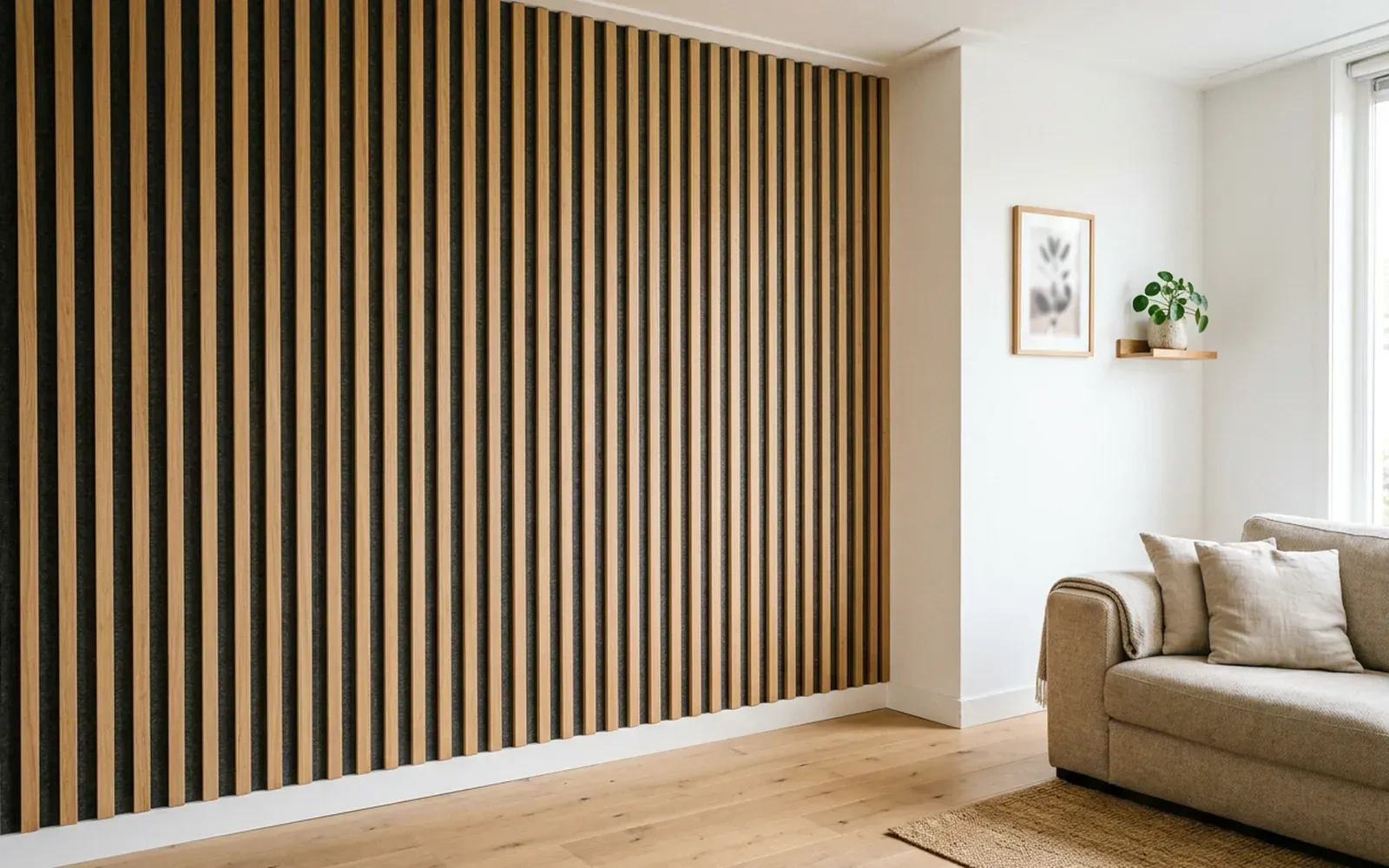
In slat panels, the absorbent felt sits behind and between the slats. Sound passes between the slats and is dampened in the felt.
Where is it used?
- In living rooms with lots of hard surfaces and open spaces.
- In home offices, for clearer speech on video calls.
- In bedrooms and children's rooms, for a calmer acoustic.
- In offices, meeting rooms, restaurants and hotels.
What should you look out for?
- Expectations: acoustic panels improve the acoustics within the room, but do not insulate against sound from outside or from the neighbours.
- Position: panels on walls opposite hard surfaces or near the source of the sound usually have the most effect.
- Surface area: the more absorbent surface, the greater the effect. One small panel does little in a large room.
- Fixing: depending on the panel and the substrate, with construction adhesive, screws or on battens.
- Junctions: the bottom edge must meet the skirting board logically; the sides must meet corners and frames neatly.
You can read more in acoustic wall panels: what are the benefits?.
At TipTop Plinten
TipTop Plinten installs acoustic wall panels in homes, offices and hotels. In a house in Apeldoorn, acoustic wall panels were installed for sound absorption and a modern look. Read more about wall panels and wall mouldings.
Frequently asked questions
No. Acoustic panels reduce echo and reverberation within the room itself. They do not stop sound from the neighbours or from outside. That requires sound insulation, which is a different approach.
That depends on the size of the room, the amount of hard surfaces and how much echo there is. Covering part of one wall often makes a noticeable difference. For large or commercial spaces, an acoustic consultant can carry out a calculation.
Related
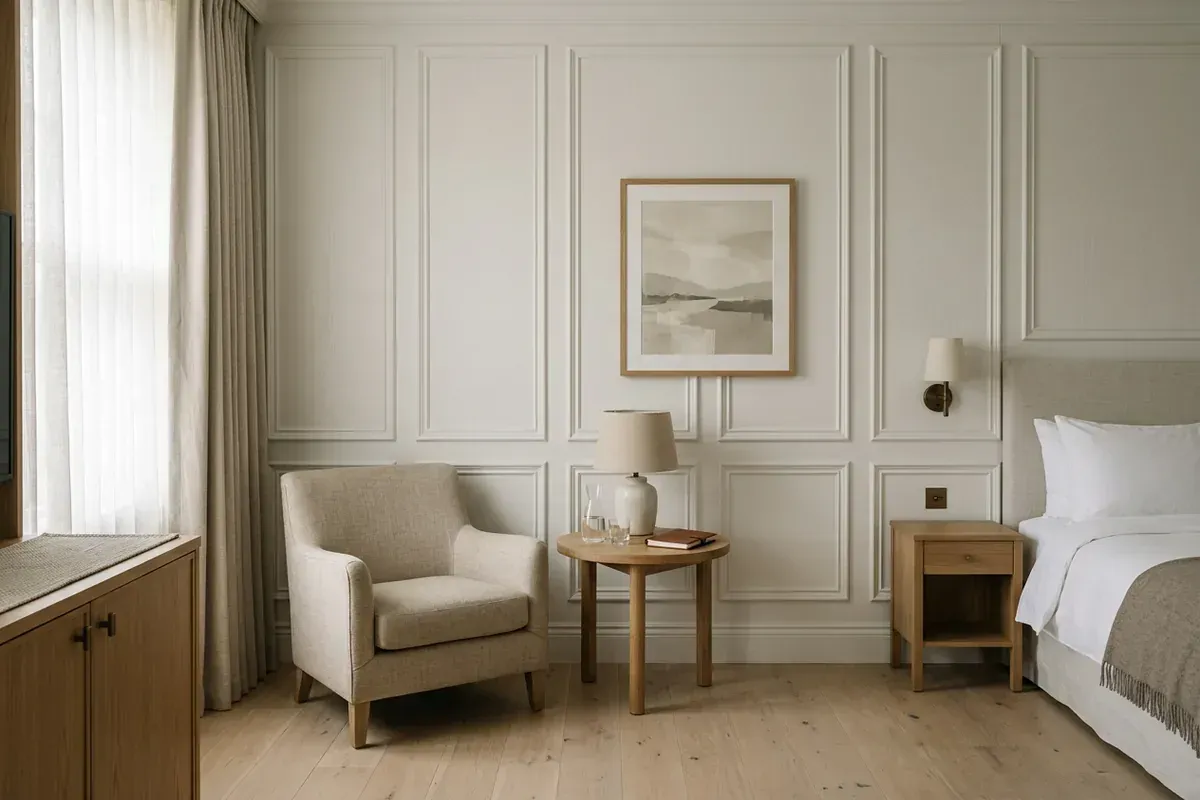
Wall panel
A wall panel is a board or panel fixed to a wall for appearance, protection or sound absorption. There are many types.
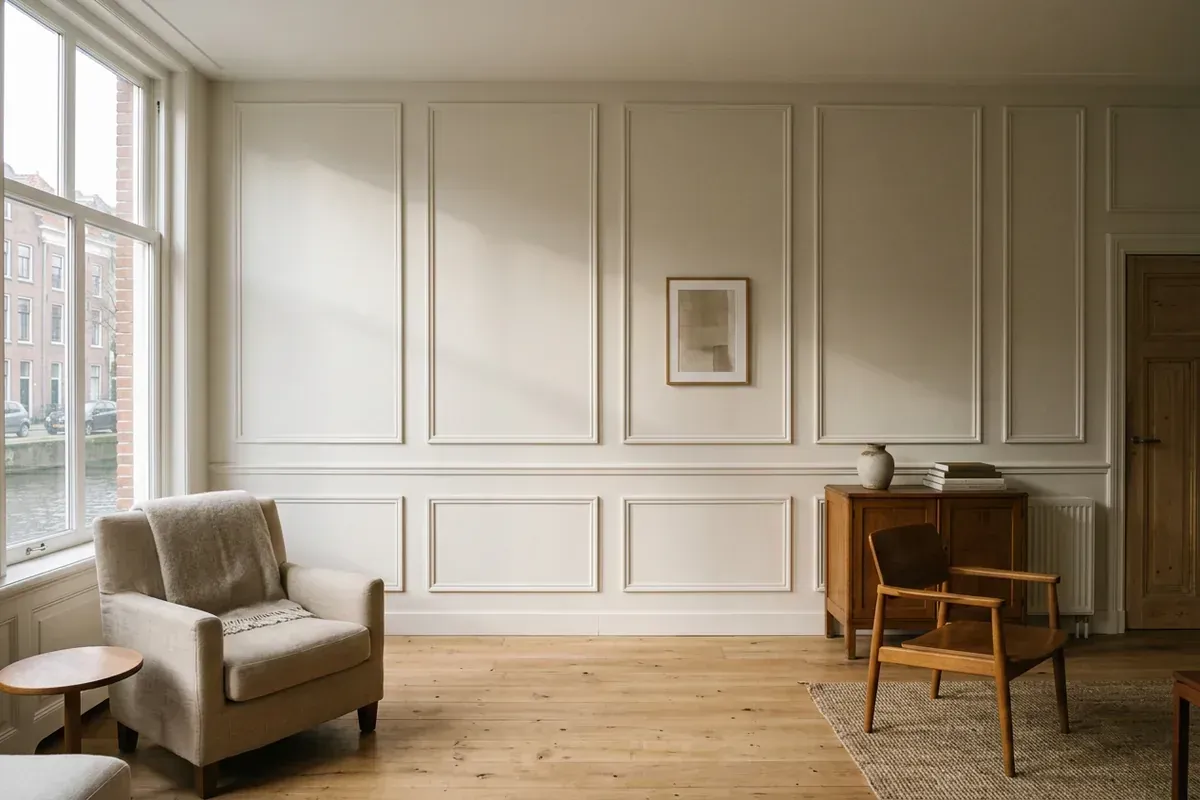
Wall moulding
A wall moulding is a narrow moulding on the wall surface. Several mouldings together create frames or panels that give a flat wall depth and rhythm.
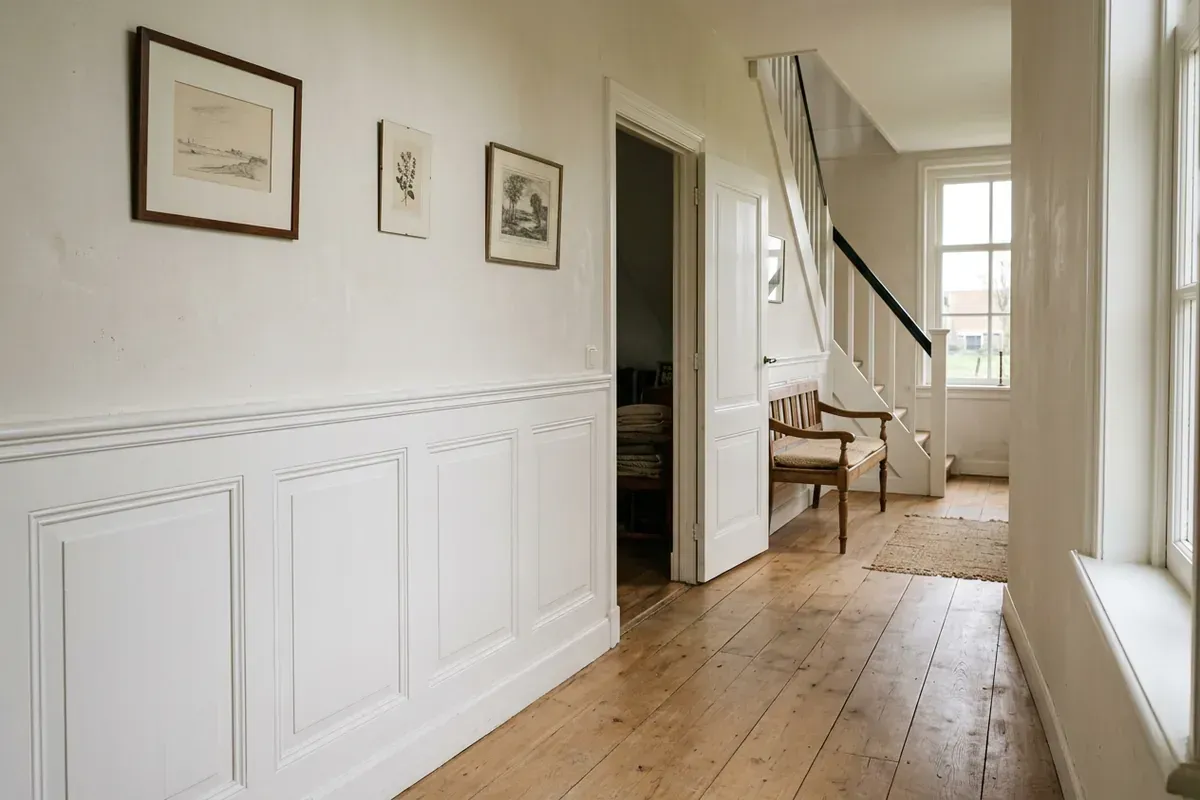
Wainscoting
Wainscoting is a covering on the lower part of the wall, traditionally in timber. It protects the wall and gives a room a classic character.
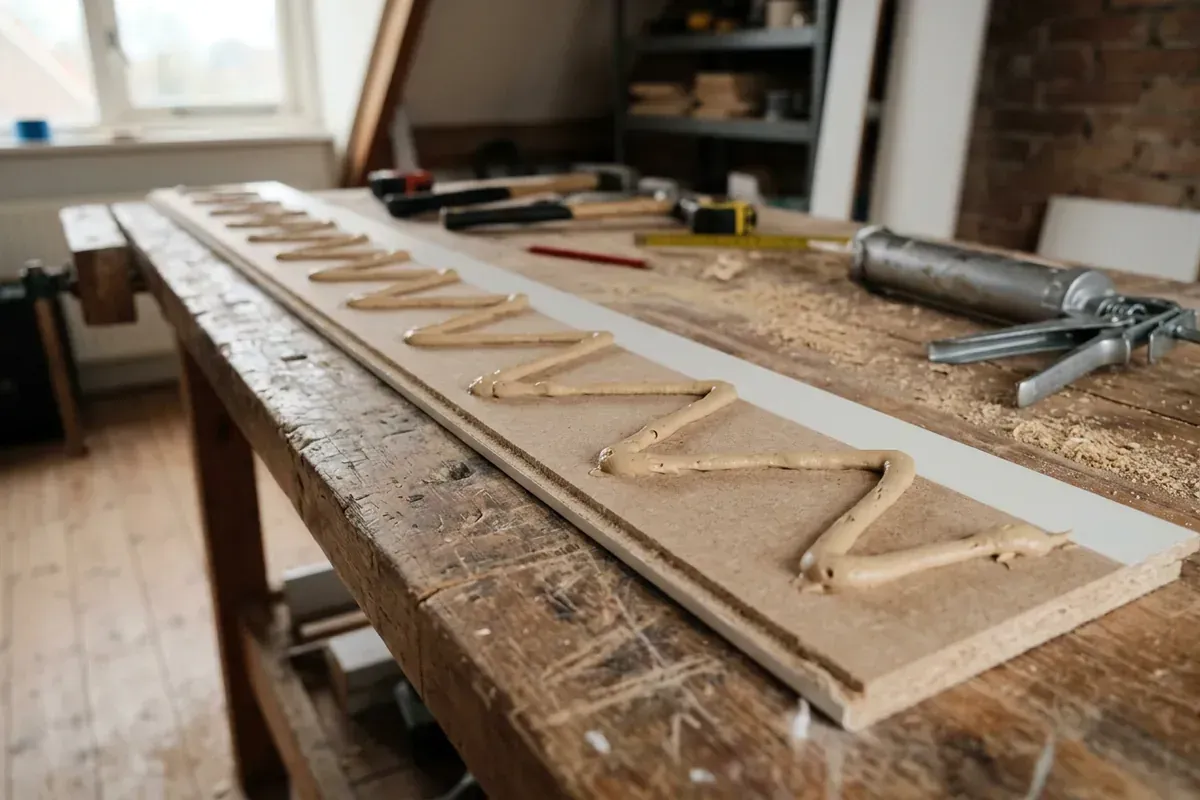
Construction adhesive
Construction adhesive is a strong glue or sealant used to fix skirting boards, mouldings and panels to the wall, often combined with nails or screws.
Mouldings & walls
Acoustic wall panels: what do they do and when should you choose them?
Acoustic wall panels dampen echo in a room while giving the wall a warm, modern look. We explain how they work, what you can expect from them and what to look out for.
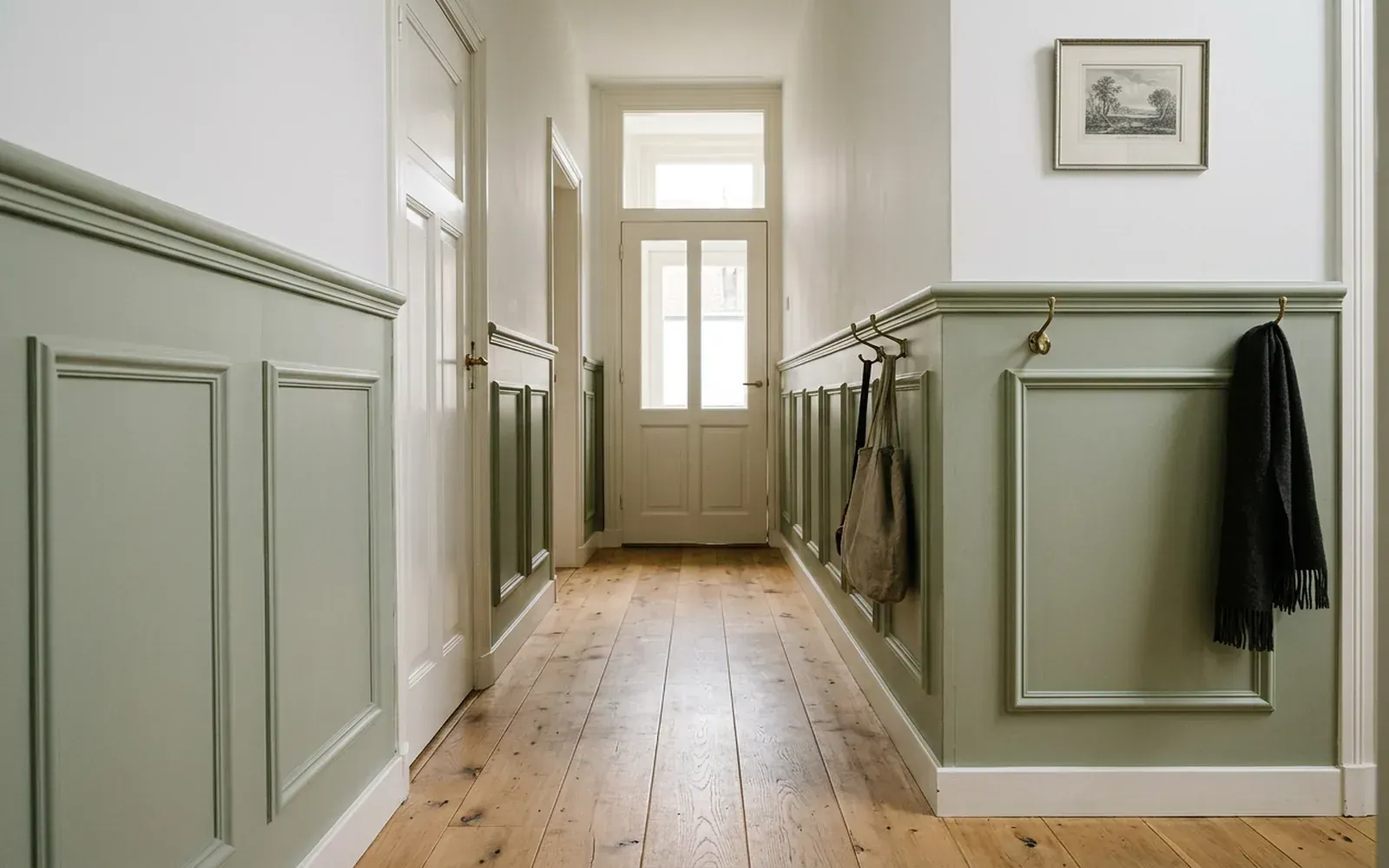
Mouldings & walls
Wall mouldings and wainscoting: differences, styles and uses
Wainscoting and wall mouldings give a wall structure and a classic or modern look. We explain the difference, which styles there are and what to look out for.
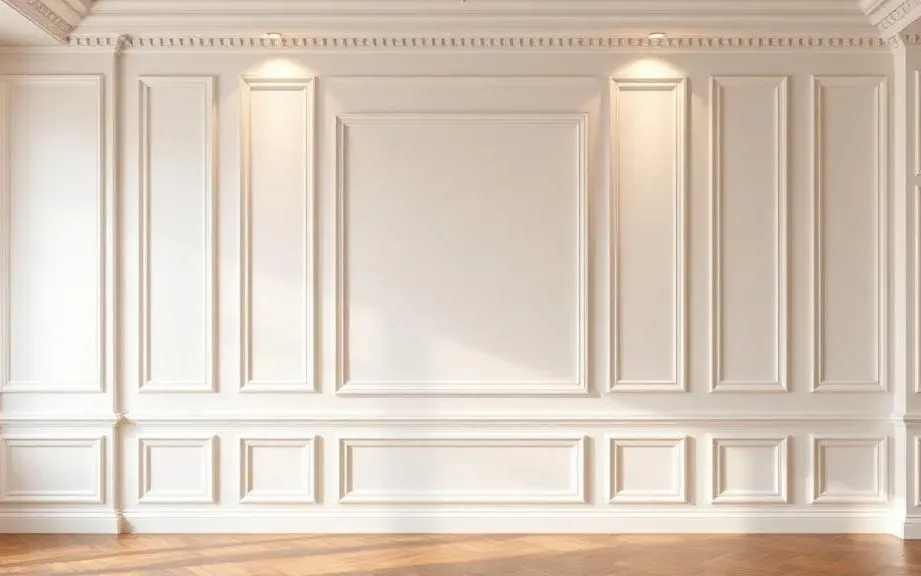
Wall panelling installation and wall mouldings fitted
TipTop Plinten fits wall panels, wall mouldings, slat panels and acoustic panels in homes, offices and hotels, with tight mitres and clean caulking.
Skirting board installation? Request a free quote
On-site measurement €75 incl. VAT (credited for orders above a minimum project size)