
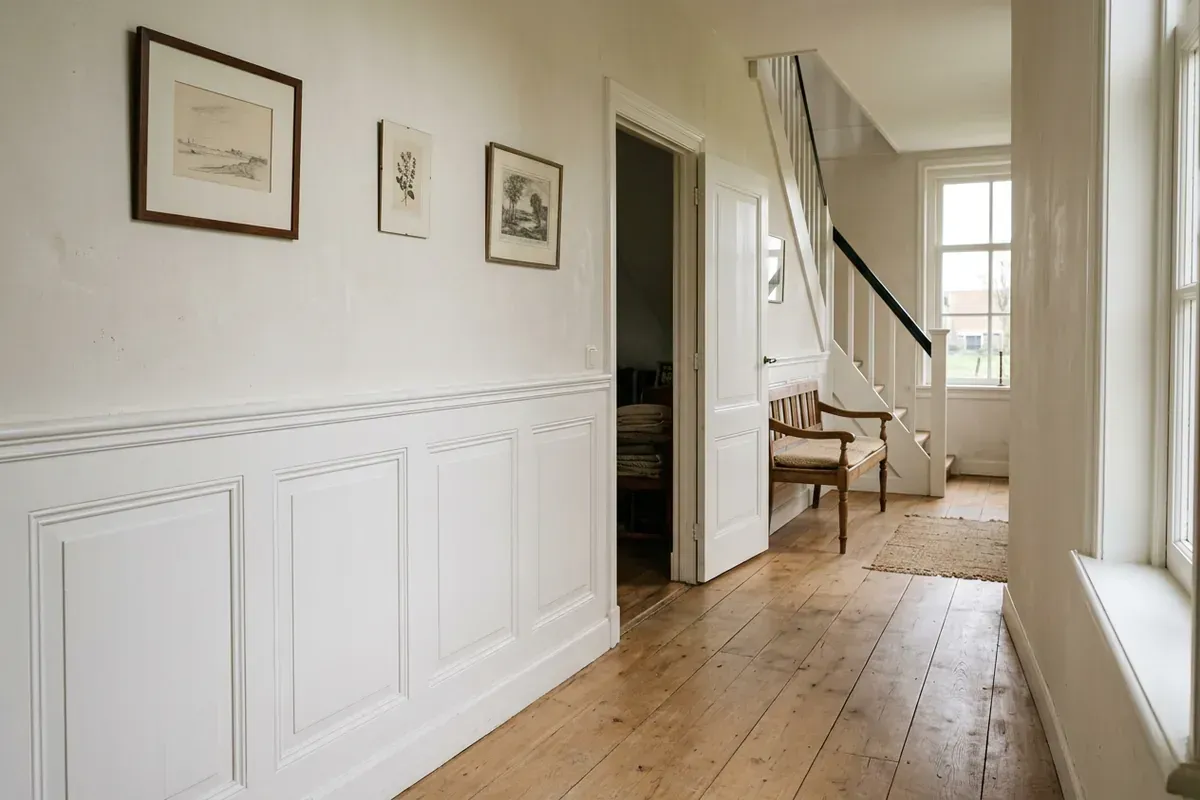
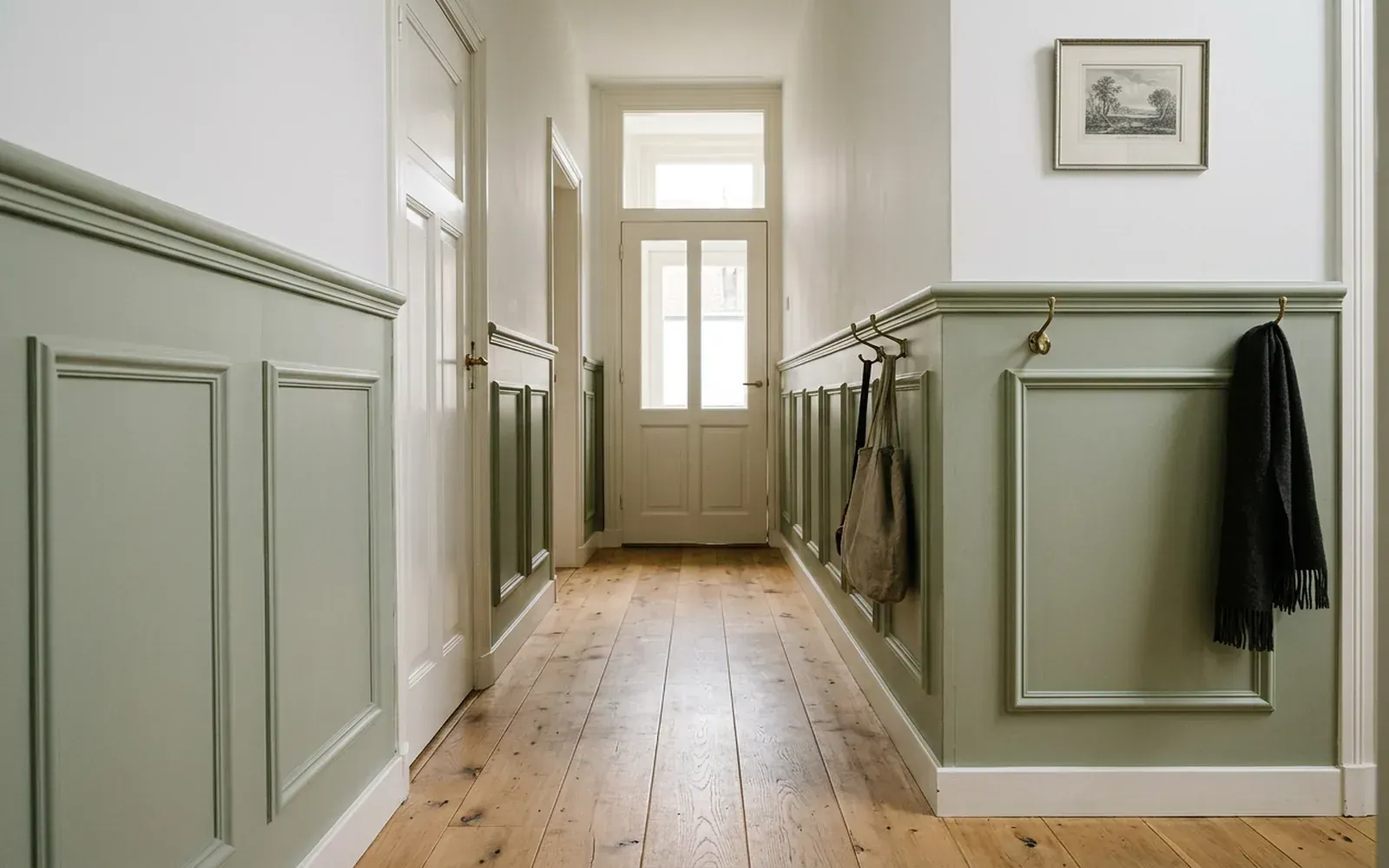
Wainscoting is a covering on the lower part of a wall, traditionally made of timber panels. At the top, the wainscoting is finished with a horizontal rail. It protects the wall against knocks and wear and gives a room a classic, well-finished character. Today it is also used in modern interiors.
What is wainscoting?
Wainscoting consists of three parts:
- Panels or slats: the surface covering the wall, with frames, grooves or vertical slats.
- Top rail: a horizontal moulding at the top, also known as a dado or chair rail.
- Skirting board: the finish at the bottom, against the floor.
Historically, wainscoting was made from solid timber. Today MDF is widely used, because it is stable and takes paint well. A similar look can also be achieved with wall mouldings applied to the wall.
Where is it used?
- In halls, corridors and stairwells, where the wall takes a lot of wear.
- In dining rooms, where chairs knock against the wall.
- In living rooms and bedrooms, as a decorative feature.
- In historic buildings, when restoring original wainscoting.
What should you look out for?
- Height: a guideline is about a third of the wall height. Match the height to window sills, switches and furniture.
- Continuous line: the top rail must run at the same height all round, even if the floor is not level.
- Junctions: at frames, architraves and stairs, the wainscoting must end logically.
- Substrate: a flat, dry wall, or battens where the wall is uneven.
- Finishing: joints are caulked and the whole is finished in colour, often white or a calm shade.
You can find inspiration and explanation in wall mouldings and wainscoting.
At TipTop Plinten
TipTop Plinten installs wall panels and wall mouldings, including skirting boards and caulking, so that wainscoting forms a single whole. Read more about wall panels and wall mouldings.
Frequently asked questions
A common guideline is about a third of the wall height, often around 90 to 110 cm. There are also taller versions up to about two thirds of the wall. The right height depends on the room, the windows and the furniture.
Yes. Wainscoting with plain, flat panels or vertical slats in a calm colour suits a modern interior well. It then mainly becomes a way to add structure and protection to the wall.
Related
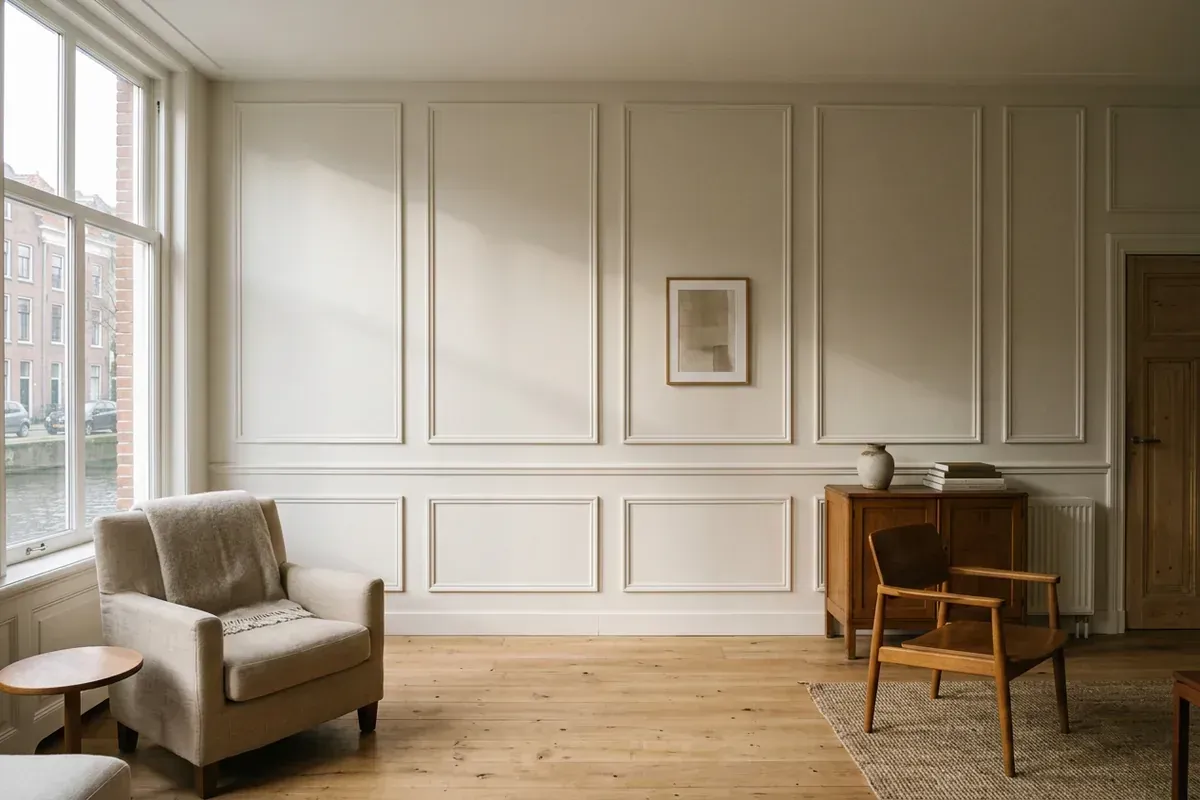
Wall moulding
A wall moulding is a narrow moulding on the wall surface. Several mouldings together create frames or panels that give a flat wall depth and rhythm.
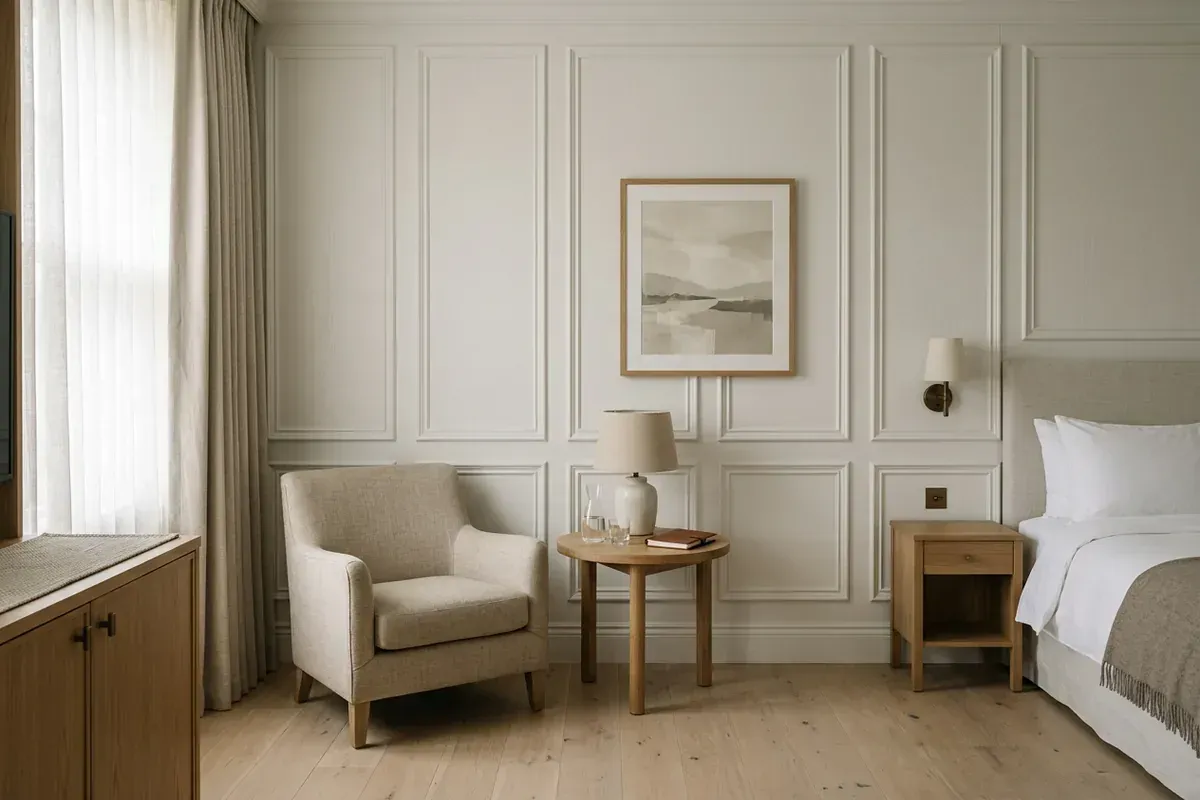
Wall panel
A wall panel is a board or panel fixed to a wall for appearance, protection or sound absorption. There are many types.
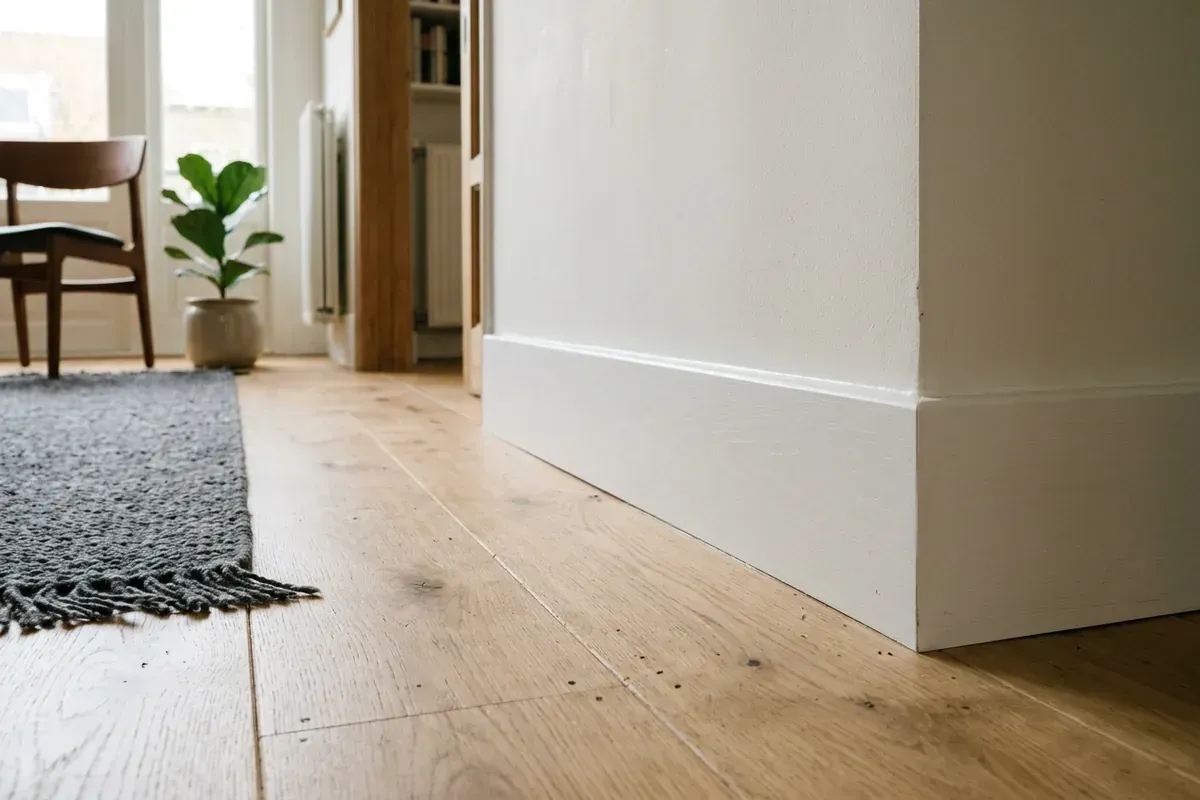
Skirting board
A skirting board is the moulding at the base of the wall that finishes the transition to the floor and protects the wall. Here is how it works and what to look out for.
MDF
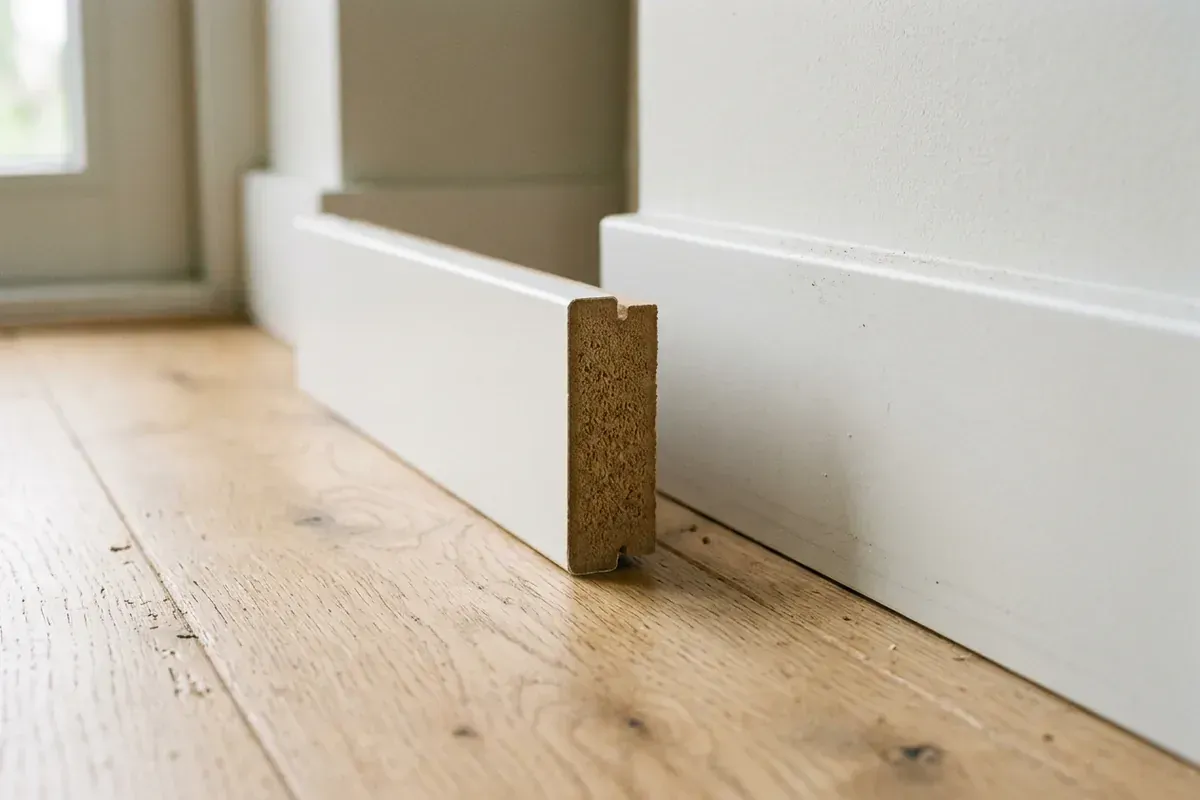
MDF is a sheet material made of pressed wood fibres. It is stable, smooth and easy to paint, which makes it the most popular material for skirting boards.
Mouldings & walls
Wall mouldings and wainscoting: differences, styles and uses
Wainscoting and wall mouldings give a wall structure and a classic or modern look. We explain the difference, which styles there are and what to look out for.
Mouldings & walls
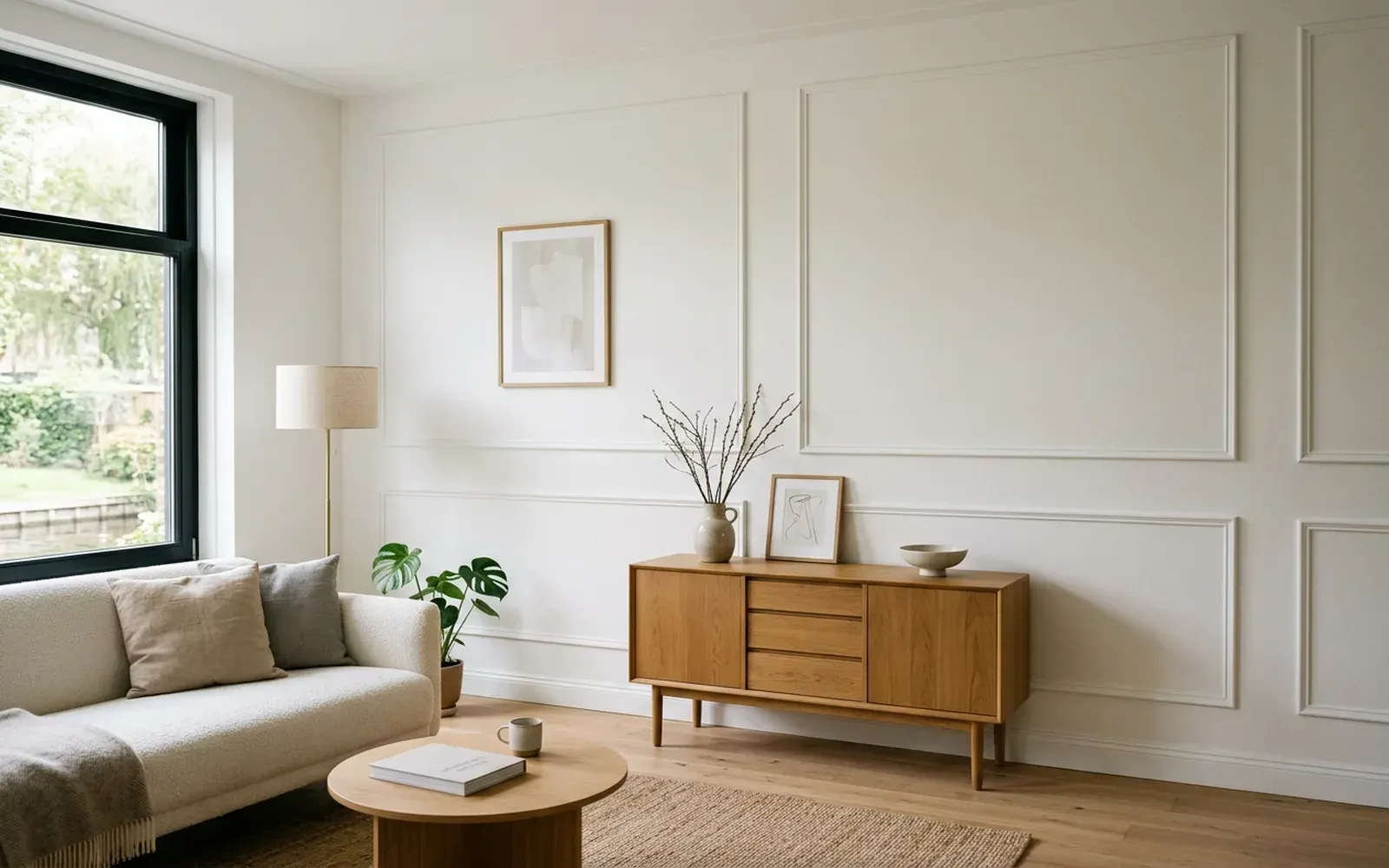
Decorative mouldings in a modern interior: how to use them with style
Decorative mouldings are not just for period properties. With a calm profile and the right colour, they give a modern interior depth and a refined look. Here is how to use them.
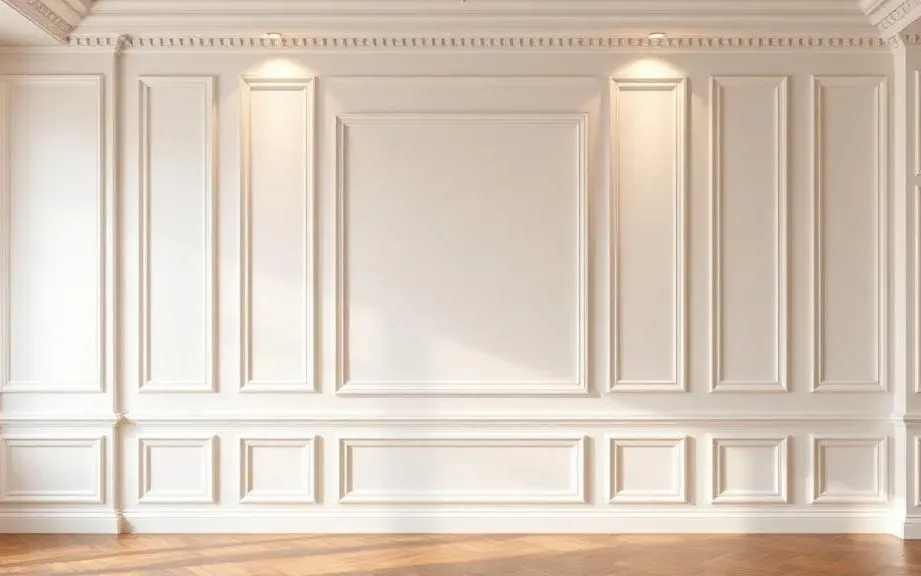
Wall panelling installation and wall mouldings fitted
TipTop Plinten fits wall panels, wall mouldings, slat panels and acoustic panels in homes, offices and hotels, with tight mitres and clean caulking.
Skirting board installation? Request a free quote
On-site measurement €75 incl. VAT (credited for orders above a minimum project size)