
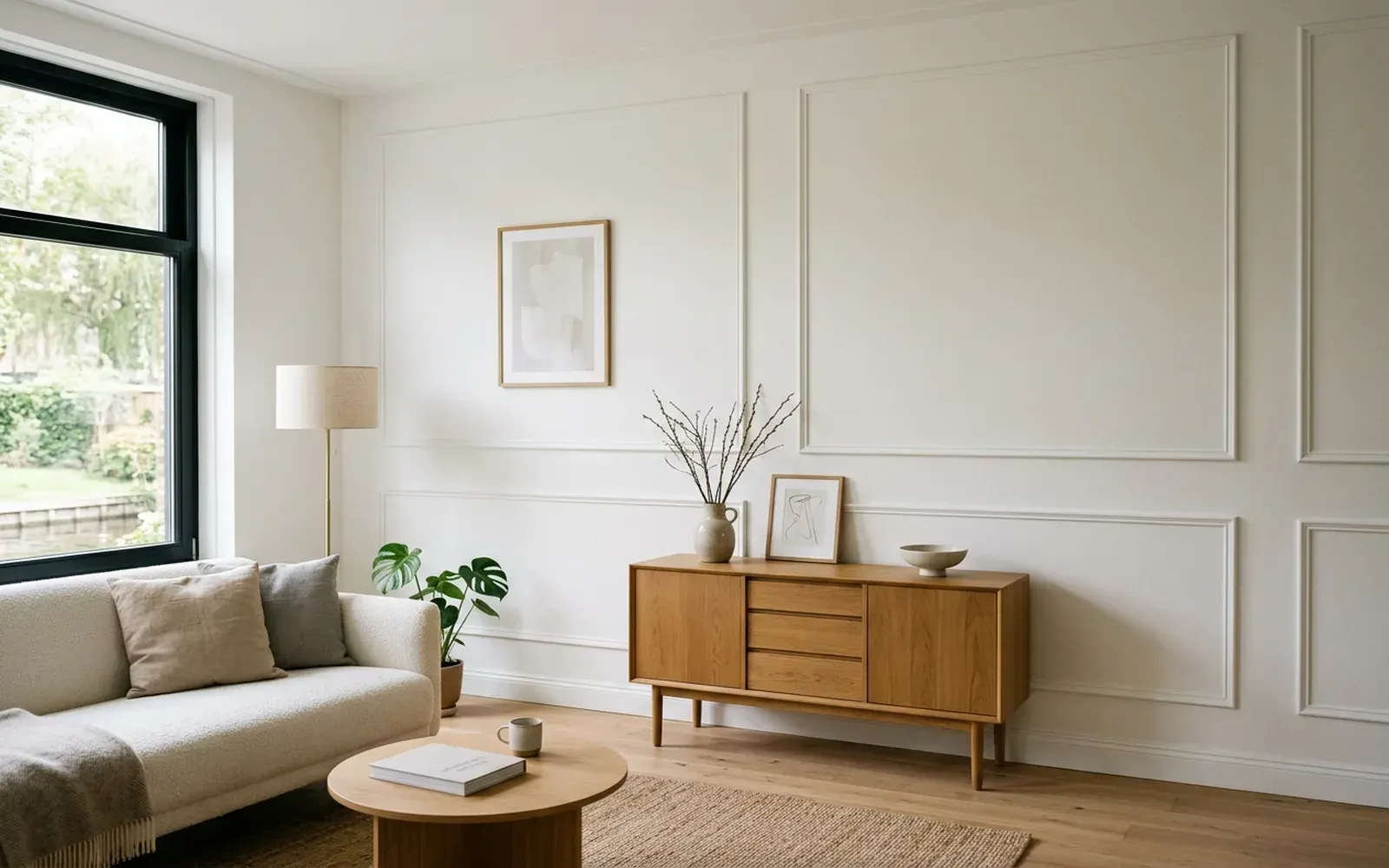
Decorative mouldings are ornamental mouldings on walls or ceilings that give a room depth, structure and character. In a modern interior they work best with a calm profile, a well-planned layout and a colour that matches the wall. That way you get the look of classic mouldings without the interior looking old-fashioned.
What exactly are decorative mouldings?
Decorative moulding is the umbrella term for ornamental mouldings fitted to a wall or ceiling. Think of:
- Wall mouldings that form frames or panels on the wall.
- Coving at the junction between wall and ceiling.
- Dado rails, which divide a wall horizontally.
Where decorative mouldings used to be found mainly in townhouses and period properties, they are now also popular in new-build homes and modern apartments. The difference lies in the choice of profile and the way they are used.
Why decorative mouldings in a modern interior?
A modern wall is often a large, flat surface. That is calm, but it can also look bare. Decorative mouldings add something:
- Depth. A moulding casts a shadow and makes a flat wall three-dimensional.
- Proportion. With frames or a horizontal line, you can divide a tall wall or give a long wall rhythm.
- A refined look. Mouldings are associated with craftsmanship and quality. It is no coincidence they are used so often in hotels.
- Focus. A frame around a bed, sofa or artwork draws attention to it.
How do you use decorative mouldings without a period look?
Choose a calm profile
A simple profile with one or two lines looks more modern than a heavy, richly decorated one. Slim mouldings with a clear shadow line suit a clean interior well.
Go tone-on-tone
Paint the mouldings and the wall the same colour. You then notice the mouldings mainly through the play of light and shadow, not through a difference in colour. This gives a calm, refined look. A warm off-white, greige or a soft colour works well here, as does classic white in RAL 9010.
Keep the layout clean
Frames that are evenly spaced, with equal gaps and a fixed distance to the skirting board and ceiling, look deliberate and modern. A careless or random layout stands out in a clean interior. Mark out the layout on the wall beforehand, allowing for sockets, switches, radiators and doors.
Combine with light
Raking light from a window or wall lights brings out the profiles particularly well. A concealed LED strip above coving can also be a modern addition.
Where can you use decorative mouldings?
| Room | Application |
|---|---|
| Living room | Frames behind the sofa or around the TV wall, coving all round |
| Bedroom | Feature wall behind the bed with frames or panels |
| Hallway and stairwell | Horizontal dado rail, frames along the stairs |
| Dining room | Wall layout with frames, combined with coving |
| Hotel and office | Wall panels and decorative mouldings as part of the interior concept |
For the junction between wall and ceiling, read more in our article on coving and cornices. If you would like to accentuate the lower half of a wall, the article on wall mouldings and wainscoting is a good next step.
Example: decorative mouldings in a hotel
Decorative mouldings and wall panels are common in hotel interiors because they create atmosphere and provide a hard-wearing finish at the same time. In a luxury hotel in the centre of Maastricht, TipTop Plinten handled all the wall panels, decorative mouldings and caulking, finished in RAL 9010 with accurate mitres, to a tight deadline. It shows how mouldings give an interior a coherent, well-finished look.
What should you look out for when fitting decorative mouldings?
A flat surface
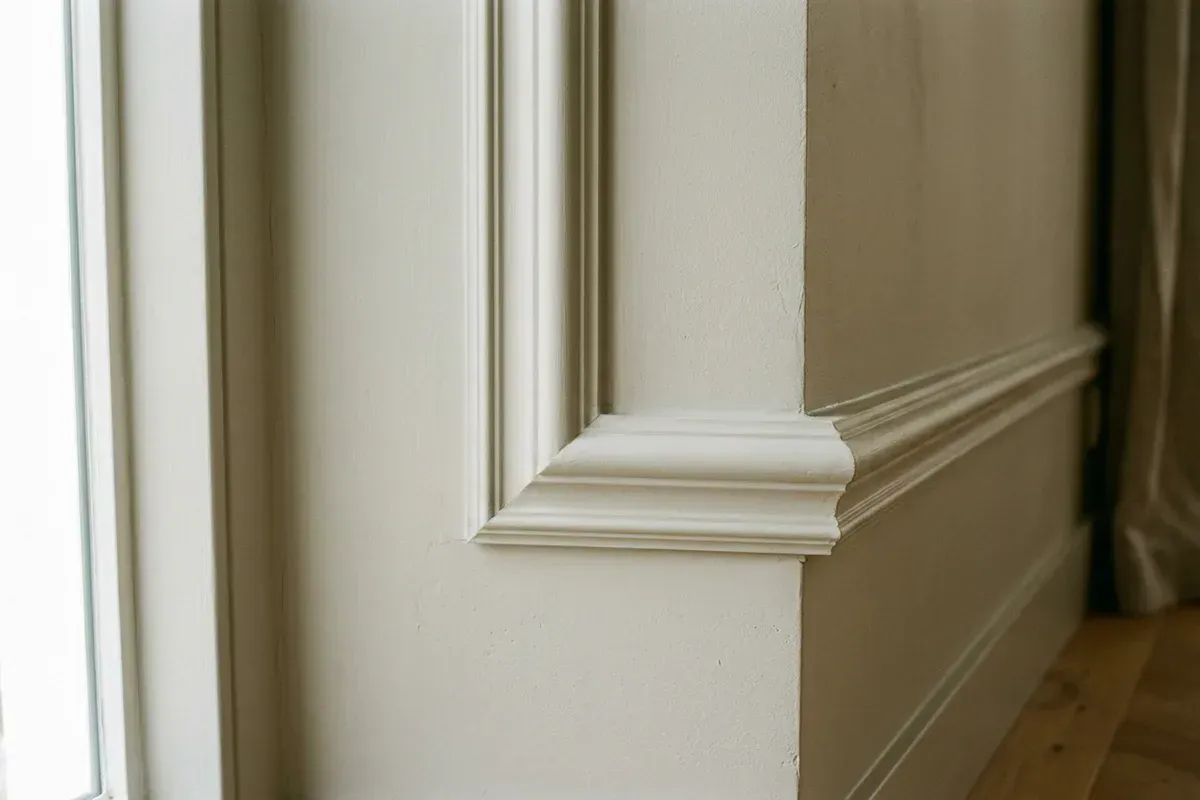
A decorative moulding follows the wall. If the wall bulges or dips, you will see it in the moulding and in the caulk joint. Small irregularities can be taken up with caulk, but larger deviations mean the moulding has to be adapted or the wall levelled first.
Accurate mitres
Frames and corners are cut as a mitre joint. With decorative mouldings, mitres are especially visible because they sit at eye level. A small error produces a visible gap. Accurate cutting and fitting makes the difference here.
Secure fixing
Decorative mouldings are usually glued with construction adhesive, sometimes supplemented with thin pins. The adhesive has to suit the material of the moulding and the surface.
Neat caulking
The joint between moulding and wall is caulked with a paintable acrylic caulk. This fills small gaps and makes the moulding part of the wall. Everything can then be painted in one colour.
Which material should you choose for decorative mouldings?
Decorative mouldings come in various materials, such as MDF, solid wood, plaster and various plastics. Each material has its own properties in terms of detail, weight, impact resistance and finish. MDF is a widely used base for crisp, painted wall mouldings because it is dimensionally stable and takes an even coat of paint.
Which material best suits your room and your wishes is easiest to discuss based on the situation on site or photos of the room.
Common mistakes with decorative mouldings
- Too much at once. Frames on every wall, heavy coving and a richly profiled skirting board can overload a modern interior. Choose one or two accents.
- Too heavy a profile in a small room. A large profile makes a small room feel visually smaller.
- Uneven frames. Frames that differ slightly in width or spacing look accidental rather than intentional.
- Not allowing for fittings. A socket or switch that falls half inside a moulding spoils the look. Plan the layout around these points, or have them moved.
- Skipping the caulking. Without a neat caulk joint, small gaps between moulding and wall remain visible, especially in raking light.
Decorative mouldings and skirting boards: one whole
Decorative mouldings look best when they match the rest of the mouldings in the room. Choose a skirting board and architrave whose style matches the decorative mouldings: sleek with sleek, profiled with profiled. If the mouldings are painted tone-on-tone, the skirting board can also be finished in the wall colour. Read more about modern skirting boards if you are looking for a clean combination.
Having decorative mouldings fitted by TipTop Plinten
TipTop Plinten, based in 's-Hertogenbosch, fits decorative mouldings and coving throughout the Netherlands for homeowners, interior fit-out companies, contractors and hotels, including caulking and a finish in any RAL colour. Read more on the decorative mouldings and coving page or see the options for wall panels and wall mouldings.
Do you have an idea for your wall? Get in touch to discuss what you have in mind and request a free, no-obligation quote. We communicate in English, as well as Dutch, German, Turkish, Persian and Arabic. An on-site measurement is optionally available for €75 incl. VAT, which is credited as a discount on jobs above a minimum project size.
Frequently asked questions
Yes. By choosing a calm profile, a clean layout and a colour that matches the wall, decorative mouldings add depth without looking old-fashioned. They are widely used in living rooms, bedrooms, hallways and hotels.
Decorative moulding is the umbrella term for ornamental mouldings on walls and ceilings. A wall moulding is a decorative moulding fitted to the wall, for example to create frames or panels.
They don't have to be, but tone-on-tone is a popular approach in modern interiors. The mouldings then stand out not through colour but through the play of light and shadow. A contrasting colour gives a bolder effect.
Usually with construction adhesive, sometimes supplemented with thin nails or pins. The joints between moulding and wall are then caulked with paintable acrylic caulk, so the moulding becomes part of the wall.
Yes. TipTop Plinten also works for hotels, interior fit-out companies and contractors. In a hotel in Maastricht, for example, all wall panels and decorative mouldings were fitted and caulked.
Related articles
Mouldings & walls
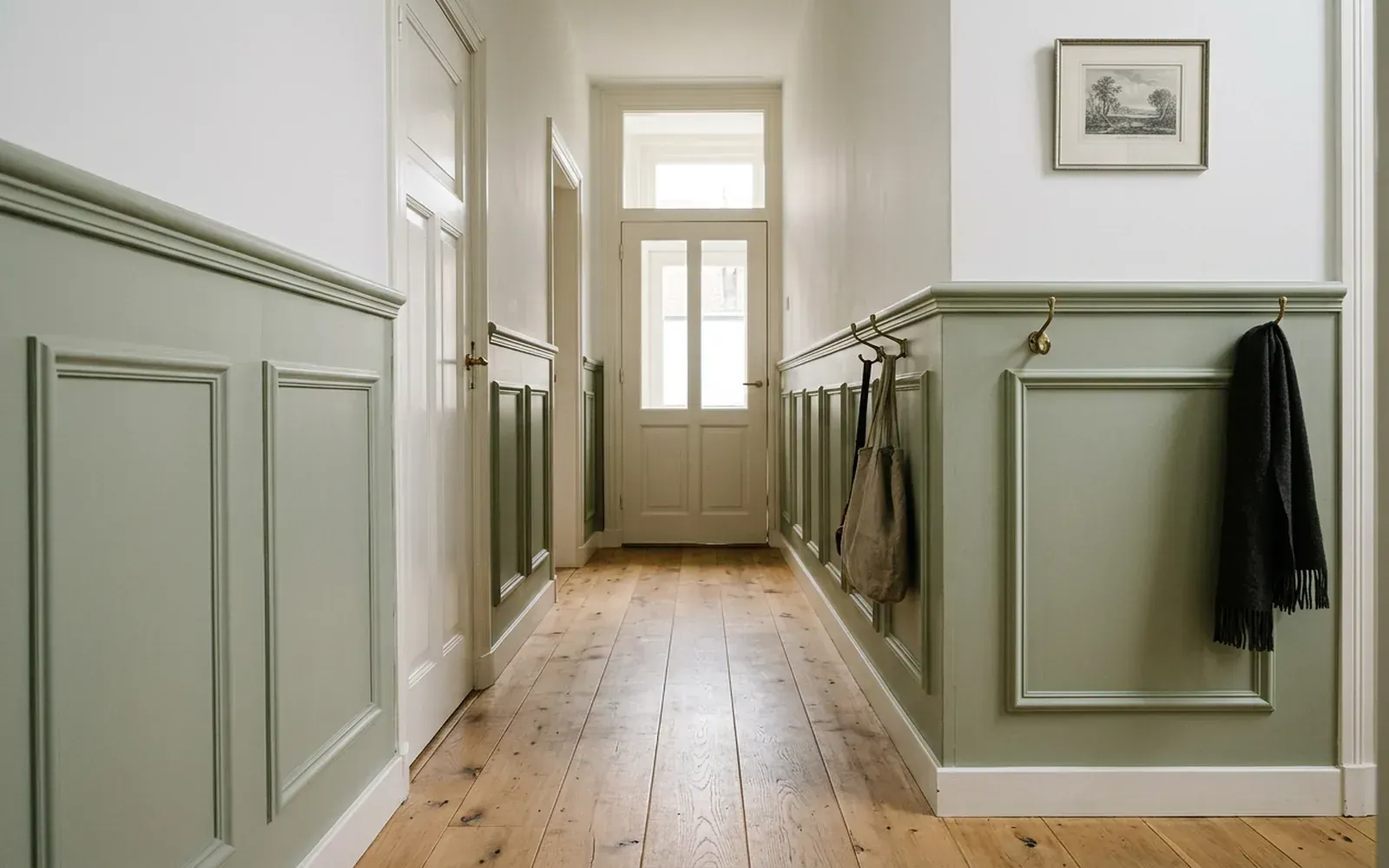
Wall mouldings and wainscoting: differences, styles and uses
Wainscoting and wall mouldings give a wall structure and a classic or modern look. We explain the difference, which styles there are and what to look out for.
Mouldings & walls
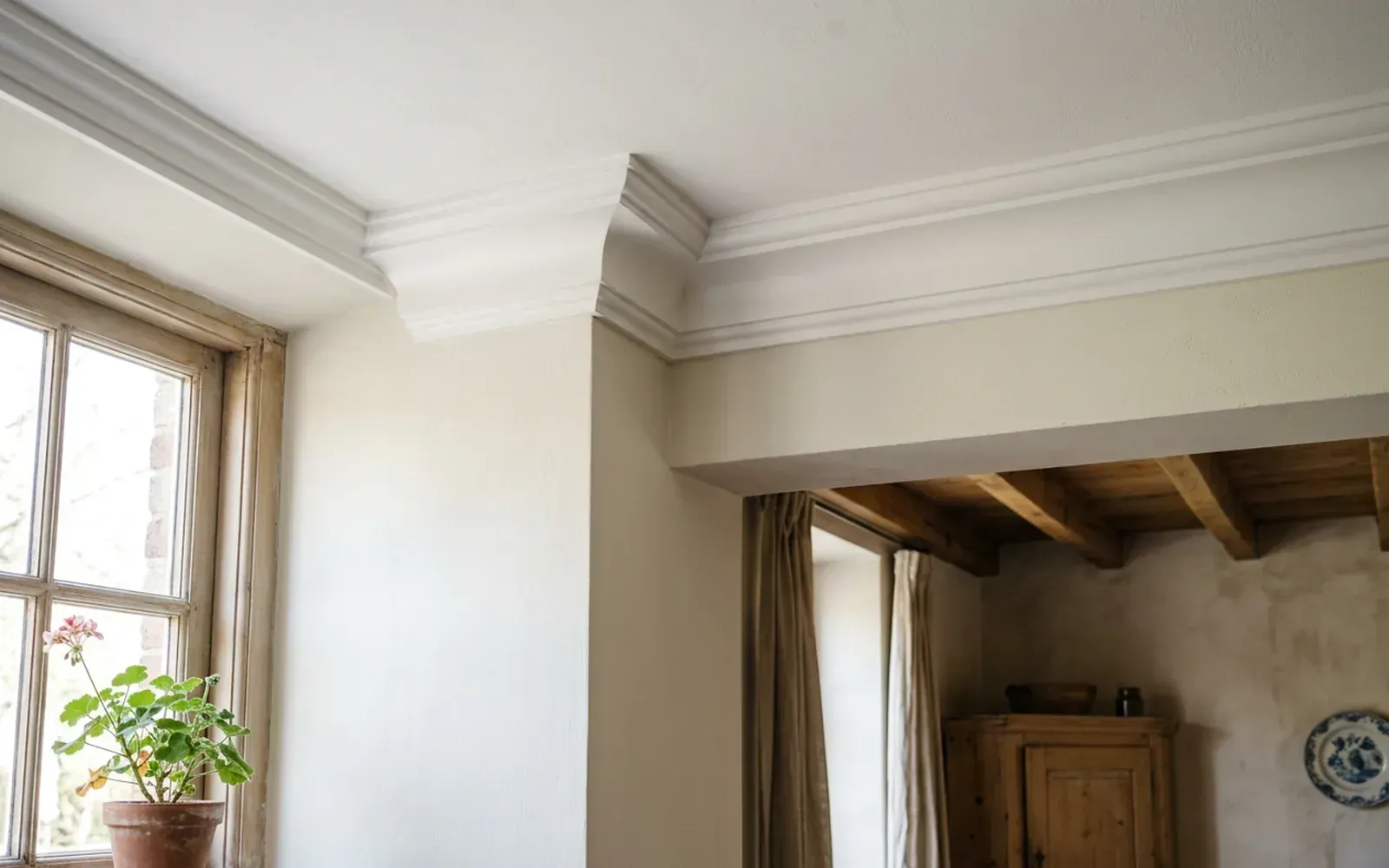
Coving and cornices: the difference, types and installation
Coving gives the transition between wall and ceiling a crisp finish and completes a room. We explain how it differs from a cornice, which profiles are available and how they are fitted.
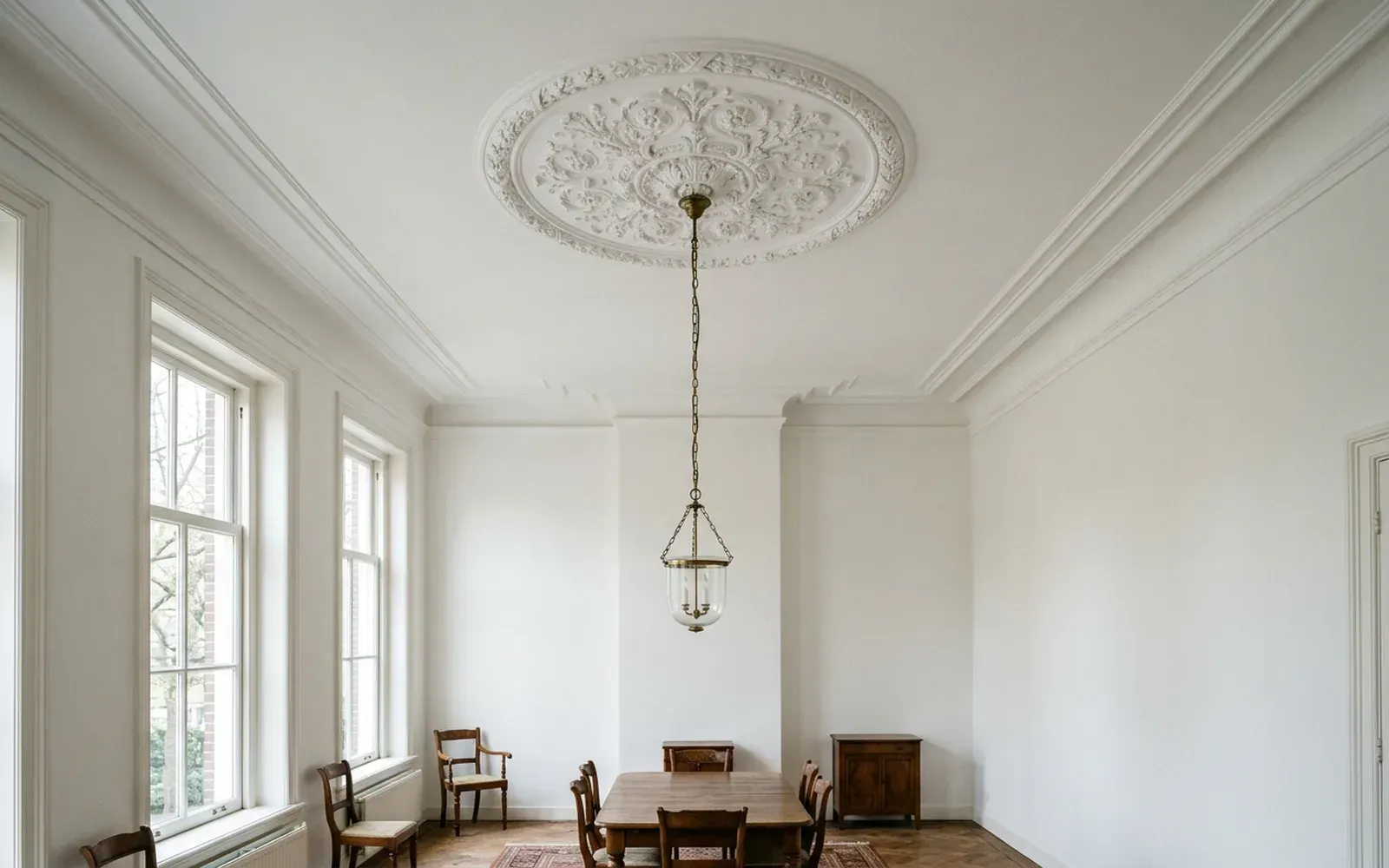
Mouldings & walls
Ceiling roses: meaning, types and what you need to know
A ceiling rose is a round ornament around the light fitting, familiar from townhouses and period interiors. We explain where it comes from, which types there are and how to combine it with coving.
Related
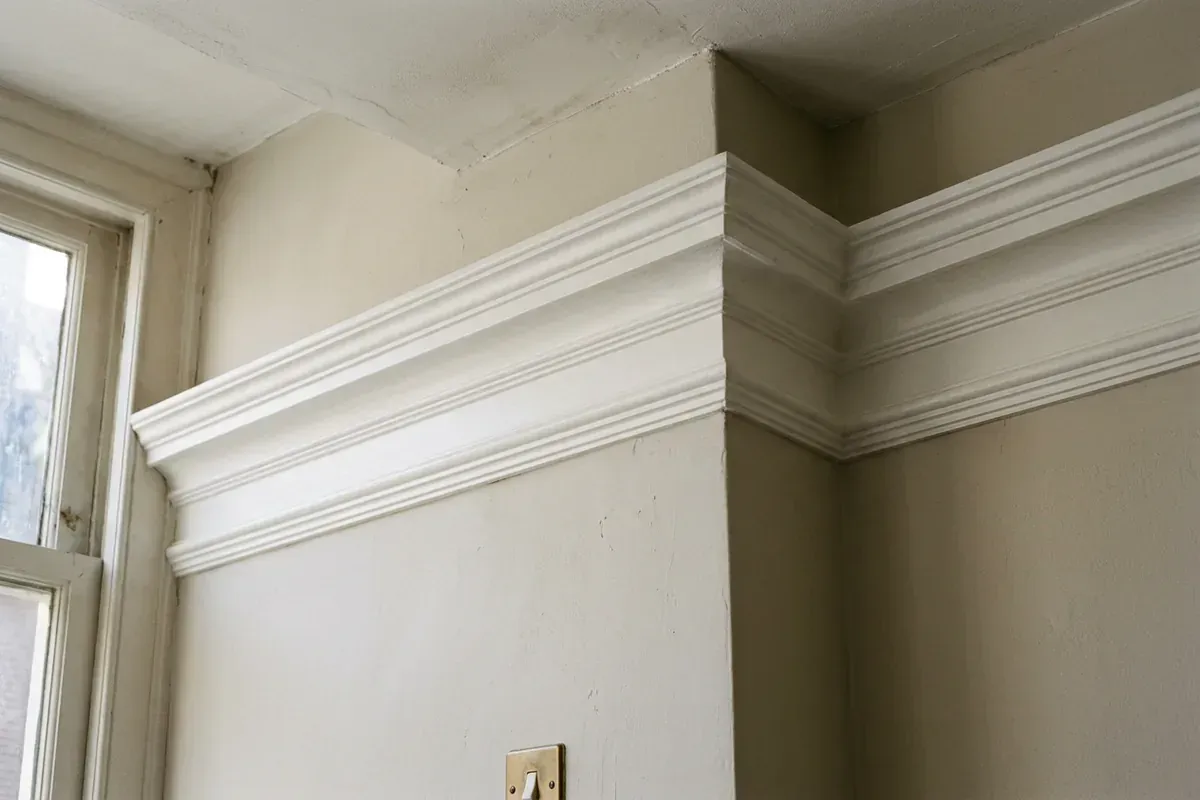
Decorative moulding
A decorative moulding is an ornamental profile on a wall or ceiling. It gives a room character, from classic ornament to a sleek modern line.
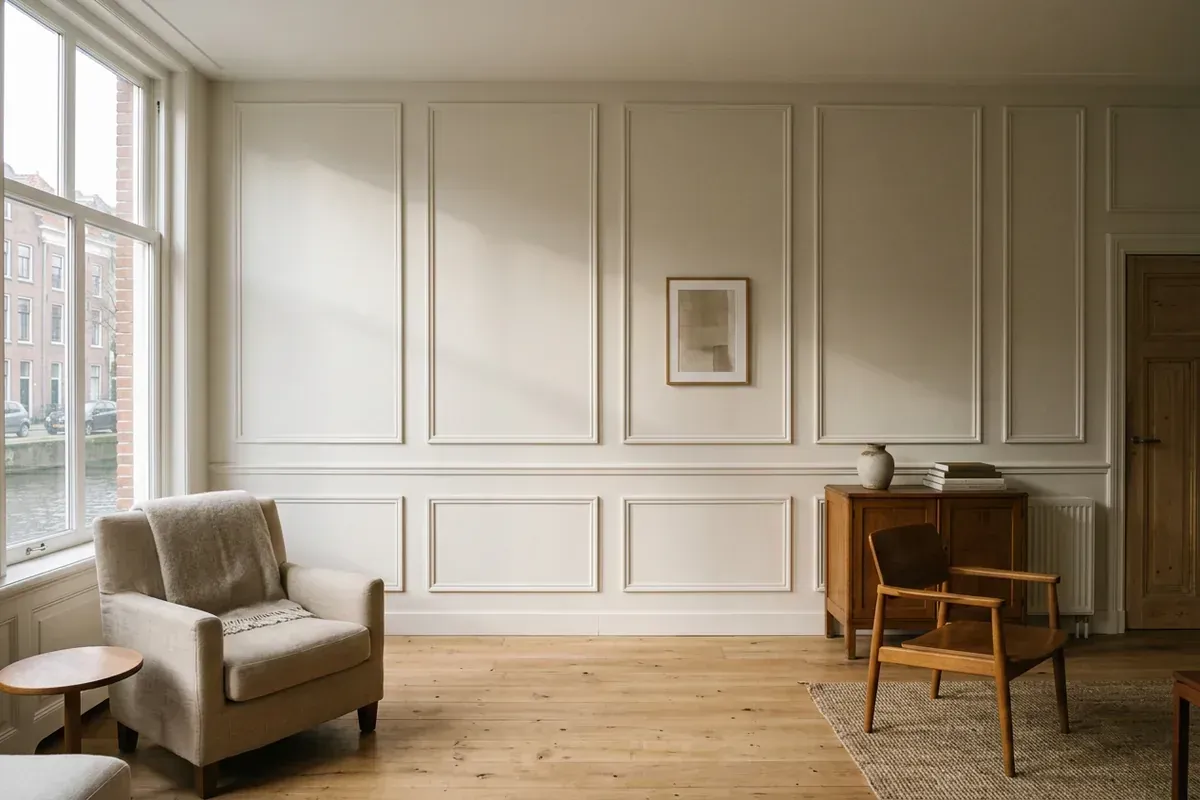
Wall moulding
A wall moulding is a narrow moulding on the wall surface. Several mouldings together create frames or panels that give a flat wall depth and rhythm.
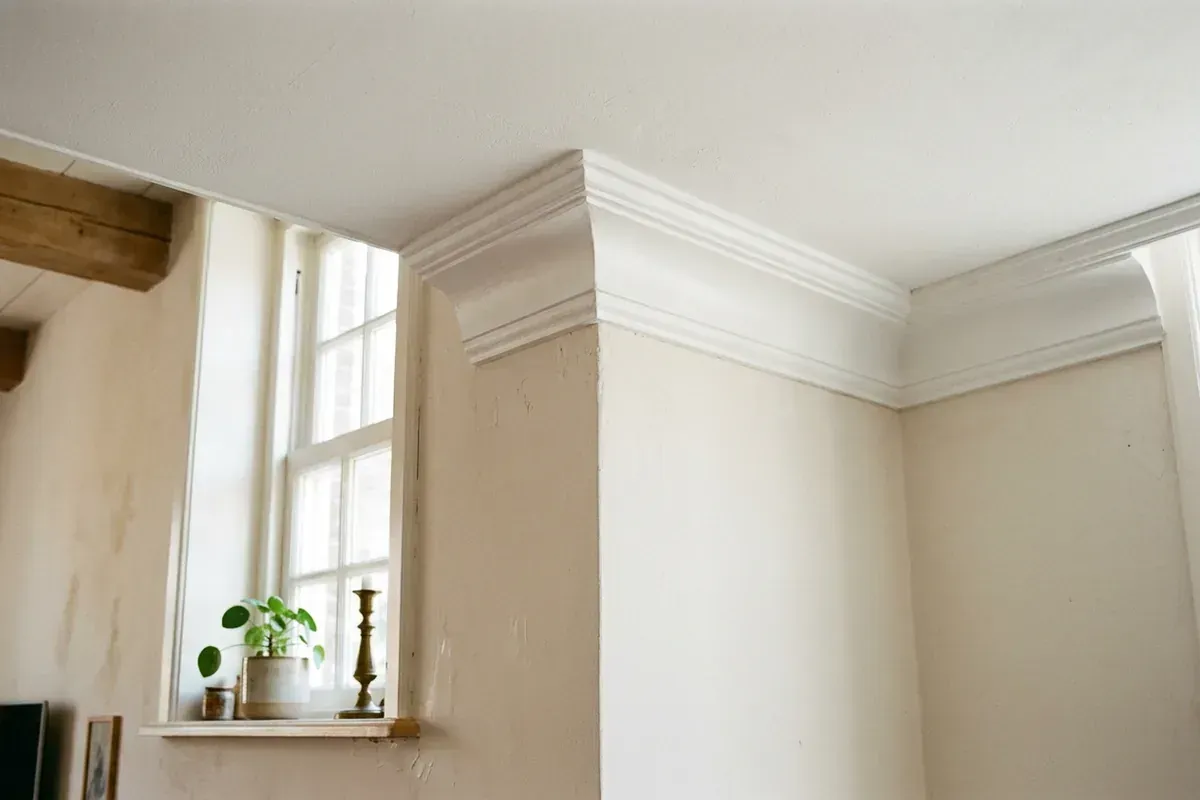
Coving
Coving finishes the corner between wall and ceiling. It hides hairline cracks and unevenness and gives a room a finished top edge.
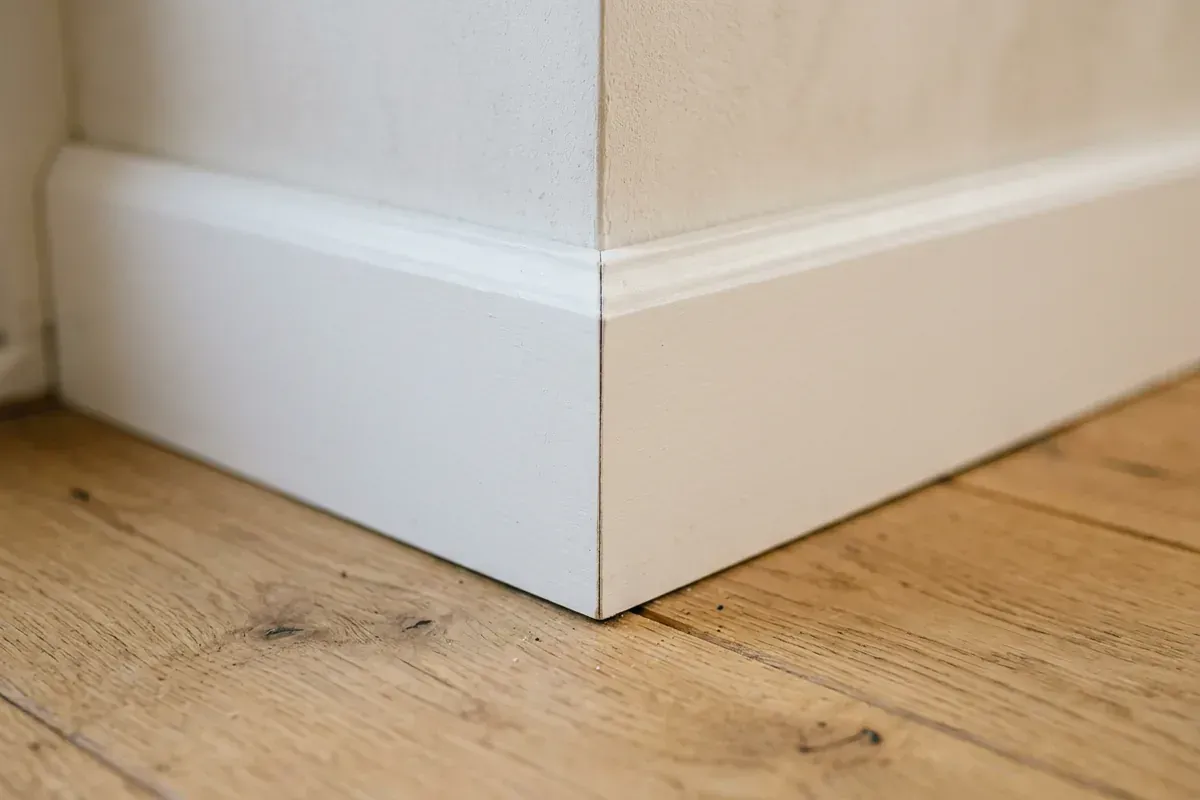
Mitre joint
A mitre is an angled cut that lets two mouldings meet seamlessly in a corner. For a right angle, that is usually 2 x 45 degrees.
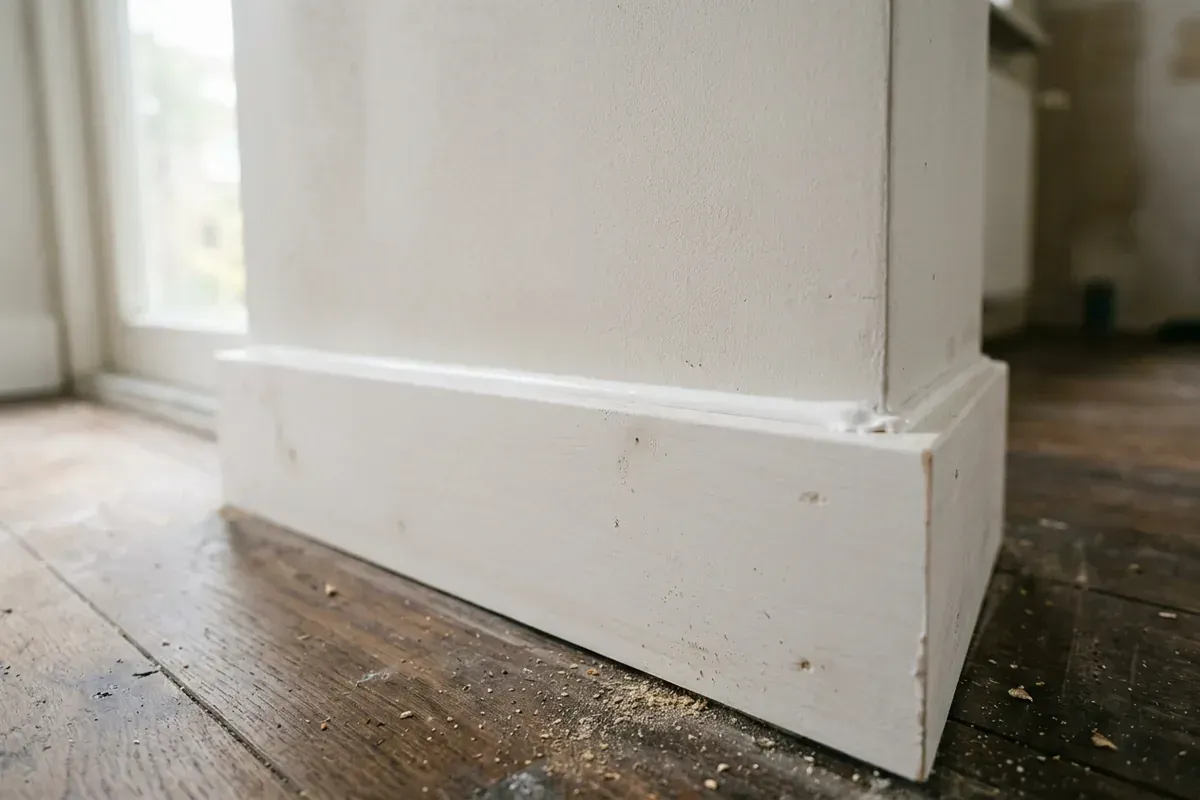
Acrylic caulk
Acrylic caulk is a water-based sealant that can be painted once cured. It is the usual choice for skirting boards, mouldings and frames in dry rooms.
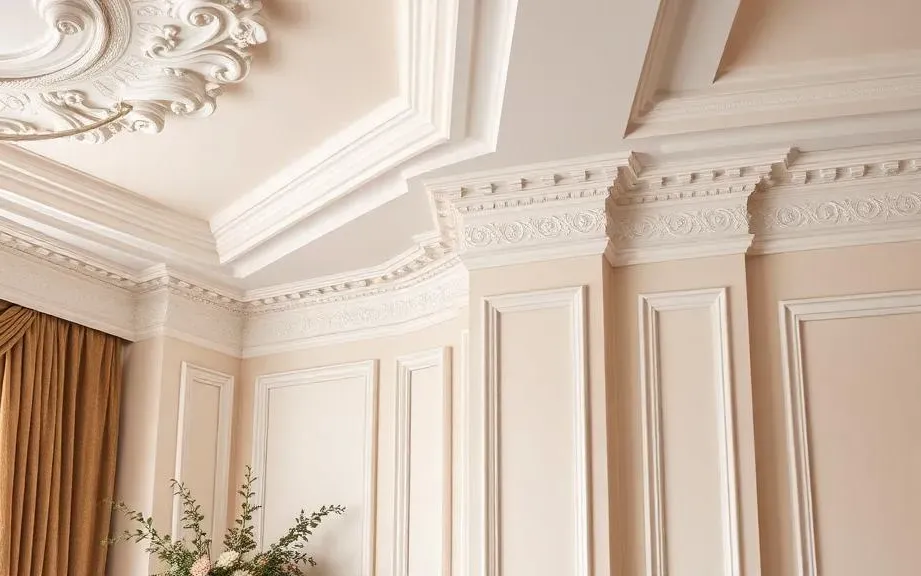
Decorative mouldings and coving installation
Decorative mouldings and coving give a room character. TipTop Plinten fits them in classic or minimal modern styles, with precise mitres and clean caulking.
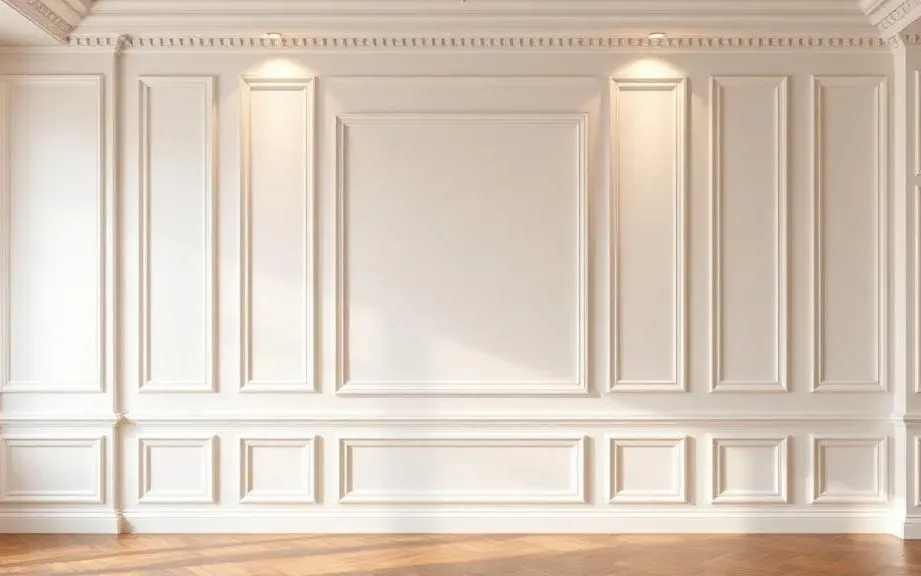
Wall panelling installation and wall mouldings fitted
TipTop Plinten fits wall panels, wall mouldings, slat panels and acoustic panels in homes, offices and hotels, with tight mitres and clean caulking.
Skirting board installation? Request a free quote
On-site measurement €75 incl. VAT (credited for orders above a minimum project size)