
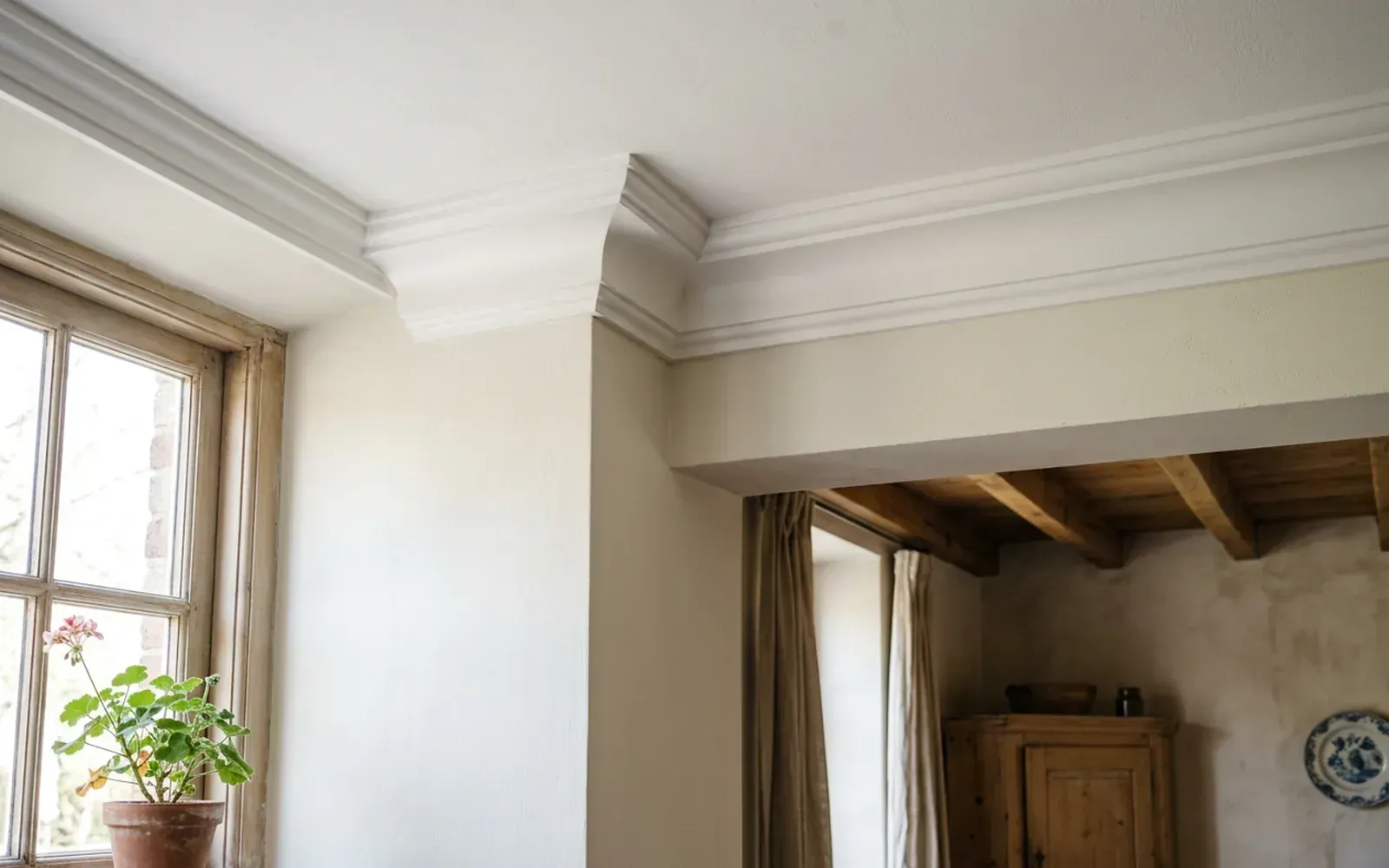
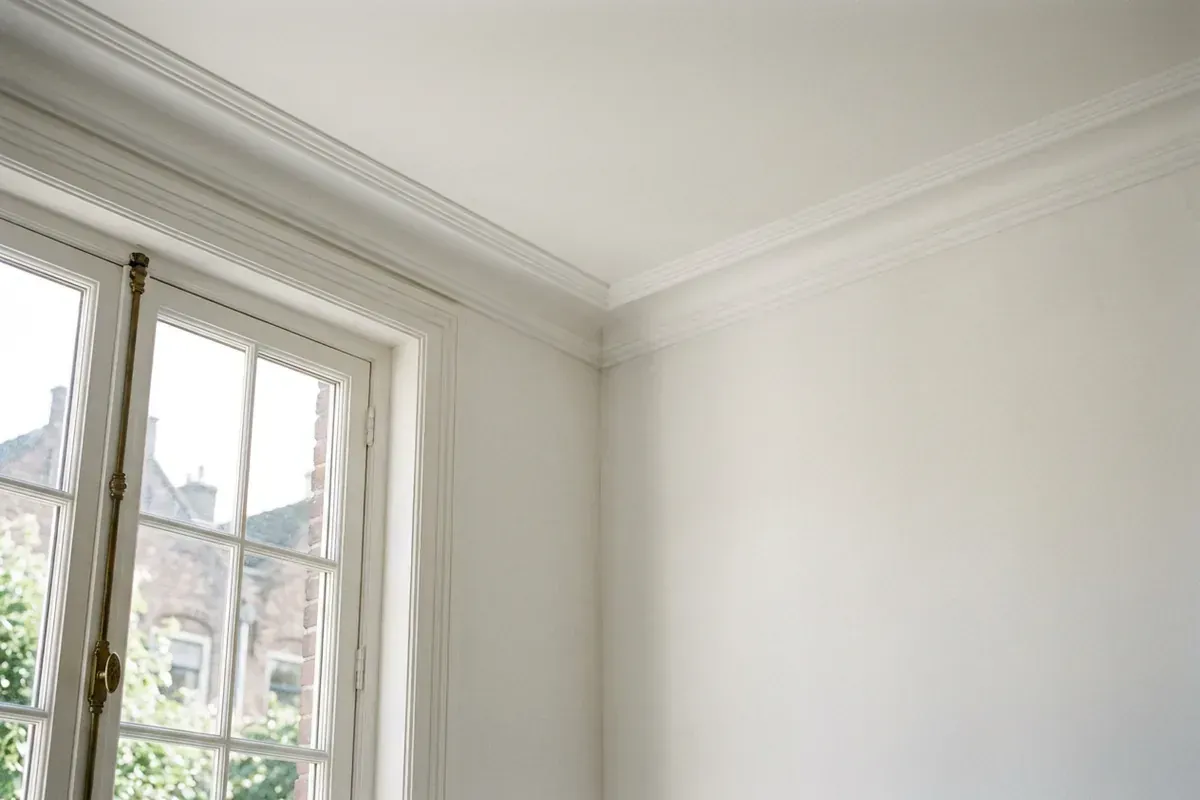
Coving is moulding at the junction of wall and ceiling. It covers the often untidy joint between the two surfaces and gives a room a finished, well-kept look. A cornice is a larger, usually more richly profiled version. There are sleek, modern profiles and classic mouldings; the choice depends on the ceiling height, the style of the interior and the condition of the wall and ceiling.
What is coving?
Coving is a moulding fitted in the angle between wall and ceiling. It has two jobs:
- Finishing. In practice, the junction between wall and ceiling is rarely perfect. Hairline cracks, colour differences or an uneven line may be visible. Coving covers this up.
- Dressing the room. Coving gives a room character. It frames the ceiling, emphasises the height of a room and can give a flat space more depth.
Coving belongs to the wider group of decorative mouldings. Our article on decorative mouldings in a modern interior explains how to combine wall mouldings with coving.
What is a cornice?
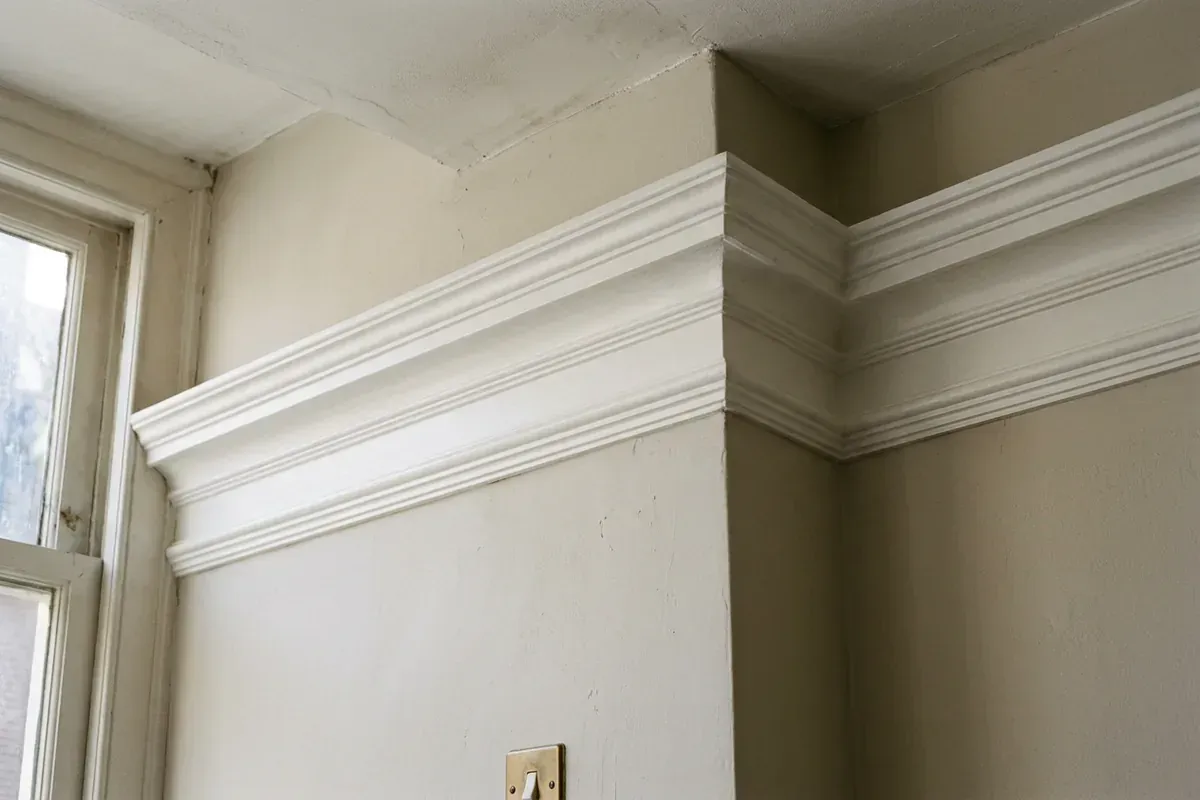
The term cornice comes from architecture. There it is the top, projecting part of a facade or of the entablature above columns: the part that forms the 'crown', as it were. A cornice on the outside of a building also protects the facade from rainwater.
In interiors, cornice is often used for a larger, profiled ceiling moulding, like those found in townhouses, canal houses and 1930s homes. In everyday language, coving and cornice are regularly used interchangeably.
What types of coving are there?
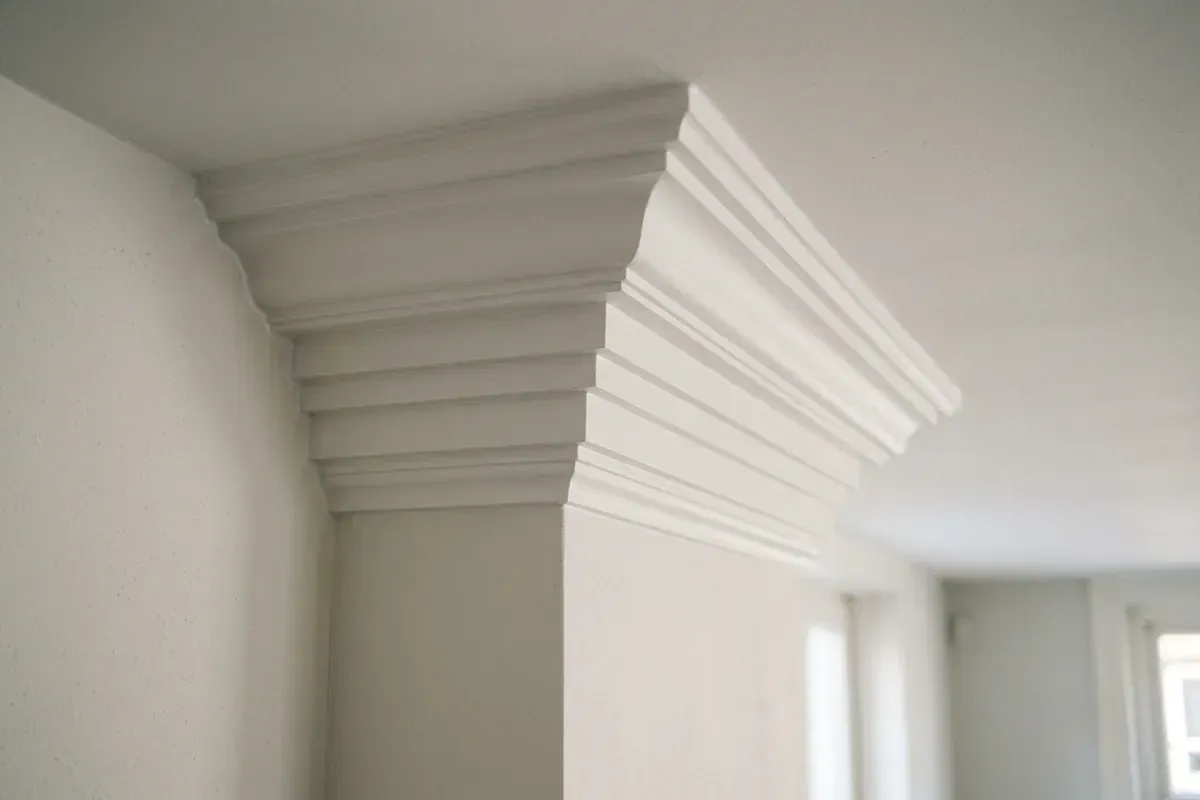
Classic coving
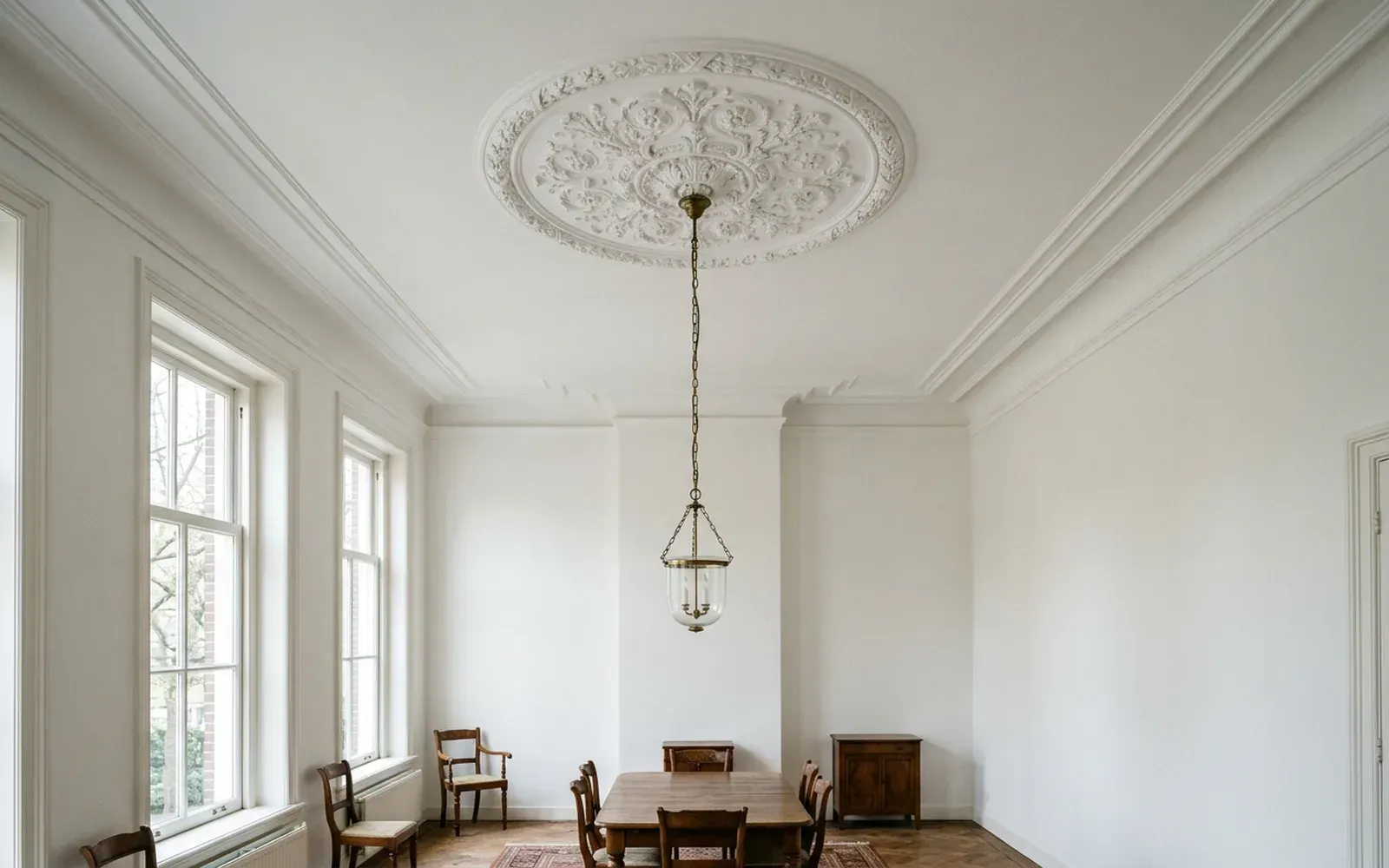
Richly profiled mouldings with several concave and convex lines, sometimes with motifs. They suit high ceilings and characterful buildings and are often combined with a ceiling rose. You can read more about ceiling roses in our article on ceiling roses and ornaments.
Modern coving
Simple profiles: a stepped moulding, a straight moulding or a moulding with a single gentle curve. They give a crisp finish without being overtly decorative.
Mouldings for indirect lighting
Some coving is set slightly away from the wall or ceiling, creating space for an LED strip. The light then falls indirectly onto the ceiling or down along the wall. That creates a calm, modern atmosphere. With this kind of application, the power supply for the lighting has to be thought through in advance.
Which size of coving suits your room?
Coving should be in proportion to the room. A rough guideline:
| Situation | Advice |
|---|---|
| Low ceiling, small room | Narrow, simple moulding, so the ceiling does not look lower |
| Average ceiling | Medium-sized moulding, sleek or lightly profiled |
| High ceiling, spacious room | A wider or richer profile works well, including a cornice |
If you are unsure, hold a piece of moulding or a cardboard template in the right place against the wall and look at it from different spots in the room.
What is coving made of?
Coving is made from various materials, such as plaster, MDF, solid wood, polyurethane and polystyrene. Each material has its own characteristics:
- Plaster allows fine detail and is widely used in classic plasterwork, but it is heavy and fragile.
- MDF and solid wood are dimensionally stable and paint well, and are suitable for sleek profiles.
- Plastics are light and easy to work with; quality and detail vary greatly from product to product. Lightweight polystyrene mouldings are prone to dents.
Which material suits your ceiling, your preferred profile and the surface is best discussed on the basis of your situation. TipTop Plinten is happy to advise you.
How is coving fitted?
Preparation
The wall and ceiling must be clean, dry and sound. Loose paint or plaster has to be repaired first. Then the line on which the moulding will sit is marked out, so that it is at the same height all the way round.
Mitred corners
In internal and external corners, the mouldings are mitre-cut. With coving this is trickier than with skirting boards, because the moulding sits at an angle between wall and ceiling. It has to be cut in the right position to get a closed corner. Because corners in a room are rarely exactly 90 degrees, each corner is fitted separately.
Fixing
The moulding is glued to the wall and ceiling with a suitable construction adhesive. Heavier mouldings are additionally secured with pins or screws so they cannot slip while the adhesive cures.
Caulking and painting
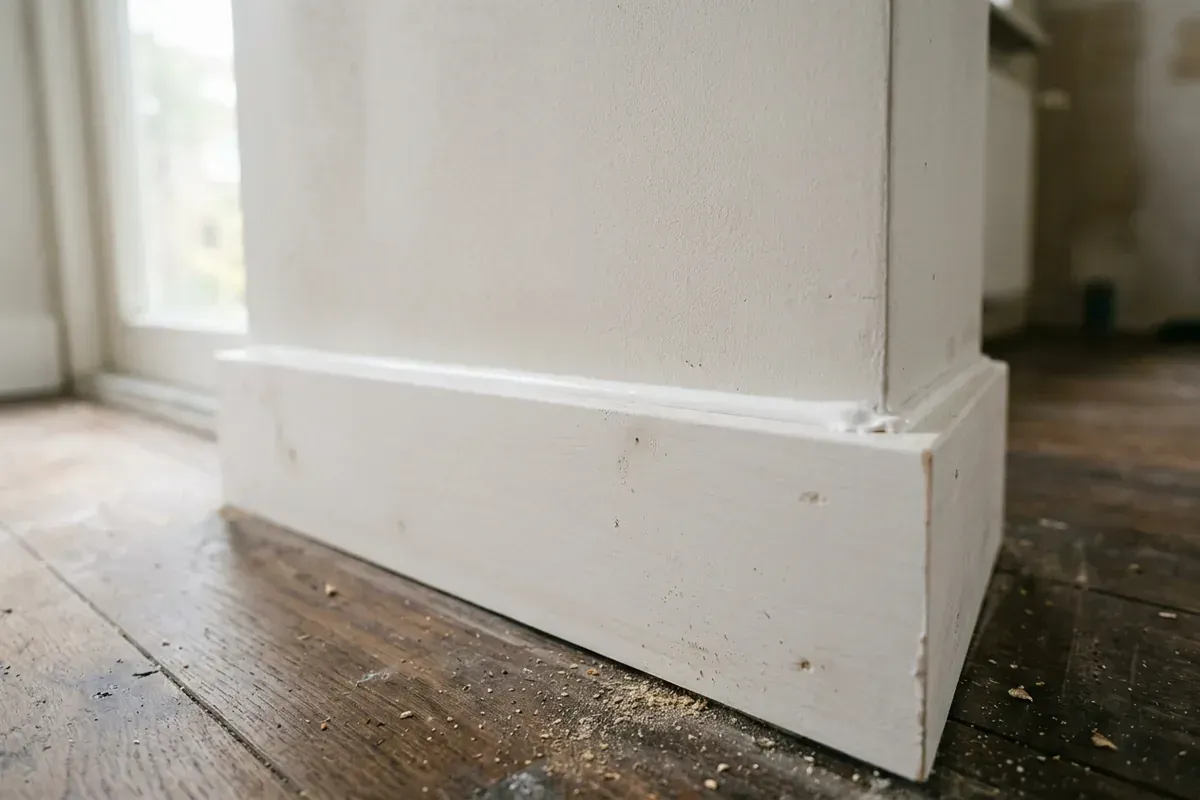
Finally, the joints are finished with a paintable acrylic caulk. The moulding can then be painted in the wall or ceiling colour. Silicone sealant is not a good choice here, because it cannot be painted over.
What should you look out for with coving?
- Straight line: a ceiling is not always flat. Decide whether the moulding follows the ceiling or holds a straight line, and take up differences neatly.
- Colour: in the ceiling colour, the moulding blends in more; in the wall colour, it extends the wall. A contrasting colour makes the moulding more prominent.
- Cohesion: choose a style that matches the skirting boards, architraves and any wall mouldings.
- Cracks: ceilings that move, for example with timber joists, can cause hairline cracks in the caulk joint. Good caulk and preparation limit this.
Which colour should you paint coving?
Most coving is painted the same colour as the ceiling, often white. The moulding then belongs to the ceiling and makes the wall look slightly lower. If you paint the moulding in the wall colour, the wall actually appears to continue higher. A contrasting colour, for example a dark moulding against a light ceiling, makes the moulding a striking feature. That works especially well in spacious rooms with a high ceiling. Also match the colour to the skirting boards and architraves, so that the mouldings in the room belong together.
Coving in classic and modern interiors
In a characterful building, coving can reinforce or restore the original atmosphere. Made-to-measure work is often needed there, because walls and ceilings may have moved over the years. In a modern home, simple coving provides a crisp finish and a well-kept transition.
Moulding work is also widely used in hospitality venues and hotels. In a hotel in Maastricht, for example, TipTop Plinten fitted and caulked wall panels and decorative mouldings, finished in RAL 9010.
Having coving fitted
TipTop Plinten, based in 's-Hertogenbosch, fits decorative mouldings and coving throughout the Netherlands, with precise mitres and neat caulking. You will find more information on our decorative mouldings and coving page.
Would you like coving or a cornice fitted? Get in touch to discuss what you have in mind and ask for a free, no-obligation quote. We are happy to communicate in English. An optional on-site measurement is available for €75 incl. VAT; for projects above a minimum size, this amount is deducted from the final price.
Frequently asked questions
Coving is the general term for a moulding at the junction of wall and ceiling. In architecture, a cornice is the top, projecting part of a facade or entablature; in interiors, the word is often used for a larger, profiled ceiling moulding.
Yes. With a simple, stepped or gently curved profile, coving works well in modern interiors. It gives the junction between wall and ceiling a crisp finish and can be combined with indirect lighting.
That depends on the ceiling height and the size of the room. With a low ceiling, a narrow moulding works better; with high ceilings and spacious rooms, the profile can be larger. Get advice beforehand or hold a sample piece against the wall.
Coving is usually glued to the wall and ceiling, sometimes supplemented with pins or screws for heavier mouldings. The joints are then caulked with paintable acrylic caulk and the moulding is painted.
Yes, but the moulding then has to take up the irregularity. Small deviations are filled with caulk; with larger deviations, you have to decide whether the moulding follows the wall or the ceiling so that the end result looks as straight as possible.
Related articles

Mouldings & walls
Decorative mouldings in a modern interior: how to use them with style
Decorative mouldings are not just for period properties. With a calm profile and the right colour, they give a modern interior depth and a refined look. Here is how to use them.
Mouldings & walls
Ceiling roses: meaning, types and what you need to know
A ceiling rose is a round ornament around the light fitting, familiar from townhouses and period interiors. We explain where it comes from, which types there are and how to combine it with coving.
Related
Coving
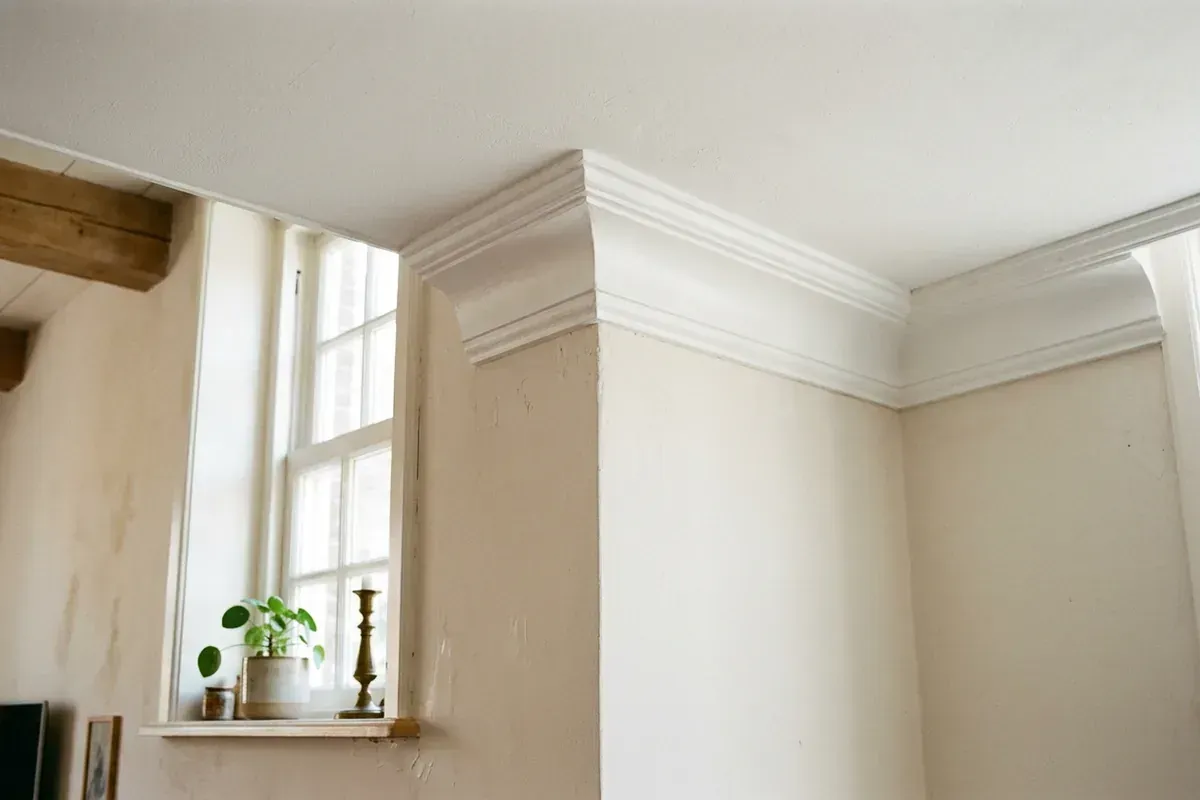
Coving finishes the corner between wall and ceiling. It hides hairline cracks and unevenness and gives a room a finished top edge.
Cornice
A cornice is a richly profiled moulding that crowns the top of a wall. Indoors, it is the classic version of coving.
Decorative moulding
A decorative moulding is an ornamental profile on a wall or ceiling. It gives a room character, from classic ornament to a sleek modern line.
Mitre joint
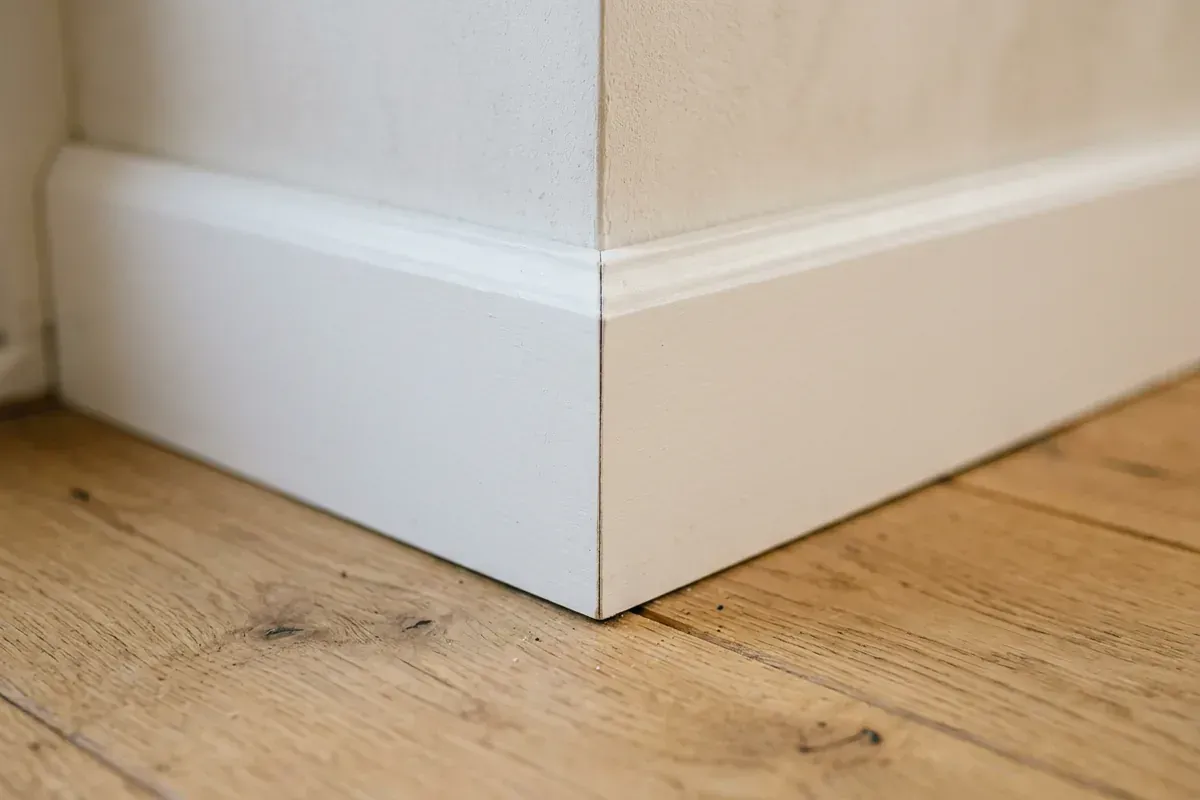
A mitre is an angled cut that lets two mouldings meet seamlessly in a corner. For a right angle, that is usually 2 x 45 degrees.
Acrylic caulk
Acrylic caulk is a water-based sealant that can be painted once cured. It is the usual choice for skirting boards, mouldings and frames in dry rooms.
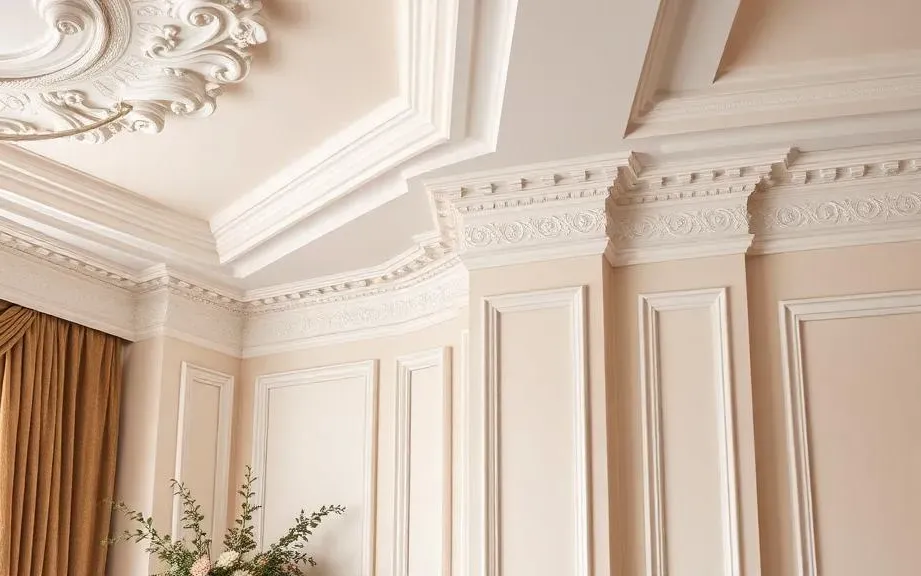
Decorative mouldings and coving installation
Decorative mouldings and coving give a room character. TipTop Plinten fits them in classic or minimal modern styles, with precise mitres and clean caulking.
Skirting board installation? Request a free quote
On-site measurement €75 incl. VAT (credited for orders above a minimum project size)