
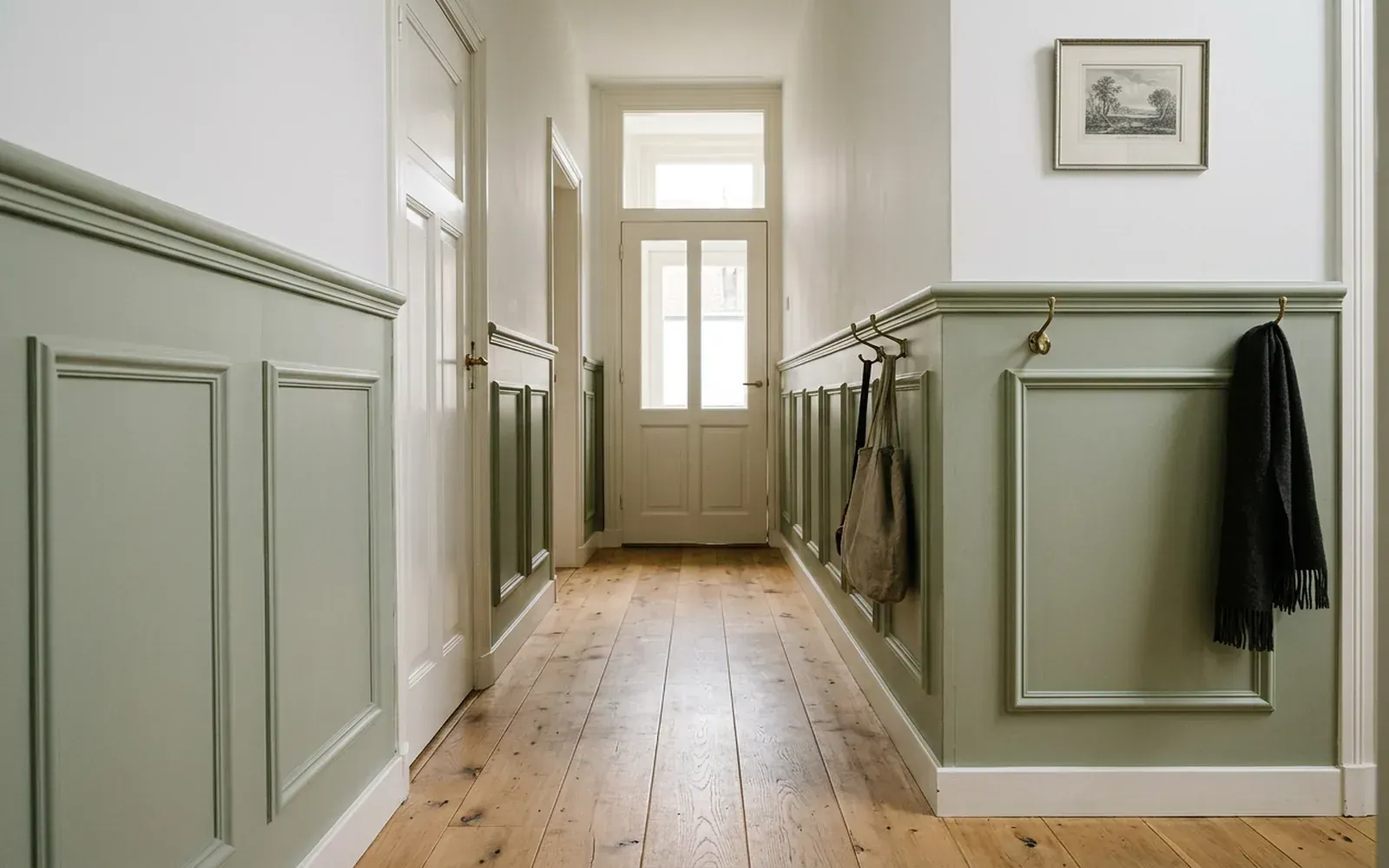
Wainscoting is a covering on the lower part of a wall, traditionally made of wooden panels or mouldings. Wall mouldings are mouldings fixed to a flat wall to create frames or a horizontal line. With wall mouldings you can create a wainscoting effect without fully covering the wall. Both give a room structure, protection and character, in classic and modern interiors alike.
What exactly is wainscoting?
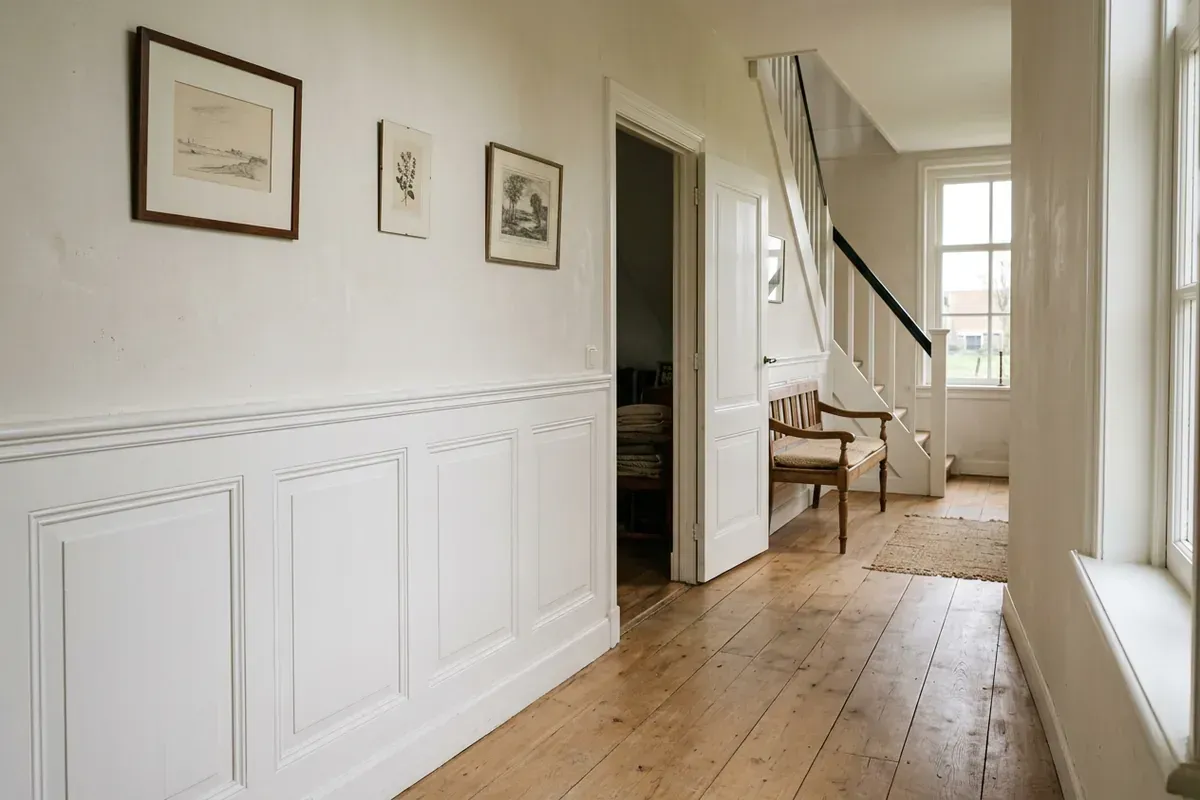
The term wainscoting (Dutch: lambrisering) is used for wall panelling that usually runs from the floor to around hip or chest height. Traditionally it consisted of framed wooden panels, finished with a rail at the top and a skirting board at the bottom.
Wainscoting has always had a practical function too. The lower part of a wall takes the most knocks, from chairs, bags and shoes. A covering protected the plaster against them. In older houses with cold, damp walls, a wooden covering also made the wall feel warmer.
Today, wainscoting is chosen mainly for its look. It gives a room a solid base, divides tall walls and adds depth.
What are wall mouldings?
A wall moulding is a decorative moulding fitted to the wall. There are several ways to use them:
- Frames: rectangular panels on the wall, evenly spaced.
- Horizontal line: a single dado rail that divides the wall into an upper and a lower section.
- Combination: a dado rail with frames below it, which gives a classic wainscoting look.
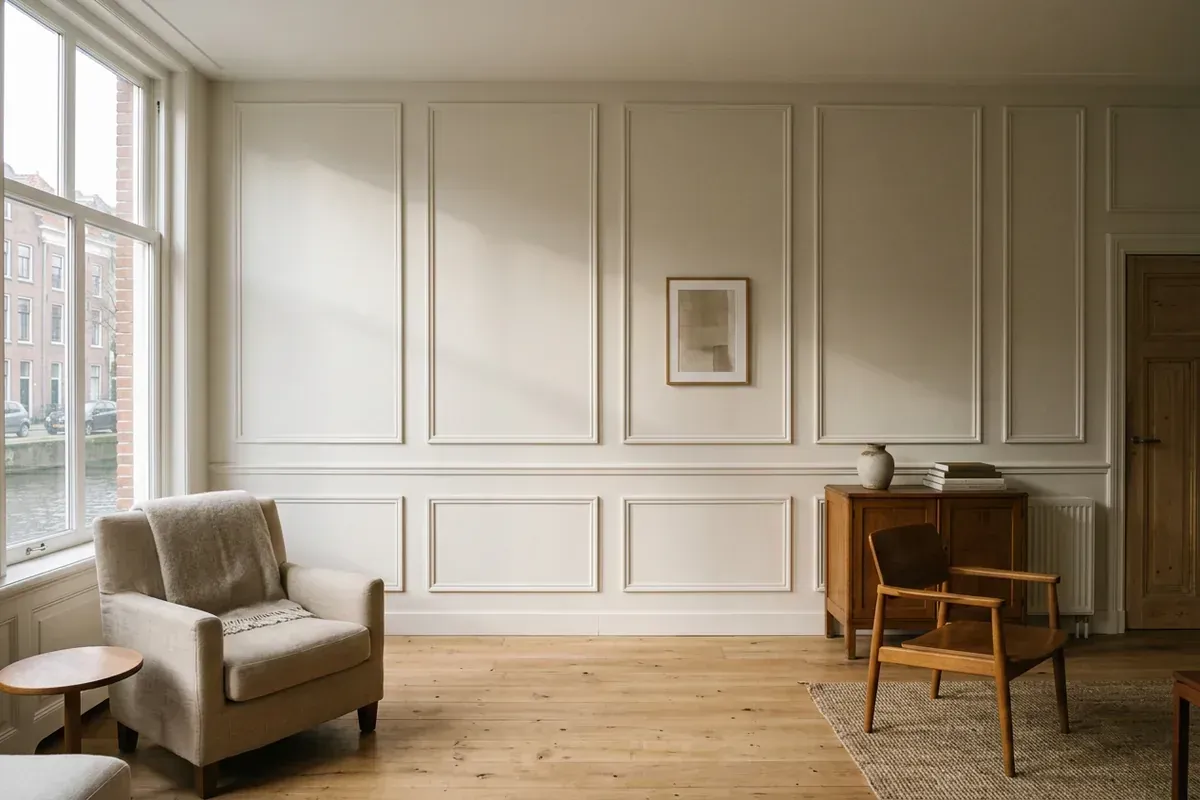
Because wall mouldings are fitted to an existing flat wall, this is often a simpler way to achieve the effect of wainscoting. The wall and mouldings are then usually painted in one colour.
Wainscoting and wall mouldings side by side
| Wainscoting | Wall mouldings | |
|---|---|---|
| What | Full covering of the lower wall section | Mouldings on a flat wall |
| Look | Solid, classic, substantial | Light, refined, flexible in layout |
| Protection | Protects the wall against knocks | Wall remains largely visible |
| Use | Hallway, dining room, stairwell, period properties | Living room, bedroom, hallway, feature wall |
Which styles are there?
Classic panelled wainscoting
Recessed or raised panels in frames, often with profiled mouldings. This style suits townhouses, 1930s homes and period properties.
Clean frames
Slim wall mouldings with a simple profile, in straight panels on the wall. Painted tone-on-tone, this gives a calm, modern look. Read more in our article on decorative mouldings in a modern interior.
Vertical panels or slats
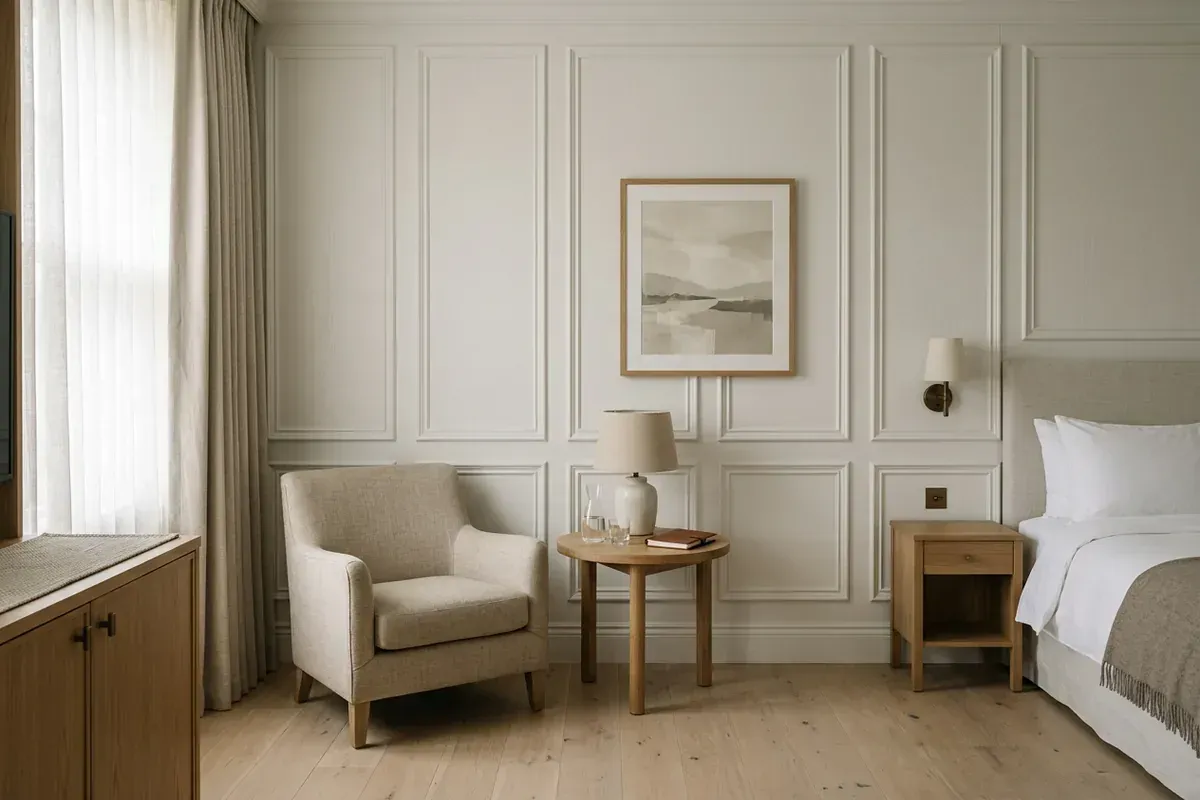
A modern interpretation is a covering of vertical panels or slats on the lower part of the wall, or over the full height. This ties in with wall panels, which also come in acoustic versions. Read more about them in the article on acoustic wall panels.
Half-height wall in colour
Increasingly, the lower part of the wall is painted a different colour from the upper part, separated by a dado rail. This creates a wainscoting effect with little material.
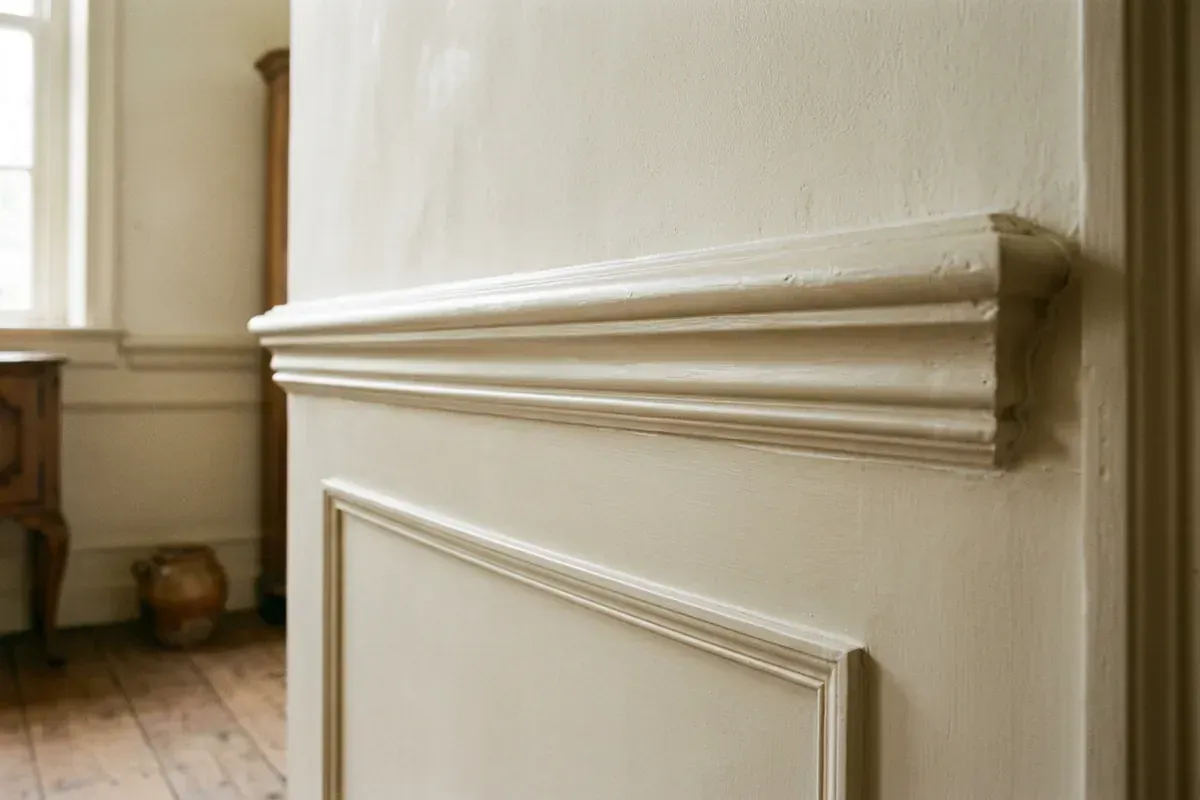
At what height does the rail go?
There is no fixed rule, but a few guidelines help:
- Around a third of the wall height is a classic proportion.
- Align with fixed points such as windowsills, door handles and furniture height. A rail that stops just below or just above a windowsill often looks unsettled.
- With high ceilings, the wainscoting can go higher, sometimes even above half the wall height.
- In a hallway and stairwell, the rail along the stairs often follows the pitch of the stairs.
Mark the line on the wall beforehand and look at it from different sides of the room before you decide.
What should you look out for with wall mouldings and wainscoting?
Surface
Wall mouldings follow the wall. If the wall bulges, dips or is out of true, you will see it in the mouldings. Small deviations can be taken up with caulk; larger deviations call for preparation or made-to-measure work.
Layout
Frames only look good if they are well spaced. Allow for sockets, switches, radiators, doors and windows. Choose fixed distances to the skirting board, the dado rail and the corners.
Mitres and caulking
The corners of frames are mitred. Because they sit at eye level, any error is visible. After fitting, all joints are finished with paintable acrylic caulk, so the mouldings and wall form one whole.
Matching the skirting board and architrave
Wainscoting or wall mouldings have to connect with the skirting board and the architraves around the doors. Choose profiles that go together, and pay attention to thickness: a dado rail that ends against an architrave must be able to stop neatly against it.
Which colour should you choose for wainscoting and wall mouldings?
Colour largely determines whether wainscoting looks classic or modern.
- Tone-on-tone: wall and mouldings in the same colour. The mouldings stand out through shadow, not colour. Calm and refined.
- Darker lower section: the wainscoting in a deeper shade than the wall above. This gives a solid base and visually lowers a tall room.
- Lighter lower section: less common, but it can make a small room feel more open.
- White mouldings on a coloured wall: a classic look that goes well with a white skirting board and white architraves in, for example, RAL 9010.
Ideally, use a hard-wearing paint for the mouldings, especially on the lower part of the wall. That section takes the most knocks and cleaning.
In which rooms does wainscoting work best?
A hallway and stairwell are classic places: there, wainscoting protects the wall against bags, coats and shoes. In a dining room, mouldings at dado height create a cosy, intimate atmosphere. In a bedroom, a half-height covering behind the bed can form a calm accent. And in hotels and offices, mouldings are used to give spaces a recognisable, well-finished look.
Mouldings in practice
Wall panels and mouldings are widely used in hotels because they create atmosphere while giving the walls a well-finished look. In a luxury hotel in Maastricht, TipTop Plinten handled all the wall panels, decorative mouldings and caulking, finished in RAL 9010 with accurate mitres.
What does TipTop Plinten do?
TipTop Plinten fits wall panels and wall mouldings, which can be used to create a wainscoting effect among other things, and decorative mouldings on walls and ceilings. That includes a clean layout, accurate mitres and caulking, finished in any RAL colour.
Would you like to have a wall dressed with wall mouldings or panels? Get in touch to discuss what you have in mind and request a free, no-obligation quote. We communicate in English, as well as Dutch, German, Turkish, Persian and Arabic. An on-site measurement is optionally available for €75 incl. VAT; this amount is credited as a discount on jobs above a minimum project size.
Frequently asked questions
Wainscoting is a covering on the lower part of a wall, traditionally made of wooden panels or mouldings. It protects the wall against knocks and gives the room a solid base and a classic look.
Wainscoting fully covers the lower part of the wall. With wall mouldings you create frames or a horizontal line on a flat wall, which gives a similar effect without fully covering the wall.
It varies. Traditionally the top edge sits at roughly hip to chest height, often around a third of the wall height. With high ceilings, the wainscoting can be taken higher. What matters is that the proportions work with doors, windows and furniture.
Not necessarily. In a calm colour, with clean frames or simple panels, wainscoting or mouldings at dado height also suit a modern interior well.
TipTop Plinten fits wall panels and wall mouldings, which can be used to create a wainscoting effect. If you would like a particular wall dressed, get in touch to discuss what you have in mind.
Related articles
Mouldings & walls
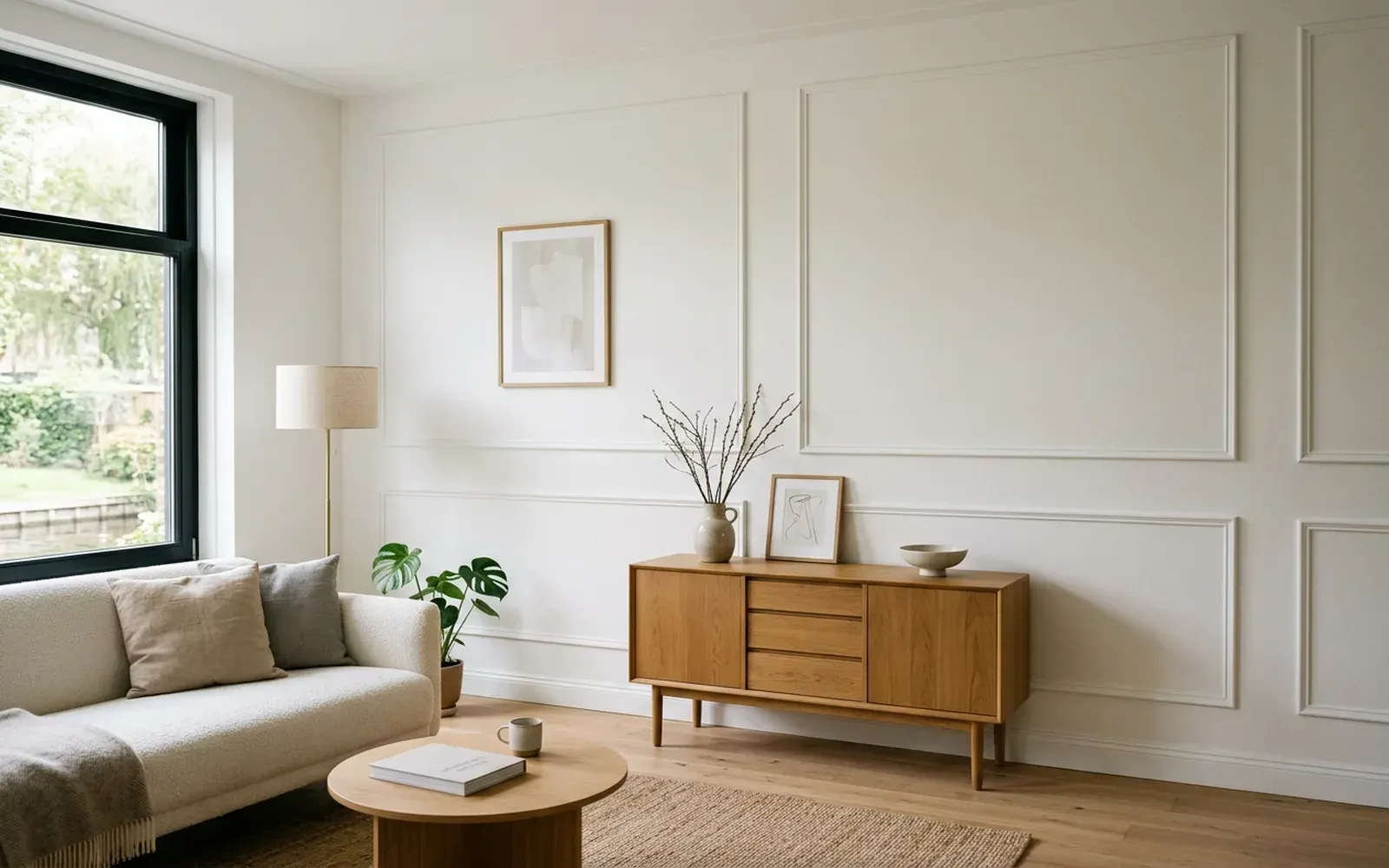
Decorative mouldings in a modern interior: how to use them with style
Decorative mouldings are not just for period properties. With a calm profile and the right colour, they give a modern interior depth and a refined look. Here is how to use them.
Mouldings & walls
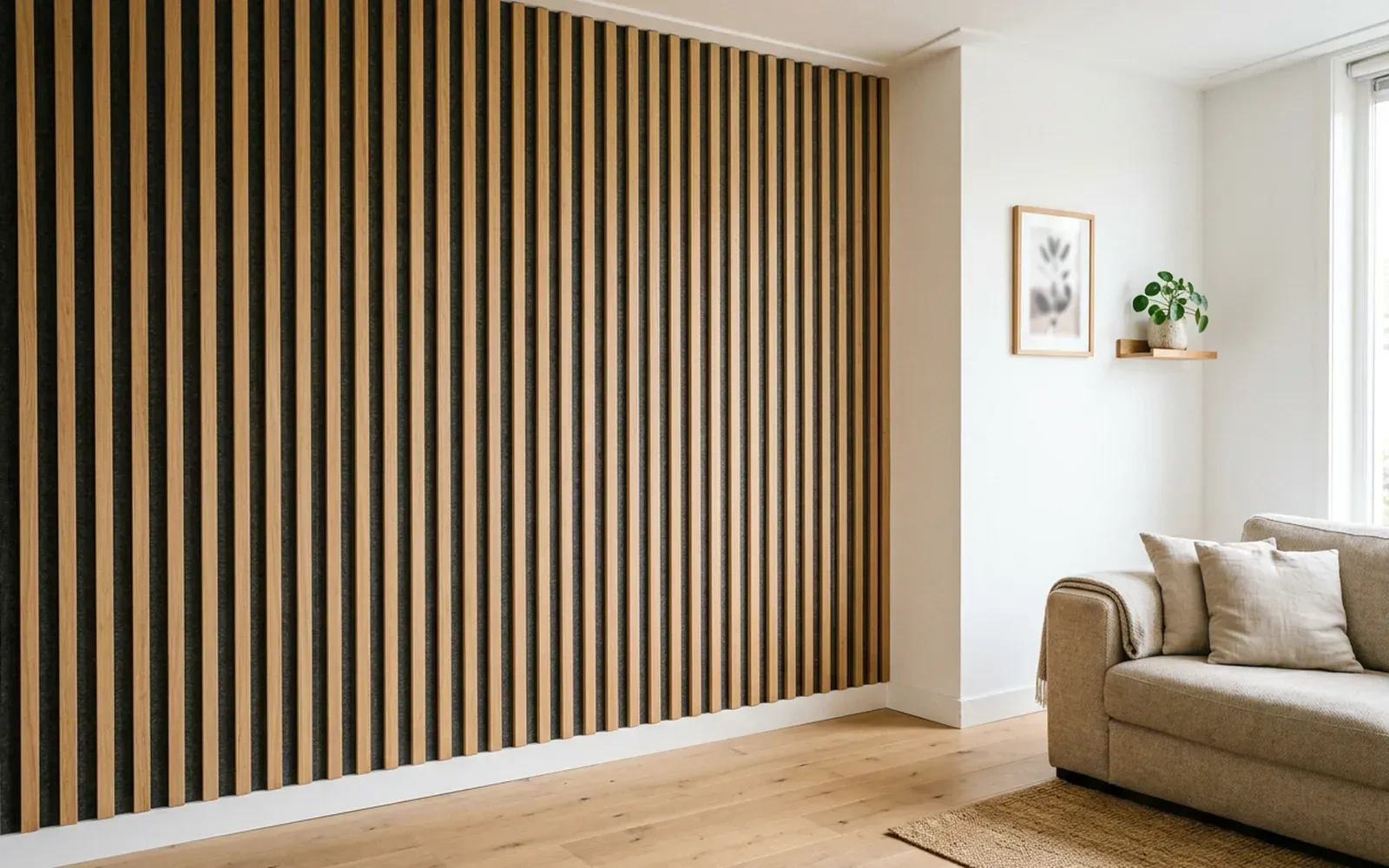
Acoustic wall panels: what do they do and when should you choose them?
Acoustic wall panels dampen echo in a room while giving the wall a warm, modern look. We explain how they work, what you can expect from them and what to look out for.
Related
Wainscoting
Wainscoting is a covering on the lower part of the wall, traditionally in timber. It protects the wall and gives a room a classic character.
Wall moulding
A wall moulding is a narrow moulding on the wall surface. Several mouldings together create frames or panels that give a flat wall depth and rhythm.
Wall panel
A wall panel is a board or panel fixed to a wall for appearance, protection or sound absorption. There are many types.
Decorative moulding
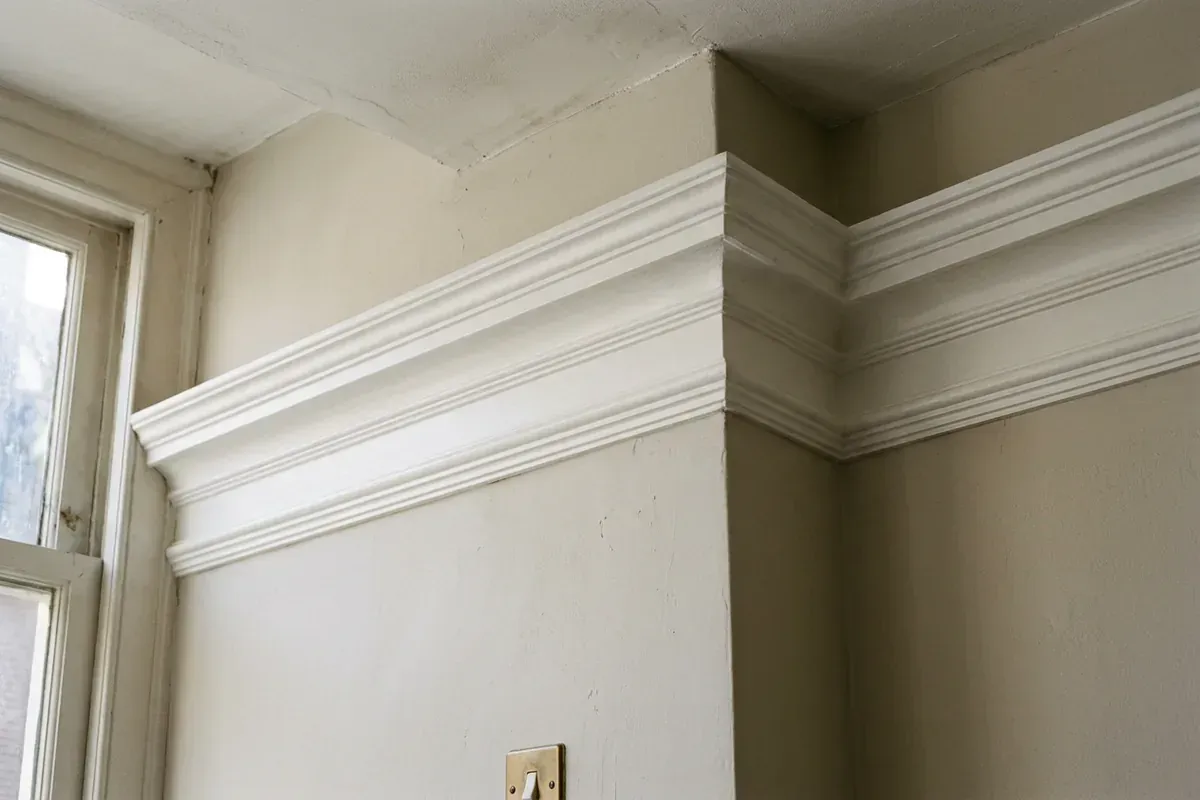
A decorative moulding is an ornamental profile on a wall or ceiling. It gives a room character, from classic ornament to a sleek modern line.
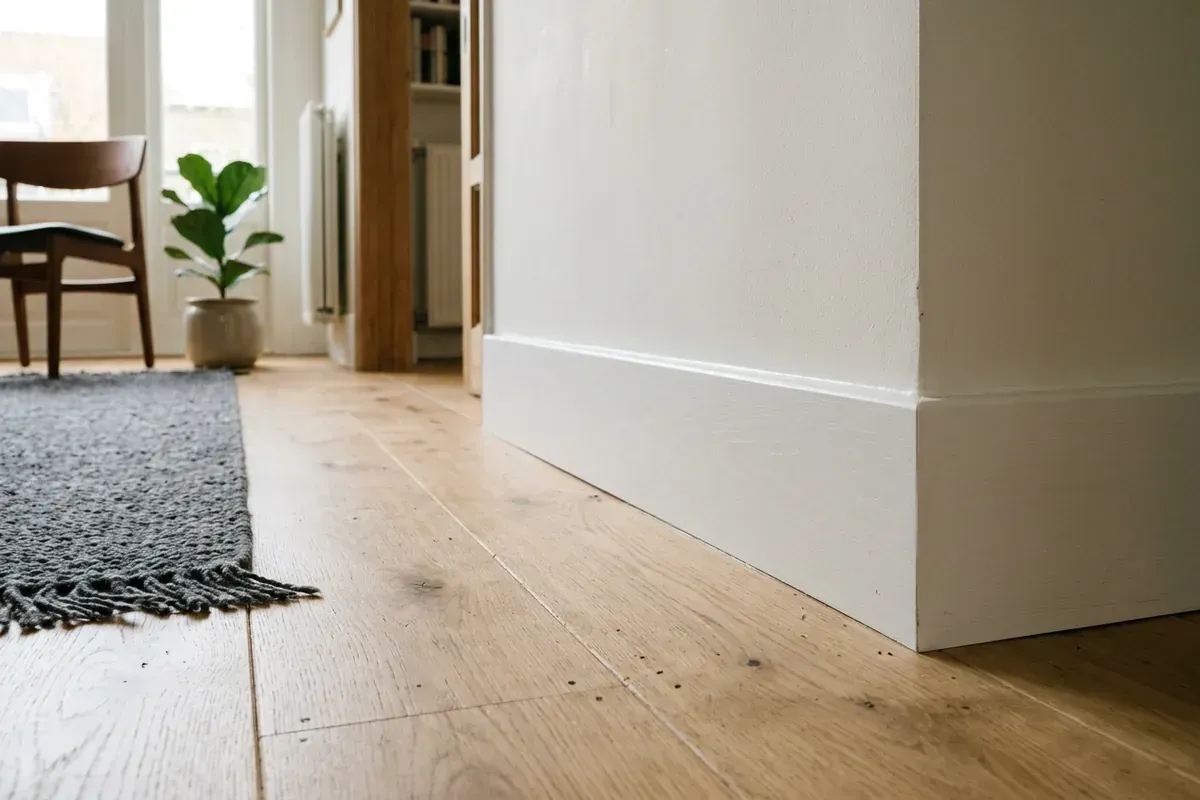
Skirting board
A skirting board is the moulding at the base of the wall that finishes the transition to the floor and protects the wall. Here is how it works and what to look out for.
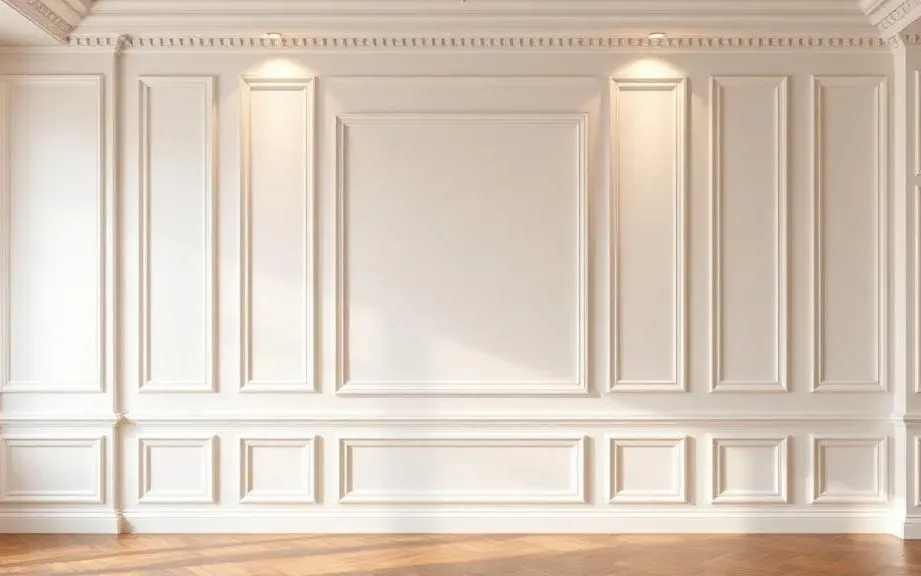
Wall panelling installation and wall mouldings fitted
TipTop Plinten fits wall panels, wall mouldings, slat panels and acoustic panels in homes, offices and hotels, with tight mitres and clean caulking.
Skirting board installation? Request a free quote
On-site measurement €75 incl. VAT (credited for orders above a minimum project size)