

A cover strip is a narrow strip or moulding used to cover a joint, gap or transition. Think of the joint between a frame and the wall, a gap along the floor or the junction between two materials. A cover strip is usually flat or slightly rounded and is deliberately unobtrusive.
What is a cover strip?
Cover strips come in various shapes:
- Flat strip: a narrow, flat strip, for example alongside a frame.
- Quadrant or angle bead: a strip with a rounded or angled profile, often along the floor or in a corner.
- Threshold strip: designed for transitions between floors, such as in a doorway.
They are made from materials including MDF, timber and aluminium.
Where is it used?
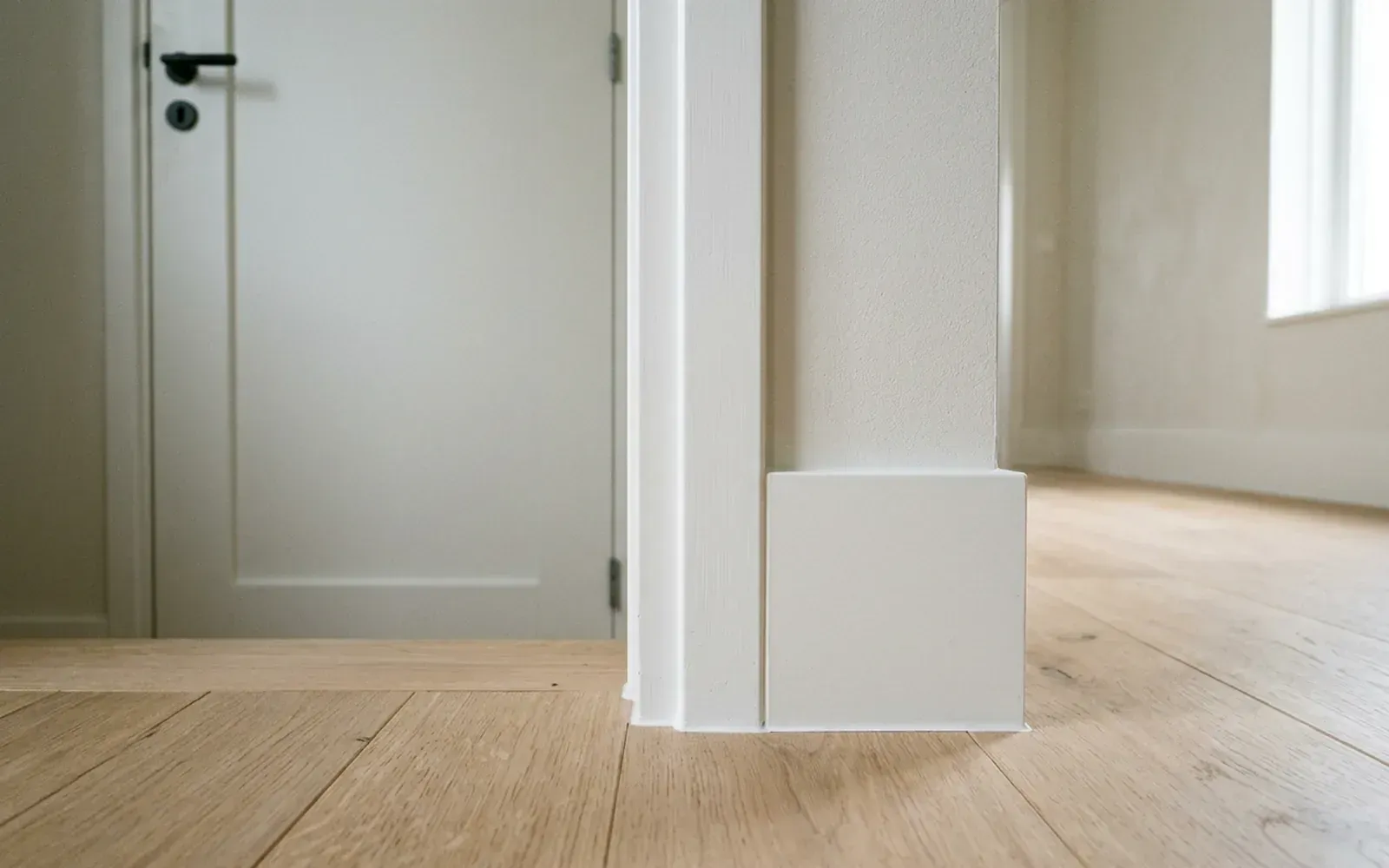
- Between a door or window frame and the wall, as a simple alternative to a door trim.
- Along the bottom of an existing skirting board, when a gap becomes visible after a new floor has been laid.
- Where built-in wardrobes or kitchen units meet the wall or ceiling.
- At transitions between wall panels or between a panel and a frame.
What should you look out for?
- Width: the strip must cover the gap completely, even at its widest point.
- Floating floor: a cover strip along the floor is fixed to the skirting board or wall, not to the floor, so the floor can move.
- Colour: in the same colour as the frame or skirting board, the strip is least noticeable.
- Fixing: narrow strips are usually glued and, if needed, secured with thin pins.
- When not to use one: for a narrow joint, caulking is often enough and looks cleaner.
You can read more about finishing joints in caulking skirting boards: which sealant? and finishing door trims and frames.
At TipTop Plinten
TipTop Plinten takes care of the finishing around frames and openings, with architraves, mouldings and caulking, so that no joints or gaps remain visible. Read more about architrave installation.
Frequently asked questions
Caulk is suitable for narrow joints of a few millimetres. If the gap is wider or irregular, a cover strip gives a neater and more durable finish. The cover strip itself is then often caulked along its edges.
Quadrant beading is a narrow moulding with a quarter-circle profile. It is often used as a cover strip along the floor, for example to hide a gap between the floor and an existing skirting board.
Related
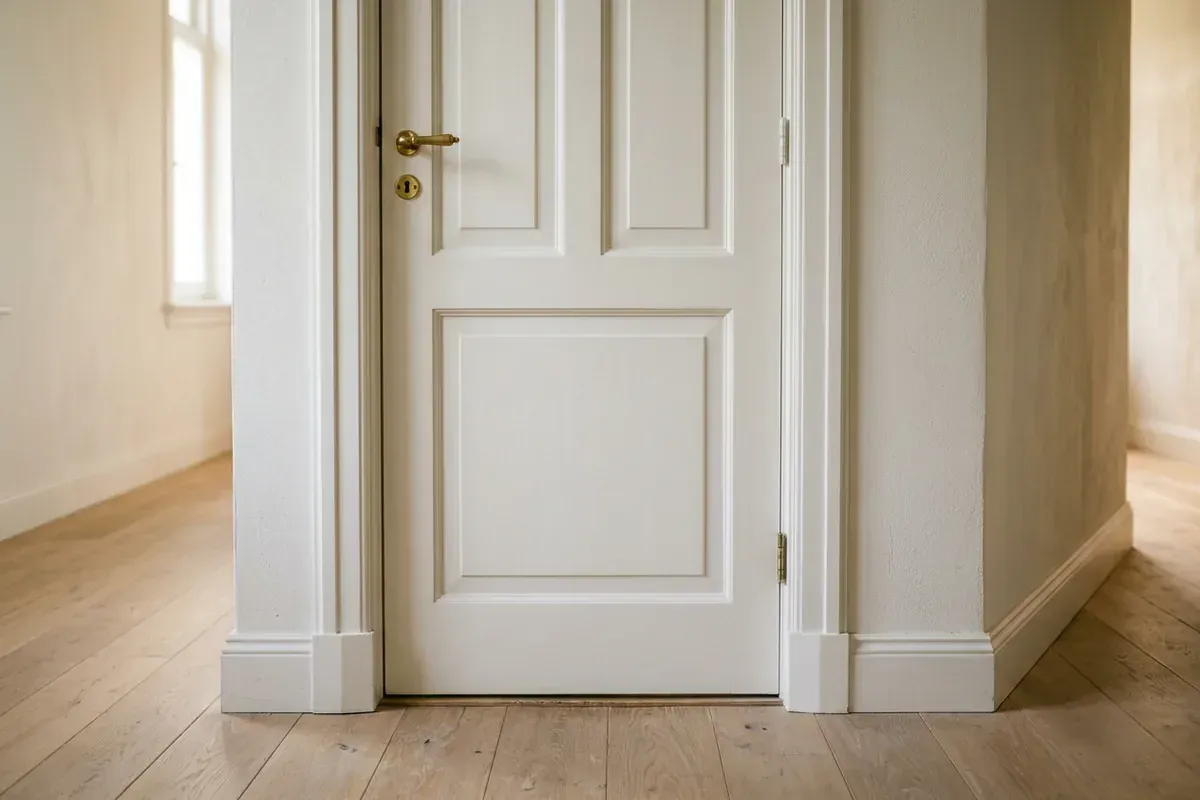
Door trim
A door trim covers the joint between the door frame and the wall. It creates a neat, straight transition around the door.
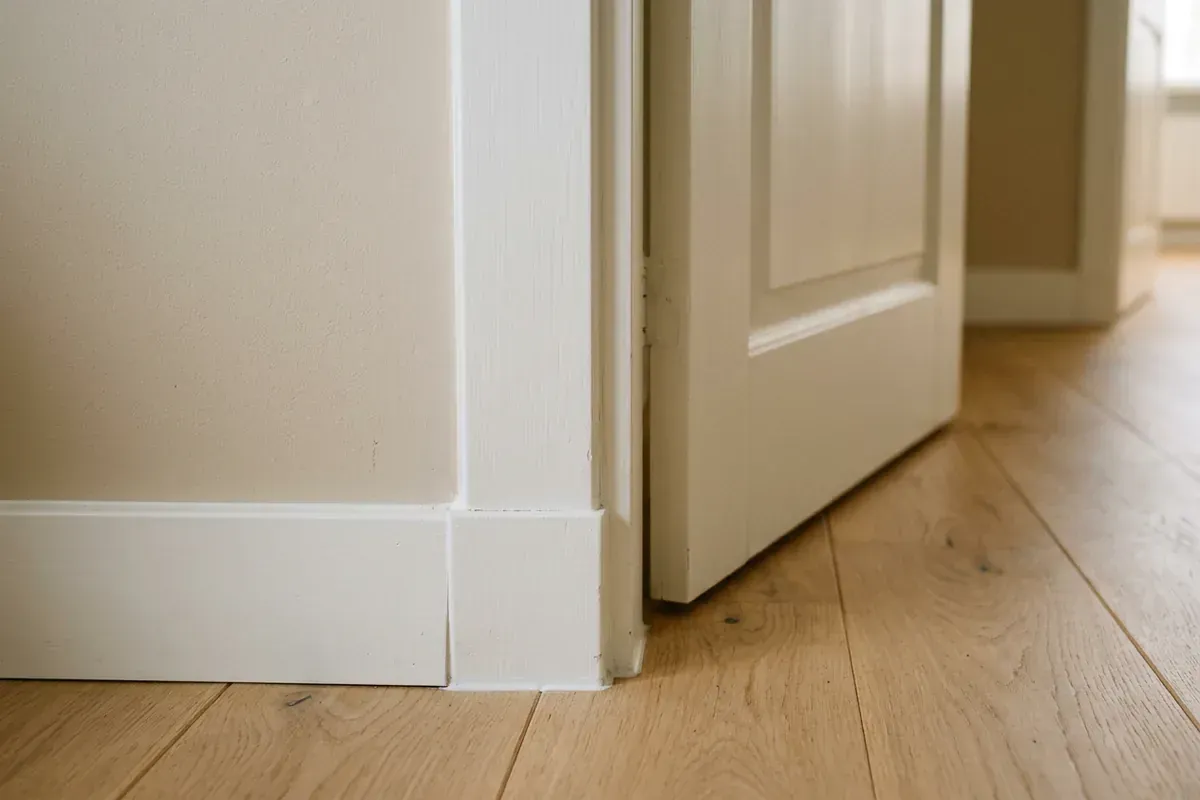
Frame
A frame is the fixed surround in the wall in which a door or window hangs. For a crisp interior, the junction with the wall and skirting matters.
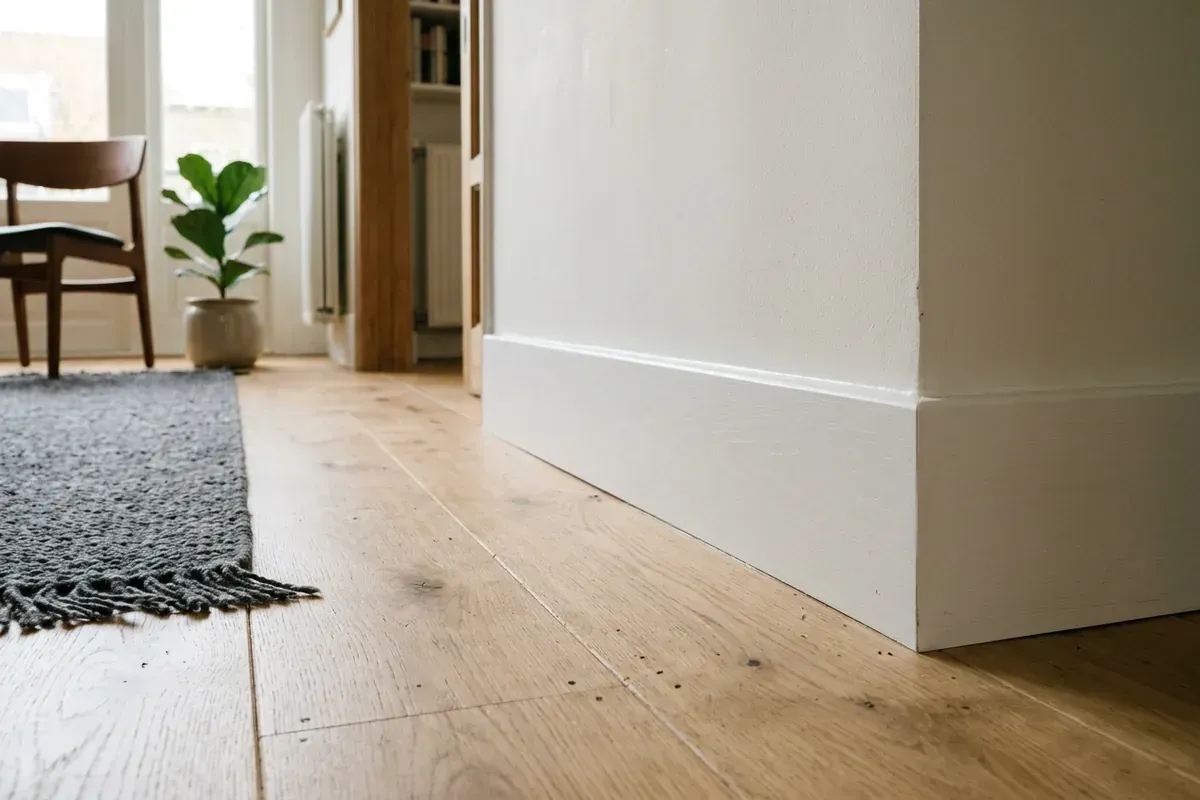
Skirting board
A skirting board is the moulding at the base of the wall that finishes the transition to the floor and protects the wall. Here is how it works and what to look out for.
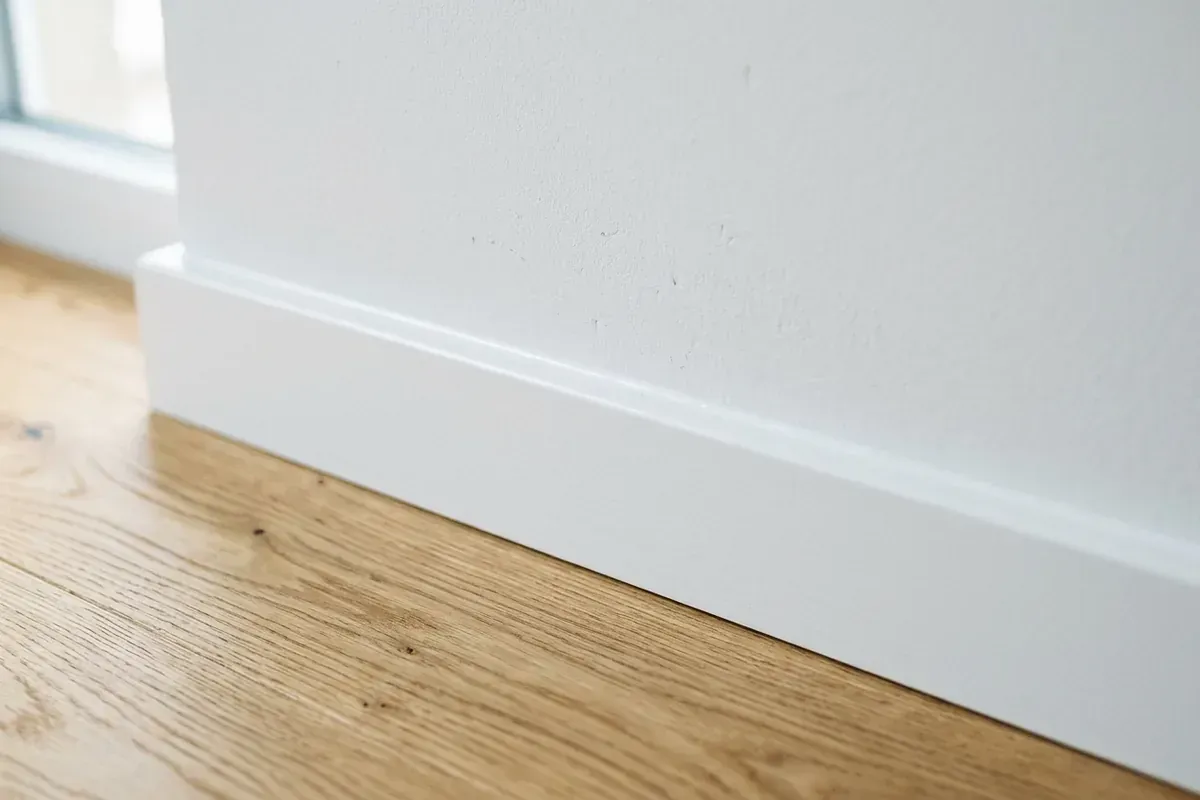
Caulking
Caulking means sealing joints with a flexible sealant. With skirting boards and mouldings, it makes the transition to the wall crisp and seamless.
Installation & finishing
Finishing door trim and frames: how to get a crisp doorway
You finish the gap between frame and wall with door trim, a cover strip or neat caulking. We list the options and show how skirting, frame and trim come together neatly.
Installation & finishing
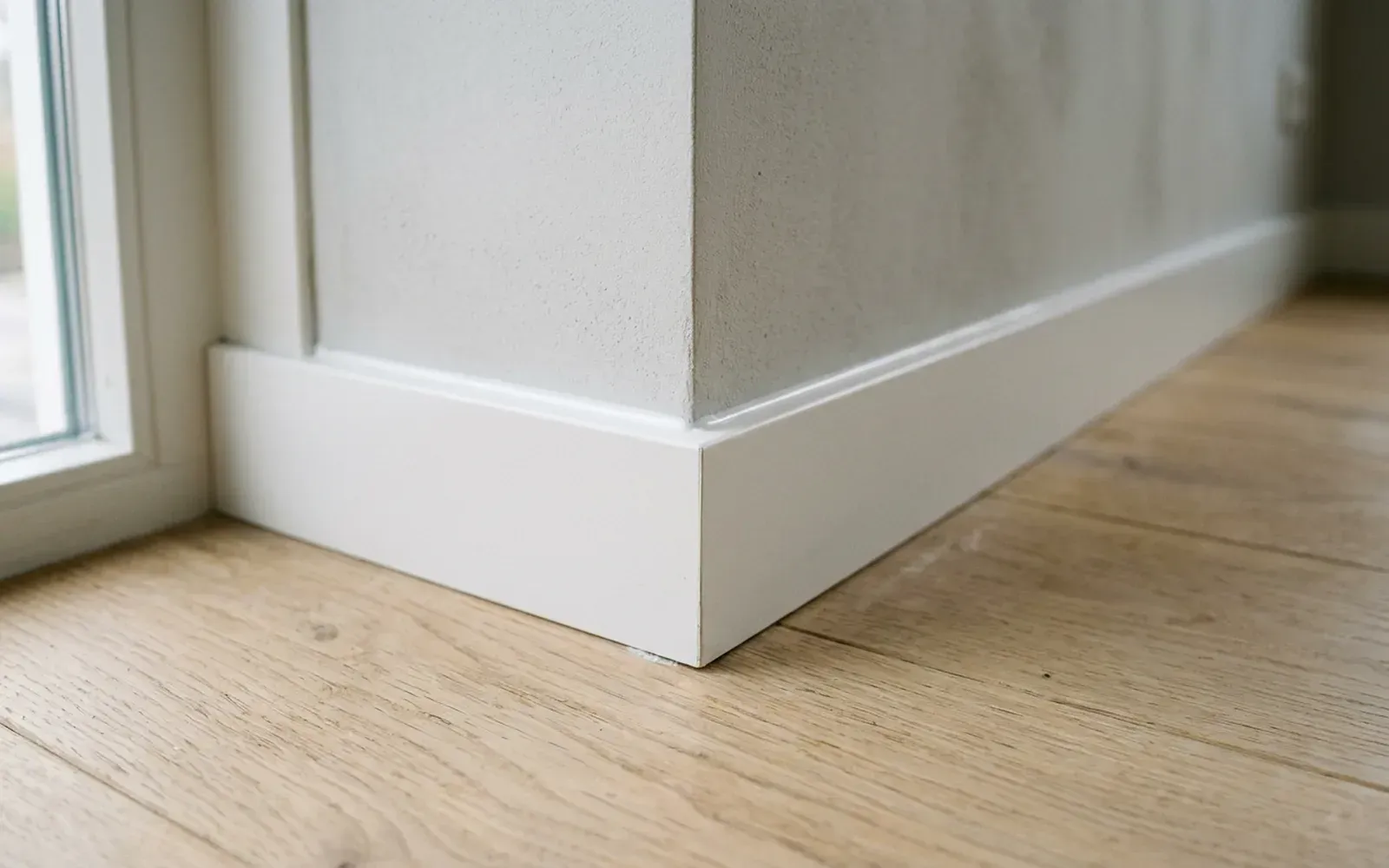
Caulking skirting boards: which sealant should you use and how do you get a neat finish?
For the joint between skirting board and wall you use paintable acrylic caulk, and silicone only where water is involved. Here is how to run a clean caulk line.

Architrave fitting around doors, frames and openings
An architrave gives a door or opening a neat surround and covers the joint between frame and wall. TipTop Plinten fits made-to-measure architraves.
Skirting board installation? Request a free quote
On-site measurement €75 incl. VAT (credited for orders above a minimum project size)