
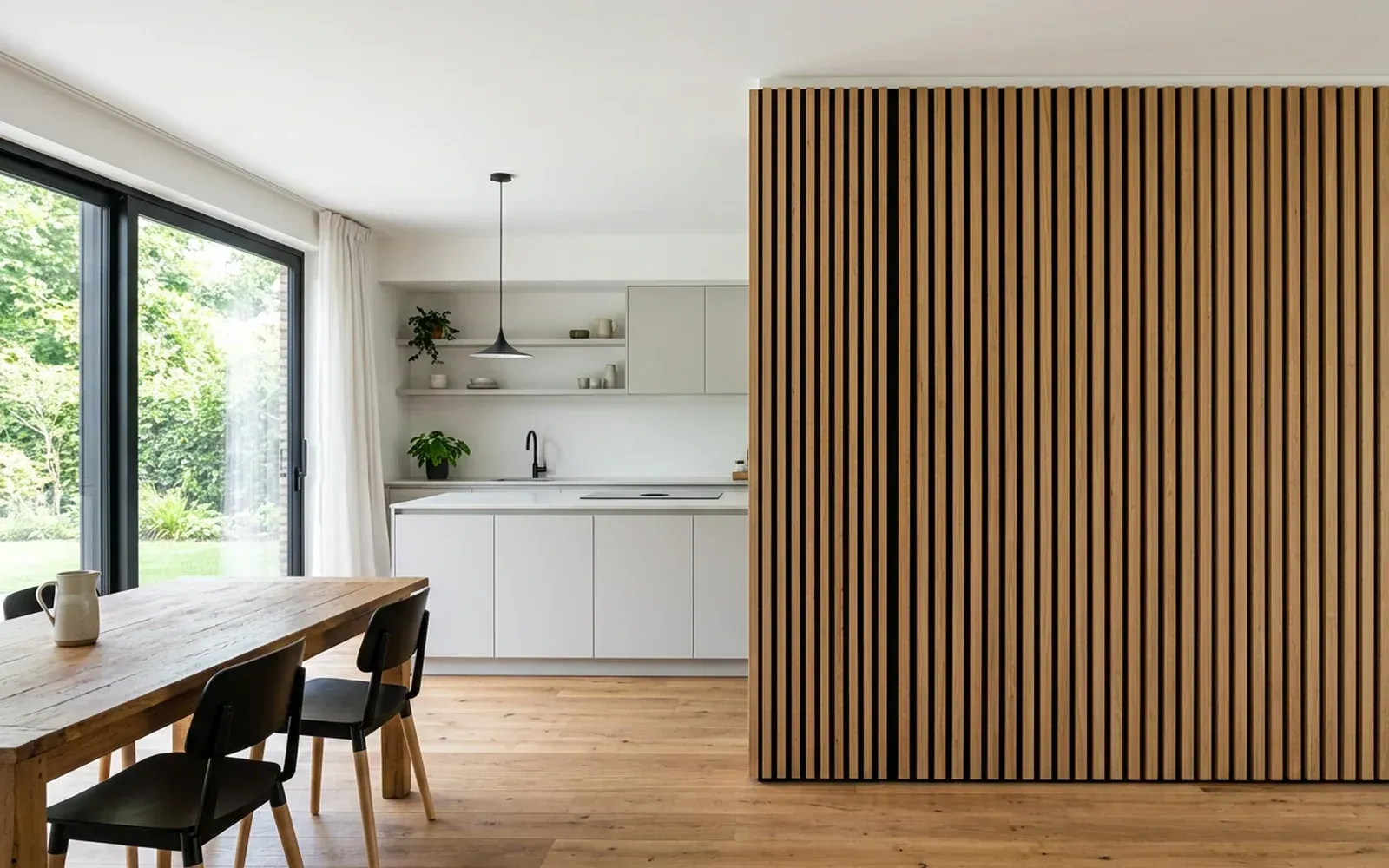
Acoustic ceiling panels or panels on the wall: both reduce echo, but they do so in different ways and suit different rooms. The ceiling is often the largest clear surface in a room and reflects a lot of sound, especially in rooms with hard floors and few textiles. The wall is easier to reach, easier to adapt and immediately visible as a design element. In many homes a combination works best. TipTop Plinten fits acoustic wall panels; we are happy to discuss ceiling installation case by case.
Why does a room echo?
Sound bounces off hard, smooth surfaces. A modern home has plenty of them: a poured floor, vinyl or tiles, large windows, smoothly plastered walls and a crisp white ceiling. Sound travels back and forth between floor and ceiling and between opposite walls. You hear this as reverberation: voices sound hollow, and a full dining table soon becomes noisy.
An acoustic panel absorbs part of that sound. The more hard surfaces you make "softer", the calmer the room sounds. Where you do that matters. How the panels themselves work is explained in acoustic wall panels: what do they deliver?.
Acoustic panels on the ceiling
When does the ceiling make sense?
- With hard floors, because sound bounces back and forth between floor and ceiling a lot.
- In rooms with lots of windows or cupboards, where little free wall is left.
- In large, open spaces, such as a kitchen-diner or an open-plan office.
- Above a dining or meeting table, where there is a lot of talking.
Points to watch
- Fixing and load-bearing capacity. Overhead panels require a sturdy, suitable fixing into the ceiling. This differs per type of ceiling.
- Services and lighting. Ceilings often contain pipes and cables, light points, smoke alarms and ventilation grilles. These have to be included in the design.
- Appearance. A dark panel on the ceiling can make a room look lower.
Considering acoustic panels on the ceiling? Get in touch to discuss the options for your situation. Ceiling installation is assessed project by project.
Acoustic panels on the wall
When does the wall make sense?
- If you want a feature wall, for example behind the sofa, the bed or the TV.
- With hard walls facing each other, where sound bounces back and forth between them (flutter echo).
- In a home office, behind or beside the desk. See acoustic panels for the home office and workplace.
- If you want to be able to adapt things later, because a wall is easier to reach.
Points to watch
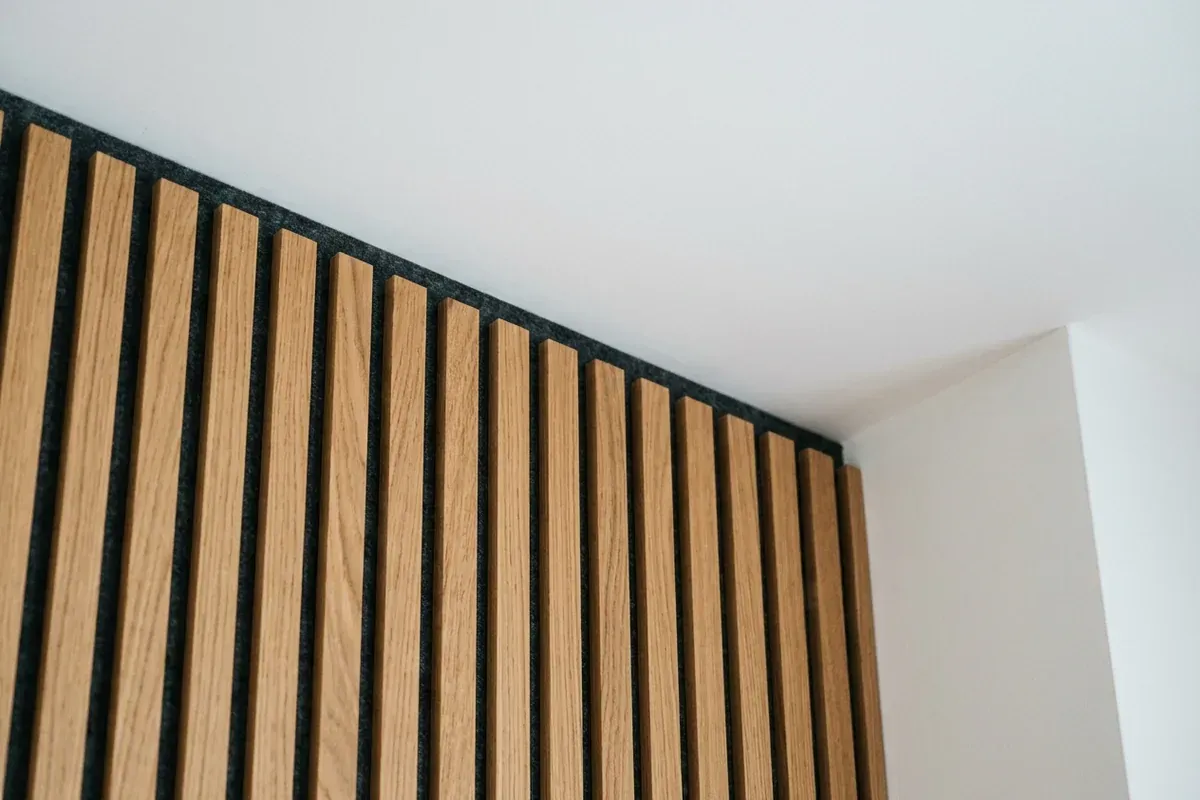
- Layout. Slats have to fit neatly across the width of the wall, with equal margins on both sides.
- Cut-outs. Sockets, switches and any lighting must be cut out precisely.
- Junctions. At the ceiling, floor, corners and frames, the panel has to finish cleanly.
Wall or ceiling: the differences at a glance
| Wall | Ceiling | |
|---|---|---|
| Visibility | Immediately visible, design element | Less conspicuous, or a statement in itself |
| Accessibility | Easy to reach | More difficult, working overhead |
| Fixing | Usually screwed and/or bonded to the wall | Requires a suitable, load-bearing fixing |
| Combination with furniture | A cupboard or sofa can stand in front | Stays clear, even in a full room |
| Fitted by TipTop Plinten | Yes | By arrangement, case by case |
Why a combination often delivers the most
Echo arises between surfaces that "see" each other: floor and ceiling, and opposite walls. If you treat only one surface, sound keeps travelling back and forth between the others. That is why many rooms use a mix: an acoustic wall, supplemented with soft materials such as a rug, curtains, upholstered chairs and a well-stocked bookcase. Sometimes the ceiling is added as well.
How much panelling is needed, and where, depends on the size of the room, the materials and how it is used. If you want this calculated or measured, an acoustic consultant is the right party. Do not expect panels to make a room completely silent, but do expect noticeably calmer sound when people are talking.
What they do not do
Acoustic panels improve the acoustics within a room. They do not block noise from neighbours, outside or another floor. That requires insulation measures, such as extra mass, decoupled lining walls or a floating floor. That is a different trade.
How do you choose for your room?
A few questions help you decide:
- Which surfaces are hardest? A concrete floor, a glazed frontage or a bare wall opposite a window are often the biggest sources of echo.
- How much free wall is there? If the room is full of cupboards and windows, there is less wall available and the ceiling becomes more interesting.
- What do you want to see? A slatted wall is a feature; if you want to improve the acoustics without it standing out, a calmer design may suit better.
- How is the room used? In a dining room or open-plan kitchen there is a lot of talking; in a bedroom, calm matters more than speech clarity.
It often makes sense to start with the wall: it is easy to reach, you can hear the effect straight away and the plan can be extended later.
Finishing around the panels
An acoustic wall only looks like a permanent part of the interior if the edges are right:
- Top: up to the ceiling with a clean junction, or deliberately with an even shadow gap.
- Bottom: down to the floor, or onto a skirting board that matches in colour and thickness.
- Sides and corners: at internal and external corners, a finish that neatly covers the felt and the ends of the slats.
An example from practice
In a house in Apeldoorn, TipTop Plinten fitted acoustic wall panels for sound damping and a modern, luxurious look. There too, it was all about a layout that works and clean junctions with the floor, ceiling and corners.
Having acoustic panels fitted?
TipTop Plinten fits wall panels and wall mouldings, including acoustic wall panels, in homes, offices and hotels throughout the Netherlands. If you are (also) thinking of the ceiling, we are happy to discuss it. Send photos of the room, the dimensions and what you currently hear or notice via the contact page. The quote is free and without obligation, and we can communicate in English, Dutch, German, Turkish, Persian or Arabic. An on-site measurement is optionally available for €75 incl. VAT; this amount is credited as a discount on jobs above a minimum project size.
Frequently asked questions
That depends on the room. The ceiling is often a large, clear surface that reflects a lot of sound; the wall is easier to reach and visible as a design element. In many rooms a combination works best. An acoustic consultant can calculate what your situation needs.
TipTop Plinten fits acoustic wall panels. If you are thinking of panels on the ceiling, get in touch to discuss your situation. Ceiling installation requires different fixings and load-bearing capacity, and is assessed project by project.
That cannot be captured in a single number. The effect depends on the size of the room, the amount of hard surfaces, the furnishings and the number of square metres of panelling. For a calculation or measurement, an acoustic consultant is the right party.
No. Acoustic panels reduce echo within a room. Sound insulation between rooms or homes requires other measures, such as extra mass and decoupled constructions.
Related articles
Mouldings & walls
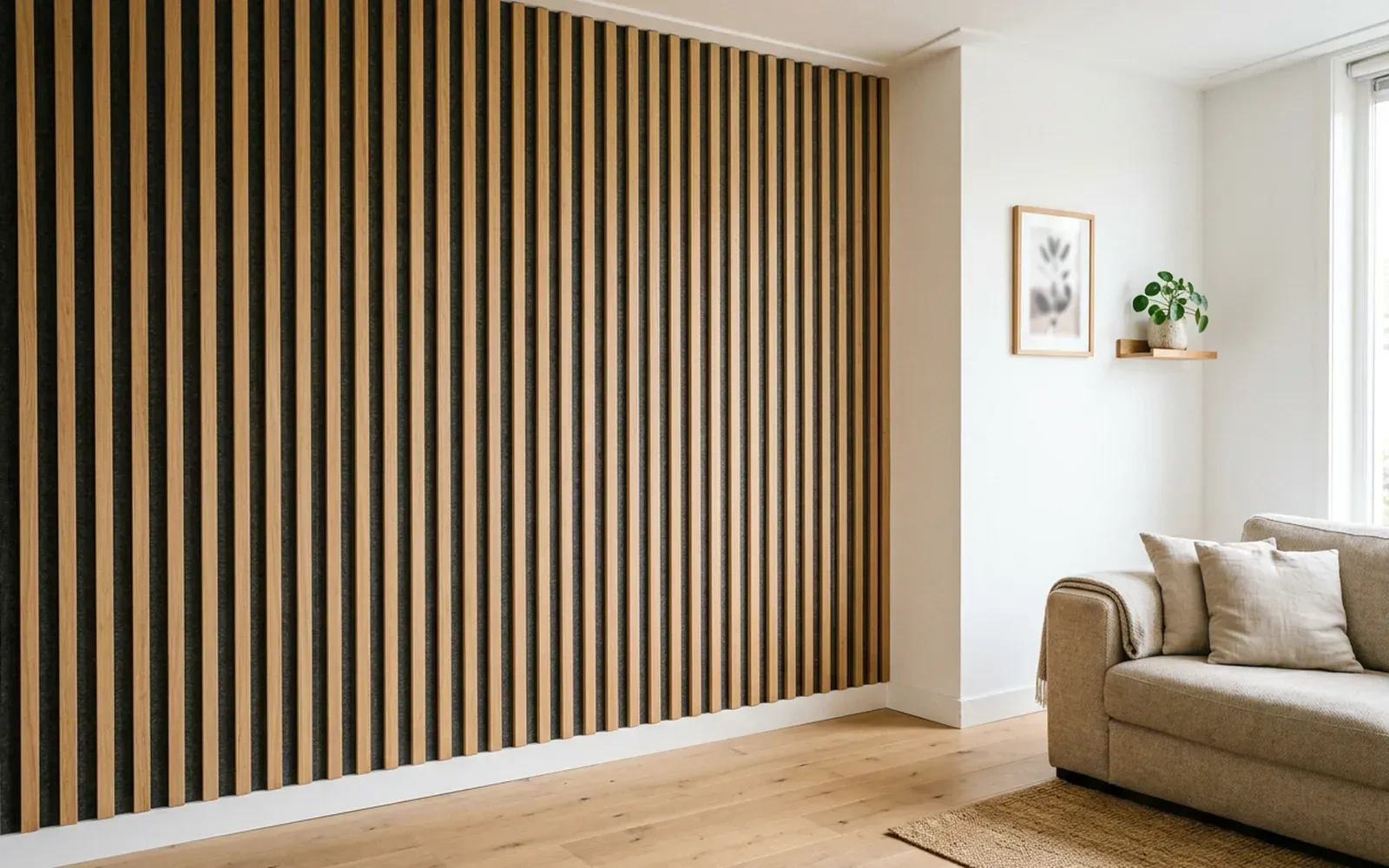
Acoustic wall panels: what do they do and when should you choose them?
Acoustic wall panels dampen echo in a room while giving the wall a warm, modern look. We explain how they work, what you can expect from them and what to look out for.
Mouldings & walls
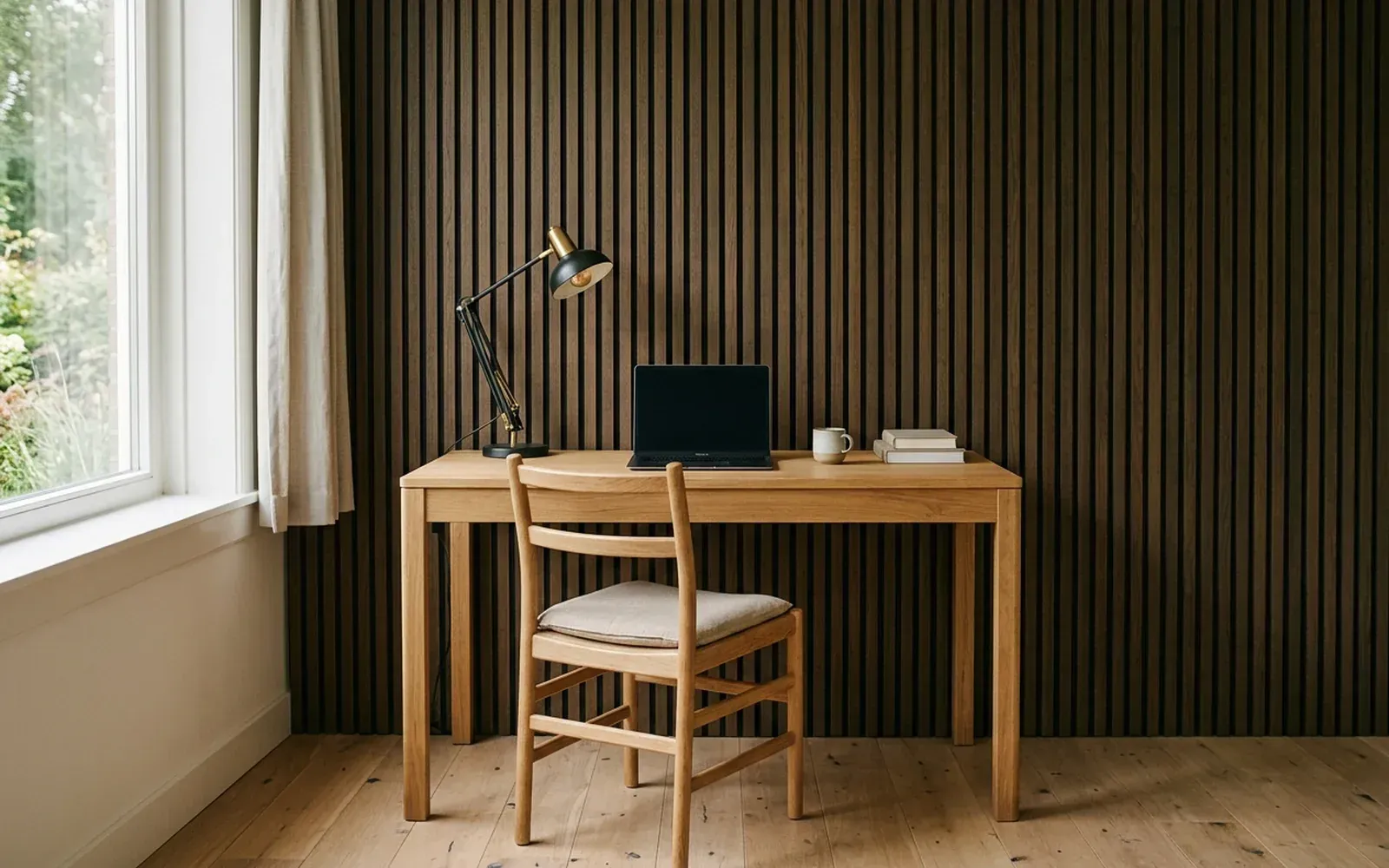
Acoustic wall panels for the office and home office: calmer calls and meetings
Video calls in an echoing room, or a meeting room where everyone talks over each other? Acoustic wall panels make the sound calmer. This is how to approach it.
Mouldings & walls
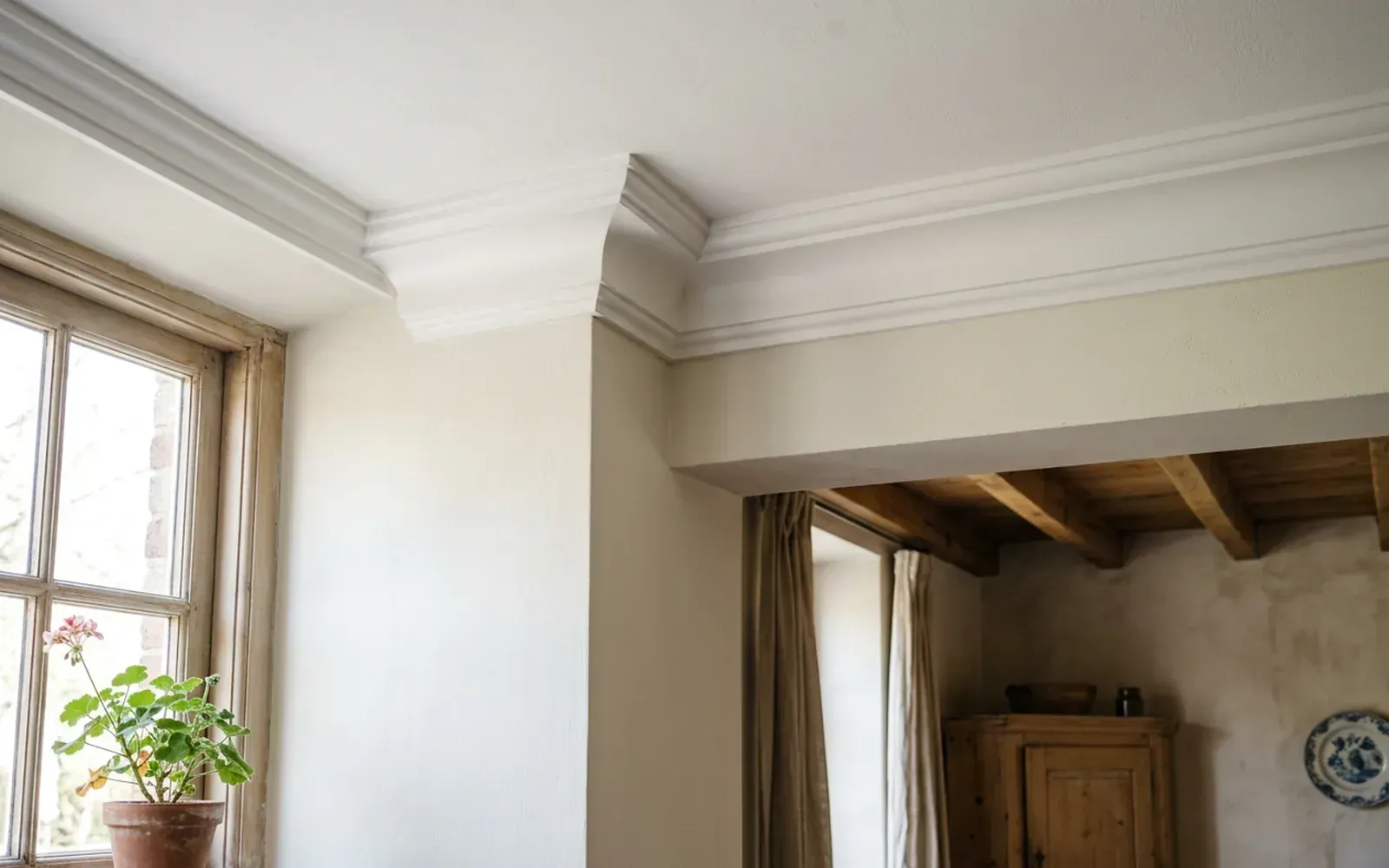
Coving and cornices: the difference, types and installation
Coving gives the transition between wall and ceiling a crisp finish and completes a room. We explain how it differs from a cornice, which profiles are available and how they are fitted.
Related
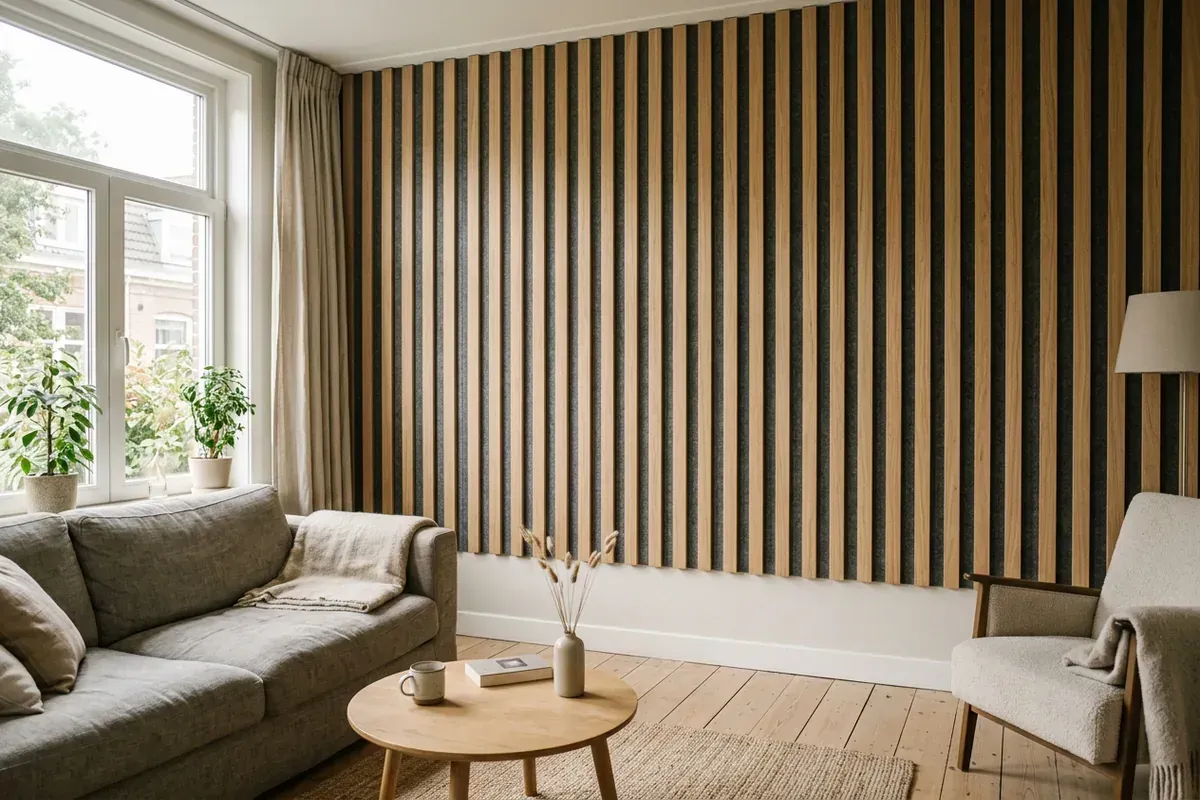
Acoustic panel
An acoustic panel absorbs sound and so reduces echo in a room. Slats on felt are the best-known type for the home.
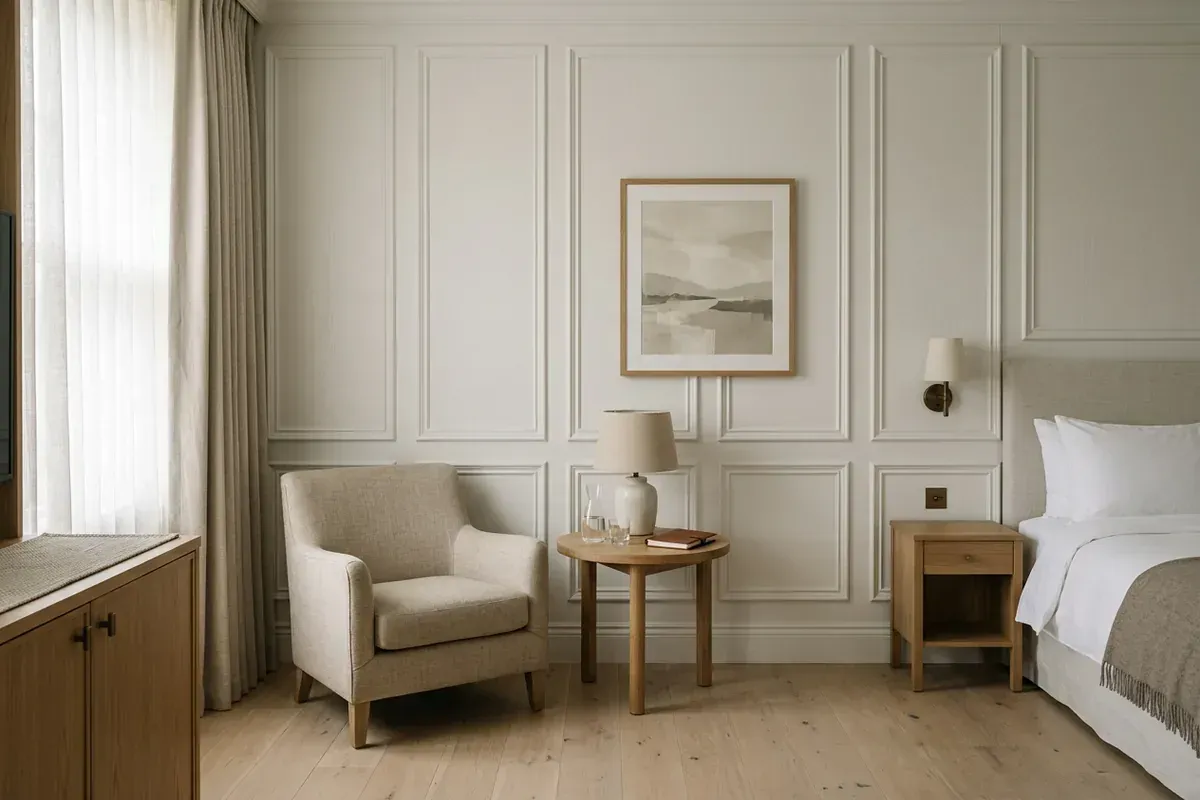
Wall panel
A wall panel is a board or panel fixed to a wall for appearance, protection or sound absorption. There are many types.
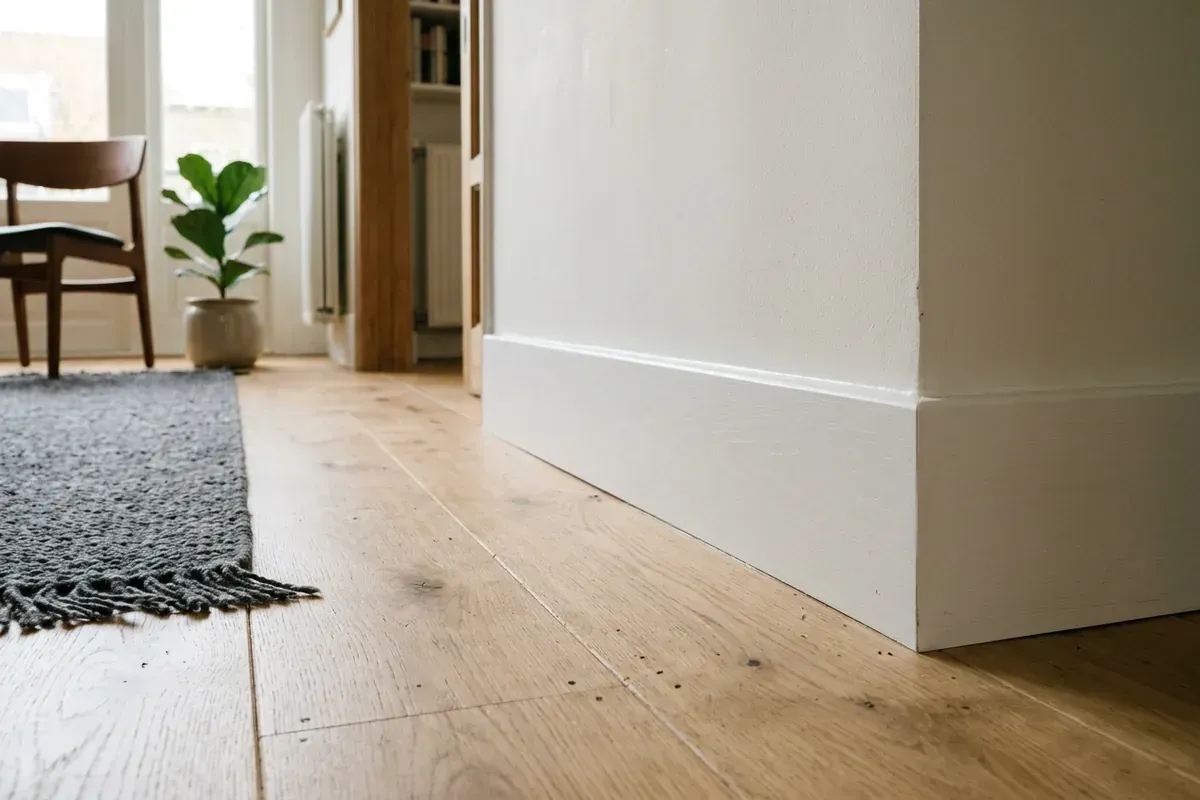
Skirting board
A skirting board is the moulding at the base of the wall that finishes the transition to the floor and protects the wall. Here is how it works and what to look out for.
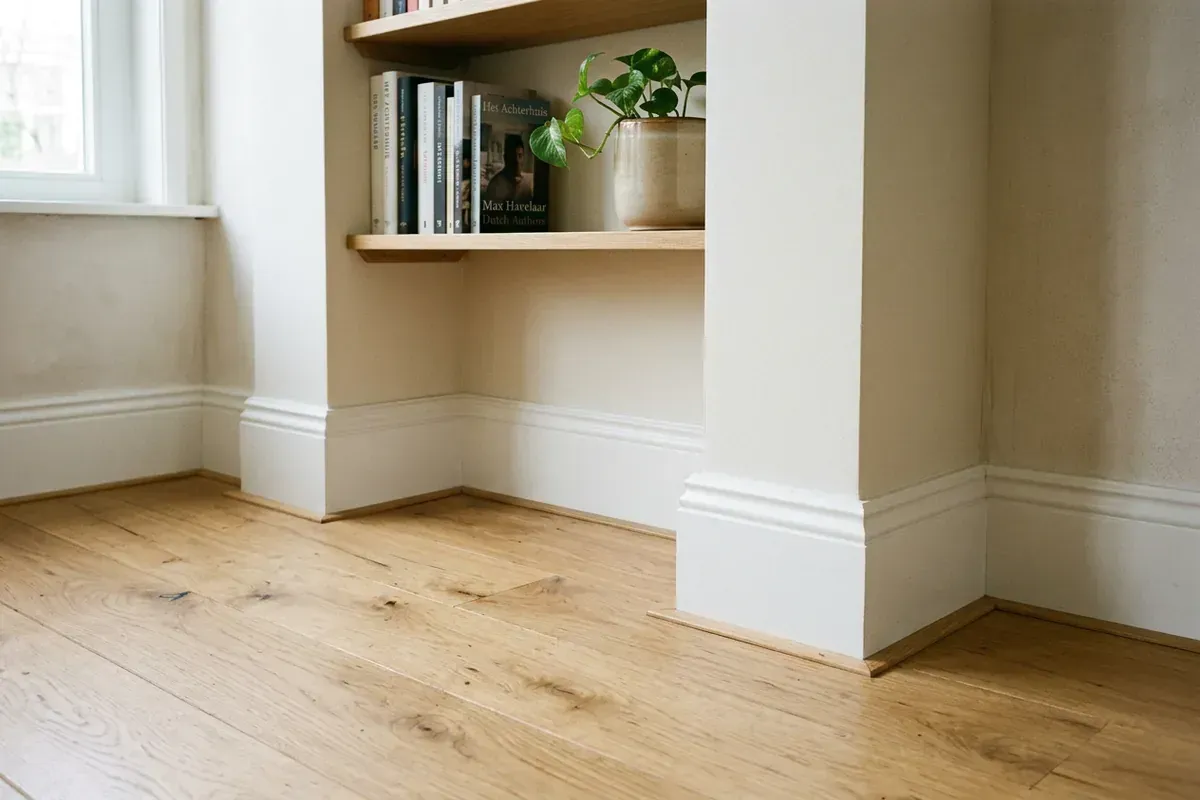
Internal & external corner
An internal corner points away from you, an external corner points towards you. With skirting boards, each type of corner needs its own cutting direction and approach.
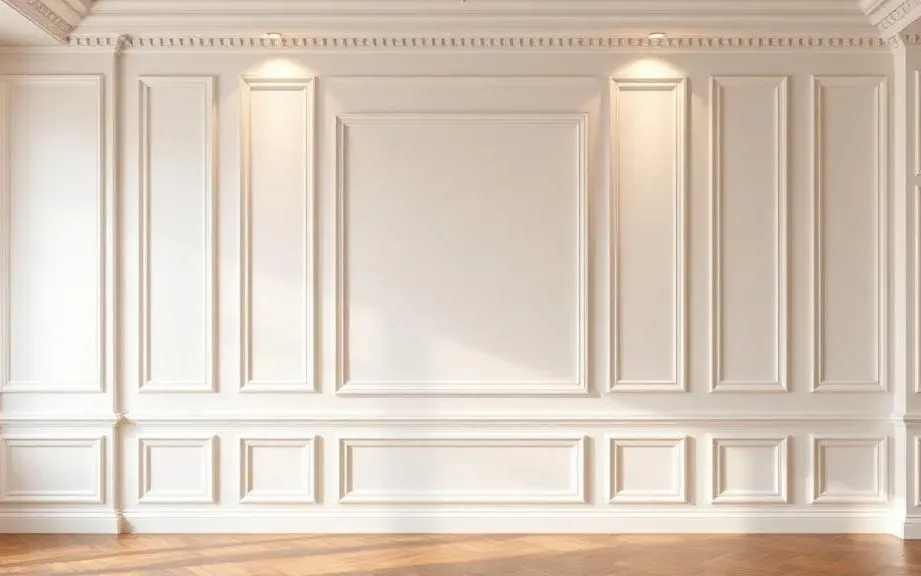
Wall panelling installation and wall mouldings fitted
TipTop Plinten fits wall panels, wall mouldings, slat panels and acoustic panels in homes, offices and hotels, with tight mitres and clean caulking.
Skirting board installation? Request a free quote
On-site measurement €75 incl. VAT (credited for orders above a minimum project size)