
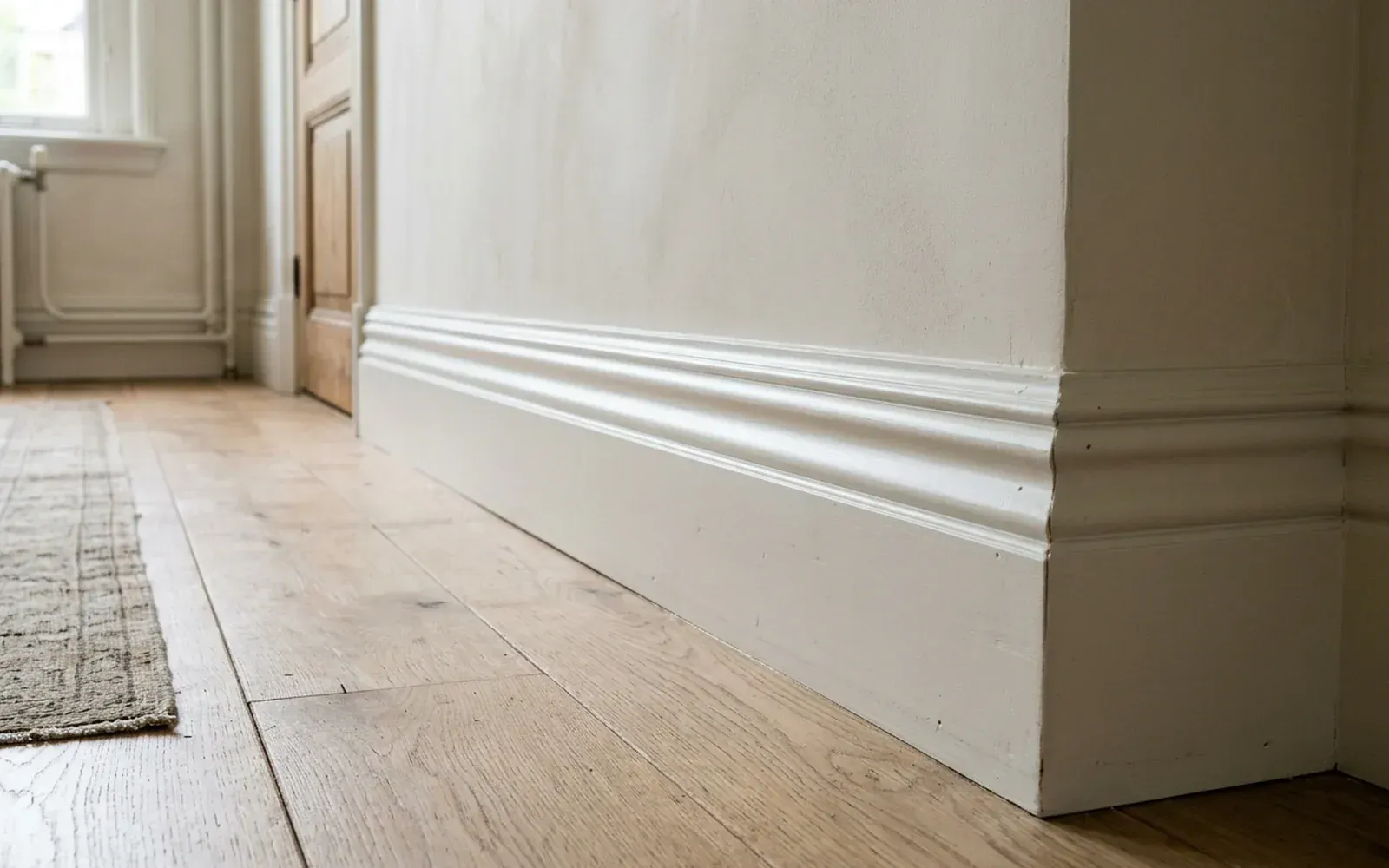
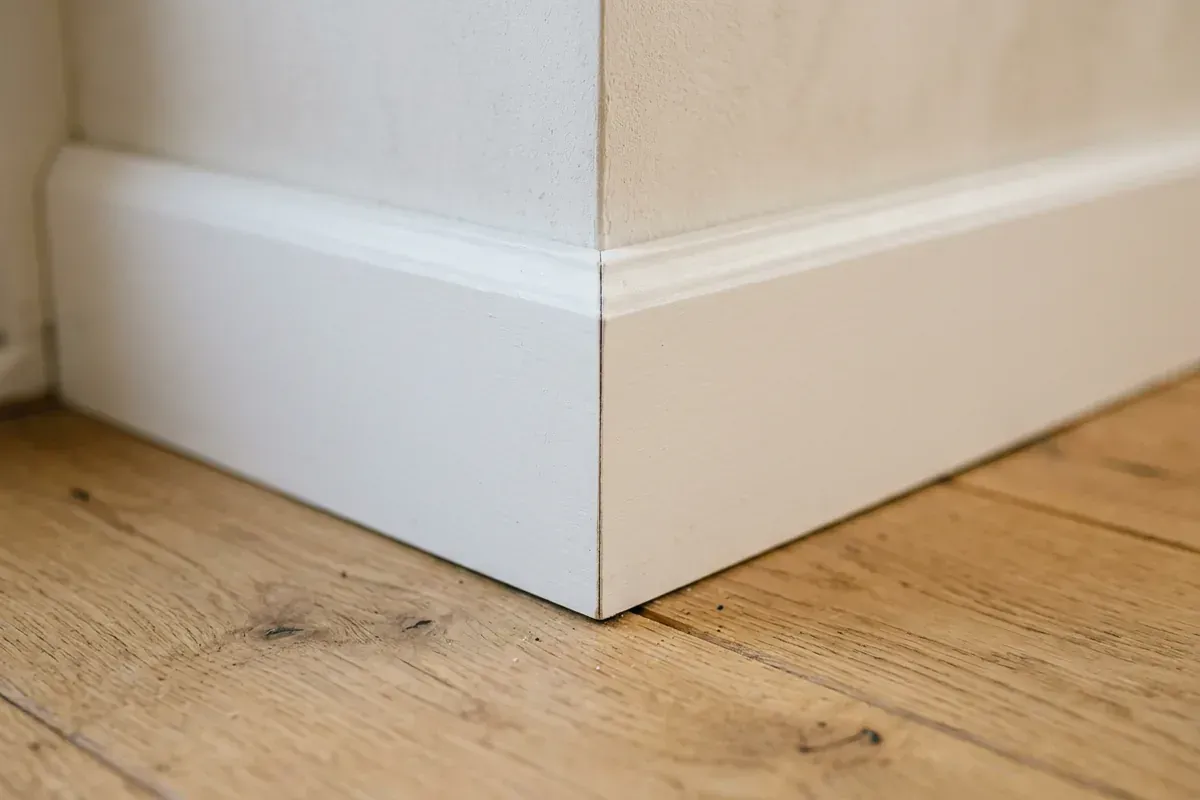
Classic skirting boards are skirting boards with a profile along the top, such as an ogee (an S-shaped curve), a bead or a stepped edge. That profile catches light and shadow and gives the transition from wall to floor a decorative character. Classic skirting boards are often taller than modern ones and suit older homes, high ceilings and interiors with other mouldings, such as architraves and decorative mouldings. They are made of MDF or solid wood and can be finished in any RAL colour.
Below you can read which profiles exist, which height suits and what to look for at corners and junctions.
What makes skirting classic?
A modern skirting board is usually straight, with at most a rounded or chamfered top edge. A classic skirting board has a distinct profile. That profile determines its character:
- Light and shadow. Curves and steps in the profile add depth.
- Proportion. Classic skirting boards are often taller, so they are in proportion to high walls and ceilings.
- Coherence. The profile often returns in other mouldings, such as door trim, architraves and coving.
Which classic profiles are there?
Ogee profile
The best-known classic profile: an S-shaped curve along the top of the skirting. The ogee looks elegant and suits many classic and country-style interiors.
Bead profile
Skirting with one or more narrow, round beads in the profile. Fine and restrained, which means it also works well in an interior that is not fully classic.
Stepped profile
A profile with one or more steps. Crisper than an ogee, but with clearly more depth than straight skirting. This profile is often chosen as a bridge between classic and modern.
Combination profiles
Many classic skirting boards combine elements: a step with a curve, or a bead above a cove. The more elaborate the profile, the more the skirting stands out.
| Profile | Character | Often suits |
|---|---|---|
| Ogee | Elegant, classic | Townhouses, country-style interiors |
| Bead | Fine, restrained | Classic and modern-classic |
| Stepped | Crisp with depth | 1930s homes, modern-classic |
| Combination | Rich, pronounced | Listed buildings, tall rooms |
This grouping is a guide; the names vary by supplier. A sample or a photo in the room often says more than a name.
Which height suits a classic skirting board?
The height depends mainly on the ceiling height and the proportions of the room. A few guidelines:
- High ceilings call for taller skirting, otherwise the skirting looks lost.
- Hallways and smaller rooms often suit medium-height skirting better.
- Consistency between rooms gives calm; preferably choose one height per floor.
You can read more about heights and proportions in the glossary under tall skirting.
MDF or solid wood?
Classic skirting boards are made in both materials:
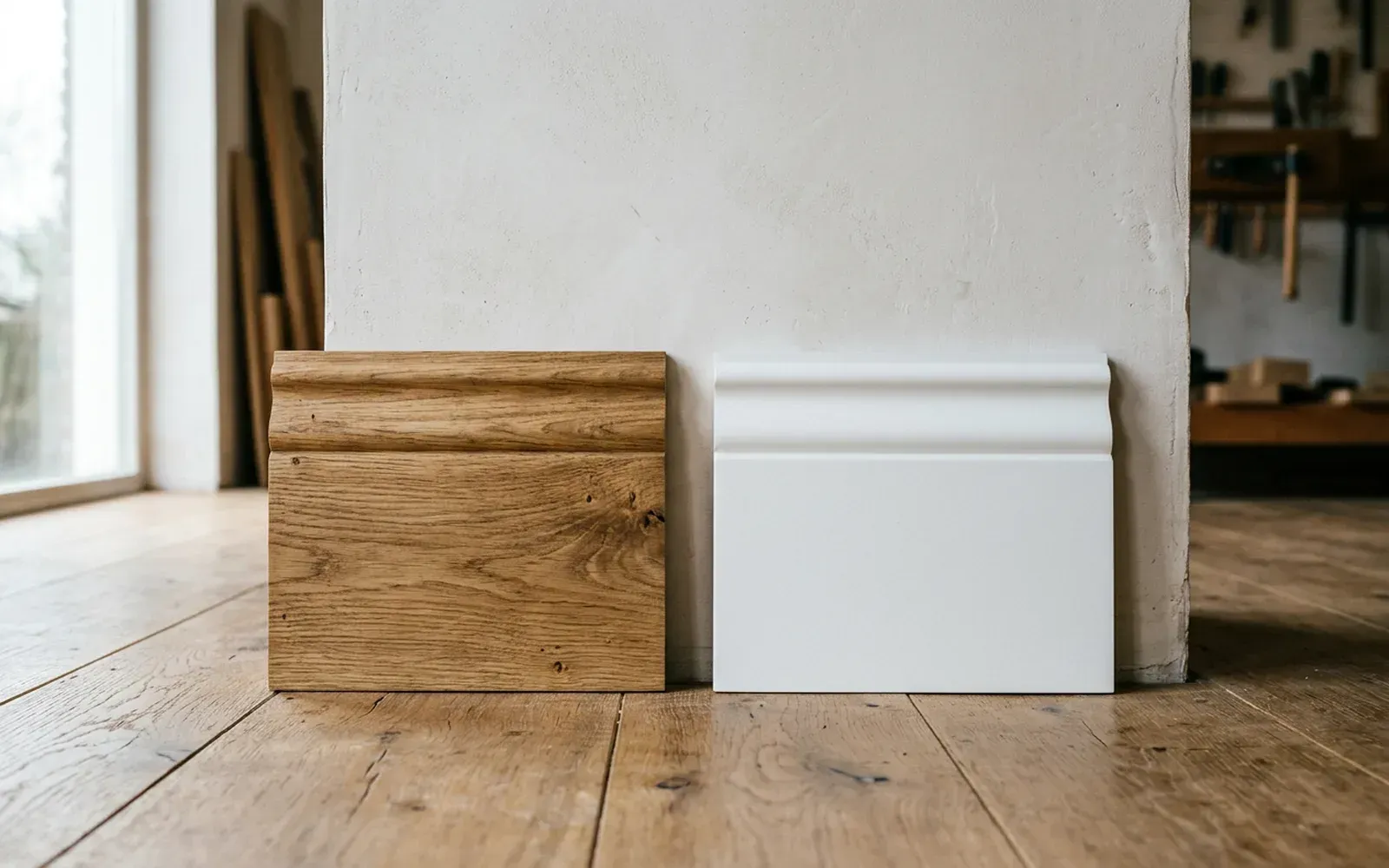
- MDF is dimensionally stable, has an even surface and takes a smooth lacquer finish in any RAL colour. Fine profiles come out crisp.
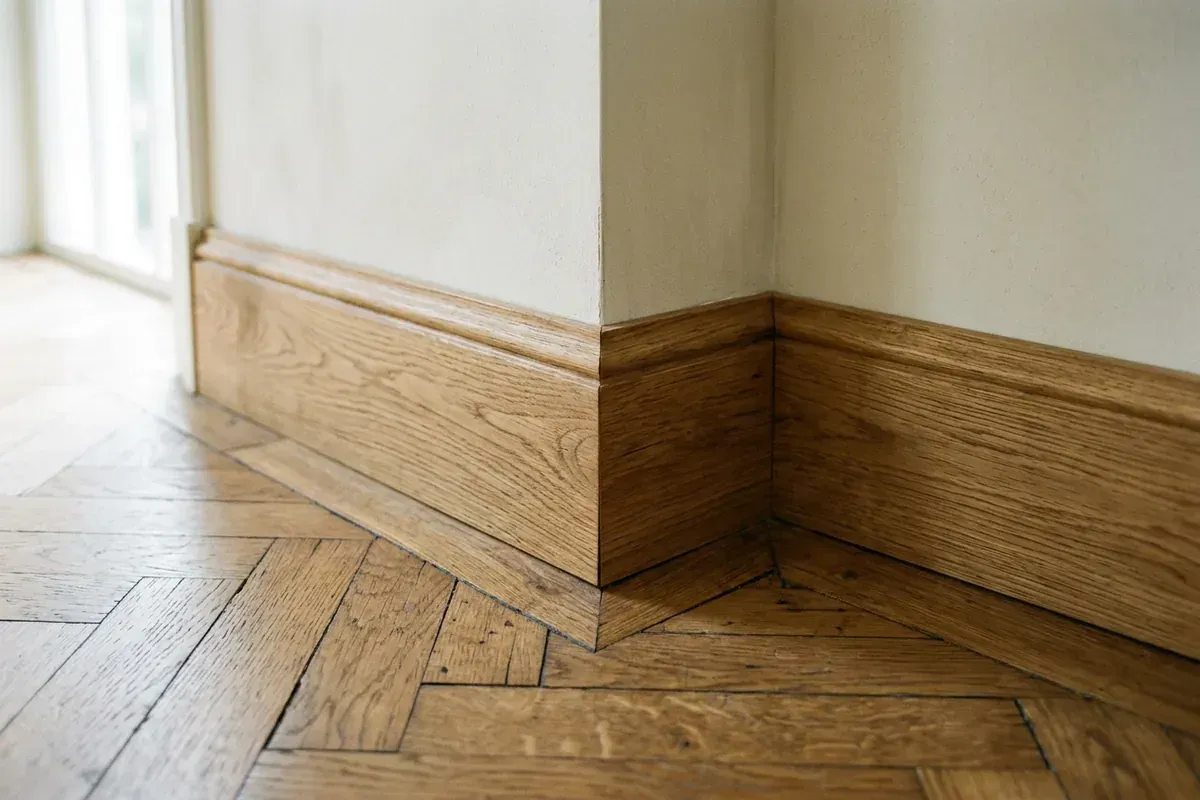
- Solid wood suits listed buildings and interiors where the wood stays visible, stained or lacquered. Wood moves more with changing humidity.
The pros and cons are listed in wooden skirting or MDF.
Corners: why precision counts here
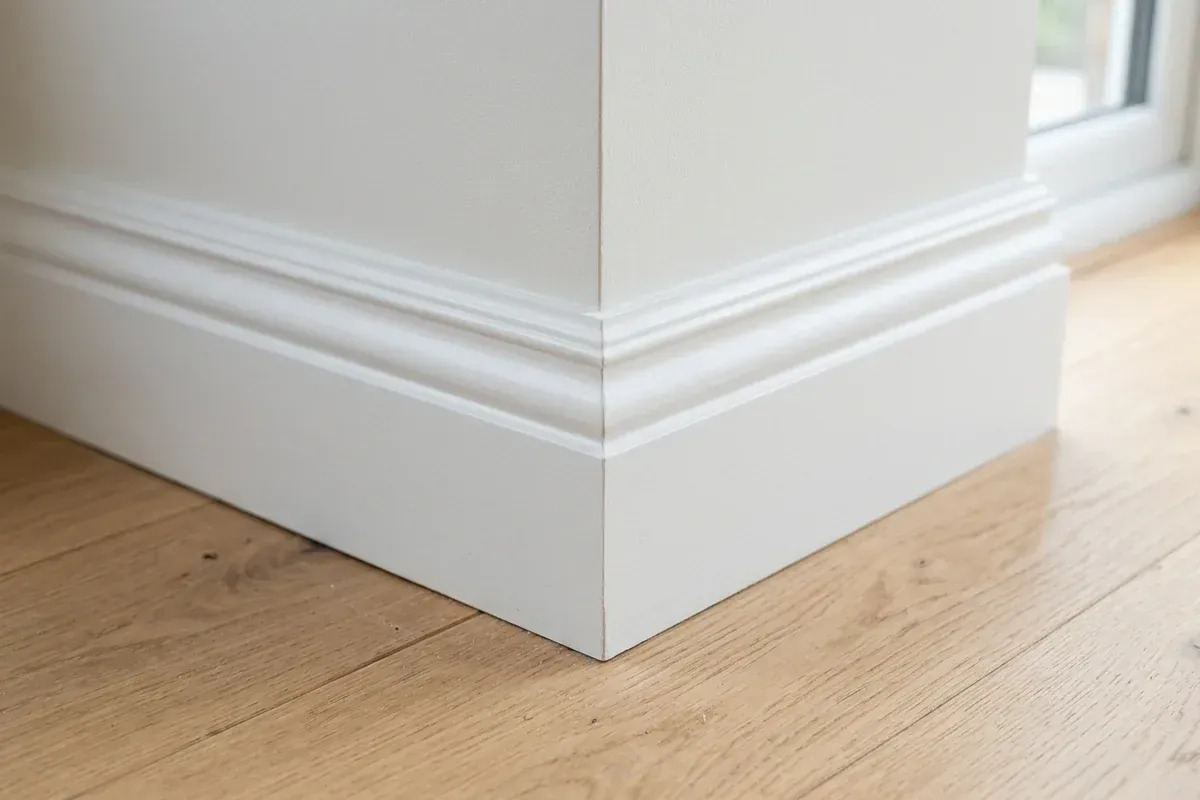
With straight skirting, a small deviation in a corner quickly looks untidy. With profiled skirting this is even more pronounced: the lines of the profile have to meet exactly in the corner.
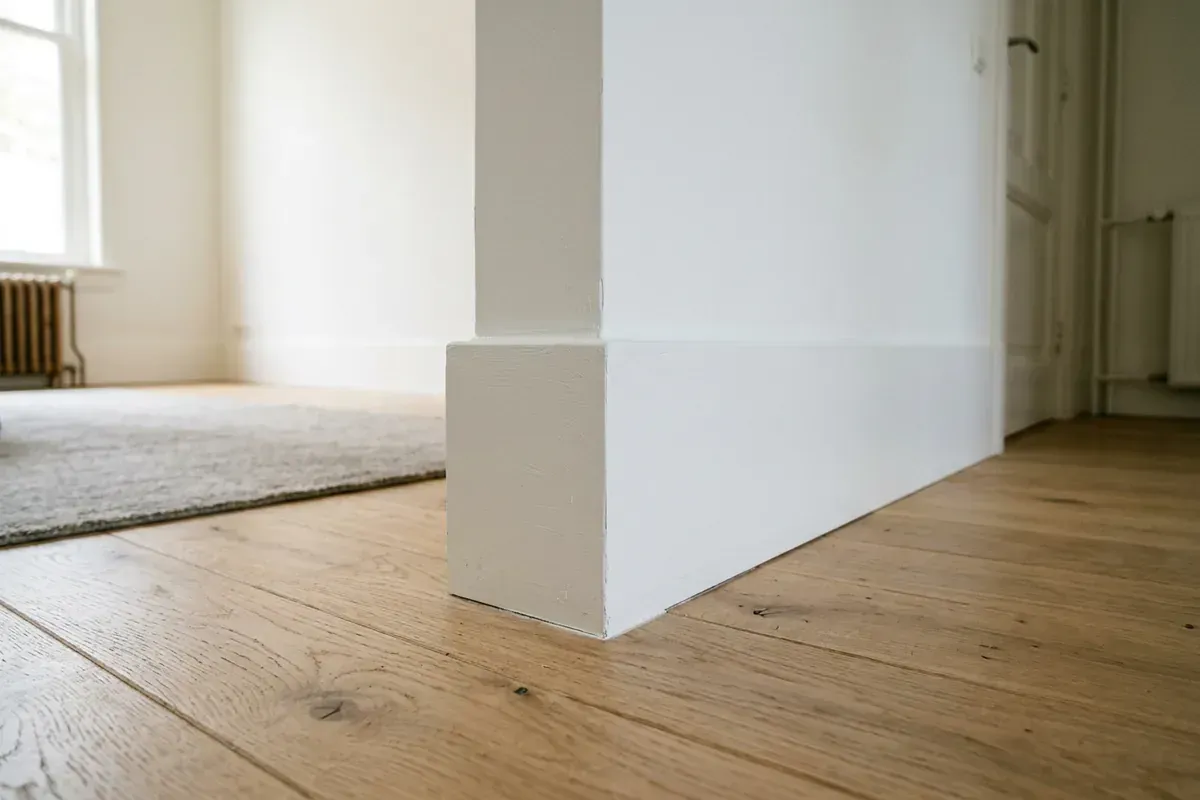
- External corners are cut as a mitre. Both pieces must have exactly the same angle, otherwise the profile does not continue.
- Internal corners can be mitred, but sometimes the profile of one board is cut out so that it fits exactly over the profile of the other (scribing). That stays tighter if the wall moves a fraction.
- Out-of-square corners are common in older homes. The angle is then measured first and the mitre is cut to suit.
You can read the difference between the two corners in the glossary under internal and external corners and in detail in mitre cutting skirting boards.
Coherence with architraves and decorative mouldings
A classic skirting board rarely stands alone. Around doors there is often an architrave, and on the ceiling sometimes a cornice or crown moulding. Pay attention to:
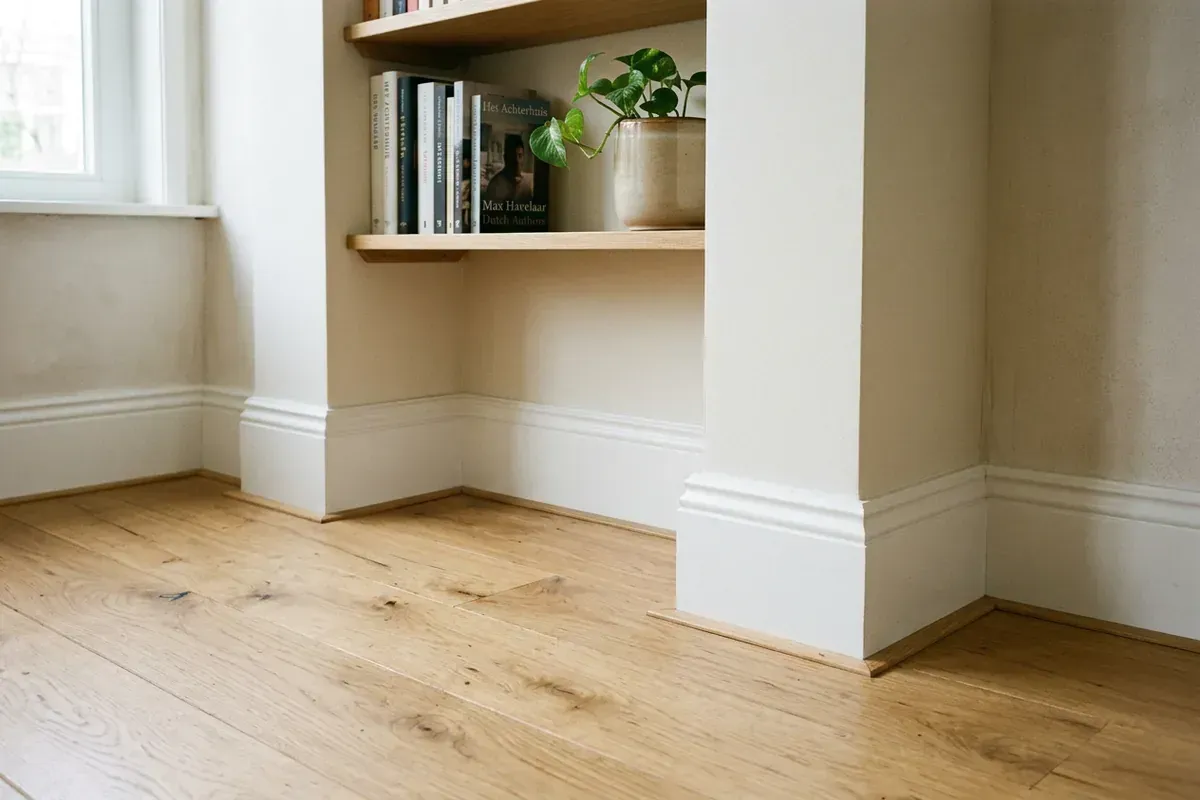
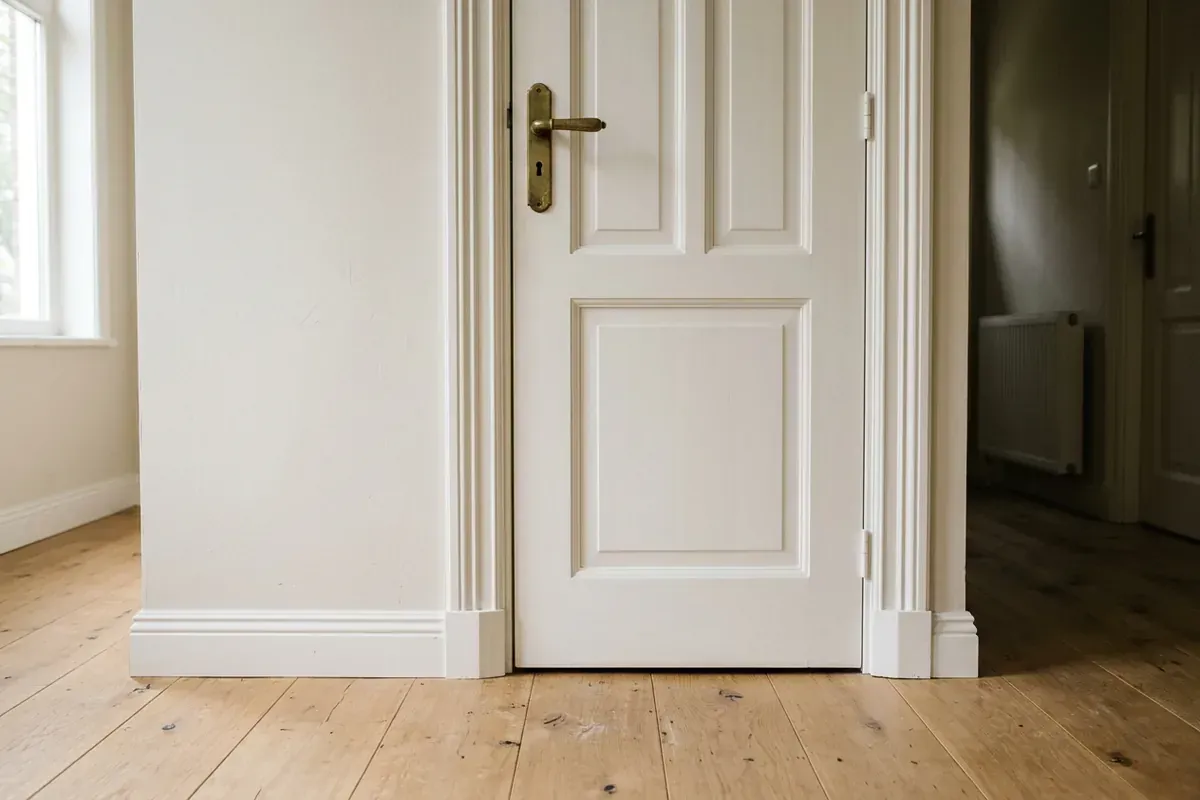
- Junction of skirting and architrave. The skirting stops against the architrave. The architrave is preferably slightly thicker than the skirting, so the skirting runs neatly up to it.
- Profile and colour. A similar profile and the same colour create coherence.
- Order. Architraves are often fitted first and the skirting then joins them.
Besides skirting boards, TipTop Plinten also fits architraves and decorative mouldings and coving.
Classic skirting in an old building
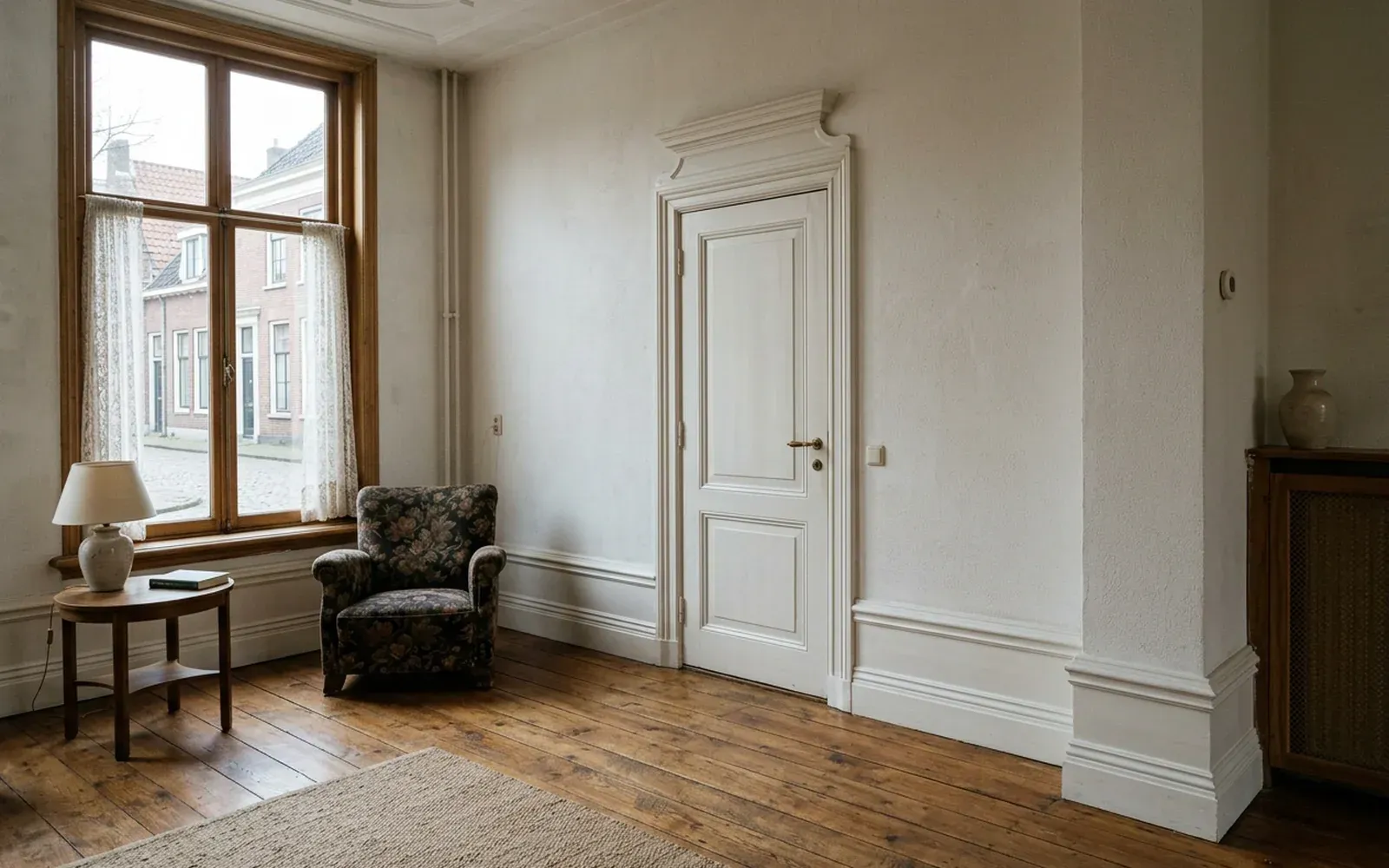
In older homes, walls are rarely straight. A classic skirting board with a rigid profile does not automatically follow a bulging or leaning wall. The skirting is then adapted to fit, so that no large gaps appear. In the historic house in Apeldoorn, a 19th-century building with subsided walls, made-to-measure skirting boards were fitted with respect for its historic character.
If you live in a 1930s house, also read skirting boards in a 1930s house.
Classic skirting in a modern interior
Classic skirting does not have to go in a classic house. In a sleek interior with a light floor and white walls, skirting with a fine profile can actually give a refined edge. A few tips:
- Choose a restrained profile, such as a bead or a single step, rather than a rich combination profile.
- Lacquer the skirting in the wall colour, so the profile stands out mainly through light and shadow rather than contrast.
- Be consistent: the same profile in every room gives calm.
If you are torn between classic and modern, a stepped profile is often a good middle ground.
Finishing
After installation, a classic skirting board is finished with paintable acrylic caulk along the wall. Mitres and fixing points are touched up. Especially with a profile that casts a lot of shadow, a neat caulk line is important: an irregular joint is immediately noticeable.
Having classic skirting boards fitted?
Take a look at our skirting board installation service or send photos of the rooms via the contact page, perhaps with a photo of a profile you like, the height and colour you want and an estimate of the number of running metres. The quote is free and without obligation. An on-site measurement is optional for €75 incl. VAT, credited as a discount on jobs above a minimum project size. We are happy to communicate in English, as well as Dutch, German, Turkish, Persian and Arabic.
Frequently asked questions
A classic skirting board has a profile along the top, such as an ogee, bead or step. The profile catches light and shadow and gives the skirting a decorative character. Classic skirting boards are often somewhat taller than modern, straight ones.
That depends on the ceiling height and the proportions of the room. In homes with high ceilings, taller skirting is often chosen so that it stays in proportion. In a smaller room, medium-height skirting with a fine profile can work better.
Both are used. MDF is stable and takes a smooth lacquer finish in any RAL colour. Solid wood suits listed buildings and woodwork that stays visible. TipTop Plinten works with both materials.
Yes. With a profile, the mitre has to be exactly right, otherwise the lines of the profile do not continue. On out-of-square corners, the angle is fitted to measure so the profile lines up on both sides.
Yes. Classic skirting in the wall colour gives a modern interior a calm, refined edge. Preferably choose a restrained profile and a clean colour, for example white or the same shade as the wall.
Related articles
Choosing skirting
Wooden skirting boards or MDF: which suits your home?
Solid wood skirting or MDF? Both materials have clear pros and cons. We compare the differences side by side so you can choose skirting that suits your floor, interior and use.
Installation & finishing
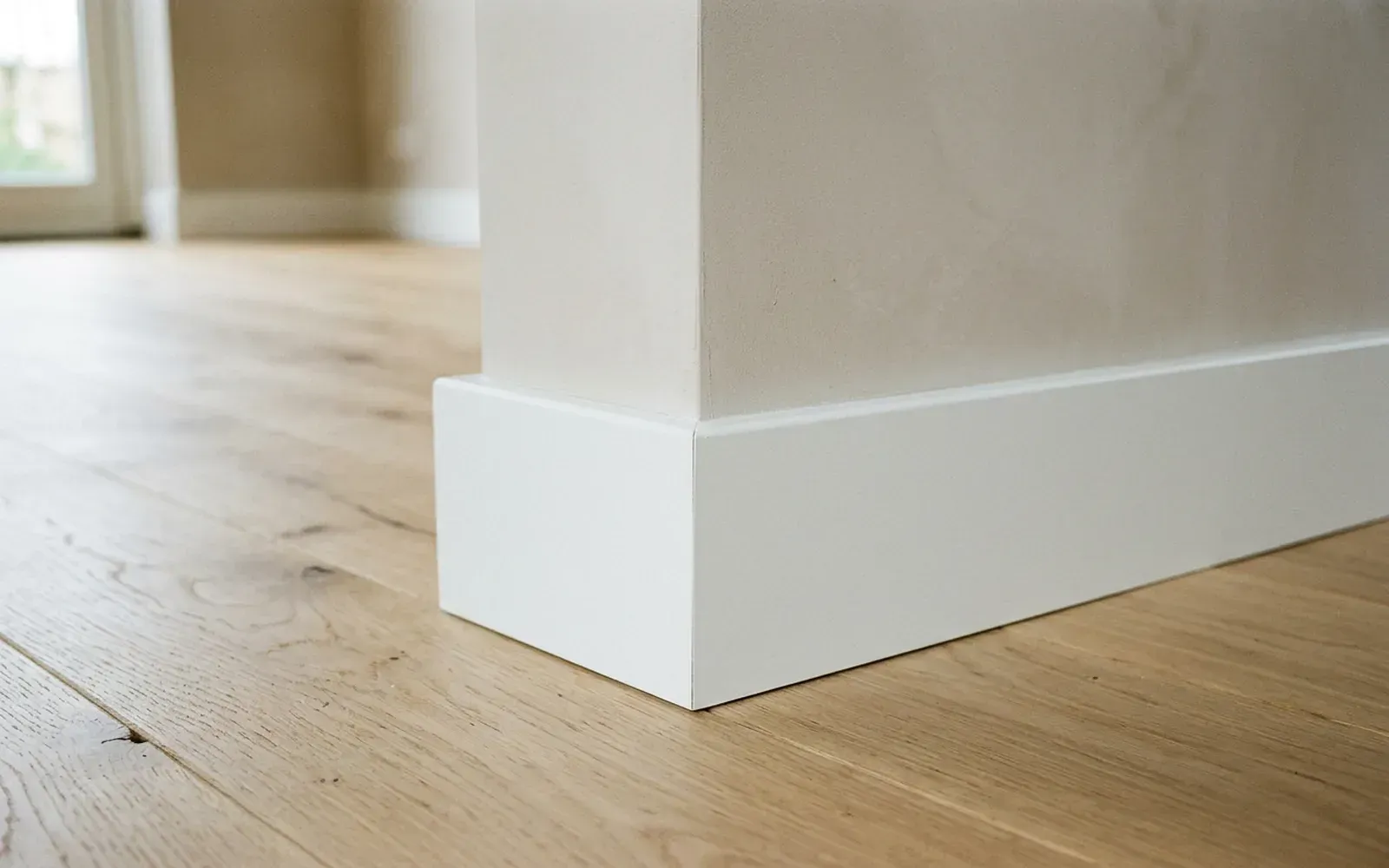
Mitre cutting skirting boards: how to get tight corners
For a square corner you cut both skirting boards at 45 degrees; for any other angle you halve the measured angle. That is how you get tight internal and external corners.
Choosing skirting
Skirting boards in a 1930s house: keeping the character, finishing it neatly
High ceilings, wooden floors and walls that are not straight: a 1930s house calls for skirting that suits both its character and the reality of an older home.
Related
Tall skirting
Tall skirting is usually 12 cm or higher. It gives a room calm and elegance, provided the height suits the ceiling and the interior.
Mitre joint
A mitre is an angled cut that lets two mouldings meet seamlessly in a corner. For a right angle, that is usually 2 x 45 degrees.
Internal & external corner
An internal corner points away from you, an external corner points towards you. With skirting boards, each type of corner needs its own cutting direction and approach.
Solid wood
Solid wood is timber in one piece, without pressed fibres. It gives skirting boards a natural look, but moves with temperature and humidity.
Architrave
An architrave is the moulding fitted around a door or window frame. It covers the joint between the frame and the wall and gives the opening a surround.
Skirting board installation by a specialist skirting fitter
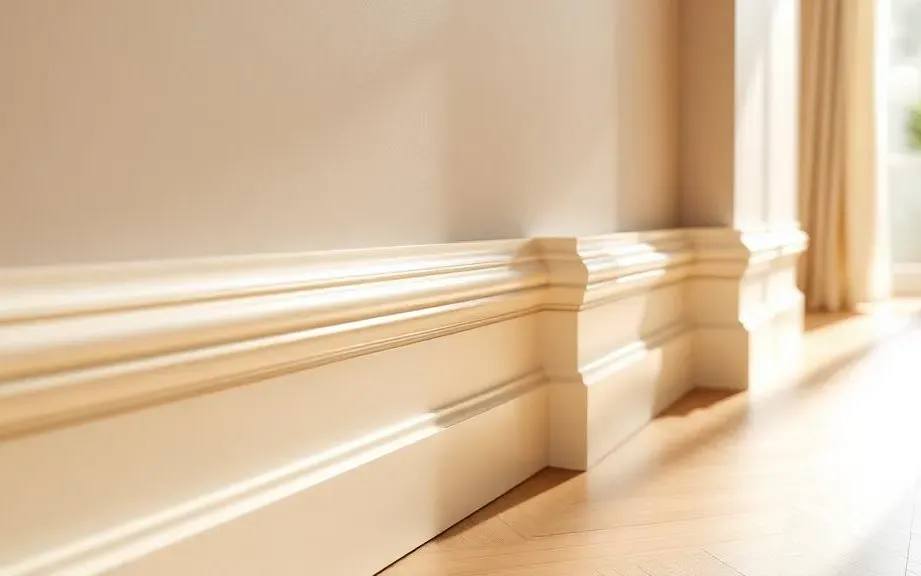
TipTop Plinten fits skirting boards in MDF, solid wood and aluminium, finished in any RAL colour and neatly matched to any floor, even with uneven walls.
Architrave fitting around doors, frames and openings
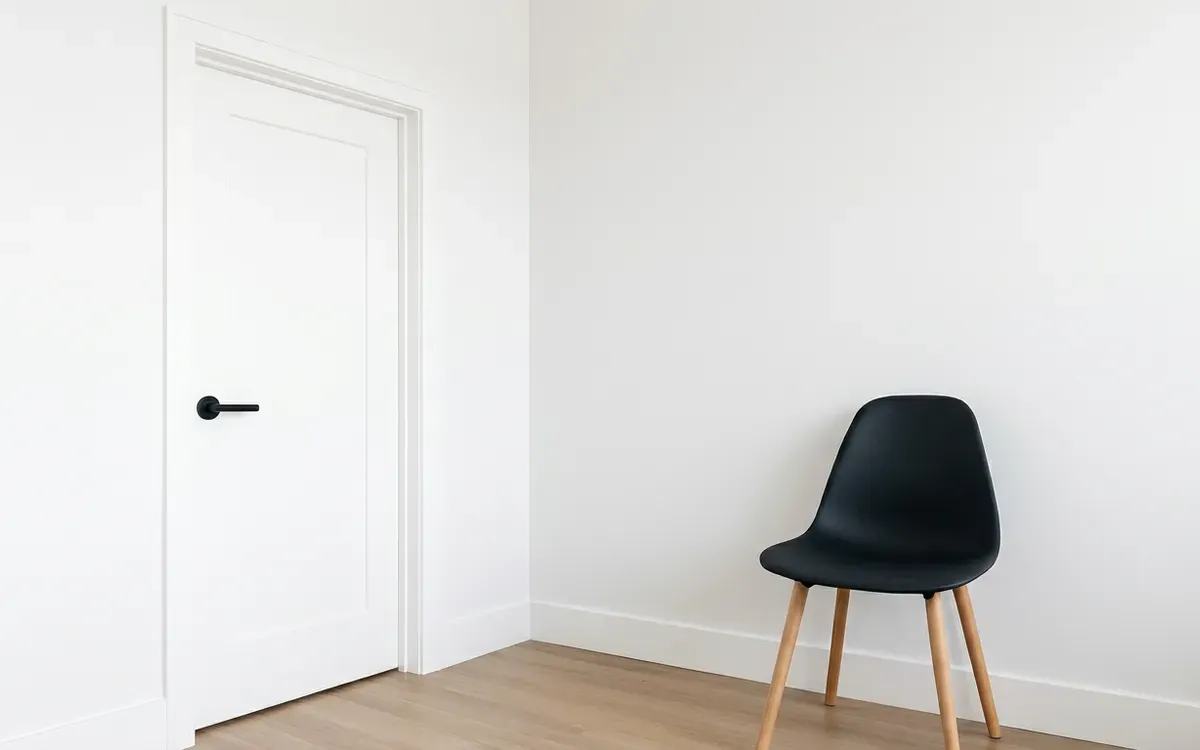
An architrave gives a door or opening a neat surround and covers the joint between frame and wall. TipTop Plinten fits made-to-measure architraves.
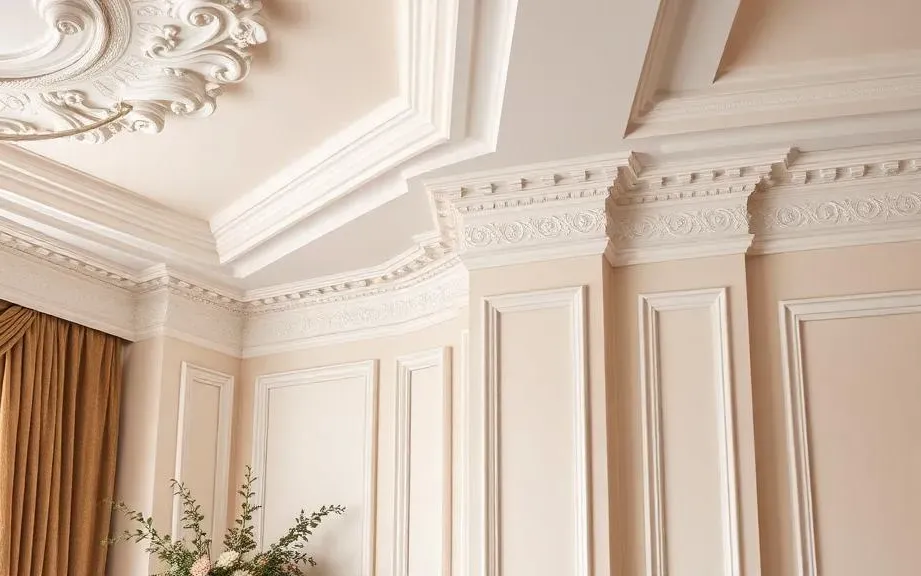
Decorative mouldings and coving installation
Decorative mouldings and coving give a room character. TipTop Plinten fits them in classic or minimal modern styles, with precise mitres and clean caulking.
Skirting board installation? Request a free quote
On-site measurement €75 incl. VAT (credited for orders above a minimum project size)