
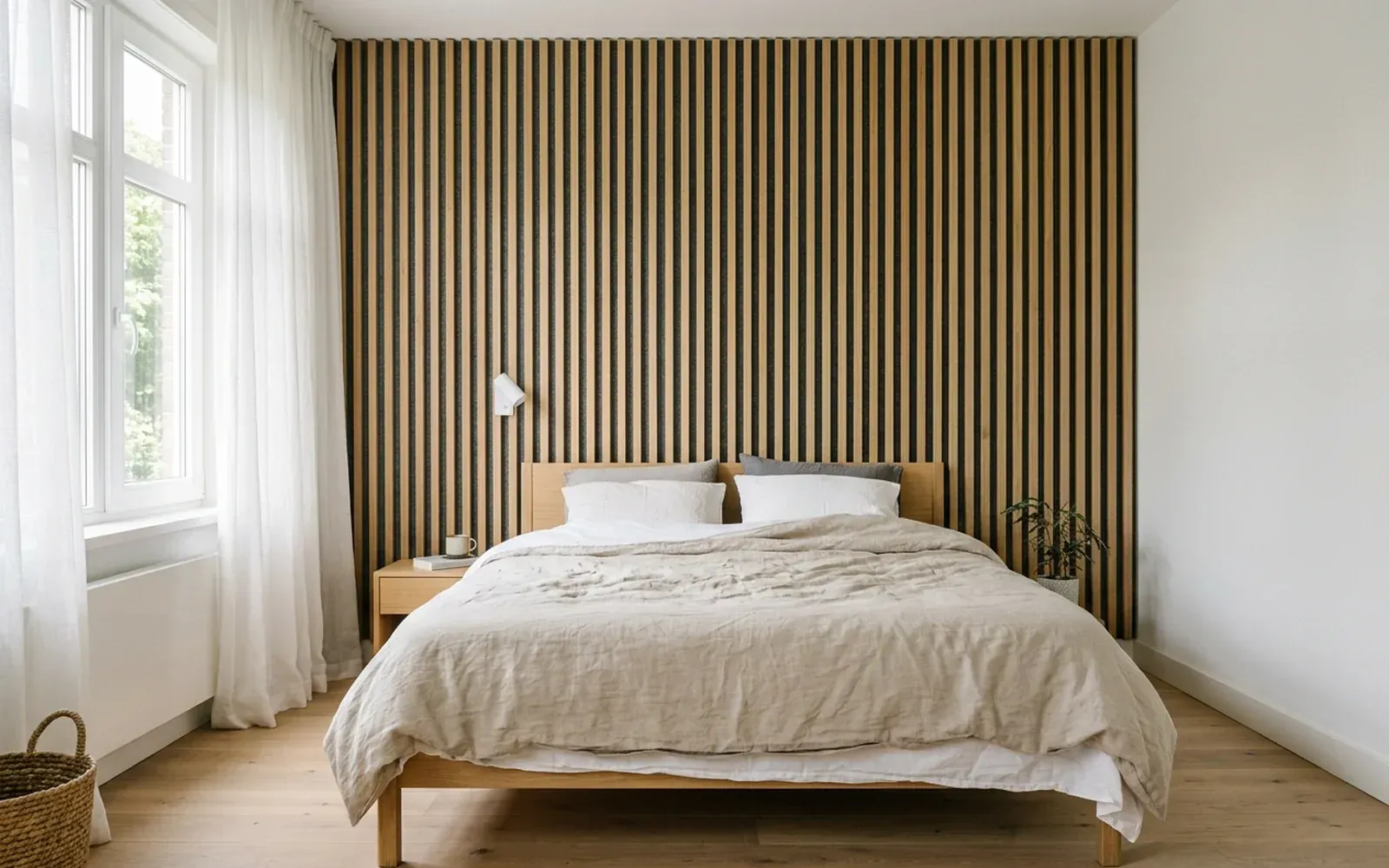
Bedroom wall panels almost always go on the wall behind the bed. There, the panel works as a large headboard, gives the room a calm focal point and makes the space feel warmer. Acoustic slats on felt also reduce echo in the room, so it sounds softer. They do not block noise from neighbours or outside. If you decide the position of reading lights, switches and sockets beforehand, you get a wall that looks finished and stays practical.
Why a wall panel in the bedroom?
The bedroom is a room for winding down. A bare wall behind the bed often looks empty, while lots of loose decoration becomes restless. A wall panel solves this: one surface with structure that frames the room without becoming busy.
Other advantages:
- No separate headboard needed. The panel takes over that role.
- Softer acoustics. With acoustic panels, the room sounds less hollow, especially with hard floors.
- Protection for the wall. Where pillows and the bed touch the wall, paint wears less quickly.
Which panels suit a bedroom?
Acoustic slats
Wooden slats on felt are a popular choice behind the bed. They add rhythm and warmth, and the acoustic panel dampens part of the sound in the room. In bedrooms with a hard floor, few curtains and smooth walls, that is noticeable. What you can and cannot expect is explained in acoustic wall panels: what do they deliver?.
Painted MDF panels
A clean panel or a layout with wide, flat panels in a calm colour. MDF is dimensionally stable and can be painted in any RAL colour, so the panel matches the rest of the room exactly.
Moulding panels and wainscoting
Panels made from wall mouldings or wainscoting up to roughly headboard height give a classic or a modern look, depending on the profile and colour. You can read more about the layout in decorative wall mouldings.
| Type | Atmosphere | Acoustic effect | Point to watch |
|---|---|---|---|
| Acoustic slats | Warm, natural | Reduces echo | Layout around lights and sockets |
| Painted MDF | Clean, calm | Hardly any | Match the colour to bedding and walls |
| Moulding panels | Classic or modern | No | Layout based on the width of the bed |
| Wainscoting | Solid, cosy | No | Match the height to the headboard height |
How wide and how high?
Full width
A panel across the whole wall looks like an architectural element and makes the room appear wider. This works especially well if the bed is centred and there are bedside tables on both sides.
A defined area
An area slightly wider than the bed including bedside tables works as an accent and leaves the rest of the wall free. What matters is that the area is symmetrical in relation to the bed and that the edges are neatly finished.
Up to the ceiling or half height
Taking it up to the ceiling emphasises the height of the room. A panel to roughly shoulder height, with a rail above it, feels cosier and is a good choice in rooms with a sloping roof or a low knee wall.
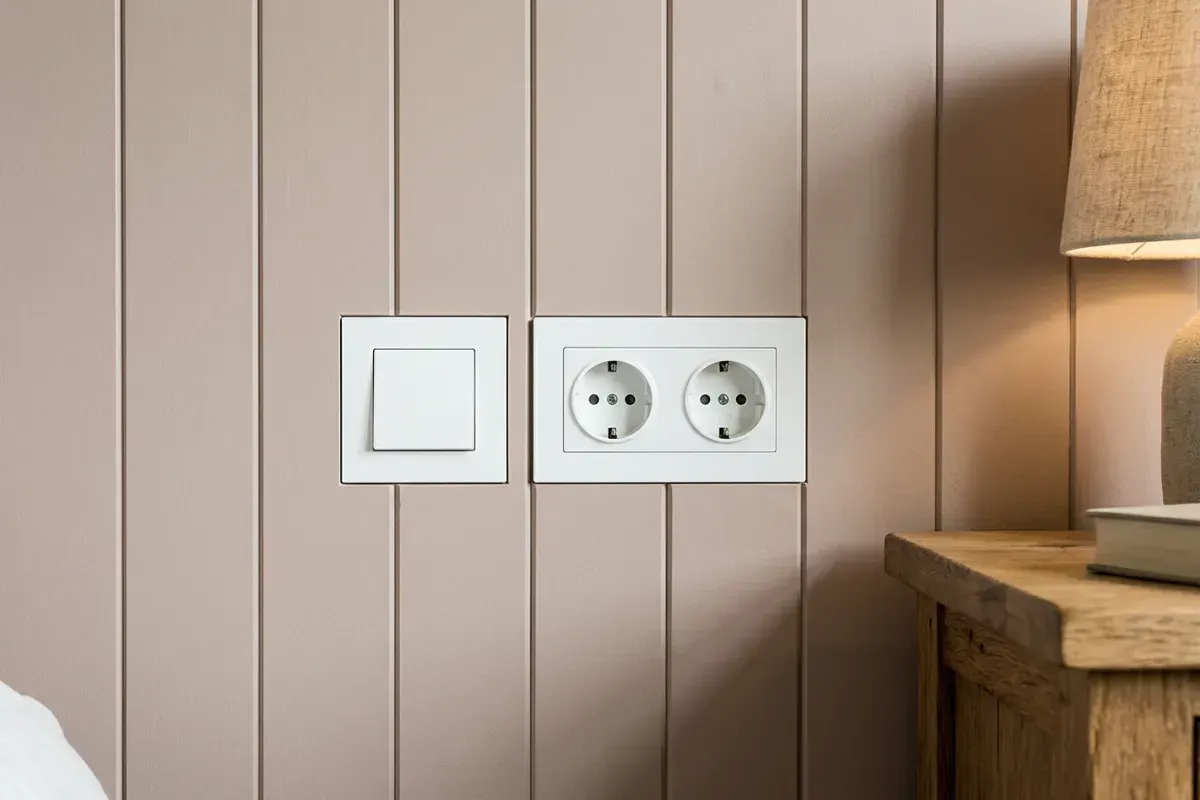
Electrics, lights and switches
This is the part that is most often forgotten. Think in advance about:
- Where will the reading lights go? On the panel, beside it or as pendant lights?
- Where will the switches go? A switch within reach of the bed is practical.
- How many sockets? For phones, an alarm clock or a lamp on the bedside table.
The cut-outs in the panel are made to the millimetre, but moving or adding electrical points is a job for a qualified electrician. Have that done before the panels are fitted.
Colour and material
In a bedroom, calm, muted colours are the most popular:
- Light oak or natural: fresh and Scandinavian.
- Warm white or greige: light and timeless. See also white wall panels.
- Soft green, blue or terracotta: cosy and warm.
- Dark or black: creates a hotel-like, intimate atmosphere; best suited to larger rooms. More on this in black slatted wall.
Ideally choose a matt or satin finish. A high-gloss panel reflects light from lamps and windows, which soon looks restless in a bedroom.
What should you look out for when fitting?
- A flat wall. Slats and smooth panels show every irregularity; bulging or out-of-true walls are taken up.
- Joint with the skirting board. Does the skirting board continue under the panel, or does the panel come down to the floor? That partly determines how calm the bottom edge looks.
- A sturdy lower edge. The bed or pillows will rest against it; a well-fixed, neat bottom edge prevents damage.
- Caulking. Joints between panel, wall and ceiling are caulked, so no shadow lines or gaps are visible.
Also in the children's room and guest room
Wall panels are not just for the main bedroom:
- Children's room: wainscoting or a half-height panel protects the wall against knocks, scratches and fingerprints. A washable paint is then more important than a very matt finish. Choose a colour that grows with the child, so the wall does not need changing at every new stage.
- Guest room or bedroom-cum-study: a panel behind the bed gives the room a clear function and makes it look finished straight away, even if it is rarely used. If the room doubles as a home office, acoustic slats help against echo during calls.
- Loft room: under a sloping roof, the wall behind the bed is often low. A panel up to the knee wall or to where the roof begins gives the room an anchor without making it look smaller.
The same applies in every case: decide in advance where the bed, lights and sockets will go, and match the panel to the skirting board and the rest of the room.
Having bedroom wall panels fitted?
TipTop Plinten, based in 's-Hertogenbosch, fits wall panels and wall mouldings, including acoustic panels, in homes throughout the Netherlands. Take a look, for example, at the acoustic wall panels in Apeldoorn or read more on the wall panels and wall mouldings page.
Send a photo of the wall behind the bed, the dimensions and your wishes for lights and sockets via the contact page. The quote is free and without obligation, and we can communicate in English, Dutch, German, Turkish, Persian or Arabic. An on-site measurement is optionally available for €75 incl. VAT; this amount is credited as a discount on jobs above a minimum project size.
Frequently asked questions
Usually on the wall behind the bed. The panel then works as a large headboard and becomes the focal point of the room. A panel across the full width looks calm; an area slightly wider than the bed and bedside tables works as an accent.
They reduce echo within the bedroom, which makes a room sound softer and calmer, especially if there are few textiles. They do not block noise from neighbours, outside or other rooms; that requires sound insulation measures.
Calm, muted shades are the most popular: light oak, warm white, greige, soft greens or blues. A dark slatted wall is also possible and creates a cosy, enclosed feel, especially in a larger bedroom.
Yes, but that has to be decided in advance. The position of lights, switches and sockets determines where the cut-outs go. Always have new or relocated electrical points installed by a qualified electrician.
Yes. A panel or moulding frame behind the bed can replace a separate headboard. Bear in mind that the bed will then sit directly against it; a sturdy, well-finished lower edge prevents damage.
Related articles
Mouldings & walls
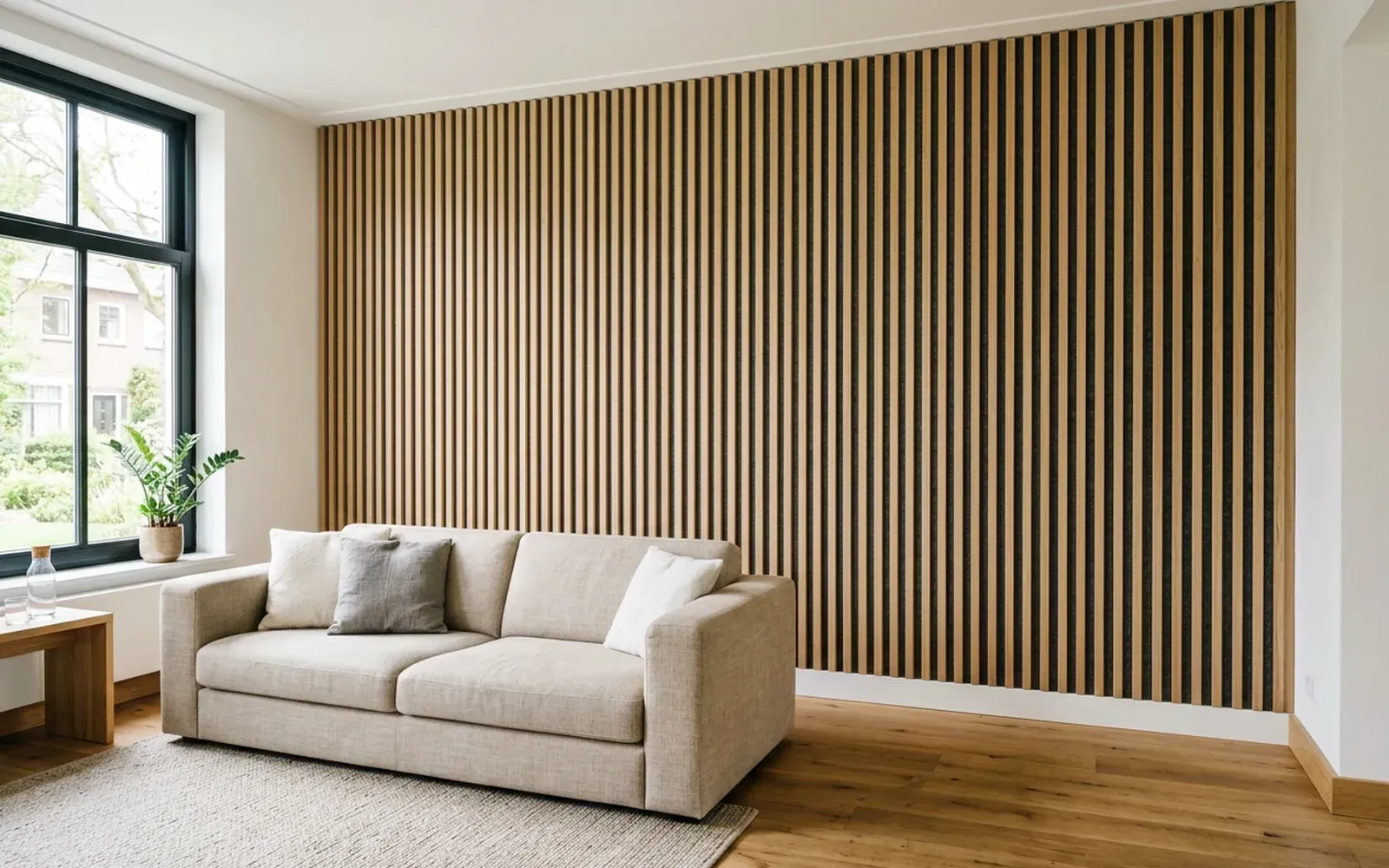
Living room wall panels: which wall, which panel and what to look out for
A wall panel can give a living room calm, depth and better acoustics. These are the types, the best places and the details that make the difference.
Mouldings & walls
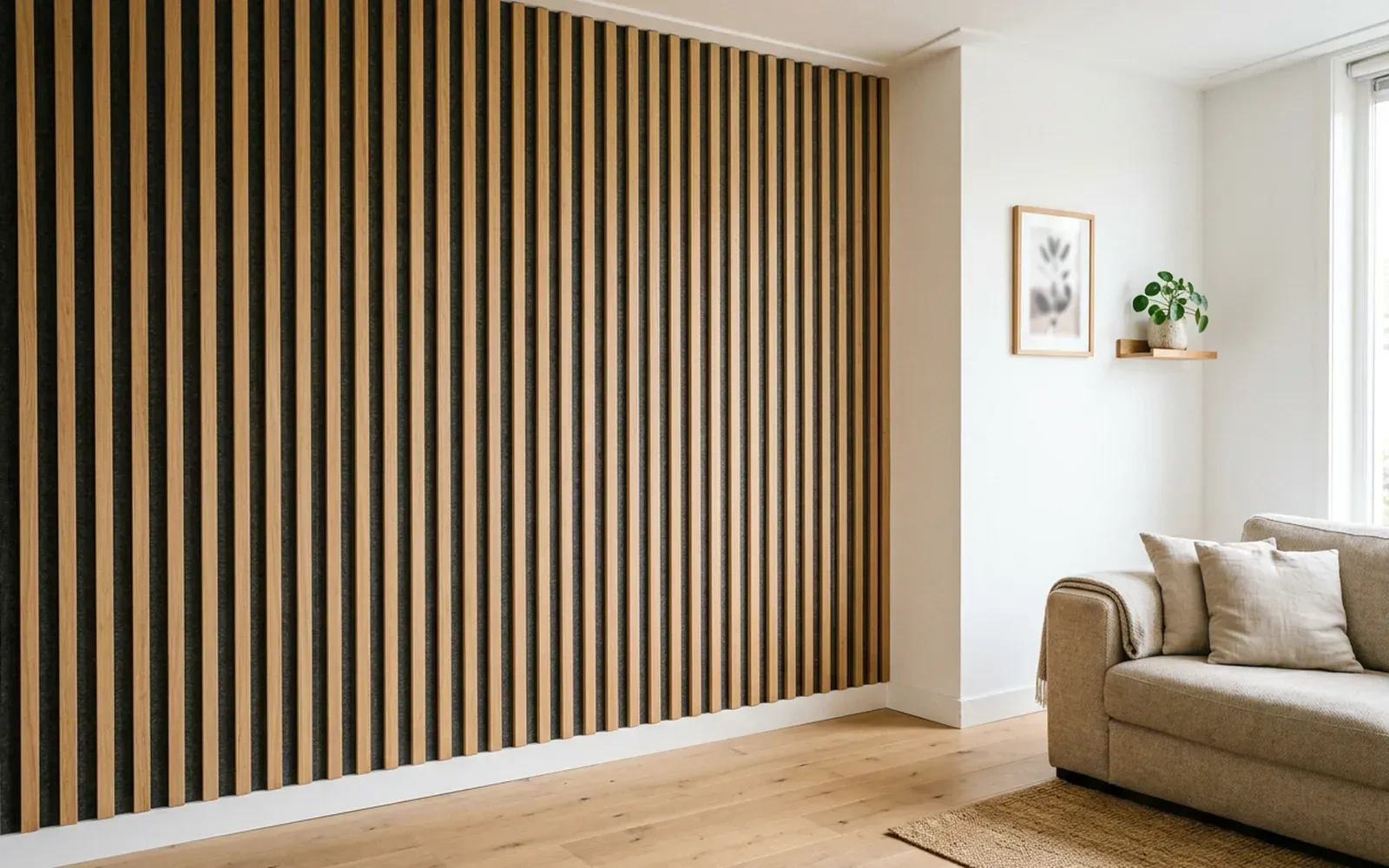
Acoustic wall panels: what do they do and when should you choose them?
Acoustic wall panels dampen echo in a room while giving the wall a warm, modern look. We explain how they work, what you can expect from them and what to look out for.
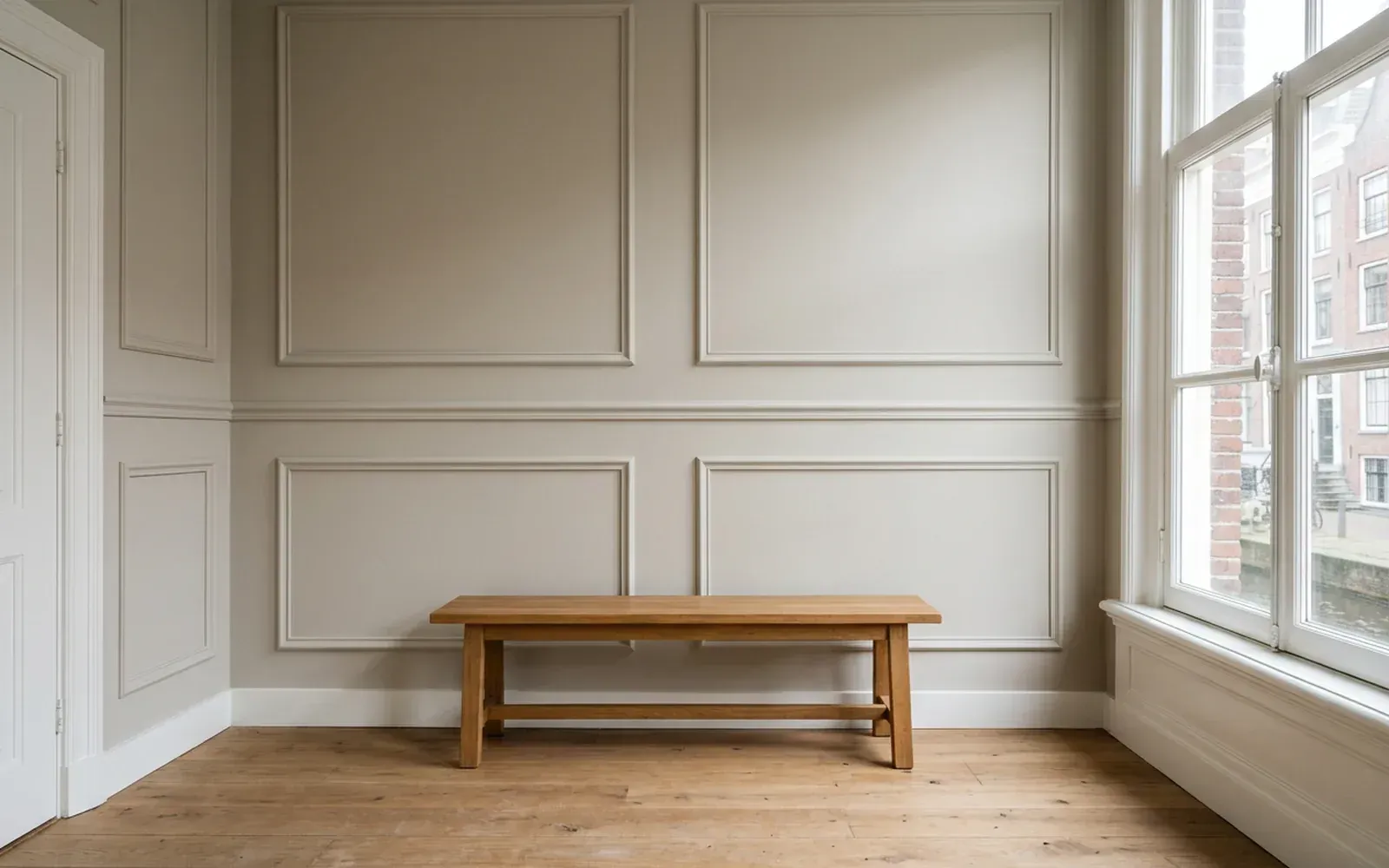
Mouldings & walls
Decorative wall mouldings: how to create panels that work
With decorative mouldings, a flat wall becomes a wall with depth and rhythm. The secret lies in the layout, the profile and the finishing of the mitres.
Related
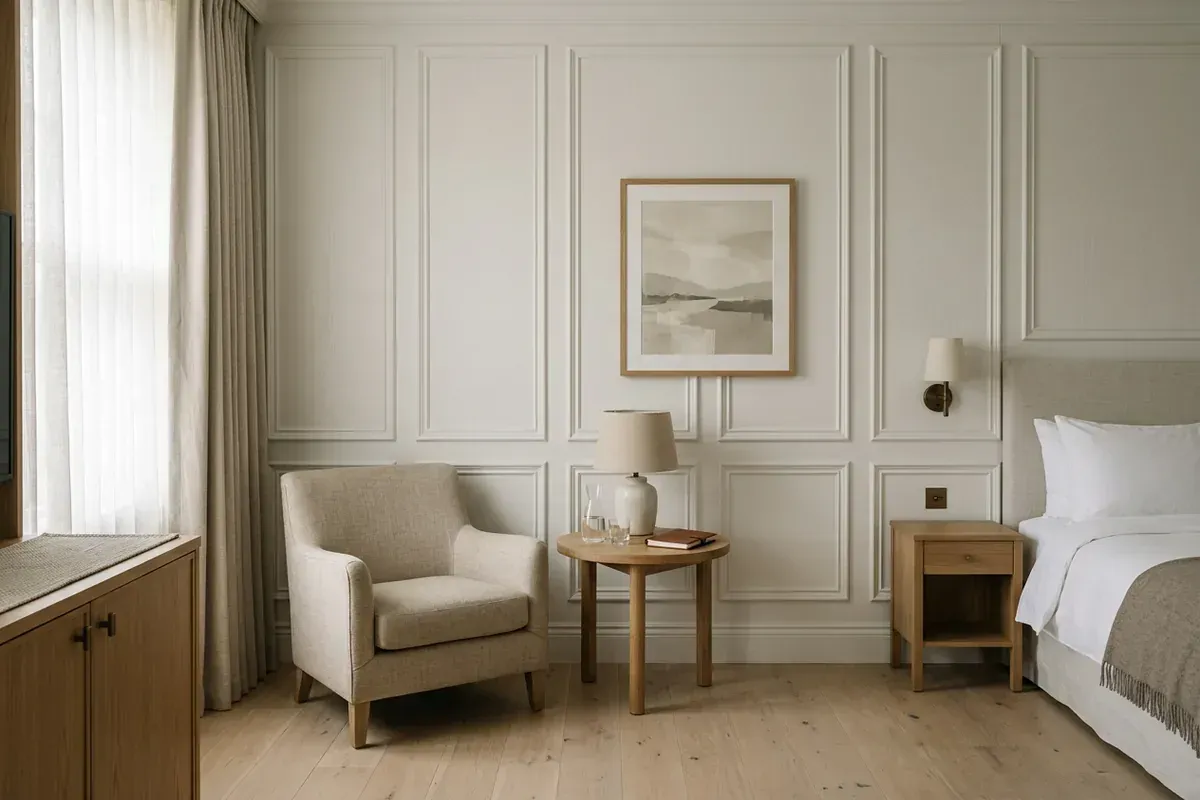
Wall panel
A wall panel is a board or panel fixed to a wall for appearance, protection or sound absorption. There are many types.
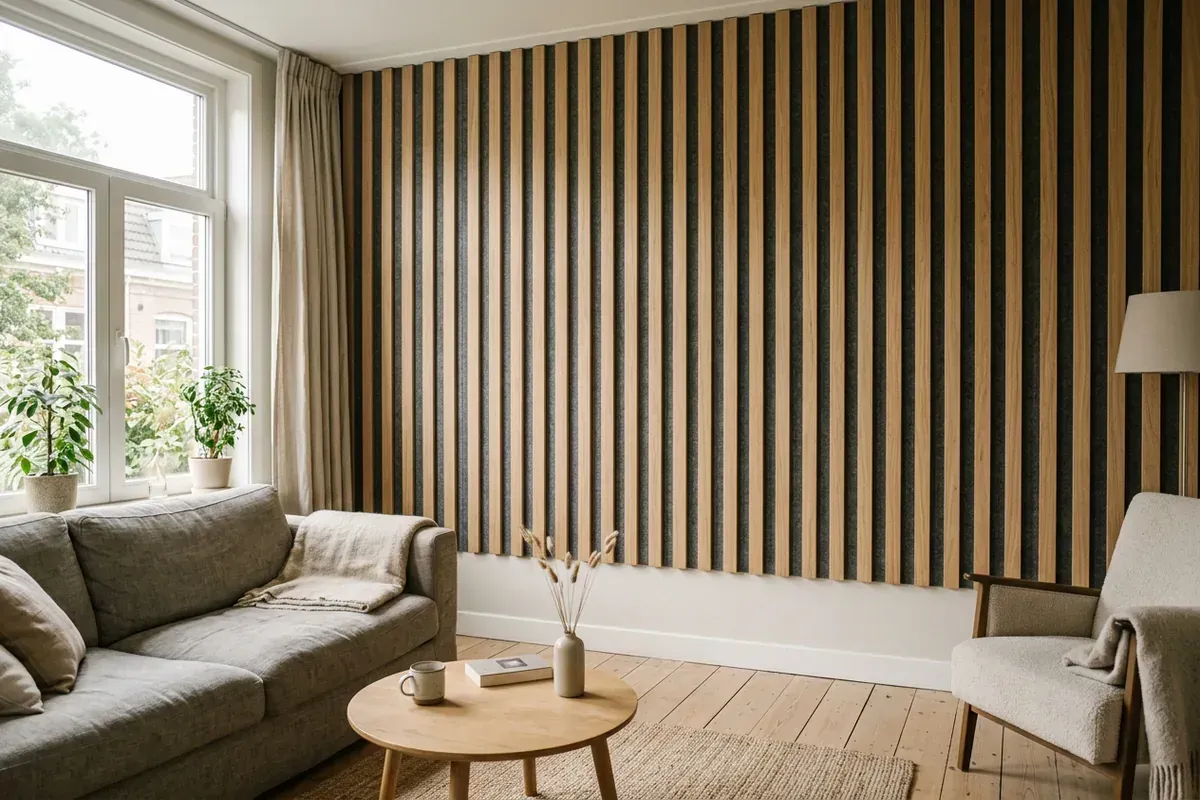
Acoustic panel
An acoustic panel absorbs sound and so reduces echo in a room. Slats on felt are the best-known type for the home.
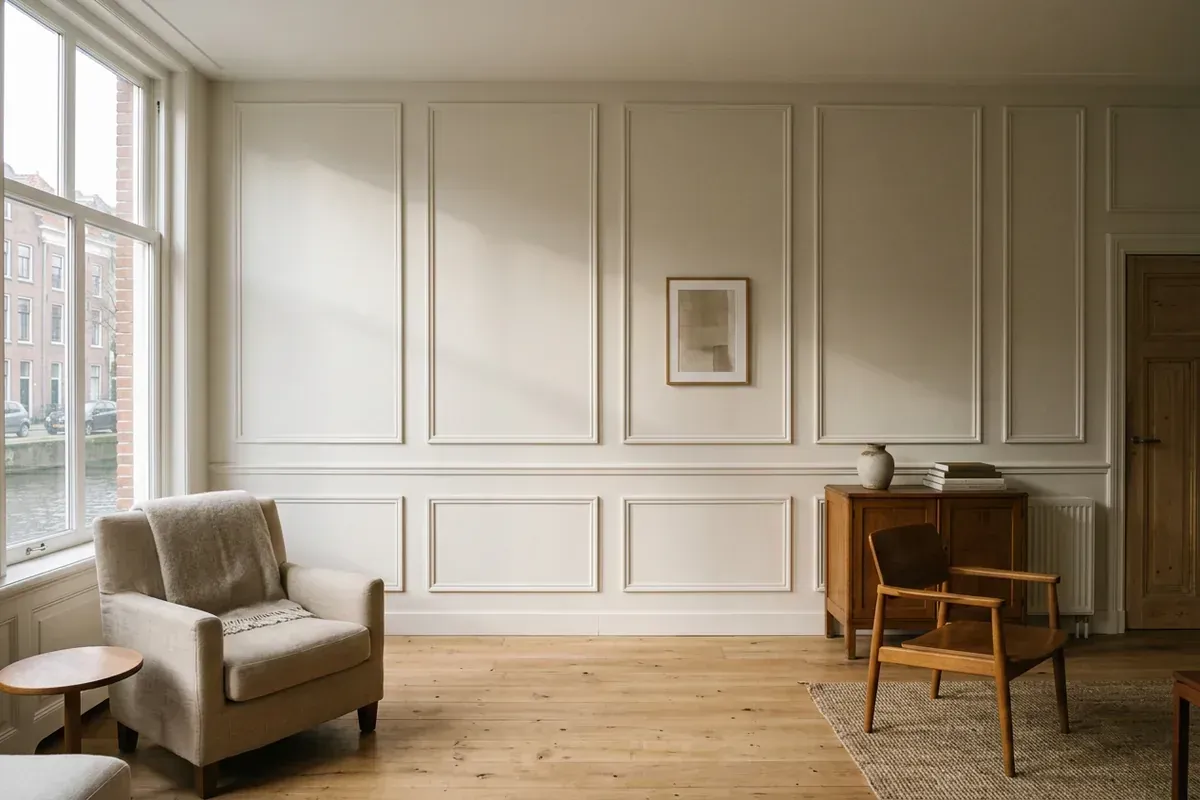
Wall moulding
A wall moulding is a narrow moulding on the wall surface. Several mouldings together create frames or panels that give a flat wall depth and rhythm.
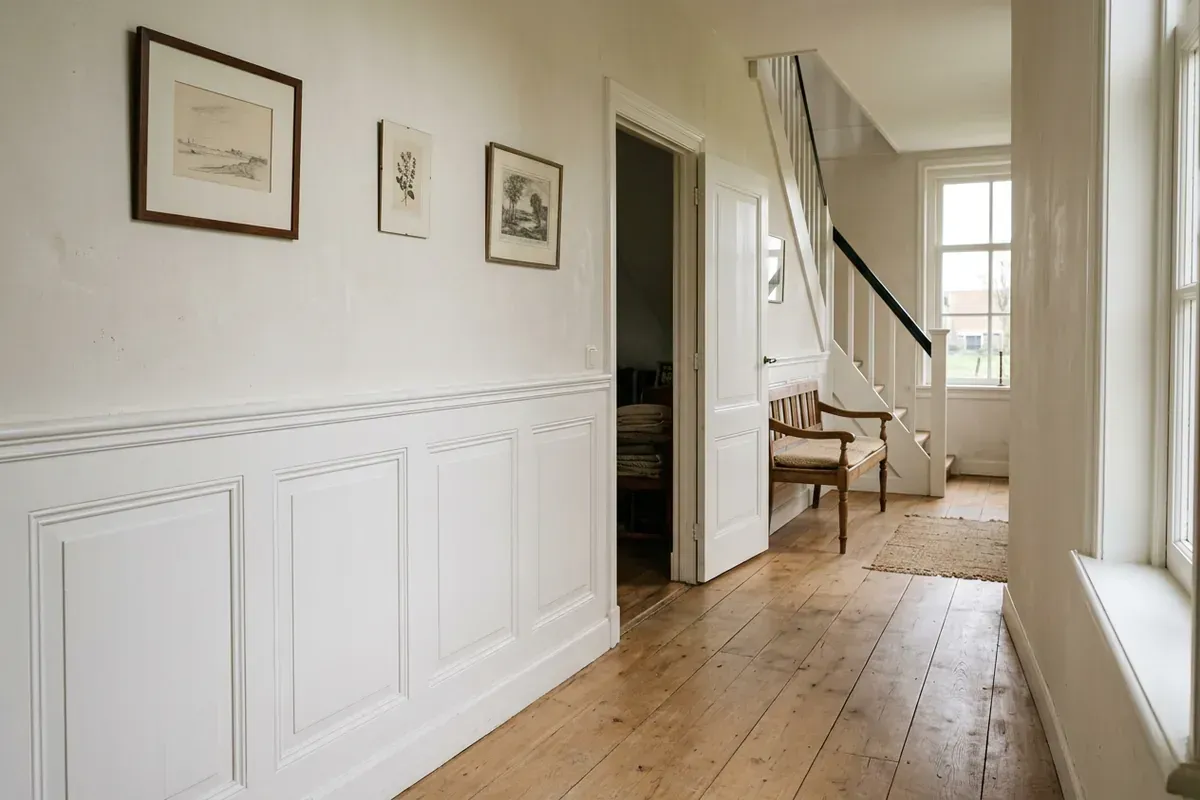
Wainscoting
Wainscoting is a covering on the lower part of the wall, traditionally in timber. It protects the wall and gives a room a classic character.
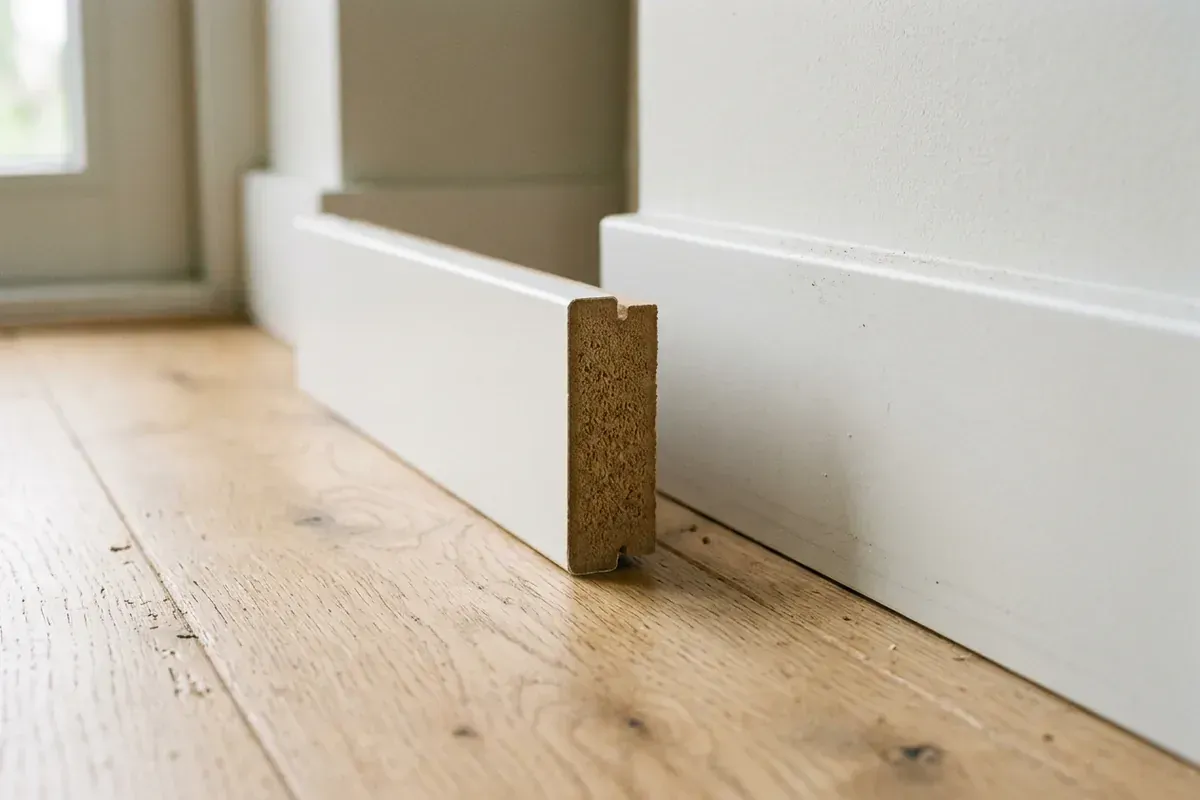
MDF
MDF is a sheet material made of pressed wood fibres. It is stable, smooth and easy to paint, which makes it the most popular material for skirting boards.
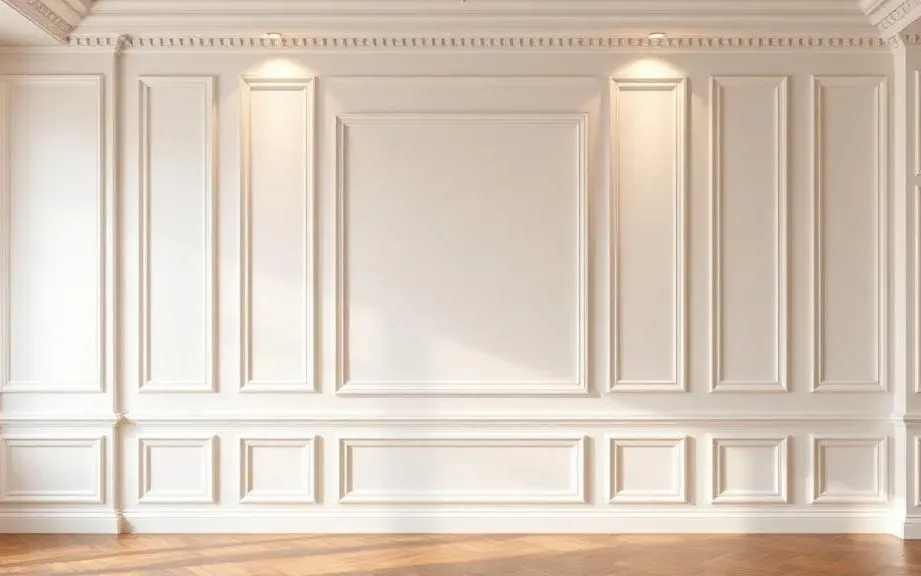
Wall panelling installation and wall mouldings fitted
TipTop Plinten fits wall panels, wall mouldings, slat panels and acoustic panels in homes, offices and hotels, with tight mitres and clean caulking.
Skirting board installation? Request a free quote
On-site measurement €75 incl. VAT (credited for orders above a minimum project size)