
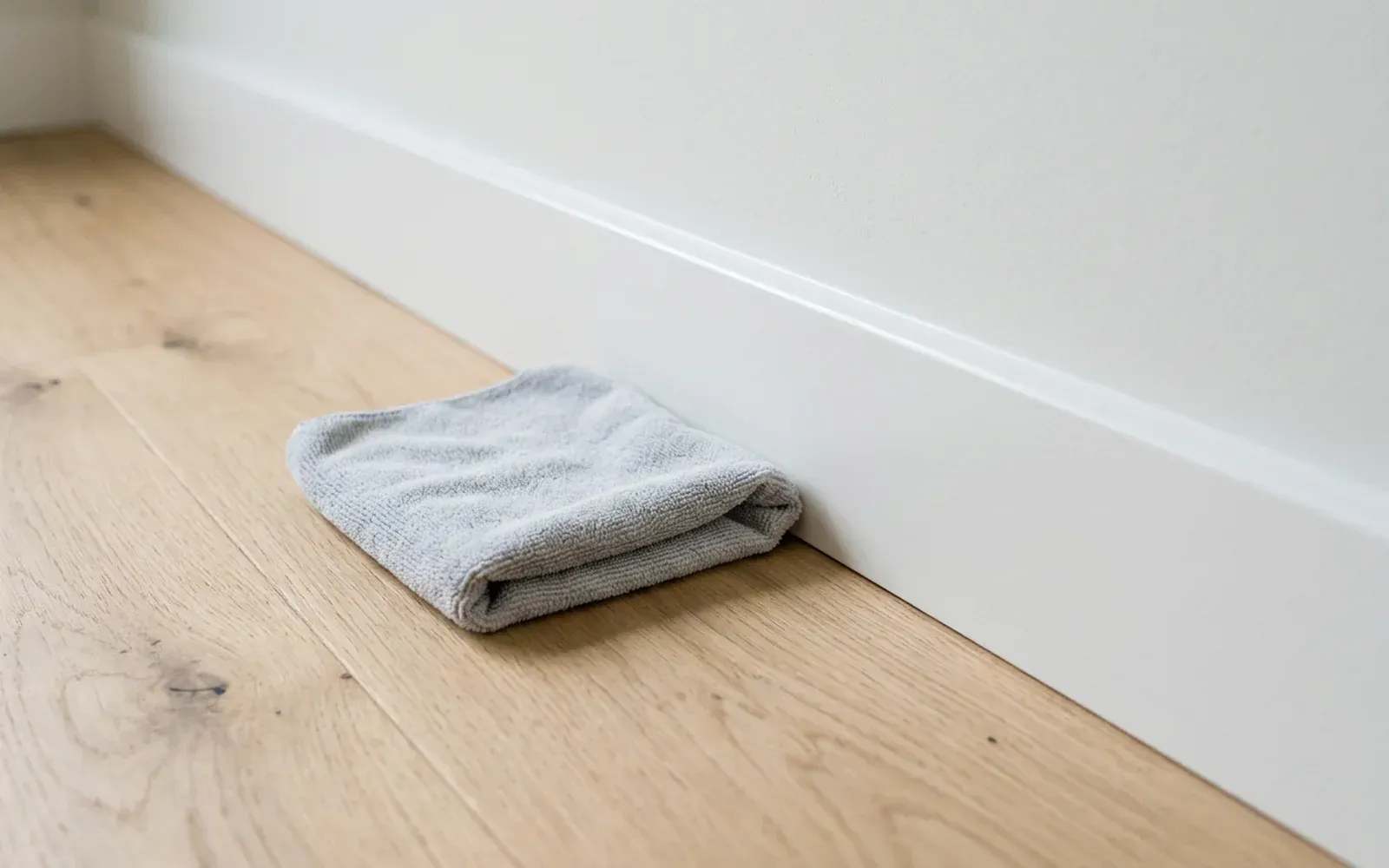
Cleaning skirting boards is a two-step job: first dust them dry with a microfibre cloth or the brush attachment of the vacuum cleaner, then wipe them damp with a well wrung-out cloth and lukewarm water with a little mild all-purpose cleaner. Dry them afterwards and do not use abrasive cleaners, scouring pads or harsh degreasers, as they attack the paint. Do not let water stand against the skirting when mopping, especially with MDF. Touch up small scratches with paint in the same RAL number.
In this article you can read how to clean skirting boards by material, how often it is needed and how to touch up damage and caulk joints.
Why do skirting boards get dirty so quickly?
Skirting boards sit where everything comes together: dust that drifts to the edges of the room, shoes and vacuum cleaners that bump into them, and mop water that runs along the edge. The top edge of the skirting in particular is a dust trap. The taller and flatter that top edge, the more dust settles on it.
Cleaning skirting boards: the basic approach
- Dust dry. Use a dry microfibre cloth, a dusting brush or the brush nozzle of the vacuum cleaner. That stops dust from turning into mud in a wet cloth.
- Wipe damp. Use lukewarm water with a small amount of mild all-purpose cleaner. Wring the cloth out well; it should be damp, not wet.
- Dry off. Dry immediately with a clean, dry cloth. This prevents limescale marks and moisture in the joints.
- Corners and mitres. Work into corners with a soft brush or a cloth wrapped around a finger; dust likes to collect there.
What you had better not use
- abrasive cleaners, scouring pads or the green side of a sponge;
- harsh degreasers or solvents;
- steam cleaners directly on the skirting;
- a soaking wet mop that slaps against the skirting.
These products and methods can dull the paint, cause scratches or force moisture into joints and mitres.
Cleaning by material
MDF skirting boards
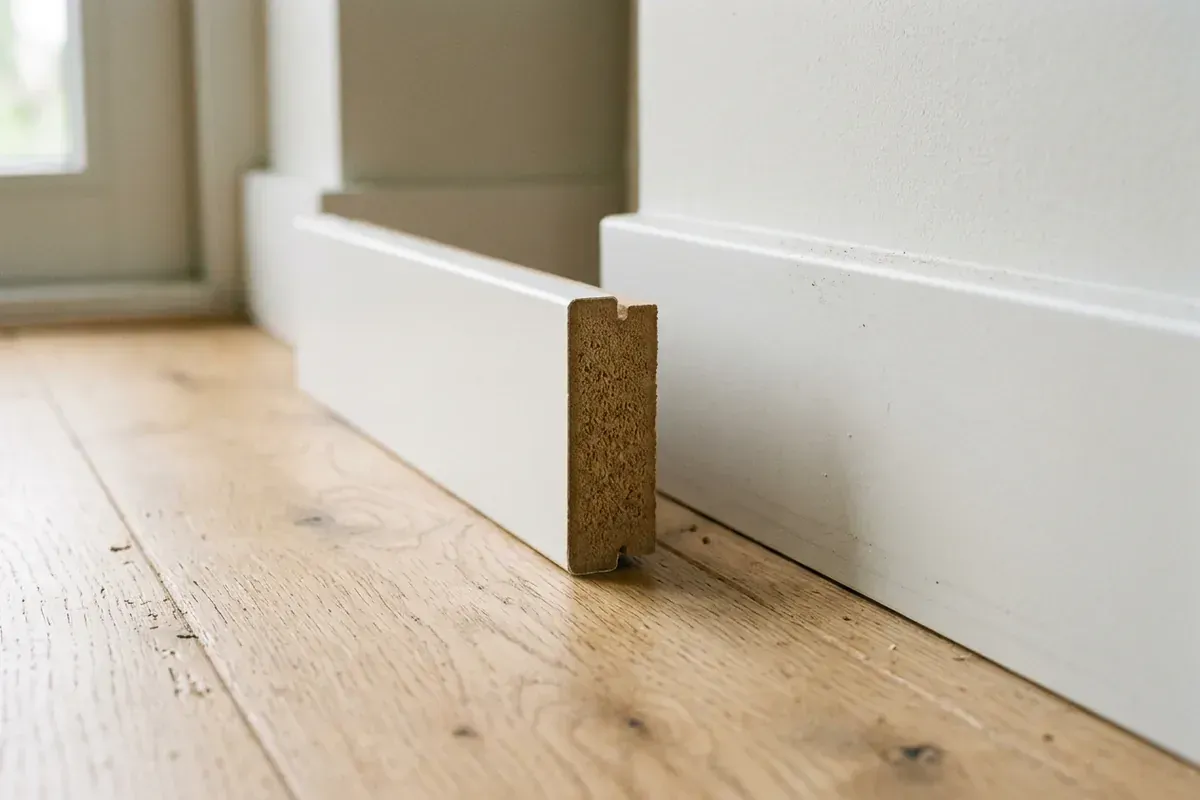
MDF is easy to keep clean once painted. The paint layer protects the material. The weak point is damage in that layer or an open joint: moisture can get in there and make the MDF swell. So do not mop along the skirting with a lot of water, and touch up damage in good time. In rooms where moisture occurs more often, choosing moisture-resistant MDF for the skirting is already a sensible step.
Solid wooden skirting boards
If the wood is lacquered, clean it like MDF skirting. If it is oiled or waxed, preferably use a product suited to that finish and not too much water. Oiled skirting may need a fresh maintenance coat over time.
Aluminium skirting boards
Aluminium skirting is unaffected by moisture and easy to clean with a damp cloth and a mild cleaner. Do not use abrasives: they scratch anodised or coated surfaces.
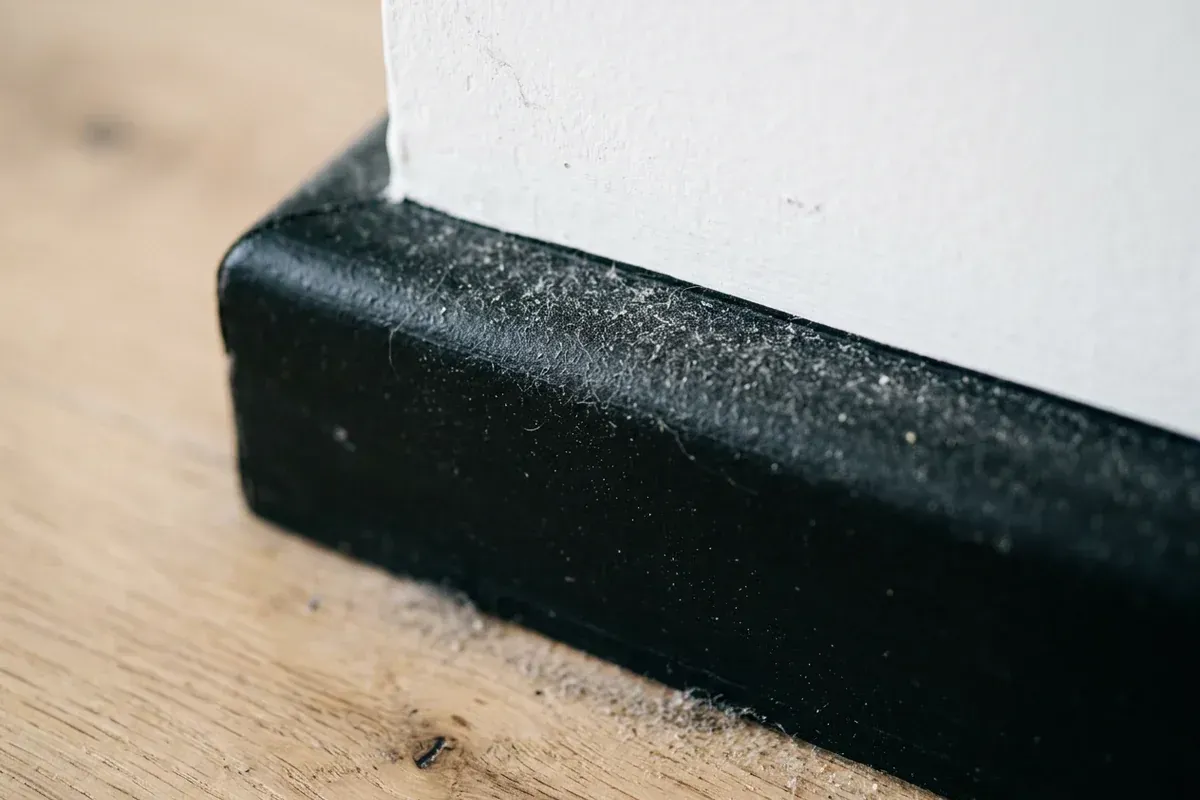
White and black skirting: each has its own weak spot
- White skirting boards mainly show shoe marks, streaks from the vacuum cleaner and yellowing from sunlight or smoke. Wiping them damp regularly helps.
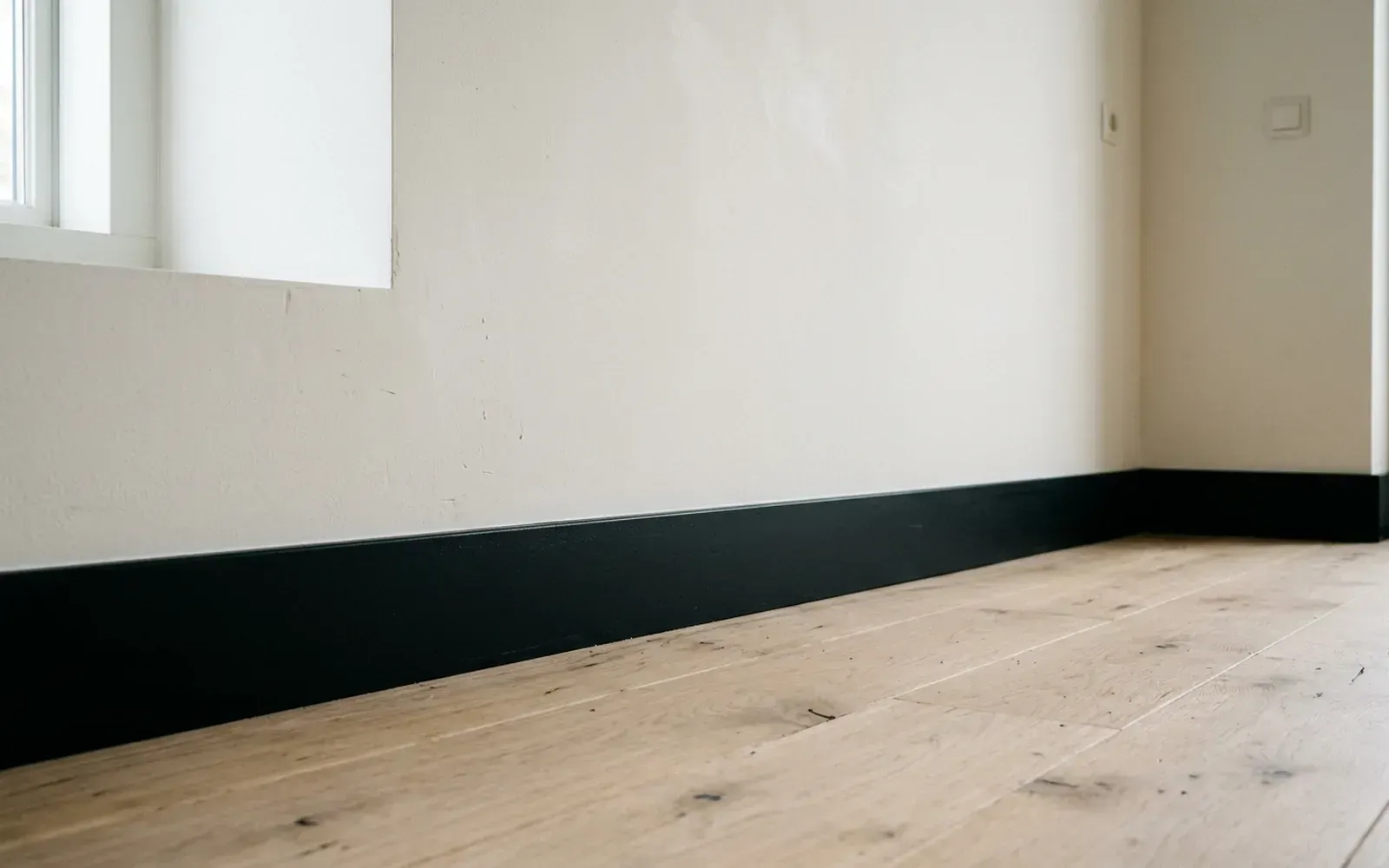
- Black and dark skirting boards mainly show dust and limescale marks. Dry dusting with a microfibre cloth matters most here. With matt black, drying off is extra important to prevent streaks. You can read more about this choice in black skirting in RAL 9005.
- Grey skirting boards sit in between and show both dust and marks less quickly.
How often should you clean them?
There is no fixed rule. It depends on the room, pets, children and how much dust there is. A practical approach:
| What | When |
|---|---|
| Dry dusting | Along with vacuuming |
| Wiping damp | When the skirting is visibly dirty |
| Checking for scratches and joints | Now and then, for example during a spring clean |
Touching up scratches and damage
Even with care, skirting gets a scratch or dent over time. This is how to touch it up:
- Clean. Make the spot free of grease and dust.
- Sand lightly. Lightly sand the edge of the damage with fine sandpaper.
- Fill a dent. For a dent in MDF or wood, fill it first with a suitable filler and sand it flat.
- Repaint. Apply a thin coat of paint in the same RAL number and the same sheen level.
So keep a note of the RAL number and sheen level of your skirting. If you no longer know them, you can have the colour measured or a sample compared. In painting skirting or pre-finished? you can read more about painting and finishing.
Maintaining caulk joints
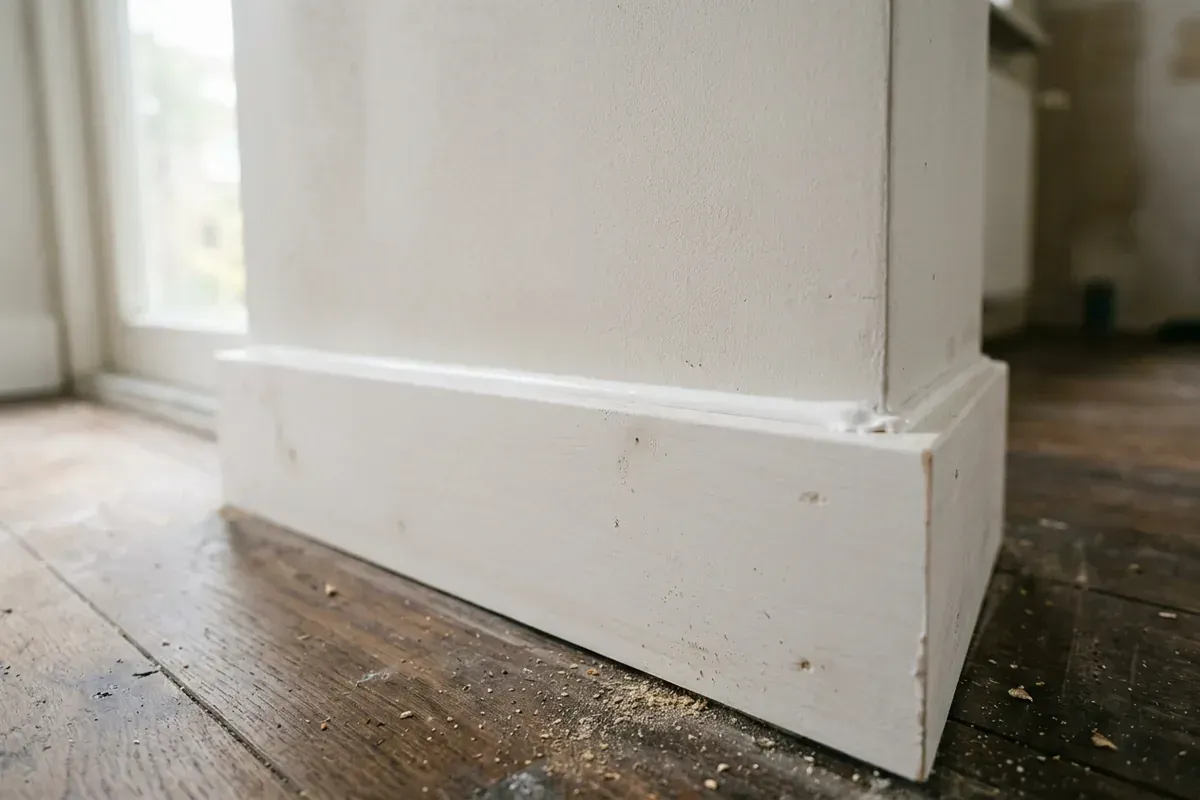
The caulk joint between skirting and wall keeps out dust and moisture and creates a clean line. Over time a joint can crack, for example due to movement in the wall or floor.
- Small cracks are filled with new paintable acrylic caulk.
- Caulk that has come loose is carefully removed first, after which the joint is re-caulked clean and dry.
- After caulking, paint the joint in the colour of the skirting or wall.
You can read which sealant belongs where in caulking skirting boards: which sealant?. For more about the craft, see the glossary under caulking.
Yellowed or dull skirting boards
White skirting boards can yellow slightly over the years, for example from sunlight, smoke or the type of paint. Cleaning helps only to a limited extent, because the discolouration is in the paint layer itself. Skirting that has gone dull from years of cleaning will not get its sheen back with a cloth either. In both cases a new coat of paint is the solution: sand lightly, remove the dust and repaint in the right RAL number and sheen level.
Prevention is better than cure
- Bumpers on furniture prevent dents and scratches.
- A vacuum cleaner with a soft edge or brush nozzle spares the paint.
- Little water when mopping along the skirting.
- Deal with moisture promptly, for example a leaking radiator valve or condensation under a window.
Touch up or replace the skirting?
If your skirting boards are so damaged that touching up is no longer enough, or many joints have come loose, new caulking or replacement can be the solution. Take a look at our caulking or skirting board installation service, or send a few photos of the skirting and the rooms via the contact page. The quote is free and without obligation. An on-site measurement is optional for €75 incl. VAT, credited as a discount on jobs above a minimum project size. We are happy to communicate in English, as well as Dutch, German, Turkish, Persian and Arabic.
Frequently asked questions
First remove loose dust with a dry microfibre cloth or the brush attachment of the vacuum cleaner. Then clean with a well wrung-out cloth and lukewarm water with a little mild all-purpose cleaner. Dry with a clean cloth and do not use abrasive cleaners or scouring pads.
Properly painted MDF skirting can take a damp cloth. Do not leave water on or against the skirting, especially where the paint is damaged or joints are open. There, moisture can be drawn into the MDF and make it swell.
On a dark, matt surface, light dust particles stand out more than on white. Regular dry dusting is therefore the best approach. A slightly damp microfibre cloth picks up dust without leaving streaks.
You can touch up a small scratch with paint in the same RAL number. Clean the spot, sand it lightly and apply a thin coat. If there is a dent or damage in the MDF, it is filled and sanded first.
Carefully remove any loose caulk, make the joint dust-free and apply new paintable acrylic caulk. Once dry, paint it in the colour of the skirting or the wall.
Related articles
Installation & finishing
Caulking skirting boards: which sealant should you use and how do you get a neat finish?
For the joint between skirting board and wall you use paintable acrylic caulk, and silicone only where water is involved. Here is how to run a clean caulk line.
Installation & finishing
Painting skirting boards or choosing pre-finished: which is the smarter option?
Pre-finished skirting boards are ready straight away, while painting them yourself gives more freedom in colour. Here is how to choose and how to paint skirting boards neatly.
Choosing skirting
Black skirting boards in RAL 9005: when do they work and what should you look out for?
Black skirting boards give an interior a graphic, contemporary look. Here is how to choose the right finish and keep dust and scratches from spoiling the effect.
Related
MDF
MDF is a sheet material made of pressed wood fibres. It is stable, smooth and easy to paint, which makes it the most popular material for skirting boards.
Acrylic caulk
Acrylic caulk is a water-based sealant that can be painted once cured. It is the usual choice for skirting boards, mouldings and frames in dry rooms.
Caulking
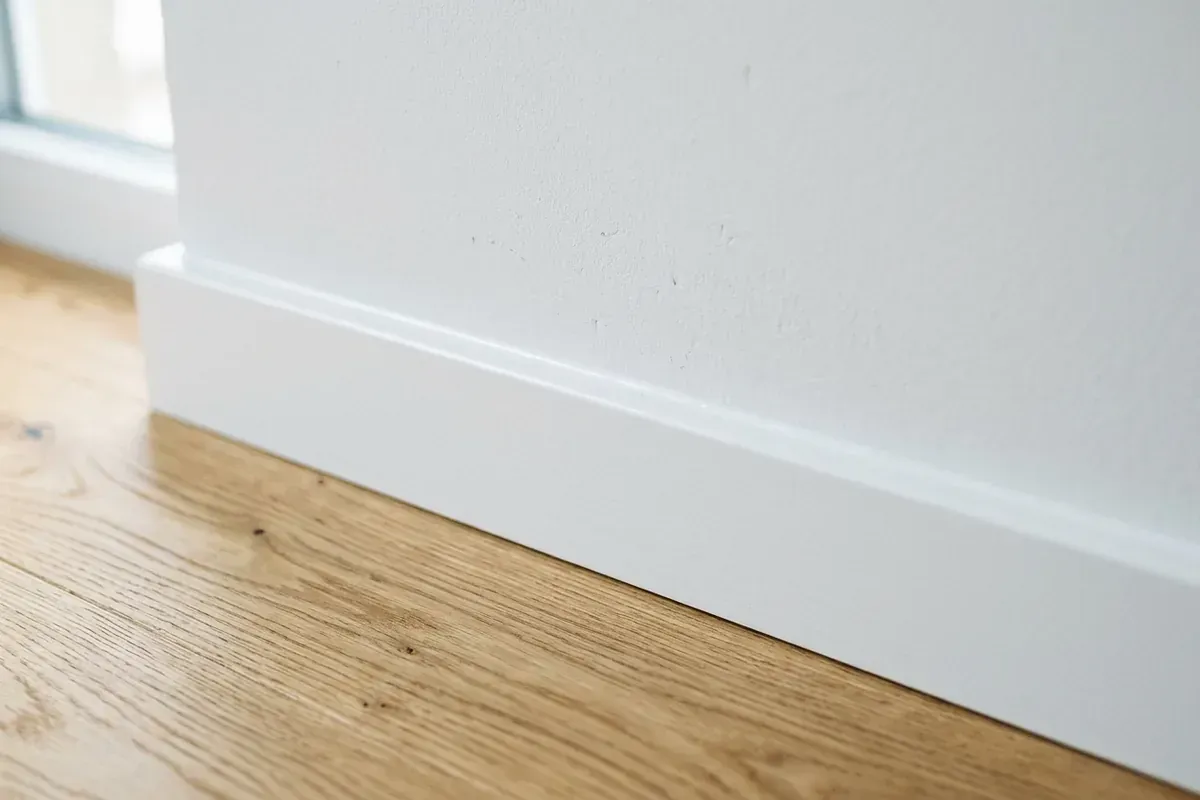
Caulking means sealing joints with a flexible sealant. With skirting boards and mouldings, it makes the transition to the wall crisp and seamless.
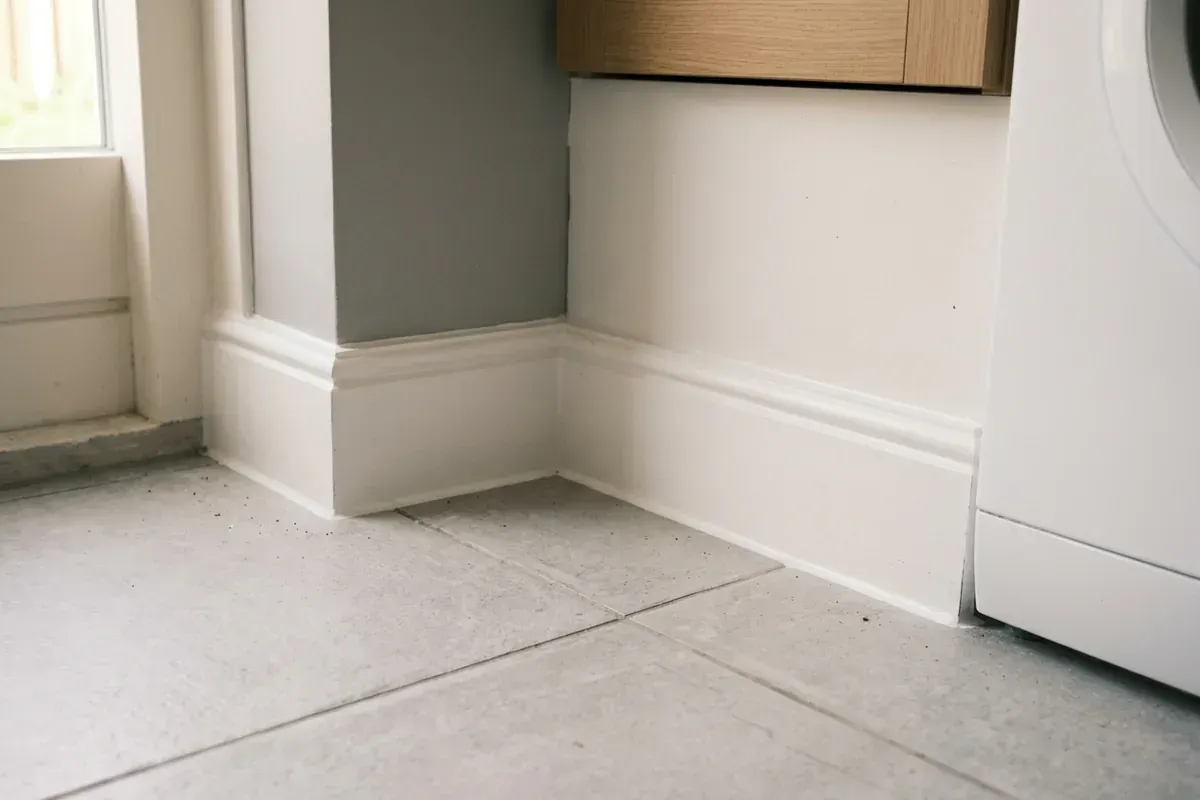
Moisture-resistant MDF
Moisture-resistant MDF is MDF treated to make it less sensitive to moisture. It is suitable for rooms where standard MDF would quickly swell.
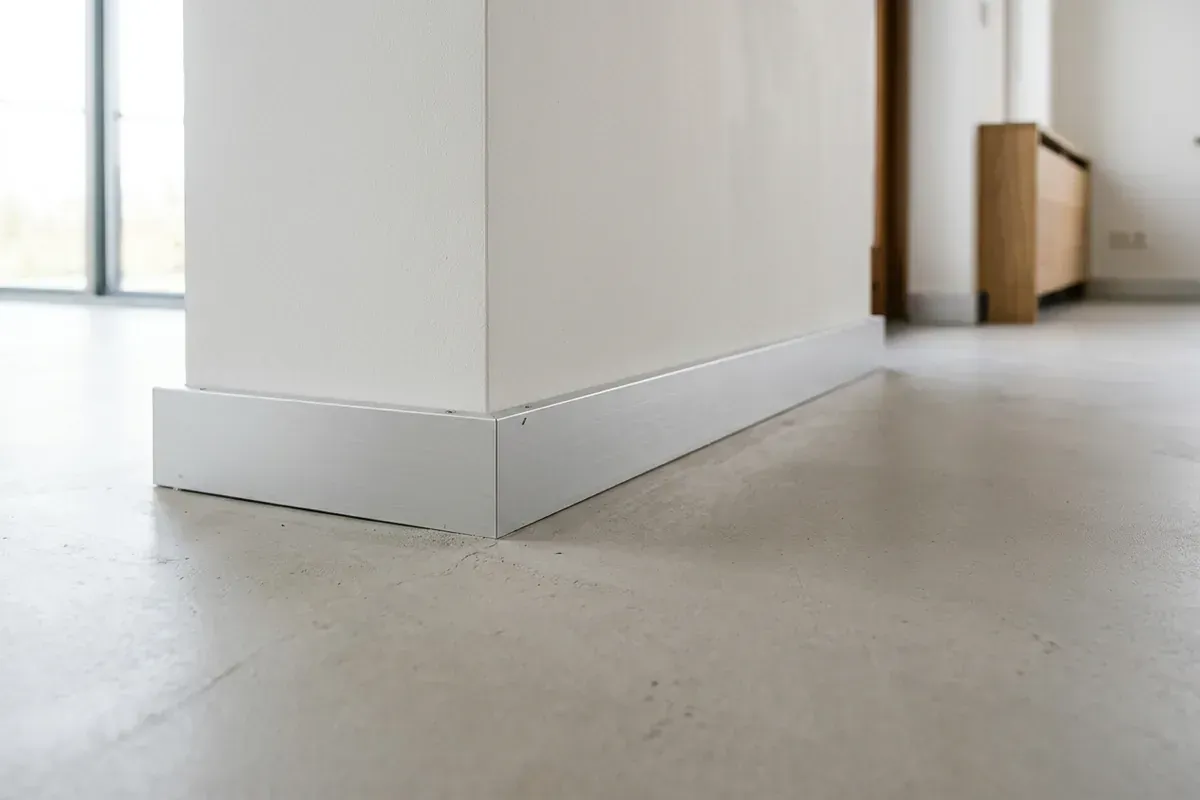
Aluminium skirting
Aluminium skirting is a slim metal profile at the base of the wall. It suits sleek, modern interiors and can be combined with LED lighting.
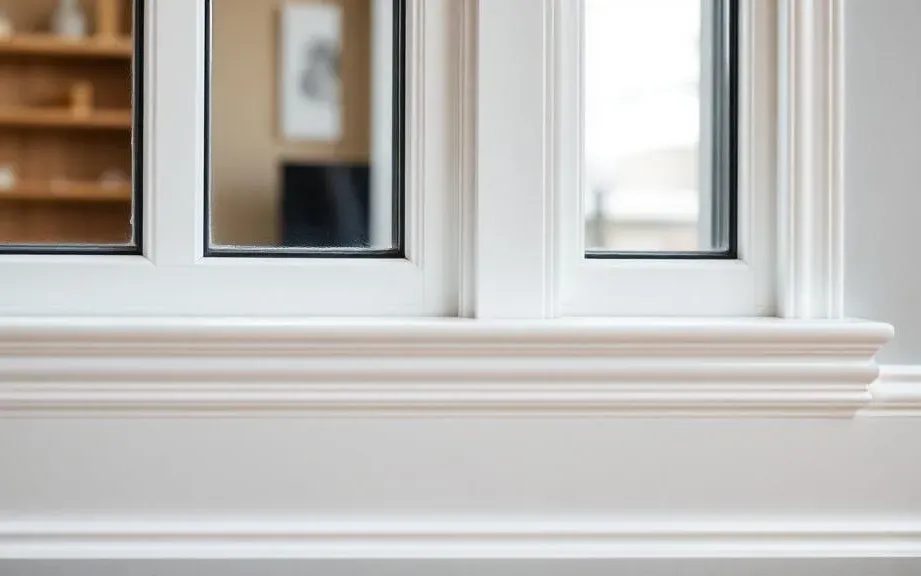
Caulking skirting boards and sealant work for a seamless finish
Caulking is the final step that makes skirting boards, mouldings and panels look seamless. TipTop Plinten uses acrylic or silicone, paint-ready or in colour.
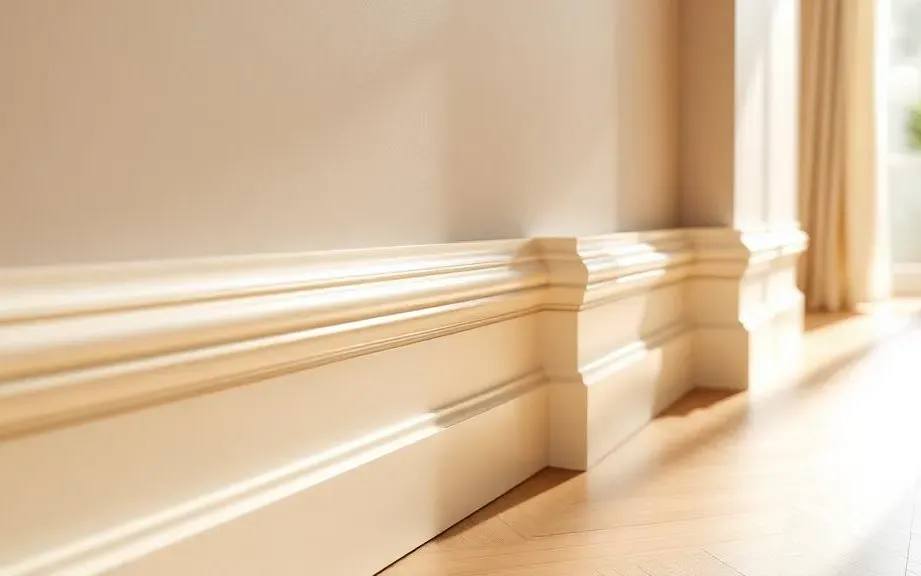
Skirting board installation by a specialist skirting fitter
TipTop Plinten fits skirting boards in MDF, solid wood and aluminium, finished in any RAL colour and neatly matched to any floor, even with uneven walls.
Skirting board installation? Request a free quote
On-site measurement €75 incl. VAT (credited for orders above a minimum project size)