
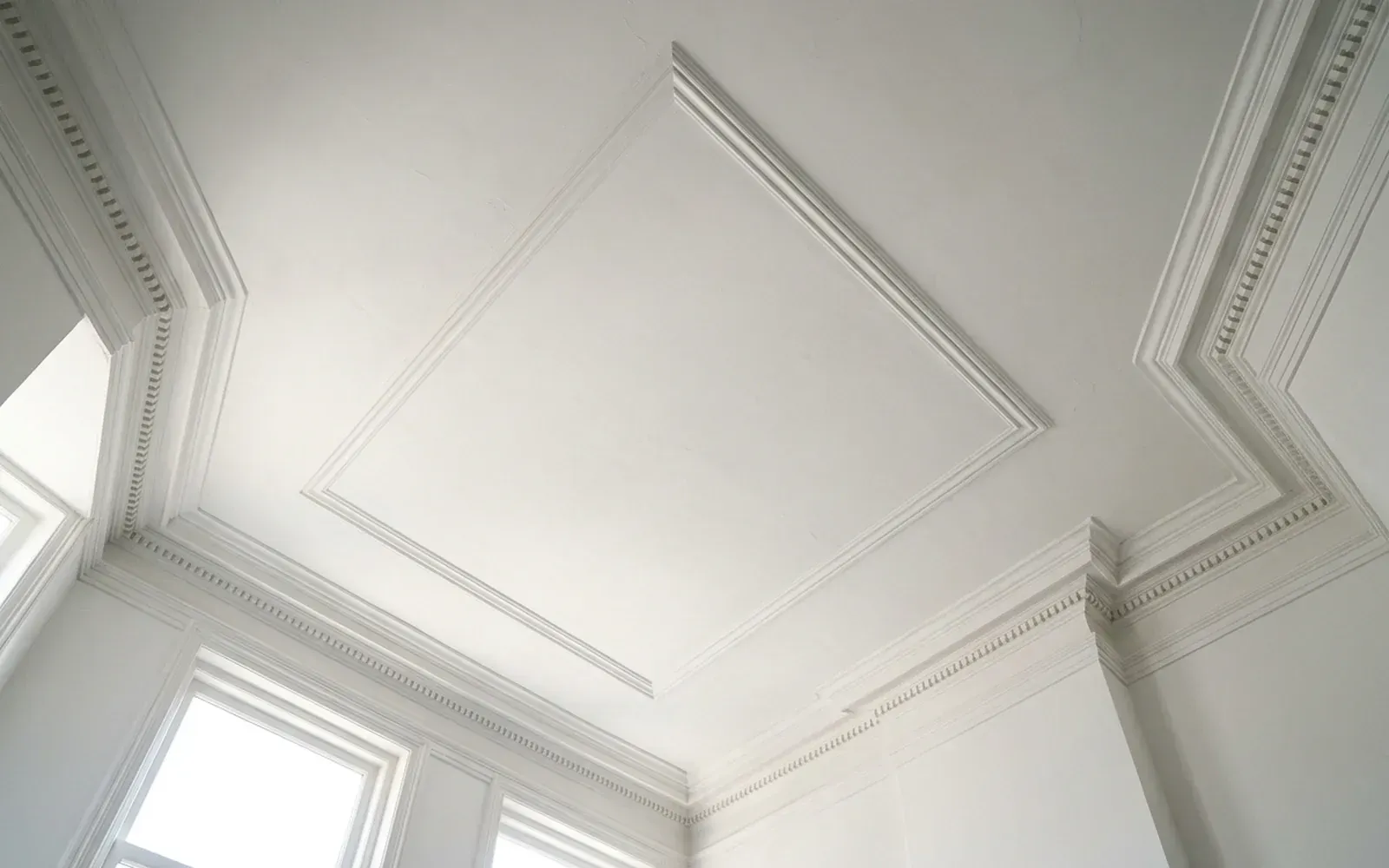
Decorative ceiling mouldings come in three forms: coving or a cornice along the walls, a ceiling panel in the middle of the ceiling and a ceiling rose around the light fitting. Coving gives a clean finish to the transition between wall and ceiling and suits almost any home. Panels and roses give a ceiling more presence and are especially suited to taller rooms or a classic interior. In every case, the profile has to suit the height of the room, and the joints must be finished invisibly.
Why decorative mouldings on the ceiling?
The ceiling is often the most forgotten surface in a room. Yet you look at it more often than you think, especially in a living room or bedroom. Ceiling mouldings:
- finish the corner between wall and ceiling, where there is often an untidy plaster joint or a small crack;
- frame the room, so it looks finished and well cared for;
- bring back character in older homes where the original mouldings have disappeared;
- can hide lighting, if the moulding is designed as a lighting cove.
Which decorative mouldings are there for the ceiling?
Coving and cornices
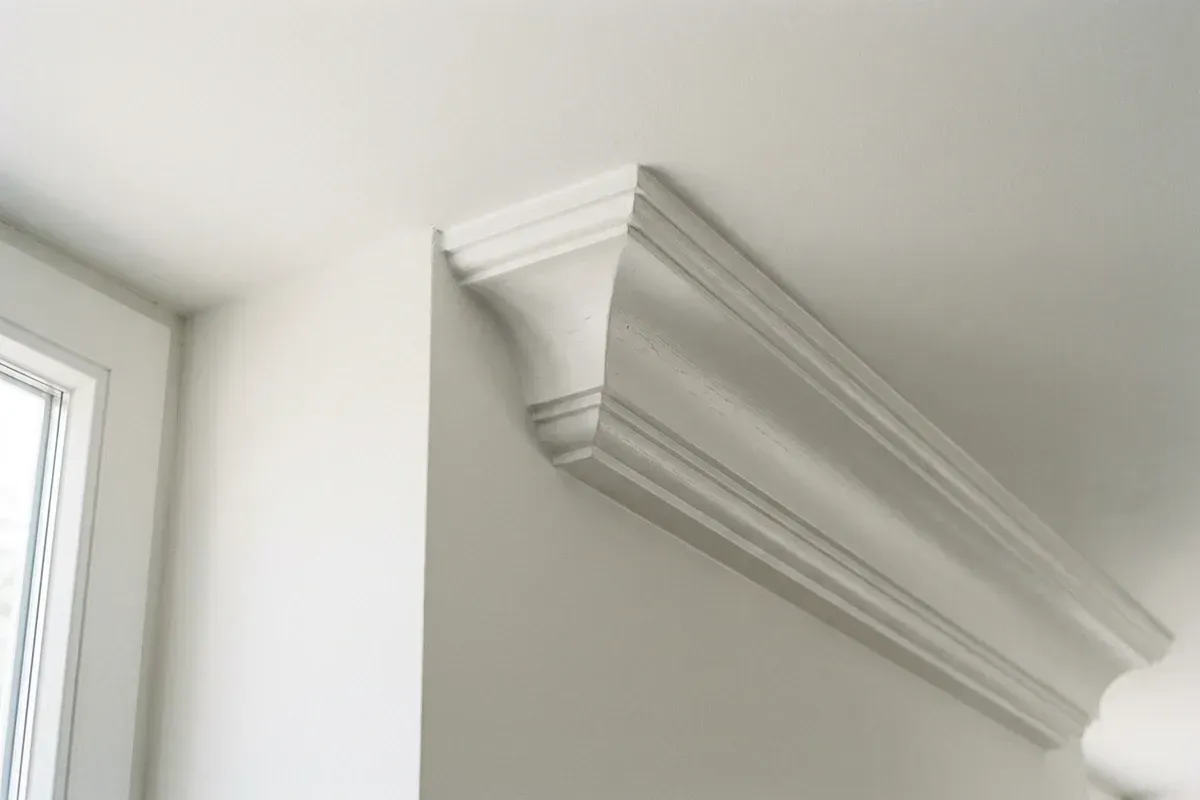
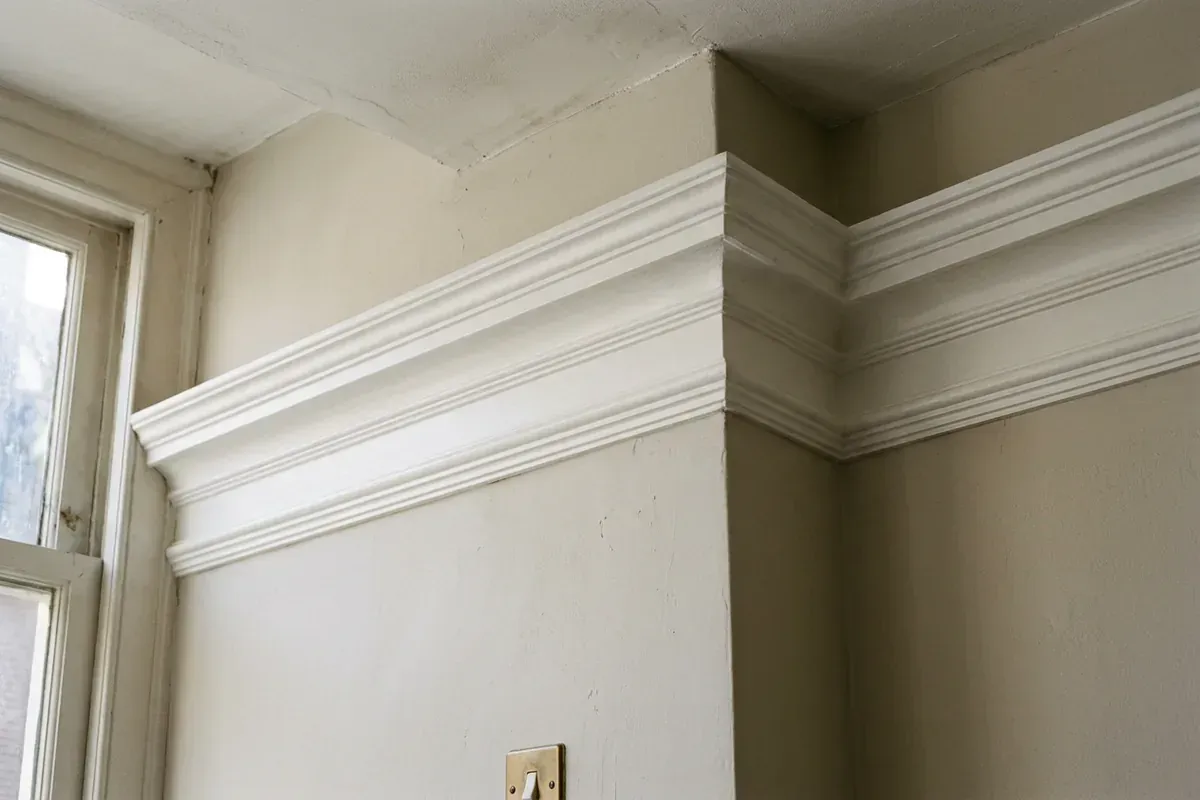
Coving runs along all the walls, in the corner between wall and ceiling. A cornice is a more richly profiled version that often extends further across wall and ceiling. In coving and cornices you can read more about profiles and sizes.
Ceiling panel
A frame of slim decorative mouldings on the ceiling itself, set some distance from the wall. It highlights a zone, for example above the dining table, above the bed or around a light fitting. A panel can also be built up in several layers, creating a coffered effect.
Ceiling rose
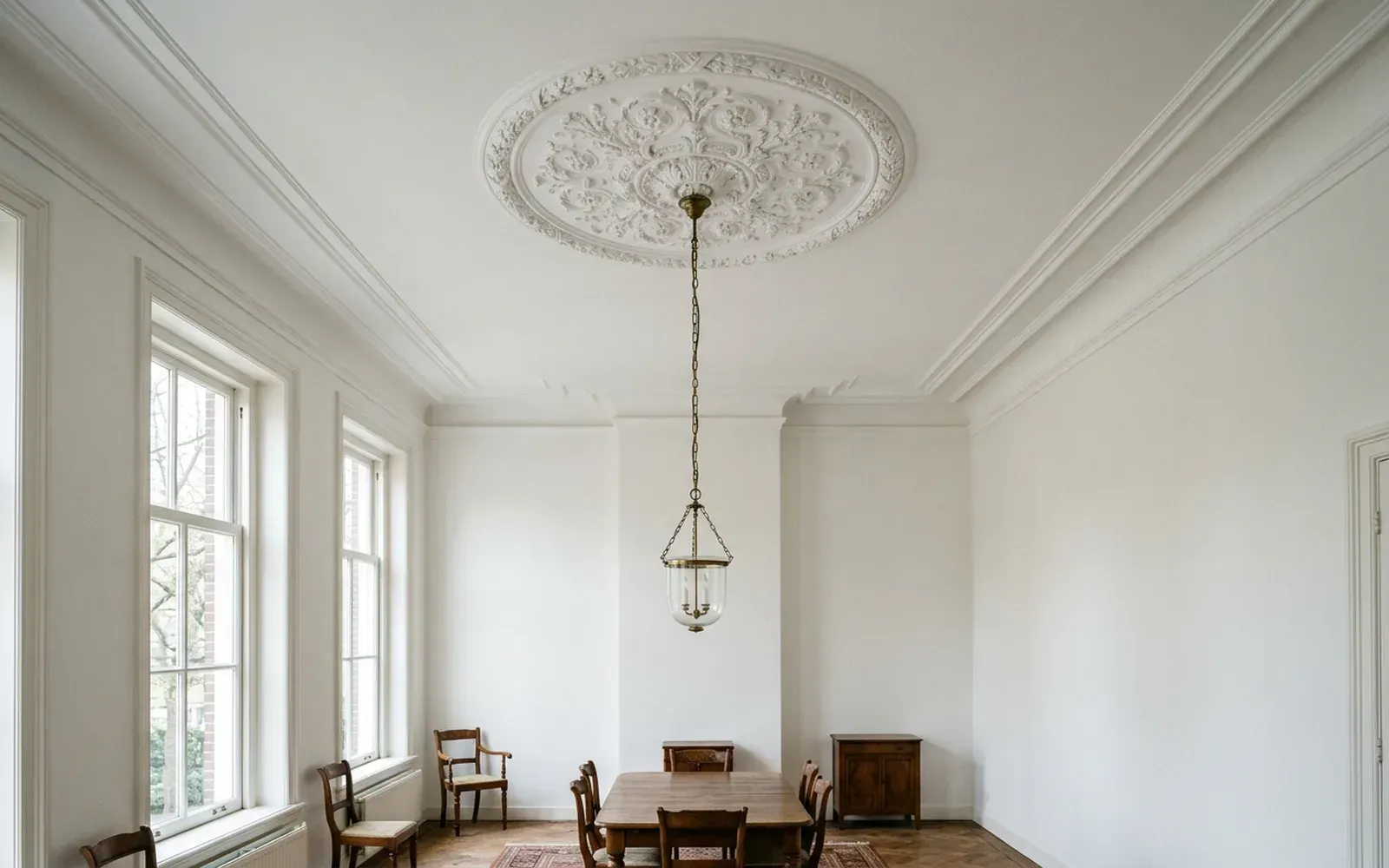
A ceiling rose is a round or oval ornament around the light fitting. It is a classic element that goes well with a cornice. You can read more about ornaments in ceiling roses and ornaments.
Lighting cove
A moulding fixed to the wall at some distance from the ceiling, leaving room behind it for an LED strip. The light then falls indirectly onto the ceiling. More on this in coving with indirect lighting.
| Element | Position | Look | Suits |
|---|---|---|---|
| Coving | Corner of wall/ceiling | Clean to classic | Almost any room |
| Cornice | Corner of wall/ceiling, wider | Classic, rich | High ceilings |
| Ceiling panel | On the ceiling | Accent, coffered effect | Living room, dining room, bedroom |
| Ceiling rose | Around the light fitting | Classic | Townhouses, 1930s homes |
Profile and proportions
The height of the room determines how much moulding the ceiling can take:
- Standard ceiling height: choose slim, simple coving, preferably in the ceiling colour. A panel is possible, but keep the profile slender.
- Higher ceilings: wider coving and cornices suit these, possibly with a panel and rose.
- Older homes: try to match the mouldings to the architectural style, for example by choosing a profile that goes with the existing door trims or architraves.
A panel is usually kept at an equal distance from all walls. In a room that is not rectangular, we look at which wall catches the eye most, so the panel looks straight.
What should you look out for when fitting?
A sound surface
A ceiling must be able to carry the weight of the moulding. On plaster over concrete, construction adhesive usually bonds well. On a plasterboard ceiling or with heavier mouldings, mechanical fixings are often used as well, for example into the joists or battens behind. Loose plaster or old layers of paint are assessed first.
Uneven ceilings and walls
Ceilings are rarely completely flat, and corners are rarely exactly 90 degrees. Coving has to follow the corner without gaps that are visible from below. Small deviations are taken up with caulk; larger ones call for adjusting the moulding or the mitre.
Mitres on internal and external corners
Coving is mitred in the corners. Because the moulding sits at an angle between wall and ceiling, this is trickier than with a skirting board. A crisp mitre really shows here, because you can see the corners of the ceiling from all over the room.
Caulking and painting
The joints between moulding, wall and ceiling are sealed with acrylic caulk. It is flexible and paintable. The moulding is then painted, usually in the ceiling colour or in the same white as the window and door frames.
Preparation: what to arrange beforehand
Ceiling mouldings are ideally fitted at the end of a renovation, but before the final painting. Think in advance about:
- Plasterwork: the ceiling and the top of the walls must be dry and finished. Fresh plaster needs time to dry out before it can be glued to and painted.
- Light fittings: the position of a ceiling rose or panel is matched to the light point. If a light point needs moving, have a qualified electrician do that first.
- Curtain tracks and blinds: coving can get in the way of a track mounted against the ceiling. Decide beforehand whether the track goes below, in front of or in a recess in the moulding.
- Floor-to-ceiling cupboards: with built-in cupboards, the coving usually runs up to the cupboard, or the cupboard is finished underneath it. This is decided before any cutting.
- Colour: coving in the ceiling colour, the wall colour or a contrast? Coving in the ceiling colour looks calmest.
Combining decorative mouldings on ceiling and wall
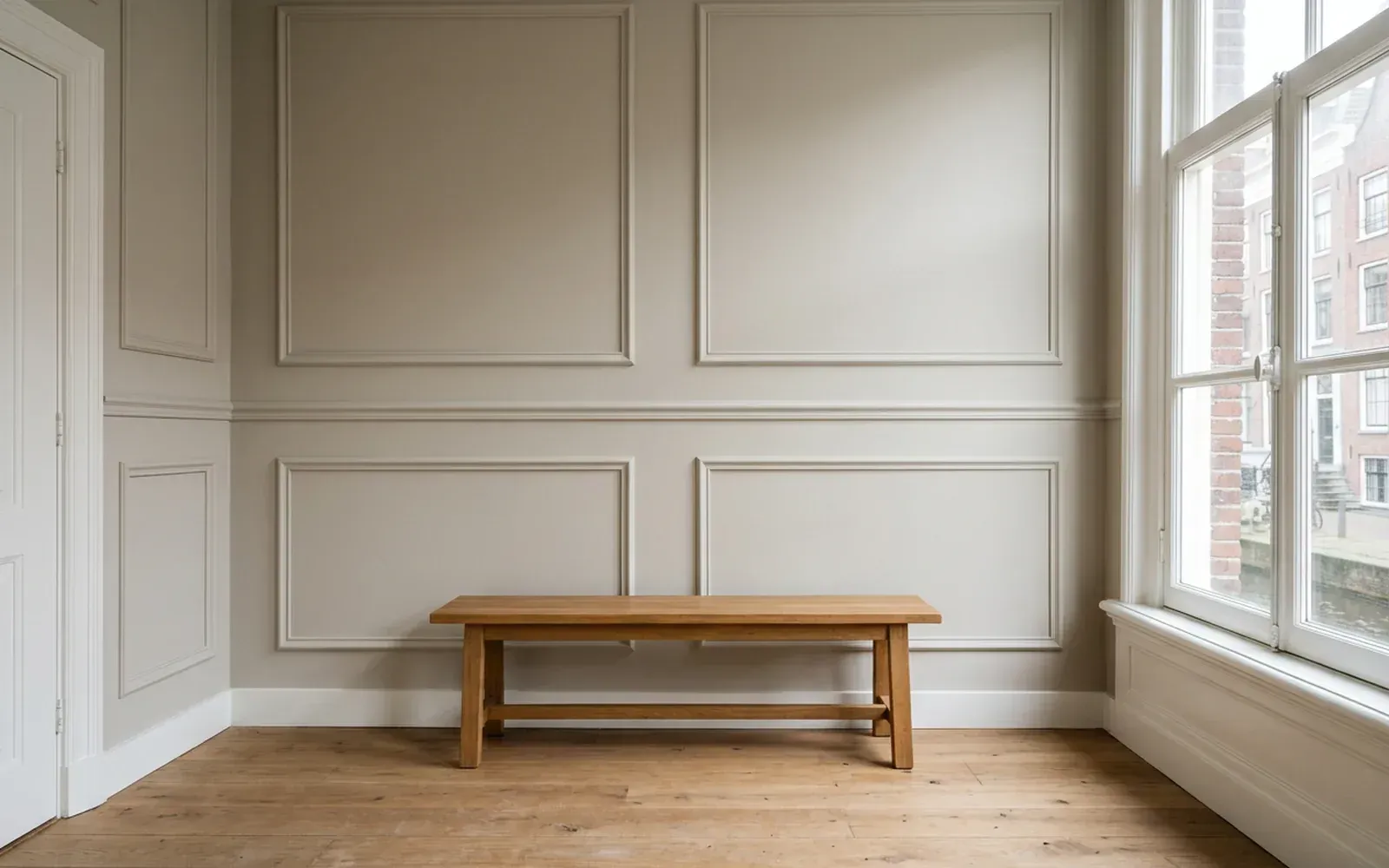
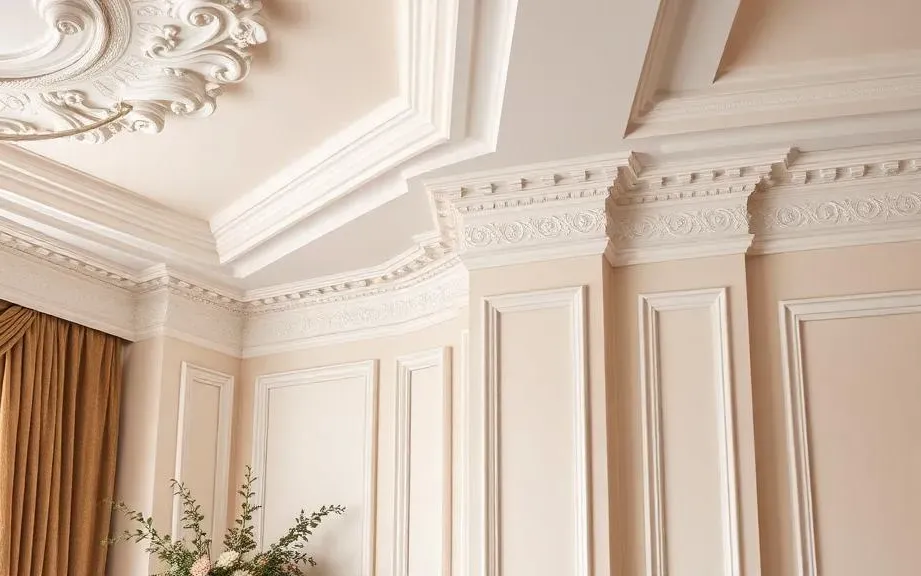
Coving and wall panels reinforce each other. Coving with moulding panels on the wall below creates a coherent whole, as also described in decorative wall mouldings. Match the profile of the coving to that of the wall mouldings and the skirting board, so everything looks as if it comes from one family.
For contractors and commercial projects
In hotels, offices and apartment buildings, ceiling mouldings are often combined with wall panels and skirting boards. TipTop Plinten, for example, handled the wall panels and decorative mouldings in a hotel in Maastricht, finished in RAL 9010. If you are working on a project as a contractor or interior fit-out company, we coordinate the schedule with the plasterer and the painter.
Having decorative ceiling mouldings fitted?
TipTop Plinten, based in 's-Hertogenbosch, fits coving, cornices, ceiling panels and decorative mouldings throughout the Netherlands. Read more on the decorative mouldings and coving page.
Send a few photos of the ceiling, the ceiling height and the dimensions of the room via the contact page. The quote is free and without obligation, and we can communicate in English, Dutch, German, Turkish, Persian or Arabic. An on-site measurement is optionally available for €75 incl. VAT; this amount is credited as a discount on jobs above a minimum project size.
Frequently asked questions
Coving runs along the walls, in the corner between wall and ceiling. A ceiling panel is a frame of decorative mouldings in the middle of the ceiling, for example above the dining table or around a light fitting. The two work well together.
Yes, provided the profile stays small and simple. Slim coving in the ceiling colour gives a neat transition without making the room feel lower. Heavy, wide profiles are better suited to high ceilings.
Usually with construction adhesive, supplemented with mechanical fixings where needed, for example with heavier mouldings or on a plasterboard ceiling. The surface must be dry, clean and sound.
Yes, with a moulding fitted at a distance from the ceiling, leaving room for an LED strip and indirect light. The electrical connection must always be made by a qualified electrician.
Often because of small movements in the building or changes in temperature and humidity. A flexible, paintable acrylic caulk in the joint absorbs part of that movement. Good preparation of the surface also helps.
Related articles
Mouldings & walls
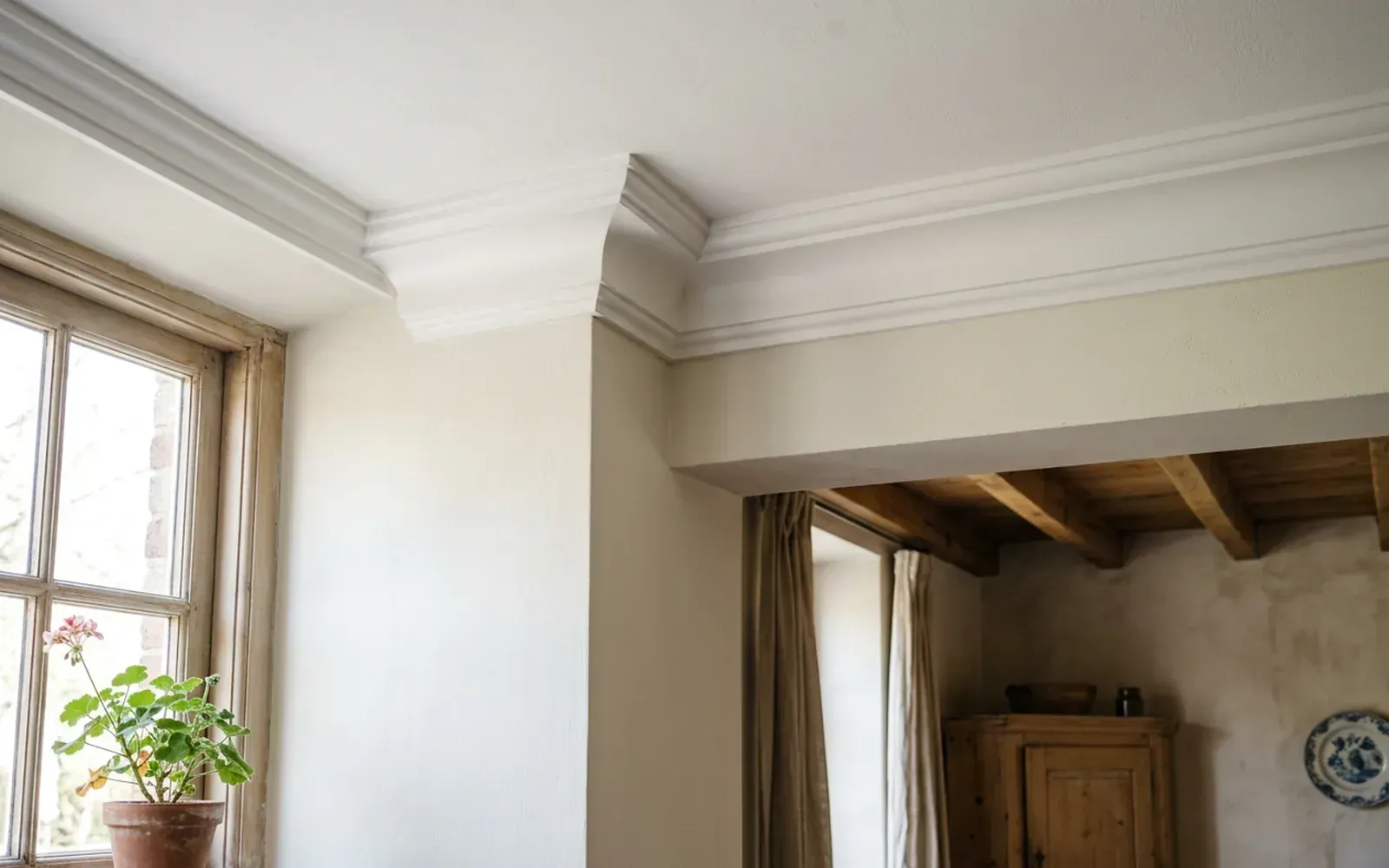
Coving and cornices: the difference, types and installation
Coving gives the transition between wall and ceiling a crisp finish and completes a room. We explain how it differs from a cornice, which profiles are available and how they are fitted.
Mouldings & walls
Ceiling roses: meaning, types and what you need to know
A ceiling rose is a round ornament around the light fitting, familiar from townhouses and period interiors. We explain where it comes from, which types there are and how to combine it with coving.
Mouldings & walls
Decorative wall mouldings: how to create panels that work
With decorative mouldings, a flat wall becomes a wall with depth and rhythm. The secret lies in the layout, the profile and the finishing of the mitres.
Related
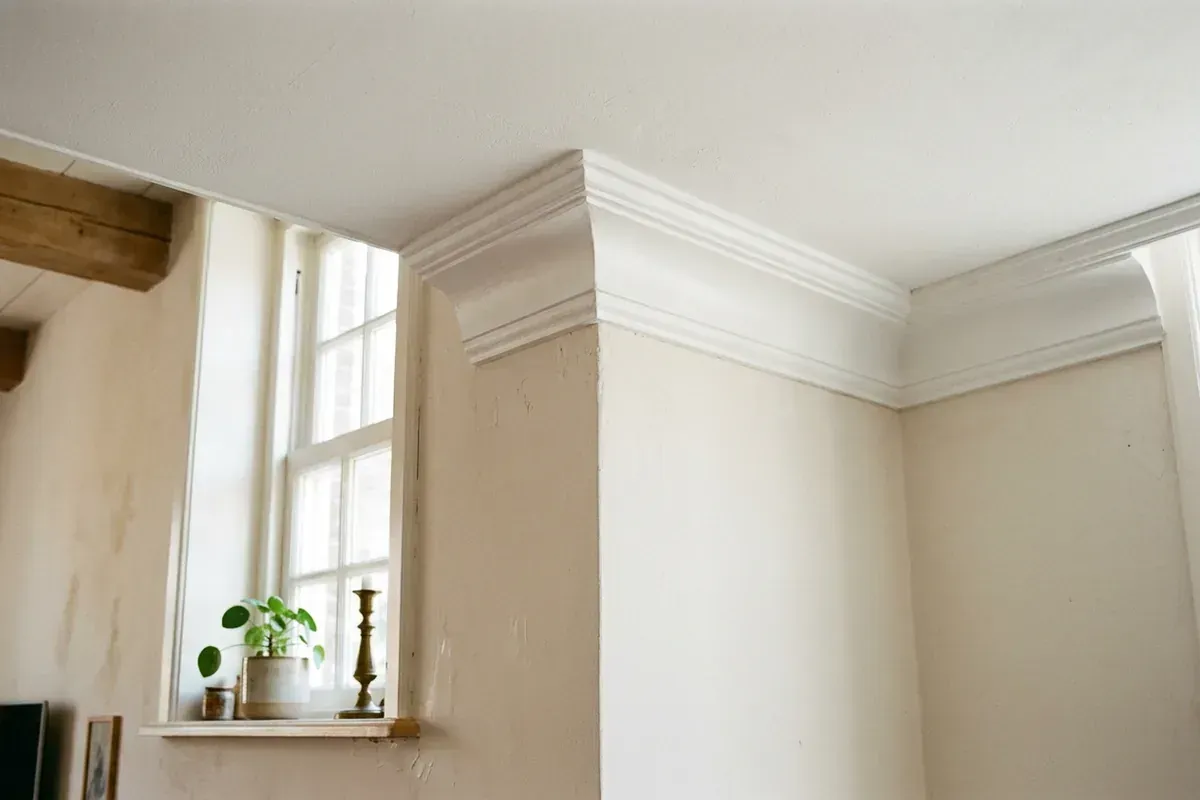
Coving
Coving finishes the corner between wall and ceiling. It hides hairline cracks and unevenness and gives a room a finished top edge.
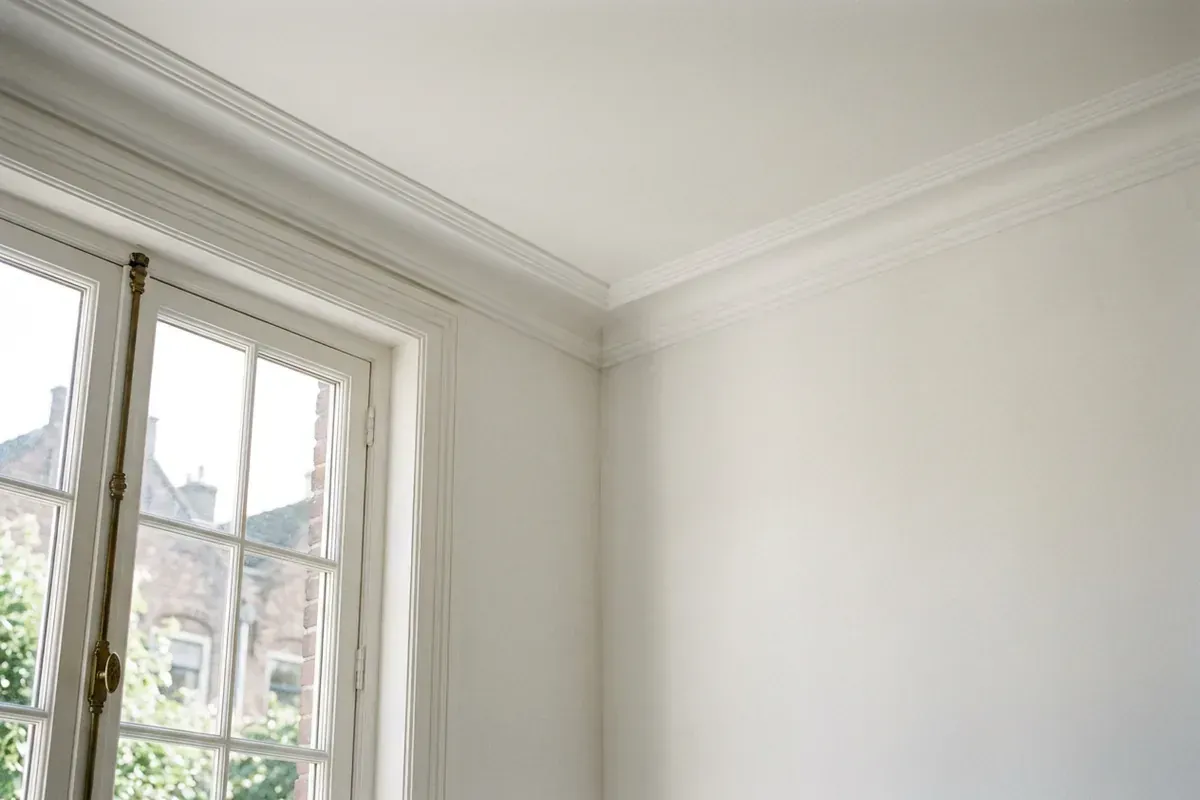
Cornice
A cornice is a richly profiled moulding that crowns the top of a wall. Indoors, it is the classic version of coving.
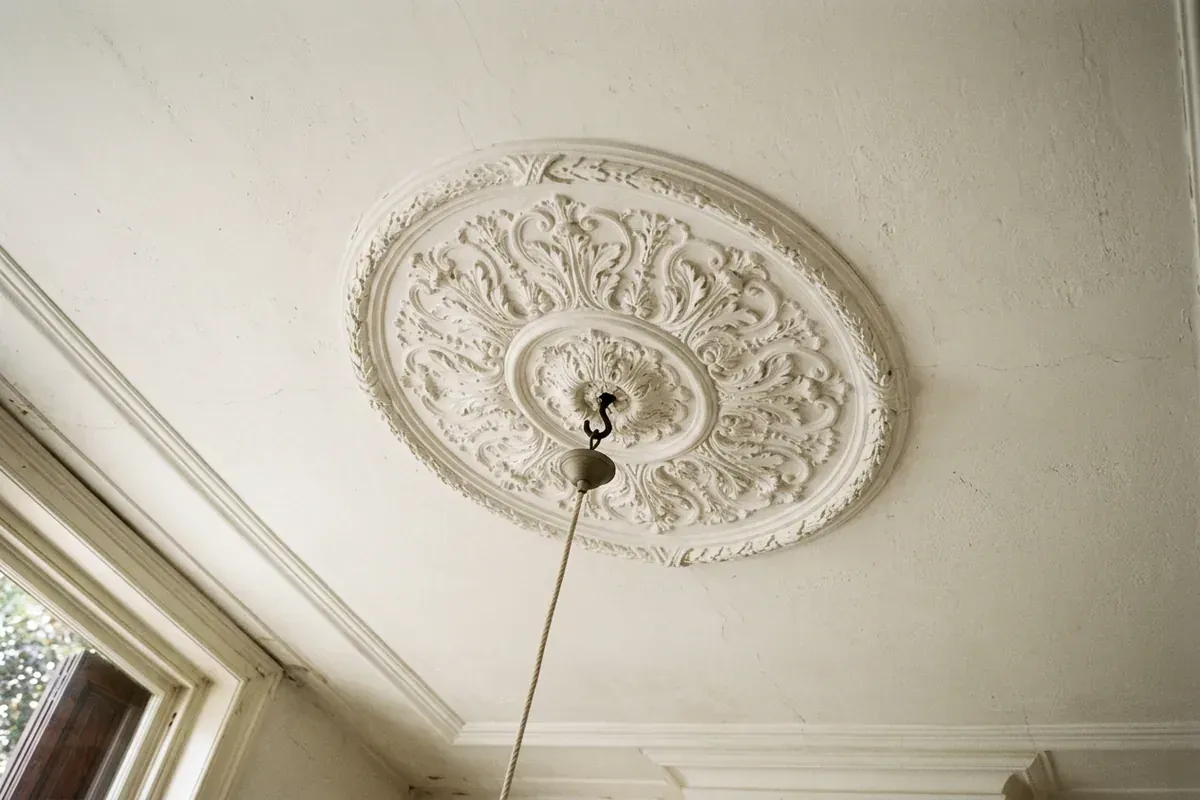
Ceiling rose
A ceiling rose is a round or decorative ornament on the ceiling, usually around the point where a light hangs. It gives a ceiling a classic centrepiece.
Decorative moulding
A decorative moulding is an ornamental profile on a wall or ceiling. It gives a room character, from classic ornament to a sleek modern line.
Acrylic caulk
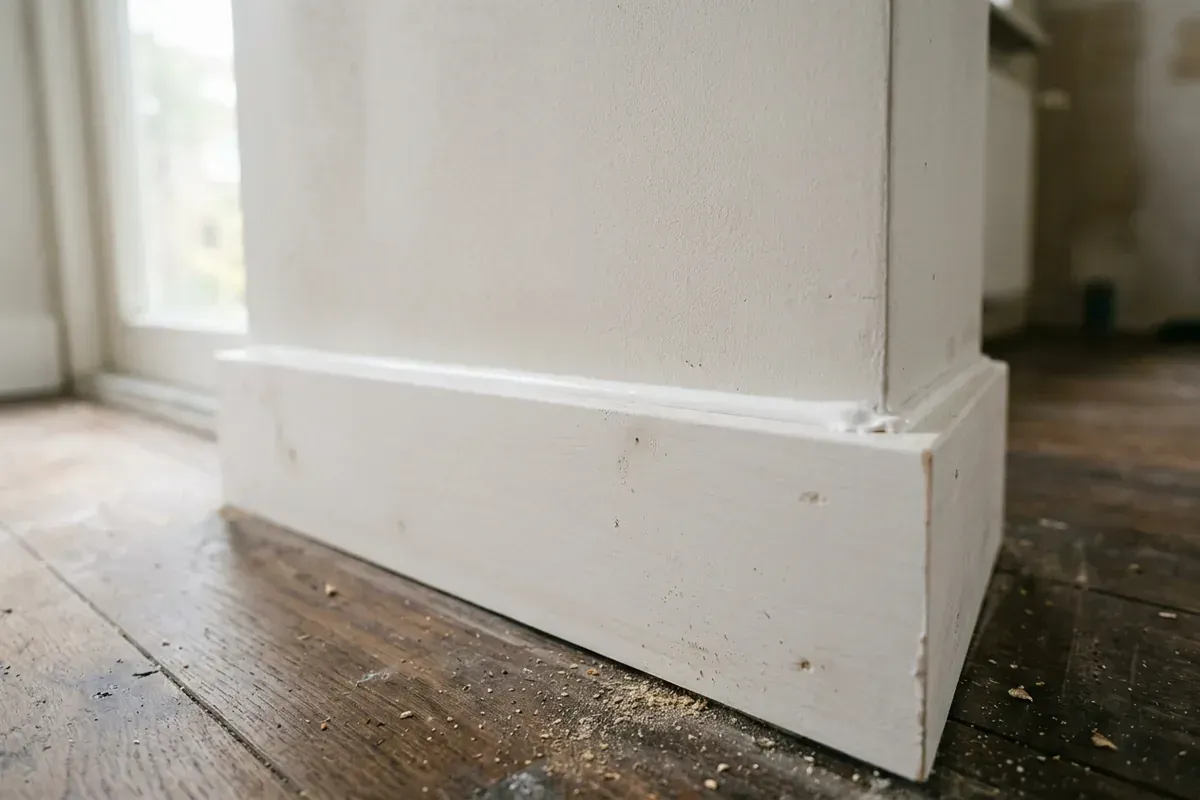
Acrylic caulk is a water-based sealant that can be painted once cured. It is the usual choice for skirting boards, mouldings and frames in dry rooms.
Decorative mouldings and coving installation
Decorative mouldings and coving give a room character. TipTop Plinten fits them in classic or minimal modern styles, with precise mitres and clean caulking.
Skirting board installation? Request a free quote
On-site measurement €75 incl. VAT (credited for orders above a minimum project size)