

Window trim is a moulding fitted around a window frame on the inside to cover the joint between frame and wall and give the window a crisp surround. A door frame is finished the same way, with an architrave or door trim. For a small, straight joint, paintable acrylic caulk is often enough; for a wider or irregular junction, such as after new frames have been fitted, a moulding gives a cleaner result. Window trim is usually made of MDF and lacquered in the colour of the frame or the wall.
Below you can read when window trim is needed, what the options are and how finishing frames on the inside is done.
Why is the junction between frame and wall often untidy?
A frame is set into the wall opening and then finished on the inside. Irregularities often appear in the process:
- New frames. After frames are replaced, the plaster around the frame is damaged or a piece is missing.
- Movement. Frame and wall move a fraction differently, which can crack a caulk joint.
- Old buildings. Walls are not always square to the frame, resulting in a joint of varying width.
A moulding covers that transition and provides a straight, finished edge.
What are the options for finishing a frame on the inside?
| Solution | When suitable |
|---|---|
| Caulk joint only | Small, straight joint between frame and a flat wall |
| Narrow cover strip | Joint just too wide for caulk, understated look |
| Window trim or architrave | Untidy junction, or a deliberate surround for the window |
| Plastering the reveal | In larger renovations, work for the plasterer |
Caulking only
If the joint is narrow and straight, a neat caulk joint with paintable acrylic caulk is often sufficient. The joint is painted in the colour of the frame or the wall. Read more on our caulking service page.
Cover strip
A cover strip is a narrow, flat strip that covers a joint. It is understated and suitable if you do not want a clear surround, but a caulk joint is not enough.
Window trim or architrave
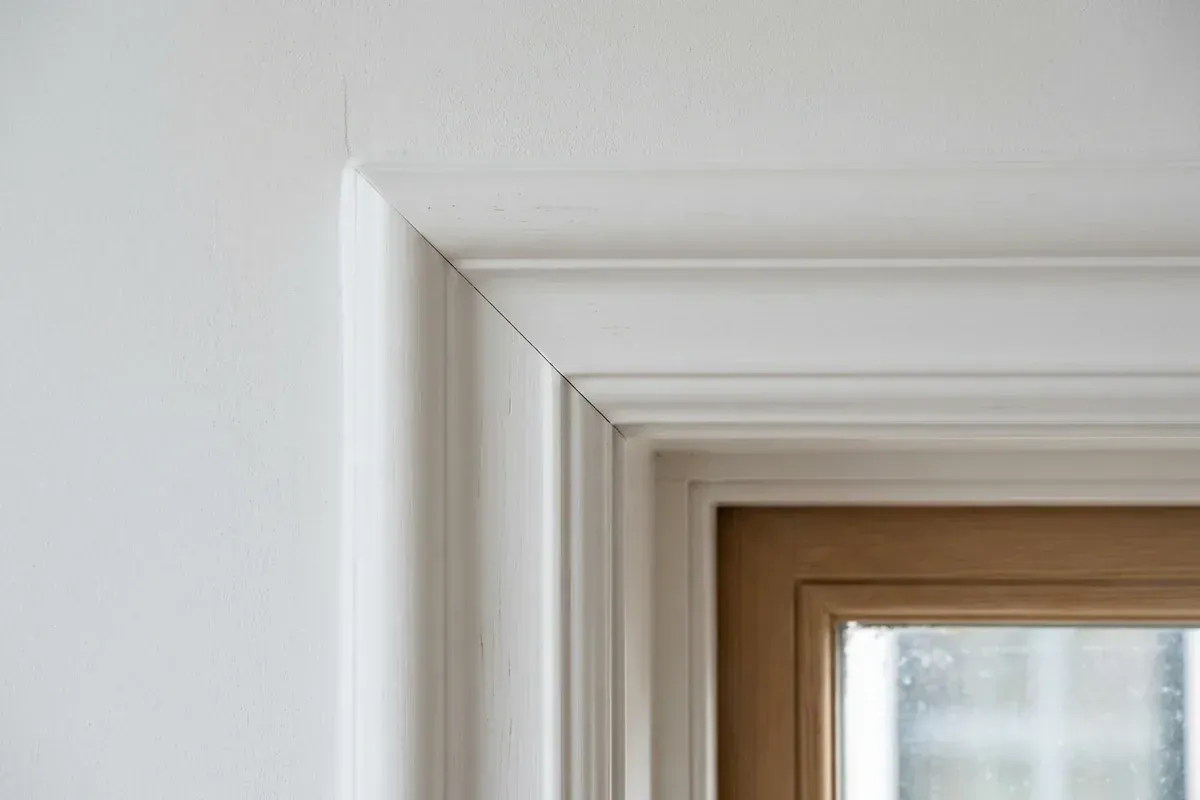
Window trim is in effect an architrave around a window. It sits on the wall and against the frame, and runs all the way round with mitred corners. That gives the window a clear, finished surround. You can read exactly what an architrave is in what is an architrave?.
Window trim: what to look for
Profile and width
Window trim can be straight and crisp, or have a profile that matches your skirting boards and door trim. In a modern interior, a narrow, straight moulding is often chosen. In a classic interior, a wider profile suits. Preferably choose the same profile as around the doors, so the mouldings form one whole.
Window sill
Many windows have a sill at the bottom. The trim then runs down the sides onto or against the sill, and across the top with mitres. Sometimes a moulding also runs beneath the sill. The junction between trim and sill calls for precision, because it is clearly visible at eye level.
Moisture and condensation
Windows are the coldest spot in a room. With older glazing or in damp rooms, condensation can run down the frame. In those situations moisture-resistant MDF can be a sensible choice, with a well-painted and caulked junction. If condensation persists, it is wise to have the cause looked at.
Finishing a door frame
Finishing a door frame follows the same principle as a window, with a few differences:
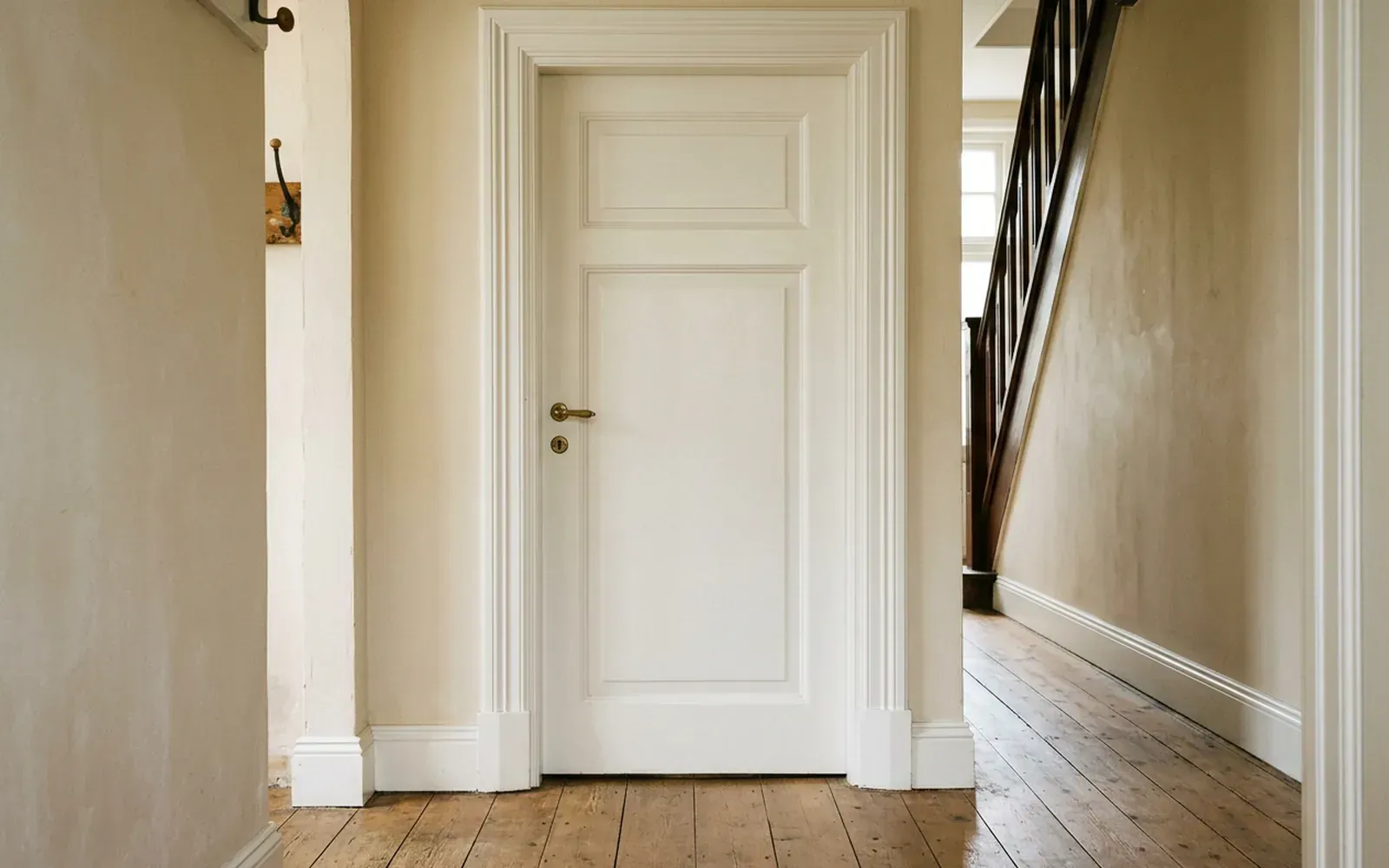
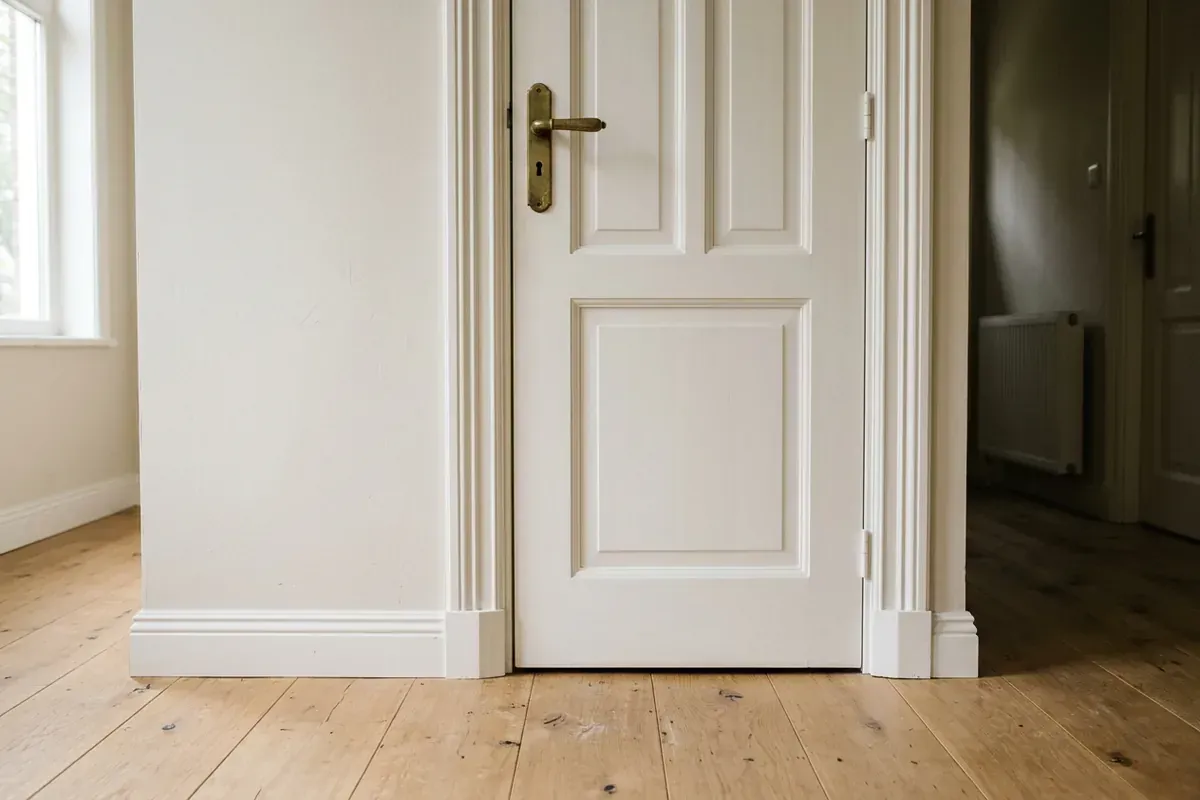
- Around three sides. The architrave or door trim runs along both jambs and across the top.
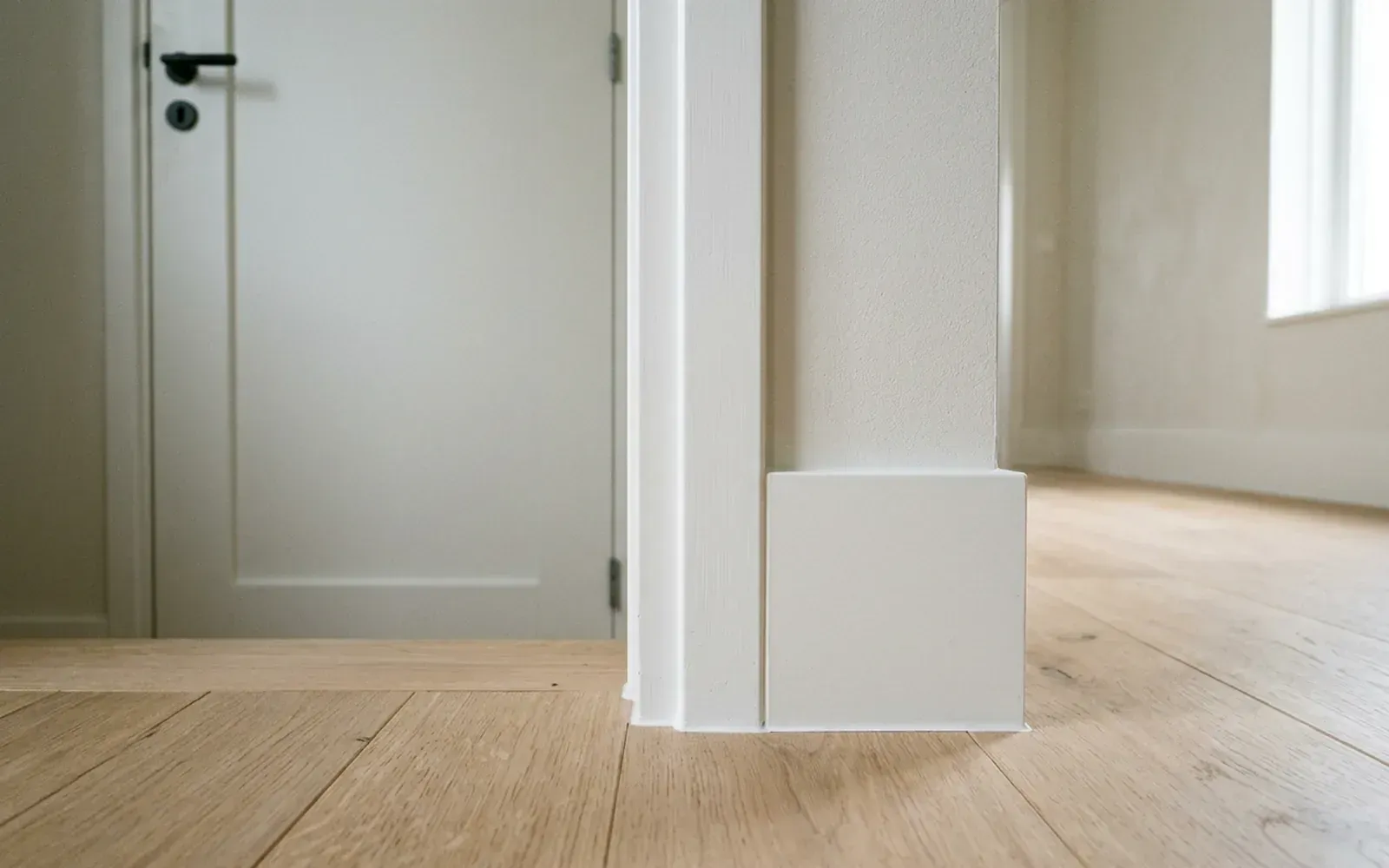
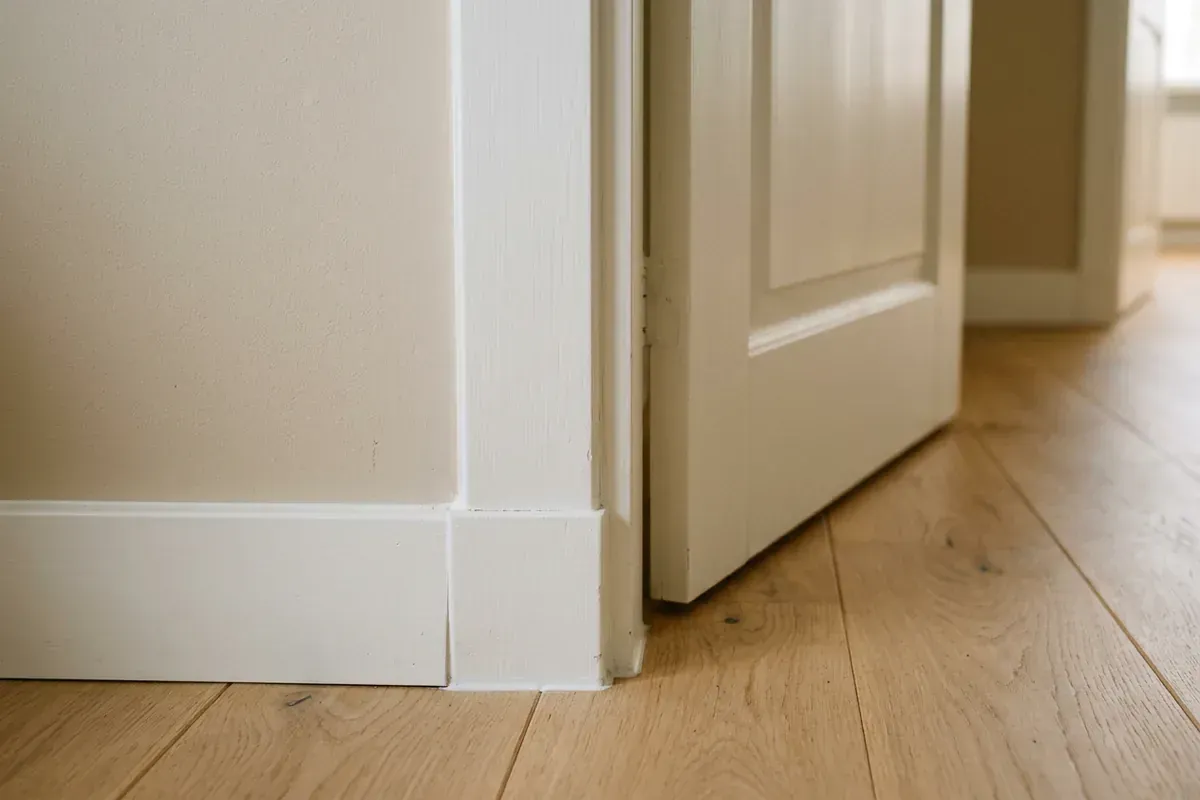
- Junction with the skirting. At the bottom, the skirting stops against the architrave. The architrave is preferably slightly thicker than the skirting, so the skirting runs neatly up to it.
- Use. Mouldings around doors get knocked more often. Firm fixing and a good coat of paint are important there.
You can read more about door trim and finishing door frames in finishing door trim and frames. TipTop Plinten fits architraves around doors, frames and openings.
How is the finishing done?
- Measure. The frame is measured all round, including the corners. Old frames are not always square.
- Cut the mitres. The mouldings are cut to size and the corners are mitred to fit.
- Fix. The moulding is fixed to the wall and frame, with adhesive, mechanically or a combination, depending on the surface.
- Finish. Joints are caulked with acrylic caulk, fixing points filled and touched up, and the moulding is finished in colour.
Colour of the window trim
It is common to have window trim in the same colour as the frame, so that trim and frame form one whole. Trim in the wall colour makes the surround fade away instead. A contrasting colour, for example black with a white frame, turns the window into a deliberate accent. Here too, any RAL colour is possible.
Window trim as a decorative element
Window trim does not only have to cover a joint. In an interior with decorative mouldings or wall mouldings, profiled window trim can carry the style through. You can read how mouldings work in a modern interior in decorative mouldings in a modern interior.
After new frames: the right moment
When new frames are fitted, the order matters. First the frame is installed and sealed on the inside. Then any plaster around the frame is repaired, and it needs to dry properly. Only then are window trim or architraves fitted, caulked and painted. Fitting the mouldings too early risks moisture from fresh plaster affecting the finish, or joints cracking later.
Tips before you start
- Let plaster dry first before mouldings are fitted to it.
- Choose one profile for windows and doors in the same room.
- Mind window handles and hinges: the trim must not obstruct the window opening.
- Think about curtain rails and blinds: plan their fixing so it does not have to go through the trim.
Having window trim or frames finished?
Take a look at our architraves service or send photos of the windows and frames via the contact page, with an indication of the sizes and the colour you want. The quote is free and without obligation. An on-site measurement is optional for €75 incl. VAT, credited as a discount on jobs above a minimum project size. We are happy to communicate in English, as well as Dutch, German, Turkish, Persian and Arabic.
Frequently asked questions
Window trim is a moulding fitted around a window frame on the inside. It covers the joint between frame and wall and gives the window a finished edge. In effect, it is an architrave around a window instead of a door.
Mainly when the junction between frame and wall looks untidy, for example after new frames have been fitted, when the plaster around the frame is damaged, or when you want to give the window a clearer surround.
With an architrave or door trim around the frame, which covers the joint between frame and wall. The skirting board stops against the architrave at the bottom. Small joints are sealed with paintable acrylic caulk.
MDF is widely used, because it is dimensionally stable and can be lacquered in any RAL colour. For windows with a lot of condensation, moisture-resistant MDF can be a sensible choice. Solid wood suits wooden frames that stay visible.
For a small, straight joint between the frame and a flat wall, caulk is often enough. With a wider or irregular junction, a moulding gives a cleaner and more durable result.
Related articles
Mouldings & walls
What is an architrave? Meaning, types and fitting
An architrave is the moulding that frames a door or window. It covers the joint between frame and wall and largely determines how a door looks. We explain which types there are and how they are fitted.
Installation & finishing
Finishing door trim and frames: how to get a crisp doorway
You finish the gap between frame and wall with door trim, a cover strip or neat caulking. We list the options and show how skirting, frame and trim come together neatly.

Mouldings & walls
Decorative mouldings in a modern interior: how to use them with style
Decorative mouldings are not just for period properties. With a calm profile and the right colour, they give a modern interior depth and a refined look. Here is how to use them.
Related
Architrave
An architrave is the moulding fitted around a door or window frame. It covers the joint between the frame and the wall and gives the opening a surround.
Frame
A frame is the fixed surround in the wall in which a door or window hangs. For a crisp interior, the junction with the wall and skirting matters.
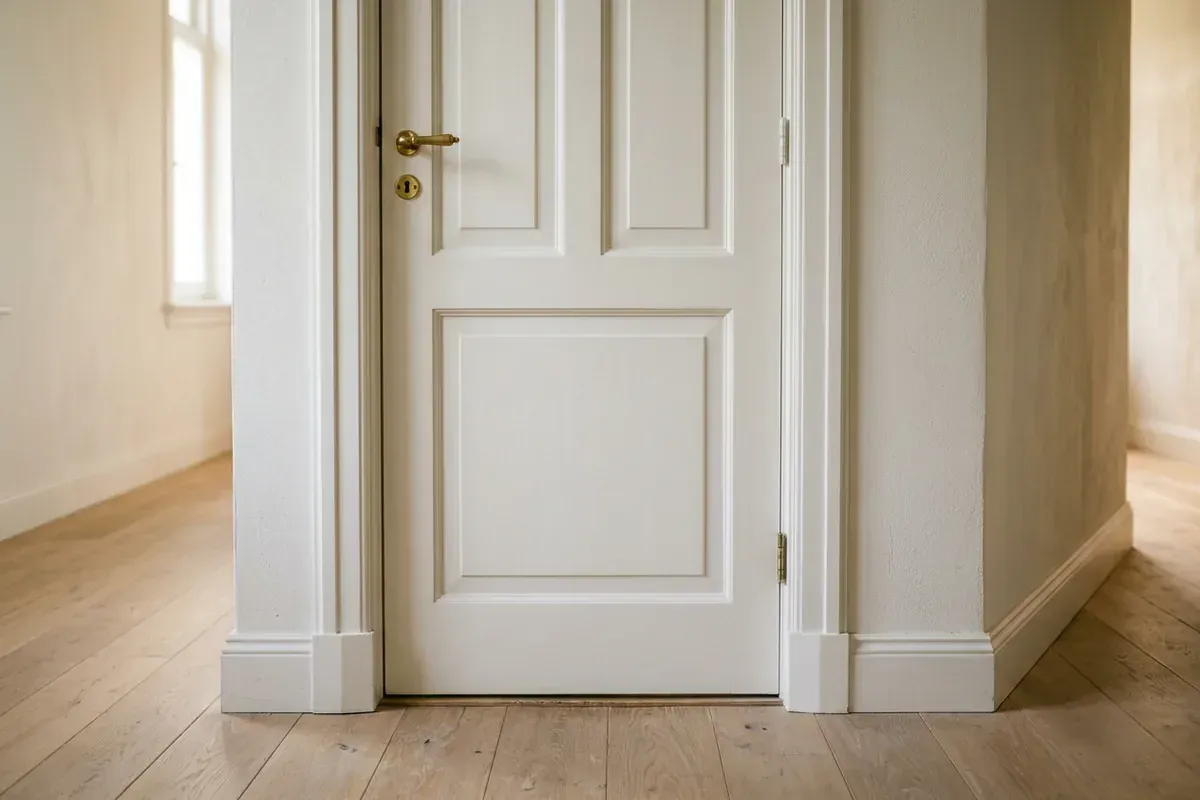
Door trim
A door trim covers the joint between the door frame and the wall. It creates a neat, straight transition around the door.
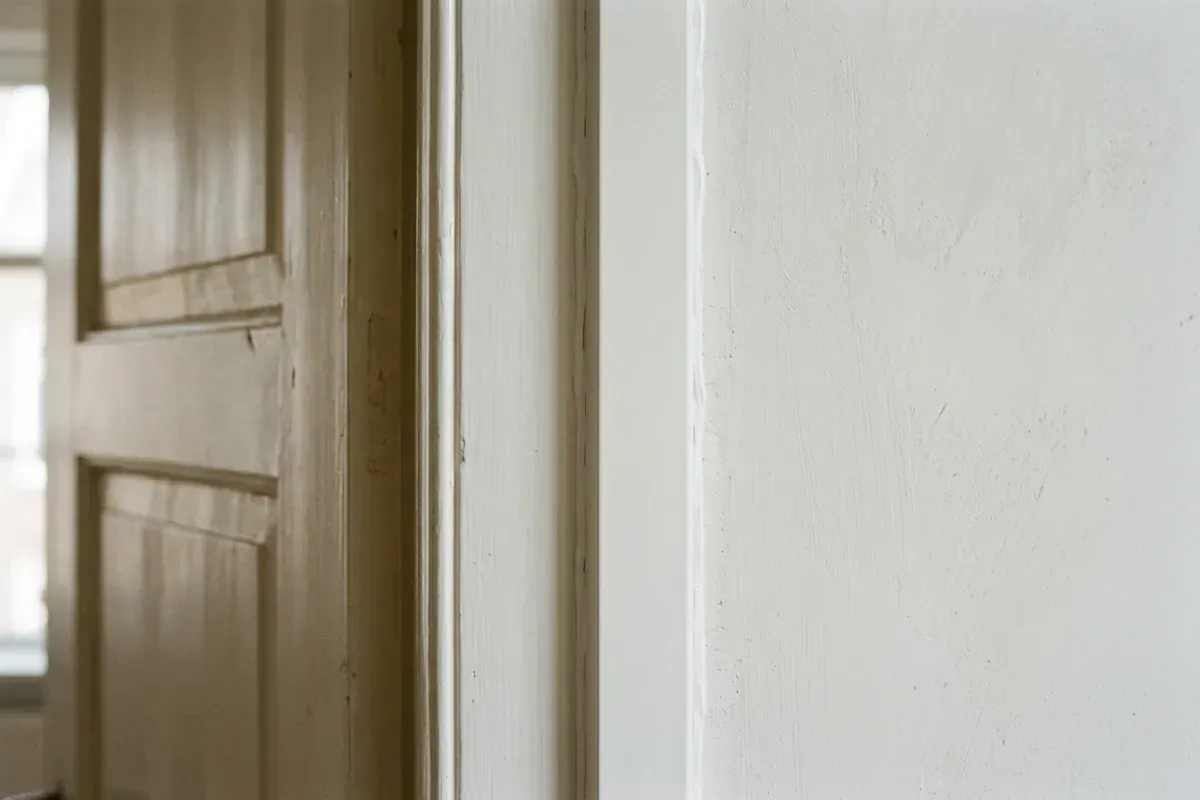
Cover strip
A cover strip is a narrow, often flat trim that covers a joint or gap, for example between a frame and the wall or along the edge of a floor.
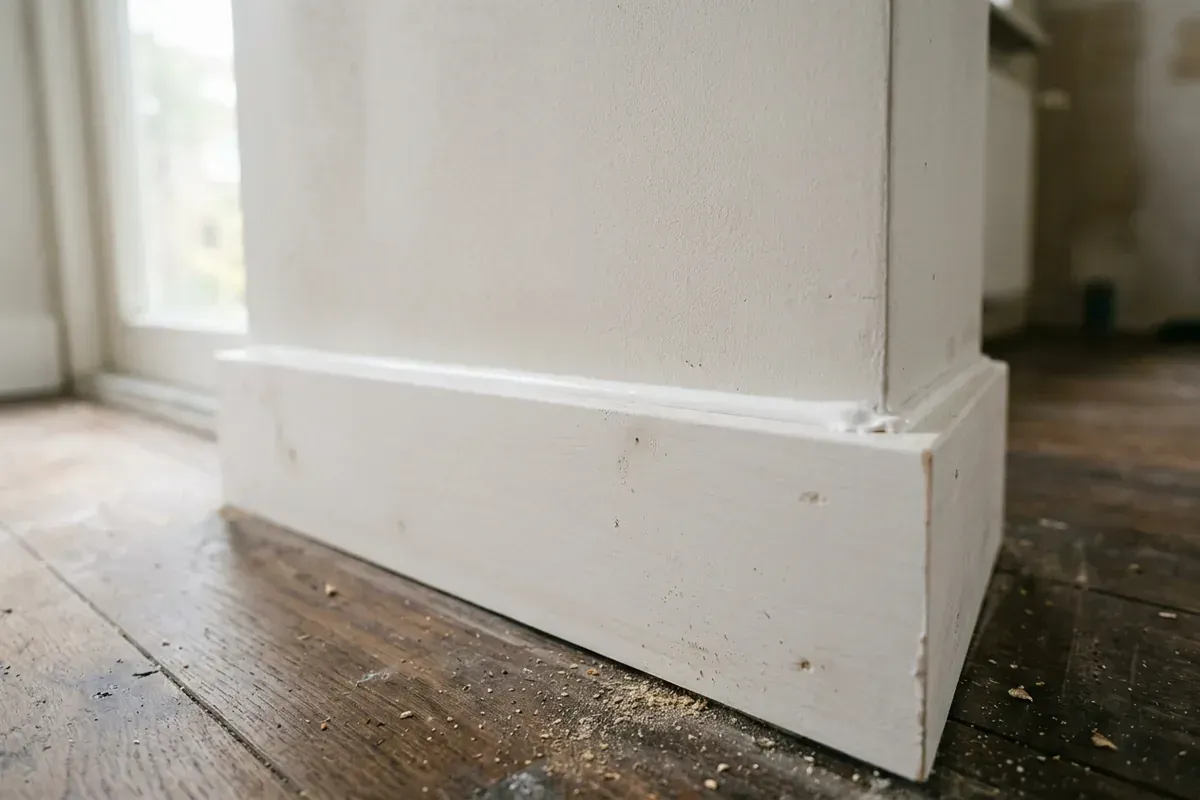
Acrylic caulk
Acrylic caulk is a water-based sealant that can be painted once cured. It is the usual choice for skirting boards, mouldings and frames in dry rooms.
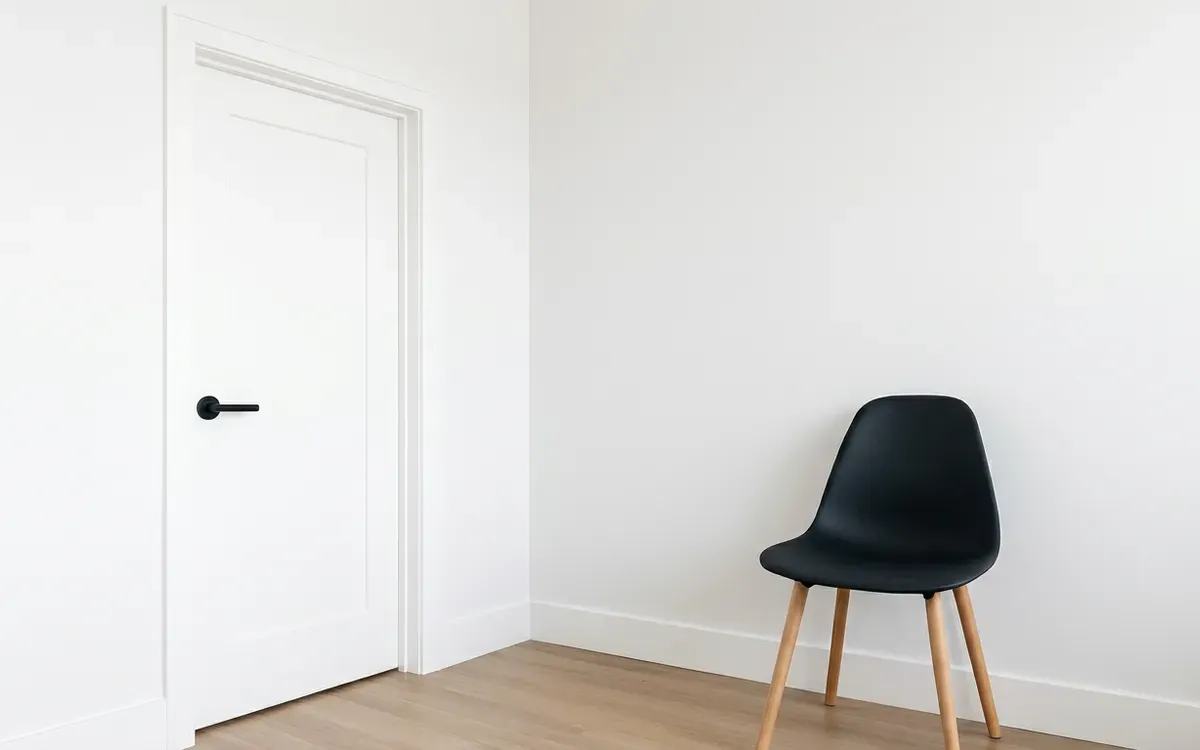
Architrave fitting around doors, frames and openings
An architrave gives a door or opening a neat surround and covers the joint between frame and wall. TipTop Plinten fits made-to-measure architraves.
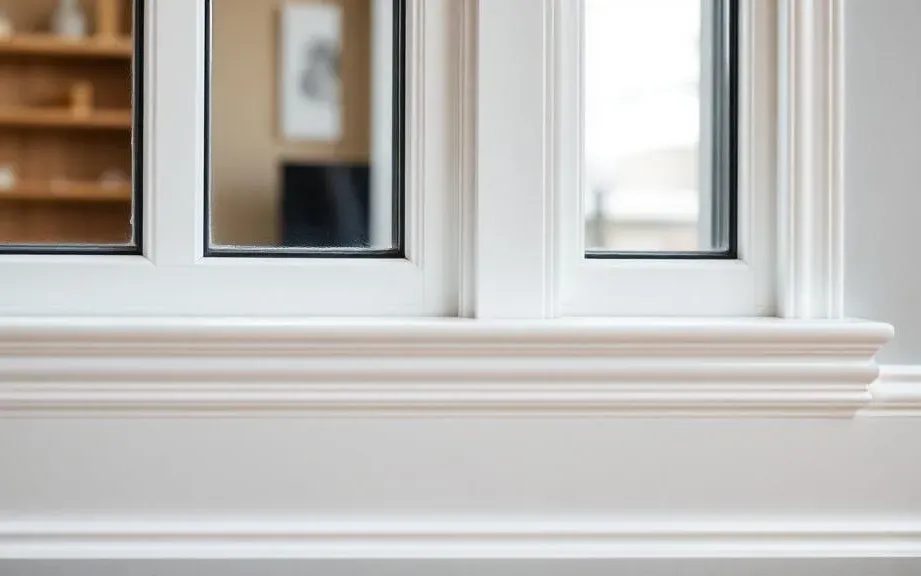
Caulking skirting boards and sealant work for a seamless finish
Caulking is the final step that makes skirting boards, mouldings and panels look seamless. TipTop Plinten uses acrylic or silicone, paint-ready or in colour.
Skirting board installation? Request a free quote
On-site measurement €75 incl. VAT (credited for orders above a minimum project size)