
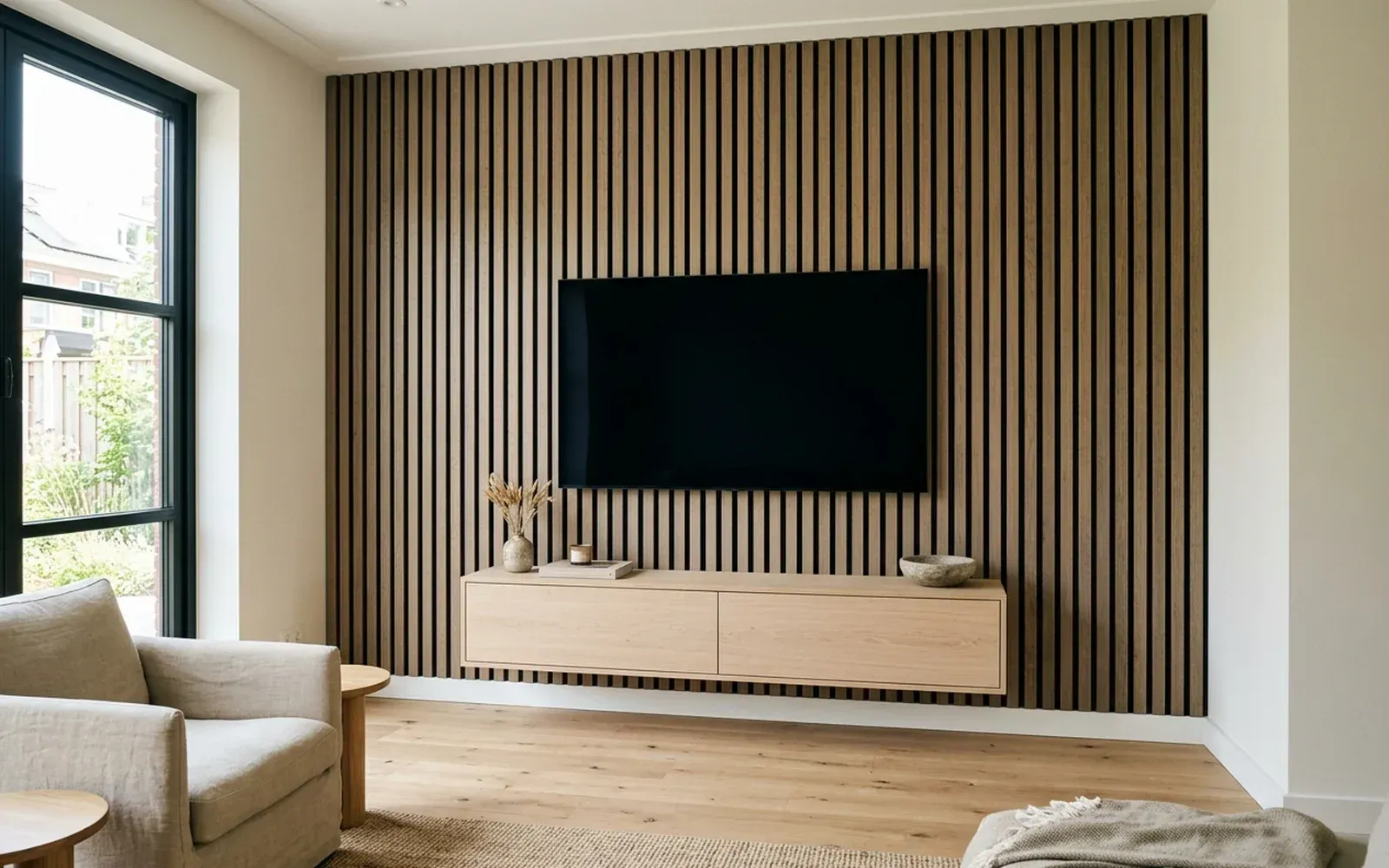
A wall panel behind the TV turns a corner full of cables into a calm, finished wall. It works best if you arrange three things beforehand: a cable route behind the panel, a secure fixing for the TV bracket in the wall (not just in the panel) and the right position for sockets and connections. Acoustic slats on felt are the most popular choice: they give the wall depth and reduce echo. A dark panel lets the black screen blend into the wall; a light panel provides contrast.
Why a panel behind the TV?
The TV is often the largest object in the living room, and when it is off, a black rectangle on a white wall. A wall panel gives the TV a frame. It also solves a practical problem: cables, plugs and devices get a fixed place, out of sight.
Which panels suit a TV wall?
Acoustic slats
Wooden or wood-look slats on felt are the most popular option. They add rhythm and warmth, and the acoustic panel dampens part of the echo. That can make speech in films and series sound clearer. You can read more about how they work in acoustic wall panels: what do they deliver?.
Smooth painted panels
A clean wall of painted MDF, possibly with a recess or a set-back area where the TV will hang. This looks calm and architectural, and is possible in any RAL colour.
Dark or light?
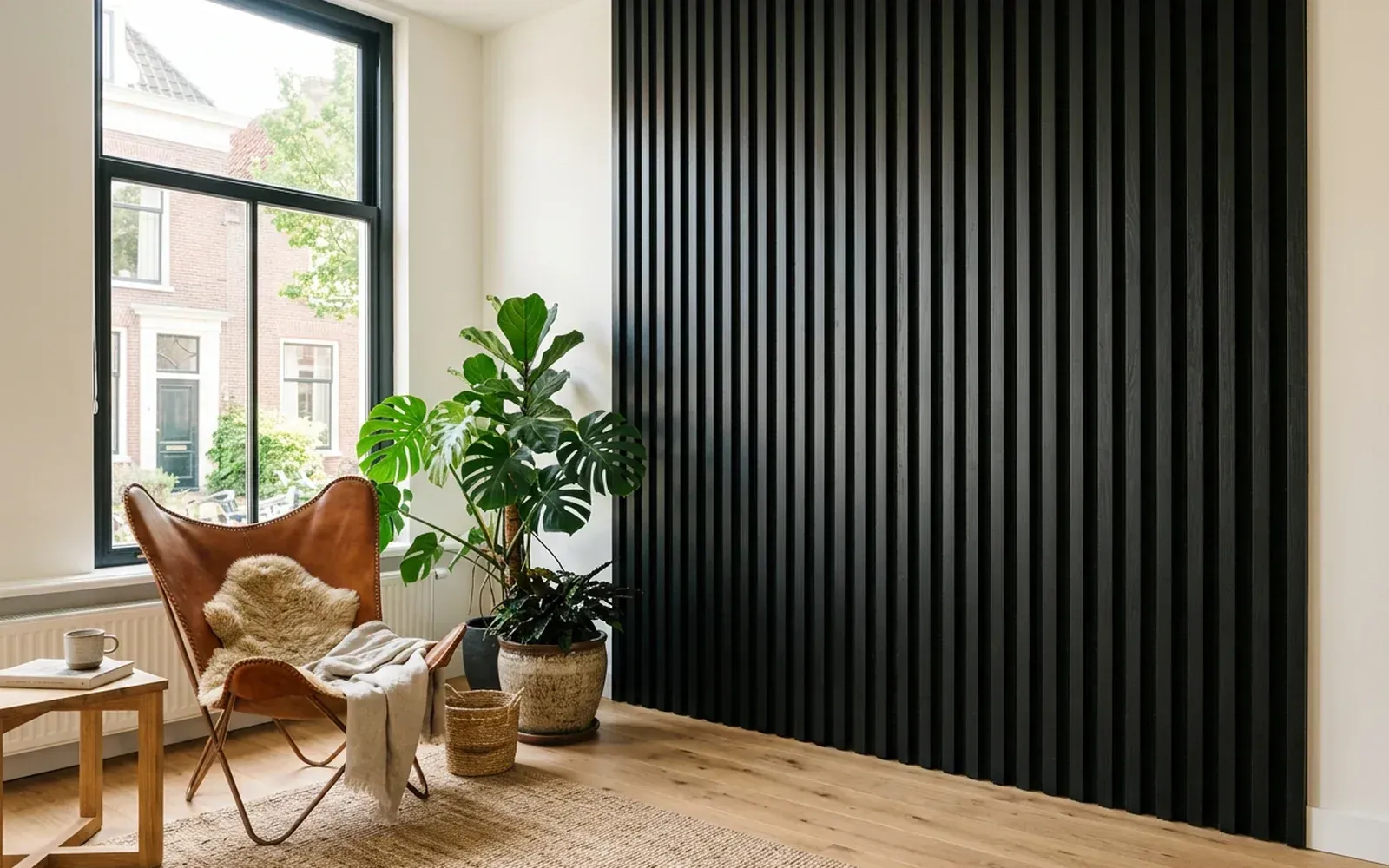
- Dark (black, smoked oak, anthracite): the TV disappears into the wall when it is off. Read more in black slatted wall.
- Light (natural oak, white): fresher and airier, with the TV as a clear element. See also white wall panels.
Preparation: what to arrange beforehand
1. The position of the TV
First decide exactly where the TV will go: height, centre line and size. Many people hang a TV too high. A common starting point is for the centre of the screen to be roughly at eye level when you are sitting on the sofa. The panel is then matched to the TV, not the other way round.
2. Fixing the bracket
A TV bracket carries considerable weight, and with a swivel arm it also has to withstand leverage. The bracket should be fixed into a load-bearing wall. With slats on felt, the fixing usually goes through the panel into the wall, sometimes with spacers so the bracket sits flat against the panel. With a panel on battens, extra reinforcement can be added where the bracket goes. Always follow the bracket manufacturer's instructions.
3. The cable route
Think about every cable: power, HDMI, network, aerial, soundbar and perhaps a games console. Options:
- A cable entry behind the TV, so cables disappear into the wall directly behind the screen;
- A channel or conduit behind the panel, from the TV to the unit below;
- An exit by the TV unit, where the devices sit;
- A skirting board with a cable channel for cables that need to run along the floor to another spot. See skirting boards with a cable channel and cable skirting in the glossary.
Ideally include a spare conduit or draw wire, so you can add a cable later without dismantling the panel.
4. Power and connection points
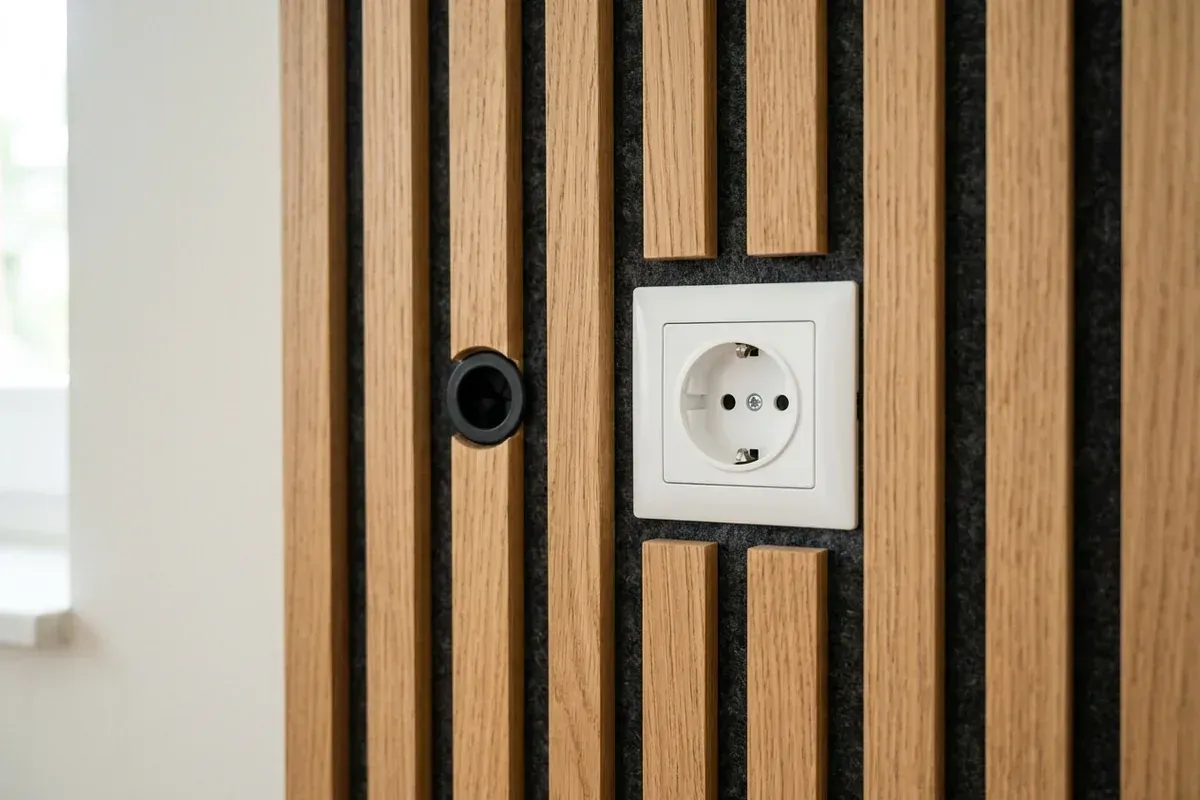
A socket behind the TV avoids a power cable visibly running down the wall. Always have new or relocated electrical points installed by a qualified electrician before the panel is fitted. TipTop Plinten makes the cut-outs in the panel; the electrical work is for the electrician.
Layout and dimensions
- Larger than the TV. The panel should extend clearly beyond the TV on all sides. The width of the TV unit is often used, or the full wall.
- Symmetry. The TV ideally hangs centred on the panel. With slats, the layout is chosen so that the centre line of the TV falls neatly.
- Ceiling and floor. A panel from skirting board to ceiling looks like one with the room. A panel that stops somewhere halfway needs a neatly finished top edge.
- Cut-outs. Cable entries and sockets look best between two slats or exactly behind the TV, where you cannot see them.
Lighting behind or around the TV
Indirect lighting behind the TV or along the edges of the panel gives a soft glow and can make the screen contrast more comfortable in a dark room. That also calls for preparation: where does the power supply go, where does the LED strip run, and how is it switched? A qualified electrician makes the electrical connection.
Joints with skirting board and furniture
Under the panel, the skirting board continues or the panel ends at the floor. With a floating TV unit, it is useful if the cables come out of the wall behind the unit, so you cannot see them. With a freestanding unit, a cable entry behind the unit is enough.
Common mistakes with a TV wall
- Fitting the panel before the TV position is fixed. The cable entry and bracket then end up in an awkward spot later, and the panel still has to be worked on.
- Fixing the bracket only to the panel. Slats and felt are not a load-bearing structure. The fixing belongs in the wall or in reinforcement made for the purpose.
- No spare conduit. A new games console or soundbar means an extra cable. Without a conduit or draw wire, it is difficult to add.
- A panel that is too small. A panel barely wider than the TV looks like a backing plate rather than a wall.
- Visible sockets. A socket just below the TV, above the unit, is always in view. Behind the TV or behind the unit is better.
Having a wall panel fitted behind your TV?
TipTop Plinten, based in 's-Hertogenbosch, fits wall panels, slats and acoustic panels throughout the Netherlands, including precise cut-outs and neat finishing of edges and corners. Take a look at the acoustic wall panels in Apeldoorn or read more on the wall panels and wall mouldings page. You will find ideas for the rest of the room in living room wall panels.
Send a photo of the TV wall, the dimensions, the size of the TV and your wishes for cables and lighting via the contact page. The quote is free and without obligation, and we can communicate in English, Dutch, German, Turkish, Persian or Arabic. An on-site measurement is optionally available for €75 incl. VAT; this amount is credited as a discount on jobs above a minimum project size.
Frequently asked questions
A TV bracket should be fixed into a load-bearing wall or a structure designed for it, not just into the panel. With slats on felt, the bracket is usually fixed through the panel into the wall, sometimes with spacers or local battens.
By planning a route in advance: a cable entry behind the TV, a channel or conduit behind the panel running down, and an exit by the TV unit. Along the floor, a skirting board with a cable channel can help. Power cables and new connection points are work for a qualified electrician.
A dark panel lets a black screen blend into the wall, which looks calm when the TV is off. A light panel gives more contrast and a fresher look. Above all, choose a colour that suits the floor and the furniture.
An acoustic panel reduces echo in the room, so speech and TV sound can come across more clearly. The effect depends on the size of the room, the furnishings and the amount of panelling.
Clearly larger than the TV, so the panel forms a frame and the TV neither gets lost in it nor sticks out beyond it. Many people choose the width of the TV unit or the full width of the wall, from skirting board to ceiling.
Related articles
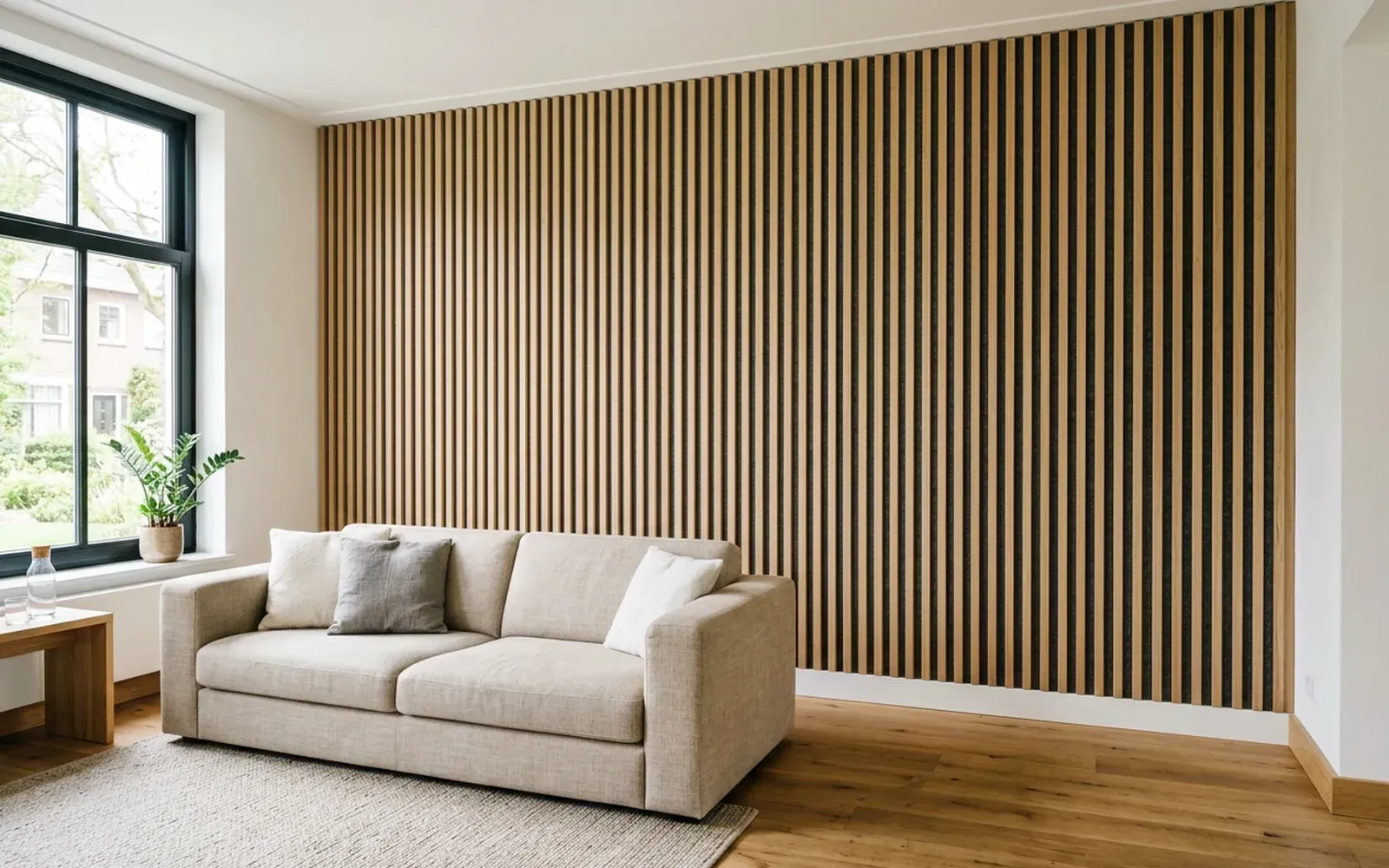
Mouldings & walls
Living room wall panels: which wall, which panel and what to look out for
A wall panel can give a living room calm, depth and better acoustics. These are the types, the best places and the details that make the difference.
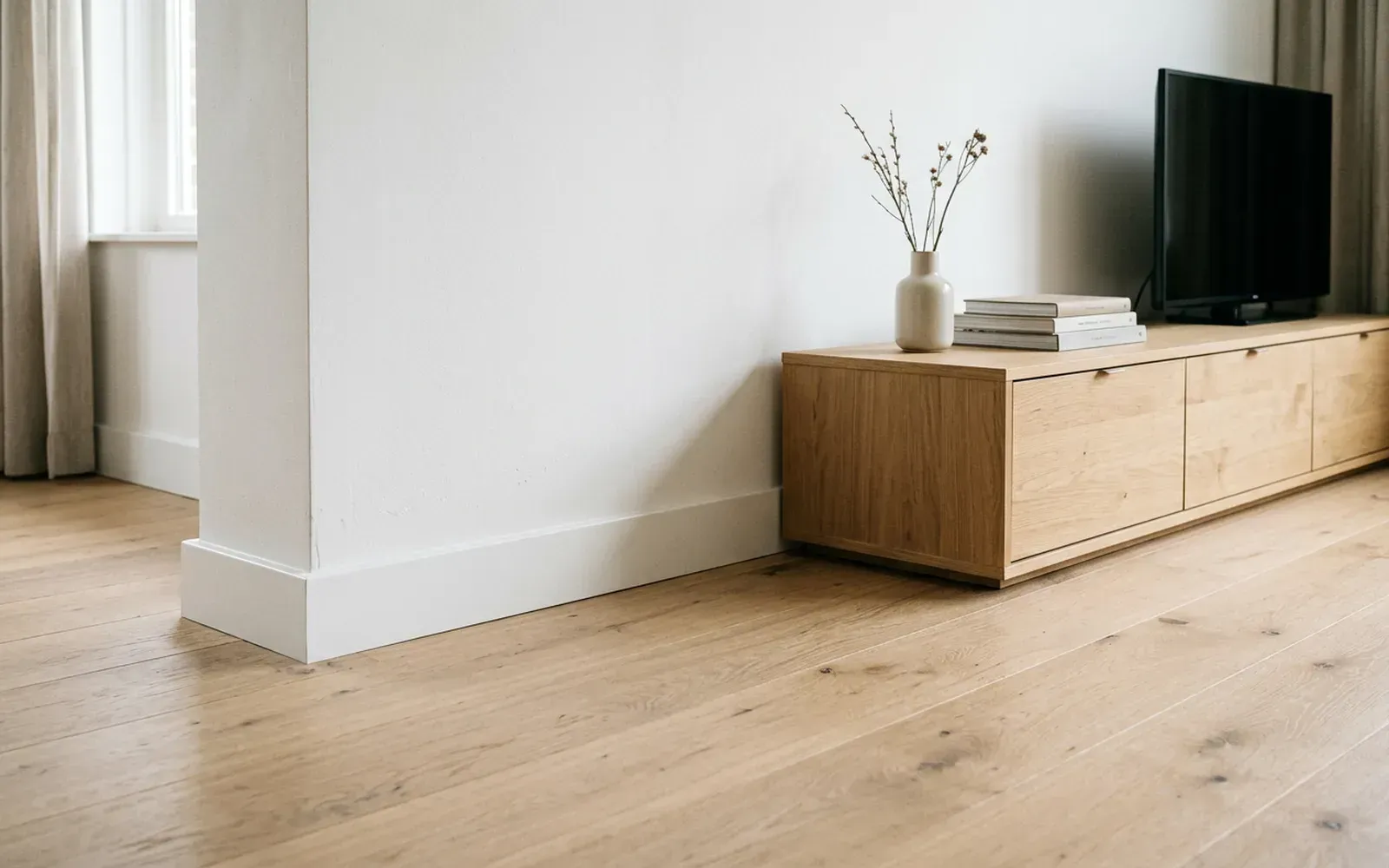
Choosing skirting
Skirting boards with a cable channel: hiding cables neatly
Want network, TV and speaker cables out of sight along the wall? A skirting board with a cable channel can do that. Here are the types, the possibilities and the limits.
Mouldings & walls
Black slatted wall: how to make it bold rather than gloomy
A black slatted wall is a statement. With the right spot, the right light and crisp details, it looks bold and warm rather than gloomy.
Related
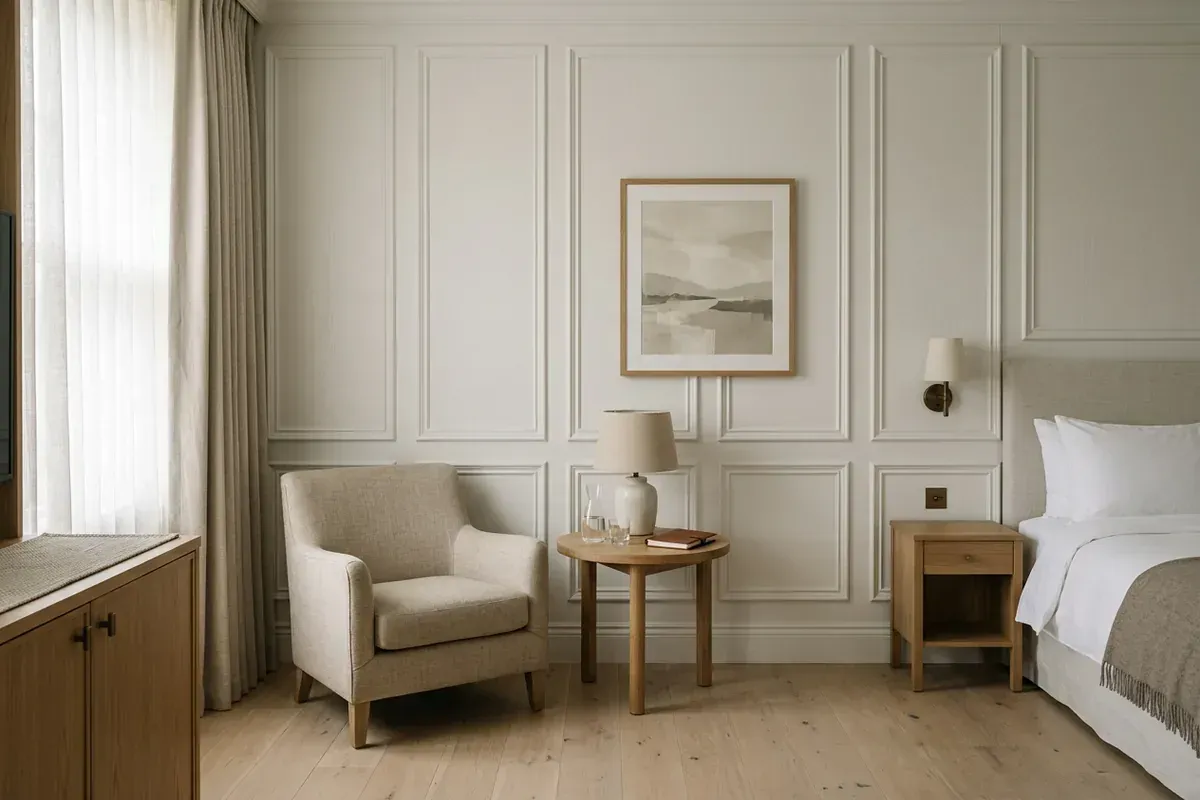
Wall panel
A wall panel is a board or panel fixed to a wall for appearance, protection or sound absorption. There are many types.
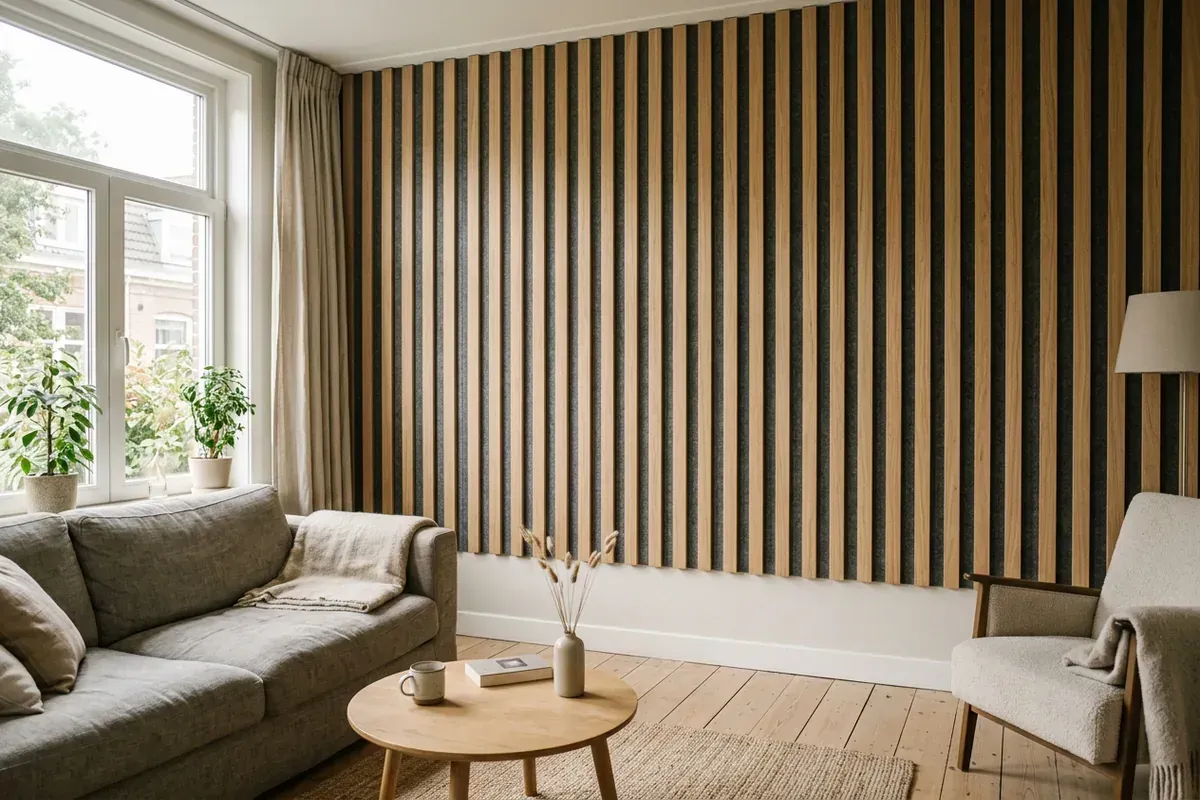
Acoustic panel
An acoustic panel absorbs sound and so reduces echo in a room. Slats on felt are the best-known type for the home.
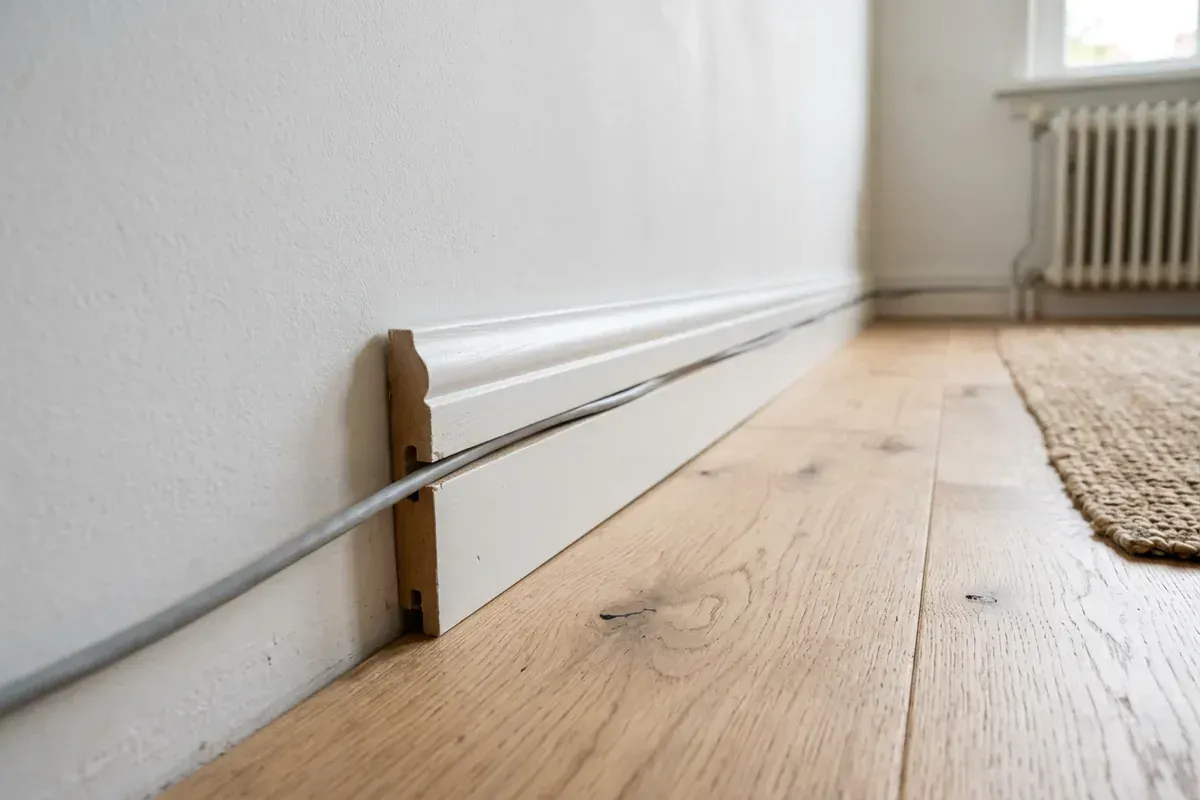
Cable skirting
Cable skirting has space for cables at the back. That way, leads for the TV, internet or speakers disappear neatly out of sight.
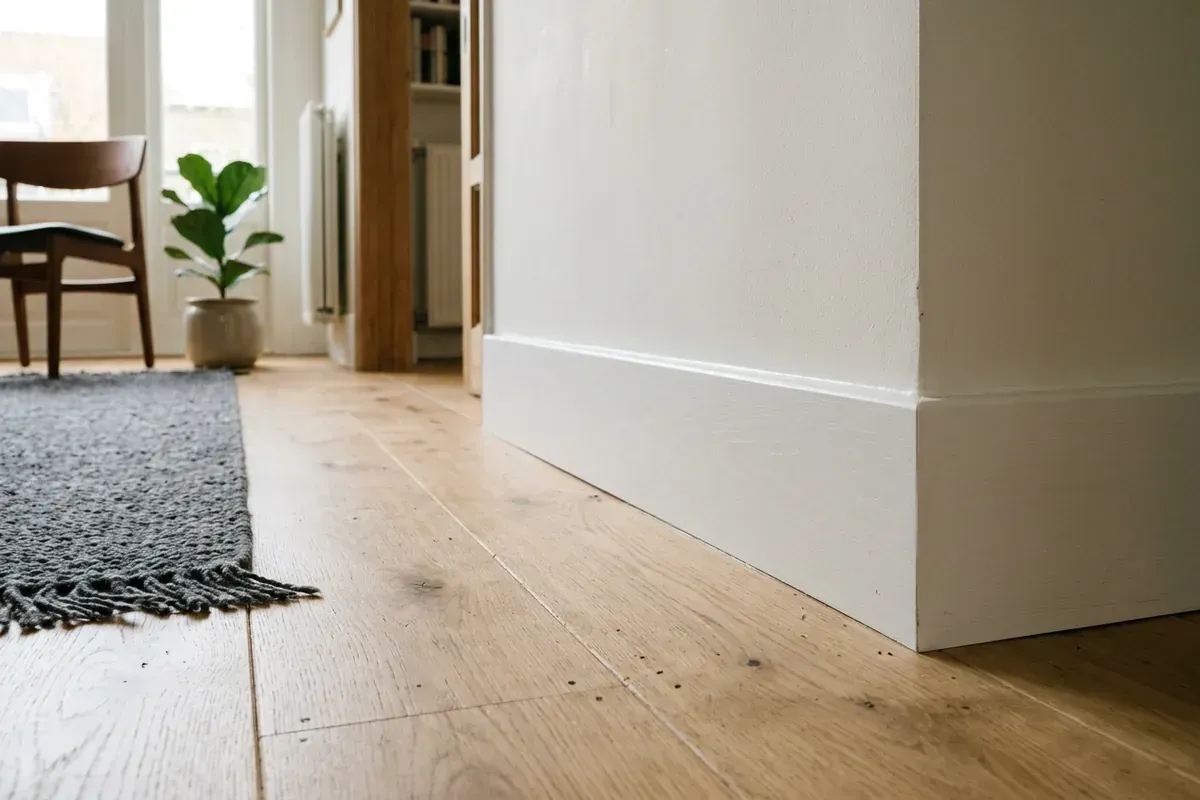
Skirting board
A skirting board is the moulding at the base of the wall that finishes the transition to the floor and protects the wall. Here is how it works and what to look out for.
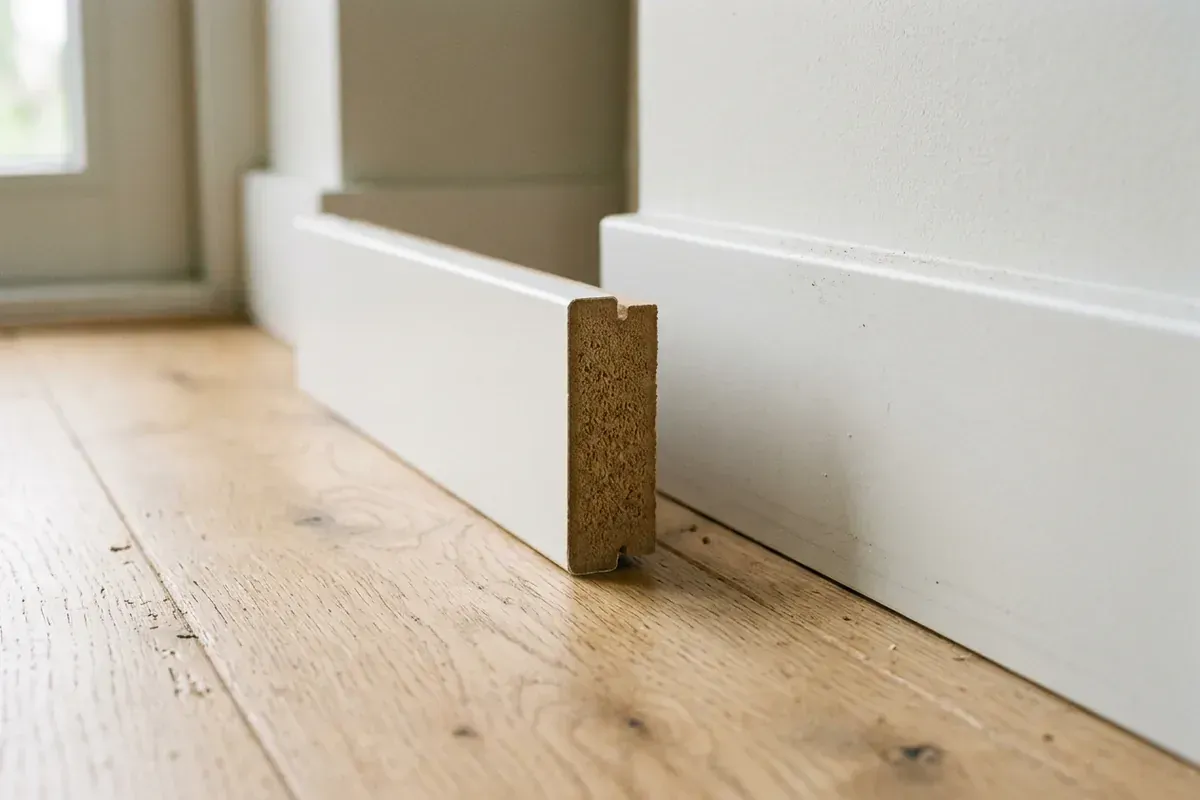
MDF
MDF is a sheet material made of pressed wood fibres. It is stable, smooth and easy to paint, which makes it the most popular material for skirting boards.
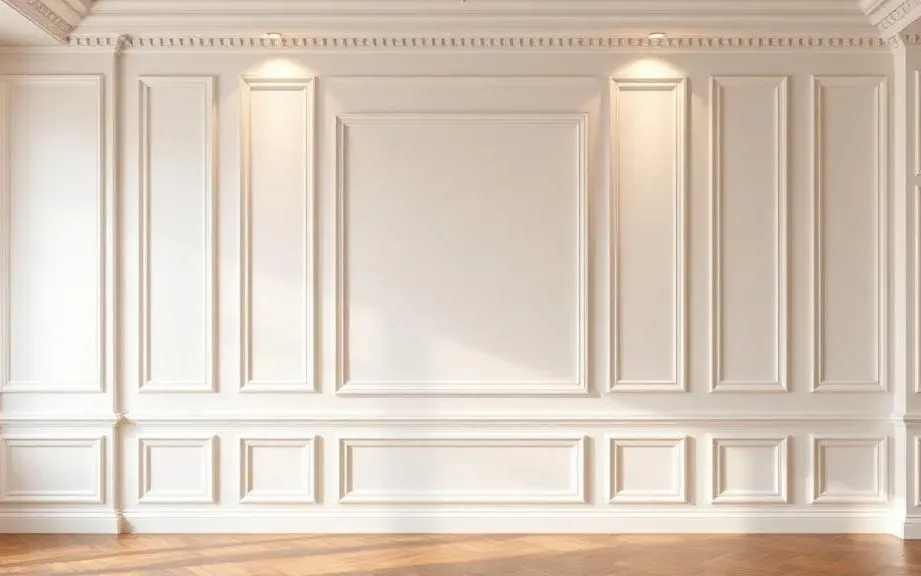
Wall panelling installation and wall mouldings fitted
TipTop Plinten fits wall panels, wall mouldings, slat panels and acoustic panels in homes, offices and hotels, with tight mitres and clean caulking.
Skirting board installation? Request a free quote
On-site measurement €75 incl. VAT (credited for orders above a minimum project size)