
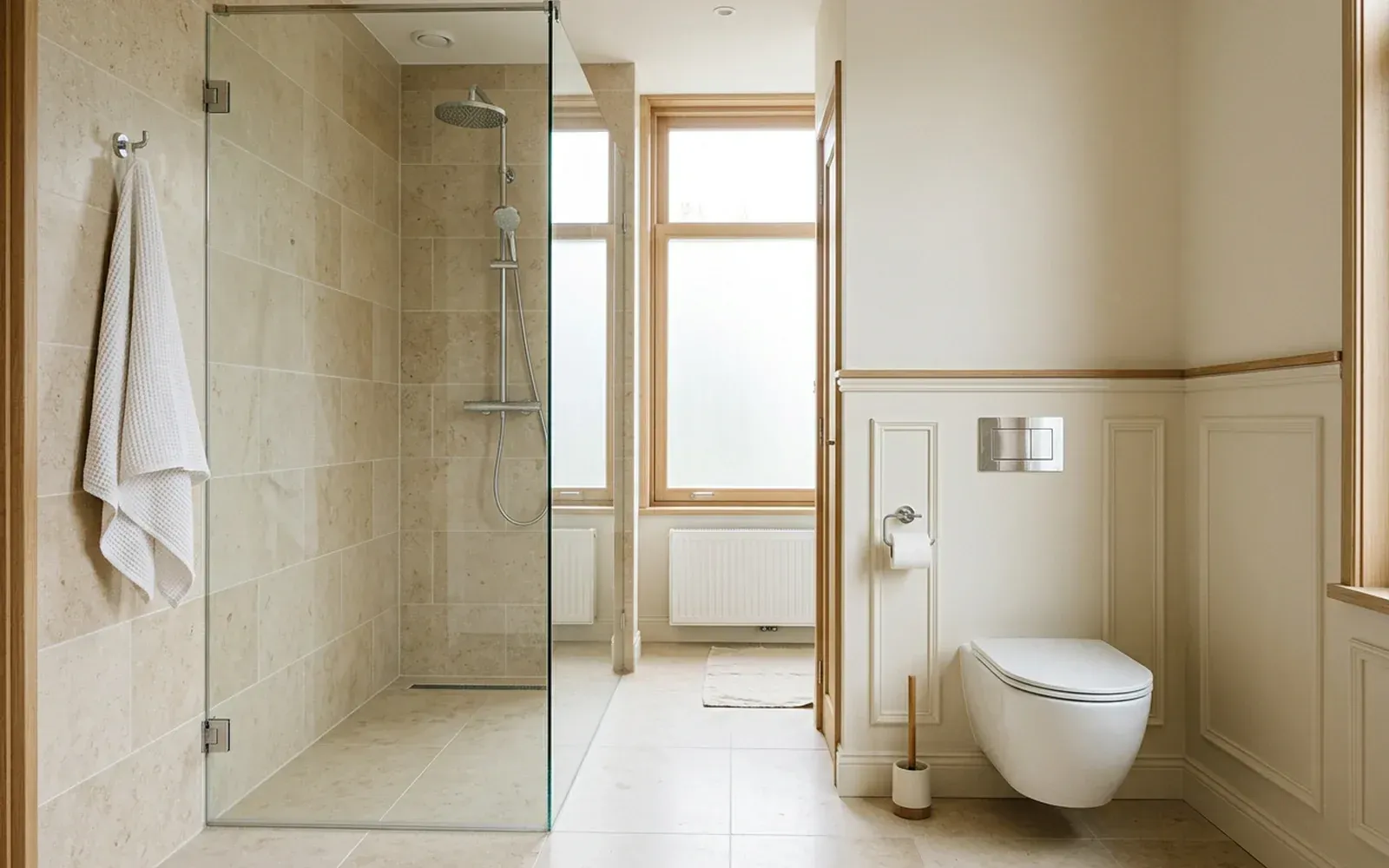
Bathroom wall panels are possible, but the material depends on the zone. The wet zone, such as the shower and the wall around the bath, calls for water-resistant systems: tiles, natural stone or wall systems developed specifically for wet rooms. MDF does not belong there, not even in a moisture-resistant version. Moisture-resistant MDF does fit in the dry zones of a well-ventilated bathroom and in a separate toilet, provided it is properly painted all round and does not get wet. TipTop Plinten does not fit plastic panels.
That may sound strict, but it prevents disappointment. Below you can read which zones there are, which materials suit where and what to look out for.
Why material matters so much in a bathroom
A bathroom is the dampest room in the house. After a shower, humidity rises sharply, and water lands directly on walls, floor and joints. Materials that are not designed for it can swell, come loose or go mouldy. With board materials such as MDF, this mainly happens at the end grain, cut-outs and joints, where water gets in most easily.
The zones in a bathroom
Wet zone
The shower, the wall around the bath and the direct splash zone around a tap. Water regularly lands on the wall here. Only materials and systems developed for this are suitable, such as tiles on a properly waterproofed substrate, natural stone and specific wall systems for wet rooms. Whether a system is watertight in your situation depends on the product and the installation; a wet-room specialist assesses that.
Splash zone
The wall behind and beside the washbasin. Splashes land here, but no running water. Here too, a tiled wall or a panel of stone or glass is usually the safest choice.
Dry zone
Walls at a distance from shower, bath and washbasin, for example the wall opposite the shower in a spacious bathroom, or a separate toilet. Humidity is sometimes high here, but no water lands directly on the wall. In this zone, a well-finished panel of moisture-resistant MDF can be an option.
| Zone | Example | Suitable finish | MDF? |
|---|---|---|---|
| Wet zone | Shower, around the bath | Tiles, natural stone, water-resistant wall systems | No |
| Splash zone | Behind the washbasin | Tiles, stone, glass | Preferably not |
| Dry zone | Wall at a distance, toilet | Moisture-resistant MDF, painted all round | Yes, under conditions |
What moisture-resistant MDF is and is not
Moisture-resistant MDF is a wood-fibre board that copes better with higher humidity than standard MDF. It swells less quickly in damp air. But moisture-resistant is not the same as waterproof. If water regularly lands on it, or water is left standing on the edge, even moisture-resistant MDF can be damaged. That is why we only use it in the dry zone and always with a complete coat of paint.
Which panels suit the dry zone?
- Wainscoting or moulding panels up to dado height. A classic or country look, for example in a toilet or beside a freestanding unit. See also wainscoting.
- Clean panels with grooves. Calm and modern, and can be painted in any RAL colour.
- A dado rail with the wall below it in a different colour. Little material, a lot of effect.
We advise against wooden slats on felt in bathrooms: felt absorbs moisture and dries slowly.
What should you look out for when fitting and finishing?
Painting all round
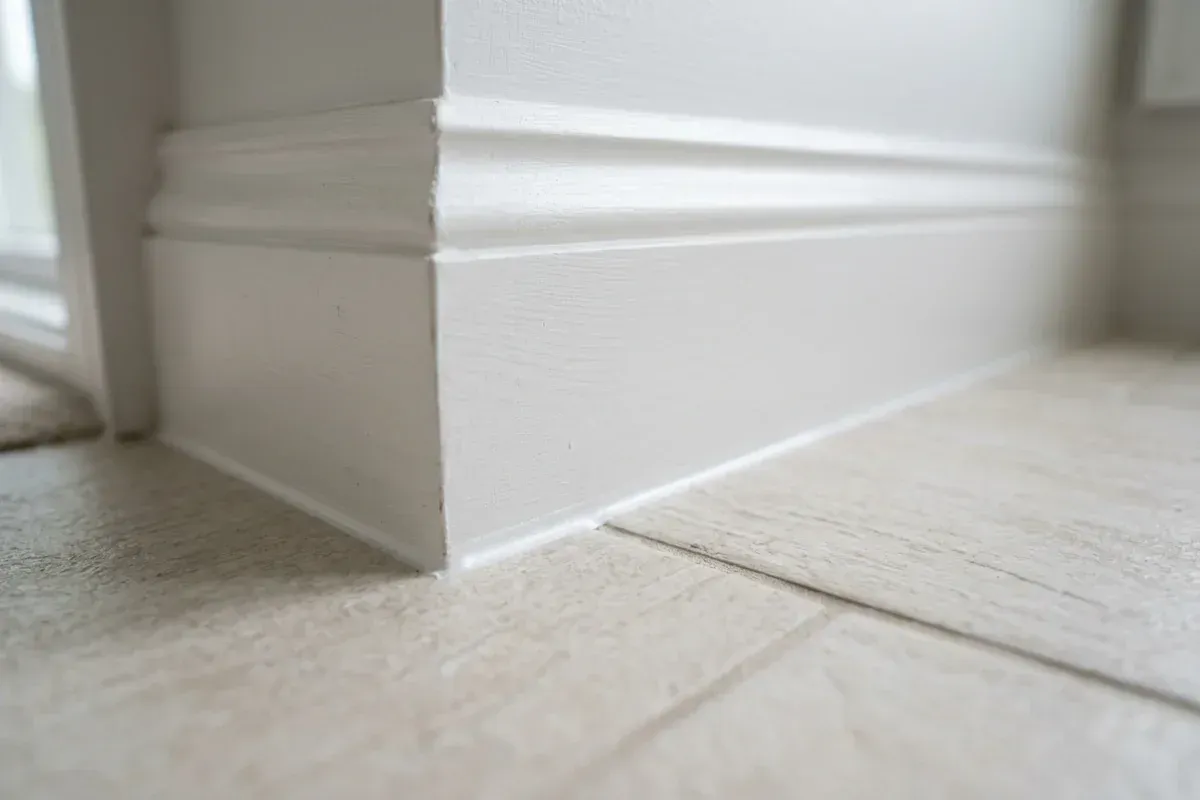
All sides, end grain and cut-outs are painted, so no unprotected material is exposed anywhere. The bottom edge in particular, where the panel meets the floor, is vulnerable.
Distance from the floor and caulking
Where the panel meets a tiled floor, the joint is sealed. In a damp environment, silicone sealant is usually used for this: it is water-repellent and stays flexible, but cannot be painted over. In dry places that will be painted, acrylic caulk is usual. You can read more about the difference in caulking skirting boards: which sealant?.
Ventilation
Good ventilation is at least as important as the material. Working mechanical extraction or a window that can be opened after a shower keeps humidity in check. Without ventilation, even the best finish has a hard time.
Maintenance
Damage to the paint layer lets moisture in, so repair it straight away. Clean panels with a slightly damp cloth and dry them afterwards; do not use abrasive cleaners.
Checklist before you choose
Not sure whether a wall panel suits your bathroom or toilet? Run through these points:
- Does water land directly on the wall? Then it is a wet zone or splash zone, and tiles, stone or a water-resistant wall system belong there.
- How far is the wall from the shower, bath and washbasin? The greater the distance, the better the chance that the wall is a dry zone.
- How is the room ventilated? Without working extraction or a window that opens, humidity stays high for a long time.
- Is the surface dry and sound? Resolve damp patches, mould or loose tiling first.
- What look are you after? Wainscoting or a dado rail gives a lot of effect with little material.
If the answer to the first question is yes, a tiler or a wet-room specialist is the right party. In the dry zone, we are happy to think along with you.
And the skirting boards in the bathroom?
In many bathrooms the tiles run all the way down to the floor and there is no skirting board. In a toilet or in the dry zone of a spacious bathroom, a skirting board is possible, with the same points to watch as for panels. You can read more in bathroom skirting boards.
Why no plastic?
Plastic bathroom panels are widely sold as an easy solution. TipTop Plinten deliberately does not fit plastic. For the wet zone, we refer you to a tiler or a wet-room specialist; for the dry zone, moisture-resistant MDF and well-finished mouldings provide a finish that matches the rest of the house. In kitchen wall panels you can read how the same zone-based approach works around the hob and sink.
Having wall panels fitted in a damp room?
TipTop Plinten, based in 's-Hertogenbosch, fits wall panels and wall mouldings throughout the Netherlands. We give you an honest view of which zones are suitable and which are not. Read more on the wall panels and wall mouldings page.
Send a few photos of the room, showing where the shower, bath and washbasin are, and tell us how the room is ventilated, via the contact page. The quote is free and without obligation, and we can communicate in English, Dutch, German, Turkish, Persian or Arabic. An on-site measurement is optionally available for €75 incl. VAT; this amount is credited as a discount on jobs above a minimum project size.
Frequently asked questions
No. The wet zone, such as the shower and the wall directly around a bath, calls for water-resistant systems such as tiles, natural stone or wall systems developed specifically for wet rooms. MDF, including moisture-resistant MDF, is not designed for that.
In dry zones of a well-ventilated bathroom, for example a wall at a distance from the shower and bath, and in a separate toilet. Moisture-resistant MDF copes better with higher humidity than standard MDF, but it is not waterproof and must not get wet.
No. TipTop Plinten works with MDF, solid wood and aluminium and deliberately does not fit plastic panels. For a water-resistant finish in the wet zone, we refer you to a tiler or a wet-room specialist.
Where water can reach, silicone sealant is usually used, because it is water-repellent and stays flexible. Silicone sealant cannot be painted over. In dry places that will be painted, acrylic caulk is usual.
Good ventilation, full finishing of all sides and end grain, and avoiding standing water. A damaged paint layer lets moisture in, so repair it straight away.
Related articles
Mouldings & walls
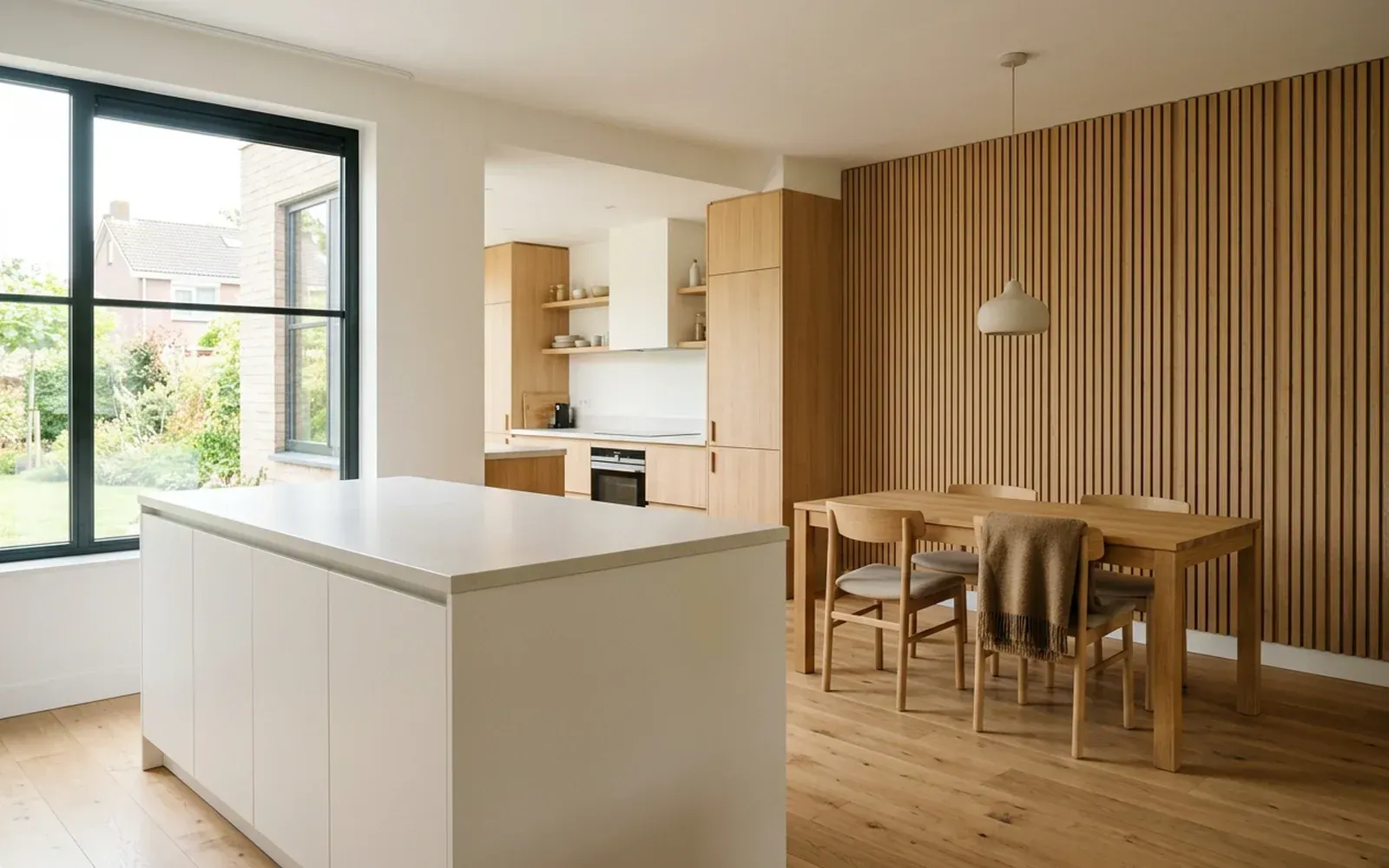
Kitchen wall panels: where they work and where they don't
A wall panel can make a kitchen warmer and calmer. But not every kitchen wall is suitable. This is the difference between the dining area and the zone behind the worktop.
Floors & skirting
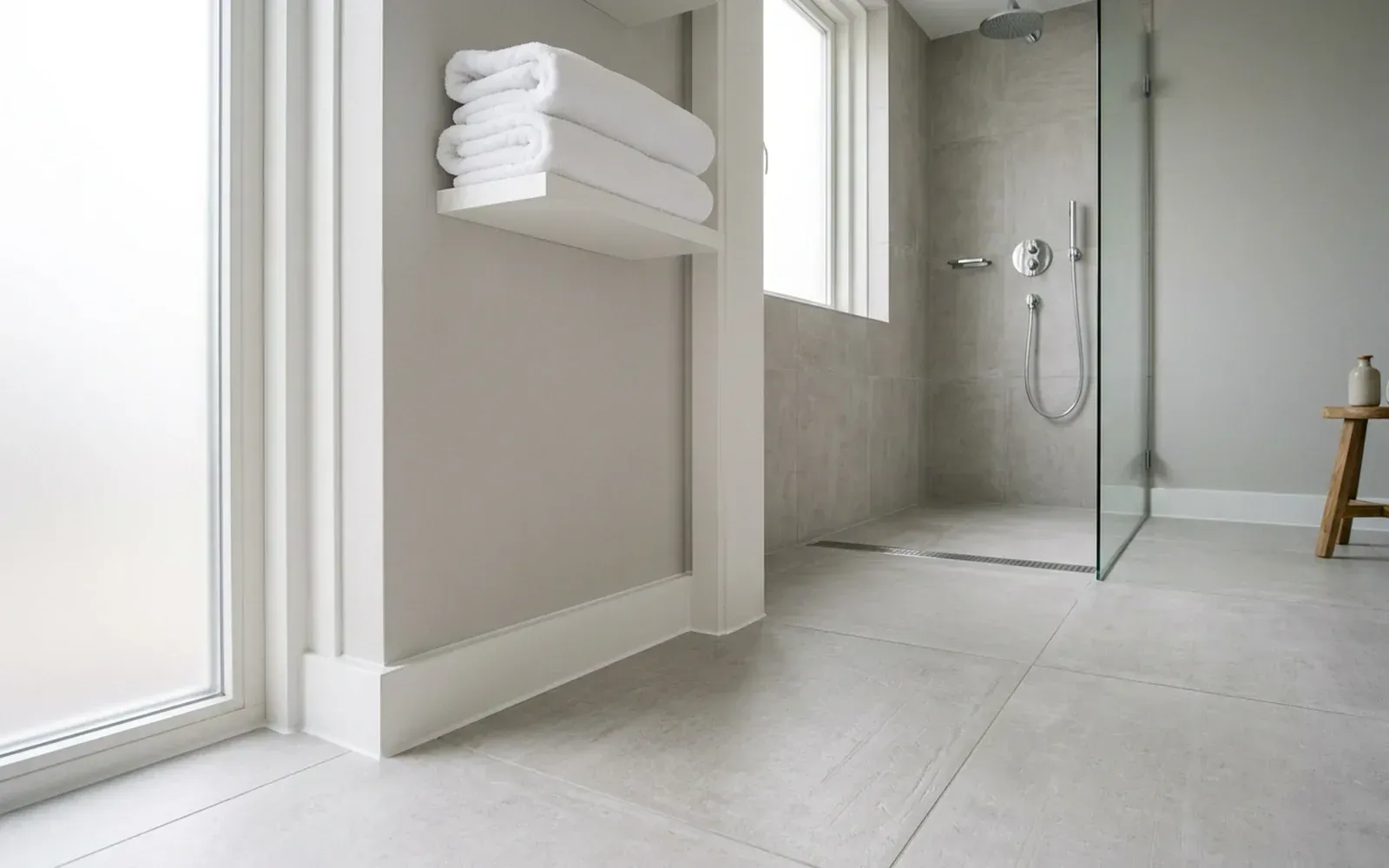
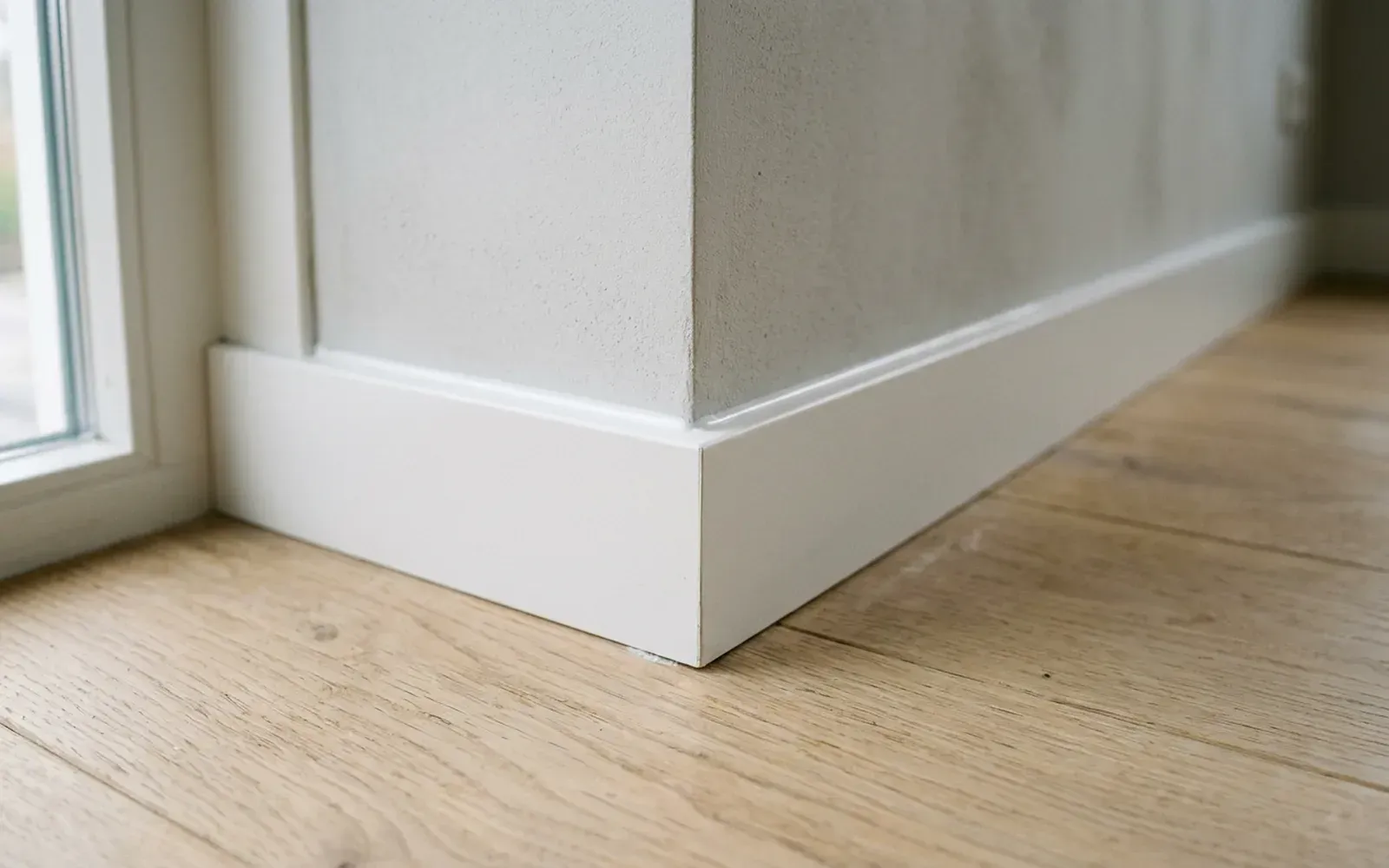
Bathroom skirting boards: which materials work and which do not?
In a bathroom, water reaches the floor and splashes against the wall. Not every skirting board can cope with that. This is which material fits where and how to finish the joints.
Installation & finishing
Caulking skirting boards: which sealant should you use and how do you get a neat finish?
For the joint between skirting board and wall you use paintable acrylic caulk, and silicone only where water is involved. Here is how to run a clean caulk line.
Related
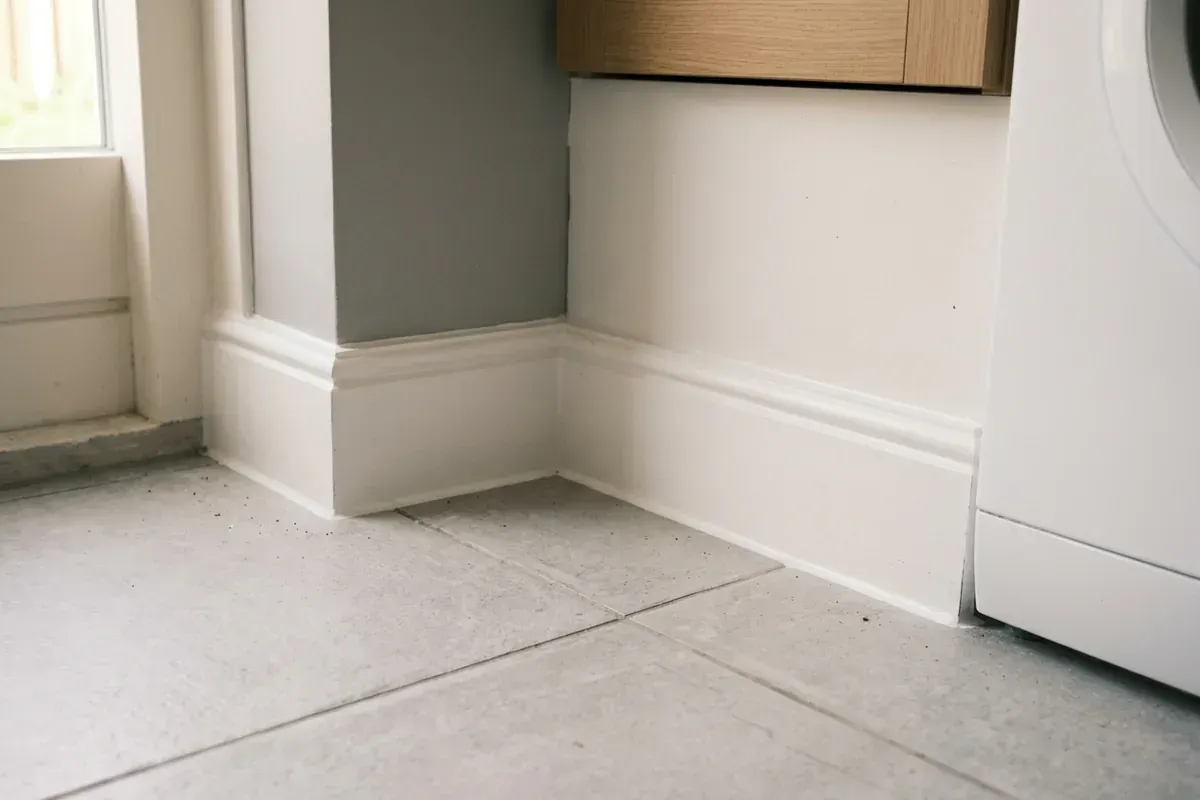
Moisture-resistant MDF
Moisture-resistant MDF is MDF treated to make it less sensitive to moisture. It is suitable for rooms where standard MDF would quickly swell.
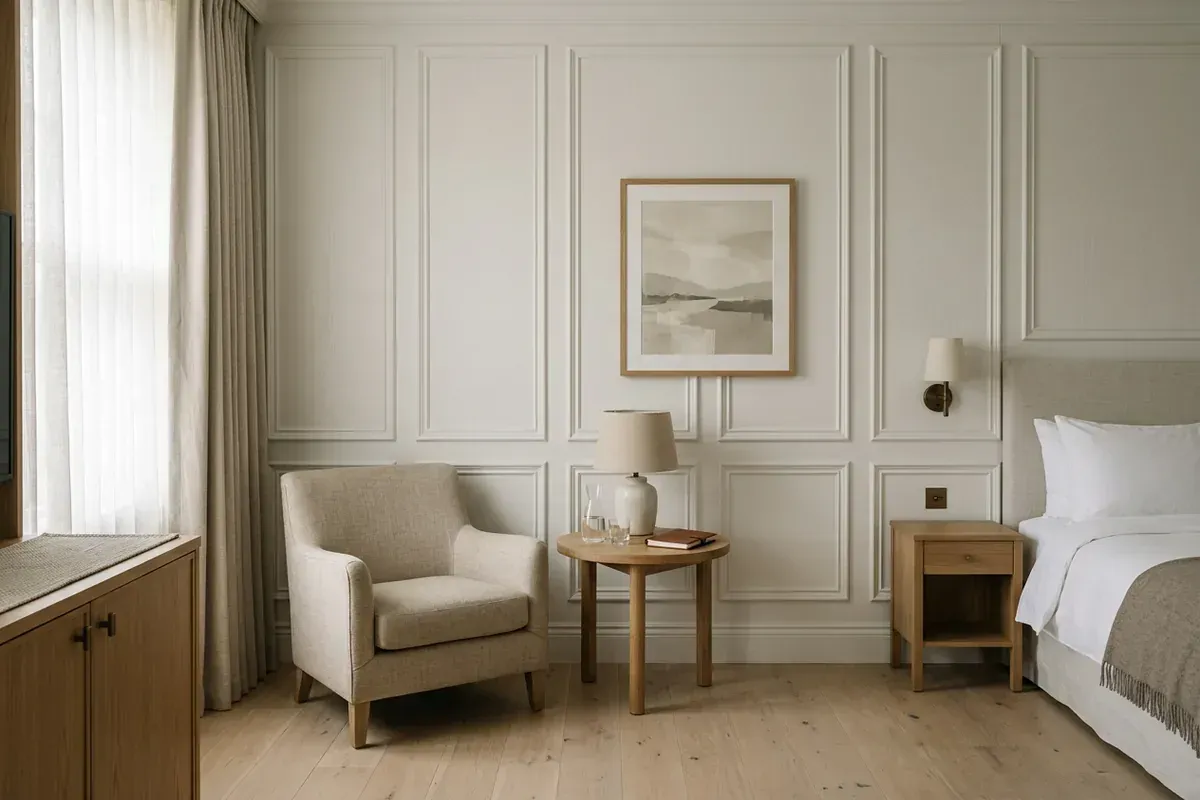
Wall panel
A wall panel is a board or panel fixed to a wall for appearance, protection or sound absorption. There are many types.
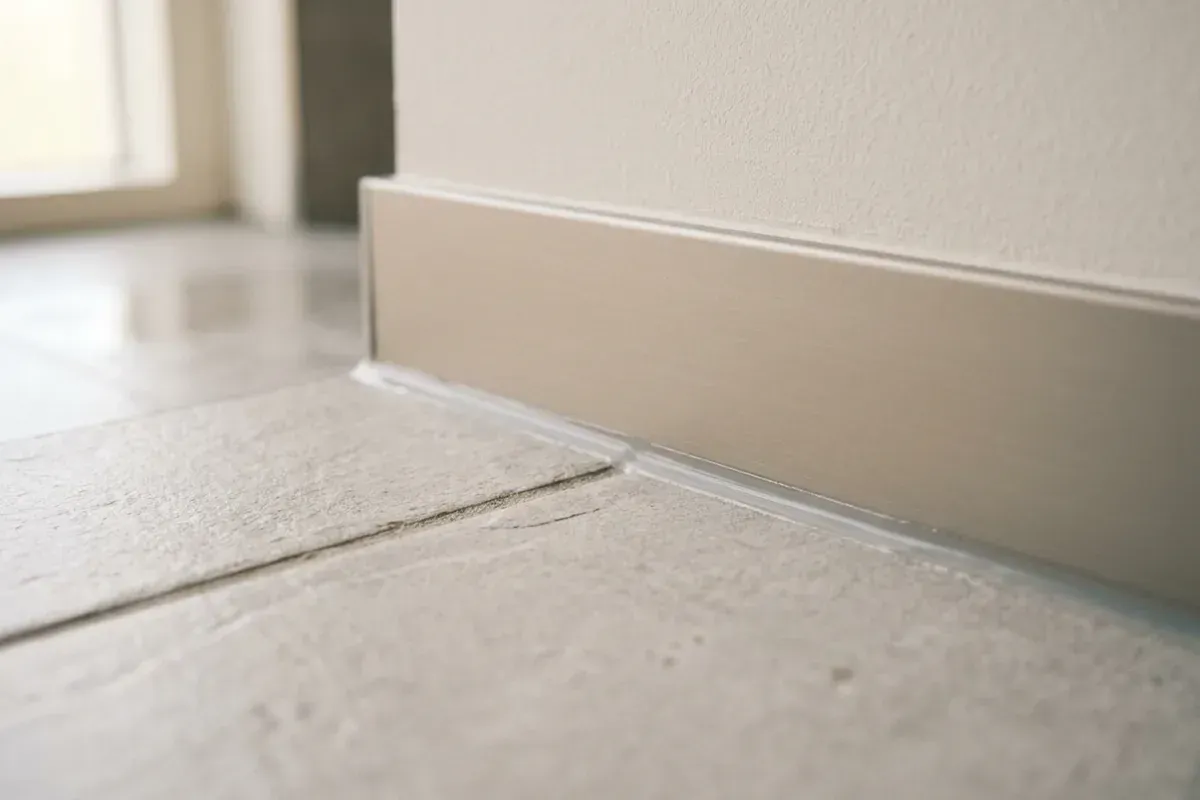
Silicone sealant
Silicone sealant is highly flexible and water-resistant, but cannot be painted. It belongs in wet rooms, not along painted skirting boards.
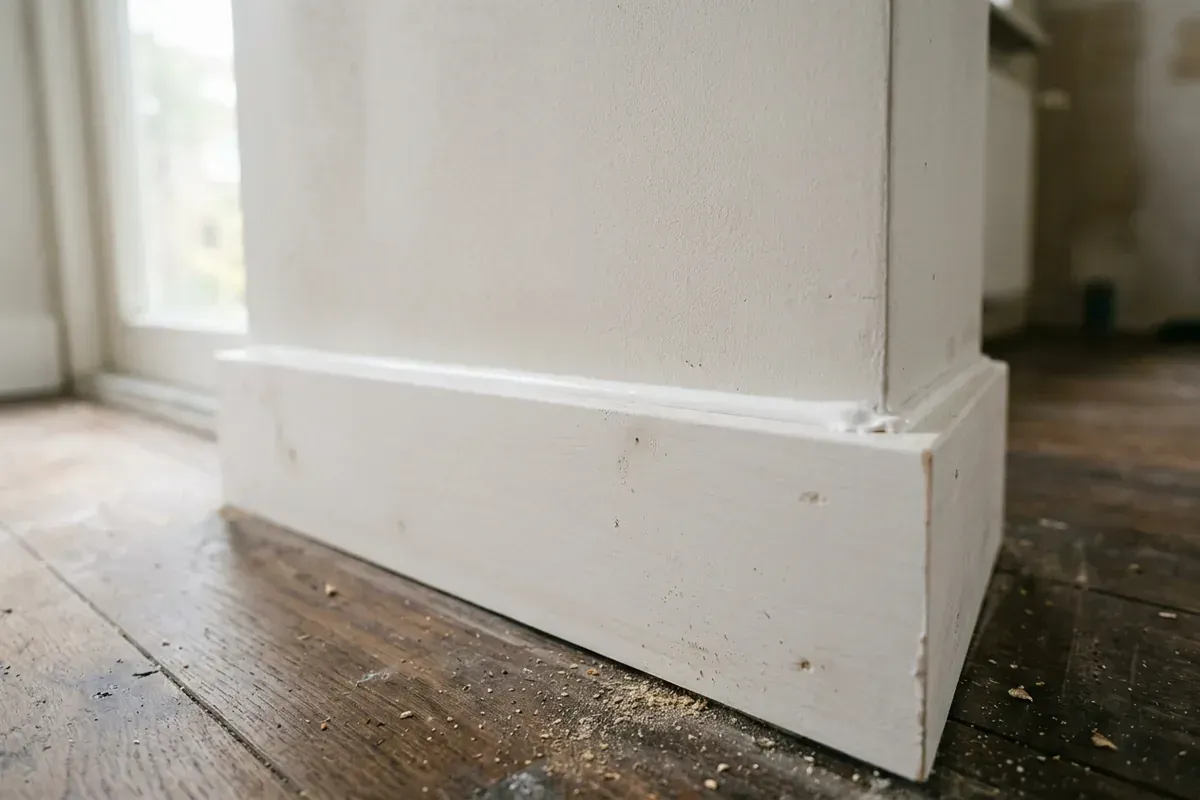
Acrylic caulk
Acrylic caulk is a water-based sealant that can be painted once cured. It is the usual choice for skirting boards, mouldings and frames in dry rooms.
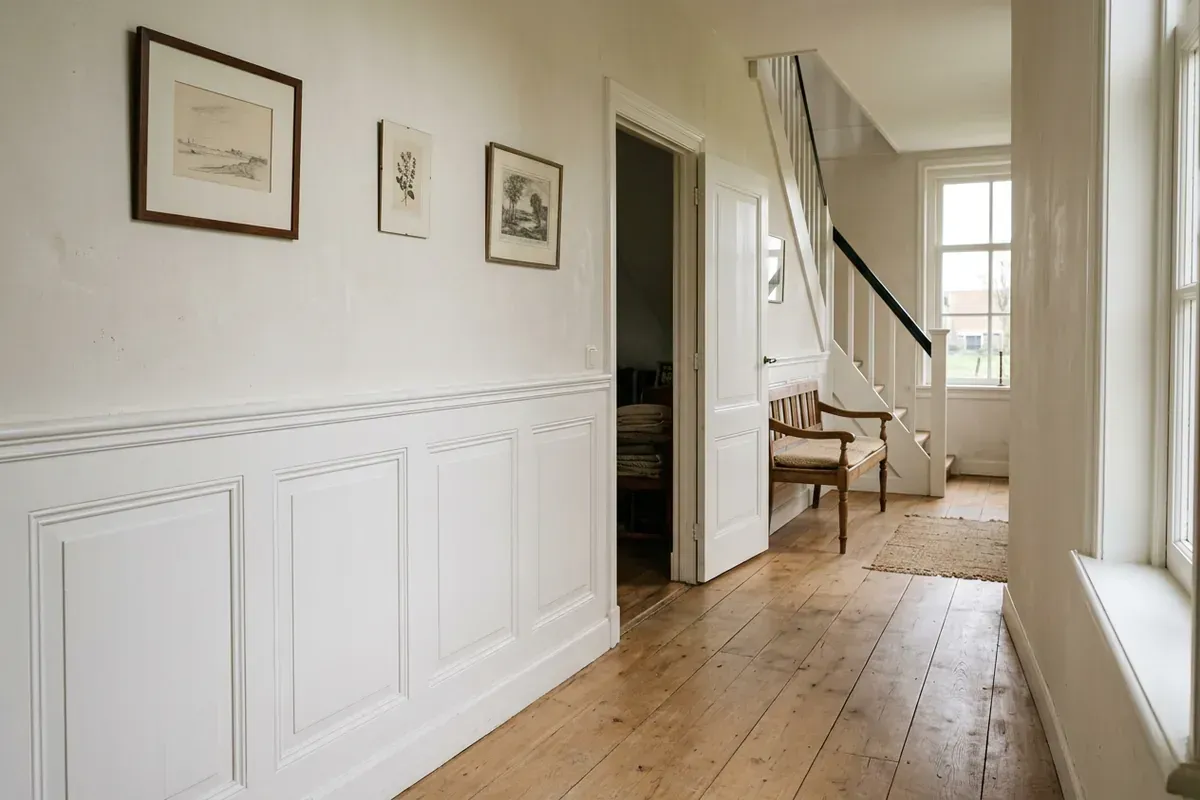
Wainscoting
Wainscoting is a covering on the lower part of the wall, traditionally in timber. It protects the wall and gives a room a classic character.
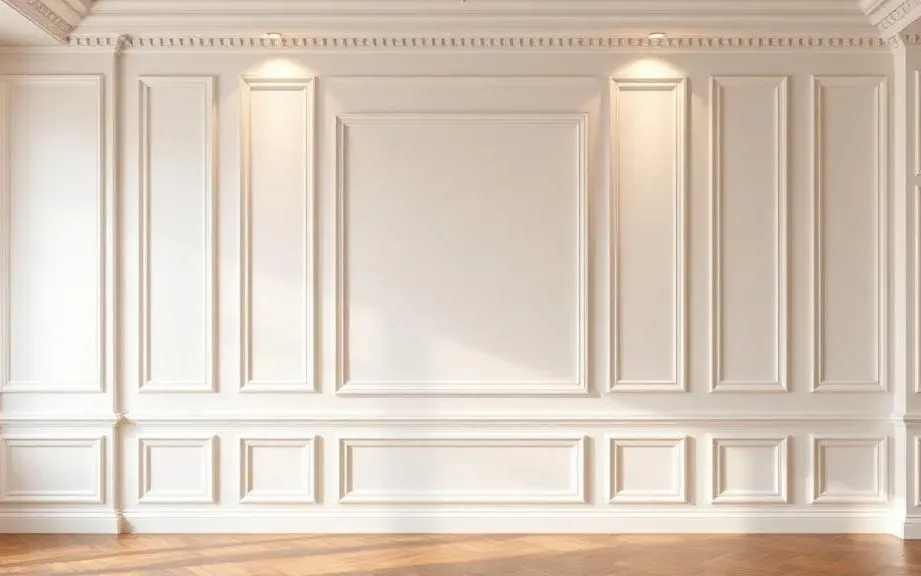
Wall panelling installation and wall mouldings fitted
TipTop Plinten fits wall panels, wall mouldings, slat panels and acoustic panels in homes, offices and hotels, with tight mitres and clean caulking.
Skirting board installation? Request a free quote
On-site measurement €75 incl. VAT (credited for orders above a minimum project size)