
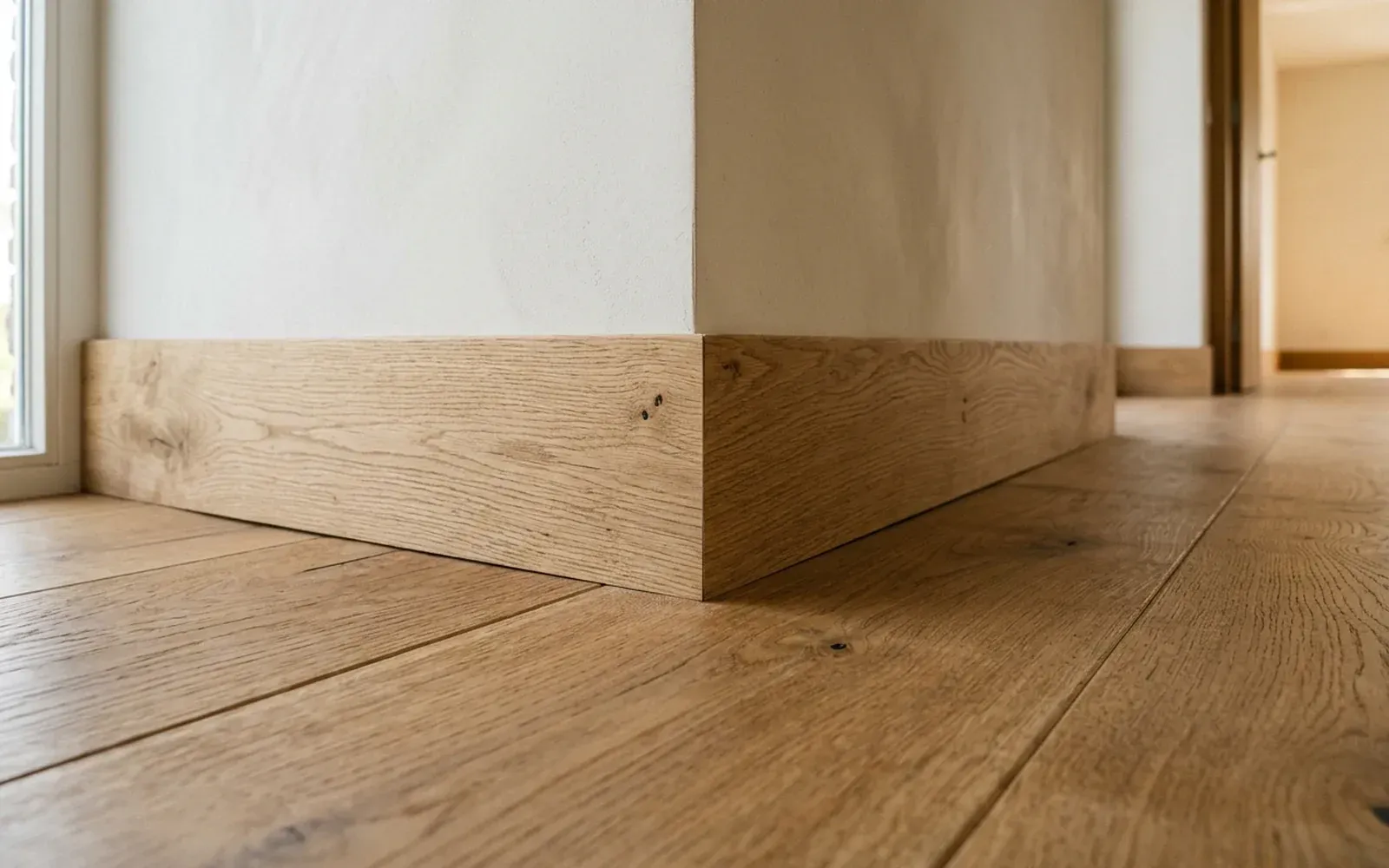
Oak skirting boards give a warm, natural finish along the floor and suit classic interiors, visible woodwork and homes where wood plays a leading role. Solid oak is strong, has a recognisable grain and can be oiled, stained or clear-lacquered. With an oak floor, oak skirting is not automatically the best choice: wood from different batches never colours exactly the same, and skirting that is almost but not quite the same stands out more than a deliberate contrast. So first choose the effect you want, then the material.
When do oak skirting boards work?
Oak skirting boards work particularly well in these situations:
- Classic or country-style interiors with wooden doors, frames or beams.
- Listed and older homes, where wooden skirting boards were originally fitted.
- Interiors with oak furniture and staircases, where the skirting continues the woodwork.
- As a deliberate contrast with a light stone floor, concrete or tiles.
In a sleek, modern interior with white walls and a light floor, many people prefer lacquered skirting. You can read more about that choice in wooden skirting or MDF?.
Oak skirting with an oak floor: yes or no?
This is the question asked most often. The honest answer: it can look beautiful, but it needs careful matching.
Why the colour is almost never exactly the same
- Wood from a different batch or tree has a different tone and figure.
- Skirting is often sawn differently from a floorboard, so the grain looks different.
- Floors are oiled, lacquered or brushed; skirting often gets a different treatment.
- A floor changes colour with light and use; new skirting starts out "fresh".
What works instead?
| Choice | Effect |
|---|---|
| Oak skirting, matched as closely as possible to the floor | Continuous wood look, needs a carefully matched finish |
| Oak skirting in a clearly different tone | Deliberate contrast, for example dark oak with a light floor |
| Lacquered skirting in the wall colour | Calm, the skirting "disappears" |
| White skirting, for example RAL 9010 | Fresh, classic contrast with wood |
| Black skirting, RAL 9005 | Graphic and modern |
With herringbone and parquet floors, many people deliberately choose lacquered skirting, because the pattern of the floor already attracts enough attention. See also skirting boards for herringbone floors.
Solid oak or an alternative?
Solid wood is wood from a single piece. The advantage: real wood with a real grain, which can be sanded and refinished if it gets damaged. Points to consider:
- Movement. Solid wood expands and shrinks with the humidity. In winter this can cause small gaps in corners.
- Straight and flat. A solid skirting board can twist or bow slightly. During installation this is corrected with the right fixing method.
- Weight. Solid oak is heavier and harder than MDF; mitres and fixing require more precision.
If you want skirting that will be painted in an opaque colour, solid oak adds little: the grain is then barely visible. In that case MDF is more stable and gives a smoother paint finish. You can read more about finishing in painting skirting or pre-finished?.
How do you finish oak skirting boards?
- Oil: natural, matt look that brings out the grain beautifully. Needs occasional maintenance.
- Clear lacquer: more hard-wearing and easier to keep clean; slightly more sheen, depending on the lacquer.
- Stain or lye: to adjust the colour, for example lighter, greyer or darker, followed by oil or lacquer.
- Smoked oak: a deeper, warm tone that suits darker interiors well.
Match the sheen level to the floor and doors. Glossy skirting next to a matt floor stands out.
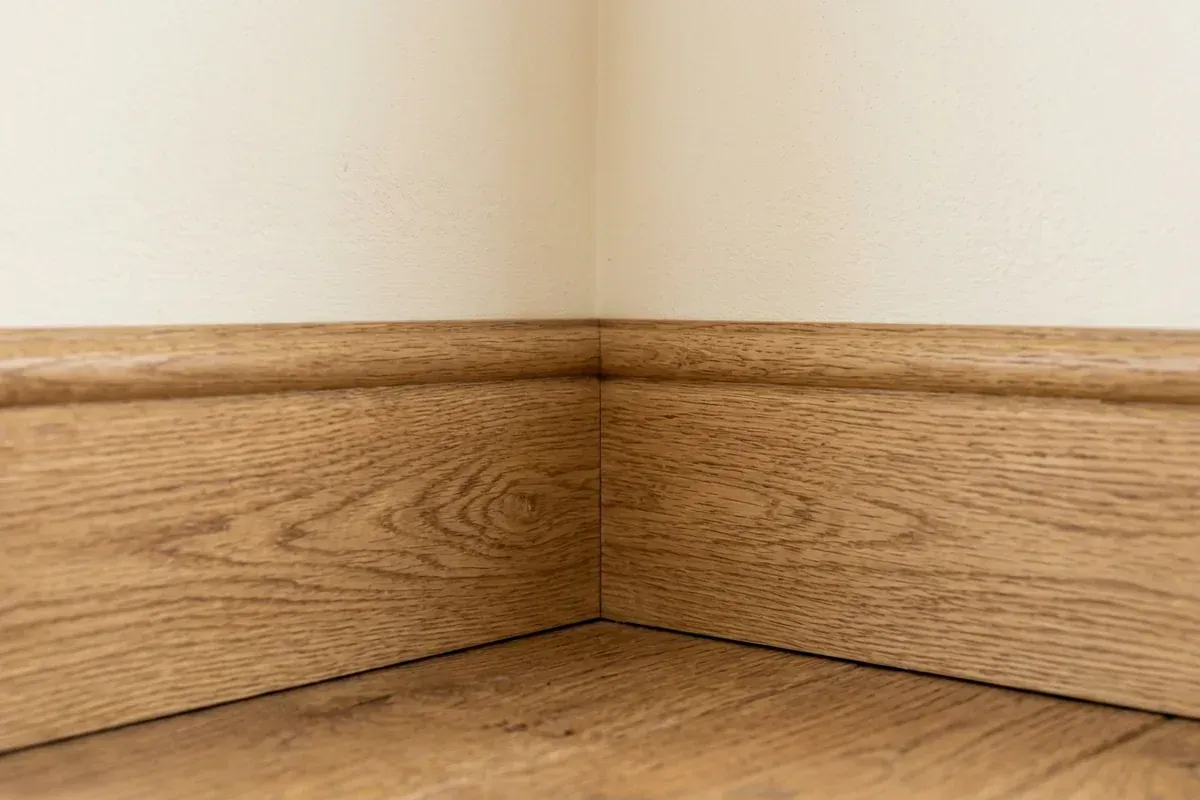
What to look for during installation
Mitres in wood
With oak skirting a mitre is extra visible, because the grain meets in the corner. An open or misaligned mitre is immediately noticeable. On external corners, accurate cutting and fitting are essential.
Fixing
Solid oak is often glued and, where necessary, mechanically fixed so that the skirting does not twist. Nail holes are filled with a matching wood filler.
Caulking
Against a white plastered wall, the joint between skirting and wall is often sealed with acrylic caulk in the wall colour. Along the floor, caulk is usually not used, so the floor can keep moving. With wooden skirting, caulk in a non-matching colour is extra visible; so for each situation we look at what looks calmest.
Space for floor movement
A wooden or laminate floor needs an expansion gap around its edges. The skirting covers that gap and is fixed to the wall, not to the floor.
Maintaining oak skirting boards
Oak skirting boards are easy to maintain. Wipe oiled skirting with a slightly damp cloth and a mild soap suitable for oiled wood; re-oiling from time to time keeps the wood looking good. Lacquered skirting is somewhat less sensitive to marks and can be cleaned with a damp cloth. Small scratches in solid oak can be sanded and touched up, an advantage over materials with a thin top layer. Avoid harsh cleaning products and a lot of water, especially with an oiled finish.
Which height and which profile?
For oak skirting a simple profile is often chosen: straight with a small round or chamfer on top. A richly profiled oak skirting board mainly suits classic interiors. For the height, look at the ceiling height and the doors; in rooms with high ceilings, taller skirting is often better in proportion. Read more in tall skirting boards: which height?.
Oak skirting in an older home
In older homes, walls are often out of true and floors are not level. Solid wooden skirting can follow this to some extent, but sometimes it has to be adapted. In the historic house in Apeldoorn, made-to-measure skirting boards were fitted in a 19th-century building with subsided walls, respecting its historic character.
Having oak skirting boards fitted?
TipTop Plinten fits skirting boards in solid wood, MDF and aluminium, with made-to-measure work on uneven walls and tight mitres. Send photos of your floor and room via the contact page, along with the number of running metres if you know it. The quote is free and without obligation. An on-site measurement is optional for €75 incl. VAT; this amount is credited as a discount on jobs above a minimum project size. We are happy to communicate in English, as well as Dutch, German, Turkish, Persian and Arabic.
Frequently asked questions
No, and an exact match is hard to achieve anyway. Wood from a different batch, with a different finish or a different sawing direction, takes on a slightly different colour. A deliberate contrast, such as white or colour-lacquered skirting, often looks calmer than oak skirting that is almost, but not quite, the same.
Both exist. TipTop Plinten works with solid wood, MDF and aluminium. Whether solid oak skirting suits your situation is something you discuss when you receive the quote.
Solid oak can be oiled, limed, stained or clear-lacquered. Oil gives a natural, matt look; lacquer is somewhat more hard-wearing and easy to keep clean. Oak can also be painted in an opaque colour, but then you hardly see the grain any more and MDF is often the more logical choice.
Yes. Solid wood expands and shrinks with the humidity of the air. This is taken into account during installation, for example in the fixing method and the mitres. Small gaps in winter are not unusual with solid wood.
It can, but the difference between real wood and a wood print is often noticeable side by side. With a vinyl floor, many people therefore choose lacquered skirting in a calm colour.
Related articles
Choosing skirting
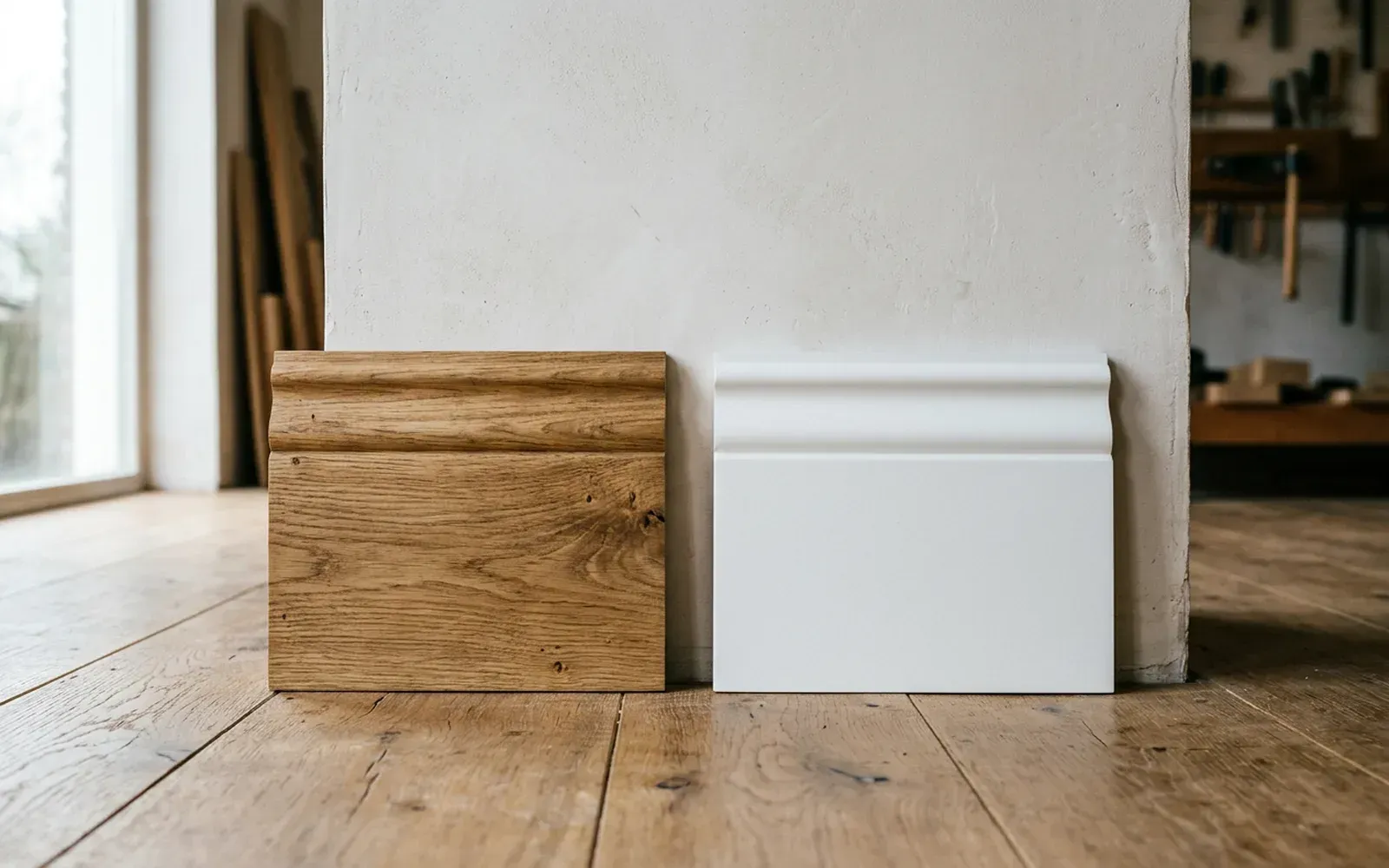
Wooden skirting boards or MDF: which suits your home?
Solid wood skirting or MDF? Both materials have clear pros and cons. We compare the differences side by side so you can choose skirting that suits your floor, interior and use.
Floors & skirting
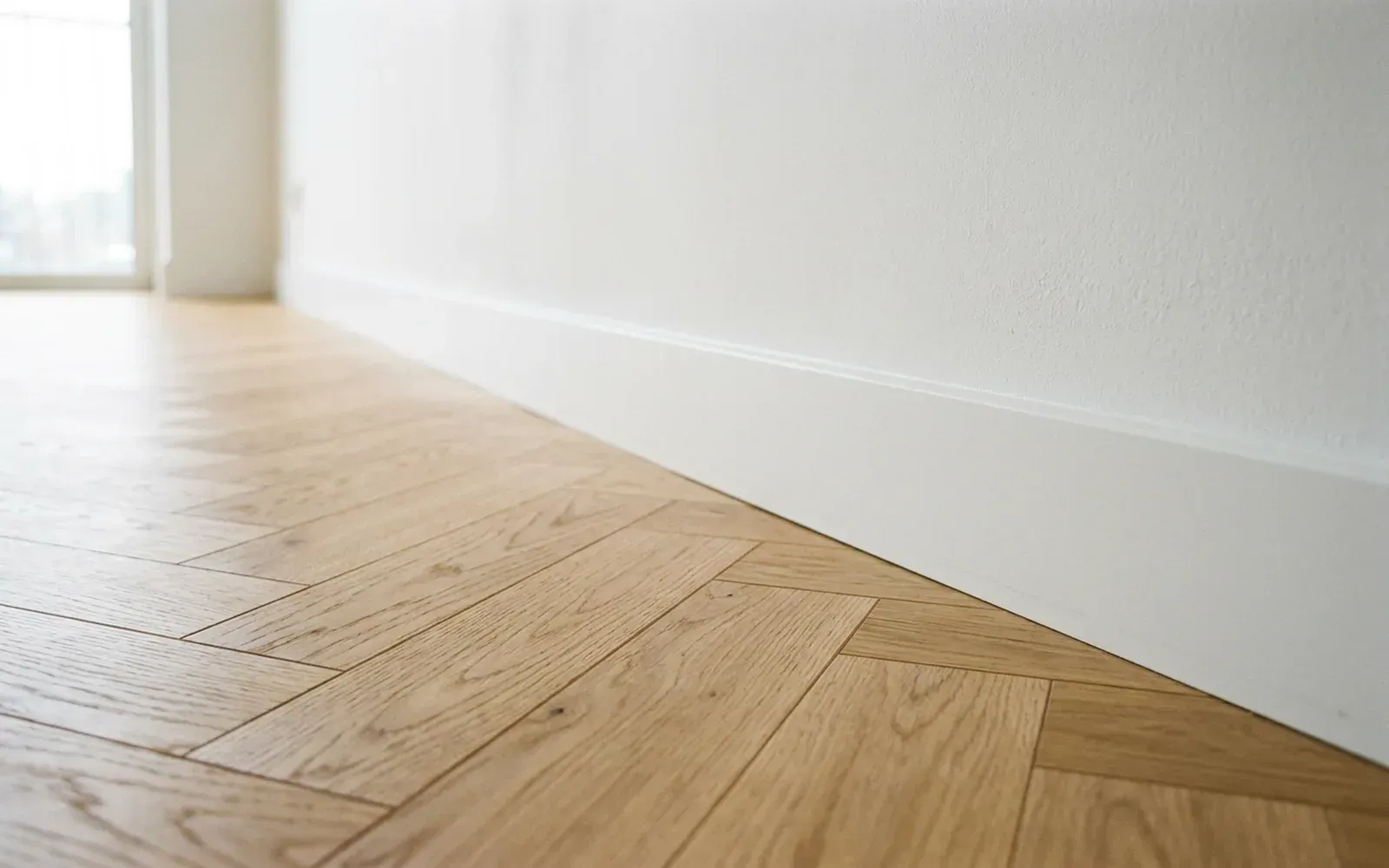
Skirting for a herringbone floor: how to finish the edge
A herringbone floor deserves skirting that gives the edge a calm finish. Here is how to choose material, colour and height, and avoid a messy zigzag edge.
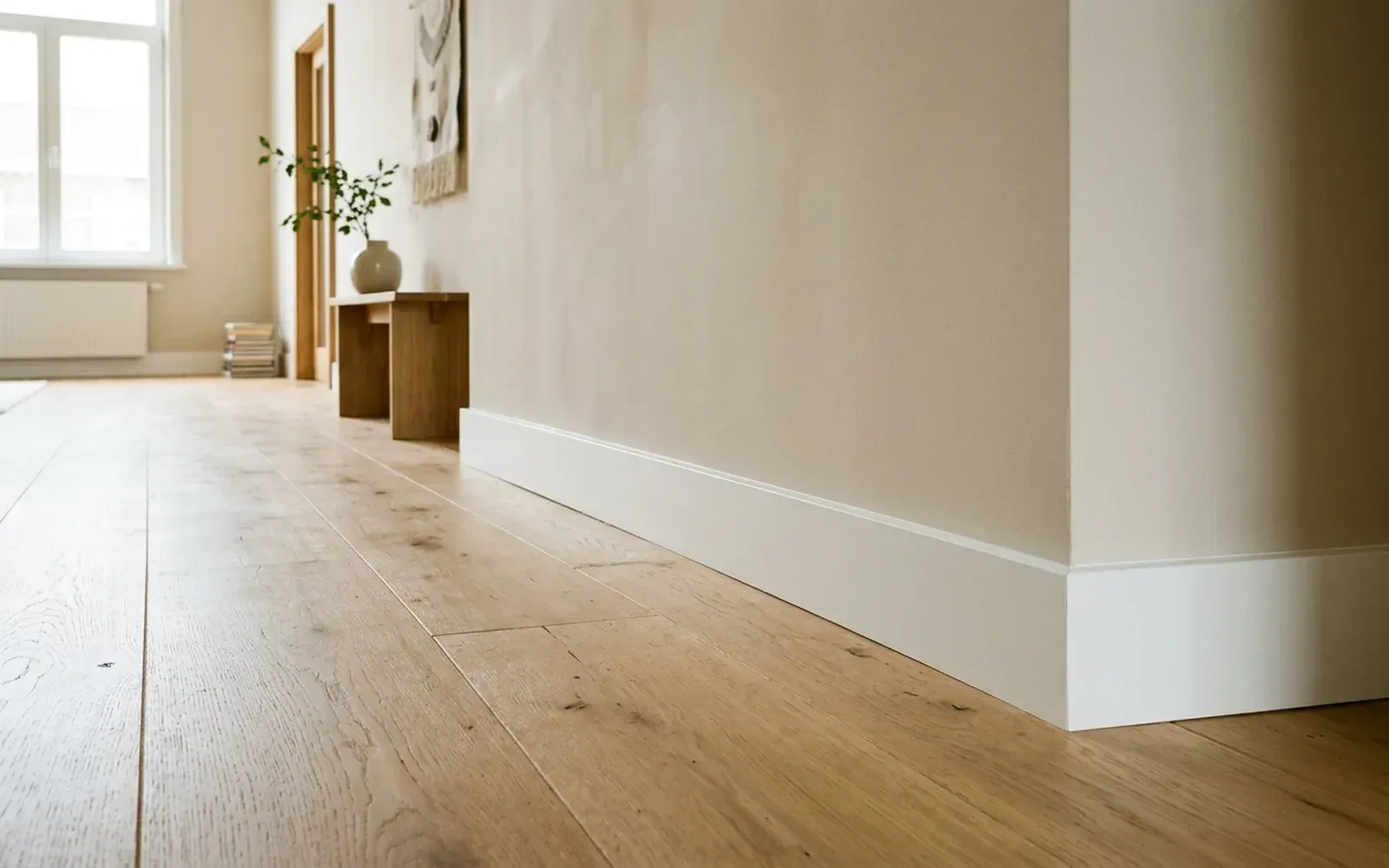
Installation & finishing
Painting skirting boards or choosing pre-finished: which is the smarter option?
Pre-finished skirting boards are ready straight away, while painting them yourself gives more freedom in colour. Here is how to choose and how to paint skirting boards neatly.
Related
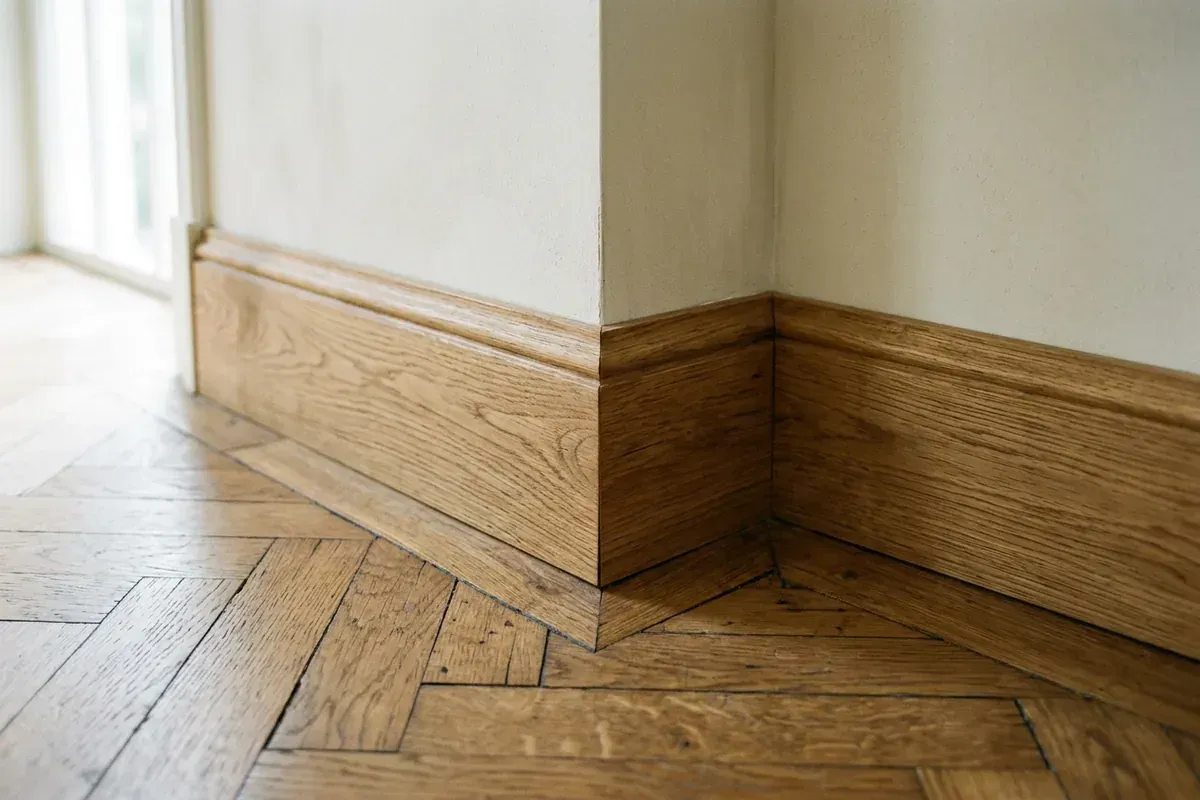
Solid wood
Solid wood is timber in one piece, without pressed fibres. It gives skirting boards a natural look, but moves with temperature and humidity.
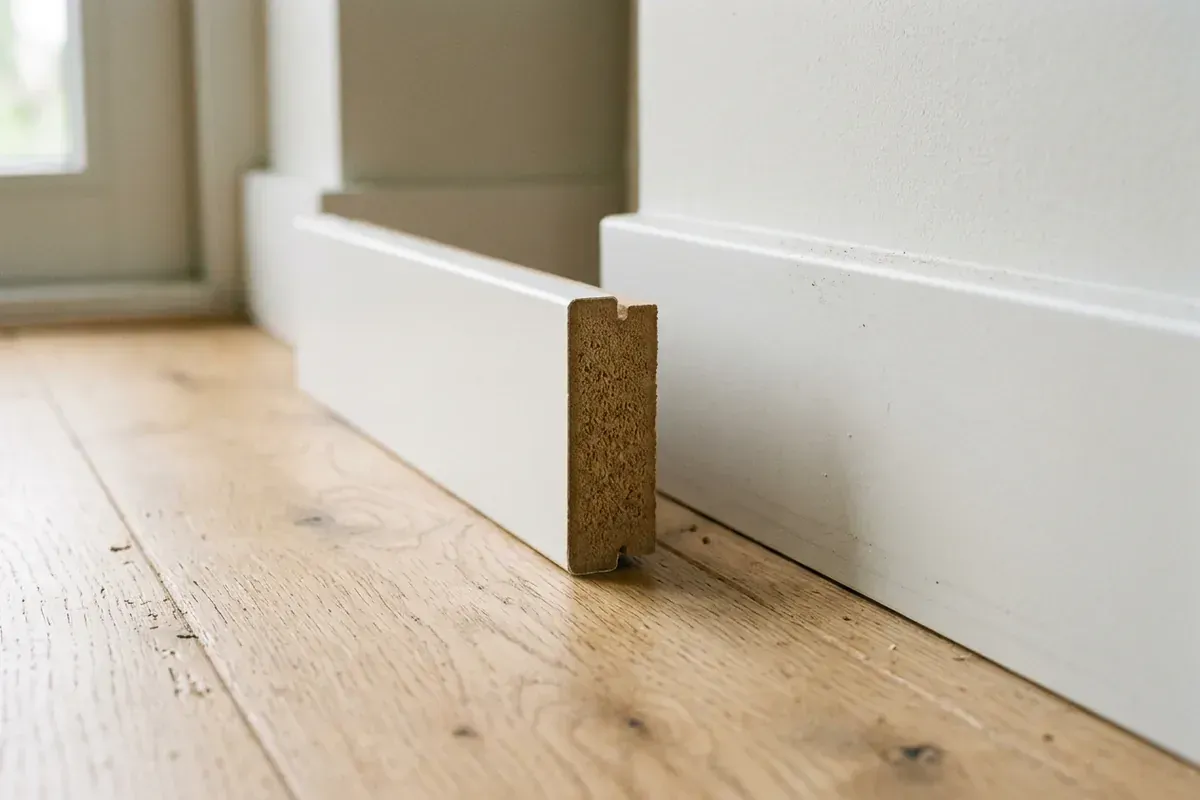
MDF
MDF is a sheet material made of pressed wood fibres. It is stable, smooth and easy to paint, which makes it the most popular material for skirting boards.
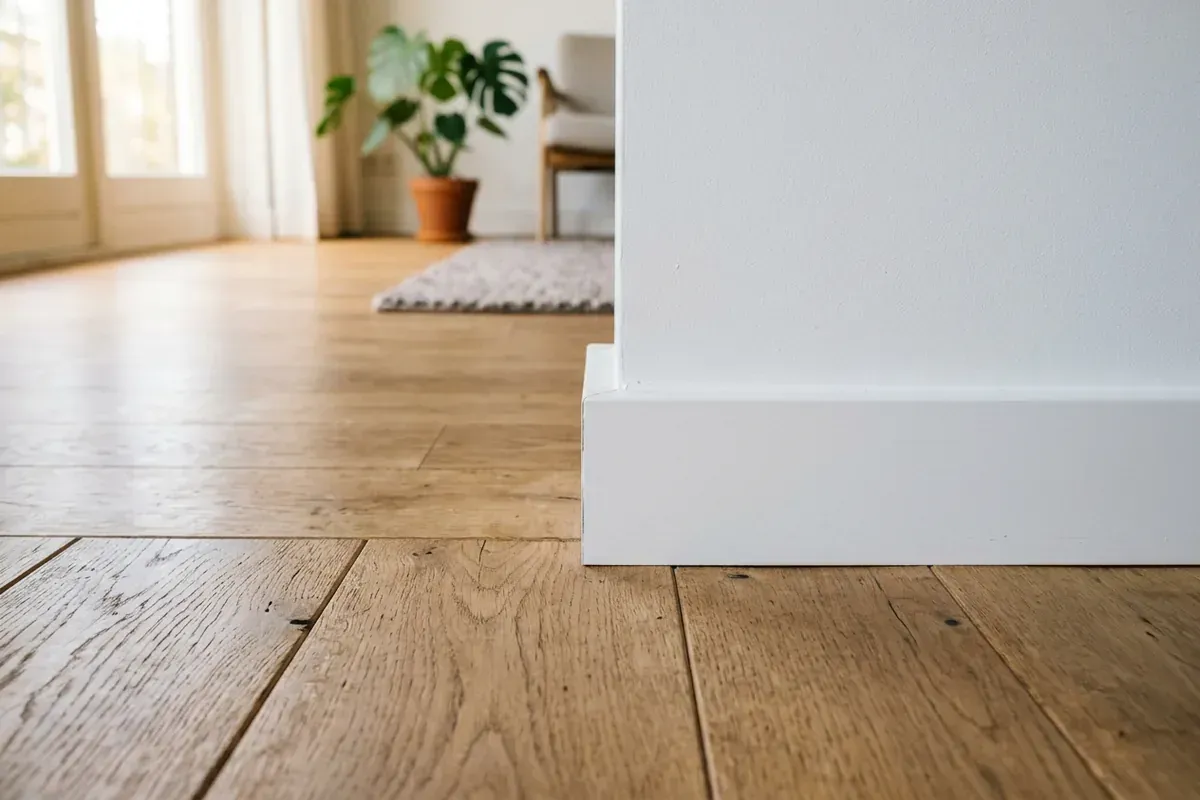
Parquet
Parquet is a floor with a top layer of real wood. Timber moves with the indoor climate, so the skirting must leave the floor room to move.
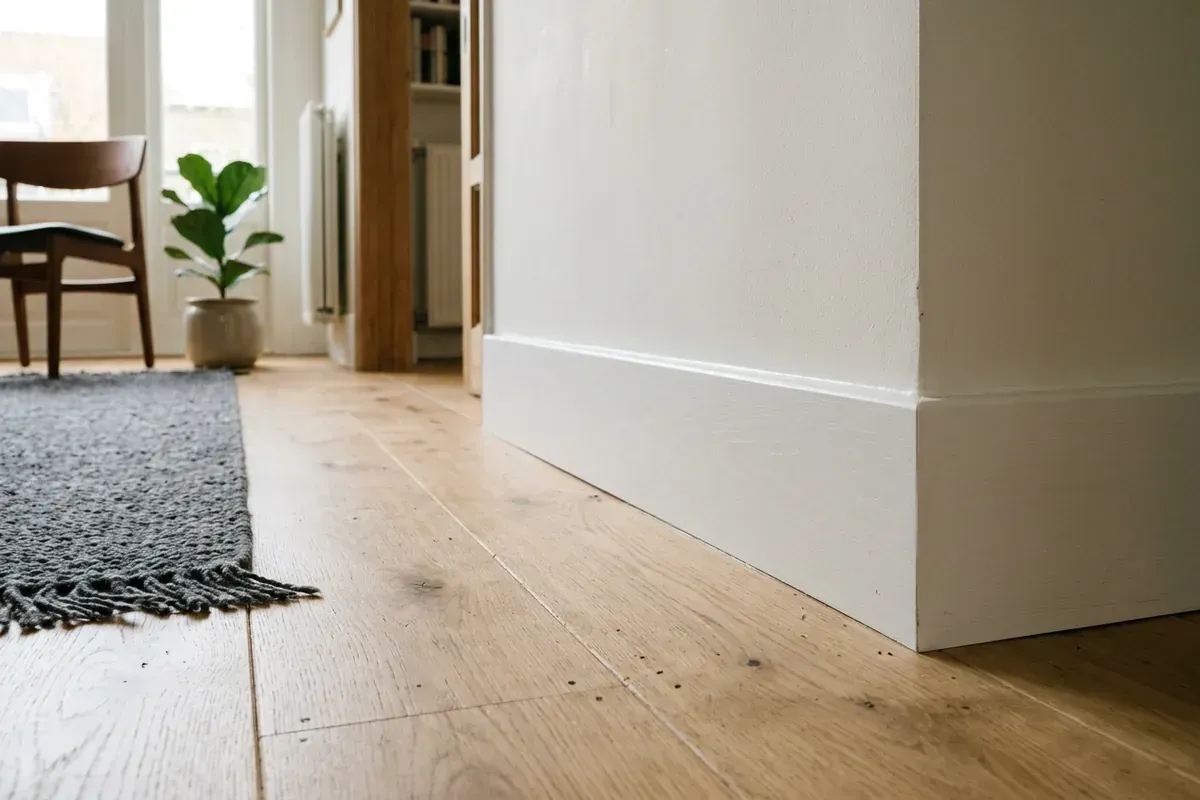
Skirting board
A skirting board is the moulding at the base of the wall that finishes the transition to the floor and protects the wall. Here is how it works and what to look out for.
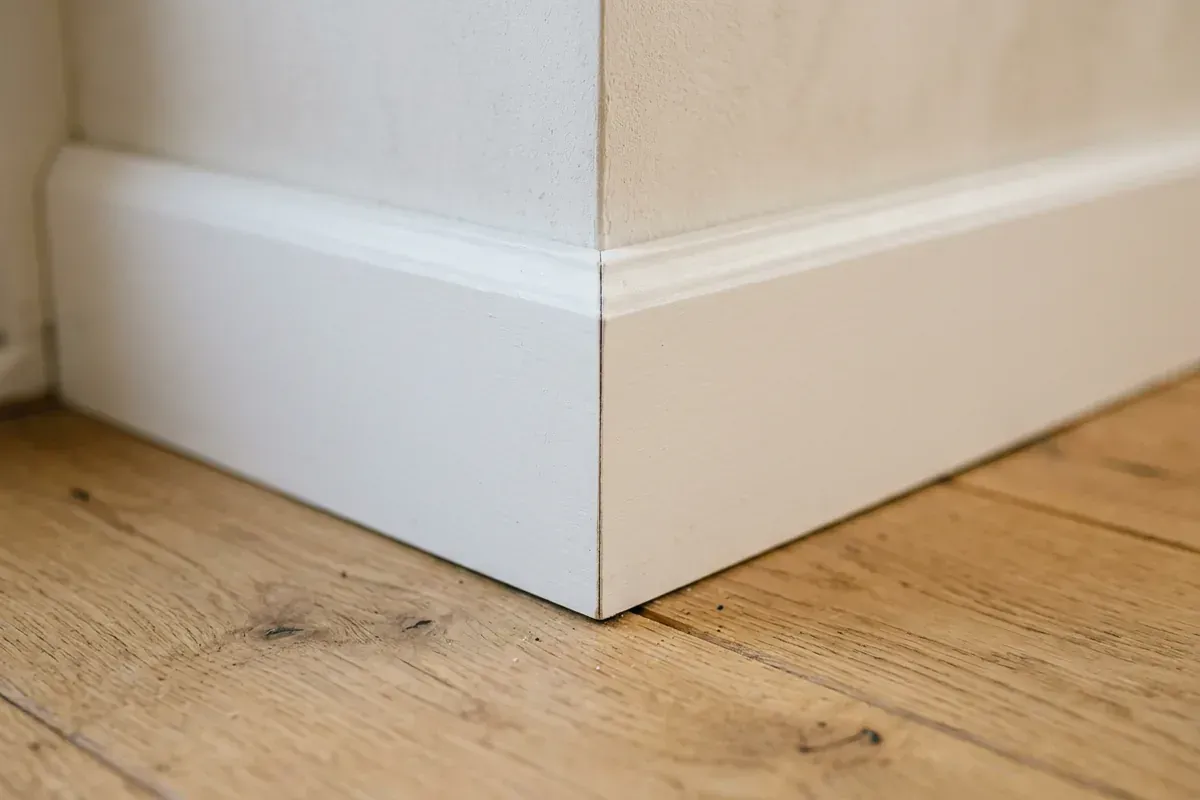
Mitre joint
A mitre is an angled cut that lets two mouldings meet seamlessly in a corner. For a right angle, that is usually 2 x 45 degrees.
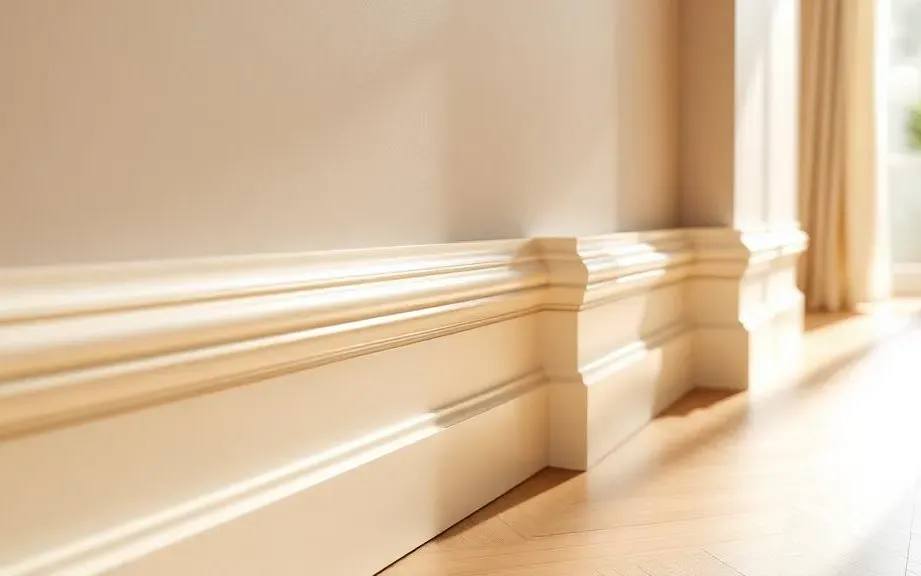
Skirting board installation by a specialist skirting fitter
TipTop Plinten fits skirting boards in MDF, solid wood and aluminium, finished in any RAL colour and neatly matched to any floor, even with uneven walls.
Skirting board installation? Request a free quote
On-site measurement €75 incl. VAT (credited for orders above a minimum project size)