
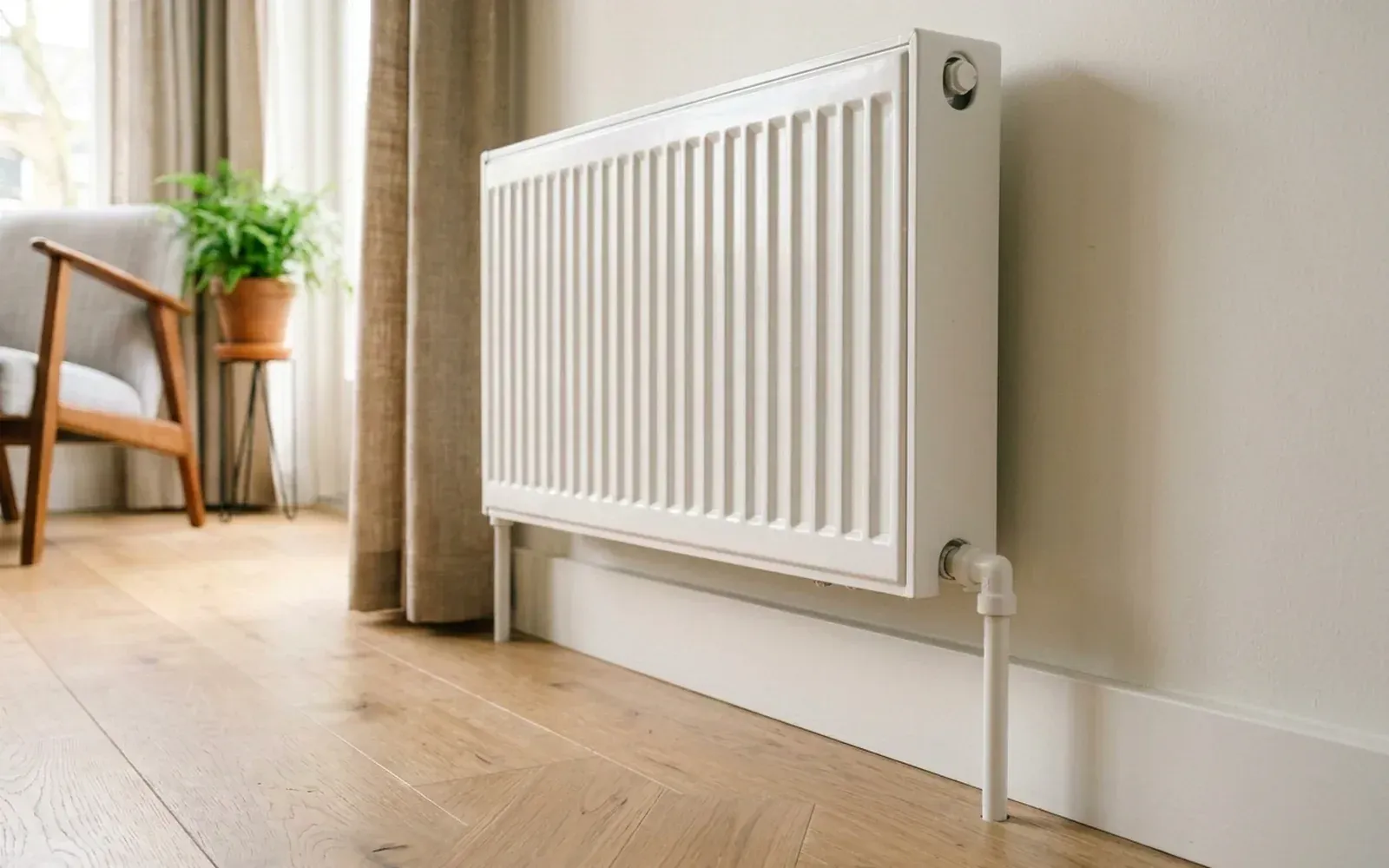
You fit skirting around a radiator and heating pipes by notching the skirting precisely around the pipes, leaving a small gap all round because hot pipes expand. If the pipes come up out of the floor, the skirting gets a hole or slot in the right place; if they come out of the wall, the skirting is notched at the top or the back. The gap is then finished with a flexible material. If pipes run low in the wall, gluing is preferable to screwing.
In this article you can read which situations you are likely to meet, how skirting is fitted around pipes and what to check in advance.
Why are radiator pipes tricky for skirting?
A skirting board runs in a single line along the wall. Radiator pipes interrupt that line exactly where the skirting needs to go: just above the floor, low in the corner or halfway along a wall. That gives three points to watch:
- The fit. The notch must be tight, otherwise you see an untidy hole around the pipe.
- The movement. A central heating pipe heats up and cools down again, and the metal expands and contracts. It is not much, but enough to crack or make a too-tight skirting board or caulk joint tick.
- The fixing. Where pipes run low in the wall, you cannot simply drive in a screw or nail.
Which situations will you meet?
Pipes from the floor
This is the most common situation with radiators: two pipes come straight up out of the floor to the radiator valves. The skirting runs behind or between them. The skirting then gets a notch at those points, exactly sized to the pipe diameter, with a small gap.
Pipes from the wall
In some homes the pipes come horizontally out of the wall, just above the floor. The skirting is then notched at the top or cut out around the pipe. The taller the skirting, the more often you meet this: with a tall skirting board, pipes are more likely to fall within its height.
Surface-mounted pipes along the wall
In older homes, heating pipes sometimes run visibly along the wall, just above the floor. Skirting cannot simply be fitted against them. Possible solutions are to have the skirting join above or behind the pipe, or to have a heating engineer reroute the pipe. Which route is best depends on the space between pipe and wall.
Underfloor heating manifold
A manifold is often in a cupboard or alcove. Around the manifold and the pipes going into the floor, the skirting usually stops neatly with an end piece or a clean finish, so the manifold stays accessible.
How is the skirting fitted around a pipe?
The principle is simple; the execution takes precision:
- Measure exactly. The centre-to-centre distance of the pipes, the distance to the wall and the pipe diameter are measured.
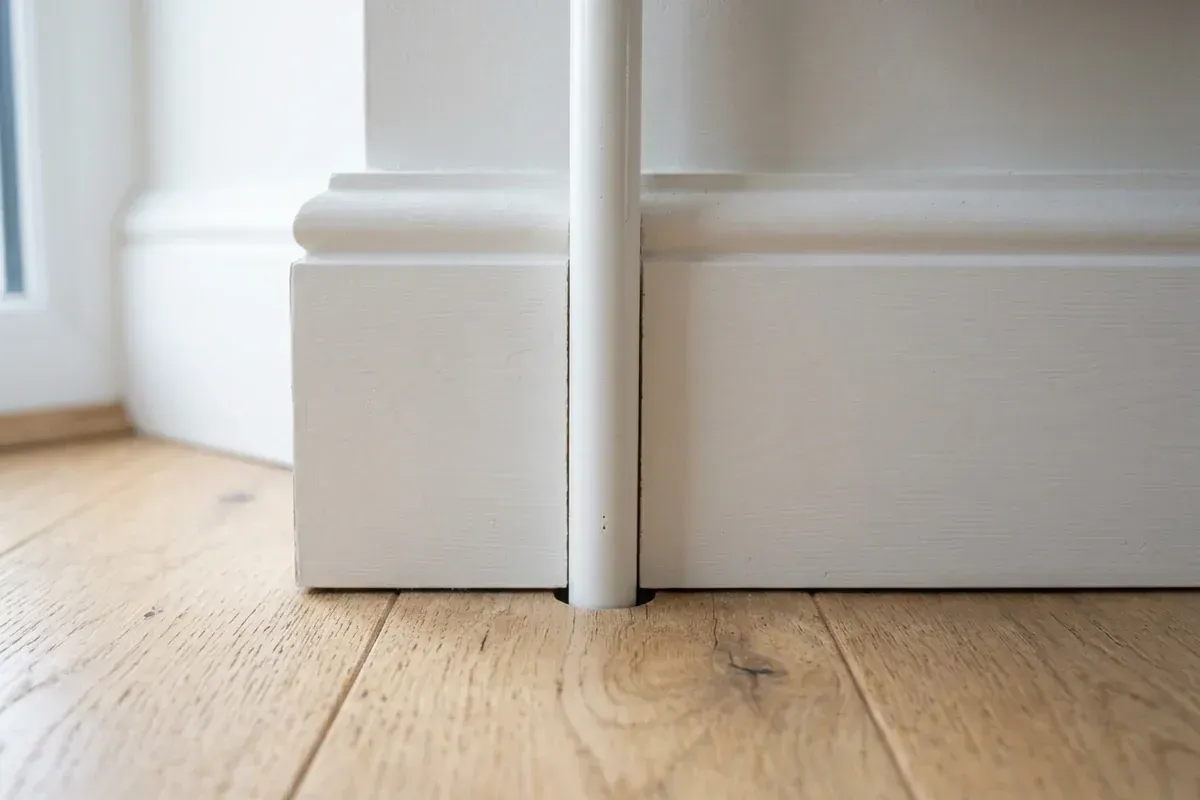
- Make the notch. A hole is drilled or a slot is cut, slightly larger than the pipe.
- Split if necessary. If the skirting cannot be slid over the pipe, it is divided at the pipe and closed up again around it. With an angled cut, that joint is barely noticeable.
- Fix. The skirting is fixed using the method that suits the wall and the position of the pipes.
- Finish. The gap around the pipe is finished flexibly, so the pipe can move.
How much clearance do you leave?
Just enough to let the pipe move freely, but so little that it looks neat. A few millimetres all round is usual. The exact size depends on the pipe and the situation.
Fixing when there are pipes in the wall
Not all pipes are visible. Water, heating or electrical lines can run low in the wall, especially around radiators, kitchens and sockets. A screw or nail in the wrong place can then cause damage.
That is why:
- Report known pipes. If you know where pipes run, or have drawings, pass that on in advance.
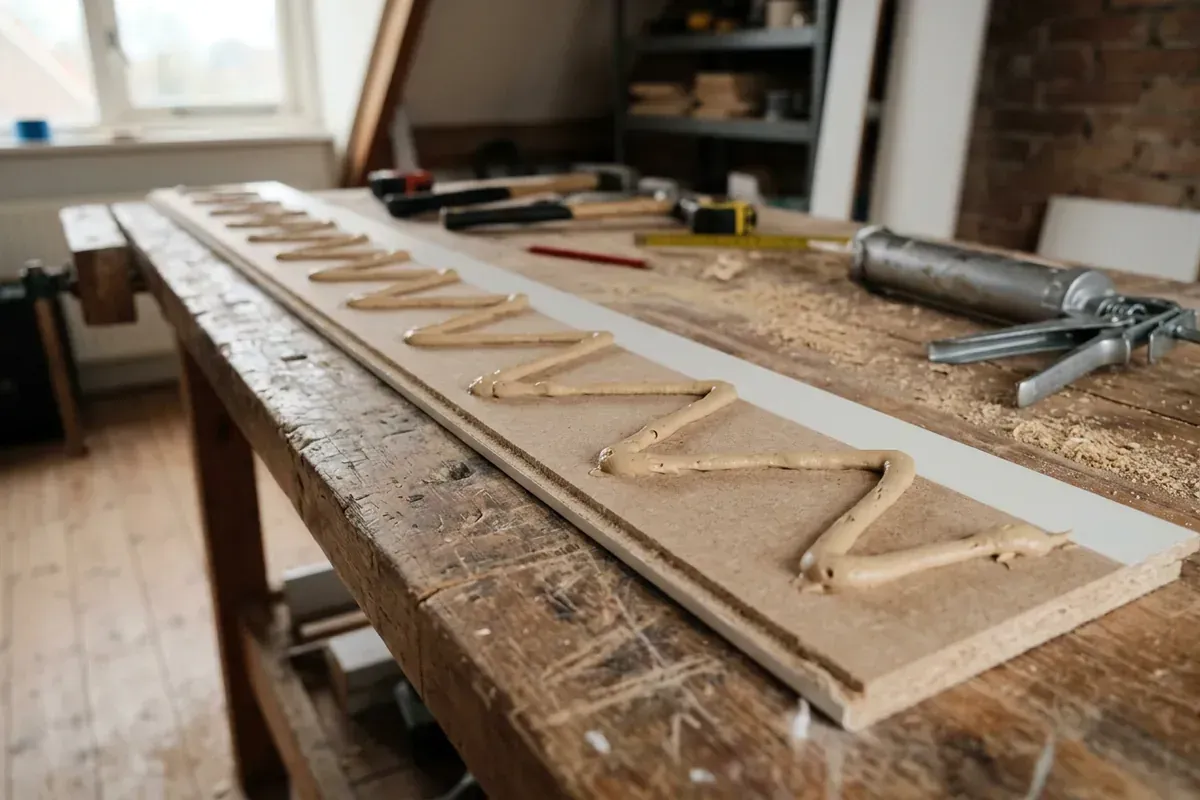
- Glue where necessary. Construction adhesive is often the safest choice when there are pipes in the wall, provided the wall is flat enough.
- Fix mechanically where possible. In places without pipes, a screw or nail can give extra hold, for example on an uneven wall.
You can read more about the different methods in fixing skirting boards: glue, screws or nails.
How do you finish the gap around the pipe?
Around a hot pipe you need a flexible finish. There are two common options:
| Finish | When it is useful |
|---|---|
| Flexible caulk joint | Neat and discreet, paintable if you choose acrylic caulk |
| Pipe collar | Covers a larger notch, handy with older or crooked pipes |
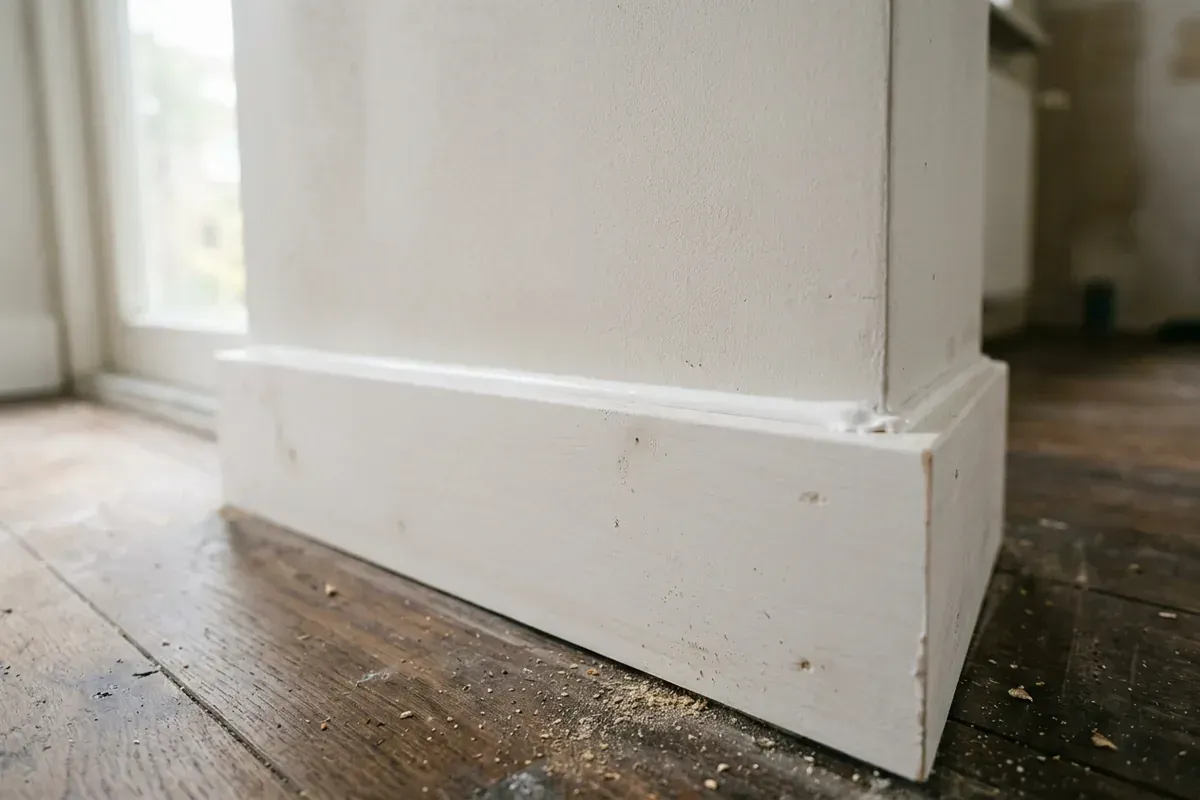
Along the top of the skirting, the joint with the wall is usually sealed with paintable acrylic caulk. Around the pipe itself, it is important that the caulk does not become rigid and that there is enough of it in the joint to absorb movement. In caulking skirting boards: which sealant? you can read which sealant belongs where.
Replacing old skirting around pipes
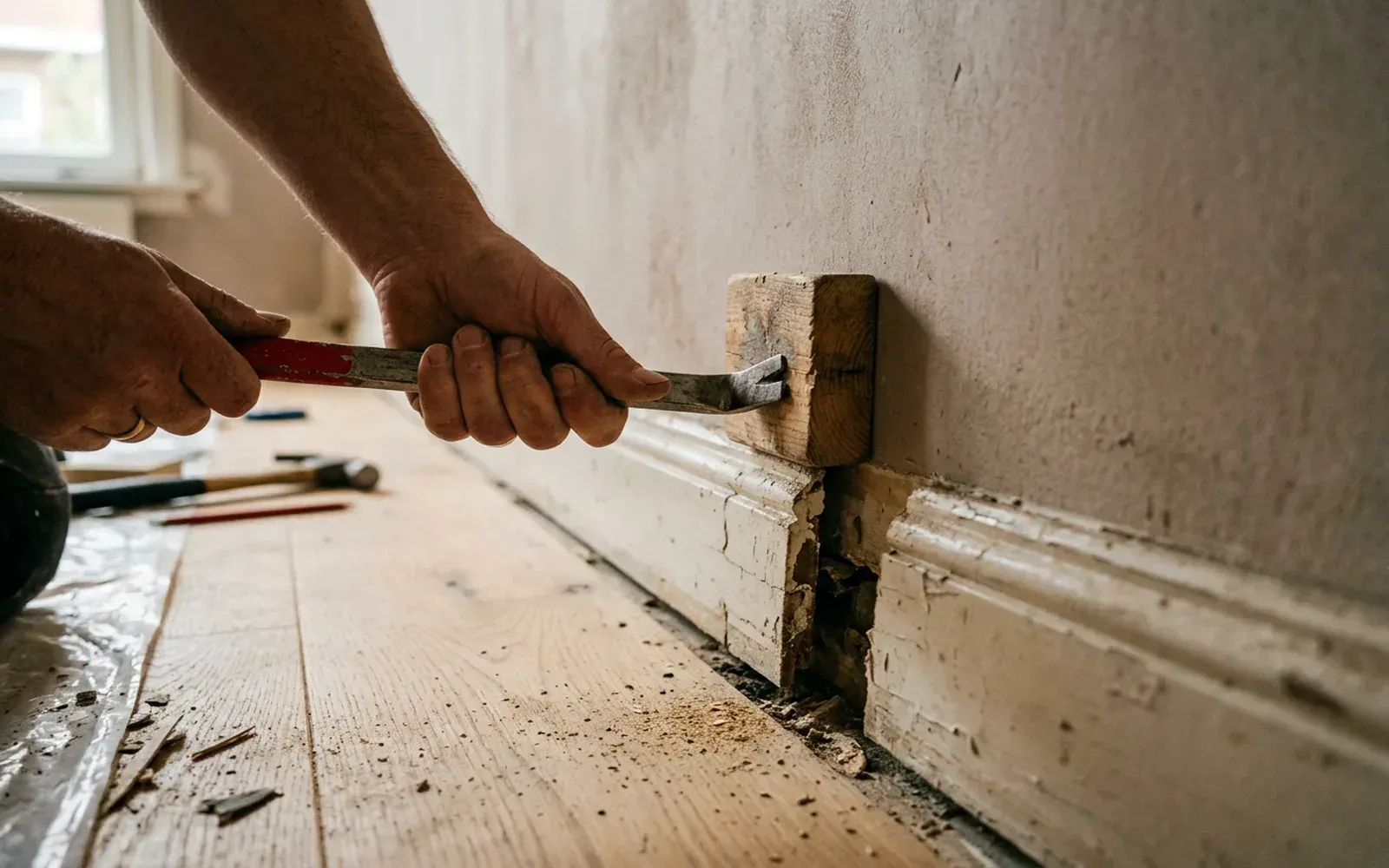
In renovations, the old skirting often sits tight around the pipes, sometimes even caulked in or painted over. Take care when removing it: a pry bar behind the skirting can hit or bend a pipe. Also read removing skirting boards without damage.
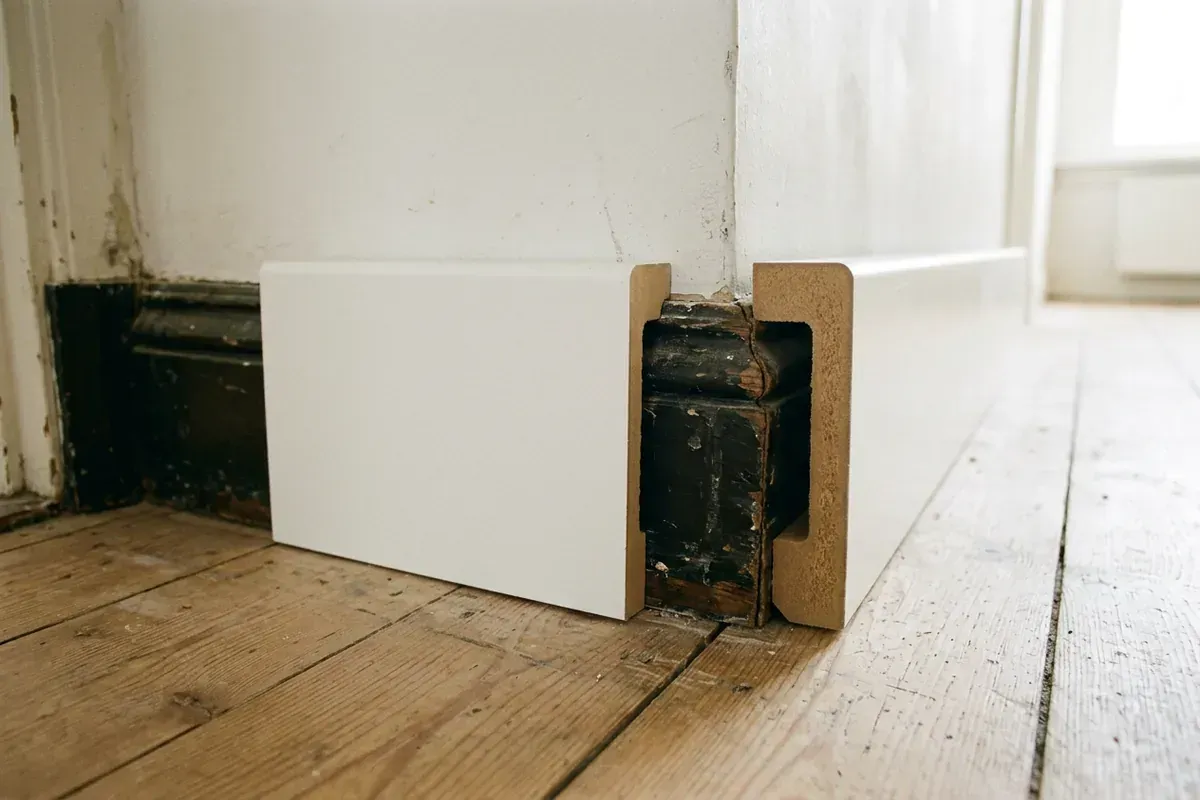
If you do not want to remove the old skirting, an overlay skirting board can be an option. It is fitted over the existing skirting. The overlay skirting must also be notched around pipes, and because it is thicker, it comes closer to the pipe. This is something to have assessed in advance.
Move the radiator or leave it?
In most cases the radiator simply stays where it is and the skirting is fitted around it. If there is little space between radiator and floor, or you want the pipes rerouted, that is work for a heating engineer. Plan it before the skirting is fitted, so the skirting is made for the final situation.
Tips before the skirting is fitted
- Take photos of every radiator and the pipes at floor level; that helps with the quote.
- Mention underfloor heating and the location of the manifold.
- Have leaks fixed first. A dripping valve or coupling does not belong behind new skirting.
- Think about access. Isolating valves and bleed valves must remain accessible after fitting.
- Choose the material deliberately. In areas where moisture can occur, such as a radiator under a window with condensation, moisture-resistant MDF can be a sensible choice.
You can see what made-to-measure work on irregular walls and unusual corners looks like in the project custom skirting in Oss, where the skirting boards were made and fitted entirely to measure.
Having skirting fitted around radiators?
On the skirting board installation page you can read which materials and finishes are possible, and on caulking how joints are finished. Send a few photos of the radiators, the pipes and the rooms via the contact page, with an estimate of the number of running metres. The quote is free and without obligation. An on-site measurement is optional for €75 incl. VAT; this amount is credited as a discount on jobs above a minimum project size. We are happy to communicate in English, as well as Dutch, German, Turkish, Persian and Arabic.
Frequently asked questions
The skirting is notched where the pipes are: a hole or slot is made that fits exactly around the pipe. Sometimes the skirting is cut into two pieces for this and closed up again around the pipe. A small gap is left around the pipe, because hot pipes expand.
Better not. A heating pipe expands and contracts with temperature changes. If the skirting is clamped against it, this can cause ticking or crack the finish. A small gap around the pipe prevents that.
That calls for caution. Water, heating or electrical lines can run low in the wall. Where this is or may be the case, gluing with construction adhesive is preferable to screwing. If you are unsure where pipes run, mention it in advance.
Usually not. As a rule, the skirting can be fitted around the existing pipes. If a radiator does need to be removed or moved, that is work for a heating engineer and is agreed in advance.
It can be finished with a flexible, paintable caulk or with a pipe collar, depending on the situation. What matters is that the finish can absorb the pipe's movement.
Related articles
Installation & finishing
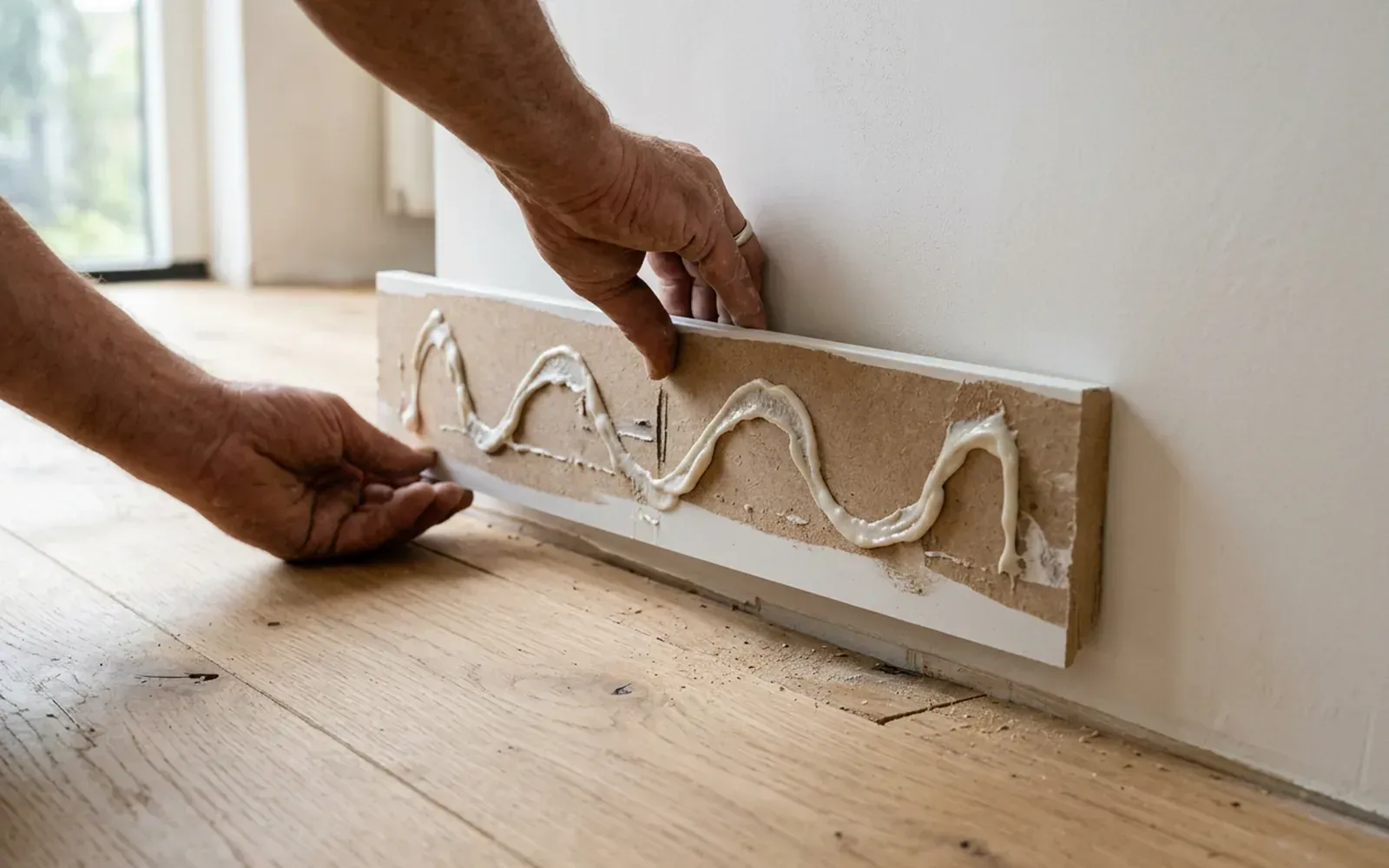
Fixing skirting boards: glue, screws or nails?
Glue, screws or nails: the right fixing depends on the wall, the skirting and the floor. Here is how to choose a method that stays put.
Installation & finishing
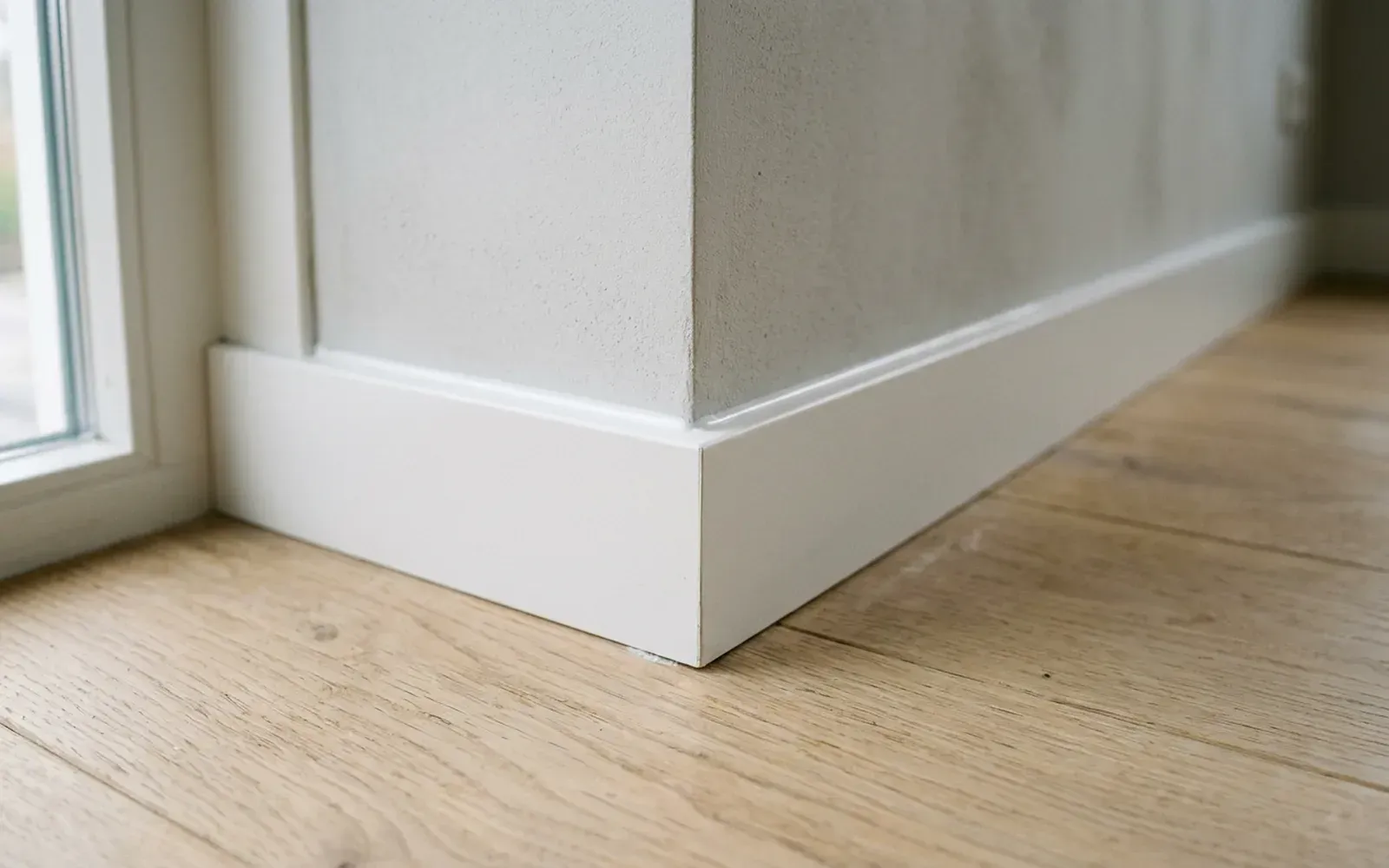
Caulking skirting boards: which sealant should you use and how do you get a neat finish?
For the joint between skirting board and wall you use paintable acrylic caulk, and silicone only where water is involved. Here is how to run a clean caulk line.
Installation & finishing
Removing skirting boards without damaging the wall or floor
Old skirting boards are best removed step by step: cut through the caulk line, find out how they are fixed and prise them off carefully while protecting the wall.
Related
Skirting board
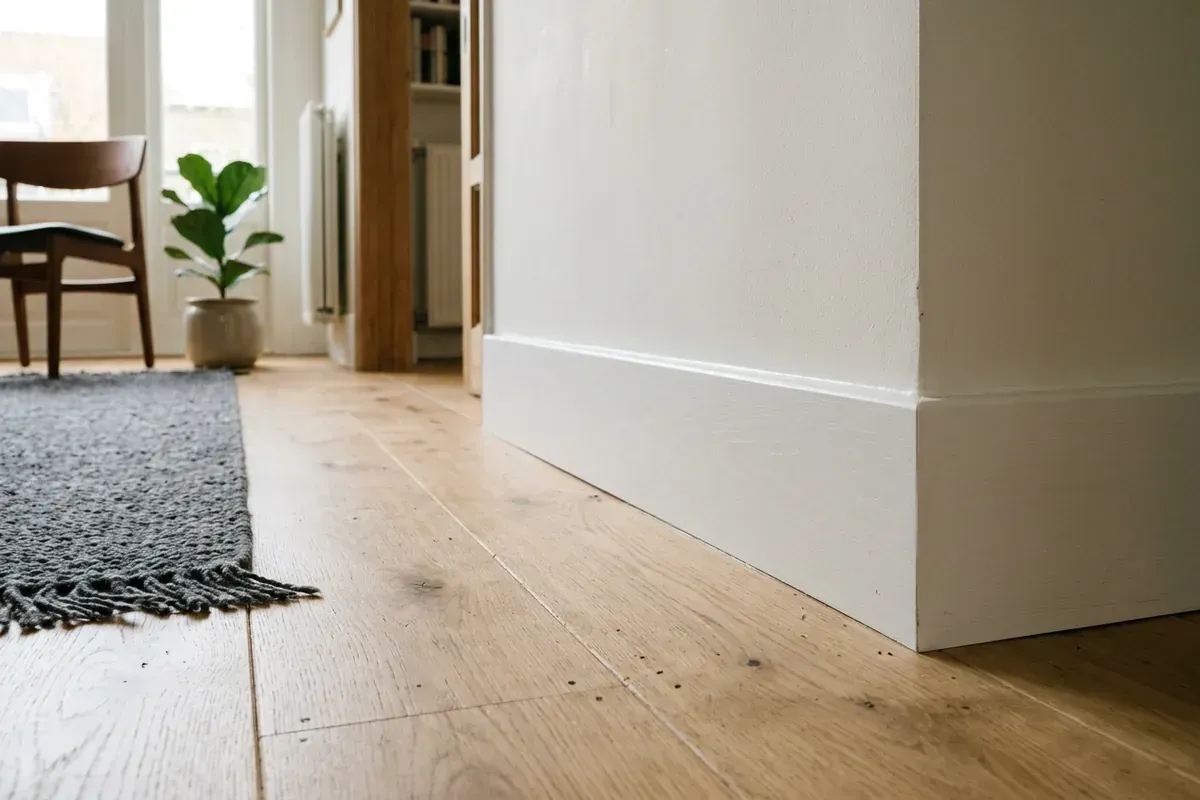
A skirting board is the moulding at the base of the wall that finishes the transition to the floor and protects the wall. Here is how it works and what to look out for.
Construction adhesive
Construction adhesive is a strong glue or sealant used to fix skirting boards, mouldings and panels to the wall, often combined with nails or screws.
Acrylic caulk
Acrylic caulk is a water-based sealant that can be painted once cured. It is the usual choice for skirting boards, mouldings and frames in dry rooms.
Overlay skirting
Overlay skirting is routed out at the back so it fits over an existing skirting board. Useful during renovation, provided the substrate allows it.
Caulking
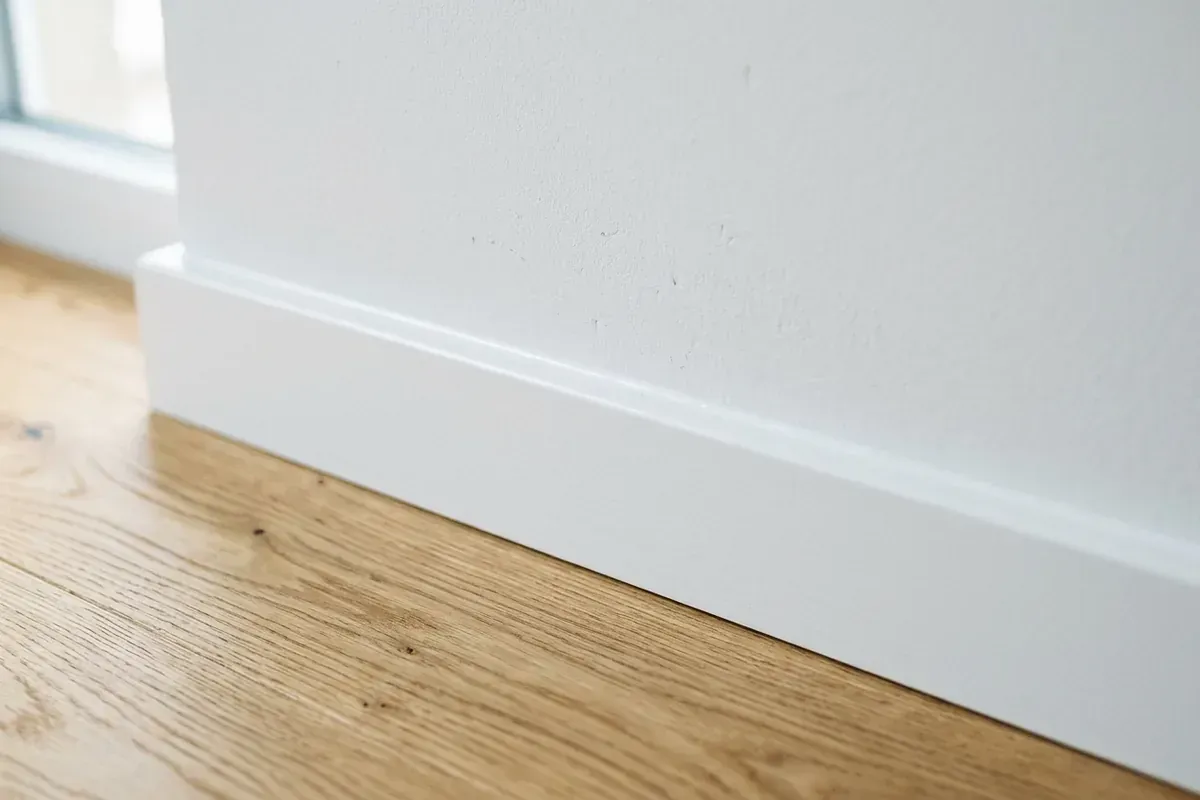
Caulking means sealing joints with a flexible sealant. With skirting boards and mouldings, it makes the transition to the wall crisp and seamless.
Skirting board installation by a specialist skirting fitter
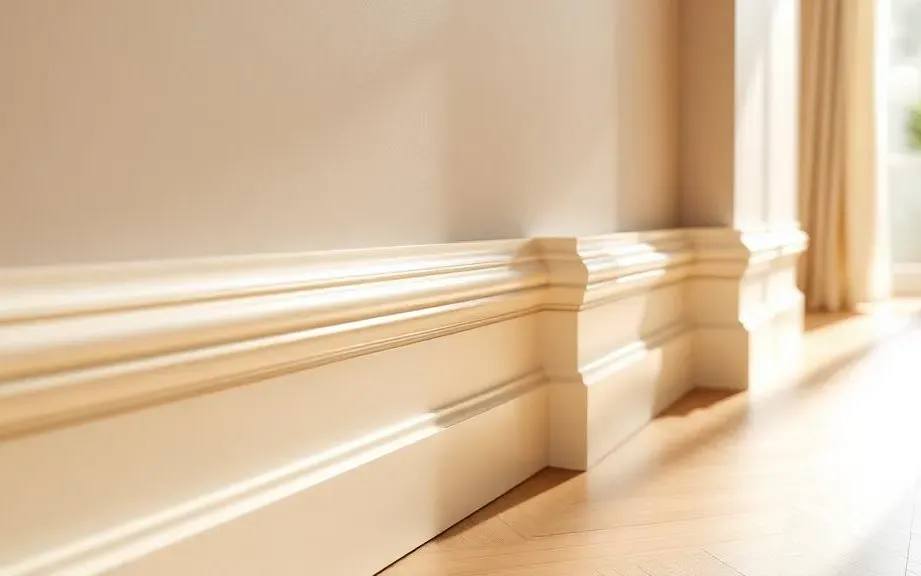
TipTop Plinten fits skirting boards in MDF, solid wood and aluminium, finished in any RAL colour and neatly matched to any floor, even with uneven walls.
Caulking skirting boards and sealant work for a seamless finish
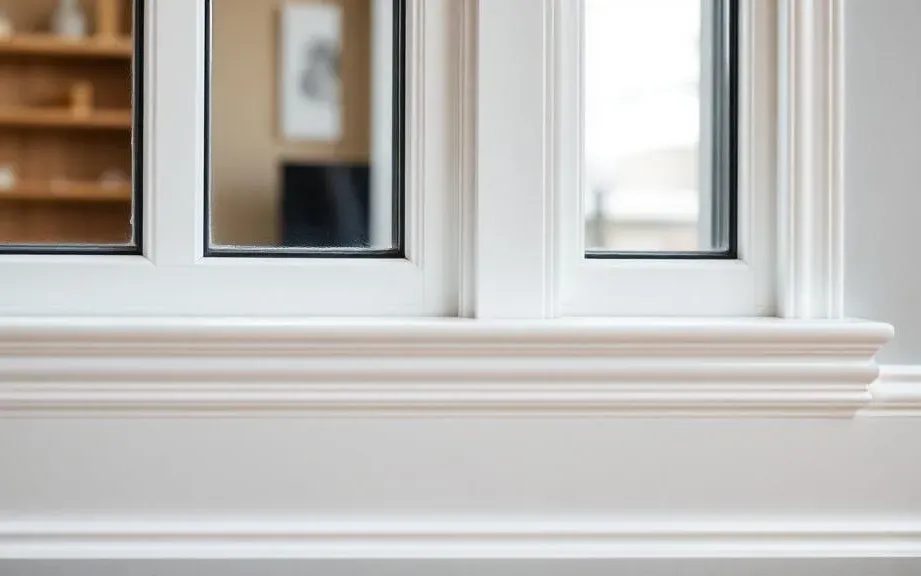
Caulking is the final step that makes skirting boards, mouldings and panels look seamless. TipTop Plinten uses acrylic or silicone, paint-ready or in colour.
Skirting board installation? Request a free quote
On-site measurement €75 incl. VAT (credited for orders above a minimum project size)