
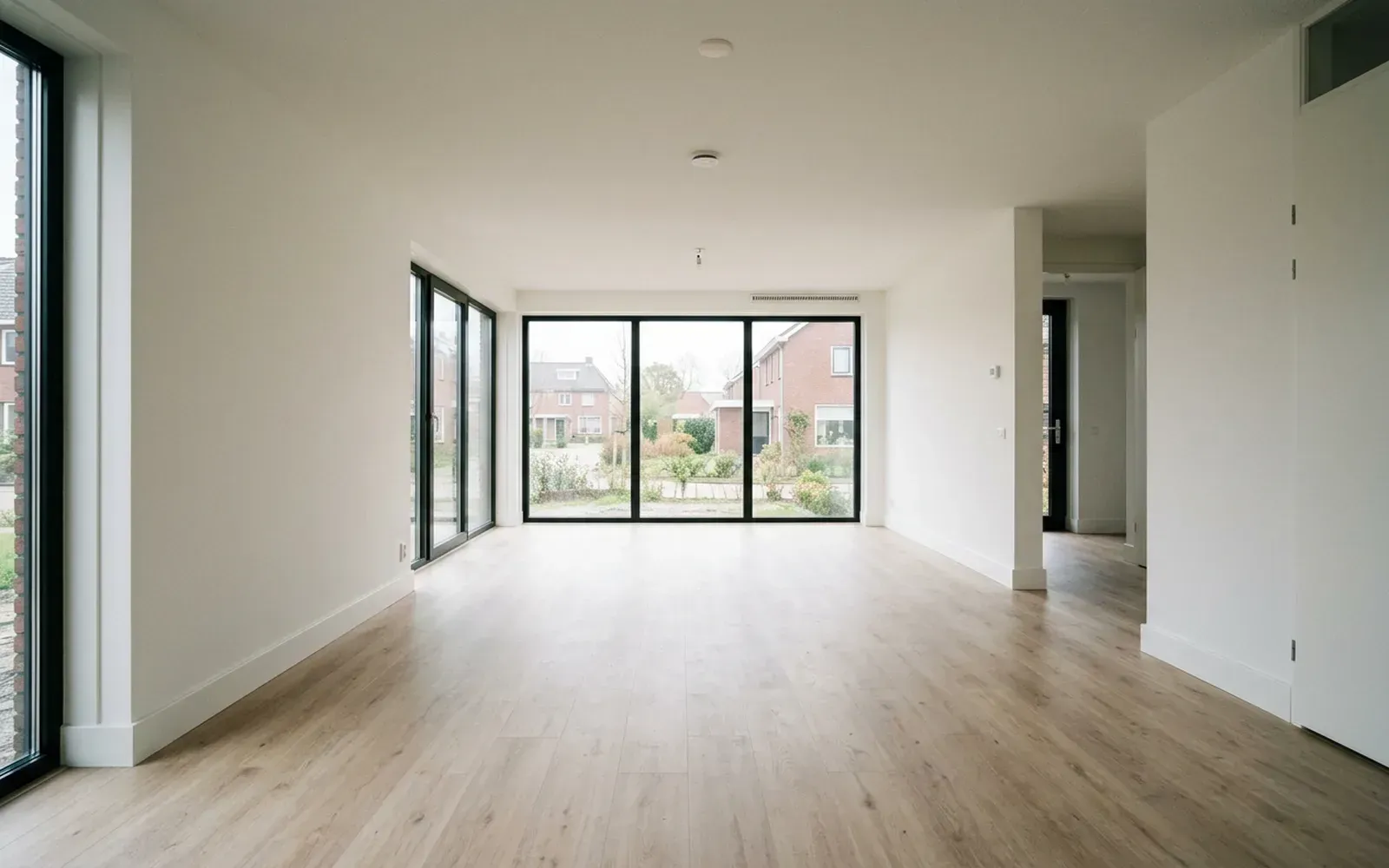
In a new build, you fit skirting boards after the floor and after the wall finish: the skirting covers the edge of the floor and the expansion gap, and preferably goes onto a plastered or painted, dry wall. Caulking and possibly a final coat of paint follow. A new build is a good moment to have skirting boards fitted, because walls and floors are new and the rooms are often still empty. It is important, though, to plan the order carefully and to take moisture into account.
Why skirting after handover?
In the Netherlands, new-build homes are regularly handed over without floors and without skirting boards. The floor, the wall finish and the skirting are then up to the buyer. That gives you freedom: you choose the floor type, the height and material of the skirting and the colour yourself. It also means you have to coordinate the order of the work carefully.
The right order in a new build
A logical order for finishing a new-build home is:
- Finish the walls. Apply plaster or a spray finish and let it dry.
- Lay the floor. Laminate, vinyl (PVC), parquet, herringbone or tiles, including an expansion gap along the walls.
- Paint the walls, if you want to do this before the skirting.
- Fit the skirting boards. Cut to size, mitre the corners, fix to the wall.
- Caulking. Seal the joint between skirting and wall with paintable acrylic caulk.
- Final coat of paint. Touch up the caulk joints and possibly the skirting.
Sometimes a different order is chosen, for example if the painter wants to do everything in one go after the skirting has been fitted. What matters is that the skirting is not fitted before the floor, because it has to cover the edge of the floor and the expansion gap.
Watch out for moisture
A new-build home still contains a lot of construction moisture. A screed and plasterwork release moisture after they have been applied. If a floor is laid or skirting is fitted too early, this can lead to problems with the floor or the skirting.
What should you look out for?
- Keep to the drying times recommended by the floor fitter and the plasterer.
- Ventilate the home well in the period after handover.
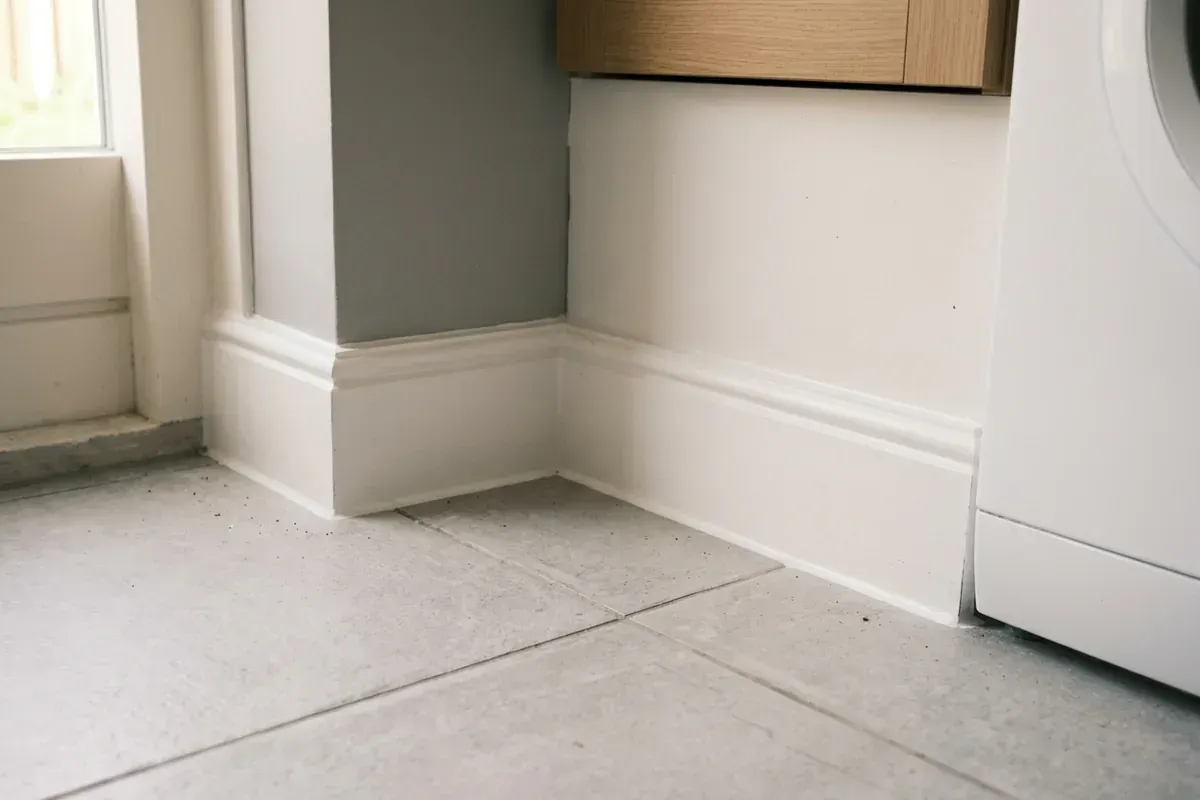
- In rooms where more moisture may occur, such as a utility room or a hallway by the front door, choose moisture-resistant MDF.
Skirting boards and underfloor heating
Many new-build homes have underfloor heating. This mainly affects the floor: it must be suitable for underfloor heating and may move a little more with changes in temperature. That is why it is especially important that the skirting is fixed to the wall and leaves the floor free. A floating floor such as laminate or click vinyl must be able to move under the skirting. Read more in skirting boards for laminate and skirting boards for vinyl floors.
Which skirting should you choose for a new build?
New builds often have a sleek, modern look. Common choices are:
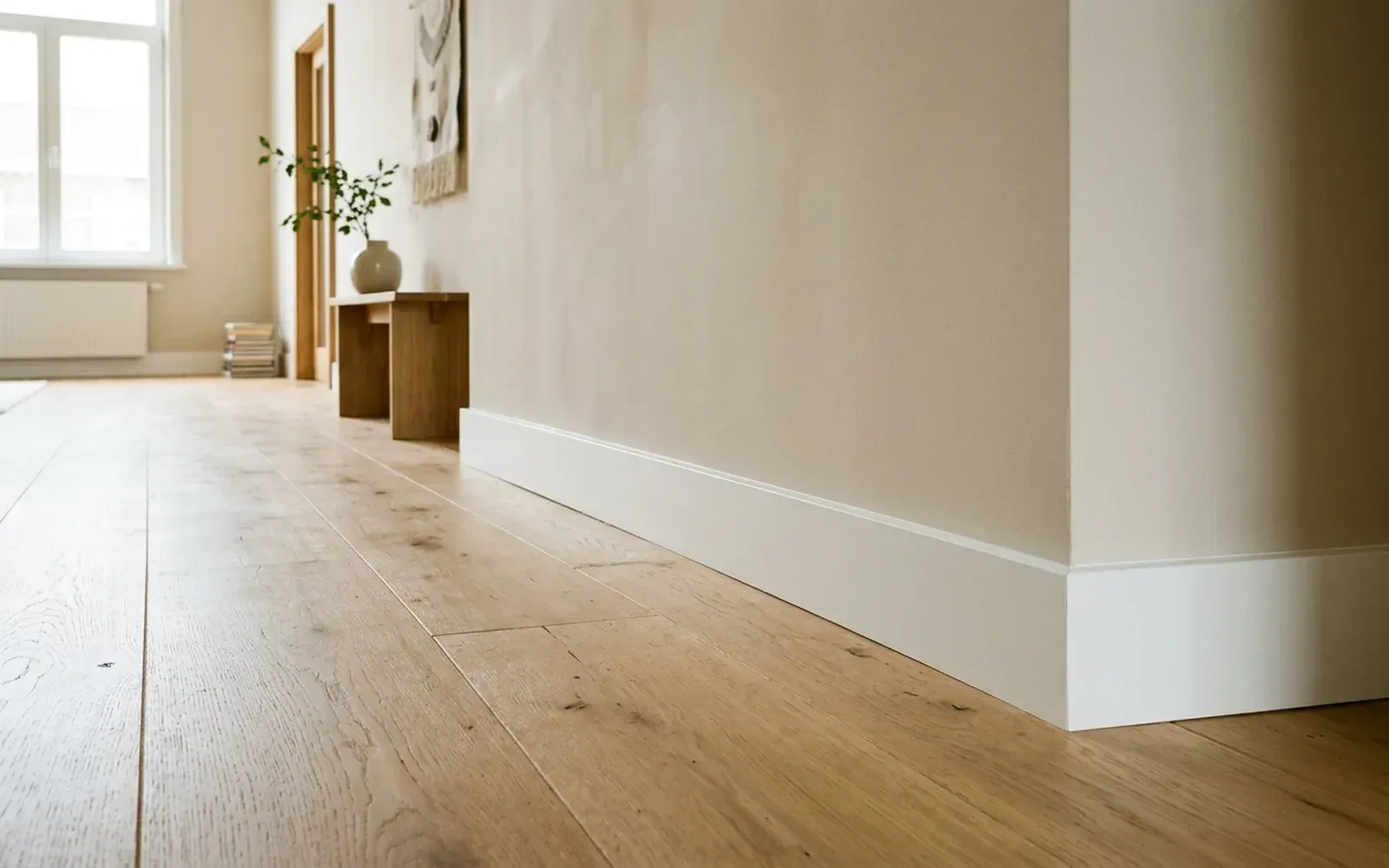
- Sleek MDF skirting boards in white, for example RAL 9010, for a calm and light interior.
- Tall skirting boards for a more luxurious look. See tall skirting boards: which height?
- Black skirting boards in RAL 9005 as a contrast with a light floor.
- Aluminium skirting boards in a sleek, modern interior.
If you want as little painting as possible, choose pre-finished skirting. After fitting, only the caulk joints and mitres are touched up. More on this in painting skirting or pre-finished.
Which floor, which junction?
The floor also determines how the skirting is fitted and finished.
- Laminate and click vinyl are usually floating. The skirting covers the expansion gap and is fixed to the wall so that the floor can move.
- Glue-down vinyl and parquet are fixed to the subfloor. Here too, the skirting is fixed to the wall, but the edge finish may differ.
- Herringbone floors have a striking pattern along the wall. Sleek skirting and a calm caulk joint show off the pattern best. See skirting for herringbone floors.
- Tiled floors sometimes call for a different edge finish, especially in rooms where water can get to them.
Let the floor fitter and whoever fits the skirting know in advance which floor is going down and how wide the perimeter gap will be. The skirting can then be matched to it.
Meeting door frames and architraves
In new builds, interior door frames are often finished with an architrave or door trim. The skirting meets it. If you choose architraves, it is handy to have them done at the same time as the skirting, so that profile, colour and junction are matched. See architraves.
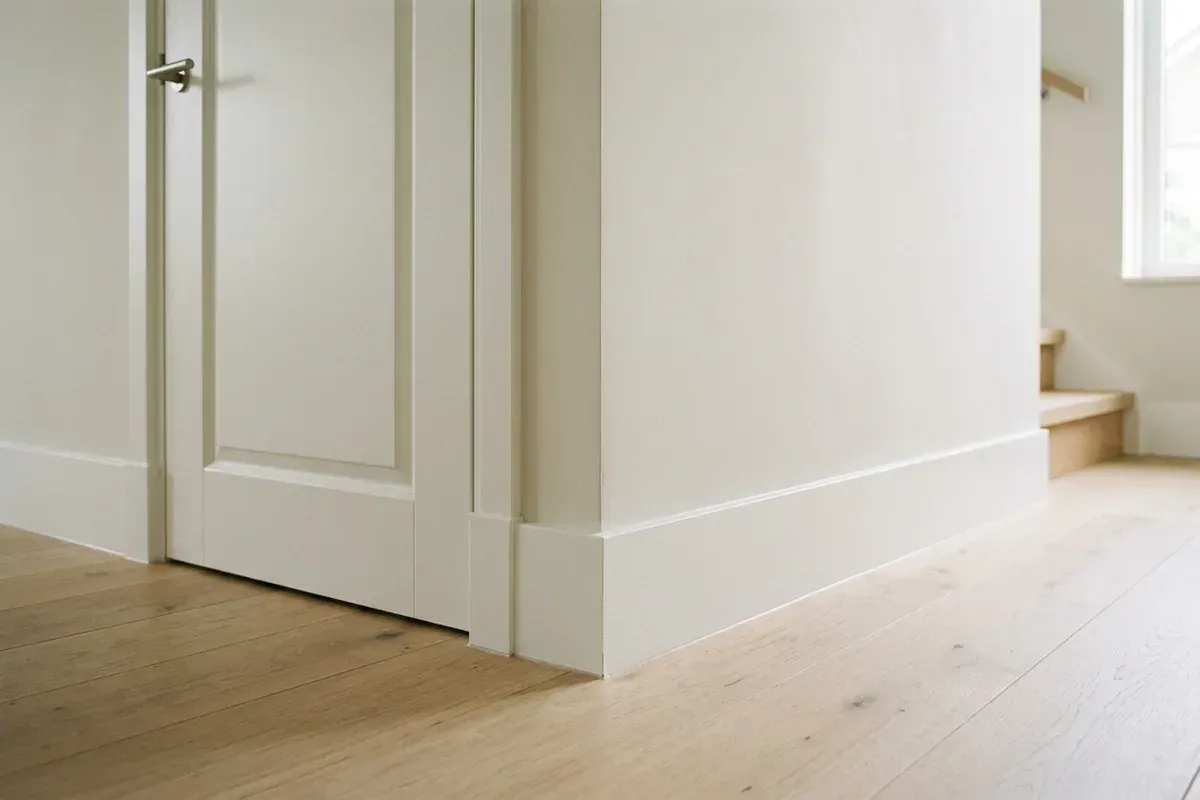
New build in practice: Boxtel
At a new-build home in Boxtel, the skirting installation was included from the shell construction stage, along with the caulking. It shows that skirting in a new build can be included early in the fit-out, instead of only as a separate job afterwards.
For contractors and floor fitters
TipTop Plinten works not only for homeowners, but also for contractors, floor fitters and interior fitters. In new-build projects, the skirting installation can be aligned with the schedule for the floor and the painting. You can read more about how we work on skirting board installation; finishing joints is covered on caulking and finishing. The glossary has more on caulking.
Common mistakes in new builds
- Fitting too early. Skirting on a wall that is still damp or before the floor causes problems with adhesion or the junction later.
- Skirting fixed to the floor. Especially with underfloor heating and a floating floor, the floor must stay free.
- Not allowing for cables and pipes. In new builds too, cables to wall sockets sometimes run low in the wall.
- Choosing the colour only afterwards. Matching the skirting colour to doors, frames and walls gives a calmer overall look.
Checklist for skirting in a new build
- Has the floor been laid, with an expansion gap along the walls?
- Is the plasterwork dry and, if applicable, painted?
- Do you know where cables and pipes run low in the wall?
- Have you chosen the material, height and colour?
- Do architraves or door trim need to be included?
- Do you want caulking included, paint-ready or in colour?
A quote for skirting in your new-build home
Send the floor plan or photos of the home, the floor type and your preferences for material and colour via contact. We are happy to communicate in English. The quote is free and without obligation. An on-site measurement is optional for €75 incl. VAT and is deducted for projects above a minimum size.
Frequently asked questions
After the floor and after the wall finish. The skirting covers the edge of the floor and the expansion gap, so the floor has to be down first. The walls are preferably plastered or painted and dry, so that the skirting and the caulk joint go onto a finished surface.
Often the walls are painted first and the skirting boards are then fitted and caulked. If the caulk joint is painted in the wall colour, a final coat along the top of the skirting follows after caulking. Agree the order in advance with the trades working in the home.
Walls and floors are new and undamaged, no old skirting needs removing and the rooms are often still empty. That makes measuring, cutting and fixing straightforward.
Yes. A screed and plasterwork continue to release moisture after they have been applied. Let them dry sufficiently according to the floor fitter's and plasterer's instructions. In rooms where more moisture may occur, moisture-resistant MDF can be a sensible choice.
Yes. At a new-build home in Boxtel, the skirting installation was included from the shell construction stage, along with the caulking. TipTop Plinten works for homeowners, but also for contractors, floor fitters and interior fitters.
Related articles
Floors & skirting
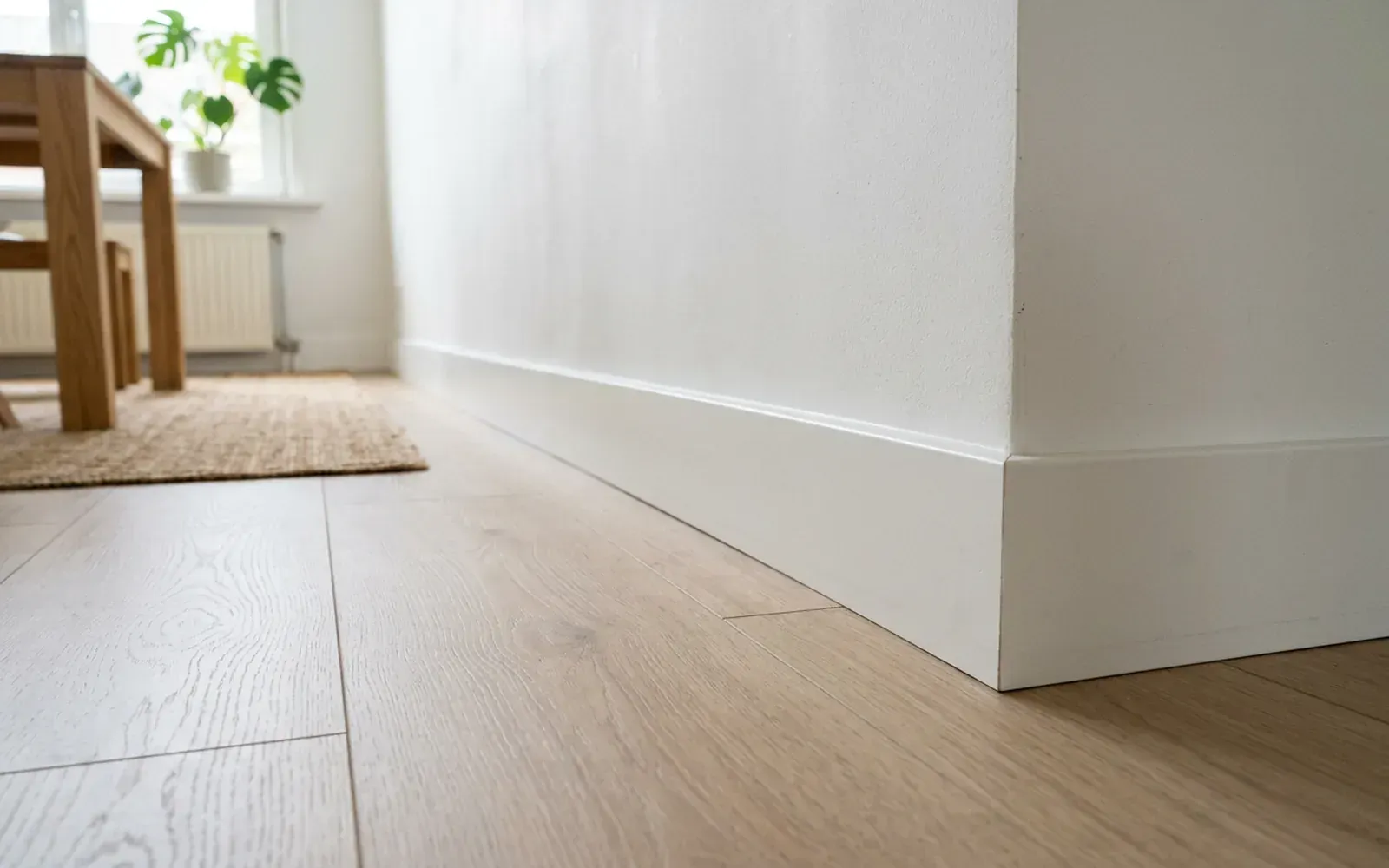
Which skirting boards suit a laminate floor?
With laminate, the skirting board has a technical job: covering the expansion gap without pinning the floor down. Here is how to choose the right skirting and fixing method.
Floors & skirting
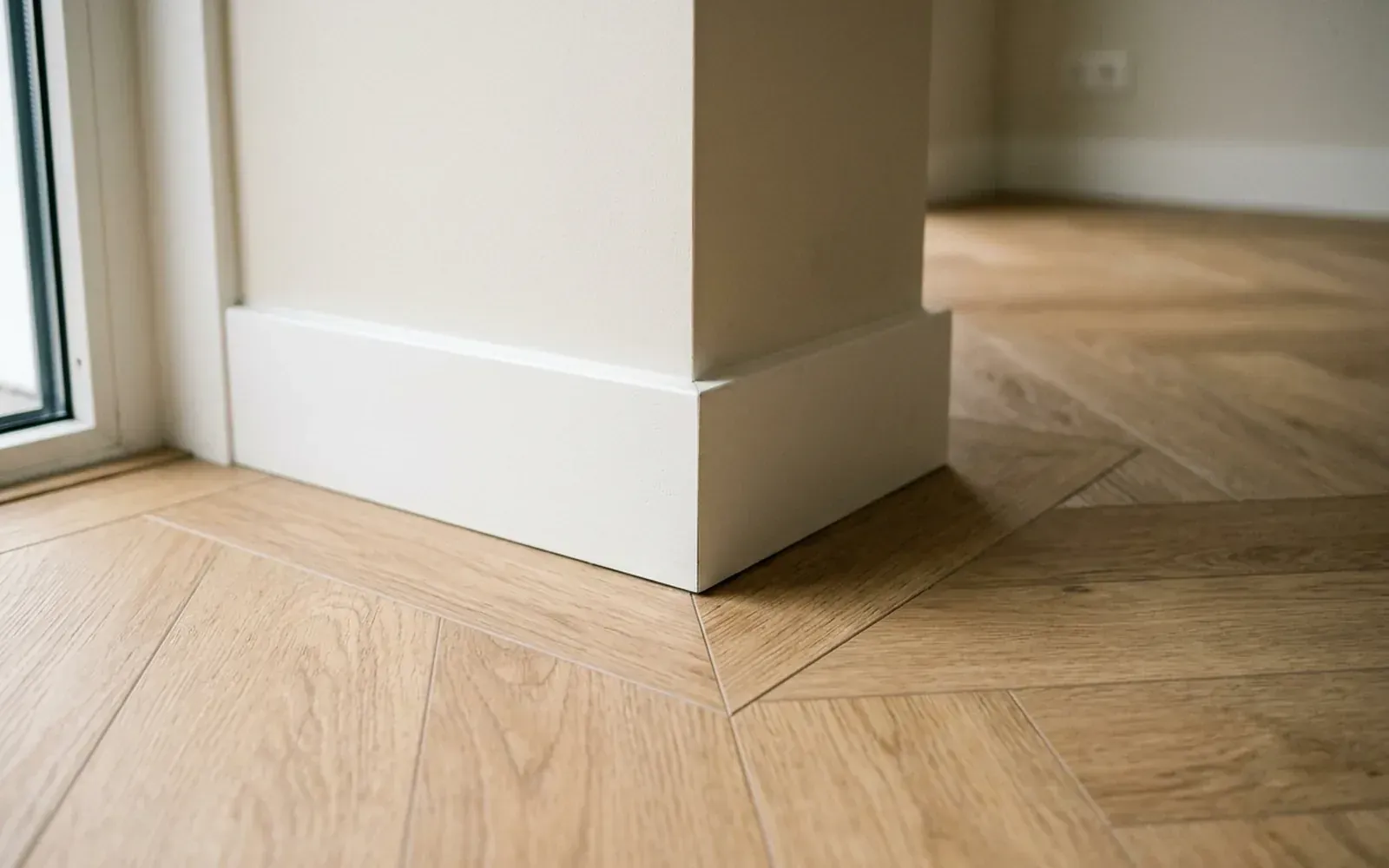
Skirting boards for a vinyl (PVC) floor: what should you look out for?
A vinyl (PVC) floor is thin and sleek, so the junction with the skirting stands out straight away. This is the difference between glue-down and click vinyl and what it means for your skirting.
Installation & finishing
Painting skirting boards or choosing pre-finished: which is the smarter option?
Pre-finished skirting boards are ready straight away, while painting them yourself gives more freedom in colour. Here is how to choose and how to paint skirting boards neatly.
Related
Moisture-resistant MDF
Moisture-resistant MDF is MDF treated to make it less sensitive to moisture. It is suitable for rooms where standard MDF would quickly swell.
Expansion gap
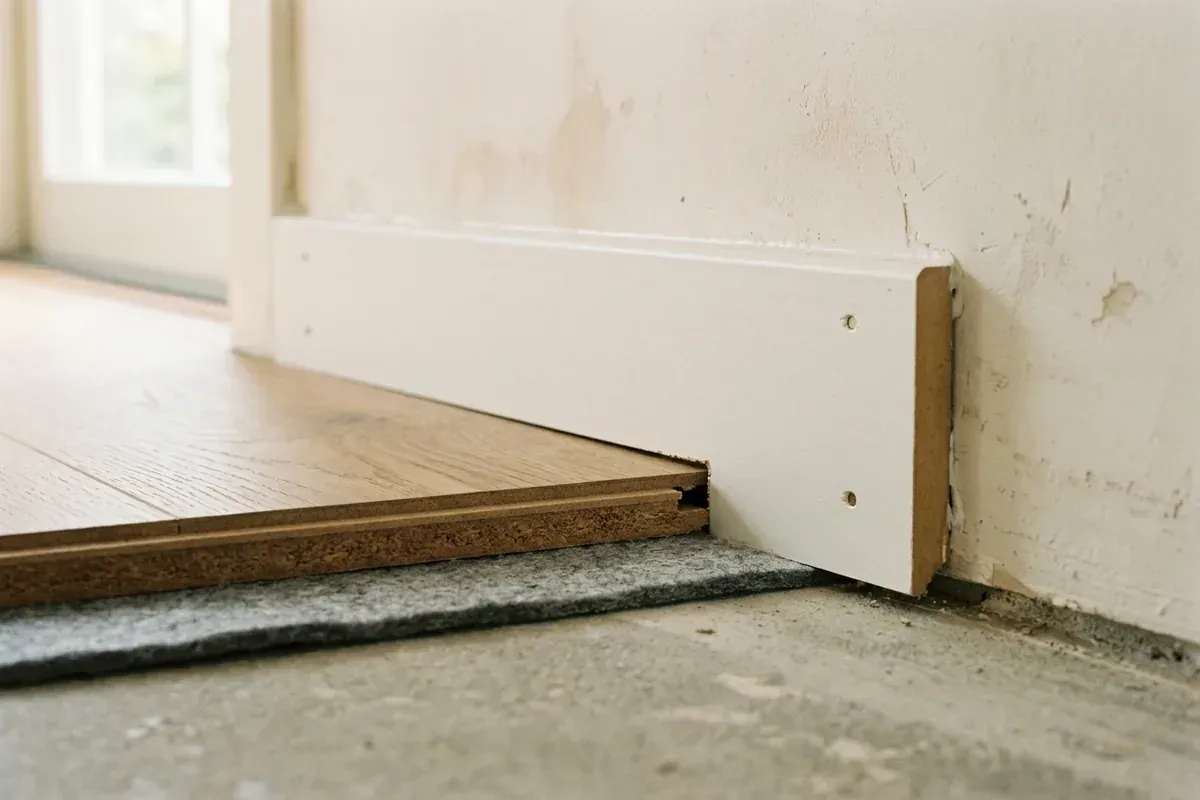
An expansion gap is an open space along the edge of a floor, so it can expand and contract. The skirting board covers the gap without fixing it.
Caulking
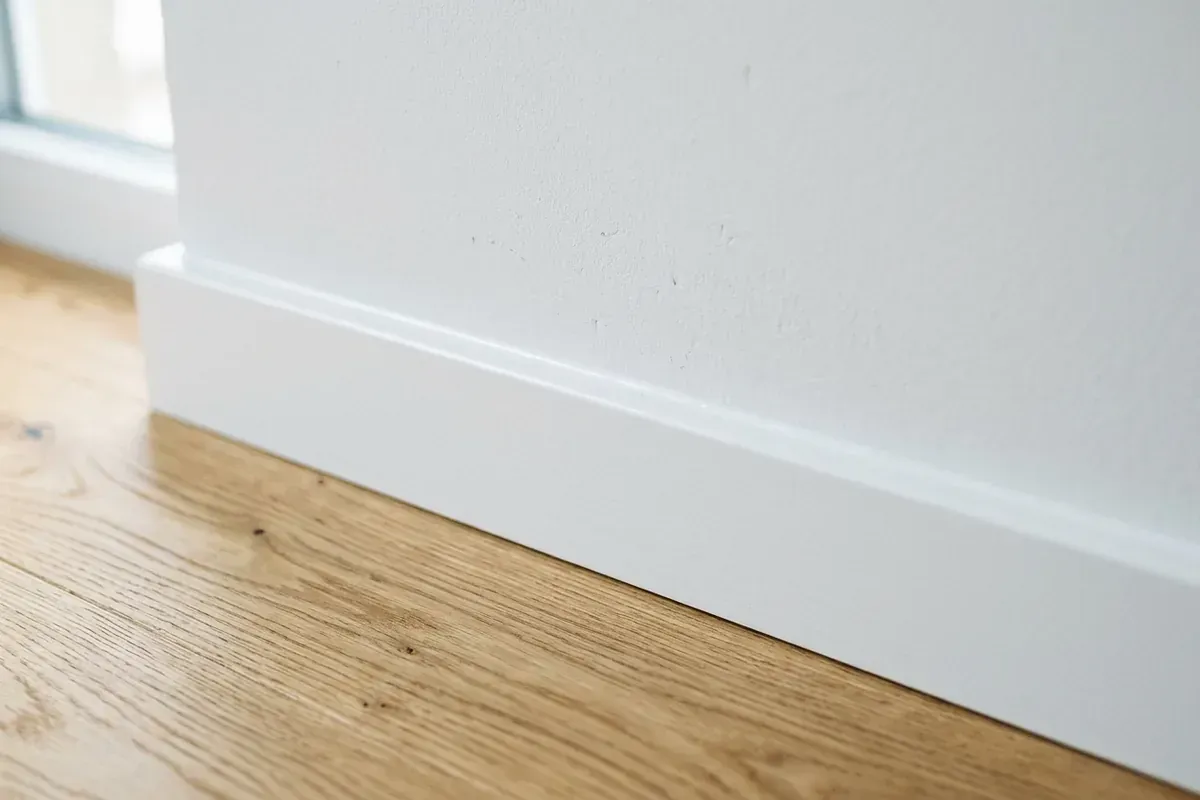
Caulking means sealing joints with a flexible sealant. With skirting boards and mouldings, it makes the transition to the wall crisp and seamless.
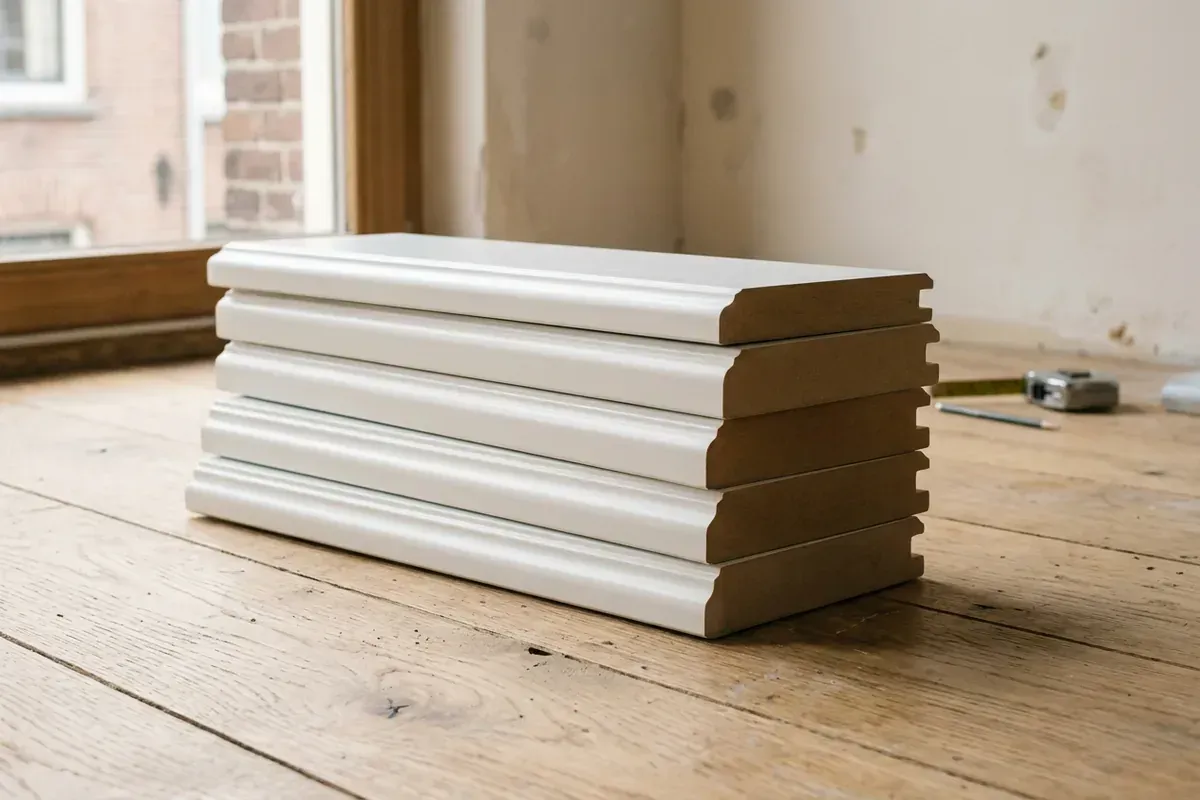
Pre-finished skirting
Pre-finished skirting has already been painted at the factory. That saves painting, but the joints and corners need neat touching up.
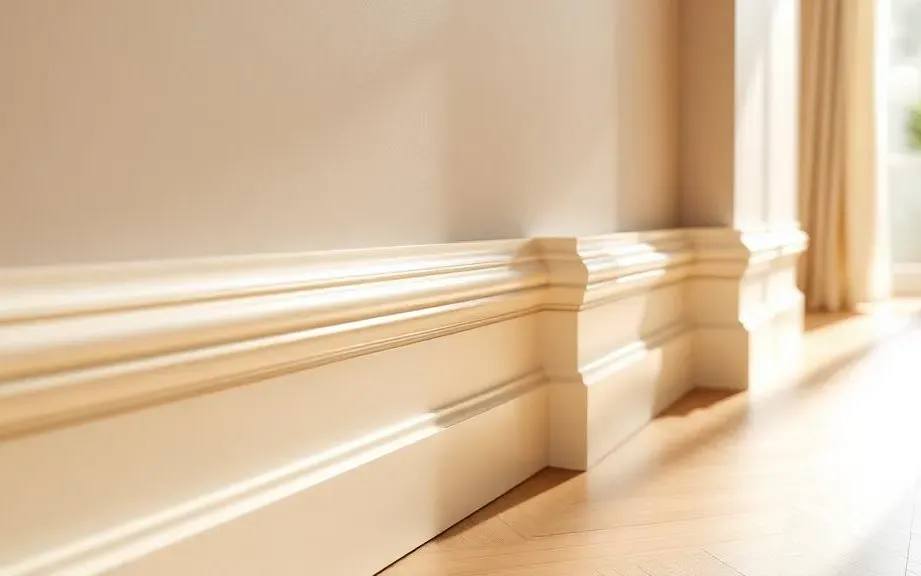
Skirting board installation by a specialist skirting fitter
TipTop Plinten fits skirting boards in MDF, solid wood and aluminium, finished in any RAL colour and neatly matched to any floor, even with uneven walls.
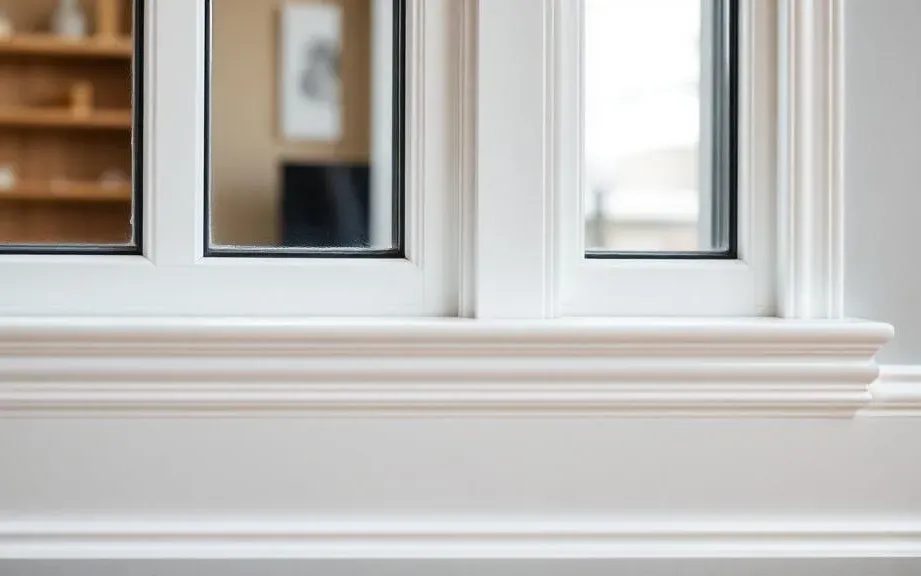
Caulking skirting boards and sealant work for a seamless finish
Caulking is the final step that makes skirting boards, mouldings and panels look seamless. TipTop Plinten uses acrylic or silicone, paint-ready or in colour.

Architrave fitting around doors, frames and openings
An architrave gives a door or opening a neat surround and covers the joint between frame and wall. TipTop Plinten fits made-to-measure architraves.
Skirting board installation? Request a free quote
On-site measurement €75 incl. VAT (credited for orders above a minimum project size)