
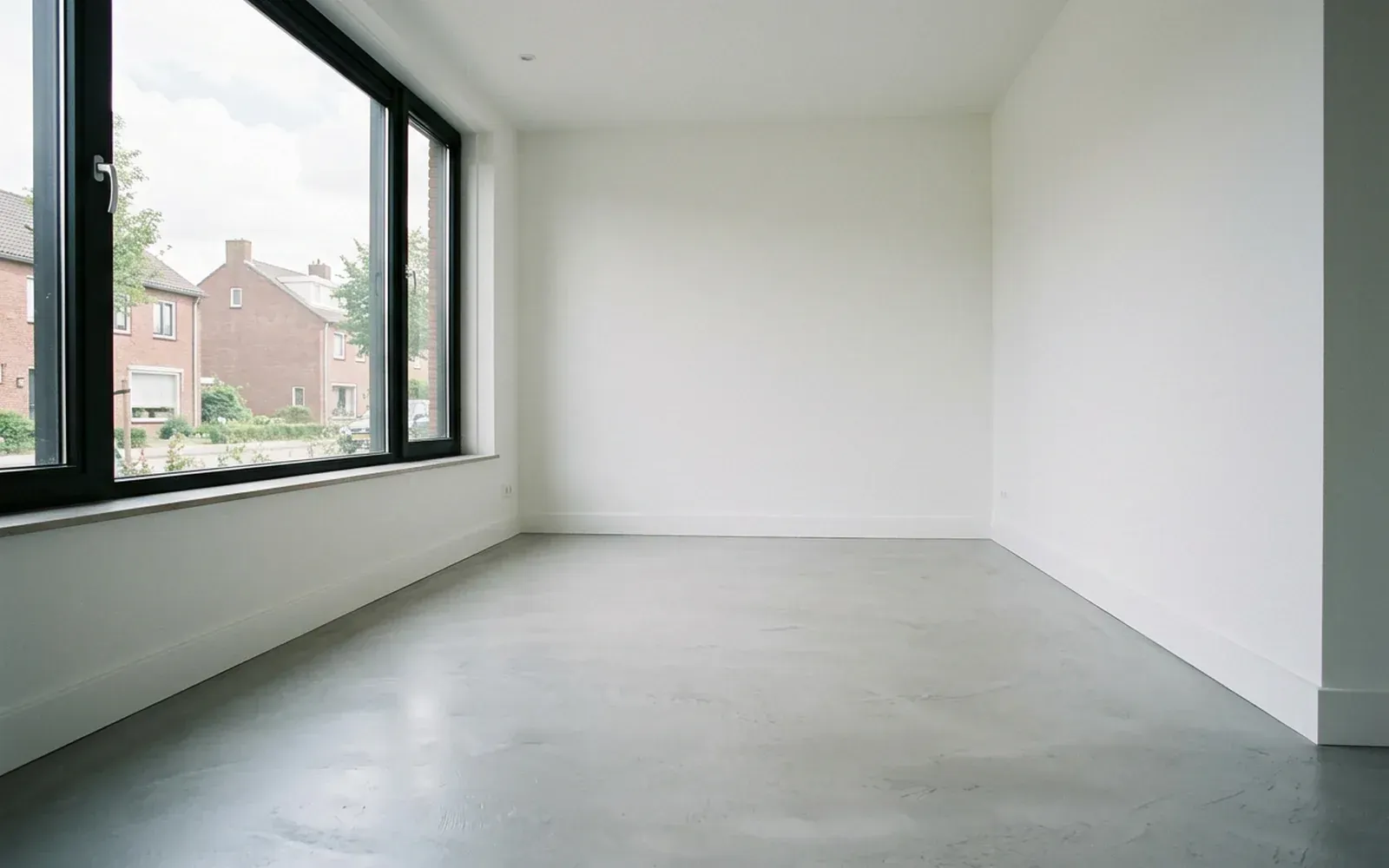
A poured or concrete floor is best paired with crisp, straight skirting: MDF skirting in the wall colour, black skirting as a contrast, aluminium skirting, or shadow gap skirting recessed into the wall. The skirting is fitted only once the poured floor has fully cured, and always fixed to the wall, never into the floor. The joint between skirting and wall is caulked; whether the bottom edge is sealed depends on the floor and how you clean it.
Below you can read which skirting suits a poured floor, when to fit it and what to look for at the junction.
Why does a poured floor call for different skirting?
A poured floor is seamless. There are no boards, no joints and no pattern to draw the eye. As a result, the eye goes to the edges more quickly: the transition from floor to wall. Skirting with a heavy profile or an off colour stands out more than it would next to a wooden floor.
The technique is different as well. A laminate or vinyl floor is often floating and has an expansion gap along the wall that the skirting covers. A poured floor is bonded to the subfloor. So the skirting often does not need to cover a wide gap; above all, it has to sit tightly against a flat surface.
Which skirting suits a poured or concrete floor?
Straight MDF skirting in the wall colour
The calmest solution: a straight skirting board without a profile, lacquered in the same colour as the wall. The skirting then barely stands out and the floor remains the main feature. Because MDF can be finished in any RAL colour, the colour matches exactly.
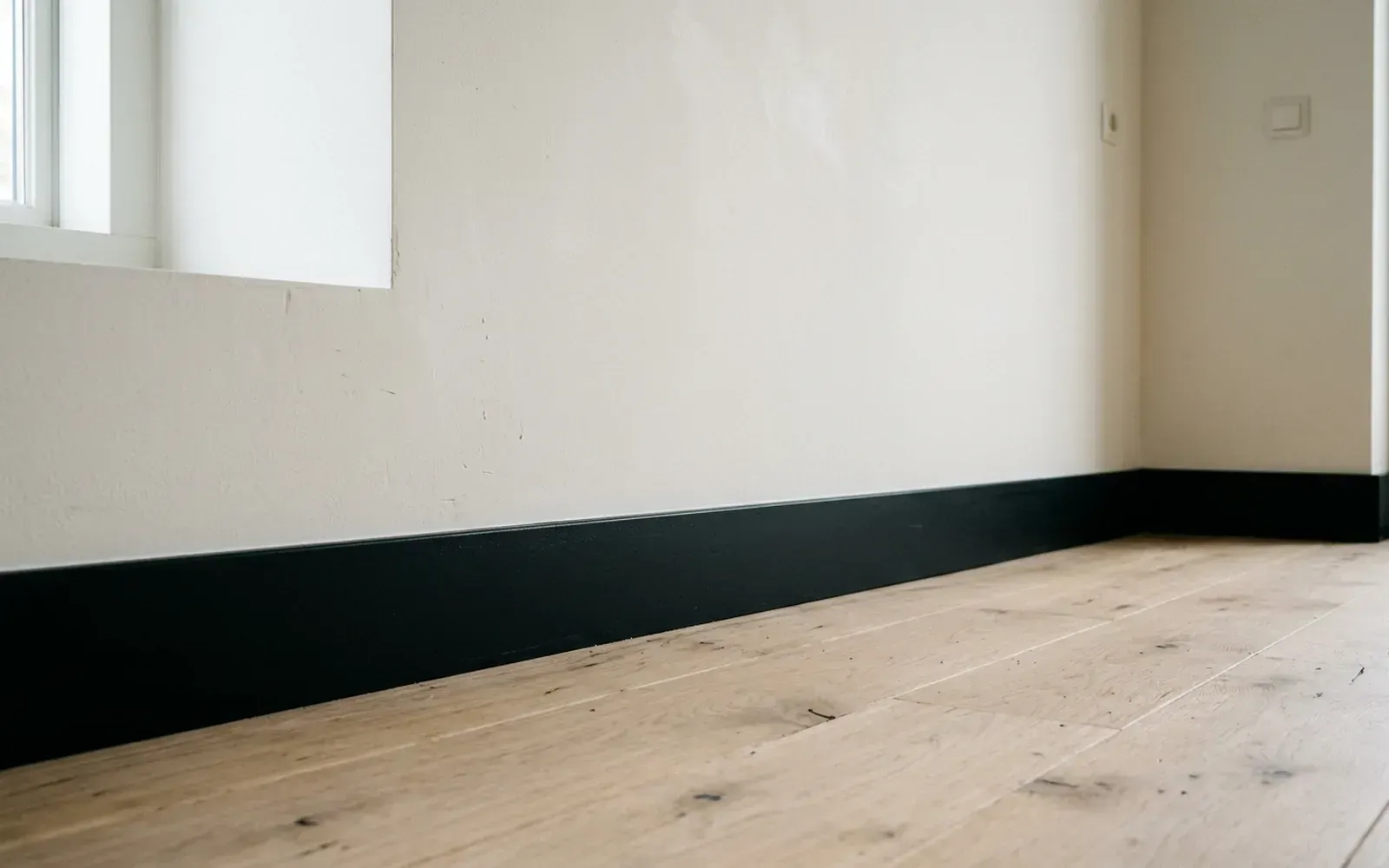
Black or dark skirting as a contrast
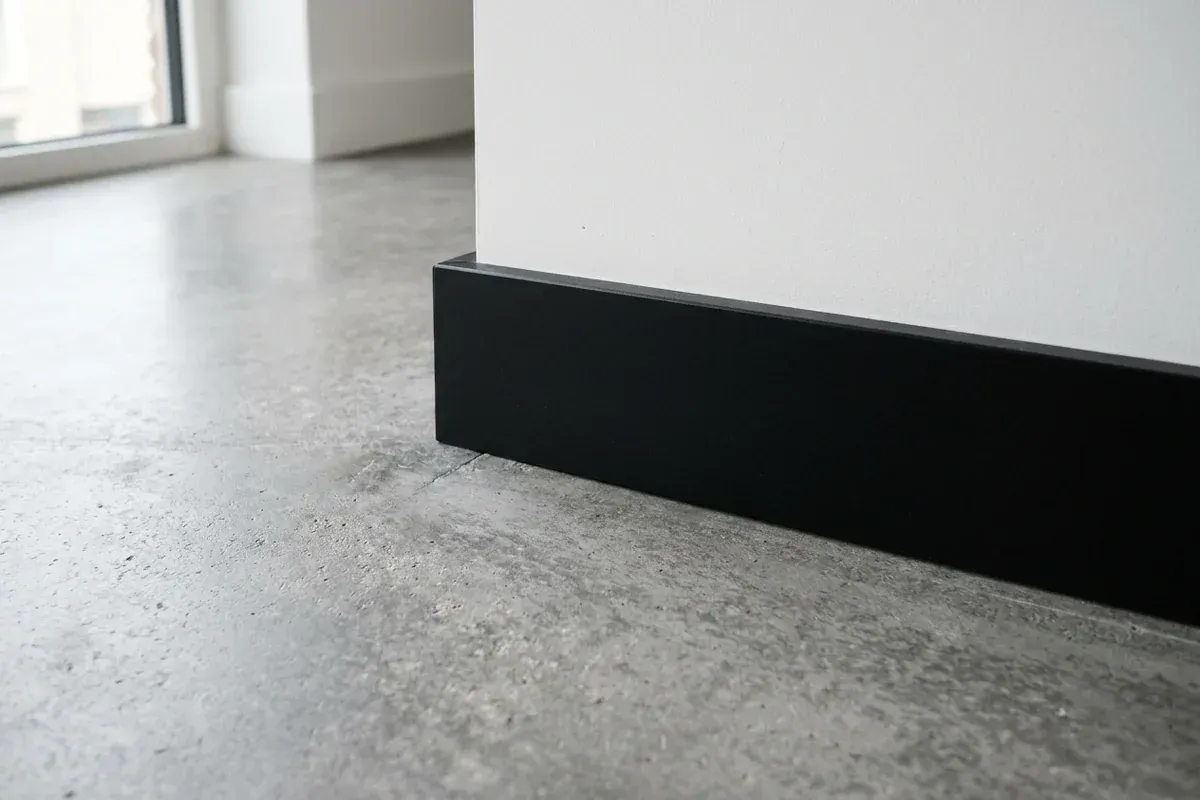
With a light grey or concrete-look poured floor, some people deliberately choose matt black skirting. That gives a graphic line along the wall. You can see how this works with light floors and walls in the black skirting boards in Leerdam in RAL 9005. Also read black skirting in RAL 9005.
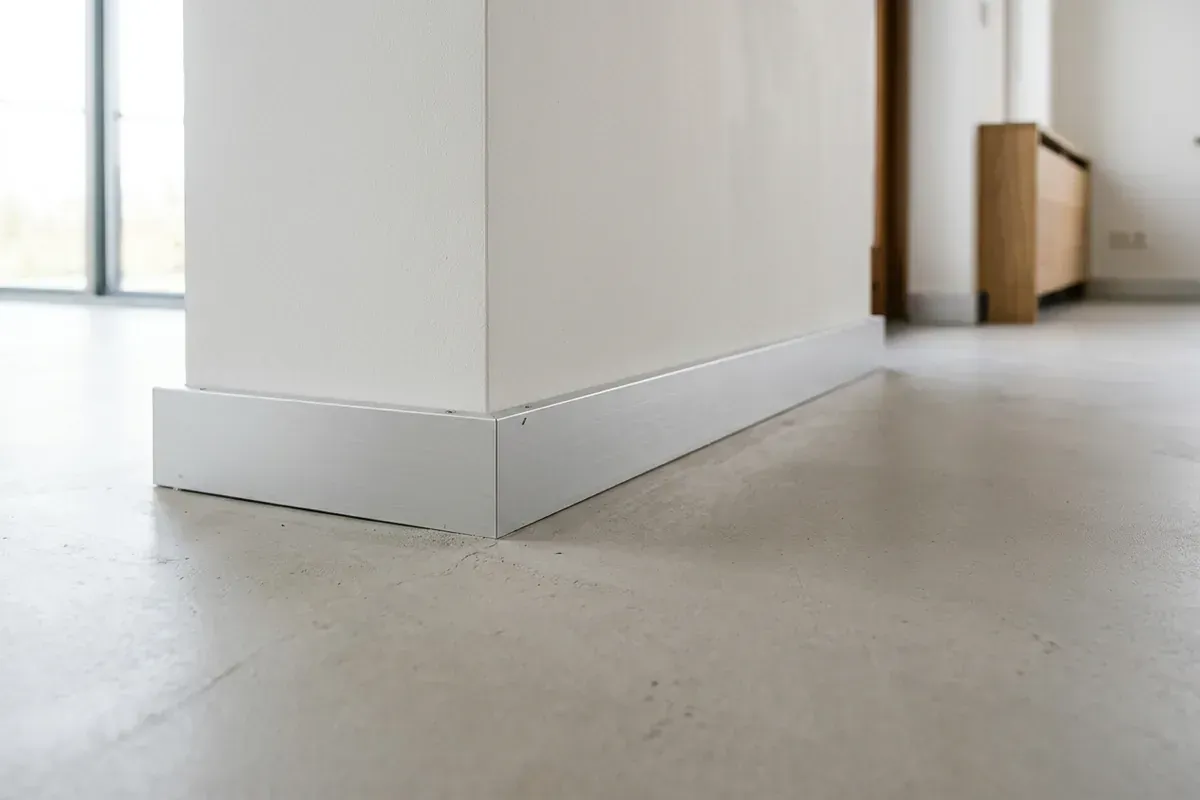
Aluminium skirting
Aluminium skirting suits the industrial, modern character of a concrete floor. Aluminium is impact-resistant and easy to keep clean. Read more in our article on aluminium skirting boards.
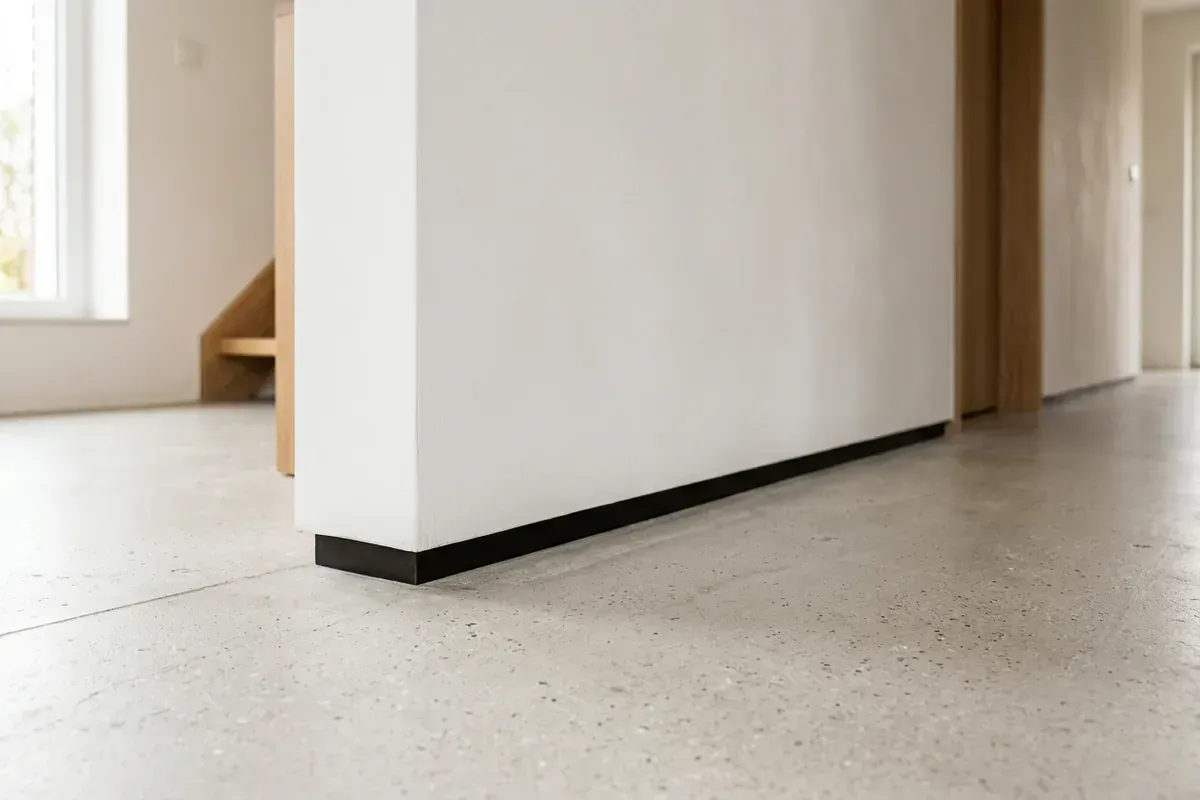
Shadow gap skirting
Shadow gap skirting is set back into the wall, creating a narrow shadow line between wall and floor. It looks as if the wall is floating. This suits a poured floor well, but needs early planning: shadow gap skirting is usually included before or during the wall finish, not afterwards.
What works less well?
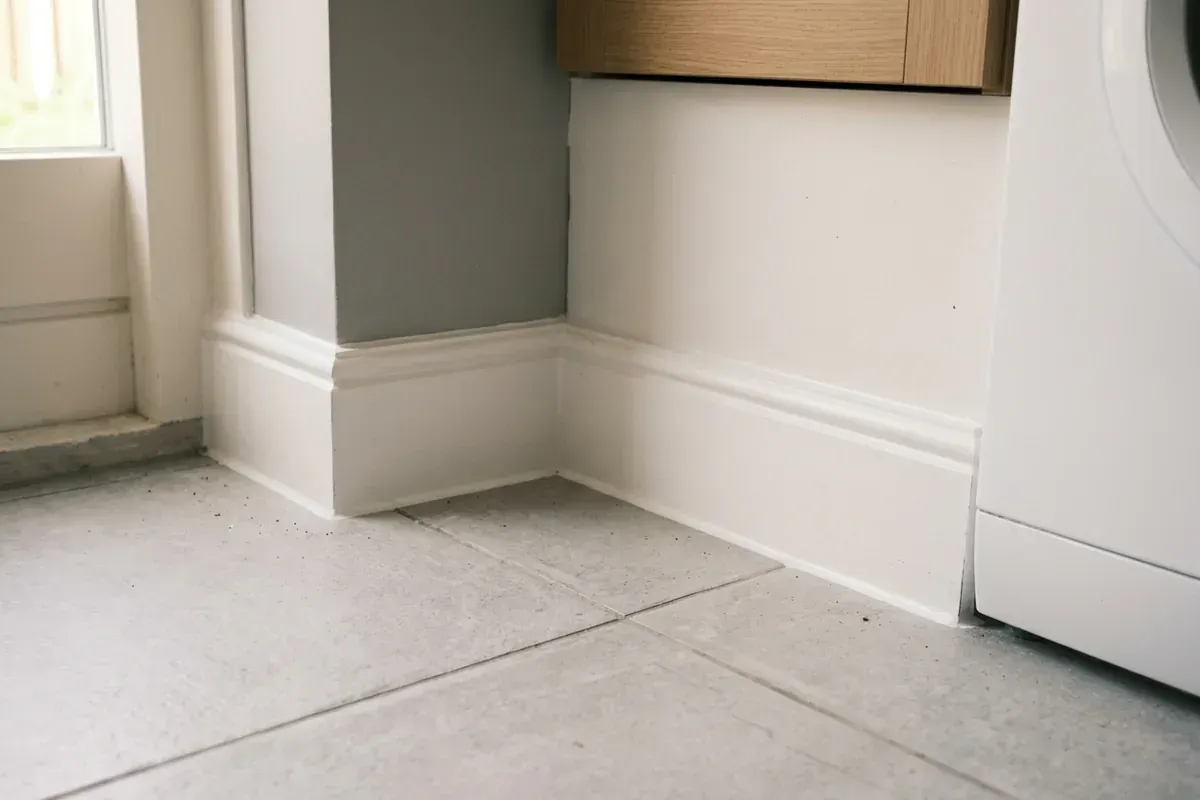
A classic profiled skirting board can work fine with a poured floor in an eclectic interior, but it stands out more. Choose it deliberately and preferably keep the profile restrained. You can find an overview of styles in modern skirting boards and trends.
How tall should the skirting be?
With a poured floor, low to medium-height skirting is often chosen because it looks calm. Taller skirting is also possible, for example in rooms with high ceilings or where the bottom of the wall needs extra protection. The choice depends on the room and your taste; there is no fixed rule.
When do you fit skirting with a poured floor?
The order matters:
- Finish the walls. Plastering and any painting are complete.
- Lay the poured floor. The floor layer pours the floor and lets it cure.
- Wait for curing. Only when the floor can take loads, according to the floor layer, can work be done on it.
- Fit the skirting. The skirting boards are cut to size and fixed to the wall.
- Caulk and finish. The joint between skirting and wall is caulked and painted if required.
With shadow gap skirting the order shifts: it belongs with the wall finish and therefore comes earlier in the schedule.
Why not too early?
A poured floor that has not fully cured is sensitive to scratches, marks and stains. Masking tape can also damage the top coat if it is used too early. So check with the floor layer when it is safe to work on the floor.
Fixing: to the wall, not into the floor
Skirting is always fixed to the wall. Nothing is drilled or screwed into a poured floor; that would damage the seamless top coat. Common methods:
- Construction adhesive on a flat wall. Construction adhesive gives an invisible fixing.
- Mechanical fixing with screws or nails into the wall, where the wall allows it and no pipes or cables run.
- A combination of both on a less flat wall.
Because a poured floor is very flat, any deviation in the wall shows up sooner as a gap above or below the skirting. On uneven walls the skirting is therefore adapted to fit.
The junction between skirting and floor
With a poured floor, the bottom of the skirting is clearly visible. A few points to watch:
- Tight to the floor. Because the floor is flat, the skirting can usually sit tightly on it.
- Seal or not. A sealant joint at the bottom can keep dirt out, but it can also become visible as a dirt line. Whether it makes sense depends on the floor and how you clean it.
- Caulk the top. The joint between skirting and wall is sealed with paintable acrylic caulk, so no shadow line or gap is visible. See also our caulking service.
Moisture and cleaning
Poured floors are often mopped wet. Properly painted MDF skirting copes with that well, as long as no water is left standing against it. In rooms where moisture occurs more often, moisture-resistant MDF can be a sensible choice. Aluminium is unaffected by moisture. Solid wood can be used, but moves more with changing humidity.
Why not plastic?
With poured floors, plastic skirting is sometimes offered because it can cope with water. TipTop Plinten deliberately does not fit plastic skirting boards. With properly painted MDF, moisture-resistant MDF or aluminium skirting, you get a clean finish that matches the quality of a poured floor.
Having skirting fitted to your poured floor?
Take a look at our skirting board installation service or send photos of the room, the type of poured floor, the colour you want and an estimate of the number of running metres via the contact page. Also let us know when the floor has been or will be laid. The quote is free and without obligation. An on-site measurement is optional for €75 incl. VAT, credited as a discount on jobs above a minimum project size. We are happy to communicate in English, as well as Dutch, German, Turkish, Persian and Arabic.
Frequently asked questions
With a poured floor, many people choose a crisp, straight skirting board without a profile: MDF skirting in the wall colour, black skirting as a contrast, or aluminium skirting. Shadow gap skirting also suits the minimalist character, but it has to be planned before the wall finish.
Only once the poured floor has fully cured and can take loads, according to the floor layer's instructions. Fit it too early and you can damage the top coat or leave marks.
Usually not. The skirting is fixed to the wall and the joint between skirting and wall is caulked. Whether the bottom edge is sealed depends on the floor and how you clean it. This is agreed for each situation.
Yes, provided the skirting is properly painted and you do not mop against it with a lot of water. In rooms where moisture occurs more often, moisture-resistant MDF is a sensible choice.
No. The skirting is fixed to the wall, not to the floor. That way the poured floor stays intact and the top coat is not drilled through.
Related articles
Choosing skirting
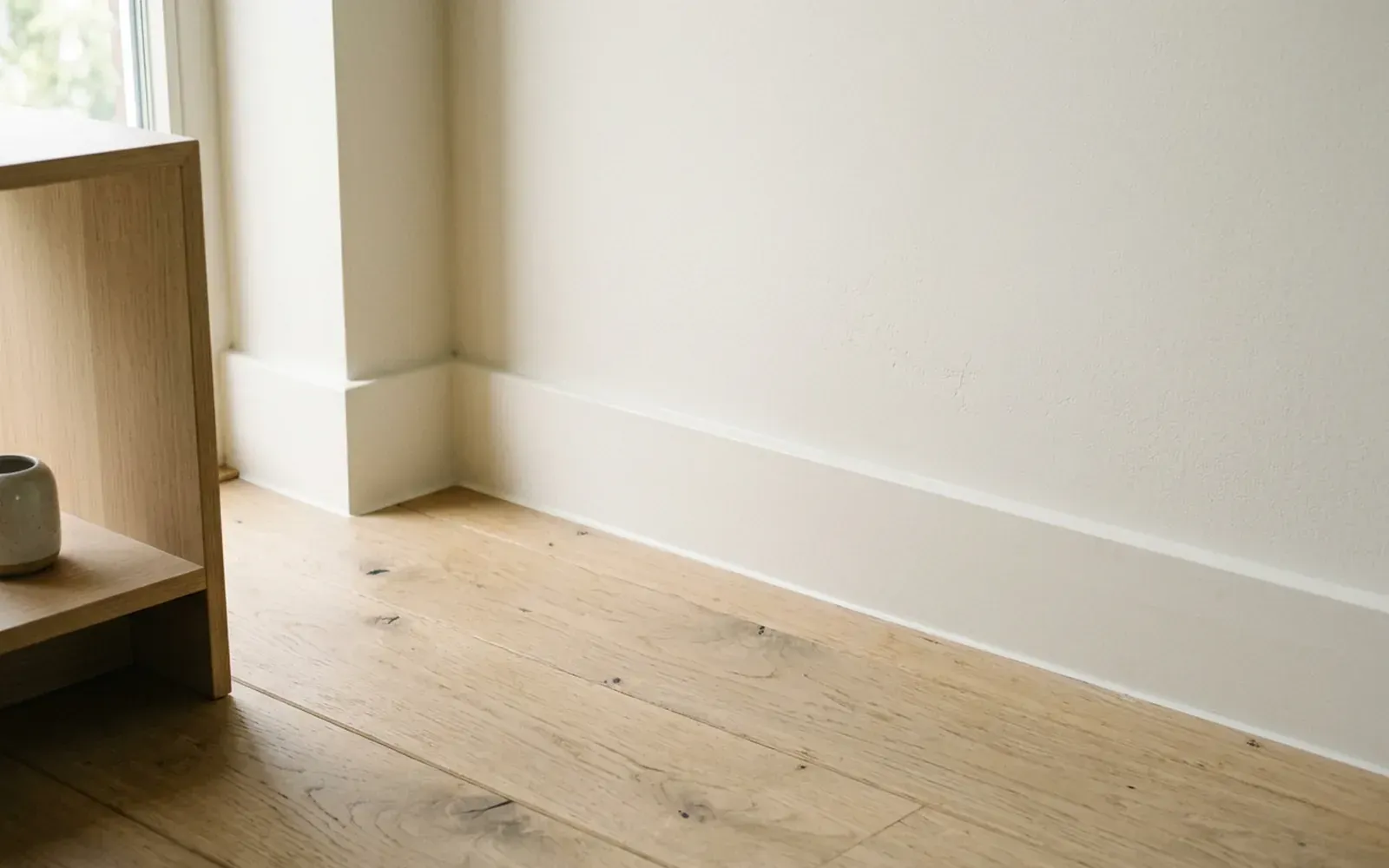
Modern skirting boards: the styles that suit a sleek interior today
Modern skirting boards are all about calm and clean lines. From shadow gap skirting to tall skirting in the wall colour or an aluminium profile: these are the styles that suit a contemporary interior.
Choosing skirting
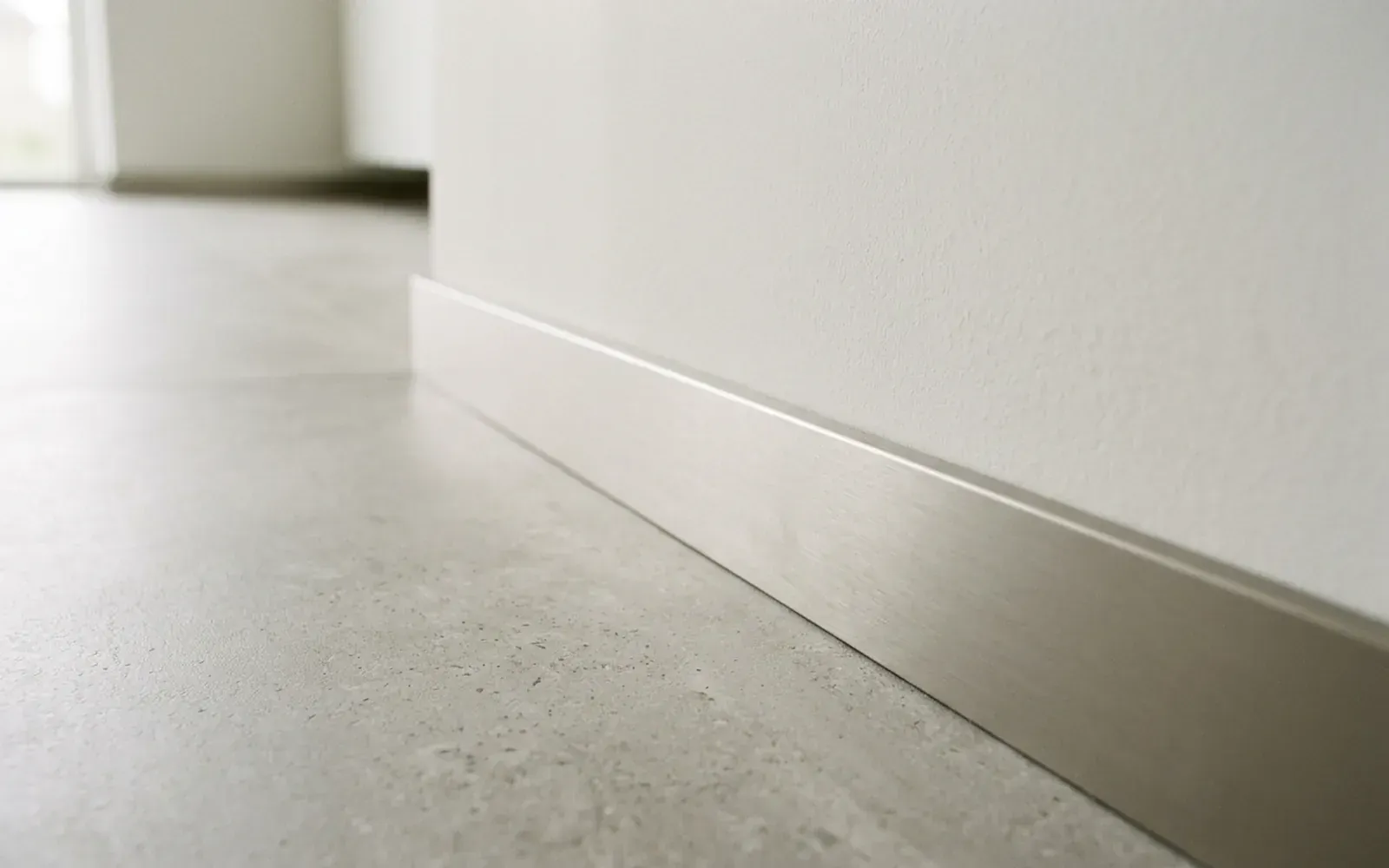
Aluminium skirting boards: sleek, modern and when they fit
Aluminium skirting boards suit sleek, modern interiors and commercial spaces. Here is how to choose between surface-mounted and recessed, and what it asks of your walls.
Choosing skirting
Black skirting boards in RAL 9005: when do they work and what should you look out for?
Black skirting boards give an interior a graphic, contemporary look. Here is how to choose the right finish and keep dust and scratches from spoiling the effect.
Related
Shadow gap skirting
Shadow gap skirting sits flush with or behind the wall, with a narrow shadow line above it. The result is a minimalist wall that seems almost to float.
Aluminium skirting
Aluminium skirting is a slim metal profile at the base of the wall. It suits sleek, modern interiors and can be combined with LED lighting.
Moisture-resistant MDF
Moisture-resistant MDF is MDF treated to make it less sensitive to moisture. It is suitable for rooms where standard MDF would quickly swell.
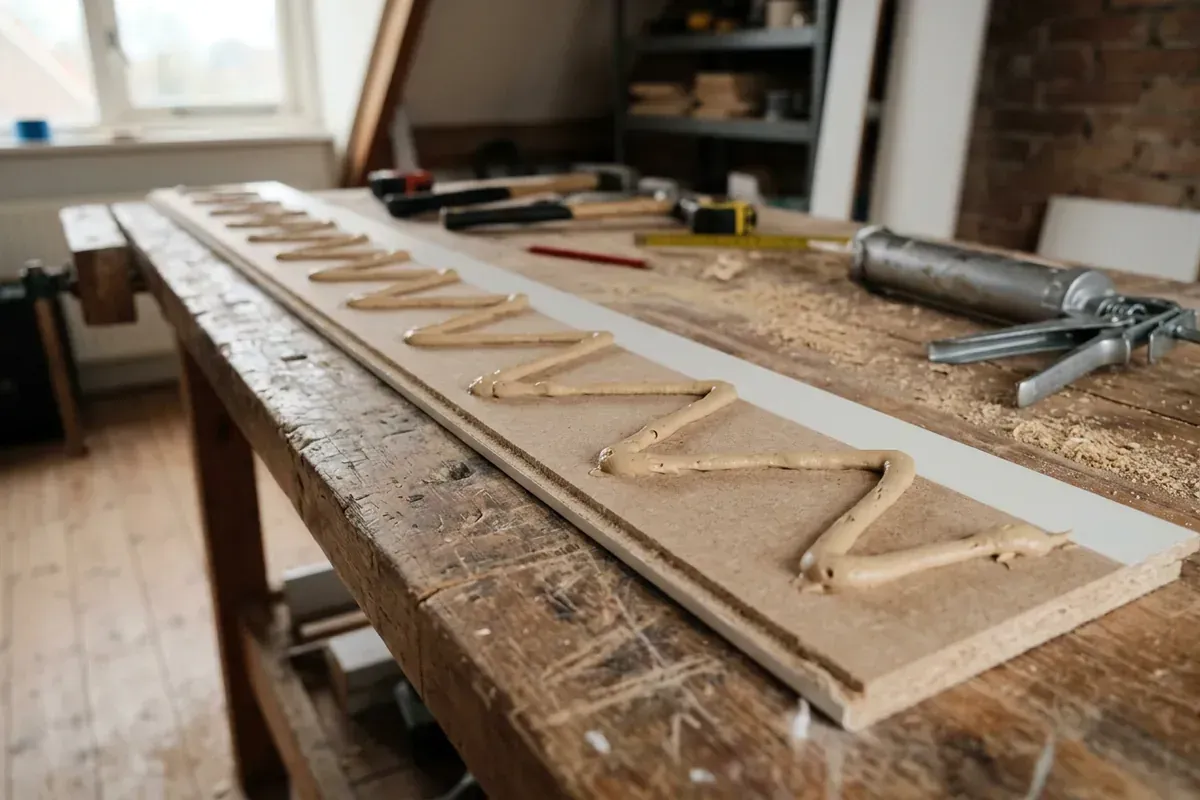
Construction adhesive
Construction adhesive is a strong glue or sealant used to fix skirting boards, mouldings and panels to the wall, often combined with nails or screws.
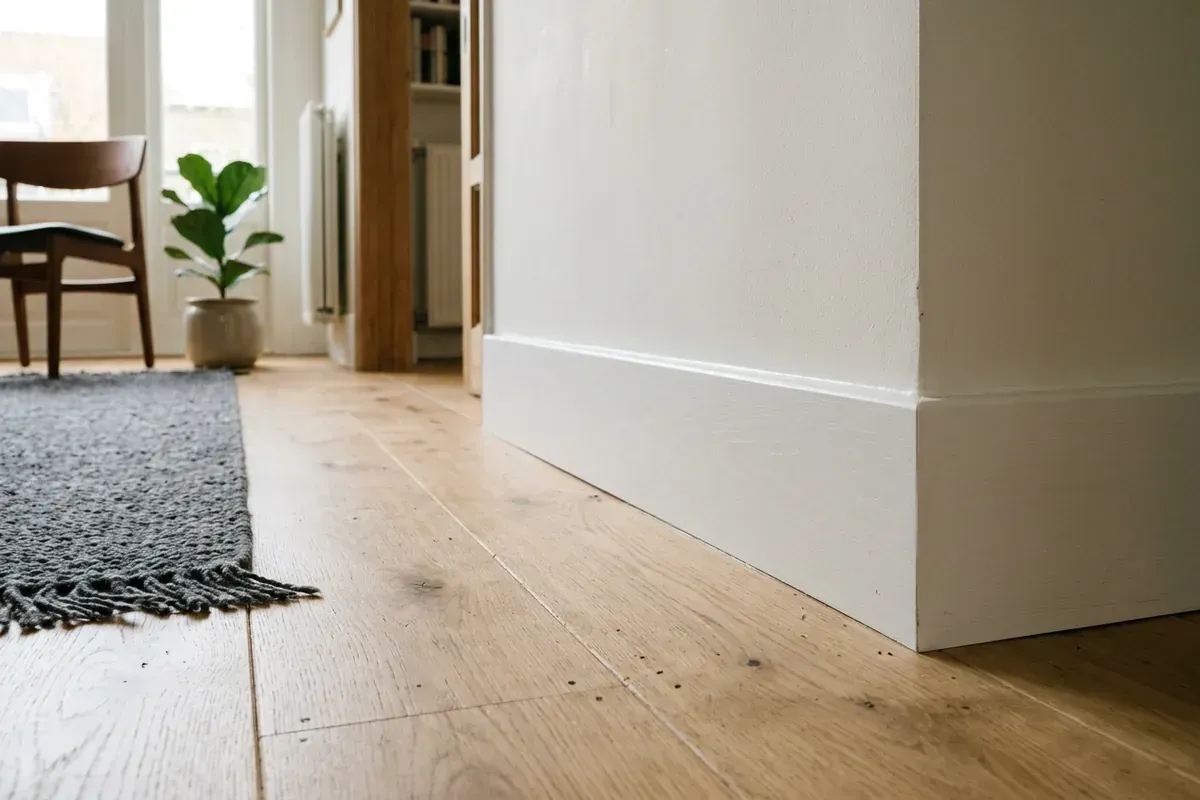
Skirting board
A skirting board is the moulding at the base of the wall that finishes the transition to the floor and protects the wall. Here is how it works and what to look out for.
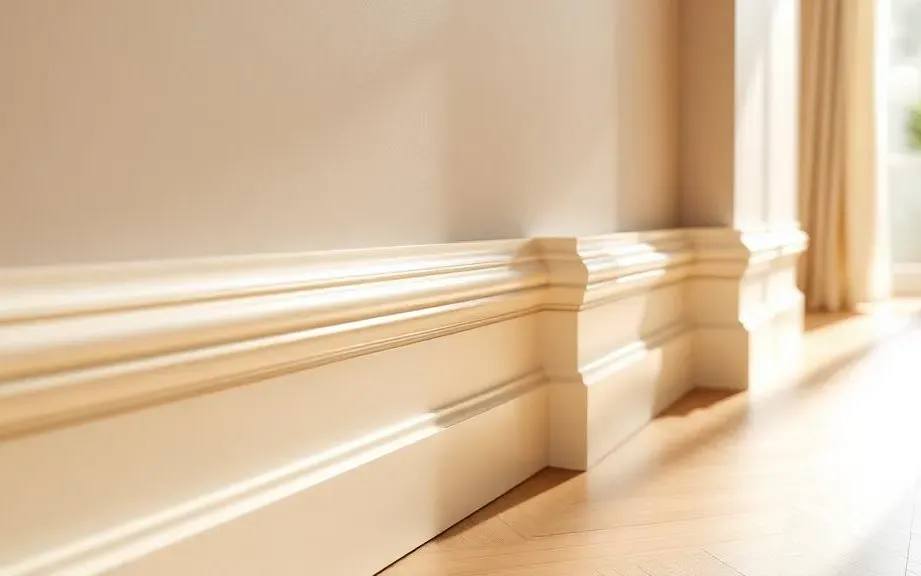
Skirting board installation by a specialist skirting fitter
TipTop Plinten fits skirting boards in MDF, solid wood and aluminium, finished in any RAL colour and neatly matched to any floor, even with uneven walls.
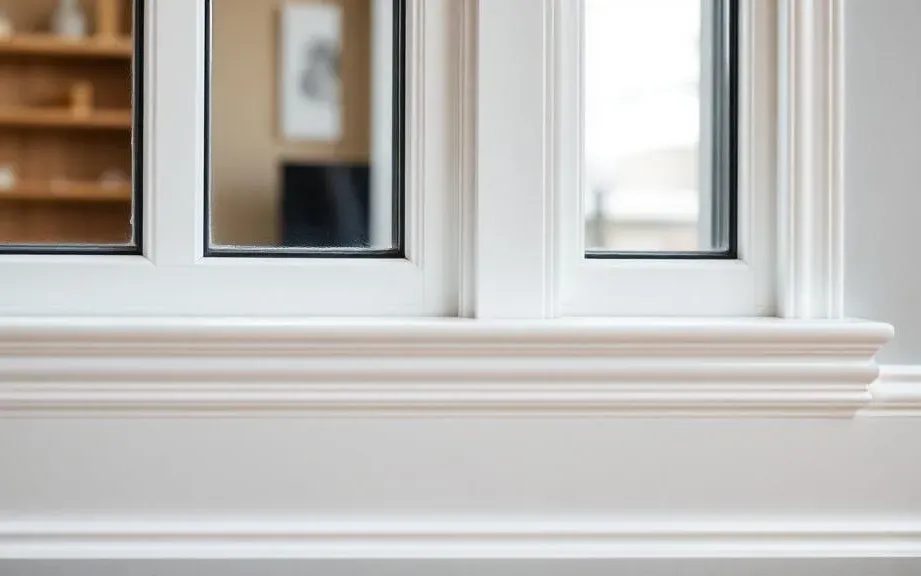
Caulking skirting boards and sealant work for a seamless finish
Caulking is the final step that makes skirting boards, mouldings and panels look seamless. TipTop Plinten uses acrylic or silicone, paint-ready or in colour.
Skirting board installation? Request a free quote
On-site measurement €75 incl. VAT (credited for orders above a minimum project size)