
The cost of having skirting boards fitted depends on a handful of fixed factors: the number of linear metres, the number of corners, the material, the height of the skirting, the wall surface, the caulking, the colour or paintwork, accessibility and whether old skirting boards need to be removed first. That is why TipTop Plinten does not give a price per metre in advance, but a quote based on your situation. The quote is free and without obligation.
Below you can read, factor by factor, why each one affects the price and how to make your quote as specific as possible.
Why no fixed price per metre?
The question "what does skirting board installation cost per metre?" is understandable, but a price per metre only tells part of the story. Ten metres of skirting along one straight wall is something different from ten metres spread across a hallway with five door frames, two external corners and a staircase. A tall, matt black skirting board on an out-of-true wall also takes more than a standard white skirting board on a flat wall.
A quote that takes the real situation into account is therefore fairer than an average price per metre that turns out to be wrong afterwards.
The factors that determine the price
1. The number of linear metres
The basis of every calculation is the total length of skirting, measured in linear metres. Measure the walls of each room along the floor and subtract door openings. An estimate is enough for an initial quote.
2. The number of corners and interruptions
Every corner involves measuring, cutting and fitting. Internal and external corners are mitre-cut, and where corners are not square, the angle is measured and halved first. Door frames, alcoves, pipes and radiator connections are also interruptions the skirting has to meet. The more of these there are, the more work per metre. Read more in mitre-cutting skirting corners.
3. The material
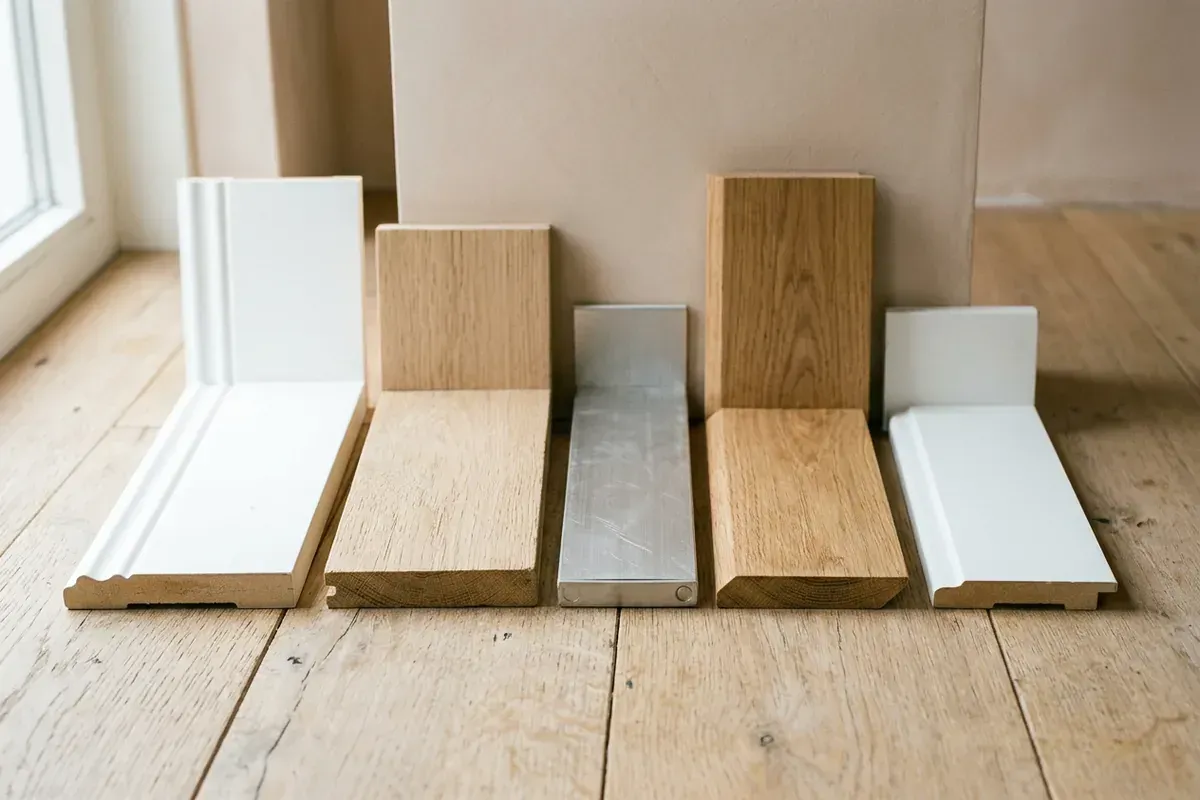
TipTop Plinten works with MDF, solid wood and aluminium. Each material has its own price level and its own way of being worked.
- MDF is the most popular option: stable and easy to paint in any colour. Moisture-resistant where needed. See MDF skirting boards: pros and cons.
- Solid wood suits classic or listed interiors and needs more care when being worked.
- Aluminium suits sleek, modern interiors and is cut and fixed differently.
Plastic skirting boards are deliberately not fitted.
4. The height of the skirting
Taller skirting means more material, and the taller the skirting, the more visible every unevenness in the wall becomes. Tall skirting boards therefore have to be fitted and fixed more precisely. More on this in tall skirting boards: which height?
5. The wall surface
A flat, plastered wall is different from an old wall that undulates or leans. The type of wall (brick, concrete, plasterboard, timber) also determines how the skirting is fixed. With out-of-true or irregular walls, the skirting is adapted to measure, which takes more time. See made-to-measure skirting for uneven walls.
6. Caulking
Caulking along the top of the skirting makes joints and gaps disappear. Whether you include caulking, and how many joints there are, counts towards the price. More on caulking and finishing and in the glossary under caulking.
7. Colour and paintwork
Pre-finished skirting in a standard colour only needs touching up after fitting. A specific RAL colour, a matt black finish or skirting boards that are fully painted after fitting mean extra work. Finishing is possible in any RAL colour, for example RAL 9010 white or RAL 9005 matt black.
8. Accessibility
If the room is empty and easy to reach, the work can be done efficiently. Full rooms, narrow stairwells, parking at a distance or working in an occupied business premises all affect the effort required. So make sure the walls are clear at the time of fitting.
9. Removing old skirting boards
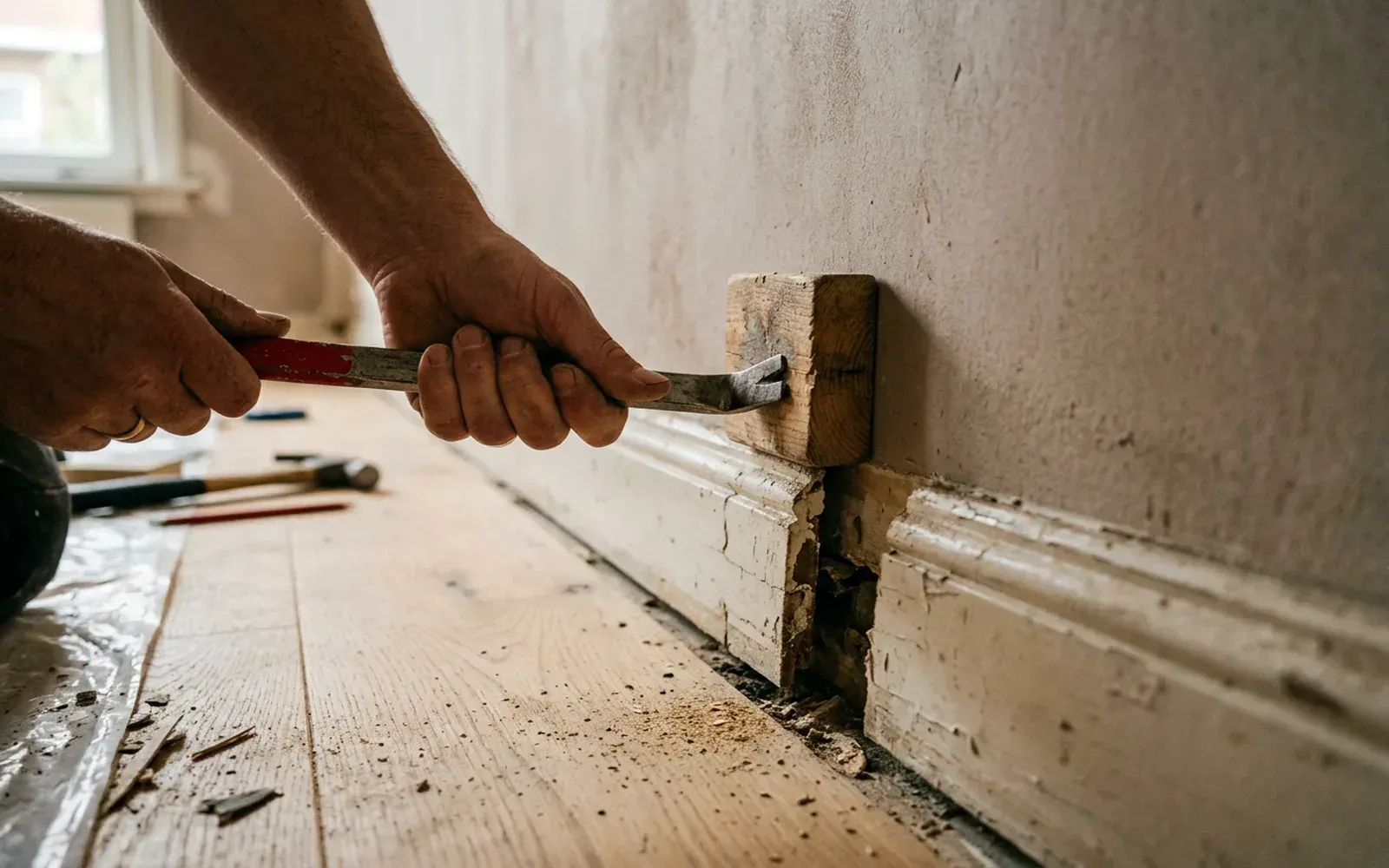
If existing skirting boards have to come off first, that adds work: loosening them, removing old caulk and adhesive residue and making good the wall where necessary. How to do this without damage is covered in removing skirting boards without damage.
Overview: what counts towards the price?
| Factor | Why it counts |
|---|---|
| Linear metres | Basis for materials and labour |
| Corners and interruptions | Measuring, cutting and fitting per corner |
| Material | MDF, solid wood or aluminium |
| Height | More material and more precise fitting |
| Wall surface | Fixing method and possibly made-to-measure work |
| Caulking | Finishing joints and gaps |
| Colour and paintwork | Standard, RAL colour or painting after fitting |
| Accessibility | Clear or full rooms, access |
| Removing old skirting | Extra work beforehand |
How to keep the quote clear
There is a lot you can do yourself to make the quote as specific as possible:
- Measure per room. A list of metres per room is clearer than one total.
- Photograph the tricky spots. Corners, stairs, alcoves and door frames.
- Decide in advance. Material, height and colour make the difference in the calculation.
- Be clear about the finish. Do you want caulking, paint-ready or straight away in colour?
Quote and site survey
The quote is free and without obligation. In many cases it can be prepared on the basis of photos and measurements. If you would like personal advice, or if the situation is hard to judge from photos, you can opt for an on-site measurement, also called a site survey. It costs €75 incl. VAT and is deducted as a discount for projects above a minimum size.
How the process runs from request to finishing is explained in skirting board installation: the process.
An example of made-to-measure work
How strongly the situation determines the effort can be seen in the flat in Oss with irregular walls and unusual corners. There, the skirting boards were fully made and fitted to measure. In a room like that, the number of metres says little about the work; the corners and the walls determine it.
How to request a specific quote
Send a message via contact, WhatsApp (+31 6 28438086) or email (info@tiptopplinten.nl) with overview photos, the estimated number of metres, the floor type and your preferences for material, height and colour. Mention whether old skirting boards need to be removed and whether you want caulking. We are happy to communicate in English. On skirting board installation you will find all the options. The quote is free; an on-site measurement is optional for €75 incl. VAT, deducted for projects above a minimum size.
Frequently asked questions
A fixed price per metre says little, because the number of corners, the height of the skirting, the material, the wall surface and the finish differ from room to room. That is why TipTop Plinten provides a quote based on your situation. The quote is free and without obligation.
Yes, the quote is free and without obligation. You can request it based on photos and measurements via WhatsApp, phone, email or the form on the contact page.
An on-site measurement costs €75 incl. VAT. This amount is deducted as a discount for projects above a minimum size. A measurement is optional and especially useful if you are unsure, have tricky walls or a larger project.
That is stated in the quote. The material, height and finish of the skirting affect the total price, so the quote shows exactly what will be supplied and fitted.
Send overview photos of each room, photos of corners and door frames, an estimate of the number of linear metres, the floor type and your preferences for material, height and colour. Also mention whether old skirting needs to be removed and whether you want caulking.
Related articles
Costs & process
Having skirting boards fitted: how it works from enquiry to finish
From the first message to the final caulk line: this is how having skirting boards fitted by TipTop Plinten works, and what you can arrange yourself beforehand.
Choosing skirting
MDF skirting boards: pros, cons and when to choose them
MDF is the most popular material for skirting boards, but not the best choice in every situation. These are the advantages, the disadvantages and the pitfalls.
Installation & finishing
Removing skirting boards without damaging the wall or floor
Old skirting boards are best removed step by step: cut through the caulk line, find out how they are fixed and prise them off carefully while protecting the wall.
Related
Linear metre
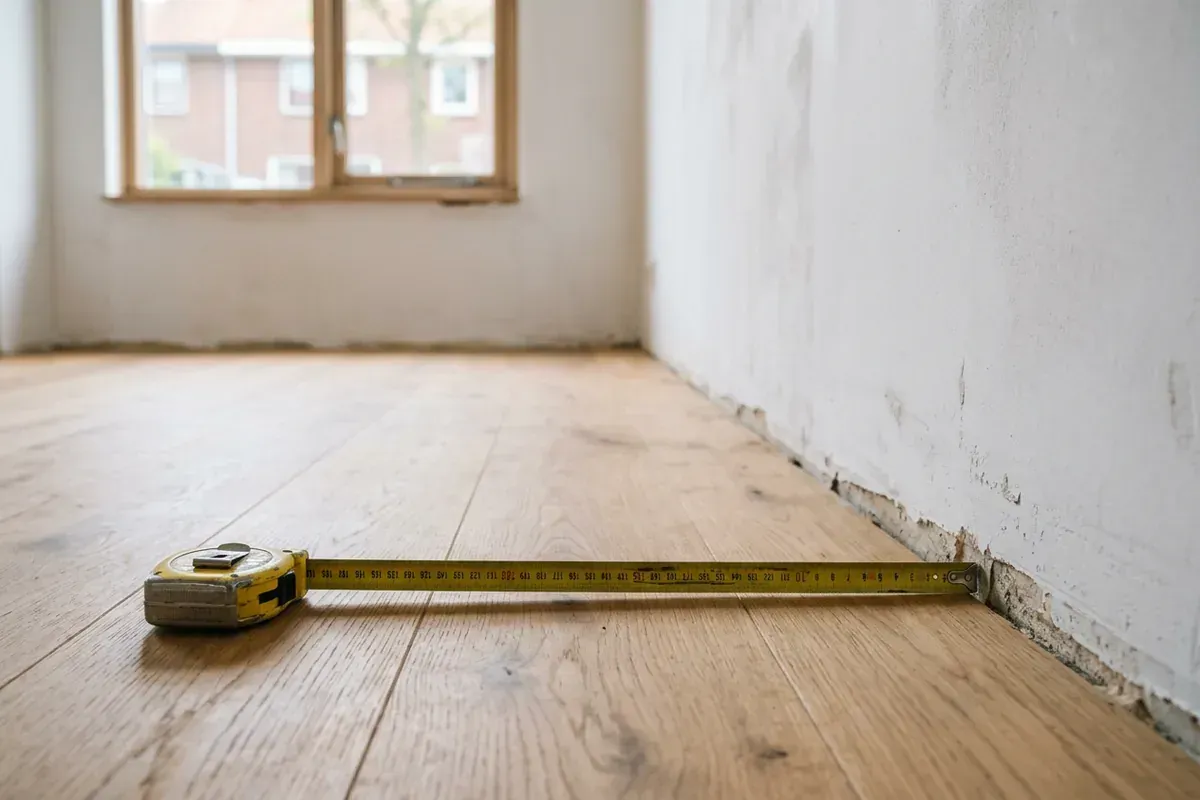
A linear metre is a metre measured along the length, regardless of width or height. Skirting boards and mouldings are measured and ordered this way.
Site survey
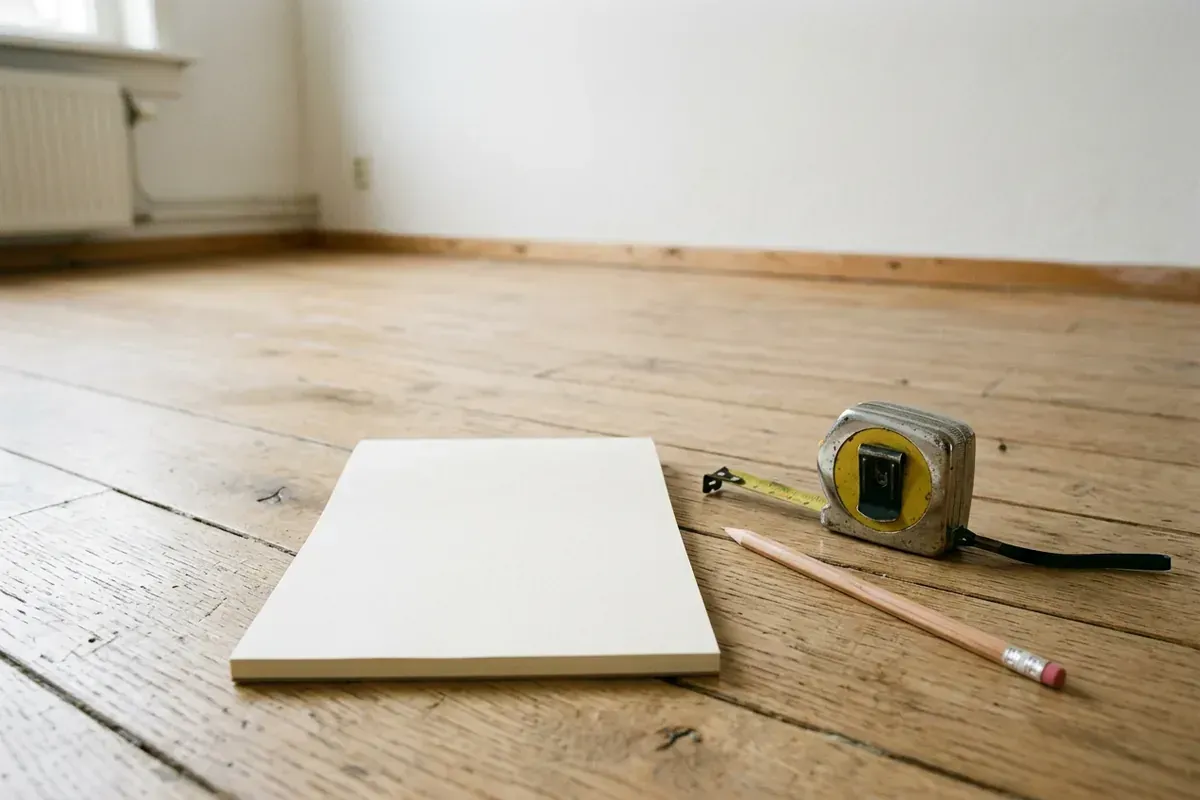
During a site survey, the measurements and conditions are recorded on site: metres, corners, walls and floor. That makes the quote and the materials precise.
Mitre joint
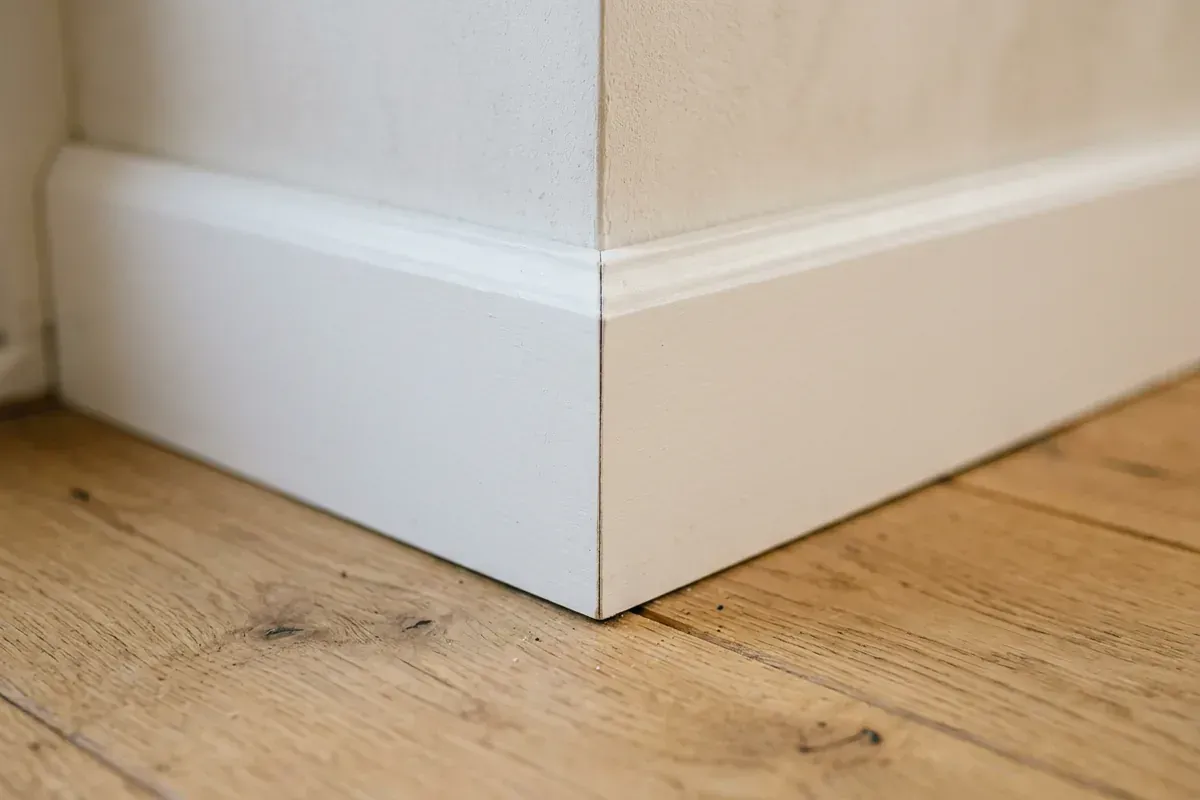
A mitre is an angled cut that lets two mouldings meet seamlessly in a corner. For a right angle, that is usually 2 x 45 degrees.
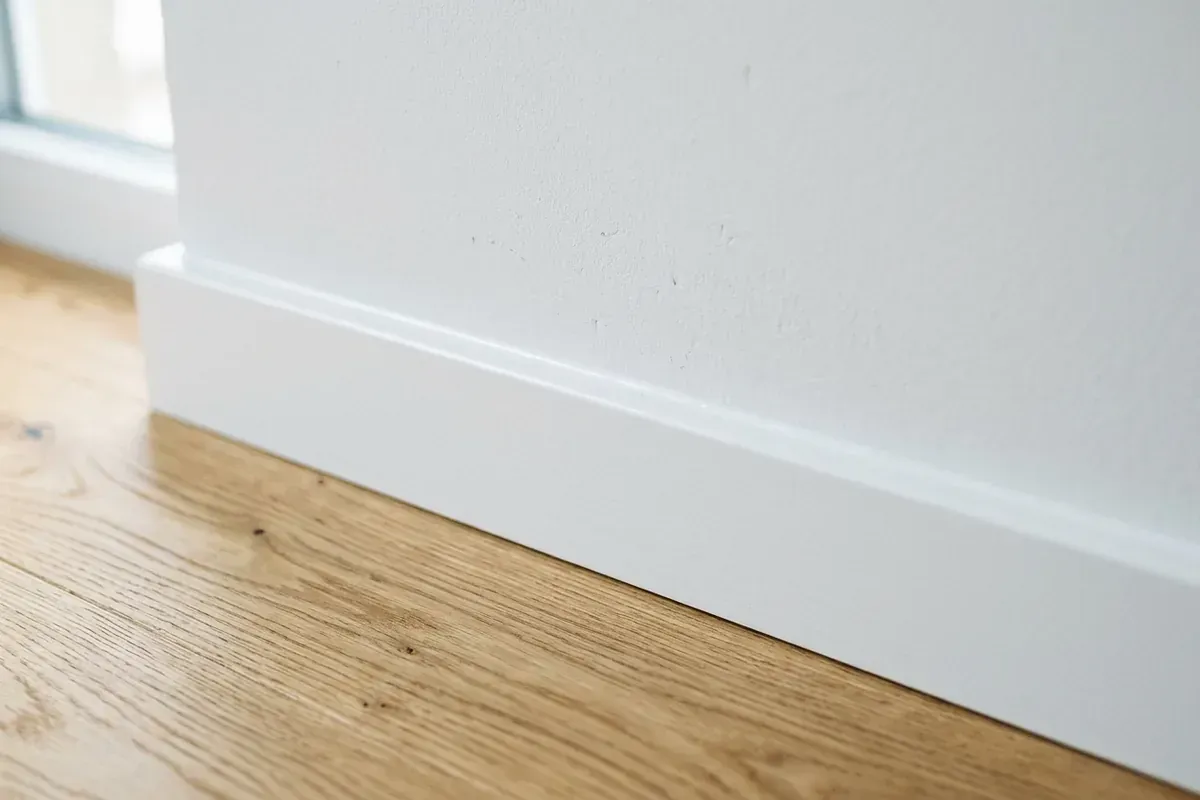
Caulking
Caulking means sealing joints with a flexible sealant. With skirting boards and mouldings, it makes the transition to the wall crisp and seamless.
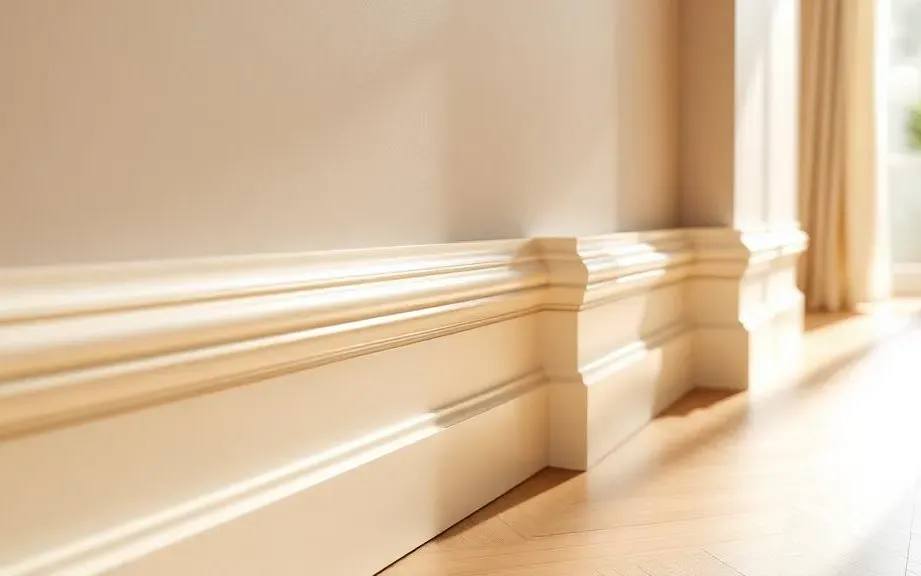
Skirting board installation by a specialist skirting fitter
TipTop Plinten fits skirting boards in MDF, solid wood and aluminium, finished in any RAL colour and neatly matched to any floor, even with uneven walls.
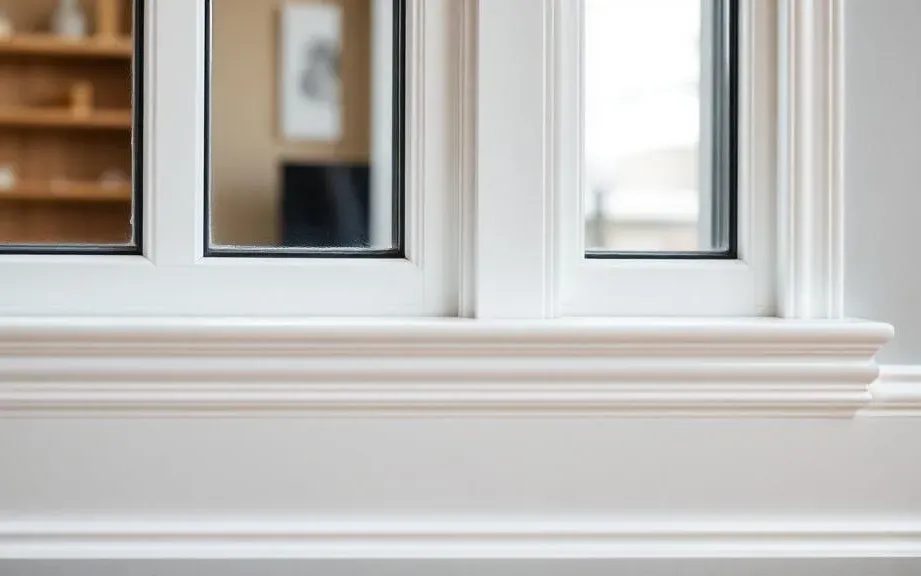
Caulking skirting boards and sealant work for a seamless finish
Caulking is the final step that makes skirting boards, mouldings and panels look seamless. TipTop Plinten uses acrylic or silicone, paint-ready or in colour.
Skirting board installation? Request a free quote
On-site measurement €75 incl. VAT (credited for orders above a minimum project size)